Guest Blogger ~ Seren Star Goode

Why I Write Cozy Mysteries — A Beach Walk Answer

On foggy mornings along the California coast, the world feels suspended.

The horizon disappears. The ocean and sky blur into one soft gray. Even the familiar curve of the shoreline looks different, as if something has shifted overnight.

Those are my favorite mornings to walk the beach.

After a strong swell, the tide leaves behind driftwood, kelp, and the occasional glint of something unexpected. I look for sea glass. At first, it’s easy to miss — a cloudy fragment half-buried in sand. But once you learn to spot that soft glow, you can’t unsee it.

Mystery writing feels like that.

I write cozy mysteries because I’m drawn to what hides beneath ordinary life. A marina on a bright afternoon. A small-town festival. Neighbors chatting on a front porch. On the surface, everything looks steady. But if you stand still long enough — you’ll notice tension, history, secrets.

Mystery readers understand that instinct. We read to uncover. To test our suspicions. To follow currents that weave through waves.

For me, the cozy branch of the genre offers something I love: community. In a small coastal town like my fictional Ocean Wood, relationships overlap. Loyalties complicate things. A crime doesn’t just affect one person; it ripples outward. That emotional web gives a mystery weight without turning it bleak.

My protagonist, Amanda Warren, arrives in town trying to rebuild her life. She carries loss. She’s not looking for trouble, but it keeps finding her. Each case she investigates is about justice, yes — but it’s also about steadiness. About putting the pieces back together.

And then there’s Grok.

Grok is a very large, very opinionated Maine Coon cat who may — or may not — have abilities that defy easy explanation. Some readers meet him expecting whimsy and stay for the sharp observations. Cats notice everything. They watch quietly. They sense shifts before humans do. Grok often catches emotional truths before Amanda does.

Writing him is a way of honoring intuition — that small internal nudge that says, something isn’t right here.

Whether you prefer hardboiled detectives or classic puzzles, that feeling is universal in mystery fiction. The tightening awareness. The moment when a clue lands differently. The fog beginning to thin.

On the beach, when I find a piece of sea glass, I always pause. It began as something whole — a bottle, perhaps — broken and tossed aside. The ocean didn’t erase its past. It reshaped it. Edges softened. Surfaces turned luminous.

That’s what draws me to this genre. Mystery is about disruption, but it’s also about restoration. Order doesn’t return untouched; it returns altered, wiser. In my most recent release, Monterey Bay Malice, chaos erupts at a seaside festival, and the crime cuts through friendships and reputations. Yet by the end, what matters most is not just who did it, but how the community stands afterward.

I don’t write cozies because I want to avoid darkness. I write them because I’m interested in what survives it.

Readers don’t turn to mysteries because they love crime. They turn to them because they love discovery. They love that moment when the scattered details align. They love the sense that someone — whether a detective, an amateur sleuth, or a watchful cat — was paying attention.

Fog eventually lifts. The tide recedes. That’s how finishing a mystery feels to me. Something once scattered has taken shape. The surface is clear again.

That’s why I write the genre I do.

Because beneath even the calmest shoreline, there are stories waiting to be uncovered.

And sometimes, if you’re lucky, they shine.

Monterey Bay Malice, the latest installment in the Amanda Warren Cozy Animal Mystery Series, strikes a deadly note when a music festival organizer is electrocuted onstage. As sabotage ripples through the seaside town of Ocean Wood, Amanda and Grok—her 35-pound psychic Maine Coon cat—must uncover the truth before celebration turns to catastrophe

Buy Link: https://www.amazon.com/gp/product/B0FVWFN352

Free story in the series: Kerfuffle at the Border https://dl.bookfunnel.com/bjbbxrovgs

Seren Star Goode writes coastal cozy mysteries set along California’s Monterey Bay. Her Amanda Warren series follows a reluctant sleuth, a close-knit community, and a very large Maine Coon cat named Grok who may be the smartest one in town. When she’s not plotting fictional murders, Seren can often be found walking the beach in search of sea glass, where many of her story ideas begin.

Guest Blogger ~ Nancy Nau Sullivan

Blanche, Nan, and Traveling Mayhem: The Blanche Murninghan Mystery Series

By Nancy Nau Sullivan

Blanche “Bang” Murninghan is a Florida island girl with a wandering heart. One challenge after another invades her idyllic way of life on the beach, and she’s off to far lands. 

In the second misadventure of the mystery series, Trouble Down Mexico Way, Blanche heads to Mexico City and gets caught up in a murder-for-art scheme. It starts with a visit to the Palacio Nacional and discovery of a “fake” mummy in the exhibit. Though she’s no expert in mummies, the skin looks fried. And it’s wearing a pink plastic barrette in its hair. The burning question, right off the bat, is: Why would a mummy be wearing such a piece of hair-ware? 

Blanche is supposed to be writing travel articles for her hometown newspaper, but the mission is immediately derailed. Her curiosity is like a door that begs to be opened. Once she begins this search for the origin of the “fake” mummy, Mexico City suddenly becomes a maze of twists and turns. The police have questions for her. The mummy has spoken with clues that lead Blanche and the authorities on a chase to unravel an obvious murder and the motive behind it.  

I thought up this mystery during the year I lived in Mexico—totally out of the fabric of imagination. Shortly after I arrived, I visited the Palacio Nacional in Mexico City where were displayed hundreds of ancient Mayan artifacts newly discovered in Mexico and Central America. The animated clay figures played ball (with skulls), the women squatted and cooked, the men hunted, the children leaped around with their smiling dog. A thousand-year-old dog. The exhibit also featured violent, colorful, and respectful rituals of death.

The celebration of Day of the Dead soon followed. Nothing is more colorful than the celebration of death in Mexico. From October 31 to November 6, depending on where you happen to be, the town plazas, homes, and shops are swept up in swaths of color, impromptu dancing and music in native dress, whole families out until midnight celebrating their deceased relatives. Their photos are posted on altars (ofrendas) carpeted with bright yellow and orange marigolds and celosias, and piled next are bread and wine and beer and, of course, tequila and mescal, all arranged on embroidered linen, ropes of flowers and handmade baskets, favorites that marked the family tradition together. Family members sit at the altars in the plazas and talk about their ancestors. It is solemn and raucous and lovely all at once, enough to make a newcomer fall completely in love with the culture.

Trouble Down Mexico Way spins off wildly from the adventure of my first days in Mexico City. But, as in all my mysteries, I celebrate the places I’ve lived, enjoyed, worked as a teacher. I like to add a folk tale in each book, history,  and the details of food and smells and color. I’ve always kept journals to refer to in the writing, but I don’t trust my spotty, unreadable notes—once written while sitting on a horse. I research the settings for months before writing to round out the historical context in each story. It can’t all be about murder. And in Blanche’s case in Mexico, it’s also about love when she meets Emilio Del Sierra, a handsome young doctor with a lot of patience and a talent for the guitar.

Before Mexico, the first book in the series was inspired by Anna Maria Island, Florida, the place I spent years with family. Saving Tuna Street—a finalist at Foreword Reviews for best INDIE mystery—meets environmental disaster and chicanery head on. After Trouble Down Mexico Way, Blanche goes to Vietnam, Ireland, and Argentina in a succession of books where she survives hair-raising capers. She always returns to her cabin on the beach where she manages to keep her feet on the ground. Well, sand. When curiosity comes knocking, she’s ready—with a little help from her friends—for more mayhem and misadventure.

Trouble Down Mexico Way

Trouble Down Mexico Way is the second stand-alone mystery in the Blanche Murninghan Mysteries.

Blanche “Bang” Murninghan is a part-time journalist with a penchant for walking the beach — and walking into trouble. In Saving Tuna Street, first in the cozy mystery series, she fends off developers and drug dealers in an attempt to save her beloved Santa Maria Island. But Blanche has feet of sand and a love of travel. The adventure continues in Trouble Down Mexico Way with a “fake” mummy and murder; in Vietnam Mission Improbable: Vietnam, Blanche helps a friend find her mother in that beautiful country. For the fourth misadventure, A Deathly Irish Secret, Blanche inherits a castle and more than she bargained for—a murder charge. She pulls out of that fracas, too. Lastly, she travels to Argentina with handsome hunk Emilio Del Sierra to save his relatives from Nazis on the pampa. Wherever she goes, she always returns to her cabin, the white sand and sunsets, and to her wonderful quirky family on the little Florida Gulf island. 

Link to book on amazon

https://www.amazon.com/Trouble-Mexico-Blanche-Murninghan-Mystery/dp/1611533759

Link to book on Barnes & Noble

https://www.barnesandnoble.com/w/trouble-down-mexico-way-nancy-nau-sullivan-ms/1137370750

Link to Kobo

https://www.kobo.com/us/en/ebook/trouble-down-mexico-way

Kirkus Reviews says: “Blanche alone puts the bang in the book, and her debut should make readers sit up and notice. A welcome newcomer to the South Florida genre.”

A former newspaper journalist—and, presently, traveler–Nancy Nau Sullivan grew up in the Midwest but often stayed on Anna Maria Island, Florida. The setting inspired Saving Tuna Street, first in the Blanche Murninghan mystery series; the fifth installment, Hot Tango in Argentina, launched in April. Nancy’s memoir, The Last Cadillac, received two Eric Hoffer awards, and her novel, The Boys of Alpha Block, is based on her teaching at a boys’ prison. She’s taught in Argentina and Mexico and now writes and teaches part-time near the beautiful beaches of the Gulf of Mexico. Find Nancy at www.nancynausullivan.com.

Social media:

https://www.facebook.com/nancy.sullivan.9638/

https://www.bookbub.com/profile/nancy-nau-sullivan

https://www.instagram.com/nancynausullivan/

https://www.linkedin.com/in/nancy-nau-sullivan-712b2015a/

Day of the Dead photo from: www.freepik.com

Guest Blogger ~ M.E. Proctor

Pretty as a Picture and Far from Innocent

By M.E. Proctor

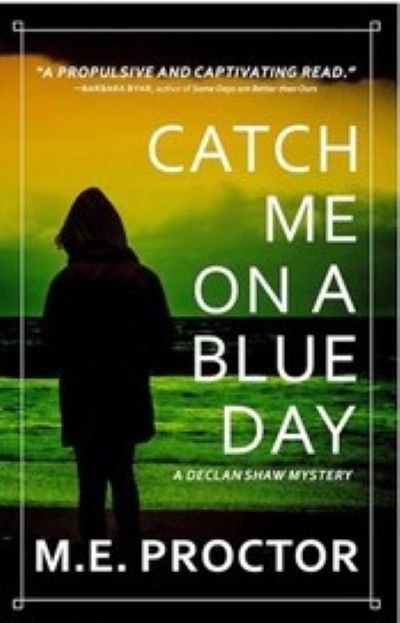
Catch Me on a Blue Day, Book 2 of the Declan Shaw mystery series, takes place in Old Mapleton, a postcard-perfect town on the Connecticut coast.

It comes with Queen Anne cottages, a yacht club, a bakery-chocolatier, an art gallery, several cafés, including one next to the marina that serves delicious crab cakes and lobster rolls. The police station is in the Tudor style, and its dark beams and stained glass windows give it the appearance of a tavern, or an inn—Ye Olde Copper’s Nest, Declan Shaw muses when he first sets eyes on it. The old Customs House, restored, is a private residence on a point next to the commercial fishing harbor. The camp of a lesser robber baron is now a B&B, and art afficionados can visit an artist colony on the outskirts of town, by appointment.

Families flock to the beaches from Memorial Day to Labor Day. Dogs are not allowed on the beach. Other things are not allowed. The list is long; it includes ‘horsing around’.

Doesn’t it look like the perfect setting for a cozy mystery?

Before you settle down in a comfortable armchair with grandma’s Delft teapot in easy reach (I just read that Delft is fashionable again), I must warn you: I don’t write cozies.

Bad people do nasty things no matter the landscape. There are homicidal maniacs in Neverland. And all the notices painstakingly posted by the city council won’t stop mischief. Violence is even uglier in an ideal setting because nobody expects it.

But you, readers of Ladies of Mystery, have consumed metric tons of crime fiction and you’re already making guesses about what comes next.

  1. Small towns have secrets, buried deep.
  2. The detective has a good shovel.
  3. A love interest delivers inside information.   

I’ll try to stay away from big spoilers, I don’t want to ruin the fun, but I’ll knock down a few hypotheses.

Old Mapleton, CT, has a dirty past. Not in a Stephen King kind of way—it isn’t built on a burial ground, and it doesn’t suffer from recurring murder sprees—but it went through a traumatic episode of collective hysteria. A horrible murder happened there thirty years ago. A little girl, Ella, was killed. The town tore itself apart in a frenzy of suspicion, denunciations, anonymous letters, and recanted confessions, with the media stoking the fire. To this day, the case is still open. Lives were destroyed, and long-time residents remember. None of this is secret. Ella and Old Mapleton made headlines far and wide.

The detective, Declan Shaw, doesn’t come to town to poke in the trash of the past. An old friend, Carlton Marsh, asked him to help with research for his book. Marsh was a war correspondent and he’s gathering his articles on the Salvadoran civil war of the 1980s. Declan is recovering from a severe leg injury and intends to take it easy. Learning, upon arrival, that Marsh committed suicide throws him off kilter. Nothing in his last conversation with the reporter indicated that he was in any kind of trouble. The Old Mapleton chief of police agrees … even if he’s not eager to have a PI sniffing around. No fisticuffs and roughing up, the two men get along. In the claustrophobic town, they’re both outsiders. The chief calls himself ‘the token punk’, he doesn’t belong to the local elite and has a lot more in common with the rough trade on the wrong side of the tracks.

The love interest. Ha! The title of this post applies to her as much as it applies to the town. Isabel is in her late twenties, smart, pretty, not too hindered by morality, and bored out of her skull. When Declan walks into the art gallery she manages, her first thought is that maybe her summer isn’t a complete waste of time. This would be a meet cute if the lust thermometer wasn’t stuck in the high nineties. I had a lot of fun writing Isabel’s point of view. Let’s say that she has very, very, little self-control … and no, she doesn’t know anything about the cold case, or Marsh’s suicide, which will not keep her out of trouble.

I like complex narratives. How does a little’s girl death in New England connect to political upheaval in Central America? Carlton Marsh knew but he’s no longer around to make Declan wise. The path to the truth will be sinuous and dark. Through the woods where Ella was found, many years ago.

—-

Catch Me on a Blue Day

A Declan Shaw Mystery

“For Ella and all the innocents slain by soulless men.”

It’s the dedication of the book on the Salvadoran civil war retired reporter Carlton Marsh was writing before he committed suicide.

A shocking death. Marsh had asked Declan Shaw to come to Old Mapleton, Connecticut to help him with research. He looked forward to Declan’s visit: “See you at cocktail time, a fine whiskey’s waiting.” They talked on the phone a few hours before the man put a bullet in his brains.

Now Declan stands in the office of the local police chief. The cop would prefer to see him fly back to Houston. He’s never dealt with a private detective, but everybody knows they are trouble. If only there weren’t so many unanswered questions around Marsh’s death … the haunting first three chapters of his book, and that dedication to Ella, a girl whose murder thirty years ago brought the town to its knees.

In Catch Me on a Blue Day, Declan is far from his regular Texas stomping grounds. He’s off balance in more ways than one, and the crimes he uncovers are of a magnitude he could not foresee.

Between the sins of an old New England town and the violence of 1980s El Salvador. And the links between the two.

Buy Links:

Catch Me on a Blue day is available in eBook and paperback

On Amazon at

https://www.amazon.com/Catch-Blue-Declan-Shaw-Mysteries-ebook/dp/B0FR3DWYGD/

From reviews:
“In Catch Me on a Blue Day, she combines the strengths of the best of the best mystery writers, writers like Raymond Chandler, Agatha Christie, and Janet Evanovich, to create a mystery novel that will have you saying, where has this terrific mystery writer been all my life?” —John Guzlowski, author of Suitcase Charlie, a Hank and Marvin mystery

M.E. Proctor was born in Brussels and lives in Texas. She’s the author of the Declan Shaw detective mysteries. The first book, Love You Till Tuesday, came out from Shotgun Honey. Catch Me on a Blue Day is the next installment in the series. She’s the author of a short story collection, Family and Other Ailments, and the co-author of a retro-noir novella, Bop City Swing. Her fiction has appeared in VautrinToughRock and a Hard PlaceBristol NoirMystery TribuneReckon Review, and Black Cat Weekly among others. She’s a Shamus and Derringer short story nominee.

Social Links

Author Website: www.shawmystery.com

On Substack: https://meproctor.substack.com

Facebook: https://www.facebook.com/martine.proctor

Twitter: https://twitter.com/MEProctor3

BlueSky: https://bsky.app/profile/meproctor.bsky.social

Instagram: https://www.instagram.com/proctormartine/

Guest Blogger ~ Laury A. Egan

Our guest Laury A. Egan answered interview questions.

1. Why you write the genre you do?

Good question! Though my dominant genre is psychological suspense/crime fiction, I also have written and published literary titles, comedy, romance, and a few children’s stories. In other words, I write the book that comes to me rather than focus on specific genres. Psychological suspense is indeed a favorite, however, and was originally inspired by Patricia Highsmith’s books in which she usually features a sociopath and does so with gleeful enthusiasm. (It is my suspicion that she herself fell into this sociopathic category). I also find that “bad guys” make for fascinating studies and Fair Haven has its share and some “bad girls” as well.

2. How did you came up with the mystery/murder/premise in the book you are promoting?

Actually, this was my first novel, one I began when I bought my first computer in the mid-80s. I made some headway then, but life got in the way as it often does (actually a new romantic relationship and a house move), and I delayed work for a few years. When the relationship flamed out in spectacular fashion, I moved nearer my parents on the coast of New Jersey, and though still working full time as a book designer and photographer, I picked up Fair Haven and finished a first draft. But once again life intruded so the manuscript was shelved into the closet. Finally, I began another novel, Jenny Kidd, inspired by Highsmith and set in Venice, and thus began a series of new books until my new and delightful publisher, Andrew May of Spectrum Books in London, began accepting my manuscripts at a furious pace, publishing four books in thirteen months. Once he cleared my desk and closets, I looked around and saw Fair Haven, but oh, my, it was a mess! Plot errors, amateur formatting, and tons of mistakes. It took me forever to whip this complicated, yet intriguing, novel into shape…which hopefully I did!  

3. How you came up with the main character in your book or series?

The cast of Fair Haven is generously large, but probably the most significant character is the forensic photographer, Chris Clarke, a handsome woman who is involved with Kate, a primary suspect in the murder. Because of my own background as a professional photographer, it was an easy task to handle the details of Chris’ work. She also lives by the river in the neighboring town of Fair Haven, and owns a sailboat, which I also did in my younger days. Chris has an obstreperous beagle who rules the house—Cagney is modeled on my own dog. He often steals the show in the novel, so hound and dog lovers should enjoy his escapades.

4. Any interesting research you did for the book?

Originally, I thought the local police force would oversee the murder investigation, which was one of the huge errors I committed during the first stages of writing. In fact, though they do some coordination, interviews, etc., the Monmouth County’s Major Crimes Bureau and the prosecutor’s office are in charge of everything, including gathering forensic evidence. I interviewed a former Fair Haven policeman as well as a retired director of the county’s Economic Crime Unit, both of whom set me straight on a number of misconceptions. In addition, after a few glasses of wine, a friend, a financial analyst, grinned and answered my question about how a broker would commit fraud, cheerfully providing details about the Cayman Islands, offshore accounts, and the like.

5. A post on your process of writing a mystery book.

As mentioned above, this book took a long and arduous journey from its inception to its submission to my publisher. Quite honestly, I never thought the manuscript was good enough to publish, but there was something charming about the plot and its characters that kept drawing me in. I also loved the irony of a murder in the quiet, serene village of Fair Haven. After hundreds of hours of revision, I hope this murder mystery will be an enjoyable read, one that harkens to some British series such as Midsomer Murders in that the residents of small towns are the focus even more than the crime. Despite this, have fun figuring out “who done it!”

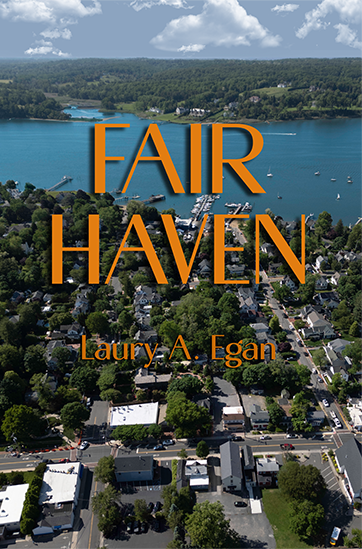
Fair Haven: A picturesque riverside town. A safe, friendly place. And then, one summer afternoon in 1994, Sally Ann Shaffer is electrocuted in her hot tub. Who did it? One of her many lovers? Her husband? A thief? A jealous colleague at her tennis club? The town is suddenly embroiled in suspicion, interpersonal conflict, blackmail, fraud, and murder. 

“When is a murder mystery more than a who-done-it? Answer: When it is written by Laury Egan. This wonderful mystery kept me en-tranced, as her characters drug me around the town of Fair Haven and through their inter-woven lives. In an ever more complex web of intrigue, jealousy, hatred and lust the plot was revealed. Though its difficult to write a review of a murder mystery without giving away too much, I couldn’t figure it out, even with some well-placed clues, until the end and then I was amazed by the reveal. You will be too.”

—CA Farlow, author of The Paris Contagion

Amazon: https://geni.us/fairhaven Published by Enigma Books, an imprint of Spectrum Books, London

Laury A. Egan is the author of fifteen novels, a story collection (with a new collection, Contrary: Stories and a Play, due May 2025), and four volumes of poetry. Her psychological suspense/crime fiction novels are: Jack & I, The Psychologist’s Shadow, Doublecrossed, The Ungodly Hour, A Bittersweet Tale, and Jenny Kidd (a revised edition will be released October 18, 2025). Ninety of her stories and poems have appeared in literary journals and anthologies. She is a reviewer for The New York Journal of Books, a graduate of Carnegie Mellon University, and a 2024 recipient of a New Jersey State Council on the Arts Individual Artist Award in prose. Website: www.lauryaegan.com

LauryA.Egan@EganLaury

https://www.facebook.com/laury.egan/

https://www.instagram.com/laurya.egan/

https://bsky.app/profile/lauryaegan.bsky.social

https://www.amazon.com/s?k=Laury+A.+Egan

https://www.goodreads.com/author/show/4090464.Laury_A_Egan

https://www.linkedin.com/in/laury-a-egan-09096b3/ http://www.lauryaeganblog.wordpress.com/

Pesky little thing called research.

When I learned about an event that is held every year in the area where I set my Gabriel Hawke novels, I decided I would write a book around that event. How hard could it be to have my character, who is a Fish and Wildlife State Trooper, become involved with finding a person or a killer during a sled dog race competition?

Well… Let me tell you, now that I’ve been digging into the logistics, the multitude of volunteers, the less than 60 hours for the total of the 200 mile race, and that doesn’t even count the weather conditions, I’m starting to wonder if this was a good idea.

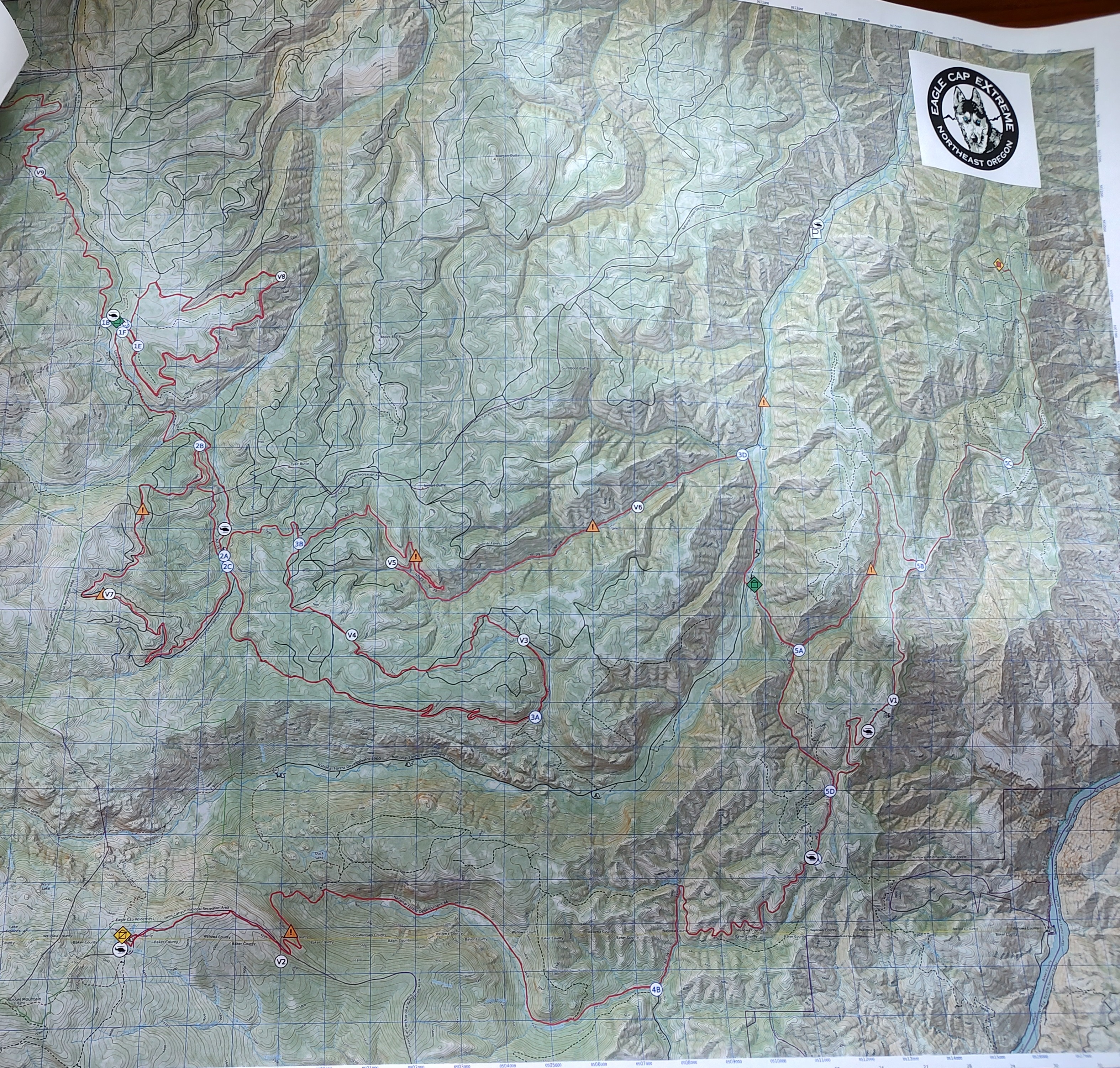
Map of the race

I’ve had my first interview with a person who has volunteered for this event for 20 years. She gave me some good insight into logistics and more people I will need to interview. This book won’t be ready to write for at least two more weeks as I talk to the head of technology, mushers, the race marshal, and judge.

What had started out as a “fun idea” has now blossomed into much more of a project. I can’t even start my suspect chart or decide how someone would be murdered or missing without doing all the research. There are so many uncertainties that I can’t even begin to fathom what the motive would be.

This is so out of the norm for what I normally do when writing a book in this series. By the time I’m ready to start writing the book, I have mulled over every aspect of the death, did the bit of research I needed and am ready to roll.

Now I sit, watching one more video, reading one more blog, and waiting to interview people so I can start this book. The next book my fans are waiting for me to publish. But as I dabble in the research, waiting to do the interviews, I may have to start working on the next Cuddle Farm Mystery book or even the next Spotted Pony Casino Mystery book, because my hands and imagination can’t sit idle for that long.

Depositphoto

I’ve already learned a lot that I didn’t know. Especially, about the dogs. A good mushing dog isn’t big and thick. It’s long and lean, like a marathon runner. They have high energy and stamina. The Alaskan Husky is nothing like the Siberian Husky. The Alaskan has been bred through the centuries to be fast and tough. They have a multitude of breeds in them that make them the marathoners that they are.

Now I need to learn more about the tracking of the participants during the race, the area where they sleep, and why someone, in a sport where you are dependent on one another to survive, would kill.