Guest Blogger ~ Joanna Fitzpatrick

When Do You Know You’re Going to Write Not Just One Mystery But a Series?

My first foray into writing mysteries was when I sat cross-legged around a Brownies’ campfire and told scary stories between bites of melting marshmellows. I held the girls’ attention with tales of monsters putting hairy arms through car windows and grabbing the bare necks of young girls cowering in the backseats. I loved adding details that made the other Brownies squirm.

Then as Virginia Woolf famously said, “life interrupted.”  My dream of being a writer was put on the back burner where it simmered for many years. The next opportunity to become a writer did not happen until, at age fifty, the record company I worked for was sold and I invested my windfall in my first love‑‑Literature.

After achieving a bachelor’s degree at SUNY, I was accepted at Sarah Lawrence College where I earned an MFA in creative writing. My thesis was a memoir on growing up as a Hollywood hippie. 

My first published book was a historical novel based on the life of the short story writer Katherine Mansfield.  My second novel The Drummer’s Widow was a contemporary novel about an older woman reinventing her life after her husband’s sudden death. I thought my third novel would be another genre. Or maybe return to that widow’s story in New York.

This was my state of mind when my husband and I moved to a mountaintop ranch in northern California for creative peace and quiet. The ranch’s tack room was converted into my writing studio. But I had severe writers’ block and I couldn’t find the nerve to begin another novel.

Then, remembering my writing teachers always telling me to write what I read, I signed up for an online mystery class at Stanford.

My great aunt Ada Belle came down from the heavens and offered her career as a painter for inspiration. In the 1920s, she’d lived in a women’s artist colony in our local town, Carmel-by-the-Sea. My research into this historical village opened a rich vein to explore as a storyteller. Characters started showing up in my studio and we worked together to plot a mystery. The Artist Colony became my third novel.

And now it’s published and I’m back to that dreaded moment when you’re between books and wondering if you really have the stamina to write another knowing how steep the metaphorical mountain is to climb before you reach the top and say “The End”. Or maybe not the end if I write a sequel, but is it too late to do that?

I’ve been told by those in the mystery-writing trade that if you’re going to write a sequel then you should know that before you start the first book. But recently I was speaking to a well-respected writing coach who said, “There are no rules other than write what you want to write as it is you who will have to devote a massive amount of time to get the job done.”

“Stop procrastinating!” added my amateur sleuth Sarah Cunningham. She is dying to step out from the written pages of The Artist Colony to solve a new mystery.

With this literary encouragement, I started making scenes in a small medieval village in southern France where I spend my summers. How marvelous to stroll on its cobblestone streets accompanied by my characters; sleuth Sarah, her Irish companion Rosie, and the ever popular dog-tective Albert. There are many unlit narrow streets where murder and mystery beckons me.

Ah yes, I can feel my heart quicken with suspenseful plots and spicy characters. I guess it’s time to get to work on that sequel.

*****

I’d love to hear from other mystery writers as to when they decided to write a series? From the beginning or, like me, after you finished one mystery and you and your readers missed your characters so much that you brought them back to life again. And a question to mystery readers? Do you want to know before you start a mystery whether there are going to be sequels? And will it influence your decision to read the mystery if it’s a one-off rather than a series?
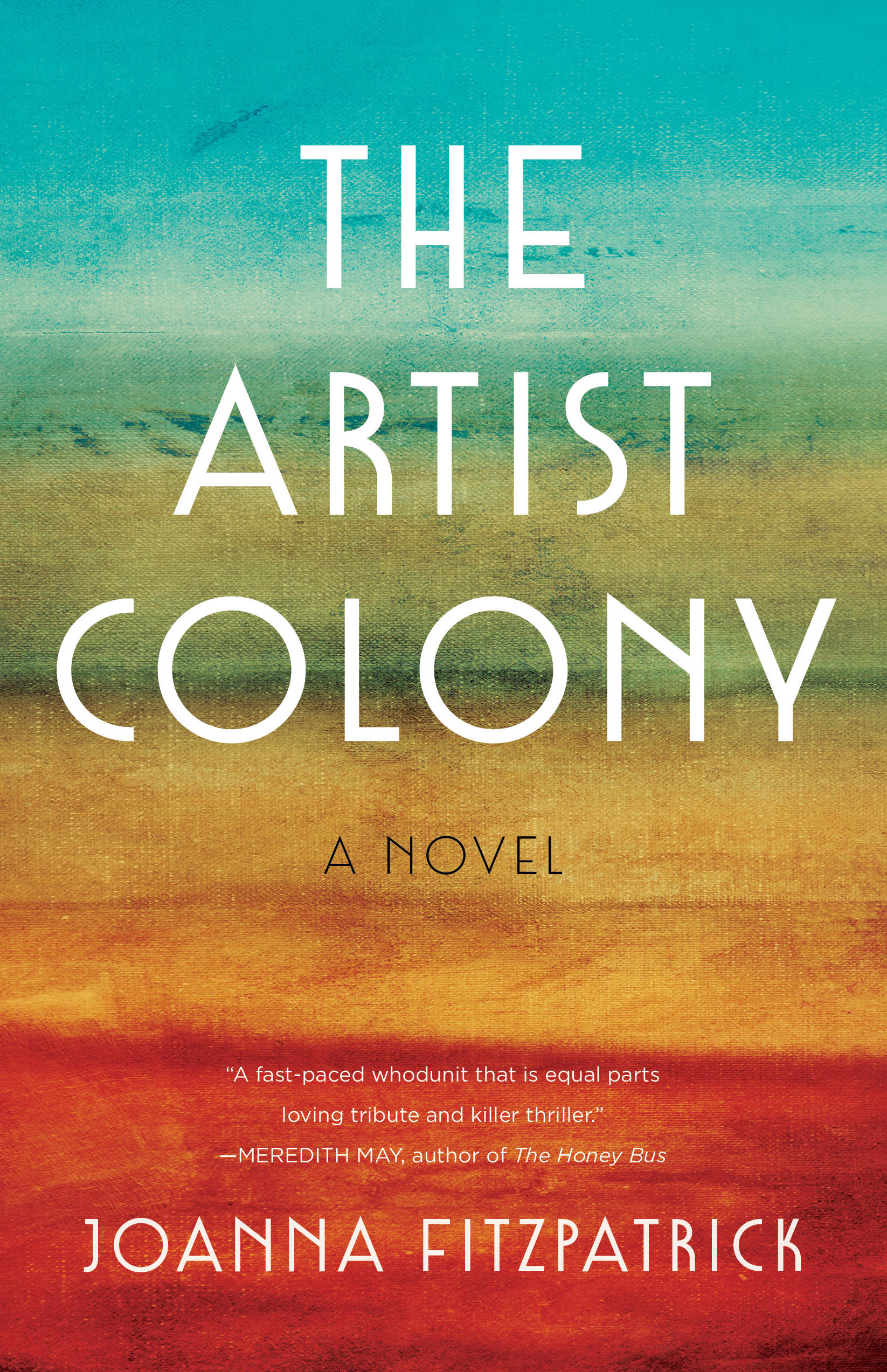
In Joanna FitzPatrick’s gripping new novel, set in 1924, Sarah Cunningham, a young Modernist painter, arrives in Carmel-by-the-Sea from Paris to bury her estranged older sister, Ada Belle. En route, she is horrified to learn that Ada Belle’s suspicious death is a suicide. But why kill herself? Ada Belle’s reputation was growing: her plein air paintings regularly sold out, and she was about to show her portraits for the first time, which would have catapulted her career.

Amazon https://www.amazon.com/Artist-Colony-Novel-Joanna-FitzPatrick/dp/1647421691

Barnes & Noble https://www.barnesandnoble.com/w/the-artist-colony-joanna-fitzpatrick/1138488960?ean=9781647421694

Bookshop.org https://bookshop.org/books/the-artist-colony/9781647421694

Bookbub: https://www.bookbub.com/books/the-artist-colony-by-joanna-fitzpatrick
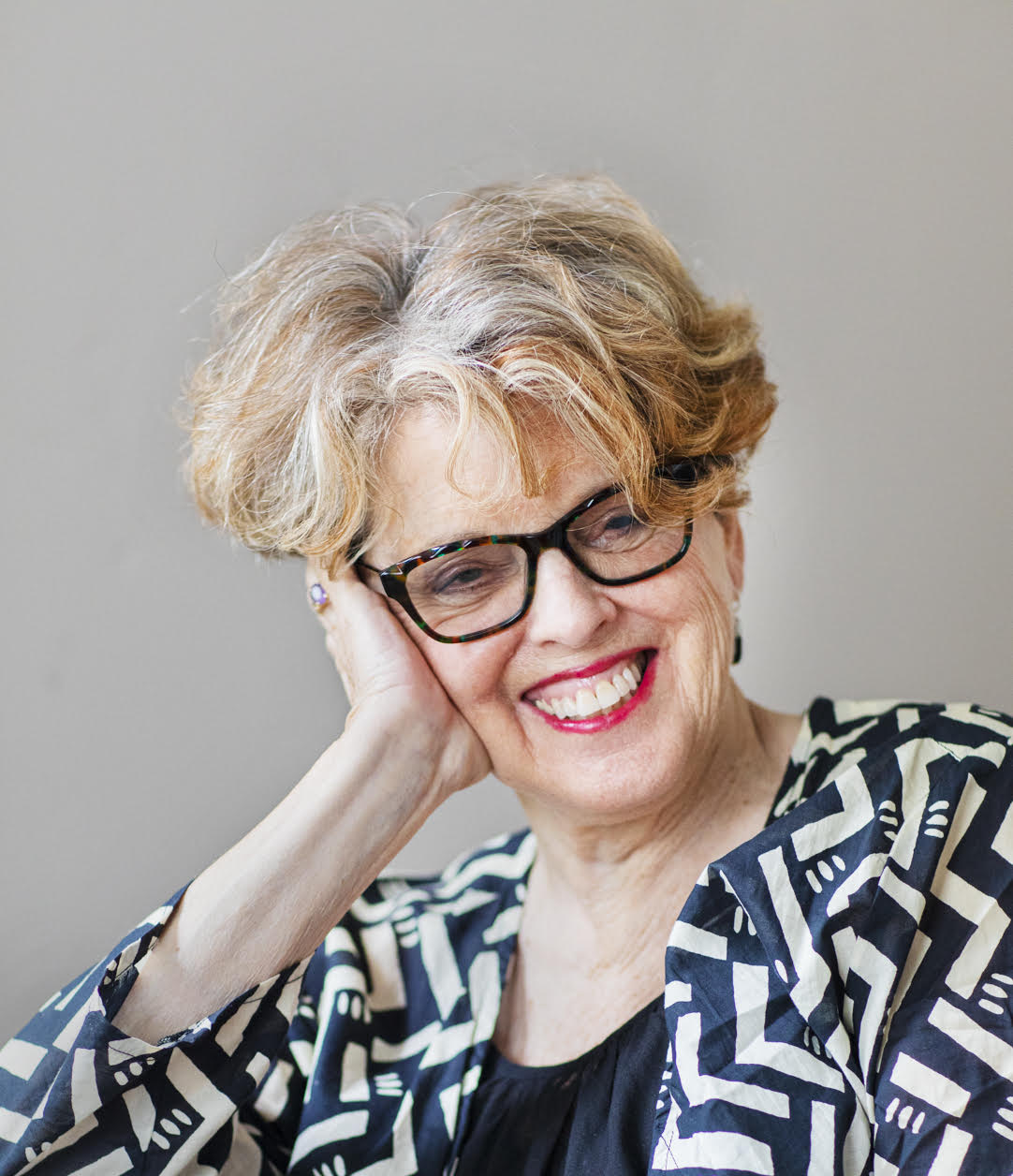
JOANNA FITZPATRICK was raised in Hollywood. She started her writing habit by applying her orange fountain pen and a wild imagination to screenplays, which led her early on to produce the film White Lilacs and Pink Champagne. Accepted at Sarah Lawrence College, she wrote her MFA thesis Sha La La: Live for Today about her life as a Hollywood hippie. Her more recent work includes two novels, Katherine Mansfield, Bronze Winner of the 2021 Independent Publisher Book Award (IPPY) in Historical Fiction, and The Drummer’s WidowThe Artist Colony, Gold Winner of the 2022 Independent Publisher Book Award (IPPY) in Mystery, is her third book. Presently, FitzPatrick divides her time between a cottage by the sea in Pacific Grove, California and a hameau in rural southern France where she begins all her book projects. 

Author website: www.joannafitzpatrick.com
Facebook: www.facebook.com/JoannaFitzPatrickauthor
Twitter: https://twitter.com/Fitzpatrick_jo
Instagram: https://www.instagram.com/joannafitzpatrick.author/
It’s All in the Details by Karen Shughart

Even in fiction, it’s important that some details are correct, especially in a murder mystery when describing an investigation and its resolution when the killer is captured. While the plot, setting, and characters can be a complete figment of the imagination, there’s got to be some accuracy when describing the measures taken to solve the crime.

Our communities offer many resources to those of us who write mysteries, among them sheriffs and police personnel, district attorneys, public defenders, prosecutors, and judges. Having access to these experts and being willing to learn from them adds a level of authenticity to our stories, and hopefully results in more reader satisfaction.  I’m fortunate that these professionals have been available to me when I’ve had questions.

Photo by Sora Shimazaki on Pexels.com

There’s wiggle room, of course, but when investigators on TV are trying to solve a crime and get DNA results in an hour, that’s not how it really works. Although technology has evolved, and today it’s possible for a speedier turnaround time- sometimes in as little as six hours-I try and stick as much to the facts as possible.

I’m working on Murder at Freedom Hill right now, the third is the series of Edmund DeCleryk Cozy mysteries.  In the last two books, the crimes were solved without my needing to provide precise details of what followed after the murderer was apprehended. This time around it’s a bit more complicated.

I’ve realized as I’ve been writing this book that my knowledge of some those procedures is a bit rusty, and I wanted to clarify the steps that must occur from arrest to sentencing, the difference between probation and parole, and the circumstances that permit the defense attorney to make a deal. A few weeks ago, I met with our county’s district attorney.  We spent about an hour together, and after, I went home and revised some sections of the book for clarity, although I must admit that I fudged a few of the details to mesh better with the story.

 The women and men who work at various levels of law enforcement and in criminal justice professions are a valuable resource to those of us who write mysteries. They help provide a framework that allows us to create a book that weaves fantasy and reality into a believable plot.

Guest Blogger ~ Dominique Daoust

Why I write cozy mysteries

When I was in my late teens and early twenties, I felt like I had to prove I was a dedicated reader by opening the pages of the classics.  But regardless of how many times I forced myself, I simply couldn’t connect with them, they weren’t for me.  And why bother reading something during your free time if you didn’t enjoy it?

After some trial and error, I finally zoned in on what I liked.  I’m a big fan of mysteries and thrillers, historical fiction, true crime and other non-fiction like biographies.  They all bring something to the table that resonates with how my brain works.  I love the twists and turns of a good thriller, the time travelling in historical fiction, the stark realness of true crime, and the revelations of biographies.  My Goodreads TBR list exclusively contains those genres, but there’s one more I recently added.

I think it doesn’t come as a surprise to anyone when I say the past few years have been rough.  Other than cuddling my pets and watching reality television (big shout out to RuPaul’s Drag Race!), the only other thing that kept me mentally afloat was my newfound discovery of cozy mysteries.  The laid-back, small-town settings, the quirky characters and pets, the element of mystery that still pulled me in even though it was lighthearted.  It opened my world to a whole subgenre of mystery I could enjoy without it feeling so harsh and heavy.  And who knew there were so many categories!  Cafes, bookstores, gardening, vineyards?  Cozies basically cover every hobby and profession in existence and it’s perfect (cheers to London Lovett and Vivien Chien!).

When I finally decided to start writing, choosing the genre was a no-brainer.  I could include elements I like from all the other genres I’ve been reading for years and wrap them up in a cozy little package.  My goal wasn’t to create a new classic but rather write some fun mysteries that people can enjoy.  Not only did it relieve the pressure and expectations of the end result, but they were a blast to write! 

With The Deadly Exclusives Trilogy, I’ve incorporated a setting and job I’m familiar with, all wrapped up in a historical period I’ve been obsessed with for years.  I grew up in the suburbs of Montreal, my first job was as a maid and I studied journalism.  And I’ve watched so many 1930s movies on the Turner Classic Movies channel that I can’t keep count.  I doubt any genre other than a cozy mystery could quite capture the tone I wanted. 

Many cozies have brightened my days and I sure hope my trilogy can do the same for others.   

Secret sources have a whole new meaning.

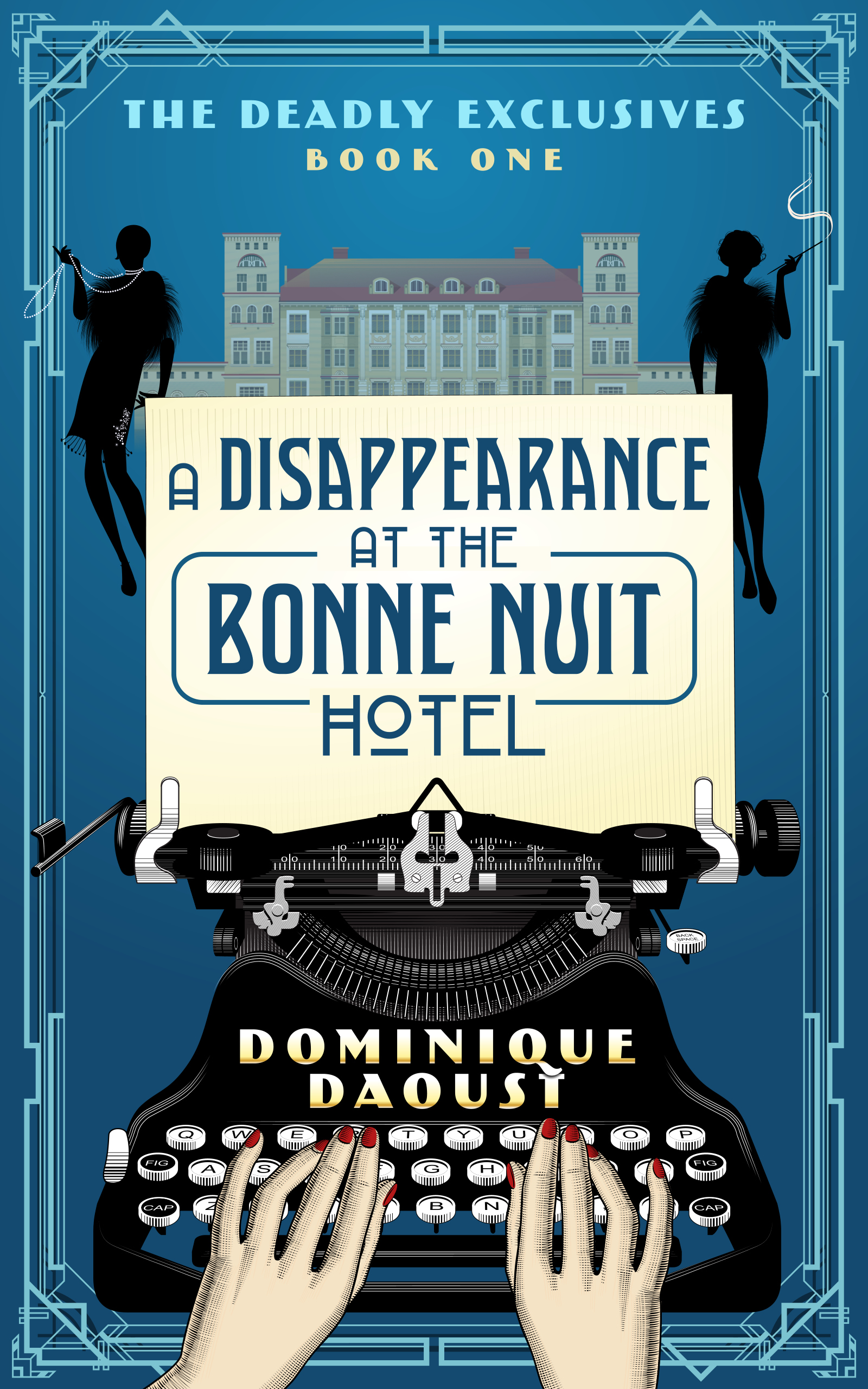
Newbie reporter Rita Larose is tired of getting assigned boring stories at one of Montreal’s most popular newspapers. It’s 1930 after all, women don’t need to only write about household chores anymore! But when a high hat socialite gossips about the New Year’s Eve party at the Bonne Nuit Hotel, a riveting mystery falls right into Rita’s lap. This is her chance to prove to herself and her underestimating colleagues that she has what it takes to write the hard-hitting articles.

While going undercover as a maid to get the scoop, Rita will soon discover unexpected friendships and an unusual gift of her own to contend with. Will she be able to juggle this newfound ability while not blowing her cover and jeopardizing her career-making article?

Purchase here: https://www.amazon.ca/Disappearance-Bonne-Nuit-Hotel-Exclusives-ebook/dp/B09WVW6L53

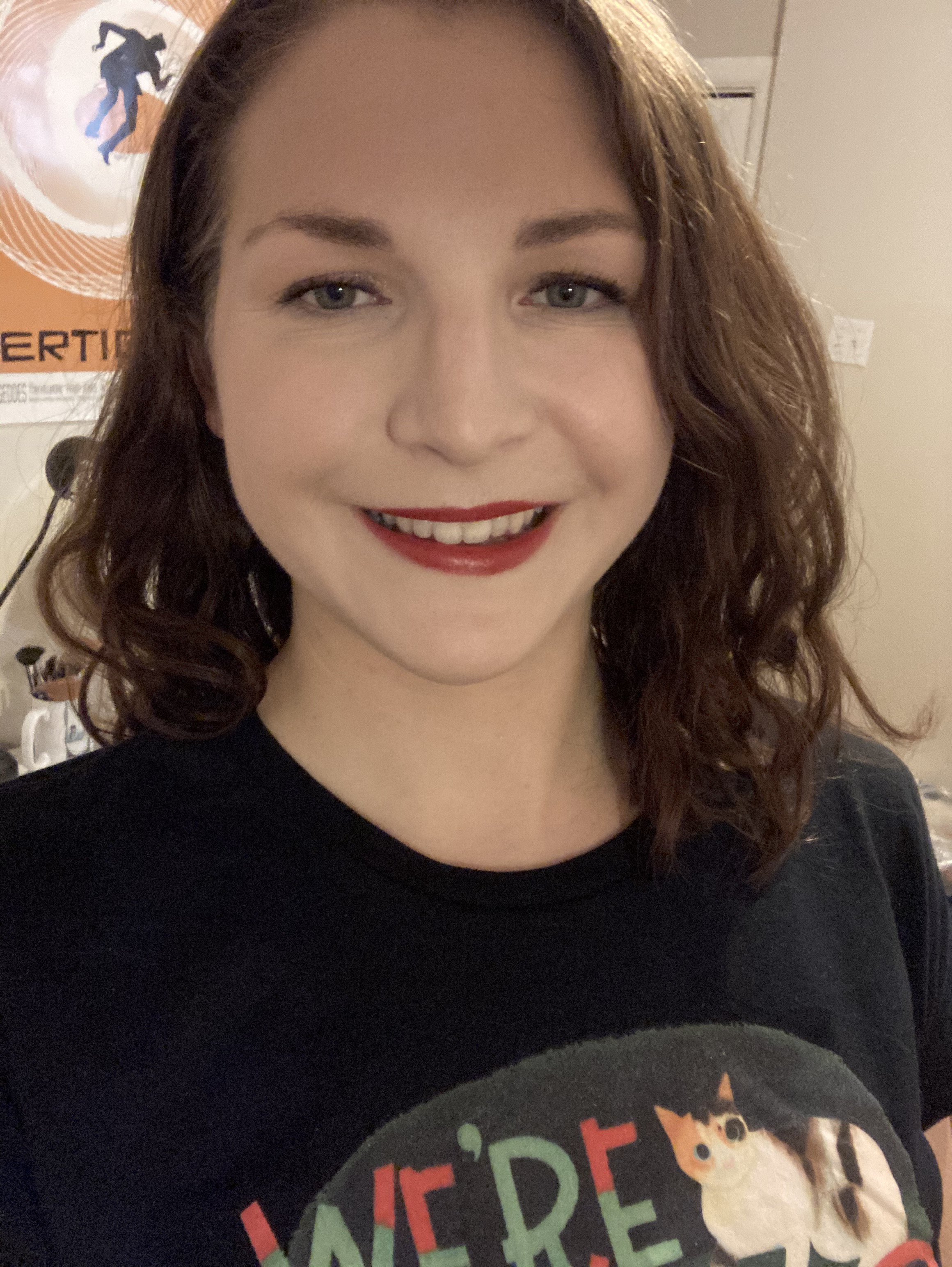
Dominique Daoust is the author of The Deadly Exclusives Trilogy. She is a journalism graduate from Concordia University in Montreal, Canada. When not reading or writing, she likes to do yoga, drink margaritas, incessantly quote Friends and listen to rap while doing mundane household chores.

You can follow her on

Instagram: https://www.instagram.com/dominique.daoust/

Facebook: https://www.facebook.com/DominiqueDaoustAuthor

Goodreads: https://www.goodreads.com/author/show/22331118.Dominique_Daoust

It Never Rains in Southern California by Karen Shughart

We just returned from a visit with our son and daughter-in-law, who live in southern California. There was a song in the 1970s entitled It Never Rains in Southern California, and although the lyrics did not particularly inspire joy, the title is apt, it truly hardly ever rains in southern California. As my son reminded me when I mentioned how nice it was to not have to deal with the inconsistent weather events like blizzards and blinding rainstorms like we do here in the northeast, he reminded me that California has plenty of their own climate issues: mudslides, fires, earthquakes, and damaging winds. Good point.

During our visit we sat under a pergola in their backyard and snacked on tangerines picked from a nearby tree. One night for dinner we ate freshly-caught Pacific salmon with lemon slices we plucked from another. Avocados, plentiful in that part of the world, hang heavy on branches drooping over fences A bottle brush tree with vivid red flowers and clusters of bright yellow daylilies attract a multitude of hummingbirds and Monarch butterflies. The air is redolent with sun-ripened foliage and the salty brine that drifts inland from the broad, blue Pacific Ocean.

Photo by Gary Barnes on Pexels.com

We arrived back in New York to a gray, cloudy day with a drizzle of fine rain and yet, when we pulled into our driveway, our daffodils and forsythia were beginning to bloom, the hyacinths were emerging from the earth, and nestled in among our own burgeoning daylilies were bright, purple violets, signs that spring is surely on the way. While the weather is fickle, each day here brings a surprise; now some days are warm and bright, on others, winter doesn’t want to lose its frosty grip.

I thought about how climate and weather affect writing. My Cozies are set in a small village along the south shore of Lake Ontario, much like the village where we live.  Four defined seasons provide the setting to the mysteries:  a dark, stormy, windblown night is a metaphor for what’s to come, as is the juxtaposition of bright summer days and a murder that’s occurred in a lush garden setting.

If we lived in California, I would still be writing Cozies, but they would different. Mine have a backstory based on the history of our state: the Revolutionary War, the War of 1812, the Underground Railroad, to name a few. If we lived in California, I’d choose Spanish Missions, the Mexican American War, or the Gold Rush.   The setting, too, would change. A California beach town and one on Lake Ontario have few characteristics in common, our beaches are rocky and not as wide, we don’t have sidewalks and parking lots along the water, and the distance across the lake to Canada is a mere 80 miles, compared to more than 6,000 to China. We do, surprisingly, have pelicans, but we’ve never seen a whale. Still, it’s fun to contemplate what I’d do differently if my mysteries were set in a part of our country where it never snows, hardly ever rains, and the sun shines almost every day.

Guest Blogger – Judy Willmore

I am a history buff, and years ago I stumbled on the Affair of the Poisons: in the 17th century poison and witchcraft permeated the court of Louis XIV. I was fascinated: did Louis’ mistress have a black mass celebrated over her beautiful naked body? Historians have been arguing over that for years. The tempestuous marquise was certainly no angel, and she was competing with every pretty face at court for Louis’ wandering eye. When the King learned about poison and witchcraft at court, he appointed Lieutenant-General of Police Nicolas de La Reynie to investigate. Soon, suspects were pointing their grimy fingers at the marquise—but how do you arrest the King’s mistress?

My varied background helped me figure it all out: I have a MS in Clinical Psychology and a former career as a private investigator, plus I am a practicing astrologer. I devoured stacks of trial transcripts, diaries and letters, focusing on the marquise and La Reynie, the first modern police officer, who uncovered a massive ring of poisoners and con artists. These so-called “witches” were nothing like “wise women” or today’s Wicca: they lured in gullible clients with promises of love spells, then advised them how to get rid of a troublesome spouse—with poison. The suspects claimed the marquise was a client of the witch La Voisin, burned at the stake. Worse, she was linked to the infamous black mass.

But she wasn’t the only one. Several noblewomen also got caught up in the scandal, and like the desperate marquise, they were all trapped: prisoners of their fathers, brothers, husbands. Disobey, and you might find yourself locked up in a convent. The noblemen too could not leave Versailles and the King’s presence, or they would risk losing any chance of advancement. In my book, the courtiers compare their existence with the creatures trapped in the Versailles menagerie, with His Majesty as the gamekeeper dispensing both discipline and rewards. Desperate, they resorted to fortunetellers and purveyors of poison.

The suspects whispered of a criminal mastermind behind the poisons, and even a plot to kill the marquise. What really happened? To fill in the blanks I needed to create a fictional character, someone wide-eyed and innocent; so along came Sylvie, a young embroiderer. She went to work in the household of a prime suspect, and the gates of the Versailles menagerie clanged shut behind her.

I am now working on a sequel to The Menagerie set in Les Gobelins, the manufactory that made Versailles’ tapestries. The artisans were Huguenots, Protestants faced with either converting at sword point or leaving—and leaving was illegal.

FranÇoise-AthÉnaÏs de Rochechouart de Mortemart had to have Louis, King of France, but his other mistresses stood in the way. Then she meets the very helpful sorceress and AthÉnaÏs gets her wish. But soon Louis hears tales of witchcraft and poison, a conspiracy spreading through his court—like the beasts in the Versailles menagerie, courtesans are clawing their way to his favor, and his bed. He orders Lieutenant General of Police Gabriel-Nicolas de la Reynie to investigate. Mysterious deaths mount while La Reynie presses on, hauling in witches, charlatans, and the nobility alike. Grimy fingers point to AthÉnaÏs, the King’s mistress, with whispers of a black mass celebrated over her naked body. Then La Reynie discovers a plot to kill her.

Buy link: https://smile.amazon.com/Menagerie-Passion-Power-Poison-Court-ebook/dp/B08XQXMG6Q

Judy Willmore is a former journalist, then private investigator, and now a psychotherapist who practices in Albuquerque, New Mexico. Her historical mystery The Menagerie was published in 2021 by Artemesia Press, and she is now working on a sequel.

https://www.facebook.com/JudyWillmoreAuthor

https://judywillmoreauthor.com/