Where Do Writers Get Their Ideas? By Ann McAllister Clark

It’s magical really. Well, at first it may seem that way. Creative thoughts, words and phrases running through a writer’s mind as she is writing. Sometimes it feels the words are like ribbons spilling out of our fingers, pens, pencils or keypads as if someone or something else is actually gathering them up and pushing them out on the page. When that happens I always send up a sincere ‘Thank You’ to the goddess of verbiage and thoughts. Yes, it is magic and when it happens I take a big breath and stay with it as long as I can.

And then I remember all the studying I have done – many college classes and dozens of writing books over the years. I read classics – Russian, English, and mostly American.

Writers get this question all the time – “Where do your ideas come from?” Ideas come right from a compilation of life and the writer’s experiences – encounters and events or things she has witnessed or researched. Writers have a way of filling up their internal and invisible sponge with all that moves before their eyes and ears and all the minutia of life. A writer is voraciously curious and thirsty for interest. A bit of this person, a little of that person, saved notes of conversation and pieces of experience all go into the vault of ideas. So ideas come from just about anywhere and go into the big soup pot of a rich mix. And then at the end of this wash of creativity comes the real work. Revision, revision and then more revision. The work never seems completely right and some writers may revise a dozen times or more.

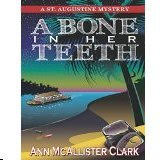
bone in teethI watched much of the George Zimmerman trial in Sanford, Florida. I suspect many writers watch court cases on TV or better yet in their own county courtrooms with thoughts of incorporating what they see into their stories. We have files of interesting newspaper clips and magazine articles to be used at a later date for inspiration or research. I took notes on the attributes of the detectives, lawyers and court proceedings during the trial in Sanford. I used those notes to describe the detectives in A Bone In Her Teeth: A St. Augustine Mystery.

Traveling through the streets of Gettysburg, Washington, DC, and Antitam and walking many battlefields helped me immensely with description in my historical novel, The Chrysalis: An American Family Endures The Civil War.

I just finished reading Justice Sonia Sotomayor’s memoir, My Beloved World. http://www.amazon.com/My-Beloved-World-Sonia-Sotomayor-ebook/dp/B00957T7CQ/ref=sr_1_1?s=books&ie=UTF8&qid=1447440566&sr=1-1&keywords=my+beloved+world

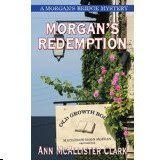
MorganWhen she was a young girl of about eight years old, she faithfully watched the weekly television program, Perry Mason and decided she wanted to be a lawyer! And then she diligently pursued that direction in every single aspect of her educational life all the way to her seat on the United States Supreme Court. I used her early years for inspiration in Morgan’s Redemption

https://en.wikipedia.org/wiki/Sonia_Sotomayor

Where do we get our ideas for writing? Everywhere and anywhere.

Ann’s Books

A Bone In Her Teeth, paperback and kindle

Morgan’s Redemption, kindle edition and paperback

About  Ann McAllister Clark

A graduate with a BA in Education from charming Aquinas College in Grand Rapids, Michigan, Ann McAllister Clark, author of the award-winning novel, A Bone in Her Teeth: A St. Augustine Mystery, and Morgan’s Redemption: 1st in the Morgan’s Bridge series and soon to be released, The Chrysalis: An American Family Endures The Civil War,  is a teacher, journalist, and former used bookstore owner. She now lives and writes in a small cottage in the Nation’s Oldest City, St. Augustine, Florida.

Ann McAllister Clark’s website
Ann McAllister Clark’s blog “Ann’s Cottage Blog
Ann McAllister Clark’s facebook page


Guest Blogger S.L. Smith – Murder on a Stick

Before explainingMurder on a Stick(3) why I wrote Murder on a Stick, I’ll tell you a bit about myself and my writing.
One of the first decisions I made, as an author, was where to stage my novels. It boiled down to creating a fictional setting or writing about the familiar. I chose the latter. The Pete Culnane mysteries are set in St. Paul, Minnesota––my home for the past three decades. One benefit is a built-in audience of locals who enjoy books set in locations they know. A drawback is my compulsion to get it right, portraying the sights, sounds, and smells in a way that rings true for locals and becomes real for those who have never been here.

Despite my knowledge of St. Paul, each novel requires lots of on-site and Internet research, and a variety of interviews. While looking for a location for book three, I thought about the Great Minnesota Get Together, otherwise known as the State Fair. Most Midwesterners have at least a passing knowledge of this fair. That gave me a shot at attracting them as readers. However, the overriding reason for selecting this venue was my love for this event. I’m not alone there. The 2015 attendance (12 days) was 1,779,738.

While writing Murder on a Stick, I spent four days at the fair, researching. My efforts included speaking with police and deputies from across the state. These are people who use vacation hours to ply their trade at the fair. A paramedic and an EMT from the St. Paul Fire Department explained the role they play and the tools at their disposal. A volunteer from one of the information booths provided pages of facts and trivia about the fair. I love learning when I read, and I used some of this information to provide that opportunity to my readership. The thing that surprised me the most was a fair-related tidbit about Teddy Roosevelt.

You can get almost anything on a stick at the Minnesota State Fair. Murder on a Stick takes that a step further. Due to my commitment to realism, I felt compelled to obtain a sample of the sticks on which 100+ foods are served. These delicacies include hot dish, s’mores, key lime pie, and walleye pike. Obtaining these sticks took a couple of days. Thankfully, the vendors gave me their sticks without the food. Hence, I saved a fortune and avoided gaining 50 pounds. I drew upon the expertise of a retired lead investigator from the Ramsey County Medical Examiner’s Office to determine if any of these sticks was a feasible weapon. The title of this novel provides the answer.  🙂  By the way, any idea what using one of those sticks as a weapon says about the crime?

The State Fair is located in Falcon Heights, a suburb of St. Paul. My protagonists do not have jurisdiction there. You have to read the book to discover why that didn’t handcuff me.

By now, I hope it’s clear that I enjoy the research part of writing, and that there are few places where it’s more fun than at the Minnesota State Fair.

Book Blurb:

You can get almost anything on a stick at the Minnesota State
Fair. This year, murder is added to the list. Family and friends
construct radically different portraits of the victim, and the
list of suspects keeps growing. No suspect has a corroborated alibi. Three admit being at the
fair that day.

The investigation crisscrosses the Twin Cities,
and travels from the fairgrounds to Rochester. St. Paul
investigators Pete Culnane and Martin Tierney must separate
fact from fiction, truth from lies.

Bio:

Sharon Newer Pipe PhotoS.L. Smith’s long career working alongside law enforcement and fire officials while with the Minnesota Department of Public Safety inspire and inform her mystery novels. Yearly trips to the iconic Minnesota State Fair addicted her to the unique atmosphere and the foods often found only at the fair.

Buy links:

http://www.amazon.com/S.L.-Smith/e/B005GVK1DO/ref=sr_ntt_srch_lnk_1?qid=1445136445&sr=1-1

social media links:

Facebook:

https://www.facebook.com/SLSmithauthor2012?ref=ts&fref=ts

LinkedIn:

https://www.linkedin.com/profile/view?id=AAkAAAMQ48sB4Tnfh8fQc3wE0z7MfGkdaF3ajf0&authType=NAME_SEARCH&authToken=Oyje&locale=en_US&trk=tyah&trkInfo=clickedVertical%3Amynetwork%2CclickedEntityId%3A51438539%2CauthType%3ANAME_SEARCH%2Cidx%3A1-1-1%2CtarId%3A1445136900972%2Ctas%3ASharon%20l.%20%20Smith&_mSplash=1

Guest Author – Robin Weaver

Make Your Corpse Behave

I once critiqued a novel where the villain forced the heroine to participate in a tea party with a week-old corpse. Can you say “ewww?”

Or if you know your corpses, you’re saying “uh-uh, no way.” And you’d be correct. Unless the body had been on ice and the tea party occurred in an Antarctica, gases from the decomposing body (and the resulting OMG-what-is-that-smell) would have made that little social gathering impossible.

After I created a stink—nothing nearly as putrid as the tea party corpse—my friend corrected her error, but too many mystery authors treat the dead body without adequately considering the decaying process. We don’t accurately depict the condition of our corpse based on time since demise and environmental conditions.

I didn’t start out to be an expert in rigor mortises (and I use the term expert very loosely). I wrote a novel about a woman with hyperosmia—a hypersensitive sense of smell. My heroine kept scrubbing the floor trying to get rid of an offensive odor. The smell, naturally, was a dead body in the basement (after all, I am a mystery writer). Only I needed to understand exactly how and when the odor would emanate. How long must a poor unfortunate soul be deceased before antiperspirants ceases to work? So I did some research and consulted some “real” experts.

Decomposition begins at the moment of death. When the heart stops, blood no longer flows through the body. Most of the corpse will turn a deadly white (pun intended), but gravity causes the blood to pool in the body parts closest to the ground. The resulting bluish-purple discoloration is called livor mortis. As authors, this makes for some vivid descriptions. Also, the pooling of blood will enable your heroine to know when a body has been moved. If your corpse is lying face-down and your arm-chair detective notices visible pooled blood on the victim’s back—the body “ain’t” where it fell.

So back to our corpse… In three to six hours, the muscles become rigid (a.k.a. rigor mortis). Rigor affects the jaw first, then face and neck, the trunk and arms, and finally the legs and feet. If your detective isn’t squeamish, touching the corpse (“ewww” again) to determine what parts are rigid can help determine the time of death—even before the coroner arrives. Rigor peaks at twelve hours, and dissipates after 48 hours. Hint: your stiff is no longer stiff after two days.

Within 24-72 hours things get gory. The internal organs begin to decompose as the body’s remaining oxygen is gobbled up by aerobic microbes, already present in the gizzards before death. Enzymes in the pancreas cause the body’s organs to digest themselves. The cells in the body literally burst open. If you’re like me, you’re thinking, YUCK. But it gets worse. Microbes tag-team these enzymes, turning the body green from the belly onwards.

Only it gets worse. Within three to five days, gases (methane, hydrogen sulfide, mercaptans) produced by the decaying process accumulate and cause the abdomen to distend. The cadaver will have an overall bloated appearance and smell bloody awful. The skin blisters, the tongue protrudes, and pressure forces gases and frothy liquids out the nose, mouth and, eh…other orifices. This same buildup of pressure may also cause the body to rupture. And I won’t even mention the flies and maggots the corpse attracts. Let’s just say the folks producing those zombie shows got a lot of things right.

Within a month, nails and teeth fall out. NOTE: Contrary to popular belief, skin and hair do NOT continue to grow after death. The skin shrinks, making nails and hair “appear” longer. The body starts to dry out. If the cadaver is unprotected, those insects I’m not mentioning will have chowed down on any remaining flesh; moths and bacteria consume the hair. If the body is not protected from the elements, within a year only bones remain. However, those same bones can last a hundred years if the soil is not highly acidic or too warm.
Keep in mind, many conditions affect the rate of deterioration. Corpses last longer in cold, dry environments and zombify really fast in tropical climates. Believe it or not, a body lasts longer in the water than in open air and even longer in the ground. The embalming process can slow the decay, but even the best undertaker is no match for Mother Nature’s recycling machine. Deterioration continues, even in the coffin. Within a year, bones and teeth are usually all that remain

Some corpses, however take an interesting turn. If the body comes into contact with cold earth or water, adipocere can develop. This waxy material is formed when bacteria breaks down tissue and naturally preserves the inner organs. For the writer, adipocere can create an interesting plot twist since the victim will have died much earlier than it seems.

Because so many factors affect rigor mortis, forensic pathologists rely on other methods to determine time of death (TOD), one being body temperature. When the heart stops beating, the body temperature falls about 1.5 degrees Fahrenheit each hour until it reaches room temperature. Of course this method is only viable if the corpse is discovered within seventeen hours of death.

Another way to determine TOD is via the corpse’s belly contents. The degree of digestion since the last meal enables examiners to gauge how long the person lived after eating at Taco Bell (which may also be the cause of death). Yet another method to assess TOD is via insect activity, but I’ve already said I won’t talk about that.

I have treated a very serious subject with a large degree of irreverence, but that’s my defense mechanism in high gear. While the idea of the real corpse is disgusting, it’s as important as the real killer. Treat your corpse accurately. As writers, we have an obligation to “get it right.”

In my newest release, Framing Noverta, I took the simple way out. I had my corpse discovered a mere two hours after death—no gory parts, no repulsive odor. I did get the exit wound right though.

Framing NovertaHow can you uphold the law when following the rules will destroy everything worth protecting?

Weary of D.C. murder and mayhem, Cal Henderson trades in his city badge for a sheriff’s star. Regrettably, his Tennessee hometown proves anything but peaceful—a woman is shot dead in her bed and the only viable suspects are his best friend, Noverta, and the love of Cal’s life—the current Mrs. Grace Gardner.

Noverta escapes from jail, making Cal question his efforts to prove the man’s innocence. As more evidence points toward Grace’s involvement in the murder, Cal’s core principles crumble. Can he do the right if his action destroys everything worth protecting?

Guest Author – Kathleen Kaska

Inspirations from Long Ago

Typewriter, newspaper, glasses and a cup of coffee on desk, high angle view, close up

As soon as I graduated from college, I packed two bags and my dog and left Austin to
experience life in the Big Apple. I’d grown up in a small town, worked my butt off to get
through college, and after receiving my diploma, headed straight to New York City. No job
awaited me there; I had no place to live and very little money; and I knew hardly anyone.

But adventure called. Miraculously, everything worked out and I stayed for eighteen months. That was thirty-five years ago. At the time I had no aspirations of becoming a writer. I just wanted to experience life in one of the most thrilling cities on the planet. Little did I realize that my time in NYC would become valuable to my future writing.

I’m now working on a new mystery series; this one is set in 1945 in Manhattan. Mickey
Spillane, Rex Stout, Dashiell Hammett, and Raymond Chandler were inspirational in my
decision to try my hand at hardboiled crime fiction. Once I began writing, memories of my time in New York came flooding back; the jazz club on Seventh Avenue where I bartended; the homeless woman who went by the name of Rooster; an elderly woman who lived in Hell’s Kitchen who believed the entire state of Texas was responsible for assassinating JKF (and since I was a Texan, I was part of that conspiracy); my apartment on 30th and Madison; the Dubrovnik Hotel down the street; a dark, eerie bar I happened to walk into one day; and the deli near my apartment where I learned to order cream cheese with my bagel by asking for a schmear. All these find their way into my new book.

I am glad I took time to visit some of Manhattan’s other institutions while living there, and not just the popular venues on every tourist’s list like the Empire State Building, United
Nations, Statue of Liberty, and Central Park; but places frequented by locals: Carnegie’s Deli in Midtown (famous for corned-beef and pastrami sandwiches); Sardi’s Restaurant in the theatre district (known for the caricatures of show-business celebrities displayed on the walls); and what became my favorite Italian restaurant in Little Italy, Luna’s on Mulberry Street. All these establishments have become my down-and-out detective protagonist’s regular hangouts. He also moves into the Dubrovnik Hotel after his apartment is ransacked and most of his positions destroyed. Rooster and the elderly woman are regulars on the street corners of Hell’s Kitchen where he lives in an apartment over Frank’s Place (based on that eerie bar).

But what really helped me develop a sense of place were the sounds and smells I vividly recall: I loved hearing the staccato chatter of short-order cooks behind the deli counter on the first floor in my apartment building; those early morning, marshy smells wafting in from the East River as I strolled down Water Street, damp with dew, in Lower Manhattan; the noise of food purveyor trucks rattling down the street on their way to make restaurant deliveries—all come alive in my story. I’m only halfway through the first draft, and am eager for more tidbits to pop up from the treasure trove of memories I’d stored up more than three decades ago.

300_Murder at the Driskill_mockup01About Kathleen

Kathleen Kaska is a writer of mysteries, nonfiction, travel articles, and stage plays. When she is not writing, she spends much of her time with her husband traveling the back roads and byways around the country, looking for new venues for her mysteries and bird watching along the Texas coast and beyond. Her latest mystery is Murder at the Driskill (LL-Publications). It was her passion for birds that led to the publication The Man Who Saved the Whooping Crane: The Robert Porter Allen Story (University Press of Florida).

Buy Link: goo.gl/lnf2WU

http://www.kathleenkaska.com

http://www.kathleenkaskawrites.blogspot.com/

http://www.facebook.com/kathleenkaska

https://twitter.com/KKaskaAuthor

Guest Blogger – Lois Winston

Jim Phelps, Bill Cosby, and Atticus Finch

I’ve been thinking a lot about heroes lately, both real and fictional. I need heroes. The world needs heroes. Heroes help us make sense of the senseless and give us hope because they’re willing to take a stand to do what’s right in order to make the world a better place for all of us.

However, lately some of my heroes have been letting me down. It started with the reboot of Mission Impossible back in 1996. Anyone who remembers the television show from 1966-1973 knows that Jim Phelps was one of the good guys, a man who risked his life for the greater good of mankind. Then the first movie comes along and turns Jim into a bad guy. After that I never watched another movie in the franchise. No way could I accept Jim Phelps as a villain.

In 1984 The Cosby Show debuted, and Bill Cosby became America’s dad. My kids grew up watching that show. Bill Cosby lived part-time a few blocks from us. We admired the man not only for the character he portrayed on TV but for the real person and the good he did. I want to believe he’s innocent of the charges made against him, but the overwhelming evidence and his own words given in a deposition seem to prove otherwise. America’s dad has been shown to have a dark side. To say I’m disappointed is an understatement; I’m outraged.

And now it turns out that Atticus Finch is a racist. I won’t be reading Go Set a Watchman because I don’t want my image of that just and honorable man from To Kill a Mockingbird tainted by this older, hateful version of the character. I’m not the only one. Social media is aghast and atwitter over this unexpected and unwelcome reinvention of one of America’s fictional heroes.

So I began to wonder, do authors make a solemn pact with their readers, and what happens when they break that agreement? In many instances, they disappoint their fans. Readers expect a certain experience when they pick up a book from an author they’ve come to enjoy, especially when the book is part of a series. Authors who have killed off beloved characters or in some other way disappointed their readership have experienced unwelcome vocal backlash.

The fifth novel in my Anastasia Pollack Crafting Mystery series is now available. I haven’t turned Anastasia into a villain, nor have I bumped off any beloved characters in the book. However, I have introduced a plot twist that I hope readers will enjoy. I want to live up to my readers’ expectations. I never want to disappoint them, and I hope I haven’t with this new installment.

A Stita_stitch_to_die_for_x664ch to Die For

An Anastasia Pollack Crafting Mystery, Book 5

The adventures of reluctant amateur sleuth Anastasia Pollack continue in A Stitch to Die For, the 5th book in the Anastasia Pollack Crafting Mystery series by USA Today bestselling author Lois Winston.

Ever since her husband died and left her in debt equal to the gross national product of Uzbekistan, magazine crafts editor and reluctant amateur sleuth Anastasia Pollack has stumbled across one dead body after another—but always in work-related settings. When a killer targets the elderly nasty neighbor who lives across the street from her, murder strikes too close to home. Couple that with a series of unsettling events days before Halloween, and Anastasia begins to wonder if someone is sending her a deadly message.

Buy Links

Paperback http://www.amazon.com/gp/product/1940795303/ref=as_li_qf_sp_asin_il_tl?ie=UTF8&camp=1789&creative=9325&creativeASIN=1940795303&linkCode=as2&tag=loiswins-20&linkId=LBEMP6U7TVMCBQMT

 Kindle http://www.amazon.com/gp/product/B010M9U5Q2/ref=as_li_qf_sp_asin_il_tl?ie=UTF8&camp=1789&creative=9325&creativeASIN=B010M9U5Q2&linkCode=as2&tag=loiswins-20&linkId=ZRX4XIA2N5VX6ARK

 Nook

http://www.barnesandnoble.com/w/a-stitch-to-die-for-lois-winston/1122259040?ean=2940150965928

 iTunes

https://itunes.apple.com/us/book/a-stitch-to-die-for/id1014678389?mt=11 

Kobo

https://store.kobobooks.com/en-US/ebook/a-stitch-to-die-for

Google Play

https://play.google.com/store/books/details/Lois_Winston_A_Stitch_to_Die_For?id=XZEbCgAAQBAJ&hl=en

(Other books in the series include Assault With a Deadly Glue Gun, Death by Killer Mop Doll, Revenge of the Crafty Corpse, and three mini-mysteries: Crewel Intentions, Mosaic Mayhem, and Patchwork Peril.)

lois-winston-med-res-file Bio: USA Today bestselling and award-winning author Lois Winston writes mystery, romance, romantic suspense, chick lit, women’s fiction, children’s chapter books, and non-fiction under her own name and her Emma Carlyle pen name. Kirkus Reviews dubbed her critically acclaimed Anastasia Pollack Crafting Mystery series, “North Jersey’s more mature answer to Stephanie Plum.” In addition, Lois is an award-winning craft and needlework designer who often draws much of her source material for both her characters and plots from her experiences in the crafts industry. Visit Lois/Emma at www.loiswinston.com and Anastasia at the Killer Crafts & Crafty Killers blog, www.anastasiapollack.blogspot.com. Follow everyone on Tsu at www.tsu.co/loiswinston, on Pinterest at www.pinterest.com/anasleuth, and onTwitter @anasleuth. Sign up for her newsletter at https://www.MyAuthorBiz.com/ENewsletter.php?acct=LW2467152513