Guest Blogger ~ donalee Moulton

In the right place

Céad míle fáilte. This Gaelic expression means “a hundred thousand welcomes.” If you live in Nova Scotia, as I do, this is an expression you will have seen for much of your life. (Pronouncing it is a different issue altogether.) A hundred thousand welcomes in any language speaks to the type of people you are likely to encounter when you come here and the values they place on such encounters.

Riel Brava – attractive, razor-sharp, ambitious, and something much more –

is the lead character in my new mystery, Hung Out to Die. He lives in Elmsdale, Nova Scotia, about a 40-minute drive from Halifax, the province’s capital. In East Coast parlance, Riel is a come from away.

Raised in Santa Barbara, California, Riel has been transplanted to Nova Scotia where he is CEO of the Canadian Cannabis Corporation – one of the estimated four to twelve percent of CEO’s who are psychopath. It’s business as usual until Riel finds his world hanging by a thread.

Riel resists the hunt to catch a killer. Detective Lin Raynes draws the reluctant CEO into the investigation, and the seeds of an unexpected and unusual friendship are sown. Ultimately, Riel finds himself on the butt end of a rifle in the ribs and a long drive to the middle of Nowhere, Nova Scotia.

Fact is, I could have placed Riel in the middle of anywhere. The murder is not location specific. The victim does not fall from the Brooklyn Bridge or mysteriously appear atop Old Faithful, places that are singular. Nova Scotia made sense for me as a writer, and it made sense for Riel as a character. I live here; I know this province better than any other place. I can write about it with ease, and with a personal perspective.

For Riel, who lives uncomfortably in a world where people hug each other because they care and share the pain of others because their brain is wired that way, being in a place where he does not have roots, where he is an outsider, mirrors what goes on within Riel. It’s the right place for him.

Because I am from Nova Scotia, I can also authentically and naturally insert elements of life here. Take the language, for instance. You may discover some new words such as bejesus and tinchlet. There will be expressions common to the area. “Bless your heart” is one you’ll hear a lot in Nova Scotia, and Riel hears it as well.

There is also food that has Nova Scotia marinated into it, as Riel discovers. Turns out Riel is now a donair aficionado. (I am not.)

One of the things I have learned as a writer is that I am in control, and I am not in control. I can decide to situate a character in a particular place, and the character will let me know if that is the right place as the writing unfolds. In the case of Riel, he ends up in the dark of winter at a deserted row of cottages called, what else, Céad míle fáilte.

I did not see that coming. I have a feeling Riel did.

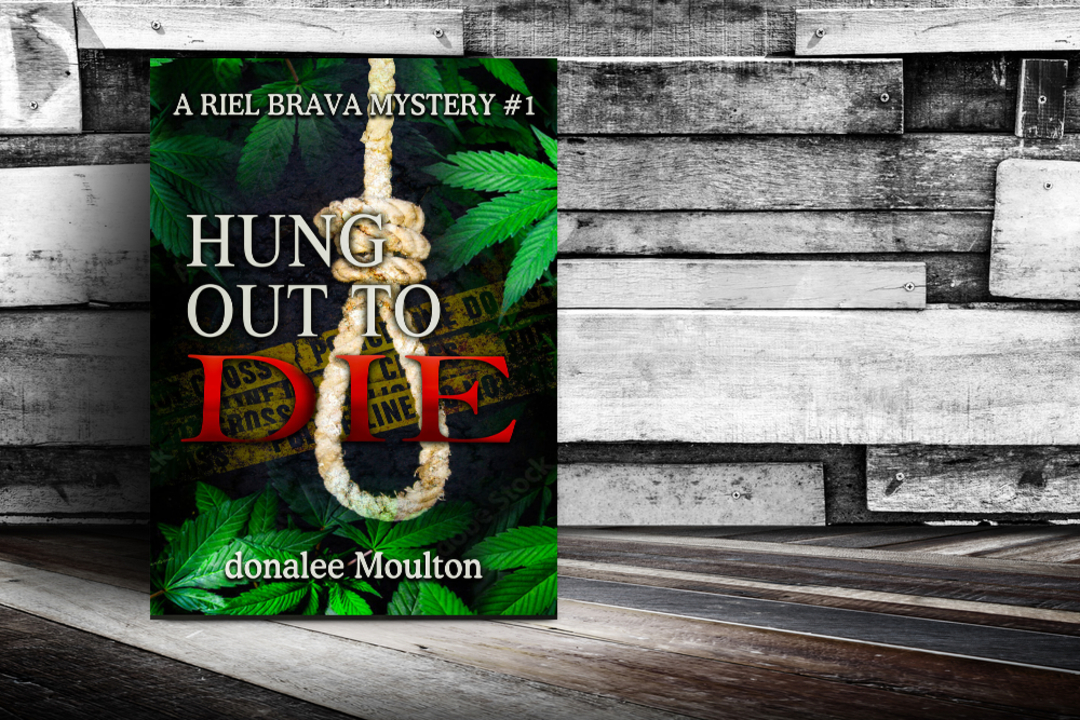
Hung Out to Die

Riel Brava, CEO of the Canadian Cannabis Corporation, just wants to be left alone to do his job and one day run for president of the United States. He has a plan. Murder gets in his way. It isn’t easy being a psychopath.

paperback

ebook

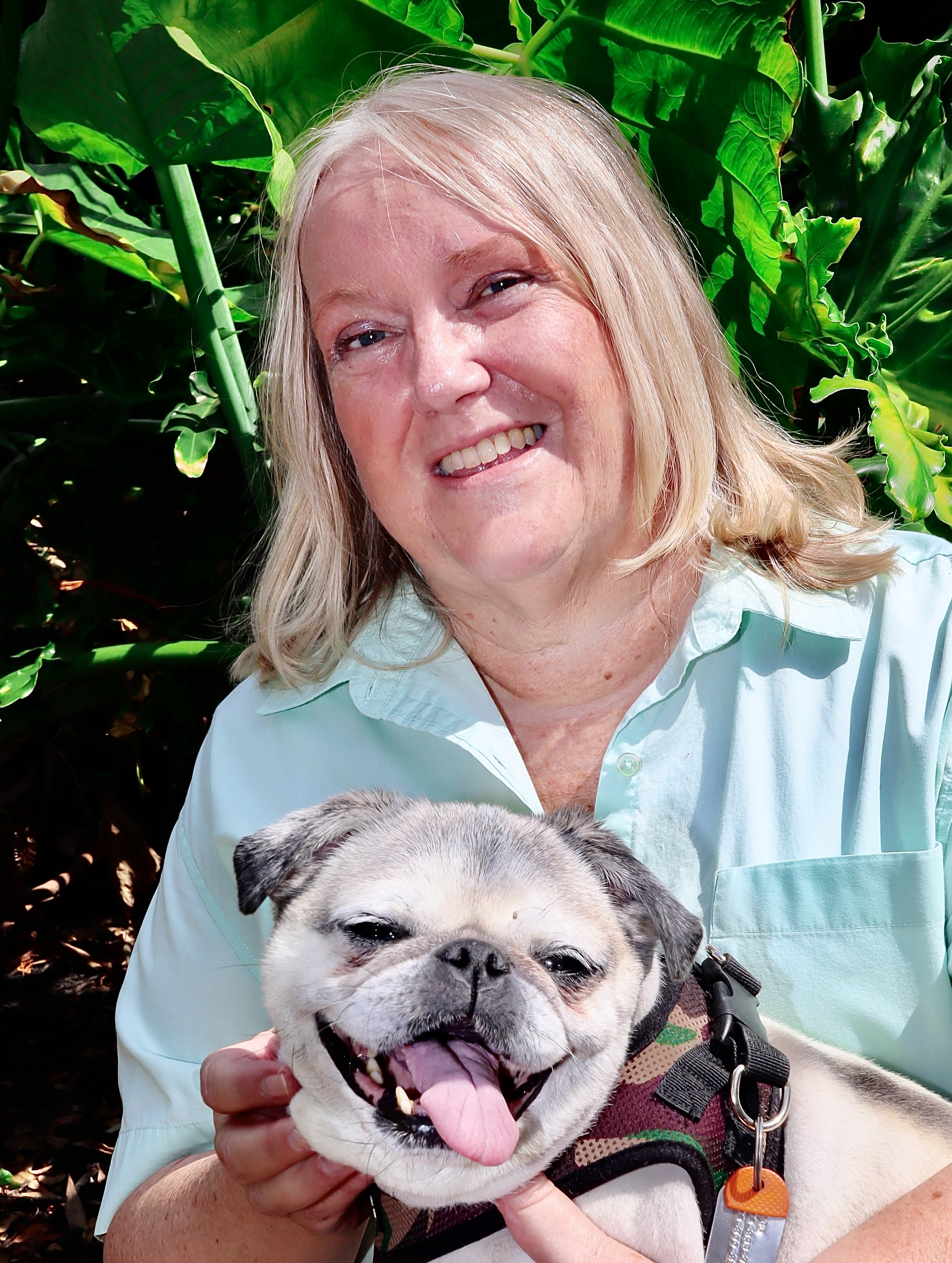
donalee Moulton is an award-winning freelance journalist. She has written articles for print and online publications across North America including The Globe and Mail, Chatelaine, Lawyer’s Daily, National Post, and Canadian Business.

Her first mystery book Hung out to Die was published this spring. Her second mystery, Conflagration, will be published in February. donalee’s short story “Swan Song” was one of 21 selected for publication in Cold Canadian Crime, and was shortlisted for an Award of Excellence. A second short story, also featuring the Iqaluit-based chief of police Doug Brumal, was published this spring in Black Cat Weekly. Her literary short story “Moist” was published recently in After Dinner Conversation and The Antigonish Review.  As well, donalee is the author of The Thong Principle: Saying What You Mean and Meaning What You Say and co-author of, Celebrity Court Cases: Trials of the Rich and Famous.

CONTACTS:

Website: donaleemoulton.com 

Amazon Author URL: amazon.com/author/donaleemoulton

Facebook: https://www.facebook.com/donaleemoultonauthor

Goodreads:  https://www.goodreads.com/donaleemoulton

LinkedIn:  https://www.linkedin.com/in/donaleemoulton/

Twitter: @donaleeMoulton

Instagram: donaleemoulton

Guest Blogger ~ Zaida Alfaro

Many years ago, I became an avid reader of cozy mysteries.  The story lines were intriguing, engaging, and funny at the same time.  I was so inspired by the authors’ novels, that I then decided to take my musical experiences, and put it on paper.  Because I write what I know, I would say that 80% of the plot and characters are drawn from real life experiences, except for the murders!  Luckily, I have never been involved in a crime investigation.  I was born and raised in Miami, and like the novel’s main character Vy, I am a singer/songwriter, Grammy considered, independent artist, and I was the lead singer for a cover band in Miami.  When I wrote my first book, The Last Note: A Miami Murder Mystery, the drummer of my band was a homicide detective, so when it came to the murders and the how to, he was the one I would go to with a list of questions.  For my sequel, In the Key of Dead: A Miami Music Mystery, I am fortunate enough to be friends with a retired homicide detective that helped me with the murders this time around.  I had to do extensive research on the weight of an electric guitar, and how fatal the swing of the guitar had to be in order to deem a person unconscious.   Vy’s phobias, the dream sequences, and the quirkiness of the other characters, are all based on facts as well.  No friend of mine is safe.  I do get their permission for use of characters, and I ask what they want their character to be named.  Surprisingly enough, many of my new supporting characters, wanted to use their birth-given name.  After getting their okay to continue, the same question was asked by each one of them, “Are you going to kill me off?”  I would always respond with, “Don’t make me upset, and I will consider keeping your character alive.”  Overall, the love I have for Miami, the Cuban culture, my family, and music, are drawn from my life, my experiences, and who I am surrounded by.

While reading my books, I hope readers will laugh, fall in love with a character, relate to a character, but most importantly, I want the reader to escape from the real world for a few hours.  Having readers say they enjoyed reading my book and commenting that they could not figure out the identity of the murderer is rewarding.  But the most rewarding feeling is knowing that I was able to make my dream of becoming an author a reality.

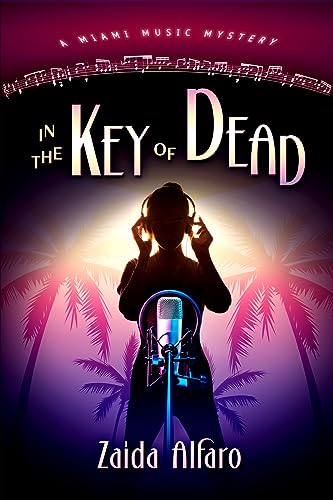
IN THE KEY OF DEAD: A Miami Music Mystery

Killer songs and a killer voice land Vy in yet another melodic murder mystery. Interlude Records has signed Vy to a long-anticipated record deal after years of rejections, but she never thought that murder would be part of the deal. Now, Vy finds herself, yet again, at the center of a murder investigation that may change the course of her music career.

It seems that someone doesn’t want Vy to record her album, and is doing everything to sabotage the release date, including murdering a key member of the production team. So Vy and her sister, Alexia, are back at it again—detecting in their own way. This time they’re using their quick-witted banter, and super sleuthing skills to ensure that Vy’s record makes it to the Billboard Top 100 list before the murderer makes it to the Miami Beach Police Department’s most wanted list.

They say the music industry is cutthroat, but Vy has never taken that statement literally. Could this be the strum of Vy’s guitar playing her last note IN THE KEY OF DEAD?

https://www.amazon.com/Key-Dead-Miami-Music-Mystery-ebook/dp/B0CDHHNMBP

ABOUT THE AUTHOR

The Miami Music Mystery series’ main backdrop, the amazing city of Miami, Florida, is beloved and well-known to me.  I was born and raised in Miami, and like the novel’s main character Vy, I am a singer/songwriter, Grammy considered, independent artist.  All things relating to music or literature are my passion. 

Many years ago, I became an avid reader of cozy mysteries.  The story lines were intriguing, engaging, and funny at the same time.  I was so inspired by the authors, that I then decided to take my musical experiences, and put it on paper.  I published my first novel, The Last Note, a Miami Music Mystery.  Now, I have brought my characters back to life, in the sequel, In the Key of Dead, a Miami Music Mystery.  The phobia’s, the dream sequences, and the quirkiness of the characters, are all based on facts.  I hope that I was able to, once again, show the readers of my novels, the love I have for Miami, the Cuban culture, my family, and music.

You can visit the following websites for find out more about my books and music:

Amazon: https://www.amazon.com/stores/Zaida-Alfaro/author/B079TD61KP

FaceBook:  www.facebook.com/zaidaauthor

Instagram: www.instagram.com/zaidamusic

Twitter: www.twitter.com/zaidamusic

Website: www.zaidamusic.com

Guest Blogger ~ Roxanne Varzi

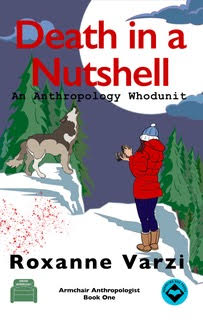
“Very few of us are what we seem,” the thematic essence in Agatha Christie’s stories, is not only the kernel of a good murder mystery but also the raison d’etre of an anthropologist. We anthropologists go to our field site (where we will study culture, people, rituals, or phenomena). We participate in daily life there, while observing and asking questions. Then, we return home, puzzle over, and try to piece together all the information we have collected that will solve the mystery to a cultural question. In my protagonist’s case in Death in a Nutshell: “Why do people immigrate to Bozeman, Montana?” And then, we write up our findings as an ethnography.

Anthropologists and detectives (and mystery writers) work hard at decoding (creating) symbols and looking for (planting) clues to explain why people do what they do, how they do what they do, and why they persist in doing what they do. Hypothetically, detectives are Anthropologists, Anthropologists are detectives, and mystery writers are a little of both. This fluidity is why writing Death in a Nutshell: An Anthropology Whodunit, a murder mystery that embeds anthropology, was not a huge leap for this anthropologist.

As a child, I was also told that just as “You are what you eat,” “You write what you read.” So, it should have come as no surprise to me, given that my youth was spent in the world of cozies with amateur sleuths (Nancy Drew, Ms. Marple, Harriet Vane, etc.) that while on a winter vacation in Montana five years ago, an idea for a murder mystery surprised me. It came to me, initially in the form of a single character in a singular setting: a nature photographer in Yellowstone Park.

I returned home with a burning desire to write, but a raging fever kept me in bed the last week of winter break. I was unable to write more than a few pages of notes. My teaching quarter began, and the mystery faded into a file folder where it would mostly remain for the next two years.

In early 2020, the pandemic hit, and a few months into the lockdown, I carefully re-opened the file, not because I had more time (teaching on Zoom coupled with a unique homeschooling experience was more challenging), but precisely because entering into a cozy world of my own making was the only salve and form of control, I had in a world that was out of control and facing new and inexplicable dangers.

While delving back into the world of fiction, I noticed that I was not the only one having difficulty handling reality. My university students were slipping away, and just like my young learner with dyslexia at home who had escaped to a world of fantasy novels, they also needed a more inventive, sensorial, and creative way to engage the material I was attempting to teach them.

At home, my goal was to make education more accessible, often involving using stories to deliver information. I was already doing this with complex theoretical knowledge at the college level in the form of a novel and plays, so why not a murder mystery? And why not for everyone who enjoys a good mystery and is fascinated by the study of human behavior, the kernel of any good mystery?

Anthropology is often described as a discipline that aims to make the strange familiar, and the familiar strange. There was no better time than during the early months of the pandemic to witness the familiar turning strange and the strange slowly becoming daily life. The world needed, and still needs, a little anthropology to help navigate difficult cultural transitions. But that does not mean it should be devoid of its mysteries or that we should seek to control all that we cannot easily explain.

One of the joys of writing fiction is how a book unfolds despite its author. As my book slowly came along, my characters, as characters in fiction often do, began to take on a life of their own. My protagonist acquired dyslexia, which was no surprise given that I had spent the better part of the last decade researching dyslexia, advocating for students with dyslexia, and learning about my own dyslexia. What was serendipitous and quite surprising was when, on one pre-pandemic afternoon, my son returned from an after-school program at Chapman University and demanded: “Where are my fossils?”

Why would he suddenly need his fossils?

“I need to take them to Chapman next week.”

What did fossils have to do with an after-school program that paired younger students with dyslexia and other learning differences with college students and faculty mentors?

“Our professor mentor is a paleontologist!” My aspiring paleontologist son answered in frenzied excitement.

The paleontologist was none other than Jack Horner, a pivotal figure in my novel, whose exhibition I had encountered during that fateful Montana vacation. People, indeed, are not what they seem. I had no idea Jack Horner was a person with dyslexia when I slipped him into Death in a Nutshell. Or that we would meet one day through my son and our shared dyslexia. Nor had I known that Agatha Christie–the author who would become such an influential figure in my writing–was also a person with dyslexia.

It’s moments like these, when the unseen mysteries that connect us come to light, that I most enjoy as a writer and anthropologist—and writing mysteries in particular are the best way to keep me digging for a good story.

Alex is on the verge of dismissal from her anthropology doctoral program when her luck turns, and she lands a fellowship with a dioramist at the Museum of the Rockies. The only problem is, Alex hasn’t a clue about dioramas or dinosaurs, and, as she will soon find out, she’s not the only one faking it in this frozen landscape.

From New York City to Yellowstone National Park, we follow Alex, a whip-smart dyslexic-ADHD Margaret Mead cum Ms. Marple, as she explores friendship, identity, globalization and a murder against the stunning backdrop of the Rockies in winter. 

            A murder mystery embedded with forays into visual anthropology … we find that in an era of fake news and science denial, a little anthropology goes a long way.

Universal Book link: https://books2read.com/varzi

Roxanne Varzi  is an award-winning author, filmmaker, playwright, Fulbright scholar, dyslexia disruptor. She has a PhD from Columbia University and is a full professor of Anthropology and Visual Studies at the University of California Irvine. Her writing is published in The London Review of Books, The Detroit Free Press, The LA Times, The Guardian, and Le Monde Diplomatique and three anthologies of Iranian-American stories. She is the author of Warring Souls, and Independent Publishers Award Gold Medalist Last Scene Underground: an Ethnographic Novel of Iran. 

https://faculty.sites.uci.edu/professorvarzi/

https://www.linkedin.com/in/roxanne-varzi-b178417a/

https://www.facebook.com/roxannevarziauthor/

Guest Blogger ~ Pamela Cowan

I love diving into mystery and suspense thrillers because there’s nothing quite like the satisfaction of seeing an everyday person take on tough challenges and come out on top. It’s like a cathartic rollercoaster ride, and writing thrillers gives me the advantage of being able to control the ride — at least as much as my characters allow.

The inspiration for my latest suspense thriller, “Repoe Man” happened during the early months of Covid. My husband and I had decided to retire so I was living in our vacation home in Southern Oregon while he was 300 miles north, prepping our primary house for sale.

During that time, I got into the habit of nightly chats with an old writing buddy, who used his pen name, Jake. We’d start Facebook threads, and our friends would chime in. One of his friends was Bobby Poe. Their banter was a mix of reminiscing about their rough hometown, and their love for heavy metal and fast cars. I thought their friendship and the way they reminisced was funny and interesting and Bobby’s name was perfect for the character who had started to coalesce in my mind. With their blessing and loads of helpful feedback, I got started on what I affectionately called the “Bobby Poe and Jake book.”

As a person who’d spent most of their career in probation and parole and then in social services, I’d seen the struggles of kids growing up in the foster care system. In fact, my agency was key in helping address one of the more tragic aspects, which is kids who age out of the system and must leave their homes, often with no resources to fall back on. There is no one to help pay for college, or a car, or even offer a place to stay in tough times.

I wondered, what would happen if Jake and Bobby grew up in foster care and were forced to deal with that issue. I decided that without resources or support they might dabble in some sketchy stuff, but since they were basically good and had each other, they would escape real trouble. Bobby would join the military while Jake would discover a marketable talent as a writer.  

That doesn’t fix all their problems though and the novel starts with Jake picking up Bobby, who has just been released from jail. Bobby is ready to make a fresh start, until Jake asks him to help a mutual friend with a problem they can’t take to the police. Bobby agrees and soon finds himself drawn into a dangerous world of crime and criminals.

For this book I did research on burglary, munitions (or how to blow things up), sports gambling, sports memorabilia, cars, motorcycles, sex workers, and law enforcement. I spoke with a drug dealer, a professional thief, a pimp, a retired munitions expert with the Army, a lawyer, and a car mechanic. Each one was fascinating in their own way.

The book was nearly done but I still didn’t have a title. When I told subscribers to my newsletter the problem, I got a flurry of responses. One of them suggested, “Repoe Man.” I thought it was the perfect title for a book about a character who retrieves things for others.

Please note that it is a thriller written in a male voice and contains scenes of erotica and violence. If that doesn’t bother you, I hope you enjoy reading “Repoe Man,” as much as I enjoyed researching and writing it. You can find it here REPOE MAN: A Bobby Poe Novel: Cowan, Pamela: 9781957638966: Amazon.com: Books

Repoe Man

Bobby Poe and his best friend Jake grew up together in foster care, bonding over their rebellious natures, and shared love of fast cars and heavy metal music.

When Jake asks him to help a mutual friend with a problem, Bobby finds himself drawn into a dangerous world of crime and corruption.

Will love, friendship, and the support of a makeshift family be enough to assure his safety and success, or is the damage inflicted by his past too great?

“Suffering from PTSD and a broken heart Bobby Poe still stands up and fights for everyone. A new hero!” ~ Corky Alexander, Simon Says Book Reviews

“Zoey is an idiot.” ~ Haley Lane, Author of The Twilight King

https://www.amazon.com/REPOE-MAN-Bobby-Poe-Novel/dp/1957638966

Pamela Cowan is a Pacific Northwest author most recognized for her psychological thrillers. Her books are known for their dark and gritty themes, exploring the uglier side of human nature. Her short stories have been featured in various magazines, and anthologies, and have been broadcast on public radio.

With an education in communications and organizational psychology, Pamela spent most of her career in social services, honing her understanding of human behavior, which she incorporates into her books. She has two grown children, a supportive husband, and a dog whose life-long goal is to end the tyranny of UPS, USPS, and FedEx drivers. To date, she has not been successful.

Website: https://www.pamelacowan.com/

Facebook: https://www.facebook.com/pamelacowanwriter/

Guest Blogger ~ Debbie Burke

What if a video goes viral showing you committing a crime? You’re innocent but how do you defend yourself when a million people on social media saw you do it. Once the court of public opinion finds you guilty, can you get a fair trial?

That’s the premise for Deep Fake Double Down, the eighth novel in my Tawny Lindholm Thriller series.

As a mystery/suspense/thriller author, I felt compelled to explore what happens when you can no longer believe what you see. How could deep fakes be used to create false evidence?

Deep fakes are often called “Photoshop on Steroids” and they frequently make news. Using software, video of real people is manipulated to make them say words they never said and do acts they never did.

Some recent examples of deep fakes are silly entertainment, like the Pope wearing a satin Balenciaga puffer coat.

But, in the wrong hands, deep fake technology becomes a weapon that can potentially affect world history. One not-so-amusing example was a fraudulent video in 2022 of the Ukrainian president ordering his troops to surrender to the Russians. In May 2023, a photo of a supposed explosion at the Pentagon caused stock market jitters before it was determined to be fake.

When I first began researching the topic a couple of years ago, deep fakes were difficult and time-consuming to create, yet fairly easy to detect. But, during the nine months when I was writing Deep Fake Double Down, technology took a giant leap forward. Now anyone with basic computer knowledge can download free or low-cost programs from the net. Then simply record a few seconds of a person’s face, body, movements, and voice, and you can create a video clone that’s nearly impossible to distinguish from the real person.

Scary? You bet!

In my new thriller, deep fakes mean deep trouble for intrepid investigator Tawny Lindholm and her charismatic attorney-husband Tillman Rosenbaum. A biracial female corrections officer begs them for help after video shows her aiding a young Native inmate in a prison escape. She swears she’s innocent and claims her life is in danger because she witnessed a murder. Then she disappears.

At the same time, Tillman’s troubled teenage son makes a deep fake video of his own kidnapping, but that prank takes an unexpected and frightening turn.

In both situations, Tawny and Tillman discover deep fake technology creates convincing but false evidence. While they struggle to save their client and their son, hidden enemies are ready to kill to keep the truth buried. Will deep fakes lead to real deaths?

Deep Fake Double Down is available from online retailers at this link: https://books2read.com/deep-fake-double-down

Or ask your favorite independent bookstore to order the paperback.

Debbie Burke is an award-winning journalist, crime novelist, freelance editor, and blogger on The Kill Zone. She writes from her home in Montana where the scenic, rugged Rocky Mountains offer plenty of locations to kill people…on the page, that is! 

Please visit https://debbieburkewriter.com to learn about my other books in the Tawny Lindholm Thriller series. Join my readers group and receive a FREE bonus short story about Tawny and Tillman.

Email: debbieburkewriter@gmail.com

Twitter/X: @burke_writer