Guest Blogger ~ Skye Alexander

Mystery Stories and Mystery Schools

What comes to mind when you hear the word “occult”? Evil cults that worship the devil? Weird rituals where animals are sacrificed? Wizards with nefarious aims wielding power behind the scenes? If so, you probably got those impressions from Hollywood or from fear-based religious groups. Let’s pull back the dark curtain that shrouds the occult arts to discover how supernatural elements can contribute to a mystery novel’s plot.

What Does “Occult” Mean?

First of all, the word “occult” simply means hidden, as in hidden knowledge. For centuries, people who practiced the occult arts had to hide what they knew and practiced in order to avoid imprisonment, torture, and murder at the hands of misguided authorities. They formed secret societies sometimes known as Mystery Schools, passed down wisdom through symbols and oral tradition, and wrote in secret code.

Yet occult ideas and practices––witchcraft, divination, spellcasting, incantations, and magic potions––continue to fascinate us to this day. Perhaps the most famous scene in literature comes from Shakespeare’s MacBeth where three witches stir a mysterious brew while they prophesy “toil and trouble” for the Scottish king. The Bard’s plays MacBeth and Hamlet also feature ghosts, and A Midsummer Night’s Dream involves faery spells and shapeshifting. More recently, J.K. Rowling’s popular Harry Potter stories have captured the imaginations of millions of young people worldwide and introduced them to some of the tenets of magic work––and its possibilities.

Using the Occult in Plotting a Story

Occult practices involve working with forces beyond the mundane, tapping into reservoirs of hidden power, and sometimes interacting with supernatural beings. Therefore, they let writers and readers step outside the ordinary limitations of a storyline. Ghosts and spirits can also expand readers’ knowledge into realms beyond the physical. In Alice Sebold’s The Lovely Bones, for example, a murdered girl shares a perspective of the crime from her vantage point on the other side.

Oracles such as the tarot, astrology, or runes can give veiled glimpses into the future. Is someone destined to die when the Death card turns up in a tarot reading? In my mystery novels What the Walls Know and The Goddess of Shipwrecked Sailors, a tarot card reader sees trouble lurking ahead for the protagonist Lizzie Crane, which adds to the stories’ suspense.

Authors can incorporate metaphysical ideas into their novels in various ways. For example:

  • Is a character a seasoned witch or wizard, or a novice dabbling with forces she doesn’t understand, like the Sorcerer’s Apprentice?
  • Does a character pursue a metaphysical path that leads him to a discovery or danger? How does he grow from this experience?
  • If this is a historical novel, what local customs, religious beliefs, and laws affected occultists at that time? Are historical events, such as the Salem Witch Trials of the early 1690s, worthwhile additions to the book?
  • Do nonphysical entities influence a character’s decisions, aid her in solving a problem, or guide her into a realm beyond the physical one?
  • Does a character conjure a spell that works––or goes wrong––and takes the story in an intriguing direction?

Oh, and by the way, writing is a powerful form of magic. When casting a spell, you envision an outcome you want to create. Then you infuse it with color, action, emotion, intention, and passion. You experience it as if you’re living it right now. In your mind’s eye, you see the result as if it already exists––and you’re the Creator who makes it happen. Sounds like writing a novel, doesn’t it?

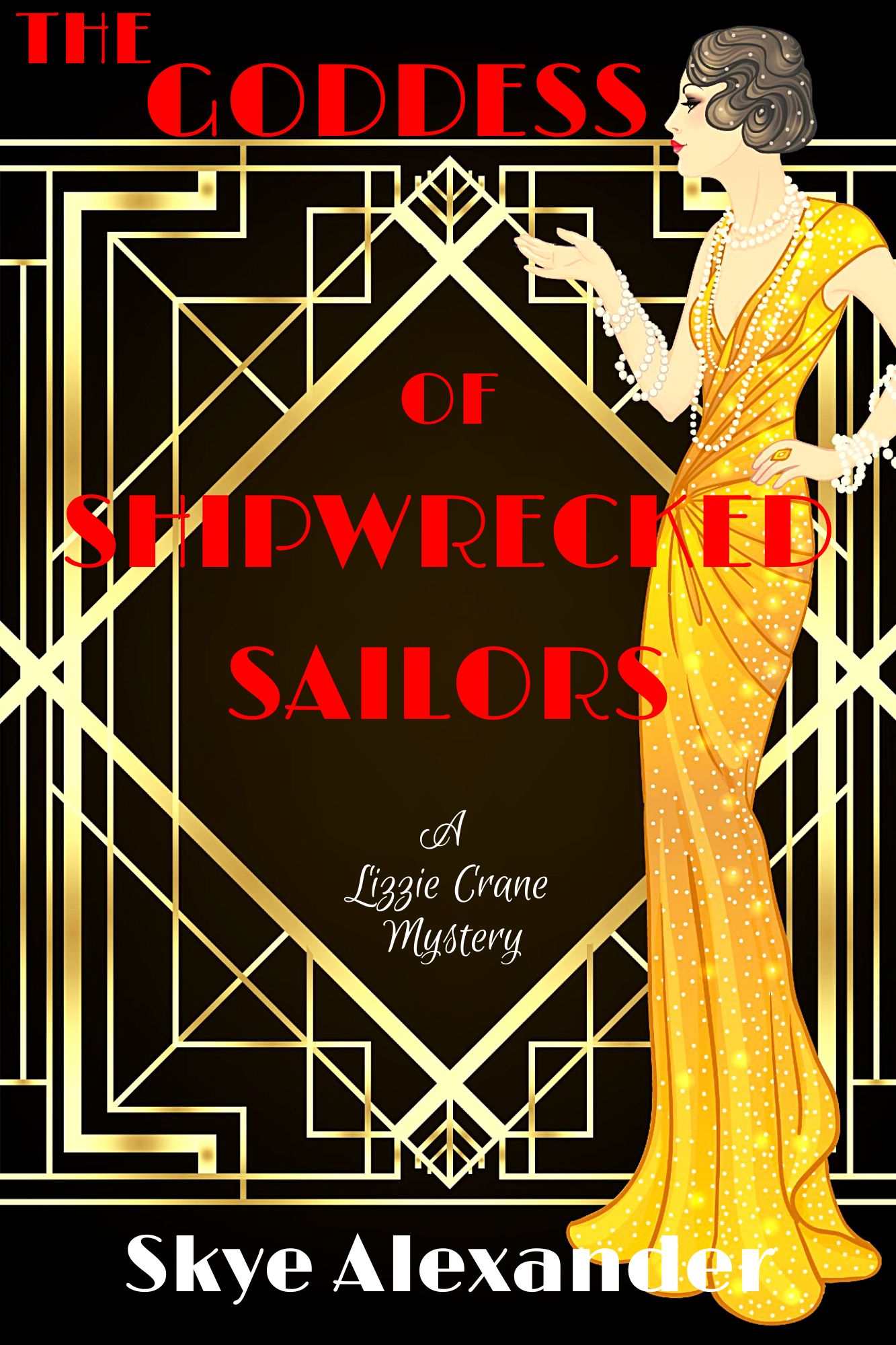
The Goddess of Shipwrecked Sailors

Salem, Massachusetts, Christmas 1925: When the heir to a shipping fortune hires New York jazz singer Lizzie Crane and her band to perform during the Christmas holidays, she has high hopes that the prestigious event will bring them riches and recognition. But the evening the musicians arrive, police discover a body near a tavern owned by Lizzie’s cousin––a cousin she didn’t even know she had. Soon Lizzie becomes a pawn in a deadly game between her cousin and her employer over a mysterious lady with a dangerous past.


Buy links

Amazon: https://www.amazon.com/Goddess-Shipwrecked-Sailors-Lizzie-Mystery/dp/1685124348

Barnes & Noble: https://www.barnesandnoble.com/w/the-goddess-of-shipwrecked-sailors-skye-alexander/1144045510?ean=9781685124342

Author Bio:

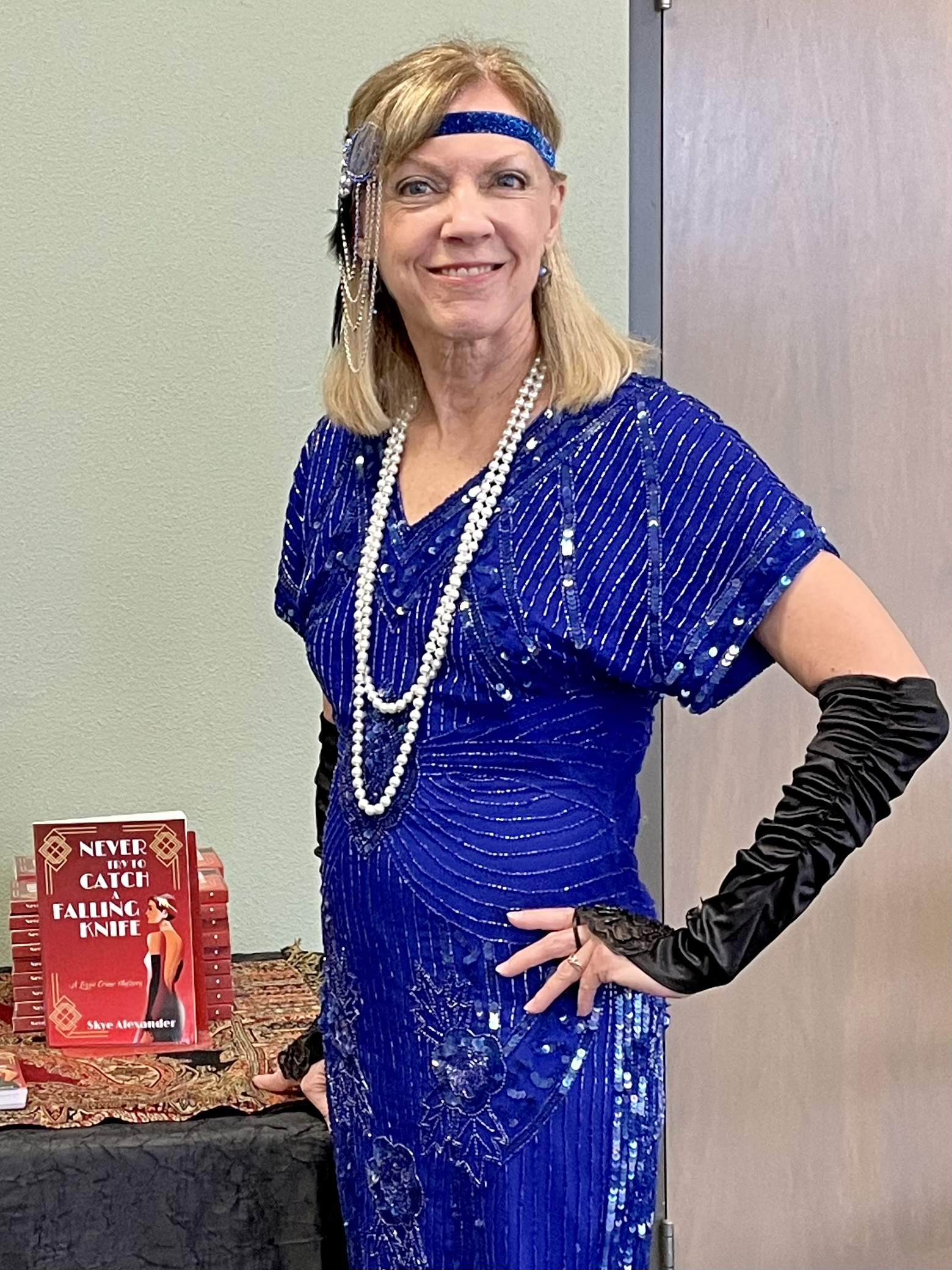
Skye Alexander’s historical mystery novels What the Walls Know and The Goddess of Shipwrecked Sailors, the second and third books in her Lizzie Crane mystery series, use tarot cards and other occult ideas to provide clues. Skye is also a recognized authority in the field of metaphysics and the author of fifteen bestselling nonfiction books on the occult arts including The Modern Guide to Witchcraft, The Modern Witchcraft Book of Tarot, and Magickal Astrology.

Facebook link

https://www.facebook.com/skye.alexander.92

Goodreads link

https://www.goodreads.com/book/show/198671880-the-goddess-of-shipwrecked-sailors

Video trailer

https://drive.google.com/file/d/1IjHJjQYpVe35nvBkMD4sMn-o2zt0skA2/view (if you can’t access it here, it’s also on the first page of my website and on YouTube at https://www.youtube.com/watch?v=kgCT41caKrs

Guest Blogger ~ Sandra Gardner

A Mystery is a Puzzle       

The basis of a mystery story is a puzzle. There’s at least the main puzzle, and maybe even one (or two more) contained in the story as subplots – smaller plots generally connected to the main story.

Your job as a mystery writer is to start with a scrambled mess, the way it looks when you dump the pieces out of the puzzle box. There’s a body, an attack, a disappearance, etc.  Somebody — or maybe more than one somebody — is guilty. But who could it be: the wife, the husband, the girl/ or boy/ friend? Or maybe it’s someone who owes money to someone else.

As the story’s writer, you need to make the pieces fit together by the end of the story. So, you begin to work it out on the page. But sometimes what you thought would work, doesn’t, and you have to toss the pieces back in the box and start again. You take a different approach or look at your story from a different angle. You might change the POV (point of view) from first to third person or vice-versa, or multiple POVs. A warning about multiples: This is difficult to manipulate and sustain, so probably not a good idea for a new mystery writer. You might change tenses from present to past, past to present; use flashbacks or a prologue to set the scene.

A word about red herrings: For example, just when everything points to a certain person, that person turns out to be a cop. Or was somewhere else at the time of the murder. Or ends up as the next victim.

Used judiciously, red herrings can give the story more tension. You want to keep upping the tension, so that when the reader thinks everything (the pieces) looks like they’re going to come together – bang, the whole thing falls apart. There’s another crime — an attack or a murder. First this person looks guilty. Everyone is terrified, each person suspects everyone else. Take a look at an Agatha Christie Poirot mystery. In many of them, Poirot gathers everyone together and points out how each person could be the guilty one, before he finally reveals the real killer. Or in at least one Poirot story, there’s more than one guilty person.   

Here’s a confession: I’m terrible at jigsaw puzzles, being one of those people who process information auditorily, rather than visually. But I’m good at the crossword kind, which, when you think about it, isn’t too different: Here you have blanks that need to be filled in and have to fit together to solve the puzzle.

Another confession: When I begin writing, I don’t know how the puzzle will work itself out. I have to wait until my characters tell me, in their thoughts and actions. So I just wait. And listen.

There are usually plenty of clues. But reader, beware. Just like in a jigsaw puzzle, what first looks like it will fit, might not.

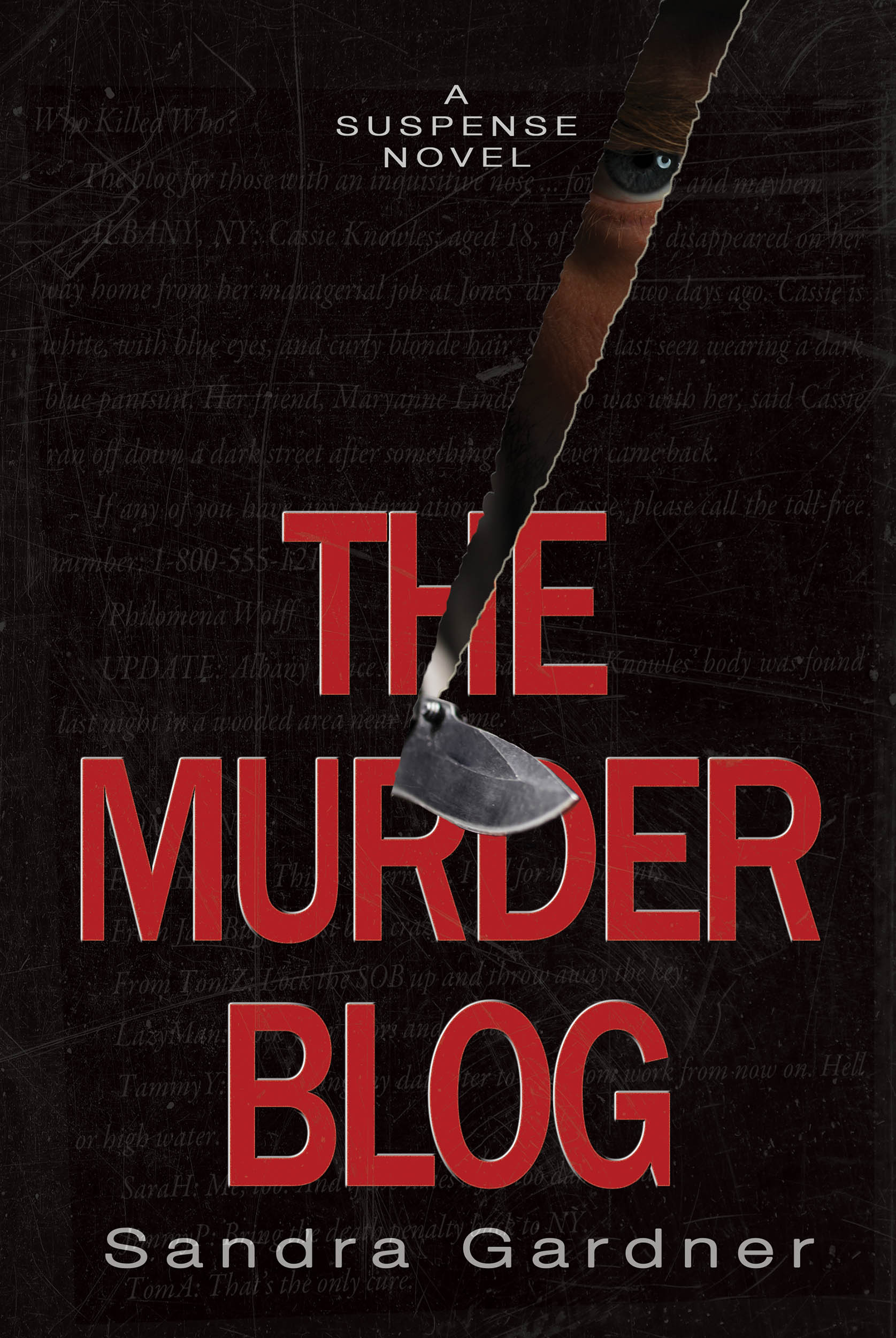
The Murder Blog

Philomena Wolff was 17, walking home from school with her best friend, when her friend disappeared, ending up as one of several young women abducted and murdered in upstate New York by a clever killer who eventually disappeared from the area.

Philomena was terrified that the man caught a glimpse of her when he took her friend.

Many years later, young women have been ending up dead again.

Philomena, now an investigative reporter, hosts a crime-solving blog, “Who Killed Who?” With the help of her friend, a psychic gravedigger, her friend’s boyfriend, a P.I., and the blog’s readers, Philomena is on a mission to hunt the killer down. Her readers are with her. But so is the killer, posting vile notes and vicious threats on the blog.

Could the killer be the same one who murdered her friend long ago, trolling for more young women – and Philomena?

Buy links: https://www.amazon.com/Murder-Blog-Suspense-Novel-ebook/dp/B0CK9RVT9V

https://www.barnesandnoble.com/w/the-murder-blog-sandra-gardner/1144100569?ean=9781685133450

Sandra Gardner is the author of seven traditionally published books: four novels and

three nonfiction books. 

         Gardner’s new suspense novel, The Murder Blog, was published by Black Rose Writing in December 2023. Her last two novels — both mysteries — Dead Shrinks Don’t Talk and Grave Expectations were published by Black Opal Books in 2018. A coming-of-age novel, Halley and Me, won the Grassic Short Novel Prize from Evening Street Press and was published in 2013. Her nonfiction books include Teenage Suicide (Simon & Schuster); Street Gangs (Franklin Watts); and Street Gangs in America (Franklin Watts). Street Gangs in America received a book award from the National Federation of Press Women. Previously, she worked as a journalist and was a contributing writer to The New York Times.

https://sjgardner6.wixsite.com/mysite

Author Central: https://author.amazon.com/home

Author’s Den home page: https://.Authorsden.com/sandragardner

I’m a Goodreads Author

Guest Blogger ~ M. E. Proctor

The Long and Short of It

If writing a novel is a long-lasting love affair—and it better be passionate because there’ll be a lot of time spent in close quarters—what are short stories? A brief encounter burning bright, a summer romance, a little walk on the wild side … It sure feels like that for me at times. Short fiction is a gulp of fresh air after completing a book draft, a welcome reprieve from obsession, and a new way to look at writing when the work-in-progress leaves me so cross-eyed I don’t see anything anymore.

Short stories are like stretching exercises. Tension is released, relaxation ensues.

A character pops into my head, a place triggers an image, a memory surfaces, a sentence rings true, and an idea is born. Could it turn into a book? Maybe, and some have grown wings and gone the distance, but not all stories deserve a 300-page treatment. Often their strength is in the instant. Their intensity cannot be sustained without dilution in a full-length narrative.

“Rabbits”, one of my favorite stories in the Family and Other Ailments collection, is a good example. It is told from the perspective of a twelve-year-old boy who blanked out a dramatic event. We meet him when he starts remembering. There’s fear and confusion, and a growing sense of panic that is more acute and more immediate for being at the core of the story instead of distributed over book chapters.

I love the spontaneity of short stories, and the best ones are written in a feverish rush with very little rework. They scream to get on the page. I often go back for inspiration to Ray Bradbury, who knew quite a bit about short fiction. One of his quotes is printed in my brain: In quickness is truth. The faster you blurt, the more swiftly you write, the more honest you are.

I can ponder a scene in a book for days, finetune and rewrite it endlessly. That kind of needlepoint doesn’t work for my short stories. The struggle doesn’t improve them, it tends to suck all the life out of them. My files are full of false starts and abandoned fragments. No regrets, they just didn’t make the cut.

Then there’s the guilty pleasure of genre-hopping. I write mostly crime, both in short and long form. The rules of the genre are infinitely flexible and accommodate pretty much everything. Yet, sometimes I feel myself slipping into horror or science fiction. I have a soft spot for cool vampires and conflicted androids. They would not fit in my contemporary detective series. Or I may decide to take a stroll in the 1950s because I’m a sucker for fedoras and hardboiled dialogue. Short fiction is like a pastry shop. All these colorful macarons. And there’s no sin in wanting to sample them all.

There are twenty-six tasty treats in my short story collection, Family and Other Ailments. Have a bite and tell me which one makes you want to come back for seconds. The main character of the book’s title story has already earned a return engagement. In a book.

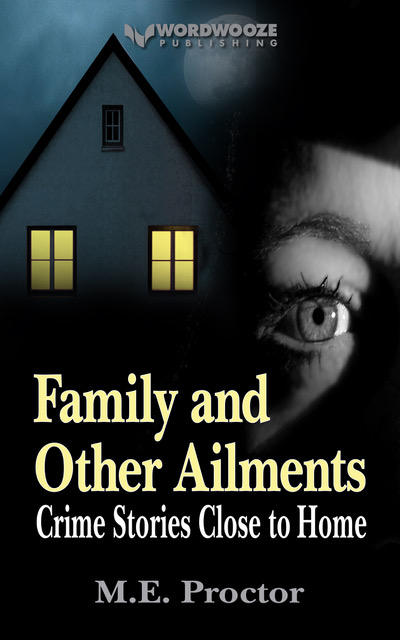
Family and Other Ailments – Crime Stories Close to Home

Blood ties. The family we’ve been given, the friends we make, the loves we keep, and those we lost. The twenty-six stories in Family and Other Ailments (Wordwooze Publishing) teeter on the brink, hover at the periphery or even the possibility of crime.
The collection opens with “Spy Head,” a tale of friendship after a crushing trauma. In “Texas Two-Step,” brotherhood leads to a wicked double-cross. “Razorbills” shows a young woman seeking freedom from the prison-like caring of her sibling. “Black and Tan” slips into domestic horror, as does “Mutti,” with a hint of the fantastic. “Hour of the Bat” and “Bag Limit” are deep woods Texas noir, while “A Head for Numbers” and “No Recoil” go west, to the stark unforgiving beauty of the desert.

Buy Links:

Family and Other Ailments is available in eBook, paperback, and audiobook.

All links are accessible here: https://books2read.com/u/3Lx0v5

From reviews:

“Channelling distinct voices, subtle humor, and endings that plant a fist in your gut, Proctor’s Family and Other Ailments is a terrific collection of crime, suspense, and fear. The tales are carefully calculated, with each scene, each piece of dialogue building to that oh so important final strike: a crescendo point that leaves the reader jarred.”

M.E. Proctor was born in Brussels and lives in Texas. Her short story collection Family and Other Ailments is available in all the usual places. She’s currently working on a contemporary detective series. The first book comes out in August 2024 from Shotgun Honey. Her short fiction has appeared in VautrinBristol Noir, Pulp ModernMystery TribuneReckon ReviewBlack Cat Weekly, and Thriller Magazine among others. She’s a Derringer nominee.

Author Website: www.shawmystery.com

On Substack: https://meproctor.substack.com

Facebook: https://www.facebook.com/martine.proctor

Twitter: https://twitter.com/MEProctor3

Guest Blogger ~ Erica Miner

Prelude to Murder: Bringing Murder and Music Together

Everything about my journey to the mystery genre was connected to my love for writing and my life as a violinist with the Metropolitan Opera in New York.

Though I had played the violin most of my life, I had started writing before I began studying the instrument. In grade school, at the age of 7 or 8, I was placed in an afterschool program for Creative Writing. I don’t remember much of what I wrote (it was about 100 years ago!). But I do remember loving the entire process: creating characters and plot lines and weaving them all together to tell stories. Then I discovered I also had a talent for the violin. That fiendishly difficult instrument monopolized my creativity, though my passion for writing never left me.

Eventually I ended up in the orchestra of the most prestigious opera company in the world, where I was part of a uniquely exciting, glamorous subculture. What I hadn’t anticipated was the hotbed of intrigue behind that famous “Golden Curtain”—an operatic Tower of Babel with clashing egos, rampant jealousies, and nefarious happenings. I then realized an opera house was the perfect place for mischief and mayhem. Why not bring murder and music together in that milieu? My Julia Kogan Opera Mystery series was born.

When it comes to the old adage “Write what you know,” I was not immune. My main character, Julia, is a young violinist much like me when I first started out at the Met: a starry-eyed neophyte who knows nothing about the backstage conflicts that take place between the fascinating but maddening characters who work there. In the first book of the series, Aria for Murder, on the night of Julia’s debut performance at the Met, an unthinkable tragedy occurs, and suddenly she becomes entangled in a murder investigation. Julia’s sleuthing makes her the target of the killer, and she uses her own ingenuity to survive.

There was little research involved in my Met Opera mystery, since I had been there for 21 years; but Prelude to Murder, the recently released sequel, takes place in a totally different atmosphere: Julia goes off to the desert to perform with the Santa Fe Opera. I had never been to Santa Fe, so I visited the area to do copious amounts of research on its history and culture. It was a revelatory experience, and the book is infused with rich details. Of course, no sooner does Julia arrive in Santa Fe than operatic chaos ensues, and she finds herself involved in yet another murder investigation, this time with the added element of Santa Fe’s ghostly activity. Her wits carry her through, and in Book #3 she goes to San Francisco for more operatic mayhem.

Though I find the mystery genre the most difficult to write, it also is the most challenging. The potential for murderous intrigue against the background of a theatre, where the turmoil behind the scenes is often more dramatic than what occurs onstage, is limited only to the number of opera houses in the world—and to my wicked imagination.

Prelude to Murder

Young, prodigious Metropolitan Opera violinist Julia Kogan, having survived her entanglement in an investigation of her mentor’s murder on the podium, and a subsequent violent, life-threatening attack of a ruthless killer, is called upon for a key musical leadership position at the Santa Fe Opera. But at the spectacular outdoor theatre in the shadows of the mysterious New Mexican Sangre de Cristo Mountains, she witnesses yet other operatic murders, both onstage and off. Dark and painful secrets emerge as, ignoring warnings from her colleagues and from Larry, her significant other, Julia plunges into her own investigation of the killing. Ghostly apparitions combine with some of the most bloody and violent operas in the repertoire to make Julia question her own motives for searching for the killer. But this time the threat to her life originates from a source she never would have imagined.

Buy links:

Amazon: https://www.amazon.com/Prelude-Murder-Julia-Kogan-Mystery/dp/1685124429/ref=monarch_sidesheet

Barnes and Noble:

https://www.barnesandnoble.com/w/prelude-to-murder-erica-miner/1144067662?ean=9781685124427

https://www.thirdplacebooks.com/book/9781685124427

After 21 years as a violinist with the Metropolitan Opera, Erica Miner is now an award-wining author, screenwriter, arts journalist, and lecturer based in the Pacific Northwest. Her debut novel, Travels with My Lovers, won the Fiction Prize in the Direct from the Author Book Awards. Erica’s fanciful plot fabrications reveal the dark side of the fascinating world of opera in her Julia Kogan Opera Mystery series. Aria for Murder, published by Level Best Books in 2022, was a finalist in the 2023 Eric Hoffer Awards. The second in the series, Prelude to Murder, published in 2023, glowingly reviewed by Kirkus Reviews (https://www.kirkusreviews.com/book-reviews/erica-miner/prelude-to-murder/), finds the violinist in heaps of trouble in the desert at the Santa Fe Opera. The next murderous sequel takes place at San Francisco Opera. As a writer-lecturer, Erica has given workshops for Sisters in Crime; Los Angeles Creative Writing Conference; EPIC Group Writers; Write on the Sound; Fields End Writer’s Community; Savvy Authors; and numerous libraries on the west coast.

https://www.facebook.com/erica.miner1

https://twitter.com/EmwrtrErica

https://www.instagram.com/emwriter3/

AUTHOR WEBSITE:

https://www.ericaminer.com

Guest Blogger ~ Eve Marie

 I write mysteries/thrillers because this is my book to go to as an escape. I will retreat to a book searching for a mystery or thriller with a protagonist who solves the crime and perseveres despite setbacks. This character motivates me. One of my favorite protagonists was introduced to me by my husband through the character of Jack Reacher developed by Lee Childs. I enjoy how the author develops a mysterious character that needs no personal belongings and just tends to show up when needed. I began my novel “The Bayou Heist” with two characters in mind and familiar settings including Florida and Bon Secour, Alabama. The two characters I developed were struggling with a business and needed a serendipity to happen. It did and this starts my novel of odd coincidences. It is also why I penned this phrase I heard while working as a teacher in the United Arab Emirates “Every man has two eyes but no one sees the same. “ I thought wouldn’t it be interesting if many threads in the novel are connected and these similarities lead the reader to discover more quirks and more coincidences ‘kind of like going down a rabbit hole’ one reader mentioned as you keep finding more rabbit holes leading the reader to discover more links between the characters. My favorite character is the detective from the Bayous using his eyes and senses and the Italian attorney to try to discover who left the money in the Bayous.

Along the way, I had to research various ideas to insert into my novel including the idea of finding a ‘cache’ which came from another blogger when she wrote about following clues to find a cache. For some of my characters, I  developed them by remembering people and stories  I heard along my journeys overseas as a teacher and as a student studying at the Sorbonne. Having the opportunity to meet some interesting people and live in some unusual places, I used the settings I was familiar with. The best advice I can give to anyone trying to write a novel is to write what you know about. The characters Faith and her husband, Timothy, own a cupcakerie. Another character owns a nursery. I am familiar with the ups and downs of owning a small business and also very familiar with nurseries in Florida. Then, don’t give up trying to get it published. Keep sending it away and keep good notes, be prepared to help with the editing process and realize it is not a sprint but a marathon.

Writing a novel, seeing it published, and then listening to your readers is very rewarding because it is an accomplishment that not everyone finishes. I am very grateful to my husband for putting up with me during this time and to a few bloggers who motivated me.

For a follow up, I am interested in continuing as a series with the protagonist, Faith, the Bayou Detective, Andre and the Italian attorney, Giorgio inhabiting a place in my series. The second novel will focus more on the small town background of Faith and a secret she discovers.

The Bayou Heist

“Everyone has two eyes but no one sees the same.” There is André, a detective from the bayous, trying to solve the Armored Truck robbery along with his trusty sidekick. On the other side are Faith and Eva, dropped into a situation which they didn’t see coming. After finding a stash of money hidden in North Georgia by robbers, the twists, turns, and coincidences caused by bumping into one another create an ironic ‘cat and mouse situation.’ Two innocents in over their head, two detectives chasing clues, and we have one bayou mystery that might just be unsolvable!

https://www.amazon.com/Bayou-Heist-Eve-Marie-ebook/dp/B0C44Q9QFM

Eve Marie was born in New York City and raised in a small town located in the Catskill Mountains where everyone knew your name. After graduating from Stony Brook University with an English degree, she spent several years working in Manhattan in the garment industry; as a real estate property appraiser with the city of New York and a girl Friday for local radio talk show host, Barry Farber, as well as a stint in the United States Navy. With a Masters Degree in TESOL (Teaching English to speakers of other languages) she has taught in the United States, France, South Korea, and the United Arab Emirates. “For four years, my husband and I were the proud owners of Cupcake Cache (a small bakery). When writing, I like to reflect upon some of the people I knew and the places I have lived. When not writing, I can be found experimenting in the kitchen, walking my dog (Iago), or creating a ‘what if’ scenario for my next creative endeavor. Writers who inspire me include Stephen King, Edna Buchanan, Lee Child, Lisa Unger, and Ann Rule.  My favorite quote for inspiration is “Everyone has two eyes but no one has the same view” (Wael Harakeh).

http://cupcakecacheblog.wordpress.com

https://anoveltowrite.com/