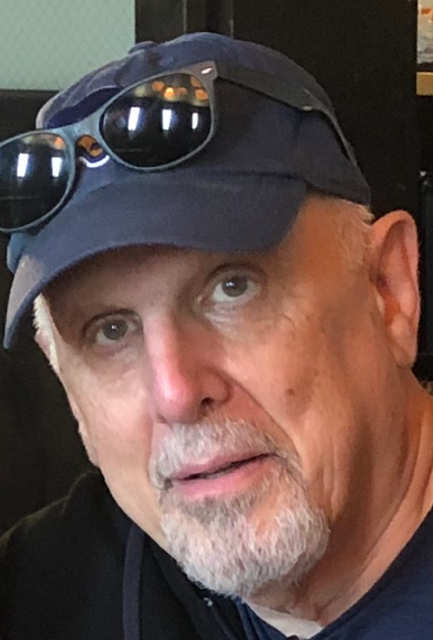
Guest Blogger ~ MM Desch

Why I Wrote an LGBTQ (Medical Thriller) Mystery

Every mystery writer knows that moment when life hands you a story, though mine arrived with the bureaucratic charm of a DEA agent on an ordinary afternoon in my Phoenix psychiatric practice. I suppose I should have expected it, having recently qualified to prescribe buprenorphine for opioid addiction treatment. The universe has peculiar timing, particularly when you’re drawn to the psychological complexities of LGBTQ characters navigating medical mysteries. Maybe it’s because I’ve spent years watching people navigate the collision between who they are and who the world expects them to be, and writing LGBTQ characters in medical crises lets me excavate those psychological fault lines in ways that feel necessary, especially these days.

The agent’s unannounced inspection was routine, professional, even cordial once I explained that I hadn’t actually used this newfound prescribing capability yet. But as we sat in my office, surrounded by the everyday detritus of psychiatric practice, tissues strategically placed, diplomas asserting competence, that one plant I somehow hadn’t killed, my writer’s mind began its familiar excavation. What if I had been prescribing buprenorphine? What if some had gone missing? What if someone in this very building was orchestrating a diversion scheme with the methodical precision of a chess master?

That afternoon planted the seed for Tangled Darkness, though it would marinate in my subconscious for years before finally demanding to be written.

The premise crystallized when I combined that DEA visit with my experiences serving on Arizona’s Medical Board committee for impaired physicians. I’d witnessed how addiction could transform brilliant medical minds into ethical contortionists—people trained to heal suddenly finding themselves entangled in webs of their own making. The stories I heard were psychological case studies in how desperate circumstances can rewrite even the most carefully constructed moral code.

But the real catalyst emerged from a pattern I’d observed: the more ethical and scrupulous a physician was, the more vulnerable they became to exploitation. Their conscientiousness could be weaponized against them with surgical precision. This paradox fascinated me, the idea that integrity could become a liability. What if someone filed a false complaint against an innocent psychiatrist? What if that psychiatrist harbored a secret history that made the accusation both plausible and devastating?

Enter Dr. Leslie Schoen, my protagonist. She’s ethical, competent, and living with the transparency that recovery demands—her wife Izzy knows about her journey with alcoholism, and they’ve built their relationship on that foundation of honesty. Which makes the secret she’s now carrying so much more corrosive. When a Medical Board complaint lands alleging that Leslie has stolen opiates from her clinic, she can’t bring herself to tell Izzy, not when her wife is pregnant, not when the accusation feels like a knife twisted in the wound of her recovery. The irony is exquisite in its cruelty: her very status as someone in recovery makes the false allegation both plausible and devastating.

The murder element emerged from a simple question: In a medical practice where controlled substances represent both healing and profit, what happens when someone knows too much? I envisioned Damon Grady, a medical assistant caught between loyalty and desperation—his death would need to be clinically precise yet psychologically revealing, appearing as an overdose while carrying deeper implications about betrayal and survival.

My years in addiction psychiatry taught me that buprenorphine occupies a uniquely precarious position in the opioid crisis. It’s medication that can save lives when used properly, yet because it is another opioid, it’s valuable currency on the street. This duality—medicine as both salvation and commodity—became the engine driving my plot. The very safeguards designed to prevent diversion could be manipulated by someone who understood the system from within.

Portland provided the perfect setting after my relocation from Phoenix. Here was a city where medical marijuana dispensaries operated alongside prestigious medical centers, where progressive healthcare coexisted with the ongoing addiction crises. This backdrop felt like the perfect petri dish for the story I wanted to tell—where cutting-edge addiction treatment coexisted with people dying from overdoses three blocks away.

What made the premise truly compelling was layering in the psychological complexity I’d observed throughout my career. The most dangerous people I’ve encountered in clinical practice aren’t the ones wearing their pathology like a neon sign—they’re the ones whose choices feel both inexplicable and inevitable. I wanted characters who would make readers squirm with recognition, the kind of people you might defend at a dinner party right up until you learn what they’ve done.

The investigation structure allowed me to explore how medical professionals react under scrutiny. Having participated in peer reviews and committee investigations, I understood the unique terror of having your professional reputation questioned. That fear could drive even innocent people to make choices that would haunt them forever.

Writing Tangled Darkness became an exercise in precision—every scenario needed to be plausible enough that medical professionals would nod in recognition yet twisted enough to keep readers guessing. The drug diversion scheme had to be sophisticated enough to temporarily succeed but flawed enough for a determined psychiatrist to unravel. Because even the most brilliant criminals are ultimately human, and humans make mistakes—often the kind that reveal exactly who they are when nobody’s supposed to be watching.

The deeper I dove into the story, the more I realized I wasn’t just writing about prescription drug diversion or murder. I was exploring how systems designed to help us can be corrupted, how past traumas shape present choices, and how the pursuit of truth sometimes requires risking everything we’ve built. It’s a psychological-medical thriller doubling as an LGBTQ mystery. Many would say all of the above.

That cordial DEA agent who visited my Phoenix office had no idea he was launching a debut novel. But then again, the most compelling stories often begin with an ordinary moment—a routine inspection, a casual question. Sometimes the best plots are just waiting there in the everyday machinery of our lives, disguised as paperwork.

TANGLED DARKNESS

When Dr. Leslie Schoen becomes a suspect in her clinic assistant’s murder, she investigates a dangerous web of opiate drug theft while protecting her pregnant wife and confronting her own haunted past. Racing against time to clear her name, she discovers everyone has secrets—and someone in her inner circle is willing to kill to keep them hidden.

Buy link: https://books2read.com/u/bwgvYO

MM Desch brings over three decades as a practicing psychiatrist to her debut psychological thriller, TANGLED DARKNESS (Rowan Prose Publishing). With a passion for telling realistic stories about the veiled realm of psychiatric practice, Desch blends high crime and suspense with her real-world knowledge of addiction medicine. She and her wife live in Portland, Oregon, USA.

Threads

https://www.threads.net/@m.m.desch?xmt=AQGzP66VD8kcFAvY_17dS7gdkt3eKFIIEH3gikVJWaVB2vE

Facebook

https://www.facebook.com/MMDeschWriter/

Instagram

https://www.instagram.com/m.m.desch/

BlueSky

https://bsky.app/profile/mm-desch.bsky.social

Linked In

https://www.linkedin.com/in/mmdesch/

https://www.goodreads.com/author/show/51031502.M_M_Desch

https://www.bookbub.com/authors/mm-desch

Website:

https://marydesch.com/

Guest Blogger ~ Helen Hynson Vettori

Have you ever heard of the term Black Swan? Not the bird found in Australia – the expression. It means a catastrophic event that could not have been foreseen or imagined because of its unprecedented impact. As a decorated EMT/Paramedic and award-winning US Homeland Security emergency manager, I planned and prepared for, responded to, and recovered from devastating crises. Experience from those professions forged my credibility to imagine plots driven by horrific circumstances, but, until I retired, I never imagined I would pen a Black Swan trilogy thriller novel series. The Ladies of Mystery invited me to introduce you to the first book, Black Swan Impact, on November 2, 2024, and one year later they repeated the kindness by welcoming me to spotlight the second book, Black Swan Shock.

As you might have guessed from the title, the catastrophe that could not be foreseen or imagined in Black Swan Shock is a massive earthquake. Like the first book, it is an award-winning, internationally acclaimed work, but unlike the first, it won the 2025 Mystery / Thriller category from The International Impact Book Awards even before its publication. The honor may be attributed to the stunning calamity and the strong, likeable, and multifaceted characters.

The primary protagonist, Marla Case, is a major reason for its recognition because she is so compelling. Beyond the professional and technical influences that helped me to shape her, the personal one that inspired me most was our neighbor, Millie Wiggins. Millie and her family live a few doors up and walk past our home often. She always smiles and spreads her joy whenever I see her. She was born with Down syndrome and personalizes it beautifully. I used Millie’s wonderful traits to develop Marla who also has the condition.

Then, an earthquake resonates with readers because seismic events are a recognized part of our dynamic world. However, while tremors are common, mammoth upheavals are not, captivating the audience. Through that catastrophic event I build tension with vivid and stunning scenarios. Of course, imagination was a key element, but I also called upon my experiences as a former paramedic and emergency manager, firsthand accounts from fire and rescue personnel, and research related to the 1811-1812 New Madrid Earthquake to deliver plausible and anxious situations.

As an avid thriller enthusiast myself, I strive to offer readers exciting and intriguing fiction because that is the great appeal of the genre. From its opening, Black Swan Shock surprises readers as Marla runs the race of her life. Then, the plot crescendos when a historic earthquake strikes. The elite athlete and her family are caught in mayhem, hooking the audience by intimately sharing their trials and successes. Juxtaposed hair-raising scenes alongside altruism and wonderful relationships, readers will experience tension one moment and then joy the next.

BLACK SWAN SHOCK

Marla Case, an elite Olympic-bound athlete, finds her devotion to competition fading and chooses to step away. She considers becoming a medical responder and learns about the profession from a paramedic friend. Before committing to the rescue service, Marla accompanies her mother on an academic tour that ends abruptly when a massive earthquake strikes. The athlete reacts to save victims with her physical skills and newly acquired understanding of some emergency medical actions. She becomes a beacon of hope for the citizens of St. Louis, Missouri. However, personal tragedy affects Marla, as well, and she struggles to find catharsis herself.

Black Swan Shock is available worldwide from your favorite bookstore or online bookseller like Barnes and Noble and Amazon in hardcover, paperback, and electronic versions. E-books are obtainable immediately, but audio-book lovers will need to wait to listen to it. That format should be released in the first quarter of 2026. If you prefer, you may find links to purchase a paperback, hardcover, or e-book at my Website https://www.helenhynsonvettori.com/.

ISBN 9798895436257 (Paperback)

ISBN 9798895436264 (Hardcover)

ISBN9798895436288 (ePub e-book)

ISBN 9798895436271 (Audiobook) 

Helen Hynson Vettori (pronounced: HELL-lun HIN-suhn Ve-TOR-ee ) was born in Washington, DC, and has always lived and worked in the National Capital Region. Her knowledge and experiences gained as a commended EMT/paramedic in the Bethesda-Chevy Chase Rescue Squad and Employee of the Year emergency manager in the Department of Homeland Security enable her to write books with credible and thrilling Black Swan plots. She lives in Leesburg, VA, with her husband and enjoys hobbies like fine art painting and traveling, but, most importantly, she likes spending time with family. You may find out more about the author at her Website https://www.helenhynsonvettori.com/, follow her on Instagram @helenhvettori, or subscribe to her monthly topics on Substack https://helenhvettori.substack.com/.  

Guest Blogger ~ Max Burger

I was intimately affected by the bombing in Dublin in 1974. As depicted in the excerpt from the book (see my website: http://maxburgerauthor.ag-sites.net/ I was a student assisting in the surgery of a victim. The description of the procedure was real. Our uncertainty of both the outcome and the identity of the victim was real as well. Never having experienced the chaos of a trauma case when minutes could mean life or death, and the unpredictability of the outcome, made me acutely aware of the tension in the room. As primarily an observer, my mind raced over the possibility of what might happen and the sad anonymity of a John Doe. The nature of the injury and the markings on the body only added to my questions. This man may have gotten his wounds in any number of ways; the speed that was needed to repair them did not allow for careful review and analysis with a plan for the outcome as it might in an elective surgery. The black rose tattoo added to the questions — a symbol of the Irish resistance to British rule. Whether this person was a member of the IRA or just a proud Republican, I never found out, but the question prompted a momentary pause in the surgery and, for me, the idea of a story of identity. The idea of a pathologist who puts together the pieces came naturally since a dead person could tell a story even if it had to be translated by the skillful eyes and hands of a pathologist. I had seen enough autopsies as a student to know the process and practiced medicine long enough to know the diseases that inhabited the bodies of the dead.

The politics of the time overlaid all the facets of Irish life but were brought into sharp focus with the bombing. I, as most students, was more involved in my social life and studying than following the news which was most violent in Northern Ireland and along the border, as distant as the war in Vietnam was a series of terrible stories that I left at home. We were relatively safe in Dublin until the reality of the violence hit the peaceful city. We all were changed with the bombings, as was my protagonist, Harold Stokes, and his assistant, Samantha Monaghan. Actions needed to be taken.

This is now a work of history and memory, but the circumstances felt very real. I wrote the novel to work through the feelings I couldn’t forget.

EVEN IN DEATH

After the Dublin car bombings in 1974, Harold Stokes, ME, and his new assistant, Samantha Monaghan, begin the last autopsy of the casualties. This unidentified victim is not an Irishman, but an Israeli, killed by a bullet, not a bomb. Before they can finish their task, the body is stolen. Stokes and Monaghan hunt for the victim, but Stokes is also looking for the killers who caused his wife and daughter’s bombing deaths two years before. In their hunt, he and his impetuous young assistant are enmeshed in a web of IRA and Palestinian arms trades with a terrorist known as the Jackal, the Mossad, more factional killings, and the manipulations of an Irish ex-minister using his power to take advantage of the turmoil.

Available On Amazon Google Play Barnes & Noble  Kobo Apple Books

Max Burger is a retired Family Physician, His novel Even In Death, a mystery/thriller of a 1970s Dublin pathologist searching for a stolen body, was published by Rogue Phoenix Press in December 2023. He has completed another novel, My Father’s Father, a Holocaust Family Saga. The first chapter was published in October 2023 in Embark, a literary magazine, and another excerpt, “Lost and Found,” was published in jewishfiction.com in September 2024. He has published personal interest stories in Medical Economics, JAMA, and AMA News.

http://maxburgerauthor.ag-sites.net/

Guest Blogger ~ Nancy Nau Sullivan

Blanche, Nan, and Traveling Mayhem: The Blanche Murninghan Mystery Series

By Nancy Nau Sullivan

Blanche “Bang” Murninghan is a Florida island girl with a wandering heart. One challenge after another invades her idyllic way of life on the beach, and she’s off to far lands. 

In the second misadventure of the mystery series, Trouble Down Mexico Way, Blanche heads to Mexico City and gets caught up in a murder-for-art scheme. It starts with a visit to the Palacio Nacional and discovery of a “fake” mummy in the exhibit. Though she’s no expert in mummies, the skin looks fried. And it’s wearing a pink plastic barrette in its hair. The burning question, right off the bat, is: Why would a mummy be wearing such a piece of hair-ware? 

Blanche is supposed to be writing travel articles for her hometown newspaper, but the mission is immediately derailed. Her curiosity is like a door that begs to be opened. Once she begins this search for the origin of the “fake” mummy, Mexico City suddenly becomes a maze of twists and turns. The police have questions for her. The mummy has spoken with clues that lead Blanche and the authorities on a chase to unravel an obvious murder and the motive behind it.  

I thought up this mystery during the year I lived in Mexico—totally out of the fabric of imagination. Shortly after I arrived, I visited the Palacio Nacional in Mexico City where were displayed hundreds of ancient Mayan artifacts newly discovered in Mexico and Central America. The animated clay figures played ball (with skulls), the women squatted and cooked, the men hunted, the children leaped around with their smiling dog. A thousand-year-old dog. The exhibit also featured violent, colorful, and respectful rituals of death.

The celebration of Day of the Dead soon followed. Nothing is more colorful than the celebration of death in Mexico. From October 31 to November 6, depending on where you happen to be, the town plazas, homes, and shops are swept up in swaths of color, impromptu dancing and music in native dress, whole families out until midnight celebrating their deceased relatives. Their photos are posted on altars (ofrendas) carpeted with bright yellow and orange marigolds and celosias, and piled next are bread and wine and beer and, of course, tequila and mescal, all arranged on embroidered linen, ropes of flowers and handmade baskets, favorites that marked the family tradition together. Family members sit at the altars in the plazas and talk about their ancestors. It is solemn and raucous and lovely all at once, enough to make a newcomer fall completely in love with the culture.

Trouble Down Mexico Way spins off wildly from the adventure of my first days in Mexico City. But, as in all my mysteries, I celebrate the places I’ve lived, enjoyed, worked as a teacher. I like to add a folk tale in each book, history,  and the details of food and smells and color. I’ve always kept journals to refer to in the writing, but I don’t trust my spotty, unreadable notes—once written while sitting on a horse. I research the settings for months before writing to round out the historical context in each story. It can’t all be about murder. And in Blanche’s case in Mexico, it’s also about love when she meets Emilio Del Sierra, a handsome young doctor with a lot of patience and a talent for the guitar.

Before Mexico, the first book in the series was inspired by Anna Maria Island, Florida, the place I spent years with family. Saving Tuna Street—a finalist at Foreword Reviews for best INDIE mystery—meets environmental disaster and chicanery head on. After Trouble Down Mexico Way, Blanche goes to Vietnam, Ireland, and Argentina in a succession of books where she survives hair-raising capers. She always returns to her cabin on the beach where she manages to keep her feet on the ground. Well, sand. When curiosity comes knocking, she’s ready—with a little help from her friends—for more mayhem and misadventure.

Trouble Down Mexico Way

Trouble Down Mexico Way is the second stand-alone mystery in the Blanche Murninghan Mysteries.

Blanche “Bang” Murninghan is a part-time journalist with a penchant for walking the beach — and walking into trouble. In Saving Tuna Street, first in the cozy mystery series, she fends off developers and drug dealers in an attempt to save her beloved Santa Maria Island. But Blanche has feet of sand and a love of travel. The adventure continues in Trouble Down Mexico Way with a “fake” mummy and murder; in Vietnam Mission Improbable: Vietnam, Blanche helps a friend find her mother in that beautiful country. For the fourth misadventure, A Deathly Irish Secret, Blanche inherits a castle and more than she bargained for—a murder charge. She pulls out of that fracas, too. Lastly, she travels to Argentina with handsome hunk Emilio Del Sierra to save his relatives from Nazis on the pampa. Wherever she goes, she always returns to her cabin, the white sand and sunsets, and to her wonderful quirky family on the little Florida Gulf island. 

Link to book on amazon

https://www.amazon.com/Trouble-Mexico-Blanche-Murninghan-Mystery/dp/1611533759

Link to book on Barnes & Noble

https://www.barnesandnoble.com/w/trouble-down-mexico-way-nancy-nau-sullivan-ms/1137370750

Link to Kobo

https://www.kobo.com/us/en/ebook/trouble-down-mexico-way

Kirkus Reviews says: “Blanche alone puts the bang in the book, and her debut should make readers sit up and notice. A welcome newcomer to the South Florida genre.”

A former newspaper journalist—and, presently, traveler–Nancy Nau Sullivan grew up in the Midwest but often stayed on Anna Maria Island, Florida. The setting inspired Saving Tuna Street, first in the Blanche Murninghan mystery series; the fifth installment, Hot Tango in Argentina, launched in April. Nancy’s memoir, The Last Cadillac, received two Eric Hoffer awards, and her novel, The Boys of Alpha Block, is based on her teaching at a boys’ prison. She’s taught in Argentina and Mexico and now writes and teaches part-time near the beautiful beaches of the Gulf of Mexico. Find Nancy at www.nancynausullivan.com.

Social media:

https://www.facebook.com/nancy.sullivan.9638/

https://www.bookbub.com/profile/nancy-nau-sullivan

https://www.instagram.com/nancynausullivan/

https://www.linkedin.com/in/nancy-nau-sullivan-712b2015a/

Day of the Dead photo from: www.freepik.com

Guest Blogger ~ M.E. Proctor

Pretty as a Picture and Far from Innocent

By M.E. Proctor

Catch Me on a Blue Day, Book 2 of the Declan Shaw mystery series, takes place in Old Mapleton, a postcard-perfect town on the Connecticut coast.

It comes with Queen Anne cottages, a yacht club, a bakery-chocolatier, an art gallery, several cafés, including one next to the marina that serves delicious crab cakes and lobster rolls. The police station is in the Tudor style, and its dark beams and stained glass windows give it the appearance of a tavern, or an inn—Ye Olde Copper’s Nest, Declan Shaw muses when he first sets eyes on it. The old Customs House, restored, is a private residence on a point next to the commercial fishing harbor. The camp of a lesser robber baron is now a B&B, and art afficionados can visit an artist colony on the outskirts of town, by appointment.

Families flock to the beaches from Memorial Day to Labor Day. Dogs are not allowed on the beach. Other things are not allowed. The list is long; it includes ‘horsing around’.

Doesn’t it look like the perfect setting for a cozy mystery?

Before you settle down in a comfortable armchair with grandma’s Delft teapot in easy reach (I just read that Delft is fashionable again), I must warn you: I don’t write cozies.

Bad people do nasty things no matter the landscape. There are homicidal maniacs in Neverland. And all the notices painstakingly posted by the city council won’t stop mischief. Violence is even uglier in an ideal setting because nobody expects it.

But you, readers of Ladies of Mystery, have consumed metric tons of crime fiction and you’re already making guesses about what comes next.

  1. Small towns have secrets, buried deep.
  2. The detective has a good shovel.
  3. A love interest delivers inside information.   

I’ll try to stay away from big spoilers, I don’t want to ruin the fun, but I’ll knock down a few hypotheses.

Old Mapleton, CT, has a dirty past. Not in a Stephen King kind of way—it isn’t built on a burial ground, and it doesn’t suffer from recurring murder sprees—but it went through a traumatic episode of collective hysteria. A horrible murder happened there thirty years ago. A little girl, Ella, was killed. The town tore itself apart in a frenzy of suspicion, denunciations, anonymous letters, and recanted confessions, with the media stoking the fire. To this day, the case is still open. Lives were destroyed, and long-time residents remember. None of this is secret. Ella and Old Mapleton made headlines far and wide.

The detective, Declan Shaw, doesn’t come to town to poke in the trash of the past. An old friend, Carlton Marsh, asked him to help with research for his book. Marsh was a war correspondent and he’s gathering his articles on the Salvadoran civil war of the 1980s. Declan is recovering from a severe leg injury and intends to take it easy. Learning, upon arrival, that Marsh committed suicide throws him off kilter. Nothing in his last conversation with the reporter indicated that he was in any kind of trouble. The Old Mapleton chief of police agrees … even if he’s not eager to have a PI sniffing around. No fisticuffs and roughing up, the two men get along. In the claustrophobic town, they’re both outsiders. The chief calls himself ‘the token punk’, he doesn’t belong to the local elite and has a lot more in common with the rough trade on the wrong side of the tracks.

The love interest. Ha! The title of this post applies to her as much as it applies to the town. Isabel is in her late twenties, smart, pretty, not too hindered by morality, and bored out of her skull. When Declan walks into the art gallery she manages, her first thought is that maybe her summer isn’t a complete waste of time. This would be a meet cute if the lust thermometer wasn’t stuck in the high nineties. I had a lot of fun writing Isabel’s point of view. Let’s say that she has very, very, little self-control … and no, she doesn’t know anything about the cold case, or Marsh’s suicide, which will not keep her out of trouble.

I like complex narratives. How does a little’s girl death in New England connect to political upheaval in Central America? Carlton Marsh knew but he’s no longer around to make Declan wise. The path to the truth will be sinuous and dark. Through the woods where Ella was found, many years ago.

—-

Catch Me on a Blue Day

A Declan Shaw Mystery

“For Ella and all the innocents slain by soulless men.”

It’s the dedication of the book on the Salvadoran civil war retired reporter Carlton Marsh was writing before he committed suicide.

A shocking death. Marsh had asked Declan Shaw to come to Old Mapleton, Connecticut to help him with research. He looked forward to Declan’s visit: “See you at cocktail time, a fine whiskey’s waiting.” They talked on the phone a few hours before the man put a bullet in his brains.

Now Declan stands in the office of the local police chief. The cop would prefer to see him fly back to Houston. He’s never dealt with a private detective, but everybody knows they are trouble. If only there weren’t so many unanswered questions around Marsh’s death … the haunting first three chapters of his book, and that dedication to Ella, a girl whose murder thirty years ago brought the town to its knees.

In Catch Me on a Blue Day, Declan is far from his regular Texas stomping grounds. He’s off balance in more ways than one, and the crimes he uncovers are of a magnitude he could not foresee.

Between the sins of an old New England town and the violence of 1980s El Salvador. And the links between the two.

Buy Links:

Catch Me on a Blue day is available in eBook and paperback

On Amazon at

https://www.amazon.com/Catch-Blue-Declan-Shaw-Mysteries-ebook/dp/B0FR3DWYGD/

From reviews:
“In Catch Me on a Blue Day, she combines the strengths of the best of the best mystery writers, writers like Raymond Chandler, Agatha Christie, and Janet Evanovich, to create a mystery novel that will have you saying, where has this terrific mystery writer been all my life?” —John Guzlowski, author of Suitcase Charlie, a Hank and Marvin mystery

M.E. Proctor was born in Brussels and lives in Texas. She’s the author of the Declan Shaw detective mysteries. The first book, Love You Till Tuesday, came out from Shotgun Honey. Catch Me on a Blue Day is the next installment in the series. She’s the author of a short story collection, Family and Other Ailments, and the co-author of a retro-noir novella, Bop City Swing. Her fiction has appeared in VautrinToughRock and a Hard PlaceBristol NoirMystery TribuneReckon Review, and Black Cat Weekly among others. She’s a Shamus and Derringer short story nominee.

Social Links

Author Website: www.shawmystery.com

On Substack: https://meproctor.substack.com

Facebook: https://www.facebook.com/martine.proctor

Twitter: https://twitter.com/MEProctor3

BlueSky: https://bsky.app/profile/meproctor.bsky.social

Instagram: https://www.instagram.com/proctormartine/