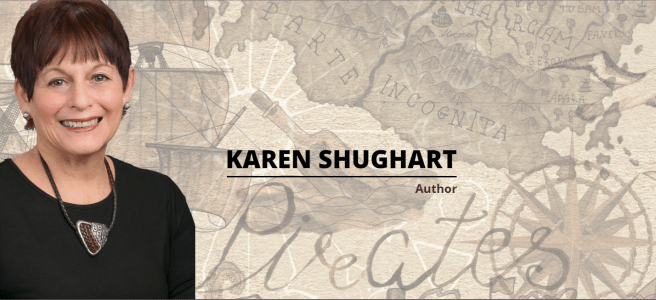
Let It Go by Karen Shughart

There’s a certain amount of pressure for all authors, regardless of how they’re published, that’s self-imposed. We set out to write a book and determine the time frame for finishing it, and therefore must adhere to some sort of schedule. And for those of us who are with traditional publishers, there’s the added pressure of submitting our book at an agreed upon deadline,

When I started writing my Edmund DeCleryk cozy mystery series, I wrote every day. I didn’t set a specific number of hours but instead spent time at the computer until I was either so exhausted that I literally couldn’t see straight or was happy with the advancement of the plot. In the past this has worked well for me, but this summer it didn’t.

Let me explain.  We live in a resort village that is a bustling hive of activity during summer months. Our beautiful scenery, gorgeous waterways, pristine beaches, and a multitude of activities centered around what we call Summerfest results in visits from family and friends, picnics, cookouts, concerts, festivals, outdoor movies, yoga classes, boating excursions and, on cool nights, time spent with friends drinking wine around a blazing fire pit watching the stars.

This year in particular, I was also happily bombarded with invitations to do book talks and signings, sometimes more than one a week. In addition, we took three short trips: to visit family; for a couple’s getaway; and when I participated as a panelist at a  mystery lovers’ conference in another state.

I must admit, at first I felt anxious about my inability to carve out time to continue writing my fourth novel, Murder at Chimney Bluffs, after making good headway last winter and spring.  Then I took a deep breath and thought. ‘It will be done, and isn’t a big part of life enjoying experiences that could help make my writing be even better? Let it go.’

And I did. When my publisher emailed me to get a sense of when she could expect my next book, I responded that I thought I could submit it to her a year from this coming November or maybe even December, but not before. She thanked me and said no problem. When I gave talks and attended signings, which I really do enjoy, I wasn’t the least bit anxious about not writing.

At the entrance to a town a little west of us there’s a huge sign that announces “Where Life is Worth Living”.   And that’s certainly true about this place we call home.  I finally conceded to the pressure to write and allowed myself to enjoy every minute of every day and relax about not keeping to a schedule. I’ll get it done, I know. There’s something to be said for letting go.

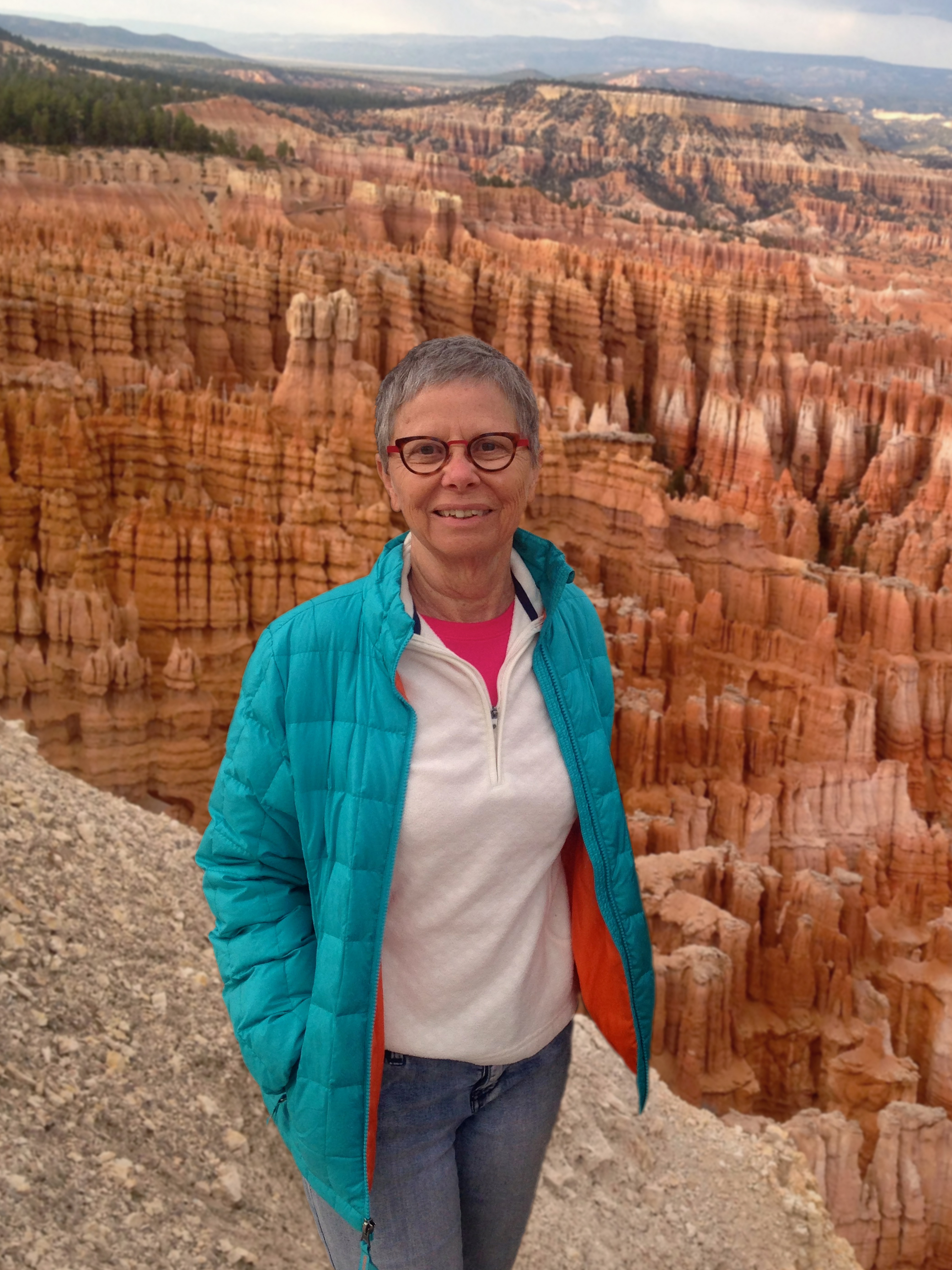
Karen Shughart is the author of the Edmund DeCleryk cozy mystery series published by Cozy Cat Press. She lives on the south shore of Lake Ontario in a village in New York state that’s the prototype for Lighthouse Cove, the s fictional setting for her books.

Guest Blogger ~ Sharon L. Dean

The Mystery of Naming

I’m not original when it comes to naming characters. No Vermeulens or Siobhans or Kimmos. I try to make the names I choose popular at the time when a character was born. So the six old women in my novella with that title get Barb, Dottie, Jane, Lucy, Stella, and Thelma, all common names in the 1920s.

My novels are filled with generic names, Will and Peter, Anna and Cynthia. The problem with this is that I tend to repeat names without remembering that I used the same one in an earlier novel. This happened recently with the novel I’m working on now. I named a minister Roy Chambers after Roy Chamberlain, the minister of my former church. When I discovered I’d used the name in Cemetery Wine, I had three choices: keep the name despite the repetition, change the name, or find a connection between the old novel and the new one. I worked to find a connection. None made sense, so I changed just the last name from Chambers to Tibbetts, a nod to another minister I once knew.

I heard a famous writer say that if she met someone she didn’t like, she’d use that person’s name for an unlikeable character in her next novel. I don’t do that. But I do pay homage to people via the names I choose. A mortician gets the last name of the mortician in the town where I grew up, a doctor gets the name of my old doctor, and a college professor gets the name of my dissertation advisor. My cats, Nutzycoocoo and Charlie, get memorialized in my writing.

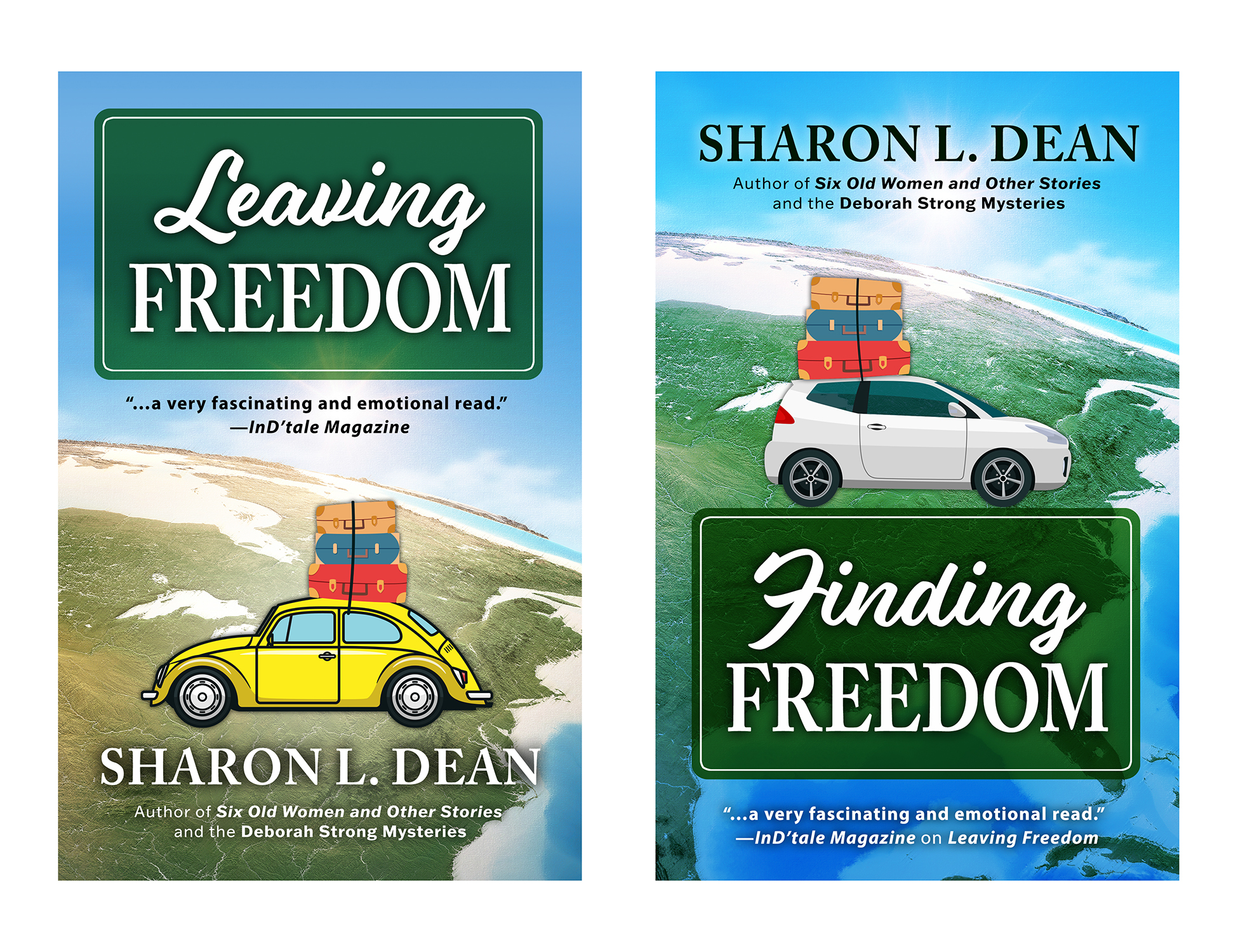
My novels Leaving Freedom and Finding Freedom borrow the protagonist’s name, Connie, from Constance Fenimore Woolson, a nineteenth-century writer whose work I researched in the days I was an academic. Woolson’s sister and niece were Clare and Clara. Connie, Clare, Clara, I couldn’t keep them straight even when I was researching Woolson. So I changed my Connie’s sister to Sarah (note the rhyme) and her niece to Lizzie, after Woolson’s friend. Her mother gets Woolson’s mother’s name, Hannah, and her uncle gets Woolson’s brother, Charlie.

The most fun I had with names came in Death of the Keynote Speaker. This is the second in my first mystery series featuring Susan Warner, the name of another nineteenth-century writer. I put into the novel a secret code even Nancy Drew couldn’t crack. Nancy Wheeler combines Nancy Drew and Honey Wheeler from the Trixie Belden books. Frank Belden combines Trixie’s last name with Frank Hardy. Joe Hardy of Hardy Boys series is Joe Keene after Carolyn Keene, the name given the author of the Nancy Drew series. And so it goes, all the way to the police officer named Stratemeyer after the syndicate that produced all those books.

The name of a character doesn’t need to be unique. Often these days, I wish there were a pronunciation glossary to accompany a novel. I can do Raskolnikov and Akhmad and Clytemnestra. I applaud the wider range of ethnicities in our contemporary fiction, but please tell me how to pronounce Ove. Ove with a long o? Ové with two syllables? Uve as in ooh or Uvé with two syllables? Maybe there’s a reason the American movie is named A Man Called Otto.

How do you choose names when you write? What kind of names do you prefer when you read?

Leaving Freedom took Connie Lewis from her home in Freedom, Massachusetts, to Florida with her aging mother and then to Ashland, Oregon, where she found success as a writer and a place to call home. Now, in the sequel Finding Freedom, Connie is eighty years old and has exchanged the Volkswagen she called The Yellow Sub for a Honda Fit she’s nicknamed Last Chance. She’s ready for a last adventure and will use a drive across the United States to write a travel narrative she’ll call Travels with Connie.  From gospel singers in the little town of Fossil, Oregon, to a famous painter in Glacier National Park, to turtle races in Perhem, Minnesota, to a twelve-year-old grandniece who teaches her about the lives of modern tweens, she finds more material for her book than she expected. Both going and coming back, she solved mysteries that help her to understand how the world changes even as it remains the same. Will she complete her journey in Massachusetts where she was born, the Oregon she has learned to call home, or somewhere she hasn’t expected?

https://www.amazon.com/Finding-Freedom-Sharon-L-Dean-ebook/dp/B0C5ZHK5N1

https://www.amazon.com/Leaving-Freedom-Sharon-L-Dean/dp/1645994651

Sharon L. Dean grew up in Massachusetts where she was immersed in the literature of New England. She earned undergraduate and graduate degrees at the University of New Hampshire, a state she lived and taught in before moving to Oregon. Although she has given up writing scholarly books that require footnotes, she incorporates much of her academic research as background in her mysteries. She is the author of three Susan Warner mysteries , three Deborah Strong mysteries, and a collection of stories called Six Old Women and Other Stories, Her novel Leaving Freedom was reissued on June 14, 2023 along with a sequel Finding Freedom. Dean continues to write about New England while she is discovering the beauty of the West.

My website:

https://sharonldean.com/

My publisher:

https://encirclepub.com/

The Importance of Research by Karen Shughart

 I recently attended a conference in Pennsylvania called Murder As You Like It that was for writers and readers of mysteries. I was fortunate to have been asked to participate with a group of other authors on a panel where we discussed the importance of research in our books.

My books are cozies that take place in the present in the fictional village of Lighthouse Cove, NY, modeled after the village where I live. Each has a historical backstory that provides clues as to why the murder occurred, all of them based on an actual period of history in our community.  Although for the most part my characters are fictional, King George, III; Abraham Lincoln; Frederick Douglass, and Susan B. Anthony are among real characters I name as part of each back story, and real universities, museums, and tourist attractions as they fit into each plot.

My sleuths follow clues that lead them to Rochester, NY; Niagara-on-the-Lake, Gananoque, and Toronto, Canada; London, England and Charleston, SC. I’ve visited these places and creative license aside; my descriptions are fairly accurate. While I don’t use the names of real newspapers, concerned that my reporters wouldn’t reflect their editorial policies and methods, I have used the name of one of our regional magazines, with permission.

When I started writing the series, I decided that it was also important to make the investigative procedures as accurate as possible, so the books had believability. I was fortunate to have been accepted into a citizen’s police academy sponsored by our local sheriff’s office – once a week for nine weeks, six hours each time- where I learned about the criminal justice system in our county. We ate lunch in the jail, watched K 9 demonstrations, and heard speakers who were experts in their fields.

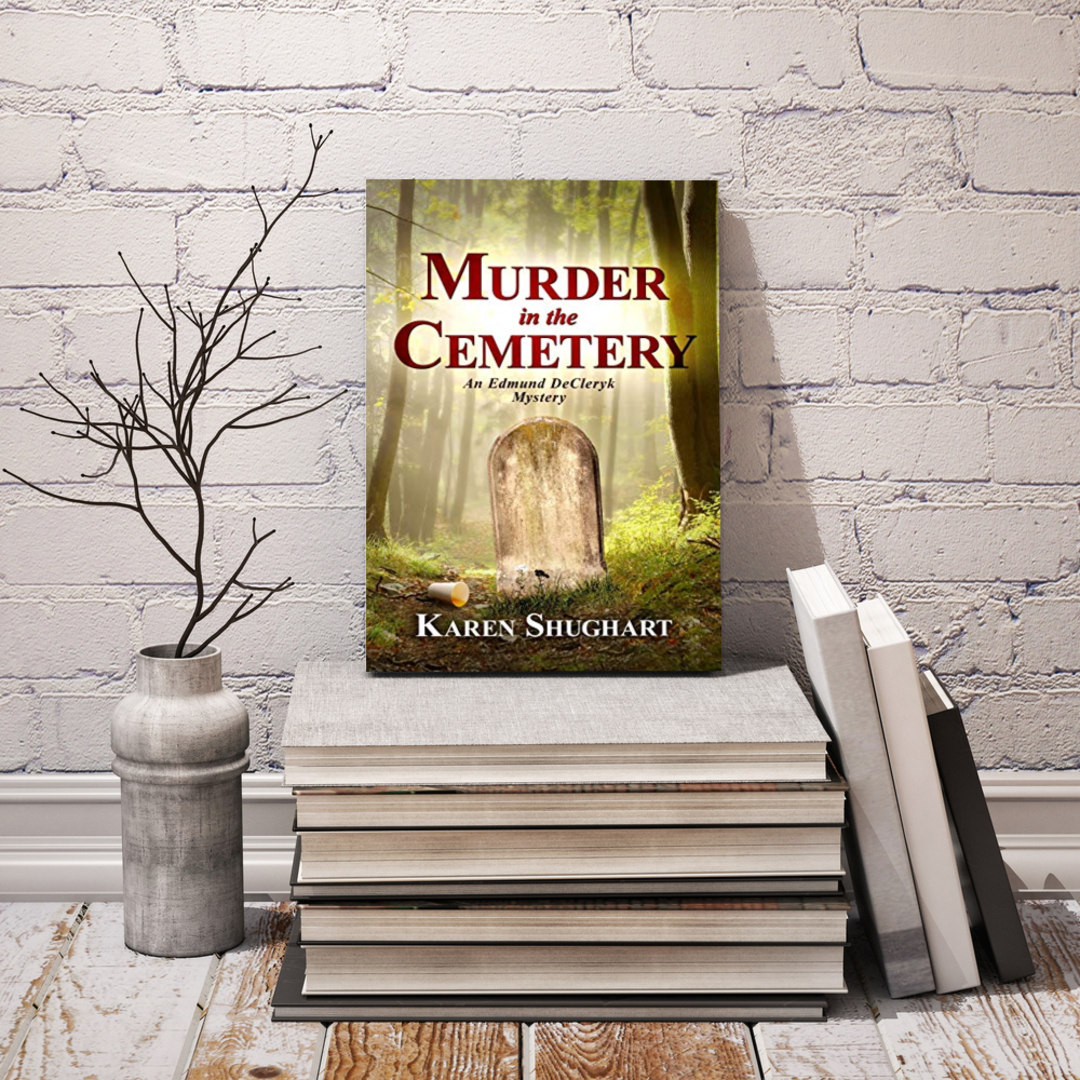
My favorite research tool is talking with professionals who know how investigative procedures work. I’ve been able to interview our DA, a professor of criminal justice, a retired police officer, a commander for regional police force; medical professionals.  In book two of the series, Murder in the Cemetery, the sleuth has a friend who is with the CIA whom he calls upon for advice. It took a bit of chutzpah, but I decided to contact the real CIA to see if I could interview someone there with questions, and low-and-behold, it worked. They reviewed my credentials, and I got a call from their public affairs officer shortly after. It never hurts to try.

Yachts in present time and rumrunning boats during prohibition figure into the book I’m writing now. A friend of mine, after retiring, got his captain’s license and now appraises boats for insurance companies. He’s been a treasure-trove of information.

 Realistic research adds authenticity to the stories, and I think it’s the interplay between fact and fiction that’s so much fun for me to write and I hope, makes the stories interesting to my readers.

Guest Blogger~Margaret Fenton

Hello to all you wonderful readers!  My name is Margaret Fenton and I write the Little mysteries, LITTLE LAMB LOST, LITTLE GIRL GONE, and LITTLE WHITE LIES published by Aaakenbaaken and Kent.  They feature child welfare social worker Claire Conover.  Claire works for the fictional Jefferson County Department of Human Services in Birmingham, Alabama.  In real life several years ago, I was the mental health consultant for the Jefferson County Department of Human Resources and was surrounded by child welfare workers as my department helped to keep their clients out of foster care.  So most of my knowledge for the books came from my living it. Sort of.

          I read primarily cozy mysteries, and have for years. One of my all-time favorite writers was Anne George, who wrote the Southern Sisters series set here in Birmingham. I got to know Anne a bit before she passed away in 2001.  We were on our way to a Sisters in Crime meeting one evening and I admitted I had some interest in writing a cozy. I had a basic idea but it wasn’t going anywhere. She said “I would think that as a social worker, you come into contact with all sorts of evil people.  You could have a protagonist who is a social worker and that could be the reason she gets involved.”

          Bingo.  Thanks Anne. I went home and wrote the rough draft of LITTLE LAMB LOST. Claire gets to work one day and one of her little clients is dead from an overdose.  The police assume it’s the mother and arrest her, but Claire knows differently. There’s some romance, too, when Claire meets Grant Summerville and they begin dating.

In the second book, LITTLE GIRL GONE, Claire takes custody of a 13-year-old found sleeping behind a local Piggly Wiggly.  I would describe my books as amateur sleuth rather than cozy, but they are on the lighter side. Yes, Claire works with abused and neglected children, but all the violence is very off-screen. 

          In the third book, LITTLE WHITE LIES, a mayoral candidate’s office is bombed.  A staff member’s body is found in the rubble, and his daughter is left at a daycare overnight.  Claire takes custody of little Maddie and it turns out her deceased father was living under an assumed name.  I wanted to put a bombing in this book.  My beloved Birmingham was known as Bombingham during the Civil Rights struggle in last century, and racism is something we still continue to confront and work on here. Claire gets a foster child in this book, too, an amazing young lady named LaReesa we meet in the second book.  This puts all sorts of stress on Claire’s relationship with her boyfriend, Grant. Plus, there’s her forbidden attraction to reporter Kirk Mahoney. 

I’m working on the fourth installment, called LITTLE BOY BLUE.  I don’t want to give too much away, but you’ll get to find out what happens when you threaten someone Claire loves. Stay tuned!

A tense, taut and timely tale featuring Birmingham, Alabama child welfare social worker protagonist Claire Conover, Little White Lies is a gripping tale about secrets, revenge, temptation and the big cost of those little white lies. 

About Little White Lies:  When the office of black mayoral candidate Dr. Marcus Freedman is bombed, Claire Conover is drawn into another mystery. While Marcus is found safe, his campaign manager Jason O’Dell is found dead in the rubble. Claire’s office gets a call about Jason’s daughter Maddie who was left at her daycare, who becomes Claire’s latest charge as she investigates what happened. 

But what—or who—is behind this attack? Turns out there are more questions than answers when it is revealed that Jason O’Dell is living under an assumed name—and he’s actually Jason Alsbrook, the son of a prominent local mine owner James Alsbrook.  James Alsbrook and his mining company have an unseemly notoriety for having the most mining accidents and deaths in Alabama. Not surprisingly, there are many people who would wish harm to him and to his family. But who would’ve acted on that hatred?

As she works to keep little Maddie safe and find out who would’ve harmed Jason—and why—Claire uncovers a complex web of deception, secrets, and lies.  As she struggles to piece together this dangerous puzzle, Claire weathers the storms in her personal life as the addition of a foster child, and a burgeoning friendship with reporter Kirk Mahoney, threaten to rip apart everything Claire holds dear.  In the end, will those little white lies  come with a big cost?  Expect the unexpected in this mesmerizing Claire Conover mystery.

Brimming with tension and a pulse-quickening plot that races from page one, Little White Lies is a clever, confident and captivating read. Margaret Fenton delivers an unforgettable novel resplendent with seamless plotting, compelling characters, and a storyline to die for. A standout novel in Fenton’s critically acclaimed Claire Conover series, Little White Lies is not to be missed.

BUY LINKS
Little White Lies – By Margaret Fenton (paperback) : Target

Little White Lies book (thriftbooks.com)

Little White Lies (Paperback) – Walmart.com

Margaret Fenton writes the Little mystery series featuring child welfare social worker Claire Conover.  She spent nearly ten years as a child and family therapist for her county’s child welfare department before focusing on writing. Her work tends to reflect her interest in social causes and mental health, especially where kids are concerned. Her favorite mystery writers are too numerous to mention, but she tends to gravitate toward amateur sleuth and historical mysteries. She has been a planning coordinator of Murder in the Magic City in Birmingham, Alabama since its inception in February 2003 (mmcmysteryconference.com). Margaret lives in the Birmingham suburb of Hoover with her husband, a retired software developer, three adorable Papillon dogs, and lots and lots of books. Her website is margaretfenton.com and she loves to hear from readers.

Guest Blogger ~ DK Coutant

The lure of traditional mysteries…

I believe we are what we read, (not only what we eat). I write mysteries, but growing up I read mysteries…Nancy Drew, Trixie Beldon, and don’t tell my younger brother, but I borrowed his Hardy Boys. Years later, I became a psychology professor and taught at a University. I found I scored high on Need for Cognition. That’s a psychological dimension which indicates a tendency to enjoy thinking. I like to solve problems, solve puzzles, and it probably also explains my addiction to Duolingo. My guess is that most people who enjoy mysteries also have a high need for cognition. They like to think. If you want to find out how you score I’ve put a self-test at the end with a scoring key.

That same need to think, lead me into geopolitical forecasting. I like to untangle and make sense of disparate information. I’m not an expert on most of the topics I’m asked to forecast. I have dive into each new subject matter and narrow down the information to the essentials of a specific question I’m asked to forecast. (Do you want to give forecasting a try? Links here)

https://www.gjopen.com/

https://www.infer-pub.com/frequently-asked-questions#whatisinfer

The process of writing mysteries also relies on my desire to ruminate over ideas. I’ve got to devise a murder that will have breadcrumbs leading to the killer, but also diverse, and intriguing red herrings that might distract my readers down alternative paths.

To narrow down to my sub-genre, traditional mysteries, I don’t write super-bloody, violent books. I know some people love them and they are very popular. But in my geopolitical forecasting I track bloody conflicts and death rates. When I write I want to leave that behind. Sure, there has to be a death in a murder mystery, but, while not strict cozies, my mysteries are on the lighter side. For the reader like me, who believes there is enough violence and darkness in their world and looks for something complex, but fun, and not too pollyannish. I use my craft, to find happy endings…  and a balance in life. I enjoy my rainy days as much as my sunny ones.

Items That Compose the Need for Cognition Scale–6 (NCS-6)

1. I would prefer complex to simple problems.

1              2              3              4              5

1=Strongly Disagree                          5=Strongly Agree

2. I like to have the responsibility of handling a situation that requires a lot of thinking.

1              2              3              4              5

1=Strongly Disagree                          5=Strongly Agree

3. Thinking is not my idea of fun. (R)

1              2              3              4              5

1=Strongly Disagree                          5=Strongly Agree

4. I would rather do something that requires little thought than something that is sure to challenge my thinking abilities. (R)

1              2              3              4              5

1=Strongly Disagree                          5=Strongly Agree

5. I really enjoy a task that involves coming up with new solutions to problems.

1              2              3              4              5

1=Strongly Disagree                          5=Strongly Agree

6. I would prefer a task that is intellectual, difficult, and important to one that is somewhat important but does not require much thought.

1              2              3              4              5

1=Strongly Disagree                          5=Strongly Agree

To score yourself start with questions 3 and 4. They are reverse scored, so if you answered 1 change it to a 5, 2 changes to 4, 3 stays the same, 4 to 2 and 5 to 1.

After you have done that add up your score. A higher score demonstrates a high need for cognition, a lower score indicates an individual not as motivated to think and problem-solve.

(for more information on Need for Cognition:

https://www.ncbi.nlm.nih.gov/pmc/articles/PMC7545655/

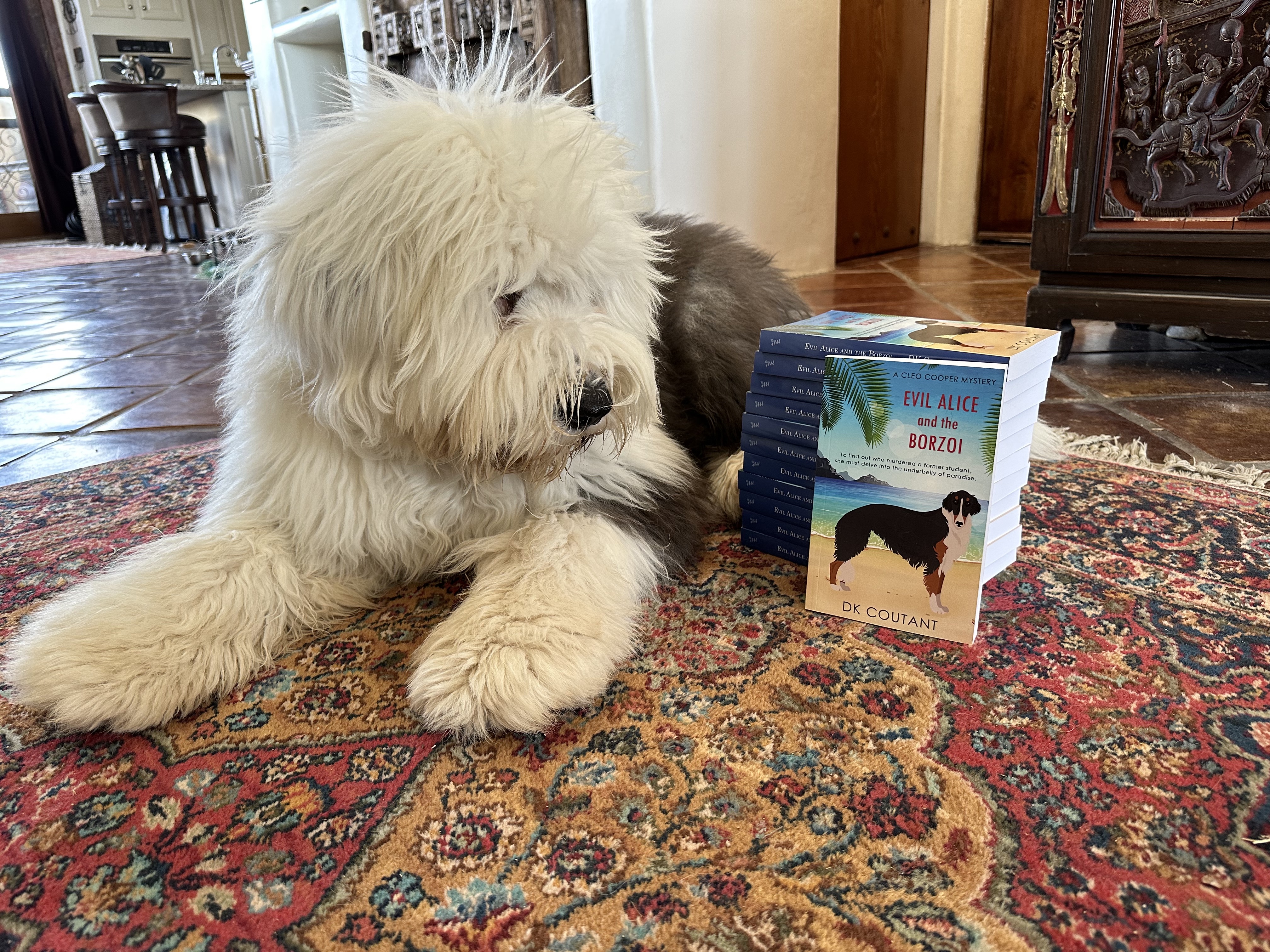
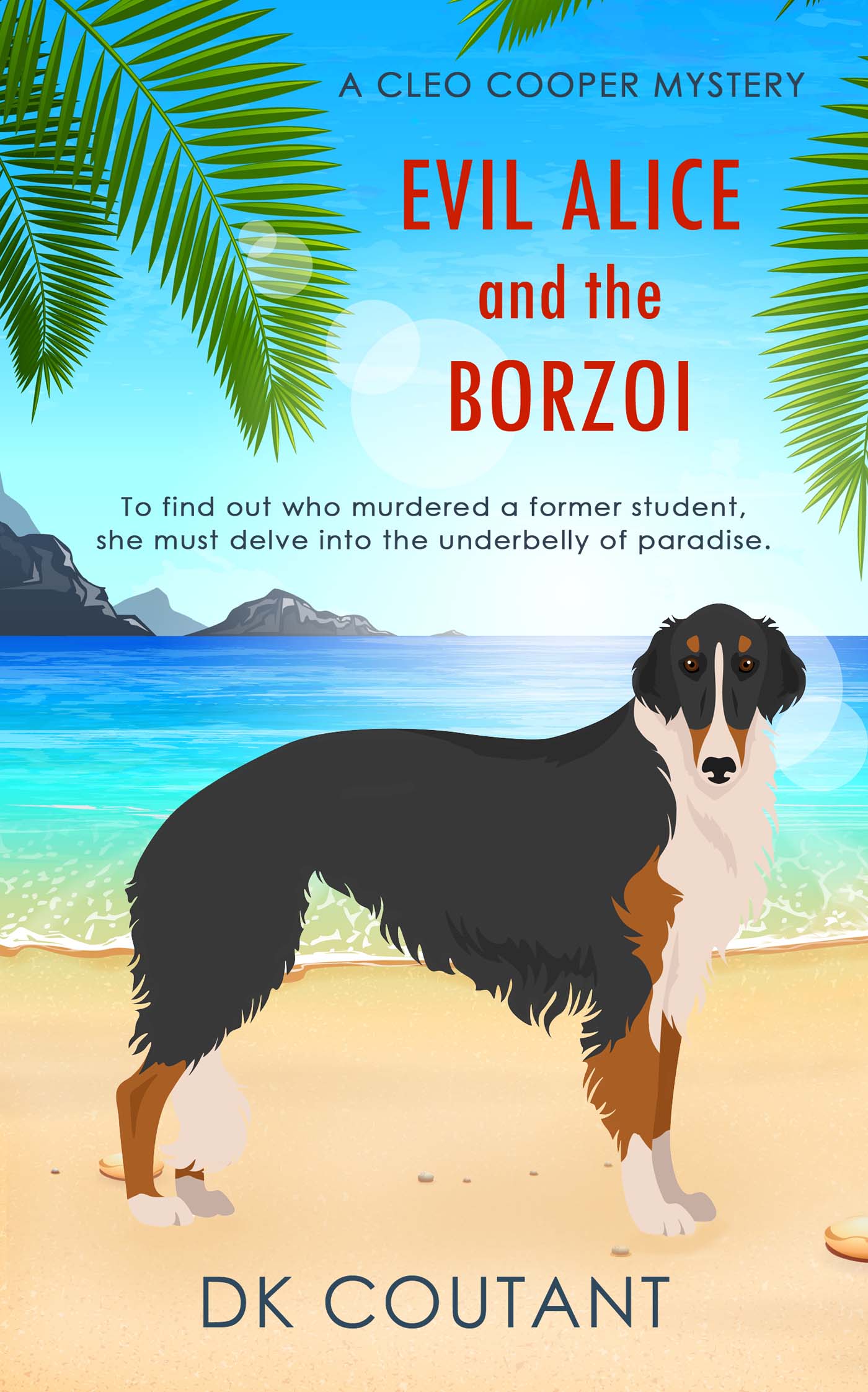
Paradise is shaken when the body of a young woman is dragged onto a university research vessel during a class outing in Hilo Bay. Cleo Cooper is shaken when she finds her favorite student is on the hook for the murder. Danger lurks on land and sea as Cleo and her friends are enticed to search for the true killer. Between paddling, swimming, and arguing with her boyfriend, Cleo discovers everything is not what it seems on the Big Island of Hawaii. But will she find the truth before she becomes the next victim?

Buy links:

https://www.goodreads.com/book/show/88564113-evil-alice-and-the-borzoi

https://www.bookbub.com/books/evil-alice-and-the-borzoi-a-cleo-cooper-mystery-book-1-by-dk-coutant

https://bookshop.org/p/books/evil-alice-and-the-borzoi-dk-coutant/19649122

https://www.amazon.com/Evil-Alice-Borzoi-Cooper-Mystery/dp/150924591X

https://www.barnesandnoble.com/w/evil-alice-and-the-borzoi-dk-coutant/1142929587

DK Coutant graduated from Davidson College with a Psychology degree, and applied her behavioral training at Sea World, training dolphins and whales. Realizing that scrubbing fish buckets might get old, she went back to school and earned a Ph.D. in Psychology. Her academic career began at the University of Southern Maine before DK made the jump to the University of Hawaii at Hilo rising to Department Chair of the Psychology Department. After many happy years in Hawaii, DK made the move out of academics to become a professional geopolitical forecaster for GJP, Inc ( https://goodjudgment.com/Inc ) and INFER  ( https://www.infer-pub.com/). Evil Alice and the Borzoi is her first work of fiction published by The Wild Rose Press.

Social Media Links:

Twitter: @dkcoutant

Instagram: @DKCandDog

Facebook: https://www.facebook.com/profile.php?id=100087049617707

Mastodon: https://lor.sh/@dkcoutant