
A Compulsive Story Maker and the Mayor’s Grandpa Mug

I was in the thrift store looking for tolerably attractive coffee mugs. I kept very few when I downsized and moved, and I’m clumsy with crockery, so I needed to resupply. A friend who recently retired from running our local bookstore was also shopping. She told me she could never buy the mug I found especially pretty, because it had words on it promoting a business systems company, and she was a compulsive reader. “It would drive me crazy. If there are words in front of me, I read them. Even if I’ve read them before, I read them over and over.”

This doesn’t happen to me. I’ll read them once and then enjoy the elegant blue and gold stripes around them.

But then she picked up a mug with pictures and words. “Oh my goodness,” she said, “it’s Jim Smith.”* The mayor.

Happy Father’s Day. We love you, Grandpa Smith was inscribed above a picture of his three smiling grandchildren. On the other side of the mug was an image of the mayor, his son, and his dog. The men looked handsome and happy; the dog, slobbery and goofy. This was the mug that could drive me crazy. I’m not a compulsive reader, but a compulsive story maker.

“He’s such a lovely man,” my friend said with a touch of concern

“And a good mayor,” I added.

We acknowledged we were both thinking about stories that would emerge. Would the mayor appear inconsiderate of his grandkids’ feelings? People would speculate. Had he had a split with his son or grandchildren? Had a person in one of the pictures died or been kicked out of the family? It’s possible he had so many grandpa mugs he needed to clear out the excess, or he quit drinking coffee, or the unflattering shot of the dog bothered him. But the mug felt wrong there.

I bought it for a quarter along with the pretty mug with words on it, but I’m not drinking coffee out of the grandpa mug. I bought it so other compulsive story makers wouldn’t invent tales about the mayor.

And then I quietly disposed of it, so I wouldn’t keep thinking of stories. Someone else’s family pictures suggest so many, and I write about a psychic who can see past events connected to a person by holding an object imbued with their energy. I felt like I’d be drinking in the mayor’s energy if I drank coffee from his grandpa mug. There’s a possible story there, but I can write it later. Not every day at breakfast.

(*Not the mayor’s real name.)

Would the grandpa mug drive you crazy? Are you a compulsive story-maker?

*****

Shamans’ Blues, book two in the Mae Martin Psychic Mystery Series, is on sale for ninety-nine cents on all e-book retail sites.
The New Writer

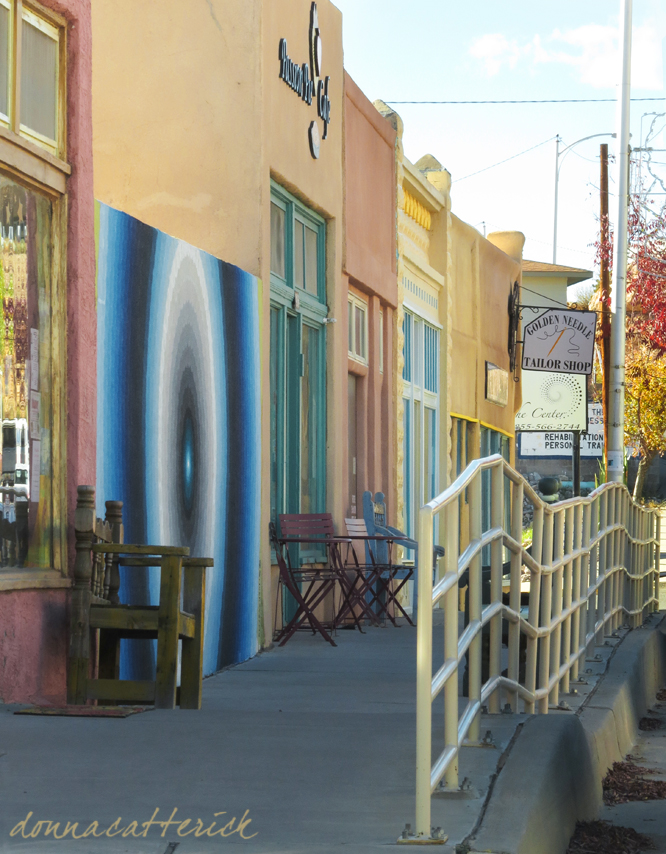
“Excuse me—are you ladies writers?” asked the man at the next table in Passion Pie Café, Truth or Consequences. Clearly accustomed to the ways of T or C, he understood that it’s socially normal to listen, to introduce yourself, and to connect with strangers.

I was having lunch with a friend who did the cover photography for some of my books, and he’d overheard us discussing the plot challenges of my next book. She’s a thoughtful and insightful reader, a great person to brainstorm with, so he assumed we were both writers. The gentleman had pages of notes on his table, and he explained that he was an archaeologist and professor working on his first mystery, to be set at an archaeological site on a fictitious version of a well-known ranch in the area where he has done work for many years.

“May I pick your brains?” he asked.

This was the beginning of a great conversation, getting acquainted as new friends as well as sharing creative processes. When we ran out of time to finish it,  he invited us out for dinner the next day. In between those two meetings, I reflected on how much floundering I did years ago, trying to breathe life into a non-viable first draft, before I found the resources that helped me become a better writer.

These are some I recommended to him

  • Sisters in Crime (SinC). There are now misters as well as sisters in the group. The SinC Guppies group (a name that evolved from the Great Unpublished) is where I found my editor and my critique partners, where I arranged manuscript swaps, and got answers to all sorts of obscure questions for my research. The subgroups of the Guppies help with marketing, social media, brainstorming, and more. Local SinC chapters host workshops and speakers and provide networking and promotional opportunities. (Our  fellow blogger Patricia Smith Wood does great work with Albuquerque chapter.)
  • Editor and writing teacher Ramona DeFelice Long’s current blog project, 40 Days of Worksheets.
  • James Scott Bell’s Plot and Structure and Jack Bickham’s Scene and Structure. For me, these are the ultimate and irreplaceable guides to making a story work.
  • Feedback from other writers. I was impressed that he’s already getting it. As he debated using first or third person, he had people look at his first chapter, and everyone told him it was better in third person. The newbie author himself was the only one who liked it in first person. Off to a good start. He’s killed his first darling.

He knew he had a difficult project underway and genuinely wanted to learn.  He had insight into the weakness that’s slowing him down—editing fanatically on the first draft rather than pushing through and polishing later. (A weakness I understand all too well.)

I offered to critique the work in progress when it’s ready. We came up with a possible title and even a theme for titles in the series. He formed quite a bond with my photographer friend, and I’ll be curious to see if her work ever ends up on his book covers.

My prediction is that he’ll succeed. He loves mysteries, knows how to work hard, has a sense of humor, research skills, and an original idea. The romantic subplot of his mystery is a knock-out. And he doesn’t think he already knows everything. Meeting him reminded not only how much I’ve learned since I was in his situation—a professor writing a first draft in my free time—but also how much I have to learn and keep re-learning.

Image credit, Passion Pie Cafe exterior  by Donna Catterick https://alwaysbackroads.wordpress.com/2016/11/30/wobbly/wobbly/

Something Bigger

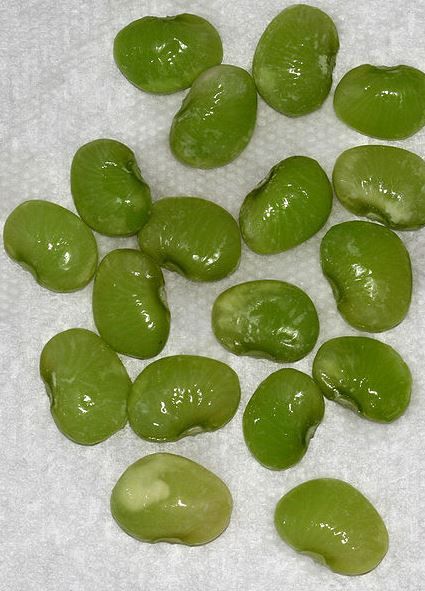
My reading encompasses genres besides mystery, especially literary fiction, historical fiction, and nonfiction. Nonfiction educates me, and I’m delighted when the author presents information in a way that makes me want to know more. The same is true of well-researched historical fiction, with the bonus of plot and characters to keep me engaged. After pushing through several highly acclaimed recent literary novels, I had to ask myself why I found them such a struggle to read compared to the classics in the genre or to my other reading. My conclusion: self-absorbed protagonists with no goals beyond their egocentric concerns. In these books, I’ve admired but not enjoyed masterful portraits of unpleasant people and vivid descriptions so alive and detailed I was immersed in the locations with all my senses without ever wanting to be there. Appreciation for writing skill isn’t the same experience as getting wrapped up in a story. When I force my way through one of these frustrating novels, I feel the way I did as a kid eating lima beans. Mom cooked them and they’re supposed to be good for me, but do I have to finish?

The mystery genre appeals to me because the protagonists are involved in something bigger than themselves. The lead characters in mysteries have their personal problems, their relationship challenges, and sometimes their demons, but the pursuit of their goals demands caring and courage, often in spite of those private difficulties.  As a writer, I hope to give my readers the experience of empathy as well as an intriguing setting and the mental exercise of solving the puzzle. After all, that’s what draws me to the series I follow.

Lessons from a Bad Neighbor

He’s long gone. In fact, I wrote the first draft of this post back in September and just now rediscovered it in my files. Some of these lessons I learned from enduring a bad neighbor for six weeks were things I already knew conceptually, but experiencing them emotionally last summer was enlightening for me as a writer.

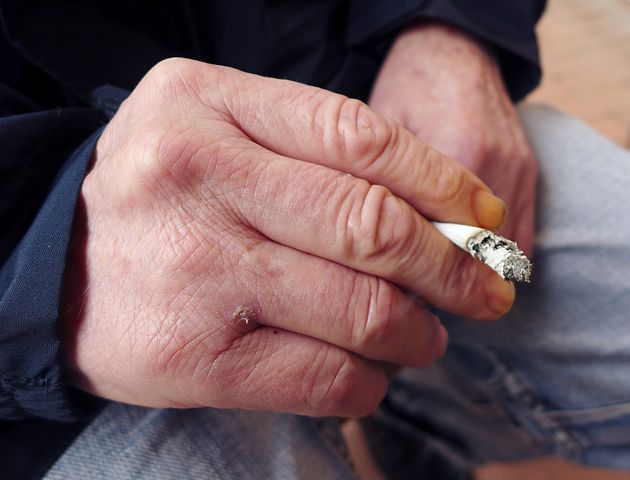
Shortly after Bad Neighbor’s arrival in our lovely old adobe apartment building, which is entirely non-smoking, even the courtyard, I began to smell tobacco smoke leaking through the gaps around the kitchen and bathroom pipes. Second-hand smoke causes low-level carbon monoxide poisoning, and opening windows and running fans isn’t enough to clear it out. He smoked so much, I got headaches and dizzy spells and had trouble concentrating, and the stink often woke me up in the middle of the night. To make it worse, he seemed to be a drug dealer. People stopped by for five to ten minutes at all hours. He left his outdoor light on all night for them. When one of my good neighbors confronted him (“Are you selling dope?”), Bad Neighbor threatened to knock his head off. Bad Neighbor accused me of harassing him when I complained, and he was furious with me for getting him evicted by telling our landlord about the smoking. Not that Bad Neighbor let the eviction notice cramp his style. After a month, instead of leaving, he moved his equally hostile, smoking girlfriend in with him. They had no lease. They paid no rent. They didn’t move out until a few days before he had to appear in court. Meanwhile, I acquired some insights.

One: How con artists work. This squatter took advantage of my kind, soft-hearted landlord with a sob story about why he couldn’t get a place to rent or afford a deposit and why he could only pay for one week at a time. My landlord was new in town. If he’d been in the rental business here longer, he might have heard about this guy’s history as a serial evictee, sort of a professional squatter. Bad Neighbor found a perfect mark. I suspect he knows the law as well as anyone and exploits it to make sure he can live rent free, utilities included, as long as possible.

Two: Why people could get the urge to be amateur sleuths. My good neighbors and I were convinced there were drug sales going on, and so was the gentleman next door. But we couldn’t prove anything. The temptation to ask each of the five-minute visitors what they were doing was strong. So was the desire to find a way to prove Bad Neighbor was not just a squatter but a criminal. I could see it especially in the old soldiers—a Korean War vet and a Vietnam vet. They wanted to be brave and see justice done.

Three: How frustration could drive people to act on their own when the law can’t move swiftly enough to suit them. In my best moments, I sent positive intentions toward Bad Neighbor, visualizing him quitting smoking, acquiring a conscience, and paying what he owed, but at other times I fantasized having superpowers that would make him wander off in the desert and fall into a canyon, never to be seen again. Not that I would actually have hurt him, but … I got it. How a peaceful person—I’m a yoga teacher, for Pete’s sake!—could wish harm on an enemy.

One of my good neighbors suggested I might break with my “no murder, just mystery” approach and write a story in which Bad Neighbor dies. Good idea, but I plan to write it without murder. I’m thinking of giving one of my recurring characters such a neighbor. In keeping with an ongoing theme in my series, she could recruit help from someone with paranormal powers, taking justice into her own hands. Actions like that have a way of biting back. I like this plot idea, but I have two books to revise before I can get to it.

New Year- New Insights

Several of the Ladies of Mystery have some info about how they begin a new year or resolutions they make.


Amber in tree final

I don’t make New Year’s resolutions. When I discover the need for change, I do it, no matter what time of year. I recently caught myself reading too much when I should have been writing—not exactly a vice for a writer, but still, it was taking me away from my work in progress. I now start the day writing. I limit myself to reading one book at a time, and have cut back on magazines and news articles. Not so much as to slip into ignorance, just reading in moderation. Writing before I do anything else is energizing and keeps the ideas percolating as I do other things before I resume writing at night. I’ve always written daily, but the morning writing is new.

My goal for the year is to complete the seventh Mae Martin mystery.  I’m entering such major revisions on it, the process will be quite an adventure. ~ Amber Fox

Website  | Facebook | Twitter Goodreads | Amazon


Me at Caruthers Library 2I never write New Year’s Resolutions, but my plan—and you know what happens to plans—is to be more regular about my writing if possible. I’ve actually gotten rid of a couple of jobs so I should have more time, right? In any case, what I really want is to enjoy my writing. ~Marilyn Meredith

Website  | Facebook | Twitter | Goodreads | Amazon


2017 headshot newI don’t make resolutions, I make goals. My goal for the coming year is to put out a product (box set, book, novella, audio book) a month. I like to have something to tell my newsletter readers about.  And I  like to keep pushing out new material. My brain is so full of ideas for the series I have started and some I don’t that I have to keep pushing out the words and stories to make more room in my head.  ~Paty Jager

Website  | Facebook | Twitter | Goodreads | Amazon