Guest Blogger ~ Terri Maue

Knife Edge is a traditional murder mystery. The entire story is told from the point of view of the amateur sleuth protagonist, Zee Morani. I knew very little about Zee when I wrote the first draft of Knife Edge about ten years ago. Basically, I knew I wanted her to be a writer, but she needed to have more freedom than a reporter with regular hours or an assigned beat. And because I also wanted her to comment current events, I ruled out making her a book author. So, Zee became a successful columnist.

As I worked my way through early drafts, I learned a lot about Zee. In her job, she was free to pursue whatever interested her, as long as she could turn it into a column on deadline. I decided Zee should use satire in her column, which allowed me to indulge my own penchant for pointing out social, cultural, and bureaucratic idiocy, incompetency, and callousness.

It was fun to sprinkle column topics throughout the story. They provided a bit of comic relief from the escalating tension of the mystery, and I enjoyed researching topics that piqued my interest or aroused my ire. Showing Zee at work also helped me clarify how she could use her particular skills to solve the murder: her skepticism, her attention to detail, and her ability to put information together in different ways—what she called seeing the world sideways.

Also, giving Zee a human-interest focus for her column meant she would not be at home in the world of crime and criminals. I certainly was not. Drawing on my own naivete (as in what might I do next?), I put her into dangerous, and sometimes humorous, situations.

I entered a new stage of relationship with Zee after Knife Edge was accepted by Camel Press. One of the early tasks my editor gave me was to write a history of Zee’s parents. Using Zee’s age at the time of the story, I backtracked to discover that her parents came of age in the 1960s.

That decade exerted a great influence on my own maturation. Coupled with research into that tumultuous time, my experience helped shape Zee’s moral compass. She is driven by a deep need to see justice done. This drive impels her to use her column to defend the ordinary human being who struggles against the mindless workings of a machine-like organization. It also gets her involved in the murder.

Perhaps the biggest surprise in Zee’s character tuned out to be the extent to which her persona was influenced by my two previous careers. I didn’t realize this until after the book was completed.

I spent twelve years in public relations before I quit, unable to continue to spin facts to create a misleading picture. I actually looked in the mirror one day and realized that if I didn’t leave, I would get to the point where I no longer recognized the truth. Though I did not see it at the time, I made Zee a satirist specifically so she could point out the ways in which people use language to distort and misdirect, to adhere to the letter of the law while violating the spirit.

My PR experience also provided the seed for Zee’s dream to write what she considers serious journalism, which she viewed as using her talent for greater good. After my PR disillusionment, I switched careers and became a university professor. I spent 18 years teaching students how to use language ethically and responsibly and showing them how unscrupulous writers and speakers deceive their audiences.

Writers are always encouraged to write what they know. My experience with Zee would seem to indicate that I’m not always aware of what I know, at least not consciously. But then, discovering what lies beneath the surface is a big part of the fun of writing—and life—for me.

KNIFE EDGE

An unwitting columnist. A shocking murder. A devious killer.

Is Zee Morani tracking clues or playing a role orchestrated by a murderer?

When Zee Morani discovers the bloodied corpse of a disgraced medical researcher, the accused killer begs her for help. But Zee is not a cop. She’s not even a PI. She’s a regionally syndicated satirical columnist who dreams of breaking into serious journalism.

Zee believes the suspect is guilty. After all, he staggered into her as he fled the scene of the crime. But she’s made a career of challenging bureaucracy. The drive to defend the underdog, or at least give him a fair chance, pulses in her veins. Unfortunately, everything she learns only strengthens the police case.

Even as the facts pile up against him, Zee’s instincts argue for his innocence. Her friend Fontina’s finely tuned intuition concurs. But while Fontina supports Zee’s investigation, Rico, a seasoned crime reporter, balks at her interference in the case. Despite their recent breakup, he wants to protect Zee from the world of violence he knows all too well. He also wants to win back her heart. Tempting as that is, Zee resists him, her heart shackled by the pain of past betrayals. They agree to work together as professional colleagues and friends, but it’s an uneasy alliance. 

As Zee digs deeper into the researcher’s murder, her involvement makes her a target. Her inexperience tempts her to back away from investigating, but her commitment to truth won’t let her quit. When Rico suffers a vicious attack, her fury burns the last vestiges of hesitation. Gritting her teeth, she tackles a nasty thug, a suspicious police lieutenant, and in the end, the barrel of a gun—all to unmask a stone-hearted killer. 

Amazon: https://www.amazon.com/Knife-Edge-Terri-Maue/dp/1684922003

Barnes & Noble: https://www.barnesandnoble.com/w/knife-edge-terri-maue/1143420718?ean=9781684922000

Bookshop: https://bookshop.org/search?keywords=Terri+Maue

Target: https://www.target.com/p/knife-edge-by-terri-maue-paperback/-/A-89152528#lnk=sametab

Walmart: https://www.walmart.com/ip/Knife-Edge-Paperback-9781684922000/2756992774?from=/search

Terri Maue is a retired professor emeritus from Embry-Riddle Aeronautical University. After she retired, she decided to pursue a life-long dream to write a mystery novel. The result is Knife Edge: A Zee & Rico Mystery. In addition to offering a challenging puzzle, it reflects several of Terri’s interests:

  • martial arts—she holds a first-degree black belt in TaeKwon Do;
  • spirituality—she has studied many forms of religion, including Christianity, Wicca, Buddhism, and Native American and African practices;
  • the intuitive arts—she reads Tarot cards and has taught dream interpretation.

Terri is a member of Henderson Writers Group, Sin City Writers, Sisters in Crime, and Mystery Writers of America. She is working on the second book in the Zee & Rico series. She lives in Las Vegas, Nevada, with Eddie, her personal photographer and husband of 55 years.

You can visit Terri’s website at https://www.terrimaue.com, find her on Facebook at Terri Maue Author, find her on Instagram @terrimaueauthor, and write to her at terri@terrimaue.com
Guest Blogger ~ Heather Ames

THE BOOK THAT DIDN’T WRITE ITSELF

Some books almost write themselves. The plot sails along, the characters all interact as they should. Even the backdrop feels like it’s an impressionist painting that only needs a few brushstrokes to make it shine.

Book 3 of the Ghost Shop series wasn’t that book.

I had trouble finding a title, even though the theme was a haunted vineyard that wasn’t producing anything except anger and bad vibes. Compounding the problem, I wanted all books in the series to have titles starting with the letter T. After mentioning my dilemma to several people, two came up with the same suggestion: Tainted Legacy.

Still not completely sold, I used it as a working title I liked more as the plot struggled along, characters tripping over themselves and refusing to fall in line when I tried to take them in a certain direction, creating strange sidebars that, when I researched them, were grounded in reality.

I’d had a similar problem with book 2 of my Miami-based Swift/Roberts series. A group of friends became suspects of one kind or another in a cold case murder and kept squabbling like an unruly flock of geese, twittering songbirds or more likely, buzzards. I had a great deal of trouble reining them in. After opening one chapter in particular, I’d stare at it, then close it again without changing a word. Finally, with 4 drafts completed, the squabbling stopped and everything fell into place.

Tainted Legacy felt like a rerun with different players. Since I don’t outline my books, surprises are lifeblood for me. They fuel my imagination and reveal things about my characters I could never envision with the rational side of my brain. But when one of those characters presented me with a pivotal scene during what should have been the final 4th draft, I balked. That draft is supposed to be a read-through. An opportunity to catch those last few errors that typically occur, regardless how many times a manuscript is polished. I remained stuck, unable to work on the file for 2 weeks. My version of writer’s block. Something I had never experienced before.

Finally, I wrote The End, but was it? I hadn’t made any significant changes to that scene. It flowed too well. Now, I had to go back and read through the entire manuscript for a 5th time. If I changed my mind about that chapter, the entire storyline would have to be revised. The manuscript wouldn’t be ready for publication in time for a shipment of books to arrive before the Portland Holiday Market, the biggest show of the year for NIWA (Northwest Independent Writers Association,) and my unofficial book launch for Tainted Legacy.

I took a few deep breaths, got back in my office, and swiftly completed that 5th draft/read through. The plot worked. The character who had thrown that pivotal scene at me stood back and smirked. It had to be there. It complicates the relationships between the main protagonists when they should have cleared a major hurdle. It forebodes trouble of a possibly monumental degree in the books that follow.

This year, I’m planning to work on the 4th books in both my series. I have titles and rudimentary plots, big steps toward meeting that goal. Without encountering angry wine or squabbling teenagers, Maine Issues and Trick or Truth will both be available before the end of 2024.

Tainted Legacy

A barren vineyard in Dallas, Oregon. Two deaths. An unexpected heir who wants a quick sale. Is it a bargain, or an invitation to become entangled with the misfortunes of the Taricani family?

Sinister winery owner Vincente Valderos calls in psychic Sunny Weston and her partner, retired detective Ash Haines, to solve the mystery and save their souls…until the next time he summons them.

https://www.amazon.com/TAINTED-LEGACY-Ghost-Shop-Book/dp/B0CMCDCYP1

Heather Ames writes two mystery/suspense series, one with a paranormal twist, standalone suspense, romantic suspense, and short contemporary romances. When she’s not writing, she’s either thinking up new plots, traveling the world, or dreaming up new adventures.

Website:

https://heatherames.weebly.com

Amazon Author Page:

https://www.amazon.com/stores/Heather-Ames/author/B00ITGYJ86?ref=ap_rdr&store_ref=ap_rdr&isDramIntegrated=true&shoppingPortalEnabled=true

Social Media links:

https://www.facebook.com/p/Heather-Ames-Writer-100063683733057

https://www.facebook.com/heather.ames.75

https://www.instagram.com/bostonbrit1/?hl=en

https://www.goodreads.com/author/show/5367400.Heather_Ames

Guest Blogger ~ Roxanne Varzi

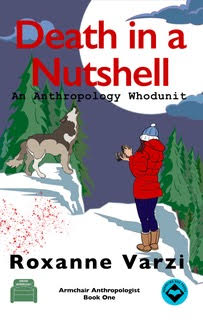
“Very few of us are what we seem,” the thematic essence in Agatha Christie’s stories, is not only the kernel of a good murder mystery but also the raison d’etre of an anthropologist. We anthropologists go to our field site (where we will study culture, people, rituals, or phenomena). We participate in daily life there, while observing and asking questions. Then, we return home, puzzle over, and try to piece together all the information we have collected that will solve the mystery to a cultural question. In my protagonist’s case in Death in a Nutshell: “Why do people immigrate to Bozeman, Montana?” And then, we write up our findings as an ethnography.

Anthropologists and detectives (and mystery writers) work hard at decoding (creating) symbols and looking for (planting) clues to explain why people do what they do, how they do what they do, and why they persist in doing what they do. Hypothetically, detectives are Anthropologists, Anthropologists are detectives, and mystery writers are a little of both. This fluidity is why writing Death in a Nutshell: An Anthropology Whodunit, a murder mystery that embeds anthropology, was not a huge leap for this anthropologist.

As a child, I was also told that just as “You are what you eat,” “You write what you read.” So, it should have come as no surprise to me, given that my youth was spent in the world of cozies with amateur sleuths (Nancy Drew, Ms. Marple, Harriet Vane, etc.) that while on a winter vacation in Montana five years ago, an idea for a murder mystery surprised me. It came to me, initially in the form of a single character in a singular setting: a nature photographer in Yellowstone Park.

I returned home with a burning desire to write, but a raging fever kept me in bed the last week of winter break. I was unable to write more than a few pages of notes. My teaching quarter began, and the mystery faded into a file folder where it would mostly remain for the next two years.

In early 2020, the pandemic hit, and a few months into the lockdown, I carefully re-opened the file, not because I had more time (teaching on Zoom coupled with a unique homeschooling experience was more challenging), but precisely because entering into a cozy world of my own making was the only salve and form of control, I had in a world that was out of control and facing new and inexplicable dangers.

While delving back into the world of fiction, I noticed that I was not the only one having difficulty handling reality. My university students were slipping away, and just like my young learner with dyslexia at home who had escaped to a world of fantasy novels, they also needed a more inventive, sensorial, and creative way to engage the material I was attempting to teach them.

At home, my goal was to make education more accessible, often involving using stories to deliver information. I was already doing this with complex theoretical knowledge at the college level in the form of a novel and plays, so why not a murder mystery? And why not for everyone who enjoys a good mystery and is fascinated by the study of human behavior, the kernel of any good mystery?

Anthropology is often described as a discipline that aims to make the strange familiar, and the familiar strange. There was no better time than during the early months of the pandemic to witness the familiar turning strange and the strange slowly becoming daily life. The world needed, and still needs, a little anthropology to help navigate difficult cultural transitions. But that does not mean it should be devoid of its mysteries or that we should seek to control all that we cannot easily explain.

One of the joys of writing fiction is how a book unfolds despite its author. As my book slowly came along, my characters, as characters in fiction often do, began to take on a life of their own. My protagonist acquired dyslexia, which was no surprise given that I had spent the better part of the last decade researching dyslexia, advocating for students with dyslexia, and learning about my own dyslexia. What was serendipitous and quite surprising was when, on one pre-pandemic afternoon, my son returned from an after-school program at Chapman University and demanded: “Where are my fossils?”

Why would he suddenly need his fossils?

“I need to take them to Chapman next week.”

What did fossils have to do with an after-school program that paired younger students with dyslexia and other learning differences with college students and faculty mentors?

“Our professor mentor is a paleontologist!” My aspiring paleontologist son answered in frenzied excitement.

The paleontologist was none other than Jack Horner, a pivotal figure in my novel, whose exhibition I had encountered during that fateful Montana vacation. People, indeed, are not what they seem. I had no idea Jack Horner was a person with dyslexia when I slipped him into Death in a Nutshell. Or that we would meet one day through my son and our shared dyslexia. Nor had I known that Agatha Christie–the author who would become such an influential figure in my writing–was also a person with dyslexia.

It’s moments like these, when the unseen mysteries that connect us come to light, that I most enjoy as a writer and anthropologist—and writing mysteries in particular are the best way to keep me digging for a good story.

Alex is on the verge of dismissal from her anthropology doctoral program when her luck turns, and she lands a fellowship with a dioramist at the Museum of the Rockies. The only problem is, Alex hasn’t a clue about dioramas or dinosaurs, and, as she will soon find out, she’s not the only one faking it in this frozen landscape.

From New York City to Yellowstone National Park, we follow Alex, a whip-smart dyslexic-ADHD Margaret Mead cum Ms. Marple, as she explores friendship, identity, globalization and a murder against the stunning backdrop of the Rockies in winter. 

            A murder mystery embedded with forays into visual anthropology … we find that in an era of fake news and science denial, a little anthropology goes a long way.

Universal Book link: https://books2read.com/varzi

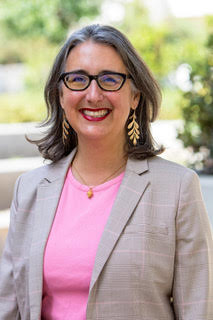
Roxanne Varzi  is an award-winning author, filmmaker, playwright, Fulbright scholar, dyslexia disruptor. She has a PhD from Columbia University and is a full professor of Anthropology and Visual Studies at the University of California Irvine. Her writing is published in The London Review of Books, The Detroit Free Press, The LA Times, The Guardian, and Le Monde Diplomatique and three anthologies of Iranian-American stories. She is the author of Warring Souls, and Independent Publishers Award Gold Medalist Last Scene Underground: an Ethnographic Novel of Iran. 

https://faculty.sites.uci.edu/professorvarzi/

https://www.linkedin.com/in/roxanne-varzi-b178417a/

https://www.facebook.com/roxannevarziauthor/

Guest Blogger ~ Melissa Yi

War and Drink by Melissa Yi

“I could make Hope a custom gin.” —Nathalie Gamache, artisan distiller and board-certified gynecologist

Nathalie’s offer to create a gin for my main character, Dr. Hope Sze, delighted me. I’m an emergency doctor myself, and when we met online through a physician group, I felt that Nathalie understands Hope’s courage and fears as a resident doctor who solves crimes.

In honour of a custom gin, though, I’d have to focus on alcohol in my next medical thriller. And I hardly drink!

However, I was soon fascinated by the history of booze and crime. I began reading Frenchie, the story of a Quebec man who joined Al Capone’s gang in Chicago for 8 years.

I discovered that Montreal, the main site of my Hope Sze series, was a vacation magnet during Prohibition, as Americans flowed north for “giggle water” (liquor), jazz, and “pro skirts” (prostitutes in 1920’s slang). Unfortunately, buildings from the era were destroyed to make way for new construction.

Luckily, la Maison de Bootlegger is still standing in Charlevoix, Quebec. This building was a speakeasy, a place where they illegally sold alcohol, so you had to “speak easy,” or softly, about its location. Now it’s a restaurant with a nightly rock and roll show. Make your dinner reservations early so you can get the tour. I enjoyed tiptoeing into hidden rooms, observing hidden booze shelves, and creeping through a secret passageway in Elvis Presley’s footsteps.

Seriously, Elvis was here. He even left his signature!

Much further east, at the Age of Sail Museum in Nova Scotia, I noted the Family Temperance Pledge in their Bible and realized that of course the Maritime provinces, right on the sea, would sail liquor to the U.S. I read later that the income was a boon to Nova Scotia fishermen, suffering from a regional recession in the 1920’s. But as the Temperance movement pointed out, that money came at a social cost: alcoholics beat their families and spent their money on drink instead of food.

So there was no shortage of writing inspiration for me, both in terms of liquor and of crime. But how could I weave it all together in my novel, White Lightning? Especially when I took a side journey researching 19th century England, how could I draw it all together into a thriller featuring my thoroughly 21st century heroine, Hope Sze?

The solution: more research.

Hope visits the Rumrunner’s Rest, a Prohibition inn inspired by la Maison de Bootlegger, but in Windsor, where 75 percent of alcohol flowed across the Detroit River onto U.S. soil. To maximize the chaos, Hope also has to navigate a con filled with people dressed up like fictional villains from the The Wicked Witch of the West to Children of the Corn.

I literally played with the historical elements: I wrote the 19th Century portion first as a play called “The Climbing Boy” in a playwriting class at George Brown College, which was turned into a Lego stop action movie at the digital Winnipeg Fringe. I folded “The Climbing Boy” into White Lightning thanks to some inspiration from author Simone St. James.

In other words, in White Lightning, I tried to capture the glamour as well as the murder and treachery of Prohibition.

As William Faulkner pointed out, “War and drink are the two things man is never too poor to buy.”

So let’s raise a glass and grab a book as we turn the page on a new year!

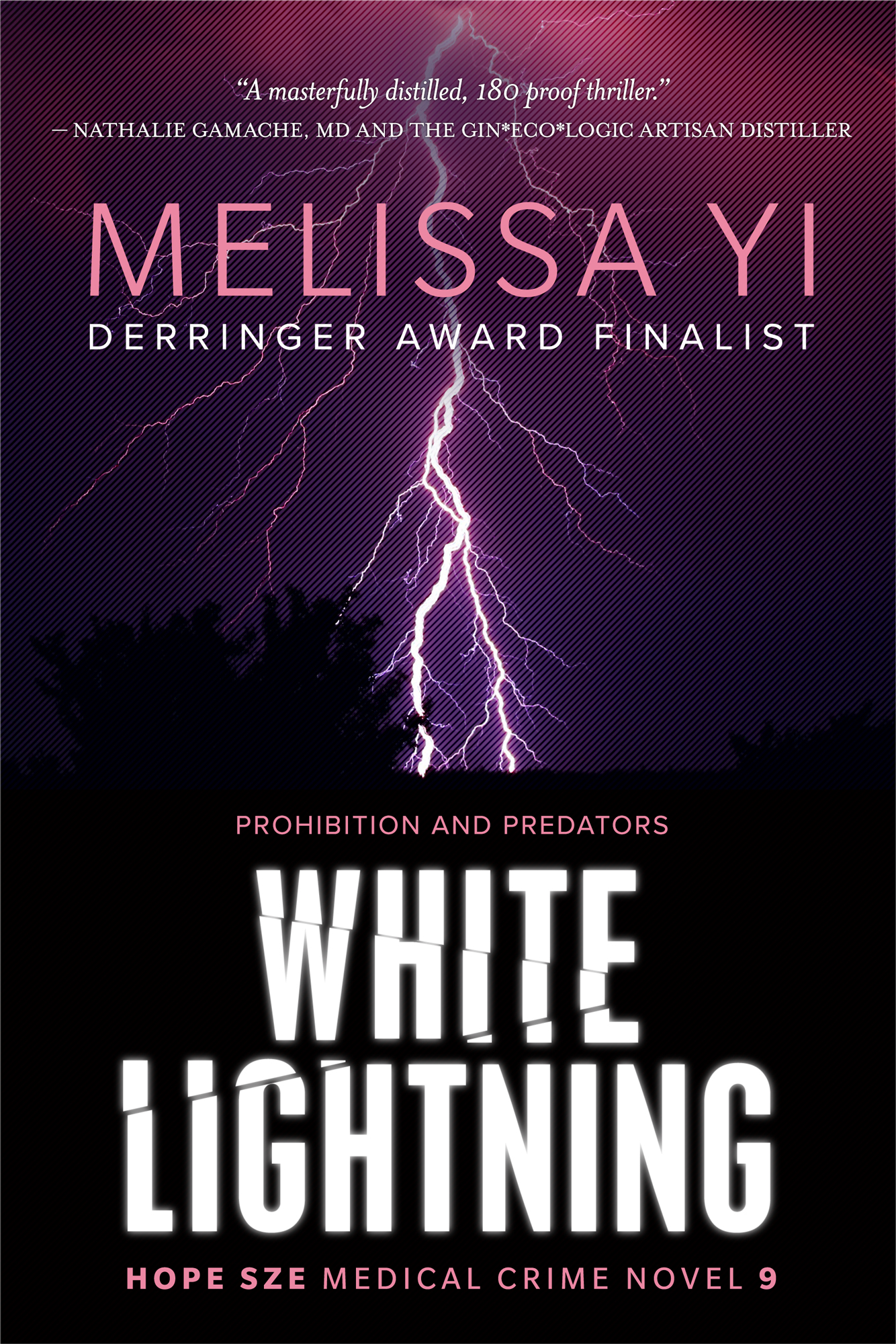
White Lightning

Hope Sze Medical Mystery Book 9

Prohibition and Predators. 

Hope Sze escapes for a romantic weekend away at the Rumrunner’s Rest, a Roaring Twenties inn once celebrated both for Prohibition’s best alcohol and the smoothest jazz bands north of the Detroit River.

Then a convention of fictional villains overrun the tavern, her friend glimpses a ghost, and Hope uncovers a grisly surprise in the fireplace that may be related to Al Capone.

Tonight, unless Hope unravels a century’s worth of clues, death will collect several more lives. Including the one she holds most dear.

Buy links: https://windtreepress.com/portfolio/white-lightning/

Direct links: https://books2read.com/whitelightningyi

amazon.com short https://amzn.to/3n5kuIl

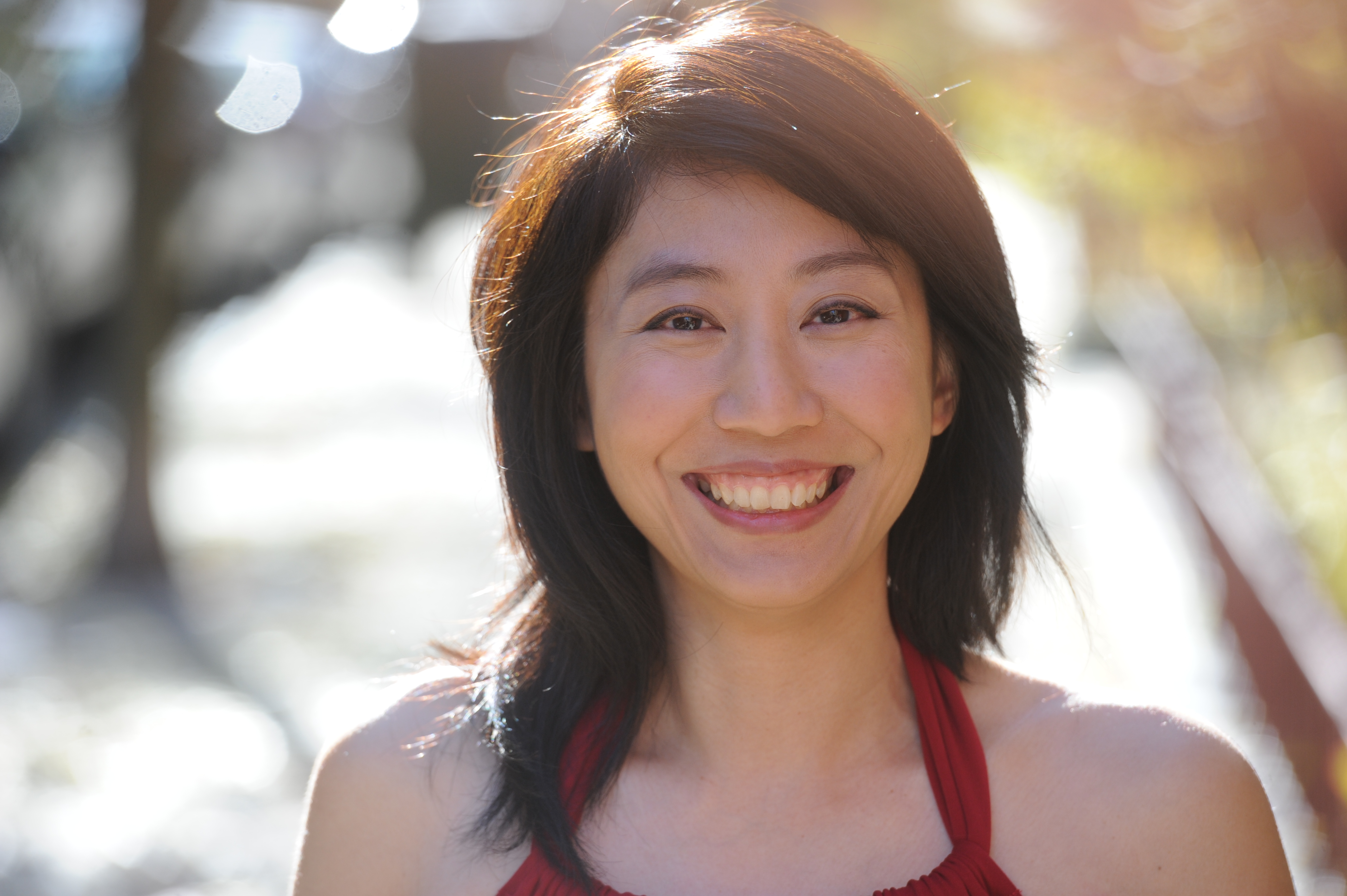
Melissa Yi, also known as Dr. Melissa Yuan-Innes, studied emergency medicine at McGill University in Montreal. She was so shocked by the patients crammed into the waiting area, and the examining rooms without running water, that she began to contemplate murder. And so she created Dr. Hope Sze, the resident who could save lives and fight crime.  Her most recent crime novel, White Lightning, is already up for many awards. She appeared on CBC Radio’s Ontario Morning and recently had so many print interviews that an addiction services counsellor said, “I see you in the newspaper more often than I see you in the emergency room.”

Dr. Melissa Yuan-Innes applied to medical school mostly because she wanted to save lives, but also because she’s nosy. Medicine is a fascinating and frustrating window into other people’s lives. She shares her sometimes painful, occasionally hilarious stories in The Medical Post, Chicken Soup for the Soul, and in her essay collections The Most Unfeeling Doctor in the World, FIfty Shades of Grey’s Anatomy, and Broken Bones.

Website: http://www.melissayuaninnes.com/

Twitter: http://twitter.com/dr_sassy

Facebook: 

https://www.facebook.com/MelissaYiYuanInnes/

Bookbub: https://www.bookbub.com/authors/melissa-yi

Goodreads: goodreads.com/author/show/4600856.Melissa_Yuan_Innes

Youtube: https://www.youtube.com/c/MelissaYuanInnes

Instagram: https://instagram.com/melissa.yuaninnes

Author central: amazon.com/author/myi

Pinterest: https://pinterest.com/melissayi_

TikTok: @myi_books

New Member

To fill in the fifth Monday of the month, I’ll introduce you to our new member.

We were sorry to see Sally Carpenter leave the Ladies of Mystery, but I’m excited to say I found some to take over her day.

Lisa Leoni is a writer I’ve known for many years. I met her when we were both members of the Salem, Oregon chapter of Romance Writers of America. We roomed together at a conference and spent time together being officers of the chapter.

I moved on from RWA and began working on writing mysteries, not realizing Lisa was too. When I discovered she is writing mystery books, and then Sally said she’d like to step down from the blog, I immediately thought Lisa would make a good addition.

Lisa will have her first post on this blog next Monday, the first Monday of every month. I look forward to hearing what she’ll have to add to the blog.

Here is her bio: Lisa has found a way to combine her lifelong love for happily ever afters and her (un?)healthy fascination with crime by writing cozy mysteries. She writes cozies set in her own backyard of the Willamette Valley of Oregon and writes contemporary romances set in Scotland. When she’s not plotting ways to murder people, she’s being herded by her ginger cats and juggles a dozen craft projects.

Welcome, Lisa!