
How Crime Novelists Come Up with Ideas by Richard Armstrong

Guest blogger banner

Where do writers come up with the ideas for crime and mystery novels?  It’s a bit of mystery itself, isn’t it!  I’m sure for some writers the crime section of the local newspaper is a rich source of inspiration.  Others may turn to history books and classical literature (like Macbeth) for ideas.  I even had an idea for a mystery novel come to me in a dream not long ago.  Unfortunately, the dream only gave me the title; I have to work out the rest myself.

It just so happens, however, that I remember the exact time and place when I got the idea for my new caper novel, THE DON CON.   My wife and I were in Rockport, Maine at a restaurant called “Shepherd’s Pie,” and we were having dinner with an old friend.  You may know him.  His name is Jonathan Frakes and he played Commander William T. Riker on Star Trek: The Next Generation.  I’ve known Jonathan for more than 40 years when we acted in a play together.

I asked Jonathan what he was doing nowadays and he told me he was directing a lot of network TV shows.  He also said that one of his sources of income was going to Star Trek conventions and signing autographs for money.  He regaled us with many funny stories about his experiences at these so-called “cons.”   At one of them, for example, he was annoyed to find a booth on the convention floor where they were selling Star Trek action figures.  A sign on the table said:

            “Buy any three action figures, and get one Commander Riker FREE!”

But the part of Jonathan’s story that really stuck with me was how much cash he was bringing home.   At $35 a pop for an autograph (more if you wanted a picture), Jonathan was leaving these conventions with his pockets, shirts, even his shoes stuffed with cash.  That’s when the idea occurred to me:

What if someone tried to steal all that money?

Not long afterwards, I began writing THE DON CON.  It’s a comedy thriller that tells the story of a washed-up actor who hit the high watermark of his career when he played a bit part as a gangster on The Sopranos.  Now he makes a living signing autographs at fan conventions.  One day, there’s a real gangster in his autograph line and he makes the actor an offer he can’t refuse: “You’re going to help me rob the celebrities at the next fan convention—or else.”

Jonathan was kind enough to write a blurb for THE DON CON, which will appear on the front cover when it’s released by Linden/Pace on April 1st.  Jonathan also invited me to join him at a small private dinner (during the Louisville “Supercon”) with William Shatner, Henry Winkler, and LeVar Burton.  Meeting Captain Kirk, Kunta Kinte, and The Fonz was like hitting the trifecta of iconic television stars, and it gave me some insight into what fan conventions are like from the celebrities’ point of view.

So how do mystery and crime writers come up with ideas for their novels?  The answer is to always ask yourself the “What if …” question.

But after that, it’s mostly a matter of sheer, dumb luck!
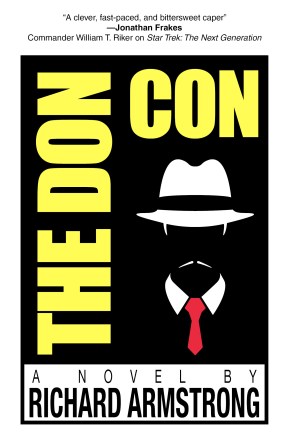
The Mafia comes to Comic-Con in a fast-paced suspense caper
The Don Con CoverJoey Volpe hit the high watermark of his acting career when he played a small role as a mobster on The Sopranos. If you blinked, you missed it.
But now he’s unemployed, broke, and forced to make a living by signing autographs at pop-culture fan conventions, or “Fan-Cons,” for $35 a pop. His lack of income, along with his chronic womanizing, has put his marriage at risk, too.
Joey’s life gets even worse when real mobster Tony Rosetti shows up in the autograph line with a plan to rob the next Fan-Con –an offer Joey can’t refuse. When the heist goes awry, Joey is left with a beef with Rosetti and two long years to plan.
Partnered with a smooth-talking con man, Joey is using all his acting skills on new projects: Revenge. Money. And saving his marriage.
The Don Con is pure a pure-entertainment caper novel with all the intrigue of Ocean’s 11 and The Bank Job –as well as a smart, witty pop culture satire that riffs on The SopranosThe Godfather, Comic-Con, Star Trek, and The Sting.
Releasing in April 2019

#   #   #


Richard Armstrong is also the author of another crime novel “God Doesn’t Shoot Craps,” in addition to two non-fiction books published by William Morrow, a division of Harper Collins.  For more about Richard (and to get a free copy of his special report, HOW TO TALK ANYBODY INTO ANYTHING: Persuasion Secrets of the World’s Greatest Con Artists, please visit www.thedoncon.com

 

Too Many Ideas Not Enough Time by Paty Jager

Lit Light BulbIf only I could write twice as fast! Ideas come at me like raindrops in a storm.  Some ideas seem like a great idea at the time and as I get closer to writing the story, decide it won’t work.

And then there are the ones that come when you least expect it and hold up the more you think about them and start researching.

In December, my husband and I spent a weekend at a nice casino in Reno. I’d won the weekend from the Silent Auction at the Left Coast Crime conference in Reno last February.  Part of the package I purchased was a spa package. I was excited to get a massage.

And the spa…on my! I’d never been anywhere that pampered and had such wonderful amenities.  I sat in a dimly lit room, watching big colorful fish in an aquarium, drinking lemon water, and waiting my time for a massage. Depositphotos_213681916_l-2015

The masseuse arrived and escorted me to the room. It was dimly lit, soft music playing. She showed me everything and headed to the door. “Take off your robe and get under the sheet, I’ll be right back.”

I did as instructed and as I laid there, face down, my arms dangling over each side of the table, my mind went to- “What if I were a dead body?” And of course my head began spinning with how to work it into one of my Shandra Higheagle books.

By the time my massage was over, I had the plot all figured out in my head. What I needed now was research.  While waiting for my hubby to come out of the men’s side of the spa, I started quizzing the people at the counter. I filled up the back side of two price sheets with answers to my questions about how a spa of that magnitude ran.

Then two weeks ago, I spent a week at the Oregon Coast writing. It was wonderful! What I especially like when I write at the beach are my walks on the beach.

On one walk, when the wind was blowing and cold enough I had my sweatshirt hood tied tight, I shared the beach with an older gentleman and a little boy of about six. I assumed the older gentleman was the grandfather. The the boy had on only a t-shirt and shorts. He had something in his hand. He came up to me and said, “Look! I found a mermaid scale!” It appeared to be a colorful piece of mollusk shell. But I agreed with him.

20190206_182452I went on my walk and noticed a boat bobbing in the ocean just the other side of the breaks. Thinking it would make a nice photo, I took several, then turned and headed back the way, I’d come.

The grandfather was near the water. The little boy was splashing in the waning waves sweeping up on the sand.  I passed them and glanced out at the waves. The boat was moving along the other side of the breaks in the same direction I was.

I thought I saw the head of a sea lion. I stared and took photos, trying to capture the creature. Walking briskly because the wind was getting colder, I headed to the hotel stairs two blocks from the house where I was staying. I looked back at the beach.

The man was there but I didn’t see the boy. And the boat was heading the other direction. Perhaps what I saw wasn’t a sea lion but a man in scuba gear?

As I walked to the house, I put together the kidnapping of a boy and the woman who captured it on her camera without knowing. It will be a story in a Gabriel Hawke book.

I love when ideas hit and I can see they will be a fun book to write.

HOME

https://writingintothesunset.com

Guest Blogger-Kathleen Kaska

Truth in Fiction
Readers often ask me if my mysteries are based on real-life crimes and circumstances. My answer is that my imagination provides what I need for my plots, so using actual cases is not necessary. However, there are several elements in the stories that are based on fact.

For my Sydney Lockhart Mysteries, set in historic hotels in the 1950s, I research what the hotels were like back then: the menu items and prices, the cost of a room and its décor. I search for old photos and articles of the hotels. In Murder at the Arlington, I describe what the restaurants, bars, bathhouses, and tourist’s sight were like seventy years ago. In Murder at the Luther (the Luther Hotel in Palacios, Texas) I drew on the colorful history of this once-thriving little town on the Texas coast. President and Lady Bird Johnson were regulars at the Luther Hotel back when LBJ was a Texas state senator. During WWII, Camp Hulen, located nearby, housed almost 15,000 personnel and interred thousands of German prisoners. The government brought in celebrities like Guy Lombardo, Rita Hayworth, Shirley Temple, and Carol Lombard to entertain. I wove these facts into the story. The same is true for Murder at the Galvez (Galveston) and Murder at the Driskill (Austin).

I don’t use people I know as models for my characters, but I do use strangers that grab my attention. Once I witnessed a domestic dispute while driving through the countryside. A wild-haired woman dressed, in orange T-shirt and pink tights, was throwing pine cones and profanity at her retreating husband, a fellow who looked as if he’d suffered years of spousal abuse. She told him if he got drunk and forgot to pick up the kids at school again (This couple had kids?), she was going to shoot him. Alas, Paula Steiner, was born and she’ll make her debut in my third Kate Caraway mystery, Eagle Crossing, which will be released in a little more than a year.

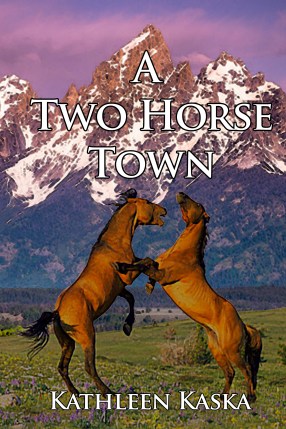
I also give my own feelings, experiences, and passions to my main characters. In my latest Kate Caraway animal-rights mystery, A Two Horse Town, Kate experiences a couple of hair-raising moments when she is traveling along a steep switchback mountain road. Her fear of heights is based on my own acrophobic experiences.

However, some writers fictionalize the truth, creating an even better story. Think of it this way: reading about an actual crime, adventure, heartwarming story, or heroic gesture in a magazine article, newspaper, or blog is captivating, but the readers are only provided limited points of view. A fiction writer can take a situation and delve deeper into telling the story, using multiple points of view, a compelling background, and a wide range of other emotions like suspense, thrill, fear, humor, something a reporter or writer of nonfiction might not do.

For instance, the Gothic novel, Rebecca, by Daphne du Maurier, is a story of jealously, misunderstanding, heartache, and tragedy wrapped up in one of the best mysteries ever written. Du Maurier loosely based the story’s origin on her own suspicions that her husband, Lieutenant General Frederick “Tommy” Browning, was still attracted to the striking woman he’d once been engaged to. Du Maurier also admitted that she and Browning had not been faithful to one another during their marriage. The couple’s infidelity was also used in the novel. Max De Winter and his first wife, Rebeca, (deceased) had cheated on one another, and De Winter’s his second wife’s jealously intensified as he became withdrawn and secretive, filling the story with tension strong enough to snap one’s nerves.

I’ve also read the excellent biography, Manderley Forever: A Biography of Daphne du Maurier. Author Tatiana de Rosnay’s book has received raved reviews, but it was Rebecca, the fictional account of an obsessively jealous and fearful wife, that sold almost three million copies. I’m not as bold as Du Marnier to use my private life in a story—but then she’s sold a lot more books than me. So maybe I’ll rethink this.

front coverBlurb:
With her coffee-guzzling dogs and a welcome mat that starts at the business end of a shotgun, Ida Springfield weathers all the challenges life hands her. Until the local government gets the idea to build a dam to help the ranchers, a dam that would dry up the water on her ranch and destroy the habitat for the herd of mustangs living there. After further alienating the “goofballs at town hall,” Ida lets go of her pride and accepts the help of animal rights activist Kate Caraway. Kate feels a need to escape life in Chicago after so many years in her beloved Africa. She’s eager to get to Montana and find some peace from rural surroundings. After tumbling down a mountain, finding a body, and getting warned off by the mayor, Kate understands why her husband wants her to come home. But Kate can’t leave without saving the mustangs and helping the 82-year-old woman and her mentally challenged twin sister stand up to the town bigwigs. To do that, she has to find out who killed Ida’s estranged son and why town officials believe her great-grandson committed the crime.

Buy Links:
Amazon
Barnes and Noble

Black Opal books

Bio:
161118_003 small 2Kathleen Kaska is the author two awarding-winning mystery series: the Sydney Lockhart Mystery Series set in the 1950s and the Classic Triviography Mystery Series, which includes The Sherlock Holmes Triviography and Quiz Book. A Two Horse Town, Kathleen’s second mystery in the new Kate Caraway animal-rights series, was released in December 2018. She is also a writer and marketing director for Cave Art Press. Her collection of blog posts was released in September 2017 under the title, Do You Have a Catharsis Handy? Five-Minute Writing Tips.
Social Media Links:

http://www.kathleenkaska.com
http://www.blackopalbooks.com
https://twitter.com/KKaskaAuthor
http://www.facebook.com/kathleenkaska
https://www.instagram.com/kathleenkaska/
www.caveartpress.com
https://www.linkedin.com/in/kathleen-kaska-942aa511/

Who is That Woman? by Patricia Smith Wood

Up until a couple of years ago, I never gave a lot of thought to a rather controversial subject. In fact, I didn’t even know there was a controversy. Most of us pick up our speech patterns as small children. It can undergo many changes when we attend school. We meet people who might make different word choices, have different speech patterns, slang, and customs.

Over time, we are “educated” either officially, or through our association with others, in the words of acceptable speech and writing. We learn new words and how to properly use them. We end up with a mishmash.

A problem can develop because language traditions change so often. Over time words come to mean different things. The years from 1890 until 1899 were commonly referred to as “The Gay Nineties” during that period. That was true even long into the twentieth century. Some folks remember the term “The Rebellious Sixties” and would be shocked if “rebellious” came to mean something very different in the future.

But what about other words—words we hear used and see printed all the time. Often there is more than one word choice. Sometimes rules of usage help us decide. But other times, it’s up to our personal decision. It can be a landmine. So what am I talking about?

Two words, “who” and “that,” are currently getting some attention.  In case you hadn’t heard, these two words are embroiled in controversy.

The word “that” is a pronoun, as is “who.” No controversy there. Ah, but think about it. How do you use these two words? There are two different opinions circulating.

I think of the two sides as the Grammarians and Humanists.

Here is the Grammarians’ argument: “That” refers to persons or things, and rarely to subhuman entities. The notion that that should not be used to refer to a person is without foundation; such use is entirely standard.

The Humanists feel otherwise: They say it is demeaning to use “that” when referring to a human being, or even an animal. Creatures with a soul shouldn’t be referred to as “that.” It’s dehumanizing. Since who isn’t used for an object, that shouldn’t be used when referring to living beings.

The problem is, I hadn’t paid a lot of attention to these competing thoughts. I was blissfully ignorant about the controversy. Then my daughter became an editor, and I became aware.

Once you think about it, there’s a good argument for referring to people as “who” rather than “that.” After my daughter explained it to me, I became an acolyte—a rabid one!

When I read the newspaper and see a person referred to as “that” rather than “who,” my hackles go up. Newscasters are the next culprits I’ve noticed. And apparently a large number of people all around me see no problem using “that” in almost all cases.

But here’s the thing. The grammarians are probably going to win this one. I’m not enough of an activist to make this my main crusade, even though I’m focusing on cleaning up my own writing and speaking. I’m using mindfulness to select the “who” designation for people and animals. (I drawn the line at assigning “who” to insects, snakes, and other crawly things!)

However, based on what I’ve seen since I became “enlightened,” I don’t think enough people are ready to jump on board. Most seem more than happy to grab whichever word strikes their fancy at that moment. They don’t recognize slights (real or imagined) by interchanging those words.

There’s one really good reason they might consider. If you’re a writer, overuse of certain words becomes truly annoying to the reader. The word “that” is one of those words.

So, next time you sit down to write (or read) see how many times you could substitute “who” for “that.” It could end up making you a convert.

Now, wouldn’t THAT be something?


A Dickens of a tale by Sally Carpenter

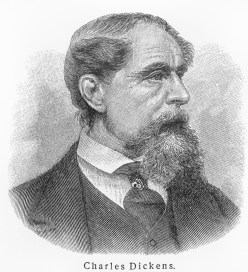
Charles DickensAlthough we’re past the Christmas season, every writer should watch the movie “The Man Who Invented Christmas.” It’s the perfect examination of a writer’s life.

The title is a misnomer. Charles Dickens didn’t invent Christmas. He only revitalized interest in it. During the industrial revolution, employers saw no reason to close their factories and cease production on Christmas day. And many of the old customs of the British countryside, holiday feasts and dancing, did not fare well among the crowded housing and low wages of urban life.

Dickens’ novella “A Christmas Carol” reminded people of past celebrations and hit an emotional nerve that had them yearning for a holiday of goodwill. He also wrote other Christmas stories, but his first is best remembered.

But writing “Carol” was no easy feat, according to the movie, which is grounded in fact.

The film begins with Dickens on a lecture tour of America. Before the days of mass media, writers were treated like rocks stars. Dickens in greeted with standing ovations before he even speaks. How many contemporary writers have encountered a reception like that? Amid the clamor of the appearances, though Dickens would rather be at home, writing.

After the tour, Dickens’s publisher informs him that his last three books were “flops,” and an advance may not be forthcoming. The author is spending too much money on home improvements and he needs to borrow money. His wife is pregnant—again. Dickens needs to write another hit immediately.

But he’s out of ideas. As Dickens says, “Shakespeare—now there’s a man who could write. I doubt that he ever had a blockage.”

The author hates that his income depends on producing an endless stream of prose. “I’m sick to my teeth of writing for bread. I should have become a journalist.” Today, few authors can fully support themselves on fiction writing alone. They write in other fields, work a day job or have a second income from a spouse.

Dickens carries a small notebook with him and jots down unusual names of people he encounters. At a club he meets a man named Marley. “If you get the name right, the character should appear,” says Dickens. Many writers also keep lists of story ideas, names or trivia to use in their work.

Dickens hits on the idea of writing a Christmas story, but his publisher says no. Like many modern authors, he turned self publishing.

A small press quotes him the cost for the books, which will have color illustrations and fancy binding.

“You’ll have to sell every copy to make your money back,” says the printer.

Dickens replies, “That is my intention.”

How many authors sell every printed copy of their work or earn out their advance?

Dickens then hires the illustrator, Mr. Leech, who is taken back by the author’s demands and deadlines. “What you’re asking is impossible for an ordinary man,” says the illustrator.

“But you are no ordinary man,” says Dickens. “You are a genius.”

Later, when Leech receives copies of the text, he is again dismayed. “I am not a hired hand. I am an artist,” he says. “A jolly ghost (Ghost of Christmas Past). I can’t draw what I don’t understand.”

Can we have a show of hands from authors who have disliked the cover art for their books? I hate one of my book covers. My publisher hired the designer, a new person she wanted to try out. The first cover the designer gave me was appalling. I gave a concept to the designer, but she failed carry it out the way I wanted. Rather than making changes, the designer insisted she be paid. My publisher never used her again.

Now the pressure is on Dickens to write, as Christmas is only a few weeks away. “The characters won’t do what I want!” he moans. “I’m afraid if I can’t finish it I’ll never write again.”

His wife tells the servants to avoid him. “We must not disturb the poet when the divine frenzy is upon him.” Yes, we writers often say no to other obligations or friendly chitchat whenever we’re facing deadlines or feeling inspired.

When Charles neglects his family, his wife says, “I fear your characters mean more to you than your own flesh and blood.”

Authors often feel their creations are so real they can touch them. For Dickens, his characters actually come alive. He even takes Scrooge with him on a walk around London.

Scrooge is not an easy person to get along with. “I fear your representation of me is rather one-sided,” Scrooge says to his creator, “I have written a speech . . .”

“No!” Dickens shouts. “I’m the author!”

Scrooge: “Allegedly.”

I’ve hear authors say how their characters will take over the story or move the plot in a different direction or say things that the writer didn’t plan. The clay tells the potter how to build the pot.

The other characters of “Carol” begin to crowd Charles’ small office. After he yells at them, one says, “Was he the author? No wonder he looked so depressed.”

The writer shouts to his characters, “Go on, back to work!”

In the end, of course, “A Christmas carol” was a smash hit and Dickens did sell every copy of the first run. People began to celebrate Christmas in high spirits, and Charles went on more tours just to read “Carol” aloud to eager listeners.

Would anyone pay me to read my writing aloud to them? Maybe not, but as long as they read and enjoy them, then my work is well done. And if I get “blockage,” I can watch the movie again and see how Charles Dickens overcame his obstacles.

Photo Source: Deposit Photos