Words are Power by Paty Jager

When I looked up the word “limbo” to make sure I was using it correctly, I found more than one meaning! That is what I love about words and using them to make stories. If you use a word one way it means one thing and the same word can mean something else when used in a different sentence.

The mystery of words has always fascinated me. When my, by one year, older than me brother started reading, I peered over his shoulder, capturing the words and discovering the sounds letters made if they were placed with this letter or a different letter.

Who came up with that? I mean over the centuries the various cultures and people came up with their own set of marks that made sense to them. But how did they distinguish the sounds each mark or letter made? How did they decide which letters together made which sounds?

For my Spotted Pony Casino mystery books, I’ve been incorporating Umatilla language words into the story. It helps to show the culture and bring a little more Indigenous feel to my characters who are Umatilla. I’ve listened to Youtube videos where they speak the language. It sounds so different from the words that are spelled out with unique characters.

The Indigenous languages were spoken long before the Anglo people arrived with their alphabet. How did they, the Indigenous people decide which of the Anglo alphabet worked for their words? I’ll have to ask a Umatilla linguist I know and see if he can help me with this, one of many question that stir around in my head at 2 AM the nights my brain won’t shut down.

Words are so useful and yet can also destroy a relationship, a person, even a country. Knowing the right words to string together is powerful. Or it can be destructive. Words are power!

Book three in the Spotted Pony Casino mysteries will be released in ebook and the following week in print.

Double Down

A donkey, a three-legged dog, and a war-scarred veteran outwit the killer.

Dela Alvaro is the main suspect in the stabbing death of a man she stopped from beating his wife to death.  The detective she abhors is ready to toss her in jail and not look for any other suspects. When FBI Special Agent Quinn Pierce is called in and Tribal Officer Heath Seaver is forbidden to work the case, Dela decides to find the killer.

Was it the wife, the drug dealer, or the man wanting to take over the victim’s business? Dela and Heath ask questions and work to prove her innocence. If she is found guilty not only will she lose her life but she’ll never be able to solve the secret of her father.  

Universal Buy Link:

https://books2read.com/u/4D6Wa7

Guest Blogger ~ Eileen Curley Hammond

I was in the middle of writing the seventh book in my Merry March cozy mystery series, and to be honest, I was struggling. Then, editor Cass Kim sent a Twitter request for the annual charity short story anthology, Autumn Nights: Nine Stories to Nibble at your Nape.

Even though I love writing daily micro-stories on Twitter, my total experience with slightly longer shorts was holiday ones for our local Sisters in Crime chapter (Buckeye Crime Writers). Luckily, Cass had been following my writing, so I was accepted into the Anthology.

The required elements were to include a bat(s), autumn themes, and be spooky. I’m a pantser and cozy mystery writer, so it should come as no shock that what emerged on the page was a cozy mystery that happens to have a bat as one of the main characters.

You would think that short stories would be easier to write. After all, the word count for the project was less than 8,000, and cozy mystery novels are usually 60,000 plus. But remember, you still need a beginning, a middle, and an end that make sense. Plus, it’s confusing to the reader to have too many characters in a short space, so your potential for red herrings is limited.

I love a challenge, and this was a fun one. It was also good to know that profits from this book will benefit The Trevor Project, which is dedicated to providing crisis support and safe spaces for young LBTQ+ individuals.

The Autumn Nights Anthology is available as both an e-book and paperback. Here is a teaser about my story in the Anthology:

An Unexpected Talent: Miranda had a bad day that she thought couldn’t get a lot worse. And that was before she stumbled over the dead body. Now she’s in the middle of a Halloween murderer hunt, and failing to uncover the perpetrator will mean the end of the world.

I’m pleased with where the story ended up and was very happy with the beta readers and editor, who made it even sharper. Writing the short story also allowed me to experiment more with humor, which I’m actively trying to incorporate into my novels as a break in the suspense. And the even better news is that a hiatus reenergized me, and I am now close to finishing my seventh book, which should be released in November. You can find all of my Merry March cozy mysteries here.

Eileen Curley Hammond retired from a successful marketing career in the insurance industry and now writes the Merry March cozy mystery series. When not pondering all that bats contribute to this world, she is hard at work on book seven of the series. To learn more about her and to sign up for her newsletter, check out her website:

www.eileencurleyhammond.com

WHEN AGING IS A CRIME? by J.L. Greger

The sale of anti-aging products in the U.S. is estimated to about $12 billion annually. The worldwide market may be four times at large. Not surprisingly, mislabeling and false claims for these products are rampant.

Although there is no doubt that injections of BOTOX and other botulinum products are effective in reducing the signs of aging (i.e. reducing crow’s feet around the eyes, laugh lines, and wrinkles on the brow), many doubt the wisdom of—but not the profits from—BOTOX parties. At these events, women receive injections of botulinum toxin at multiple sites in a party environment in someone’s home with plenty of food and alcohol. Nevada has now banned these at-home parties. Many states require that injections at these parties be made by a physician or nurse. However, basic safety requirements are more difficult to maintain at these parties than in a clinic.

In the U.S., the FDA is the chief agency monitoring the safety of cosmetic products and assessing the veracity of the claims. Many Americans don’t realize FDA can not only fine but also incarcerate manufacturers and spa/store owners that knowingly produce, advertise and sell dangerous or mislabeled items.

I like to describe the situation in the cosmetic industry this way: those who try to make the public believe it is a crime to look old are sometimes committing crimes. That’s a basic premise in my new mystery.

In FAIR COMPROMISES, twenty residents in New Mexico come into clinics and doctors’ offices complaining of double or blurred vision, sagging eyelids, and headaches the day after a political rally. Public health workers quickly hypothesize the cause was botulism toxin in improperly home canned food served at the rally. Unfortunately, one individual’s symptoms are much more severe. If her muscle paralysis continues unchecked, she will die. New Mexico health officials contact the FBI because that patient is a candidate for the U.S. Senate and they fear she may have been targeted.

The mystery turns from being the analysis of a severe food safety breach to the investigation of a diabolical murder attempt using “cosmetic” botulism toxin when scientist Sara Almquist with the help of a talented FBI lab crew discover a more sinister source of the toxin at a health and beauty spa in Santa Fe. FDA officials then help the FBI solve this case and seek justice for the victims.

FAIR COMPROMISES has message: It’s not a crime to show your age and the relentless search for youthful beauty can be dangerous.

Now you’re ready for some fun. Read FAIR COMPROMISES and see what happens to a politician who tried too hard to look young.

Fair Compromises

In FAIR COMPROMISES, Sara Almquist and her FBI colleagues rush to find who endangered the lives of a hundreds at a political rally by poisoning the food with botulism toxin. The poisoners’ target was a woman candidate for the U.S. Senate; the rest were just collateral damage. As these agents track clues from a veterans’ hall in Clovis to health spas of Santa Fe, they must make a multitude of personal and professional (perhaps too many) compromises.

https://www.amazon.com/Fair-Compromises-Science-Traveler-Greger/dp/1735421421

J.L. Greger is a scientist turned novelist. She includes science and international travel in her award-winning mysteries and thrillers: The Flu Is Coming, Games for Couples; Dirty Holy Water, Fair Compromises, and seven others. https://www.jlgreger.com

Guest Blogger ~ Dianne Freeman

An Inspirational Feud

My Countess of Harleigh series takes place among the aristocracy of late Victorian London. That era and group of people provide an endless supply of situations on which to hang a murder mystery. The inspiration for my latest book was an unusual feud between two millionaires of the Gilded Age—John MacKay and Charles Bonynge.

The men had quite a bit in common. John MacKay came to the US from Ireland. In 1851, at the age of twenty, he made his way to California where he worked as a miner for eight years. Tired of mining, he began a mine-servicing business. As mining expanded, his business boomed. He continued to maintain ownership in a few mines as he was sure there was more silver to be found. He was right. One of his mines hit the Big Bonanza, the greatest mining strike in the history of the American West, and made him a millionaire many times over. He and his wife relocated to San Francisco.

Meanwhile, Charles Bonynge immigrated to the US and headed west. He worked in San Francisco in a livery stable while speculating on the stock market. In the 1860s he too moved to Nevada, where he worked in the mines and traded in mining shares. After a while, he quit mining to set himself up as a stockbroker and met with great success. Bonynge, along with his wife and step daughter, moved to San Francisco, where Mackay became one of his clients.

Bonynge and MacKay had a business relationship that appeared to be cordial and lasted for several years. Then Bonynge retired, but not before he made some public comments about MacKay’s unethical business practices.

So began the feud.

Both families had homes in London and they all showed up for the social season of 1886. On the same day, Mrs. MacKay and the Bonynge family were meant to be presented to Queen Victoria at one of her Drawing Room afternoons. Unfortunately for Mrs. Bonynge, a newspaper ran a story revealing that she had been divorced, which made her ineligible to meet the queen. Mr. Bonynge and their daughter attended without her. Only the MacKays could have provided that tidbit to the papers. If this was the opening salvo in the feud, they were happy to fire back. They revealed to a reporter that when MacKay met his wife, Louise, she was working as a washer woman in mining camp.

Despite their wealth and class, the feud, which carried on for four years, was every bit as dirty as the Hatfields and McCoys and far more public. Enough so, that I had to wonder what would happen if one of these men was murdered? Wouldn’t the police immediately suspect the other party in the feud? And if someone else wanted to murder one of these men, what better time than when he was involved in an openly hostile feud with someone else? It was the perfect time. And that’s where A Bride’s Guide to Marriage and Murder begins.

A BRIDE’S GUIDE TO MARRIAGE AND MURDER

On the eve of her marriage to George Hazelton, Frances has a great deal more on her mind than flowers and seating arrangements. The Connors and the Bainbridges, two families of American robber barons, have taken up residence in London, and their bitter rivalry is spilling over into the highest social circles. At the request of her brother, Alonzo, who is quite taken with Miss Madeline Connor, Frances has invited the Connor family to her wedding. Meanwhile, Frances’s mother has invited Mr. Bainbridge, and Frances fears the wedding may end up being newspaper-worthy for all the wrong reasons.

On the day itself, Frances is relieved to note that Madeline’s father is not among the guests assembled at the church. The reason for his absence, however, turns out to be most unfortunate: Mr. Connor is found murdered in his home. More shocking still, Alonzo is caught at the scene, holding the murder weapon.

Powerful and ruthless, Connor appears to have amassed a wealth of enemies alongside his fortune. Frances and George agree to put their wedding trip on hold to try and clear Alonzo’s name. But there are secrets to sift through, not just in the Bainbridge and Connor families, but also in their own. And with a killer determined to evade discovery at any cost—even if it means taking another life—Frances’s first days as a newlywed will be perilous indeed.

You can find links to all Dianne’s books here: Dianne Freeman | Historical Mystery Writer (difreeman.com)

Goodreads: Dianne Freeman (Author of A Lady’s Guide to Etiquette and Murder) | Goodreads

Dianne Freeman is the acclaimed author of the Countess of Harleigh Mystery series. She is an Agatha Award and Lefty Award winner, as well as a finalist for the prestigious Mary Higgins Clark Award and the Sue Feder Historical Mystery Award. After thirty years of working in corporate accounting and finance, she now writes full-time. Born and raised in Michigan, she and her husband split their time between Michigan and Arizona. Visit her at www.DiFreeman.com.

Social media links:

Facebook: (13) Dianne Freeman Author | Facebook

Twitter:  Dianne Freeman (@Difreeman001) / Twitter Instagram: Dianne Freeman (@diannefreemanwrites) • Instagram photos and videos

Titles- where do they come from?

Ask any writer and they will each give you a different answer to where they get the title for a story, book, or article. Most will even say they come up with the title differently for each story, book, or article.

So how does that tell you where titles come from…it doesn’t. From talking to other writers and reading the struggles they go through to find titles, I can tell you there is no set way a writer comes up with the words that are on the front of their book or draws a reader to their story or article.

If the writer is published with a traditional publisher, they have no say over the title. The publishing company decides what title will go on the book based on past book sales. Not sales by that author but by all the authors in their house and what titles readers were drawn to.

A self-published author can give their book a title and it will stay with the book. We don’t have the algorithms that the traditional publishing houses have. But we can google the title, see if there are any others like it. Then we can see if the words in the titles are used in top selling books. And so on. If you are a writer who tries to piggyback off the top selling books.

For me, the title either comes as I am “stewing and brewing” the story –this is where I’ve come up with a premise, or the means of murder, or a unique idea I plan to incorporate into the story. If that doesn’t bring about a catchy title that matches other titles in the series, then I start writing. Adn at a point while I’m putting the story down in words, a few will string together and a lightbulb comes on and I realize that is the title of the book. This has happened to me, mostly with the first book of a series. Then after that the rest of the series has to have similar titles.

As for my Shandra Higheagle mystery series, the titles all come from either the way someone was killed or how they came to be killed.

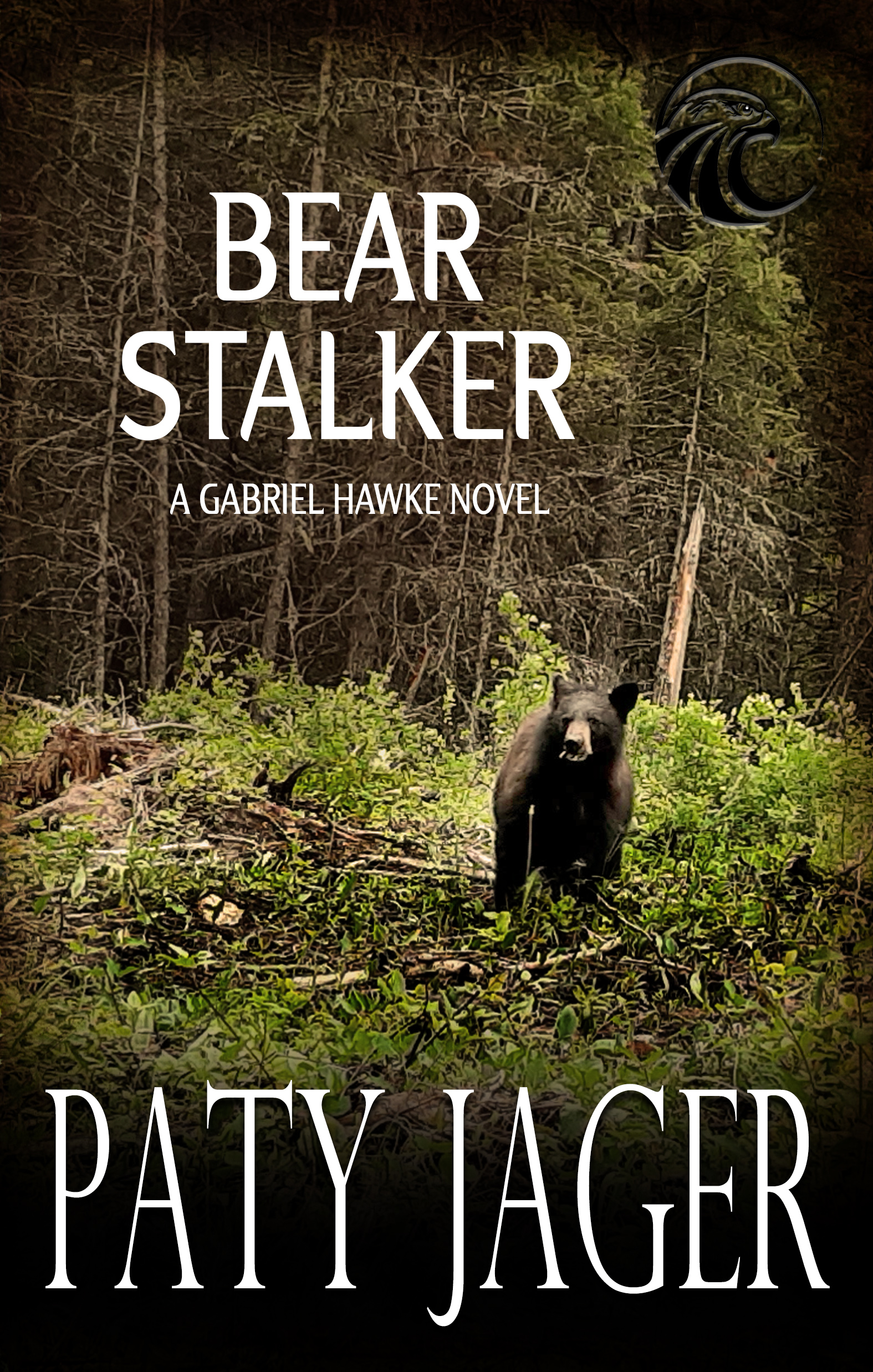
With the Gabriel Hawke series, since he is a Fish and Wildlife officer (game warden) I wanted to have animals in the titles of the books and on the covers.

The Spotted Pony Casino mystery series, I chose to use gambling terms for the titles of the books. I found a dozen terms that I liked and have been slowly incorporating which ever title I pick into the murder mystery that I write. This has actually been the easiest way to come up with a title. I have the list and just have to decide which term works with the premise I come up with for the book.

Currently, I have started book 10 in the Gabriel Hawke series. When I first came up with the idea for the story and formulated the premise of the murder, I had called the book Fleeing Swan. But after researching the area and getting a great photo of a bear while traversing the wilderness where one of the characters will be hiding, I decided I wanted that photo on the cover and have changed the title to Bear Stalker. While the character who I was referring to as swan in the original title swims away from a threat, I decided to give her the Cayuse name of Small Bear (kskɨ́s yáka). Since she is being stalked by the killer- I came up with the title Bear Stalker. And now that I have my title and my story, my fingers are flying across the keyboard telling Small Bear’s story.

I haven’t decided what the next title will be in the Spotted Pony Casino series. I have an inkling of what the story will be about, at least the secondary plot since I left it hanging in the last book, but I want the title to reflect the main plot of murder in the book and not the secondary plot that will be left hanging in the next few books. I don’t want that little time bomb to go off just yet. 😉 But until I get a clear picture of what the next book will be about, I’m not sure what the title will be other than one from my list of gambling terms. 😉

Does a title of a book draw you to discover more about the book or is it the cover image that draws you to the book? Especially if it is an author you have never read before.