Guest Blogger ~ M. R. Dimond

 I had the first three books of the Black Orchid Enterprises mysteries planned when I spied this cover at a premade cover event. I hadn’t ever considered buying a premade cover. How could the artist possibly know the story I would write or had written? I knew of one author who had her covers made and posted them where she could see them as she wrote. How could I take such a risk? 

Reader, I could and I did. It was meant to be. One of my main characters is a cat veterinarian who runs the town’s overflow animal shelter, meaning he provides a home for any homeless cat he comes across.

Book 1 of the series starts with Black Orchid Enterprises throwing a holiday open house to celebrate their new business in Beauchamp, TX. Some townspeople bring food; others bring unwanted kittens. Of course this glorious Sphynx cat could find his way there! And the gingerbread house? For their second year’s open house, our heroes host a gingerbread house display and contest. You can see how the invading cat earns the name Godzilla. I swept aside my plans to tell his story.

I’ve loved cats all my life, but I confess I warmed up to the Sphynx breed slowly. A hairless cat? Doesn’t everybody love soft, silky cat fur (except for those allergic to it)? But when two sets of naturally mutated hairless cats showed up in the 1970s, people did their best to produce more. Cat lovers with allergies appreciated them, but I wasn’t sold. The naked, wrinkly skin, big ears, and demonic expressions were the stuff of nightmares. I thought they looked closer to horror movie vampire bats than cats.

But years in cat rescue taught me that not every cat is pretty, healthy, or even friendly. But they’re all worth rescuing, even the ones that send you to the emergency room, and I’ve made friends with just about every cat I’ve met. Some want to cuddle; some keep their distance. It’s just a matter of getting to know them and honoring how they want to live.

The more Sphynx I met, the more I appreciated them. Despite their expressions, they tend to be affectionate and happy. For instance, the Sphynx on National Geographic’s October 2022 cover is said to be alert and relaxed. I’ll take their word for it.

https://twitter.com/NatGeo/status/1570778282714402818?s=20

To write this book, I drew heavily on my cat rescue experience, both funny and sad. I had friends with Sphynx cats who were always ready to tell me more stories about their pets. The internet, as usual, had a wealth of information about Sphynx and their special needs. They need to be bathed and oiled regularly. Their lack of fur means they feel the weather more. You often see them in sweaters and onesies in the winter. Some enjoy their styling little outfits. Others rip their clothes to shreds and prefer heating pads and blankets. 

The only problem with writing a cat mystery was knowing when to stop. I comforted myself with the reminder that there’s always the next book. Spoiler: Godzilla just might be back.

Cover by Mariah Sinclair

Book 2 of the Black Orchid Enterprises Mystery series finds Johnny Ly, Dianne Cortez, and JD Thompson trying to celebrate their first year in business in a small Central Texas town. The weather outside is frightful, and indoors isn’t looking too good either, not when a crazed hairless cat invades their Christmas party and leaves a trail of destruction in his wake.

The murder in the backyard doesn’t help, but Johnny and Dianne are more worried about the cat. After the police reduce the suspect list from the entire town of Beauchamp, Texas, to just the Black Orchids’ friends and family, Attorney JD Thompson springs into action to clear them all, preferably before Monday night’s concert. Life’s hard for a veterinarian, accountant, lawyer, and ABBA tribute band.

https://books2read.com/b/BlackOrchids2

Author photo courtesy of Marjorie Farrell

After stints in professional orchestras, law firms, cat rescue, bookkeeping, and technical communication, M. R. Dimond returned to a childhood dream of writing fiction, which has turned out to be about musicians, lawyers, veterinarians, accountants, and cats. Watch for the next Black Orchid Enterprises mystery, Family Matters.

Facebook: https://www.facebook.com/madeleine.dimond

Instagram: https://www.instagram.com/mrdimondauthor/

Guest Blogger ~ Charlene Bell Dietz

WHY MYSTERIES CAPTIVATE

by

Charlene Bell Dietz

We’re all drawn to what we don’t understand. It must be a primeval survival instinct. We have our daily world, which mostly consists of routine habits and familiar surroundings. But when something quirky intrudes, we find ourselves on high-alert mode. Like at night, when our usual surroundings fade into shadow, and we hear a strange noise, we stop to listen. The appeal of experiencing what’s unknown in the safety of our own cozy world creates our great demand and interest for the mystery novel.

Many authors preach “write what you know” to wanna-be writers. To me this doesn’t make sense. What motivates us to solve problems and engage in dreams comes from our not knowing. Writers are readers, and reader’s read to experience something new and maybe learn. As authors, we need to write what we don’t know.

If you don’t know something how can you write about it?

Maybe you’ve dreamed of being a double agent. Possibly you’ve longed to experience what it would be like to be in a Witness Protection Program. Perhaps you’ve wondered how it would feel to have the hot breath of a serial killer on your neck just before your heavy wrench smashes his face into the dirt. Only human beings can enjoy danger safely, living vicariously, through the words spoken or written by others. No other animal on our planet has this luxury.

My first novel, The Flapper, the Scientist, and the Saboteur, Kirkus Reviews (starred review) started with scant knowledge about an estranged aunt who was an ex-flapper. Inspiration for this novel came to me because her story felt too important to ignore. My ancient aunt had slammed into my busy life, vying for attention with my demanding career. This redoubtable, chain-smoking, rum-drinking woman made a game of criticizing me, turning the air blue with smoke and cuss words, and enchanting my husband.

I’d come home exhausted from my job of problem solving as an administrator in a heavy-handed bureaucracy of educators and also from my layman position, working with a veterinarian to evaluate research protocols at the Lovelace Respiratory Medical Research Laboratory. Every evening, I’d find this tipsy woman telling outrageous tales of her Roaring-Twenties life as a flapper in dangerous 1923 Chicago. She never revealed much about her own antics, except on occasion she’d toss out tidbits of her wild life like delicious appetizers.

Too good not to be told:

What if I combined this ancient flapper’s ramblings and fabrications with today’s devastating corporate espionage problems, using what I did know about biomedical research labs? Then this would be much more than just another Roaring-Twenties flapper story. Even though I’d fashioned an unusual combination, I thought it might be quite an intriguing mix. However, I knew nothing about the 1920s and even less about corporate spying.

Playing around with my knowledge of bits and pieces, tiny kernels of ideas developed into miniature tales. I shuffled them together using fictional characters, places, events, and conflicts. For my strange story to be engaging, each character would have to be connected with the others characters through powerful motivations. This meant even my secondary characters must be three dimensional. I had huge holes in my knowledge. I needed to know more.

Use what you know to figure out what you don’t know:

After untold hours of researching, I made likely guesses to fill in as many empty spaces as possible. I buried myself under a search and find mode. I had started out knowing only the Hollywood version of a flapper’s life along with scraps of information my aunt had given. This wouldn’t do, and I knew nothing about corporate espionage, but spies have always intrigued me. The more I learned the more fun I found in bringing my Flapper, Scientist, and Saboteur to life.

Writing the unknown:

I believe your story deserves to be startling and robust. I always research more than I can possibly use. Then I select only what’s rich and on target. For fun, I throw in some quirky stuff. Here’s the best part: I put all of the above together, mix with my wildest imagination, edit, delete, select the most powerful verbs, revise, revise, revise, then polish my story—with joy.

My award winning stories happen because I dare to write what I don’t know. How does your imagination help you write what you don’t know?

The Flapper, the Scientist, and the Saboteur intertwines a corporate espionage mystery with a generational battle-of-wills story between a dedicated professional intent on fighting chaos to restore order and a free-spirited aunt who needs her niece to live in the moment.

Beth Armstrong, a Denver biomedical scientist, wrestles with the impossible choice of saving her sabotaged, groundbreaking cure for multiple sclerosis or honoring an obligation to care for her cantankerous old aunt. Playing nursemaid ranks just a notch above catching the plague on Beth’s scale, yet her ex-flapper aunt would prefer catching anything deadly to losing her independence under the hands of her obsessive-compulsive niece. 

While a murderous culprit runs loose in the science institute, Beth finds her whole life out of balance. Unpredictable nefarious activities at the institute–which is rife with suspects–cause Beth to wonder if she can trust anyone, while at home her chain-smoking aunt entertains Beth’s neglected husband with nightly cocktails and raucous stories from the Roaring Twenties. The Flapper, the Scientist, and the Saboteur creates a compelling mystery intertwined with a generational battle-of-wills story between a dedicated professional intent on fighting chaos and restoring order, and a free-spirited aunt who insists her niece listen to her heart and learn to live in the moment.

Buy Links:

https://www.barnesandnoble.com/s/charlene%20bell%20dietz/_/N-8q8
https://www.amazon.com/Flapper-Scientist-Saboteur-Charlene-Dietz-ebook/dp/B01HFKL3DA
https://treasurehousebooks.net/product-tag/charlene-bell-dietz/
https://www.audible.com/pd/The-Spinster-the-Rebel-and-the-Governor-
Audiobook/B0BPDCJK4B

Charlene Bell Dietz, raised in the Rocky Mountains of Colorado, now lives in the central mountains of New Mexico. She taught kindergarten through high school, served as a school administrator, and an adjunct instructor for the College of Santa Fe. After retirement she traveled the United States providing instruction for school staff and administrators. Her writing includes published articles, children’s stories, short stories and mystery and historical novels, winning awards from NM/AZ Book Awards, Writers Digest, Public Safety Writers, and International Book Awards, along with earning two of the coveted Kirkus Reviews (starred review) and having two books named to Kirkus Reviews Best Books of 2018.

Connect with Charlene:

chardietzpen@gmail.com

https://www.facebook.com/charlene.dietz.9/

http://inkydancestudios.com

Hitting the Road to Write a Book

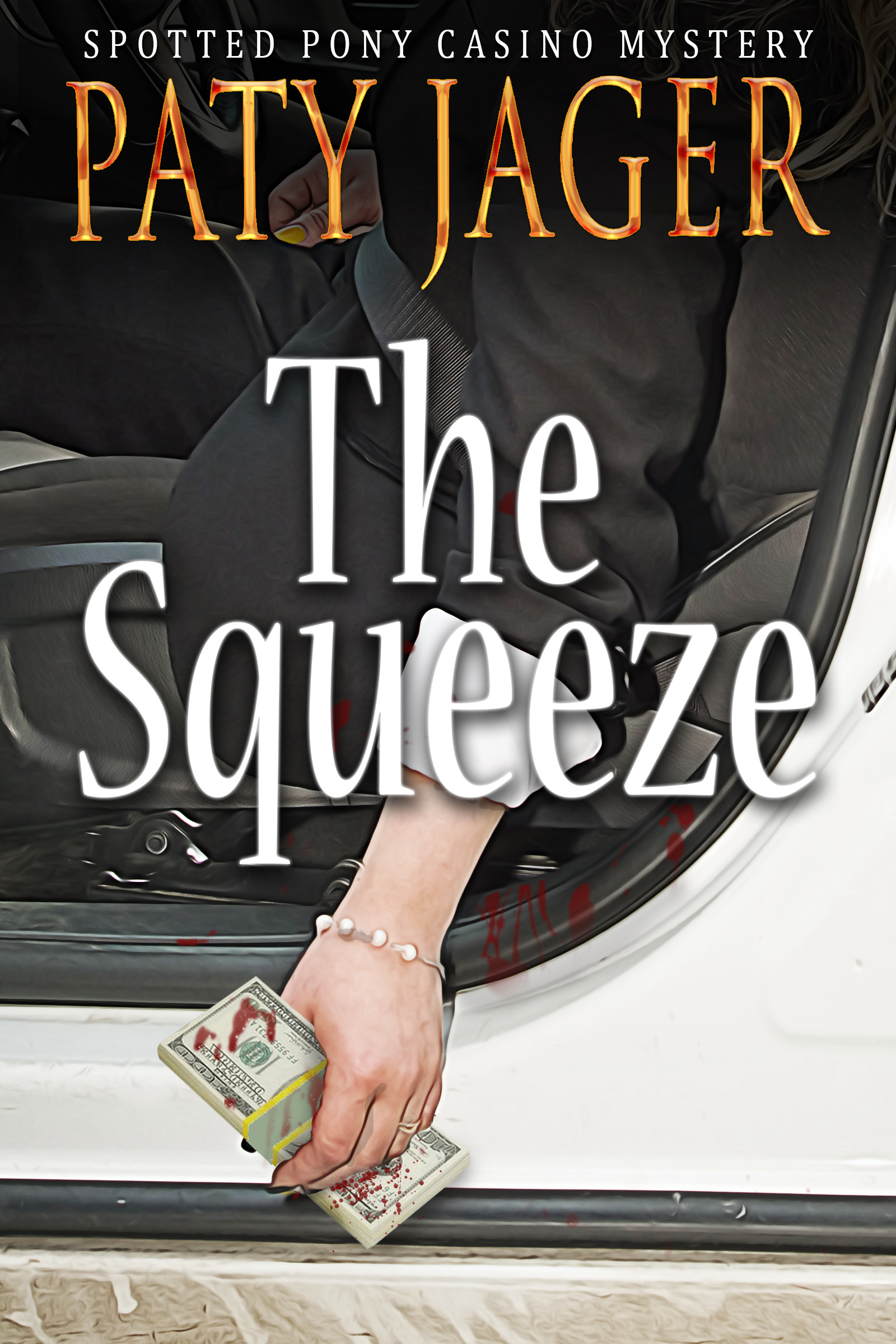
I’m heading on a road trip Wednesday to check out some locations I’ve written into the 4th book, The Squeeze, in the Spotted Pony Casino Mystery series. While I grew up close to the area and had quite a few trips to there, it has changed since I was a teenager.

I’m also going to the library in Pendleton to use their archives of the local paper to go through the motions my character will be doing in my book. And I need to see a restaurant and store that I use in the book. Then I’ll be headed to the Umatilla Reservation to drink in more of the atmosphere there. I plan to sit for an hour or more in the small store with a sandwich shop to watch interactions and if I’m lucky I’ll find someone to talk to about living there. After that, I’ll go to the museum and check out the books at the store in the museum to see if there are any books that I can use to learn more. And finally, I’ll sit in the casino an hour or two to soak up that atmosphere and add it to my story. I may even venture out to where I have my character’s house just to get view of it in a different season.

I’d hoped to visit with a tribal member that has been helping me with the culture of the reservation. He can’t get away to talk to me the days I could get to the Reservation.

It will be a five-hour drive from where I live to Pendleton. I’ll either spend the night at the casino if I don’t have enough time to do all I want, or if I do get my research finished and don’t have to go back, I’ll spend the night at my oldest daughter’s an hour from Pendleton and head home on Thursday.

This isn’t the first nor the last time I’ll be taking research trips for books. The 5th book in the series is set at an Indian casino on the Oregon Coast. I’m headed there in March with a friend to do research for that book.

And over the summer I took a trip with my sister-in-law for book 10 in my Gabriel Hawke series. Bear Stalker is now available in ebook and print and we are working on the audiobook.

Here is the blurb, cover, and buy link:

Book 10 in the Gabriel Hawke Series

Greed, Misdirection, and Murder

Oregon State Trooper Gabriel Hawke’s sister, Marion, is on a corporate retreat in Montana when she becomes a murder suspect. Running for her life from the real killer, she contacts Hawke for help.  

Hawke heads to Montana to find his sister and prove she isn’t a murderer. He hasn’t seen Marion in over twenty years but he knows she wouldn’t kill the man she was about to marry.

As they dig into possible embezzlement, two more murders, and find themselves trying to outsmart a wilderness-wise kidnapper, Hawke realizes his sister needs to return home and immerse herself in their heritage. Grief is a journey that must be traveled and knowing her fiancé had wanted Marion to dance again, Hawke believes their culture would help her heal.

https://books2read.com/u/mdjNzW

Guest Blogger ~ Saralyn Richard

The Origin of Detective Oliver Parrott

By Saralyn Richard

I hate to admit this, but the protagonist in my Detective Parrott Mystery Series began as an afterthought. Shameful, I know, but truthful, nonetheless. The first book in the series, MURDER IN THE ONE PERCENT, begins with an elegant party—a weekend retreat at a country mansion in Brandywine Valley, Pennsylvania, where some of America’s wealthiest and most powerful live.

I was so focused on the party—the guests, the invitation, the menu—I lost sight of the fact that the plot was barreling towards a mysterious death in the bedroom on the fourth floor. Once I had the body, and I’d carefully lined up the various suspects, I realized I needed a detective. Of course, I did. So, I fleshed out the details of the detective’s appearance, his background, his personality. Parrott was an outsider, having little in common with the people in Brandywine. He was young and African American, smart and well-organized, undaunted by the glamor or power, and able to see through the subterfuge and dissembling that was thrown at him.

I’d had students like Parrott. I knew him inside and out. I decided to name him Parrott after Agatha Christie’s detective, Hercule Poirot. (His name is pronounced like “parrot,” the bird.) Once I got further into writing the book, I realized that Parrott was the main character. With that in mind, I rewrote the first chapters of the book to shine the spotlight on him from the start.

The more scenes I wrote with Parrott in them, the more I admired and appreciated his qualities and the way he worked. I loved the way he treated others, too. I still didn’t fathom how much readers would root for him. It wasn’t until MURDER IN THE ONE PERCENT was published, and a clamoring for more Parrott books started that I even considered writing a series.

Here we are, four years and three books later. A PALETTE FOR LOVE AND MURDER was published in 2019, and CRYSTAL BLUE MURDER was just released in September. The Detective Parrott Mystery Series continues to thrive, and so does Detective Parrott, the protagonist who was actually an afterthought.

CRYSTAL BLUE MURDER

METH, MURDER, AND EXPLOSIONS OF THE HEART

In the heart of tranquil, lavish Brandywine Valley, Detective Parrott confronts a meth explosion, a dismembered corpse, and an intricate trail of deceitful secrets that shake up many lives — including his own. When celebrity hostess Claire Whitman’s renovated barn explodes into flames, Parrott delves into the privileged lives of all who are affected. Tension from Parrott’s personal life crosses over into the case, and secrets, deceptions, and crimes create an even bigger explosion. Third in the Detective Parrott Mystery Series, Crystal Blue Murder explores the complexities of life in an entitled world where many of America’s wealthiest and most powerful elite have their own definitions of right and wrong.

Buy links: https://www.amazon.com/Crystal-Blue-Murder-Detective-Parrott/dp/0989625567

Crystal Blue Murder by Saralyn Richard, Paperback | Barnes & Noble® (barnesandnoble.com)

https://books2read.com/u/4X2ae6

Saralyn Richard is the author of award-winning mysteries that pull back the curtain on people in settings as diverse as elite country manor houses and disadvantaged urban high schools. An active member of International Thriller Writers and Mystery Writers of America, Saralyn teaches creative writing and literature. Her favorite thing about being an author is connecting with readers like you. Follow Saralyn and subscribe to her monthly newsletter at http://saralynrichard.com.

Social media links:  https://twitter.com/SaralynRichard

https://www.facebook.com/saralyn.richard

https://www.linkedin.com/in/saralyn-richard-b06b6355/

https://www.instagram.com/naughty_nana_sheepdog/

https://www.goodreads.com/author/show/7338961.Saralyn_Richard

https://www.bookbub.com/profile/saralyn-richard

Guest Blogger ~ Claudia Riess

 The Freedoms and Constraints of Genre

     I love art, mystery and romance and wanted to explore all three.  The notion of “genre” was secondary.  For efficiency my present genre’s been labeled “mystery,” but more accurately, it’s “hybrid.” 

     What sparked Stolen Light, the first book in what was to become my art mystery series, was an offhand remark by my brother, an art historian, about the possibility of unearthing a presentation drawing or cartoon fragment of Michelangelo’s Battle of Cascina.  The idea instantly conjoined with a conversation I’d had many years prior with a Vassar College mate, who spoke of her father’s sugar plantation having been confiscated during the Cuban Revolution. (To me, the daughter of an English professor, whose worldly possessions had never crossed the borders of Brooklyn, New York, this was a collision of societal classes never before experienced first-hand.  The memory would remain intact.)  Without losing a beat, I reconfigured events, made the plantation owner an art enthusiast whose art collection is looted during the turmoil of 1958, in an incident shrouded in mystery that would resurface six decades later.  My protagonists, Erika Shawn, a young art magazine editor, and Harrison Wheatley, a more seasoned art history professor, would come into being a few hours later, when I was sitting in front of my computer, staring at a blinking cursor on an otherwise blank screen.  Erika and Harrison, I decided, would would find themselves thrown together in both an academic sleuthing adventure that turns deadly, as well as a burgeoning romance with hazards of its own.

     What pressed me into writing False Light, the second book in the series, and whose plot pivots around the notorious forger, Eric Hebborn (Born to Trouble, a memoir, 1991), is two-fold.  I was now hooked on tackling exploits in the art world, where man’s most sublime aspirations conflict with his basest (a great amalgam for fiction!), and also Erika and Harrison were insisting I allow them to get on with their lives.

     The third book in the series, Knight Light, would focus on the recovery of art seized during Germany’s occupation of Paris, and the fourth and most recent, To Kingdom Come, on the repatriation of art looted from Africa during the late nineteenth century.

     Working in a hybrid medium, where the protagonists are amateur sleuths helping solve crimes, often gruesome, in the art world, and also engaged in a dynamic romantic relationship, can be challenging.  One way I deal with the balancing act is seeing that the principal driving force is the mystery and sticking to it.  To prevent the plot from stalling, I make sure that Erika and Harrison’s personal conflicts have a bearing on their crime-solving.  In one instance, say, Erika goes off on a risky mission on the sly, despite Harrison’s adamant opposition.  Her decision and his reaction play an integral part in how the mystery evolves.

     Something I have to be on guard about is digressing too long on intimate encounters or personal-issue-centered dialogue.  Both can break the forward motion of the central plot.  I have a tendency to get swept into the emotional drama at hand, and it’s only later, when I’m reading through the section where the interlude occurs, that I realize the main thread’s been lost.  Luckily, most of the time all it takes to resolve the problem is a bit of pruning.  On occasion, though, it requires the interlude’s excision.  This can be painful, but sometimes cutting a manuscript—and a writer’s ego—down to size can be a constructive experience.   

Amateur sleuths, Erika Shawn-Wheatley, art magazine editor, and Harrison Wheatley, art history professor, attend a Zoom meeting of individuals from around the globe whose common goal is to expedite the return of African art looted during the colonial era.  Olivia Chatham, a math instructor at London University, has just begun speaking about her recent find, a journal penned by her great-granduncle, Andrew Barrett, active member of the Royal Army Medical Service during England’s 1897 “punitive expedition” launched against the Kingdom of Benin. 

Olivia is about to disclose what she hopes the sleuthing duo will bring to light, when the proceedings are disrupted by an unusual movement in one of the squares on the grid.  Frozen disbelief erupts into a frenzy of calls for help as the group, including the victim, watch in horror the enactment of a murder videotaped in real time.

It will not be the only murder or act of brutality Erika and Harrison encounter in their two-pronged effort to hunt down the source of violence and unearth a cache of African treasures alluded to in Barrett’s journal.

Much of the action takes place in London, scene of the crimes and quest for redemption.

Buy links: https://www.amazon.com/Kingdom-Come-Art-History-Mystery-ebook/dp/B09Z1KFNB4

https://www.levelbestbooks.us/

 Claudia Riess, award-winning author of seven novels, is a Vassar graduate who has worked in the editorial departments of The New Yorker and Holt, Rinehart and Winston, and has edited several art monographs.

                       http://claudiariessbooks.com

                       http://twitter.com/ClaudiaRiess

                       http://www.facebook.com/ClaudiaRiessBooks