Guest Blogger ~ Marla White

Why I Write the Un-Cozy Genre

Any time someone asks “why do you write mysteries” I tell them because it’s the only way to kill someone who irritates me and not go to jail.

And I tend to stick to cozy mysteries because I don’t want to have to learn cop procedures. Just kidding. I still do a lot of research on cop jargon, weapons, and crimes, but I like to focus on what makes characters tick more than the policy and protocols. I leave that to the more procedural driven writers because those are the kind of details you cannot get wrong and still maintain your readers’ trust.
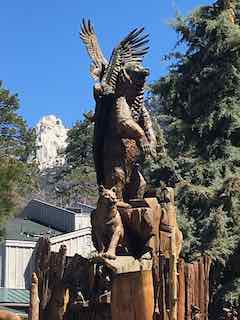
First, let’s establish that most people define a cozy mystery as a book set in a small town. In “Framed for Murder”, the setting of Pine Cove is heavily influenced by the actual town of Idyllwild, California. Neighbors know each other, they have a dog for a mayor, and there’s only two major streets. To me, there’s something comforting about characters living in a place where nothing truly bad happens (unless you count the dead person who usually is universally disliked anyway) and often there’s a spark of romance. It’s a nice break from real life.

One of the first books I read as a kid was a Nancy Drew mystery, so detectives out of uniform who can make up the rules as they go along have always been appealing. Rex Stout’s Nero Wolfe, Robert Parker’s Spenser, and of course the great Janet Evanovich’s Stephanie Plum all get to solve crimes but bend a few laws along the way. Dick Francis’ mysteries were a huge influence as well. My first full-length novel from The Wild Rose Press, “Cause for Elimination,” has a cop as one of the main characters, but there’s also Emily Conners, professional horse trainer and part-time snoop. Besides, once you throw a little romance in there, it’s reasonable that some rules get broken. Plus, his partner is a snarky, lovable jerk who refuses to draw inside the lines anyway, so problem solved!

Which brings me to the “un-cozy” part of the story. One reviewer loved “Framed for Murder” but commented that they’d call it an un-cozy because my characters go beyond the sure steadiness of a Miss Marple. For instance, my characters’ lives are screwed up long before they find the body In the Pine Cove books, the main character Mel O’Rourke faces a fear of heights, learns how to run an aging B&B, deals with her eccentric grandmother, and solves a murder. The stakes for Mel aren’t just life or death, although there’s that too; she struggles with her identity as she has to start her life over.

In truth, I’m one of those idiots that writes in multiple genres. The idea of self-discovery is a common theme throughout all of them, whether it’s after losing a job, a cheating boyfriend, or the world as you knew it. It’s when characters are at their most vulnerable but also the most interesting. It’s one thing to know at the end of a cozy the killer will be caught, that’s kind of a given. But as a writer, I love the journey of writing a book where I have no idea what’s next for my characters beyond solving the core plot problem until I’ve outlined all the way to ‘The End’.
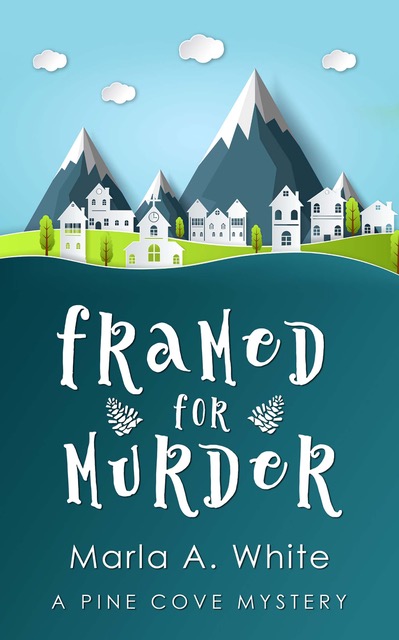
Old enemies become allies to unravel a deadly mystery

Mel O’Rourke used to be a cop before a life-changing injury forced her to turn in her badge. Now she leads a relatively peaceful life running a B & B in the quirky mountain town of Pine Cove. That is, until her old frenemy, the charismatic cat burglar Poppy Phillips, shows up, claiming she’s been framed for murder. While she’s no saint, Mel knows she’d never kill anyone and sets out to prove Poppy’s innocence.

The situation gets complicated, however, when the ruggedly handsome Deputy Sheriff Gregg Marks flirts with Mel, bringing him dangerously close to the criminal she’s hiding. And just when her friendship with café owner Jackson Thibodeaux blossoms into something more, he’s offered the opportunity of a lifetime in New Orleans. Should she encourage him to go, or ask him to stay? Who knew romance could be just as hard to solve as murder?

Buy Links

Amazon – https://bit.ly/43Uwj96

Barnes and Noble – https://bit.ly/3TKdPDu

Apple Books – https://books.apple.com/us/book/framed-for-murder/id6483932566

GoodReads – https://www.goodreads.com/book/show/211106987-framed-for-murder

AllAuthor – https://allauthor.com/book/87348/framed-for-murder-a-pine-cove-mystery/

Books2Read – books2read.com/u/4Djgor  

Book Bub-https://www.bookbub.com/books/framed-for-murder-by-marla-a-white
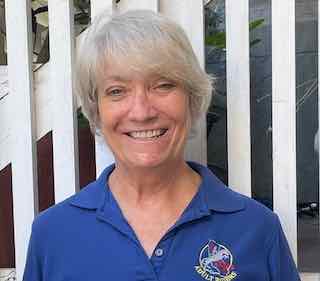
Marla White is an award-winning novelist who prefers killing people who annoy her on paper rather than in real life. Her first full-length mystery novel, “Cause for Elimination,” placed in several contests including Killer Nashville, The RONE Awards, The Reader’s Favorite, and finishing second in the Orange County Romance Writers for Romantic Suspense. Originally from Oklahoma, she lived in a lot of other states before settling down in Los Angeles to work in the television industry.  She currently teaches at UCLA Extension and gives seminars about the art of script coverage. When she’s not working on the next book, she’s hiking, cheering on the LA Kings, or discovering new craft cocktails (to, you know, drown her sorrows over the Kings #GKG).  

Social Media Links

Twitter:  https://twitter.com/TheScriptFixer

Instagram: https://www.instagram.com/marlawriteswords/

Facebook: https://www.facebook.com/MarlaAWhiteAuthor

TikTok: https://www.tiktok.com/@marlaw825

Goodreads: https://www.goodreads.com/author/show/21467766.Marla_A_White

Bookbub: https://www.bookbub.com/profile/marla-a-white

Amazon: https://amzn.to/3MHIzkB

Substack: https://substack.com/@marlawhite?utm_source=edit-profile-page
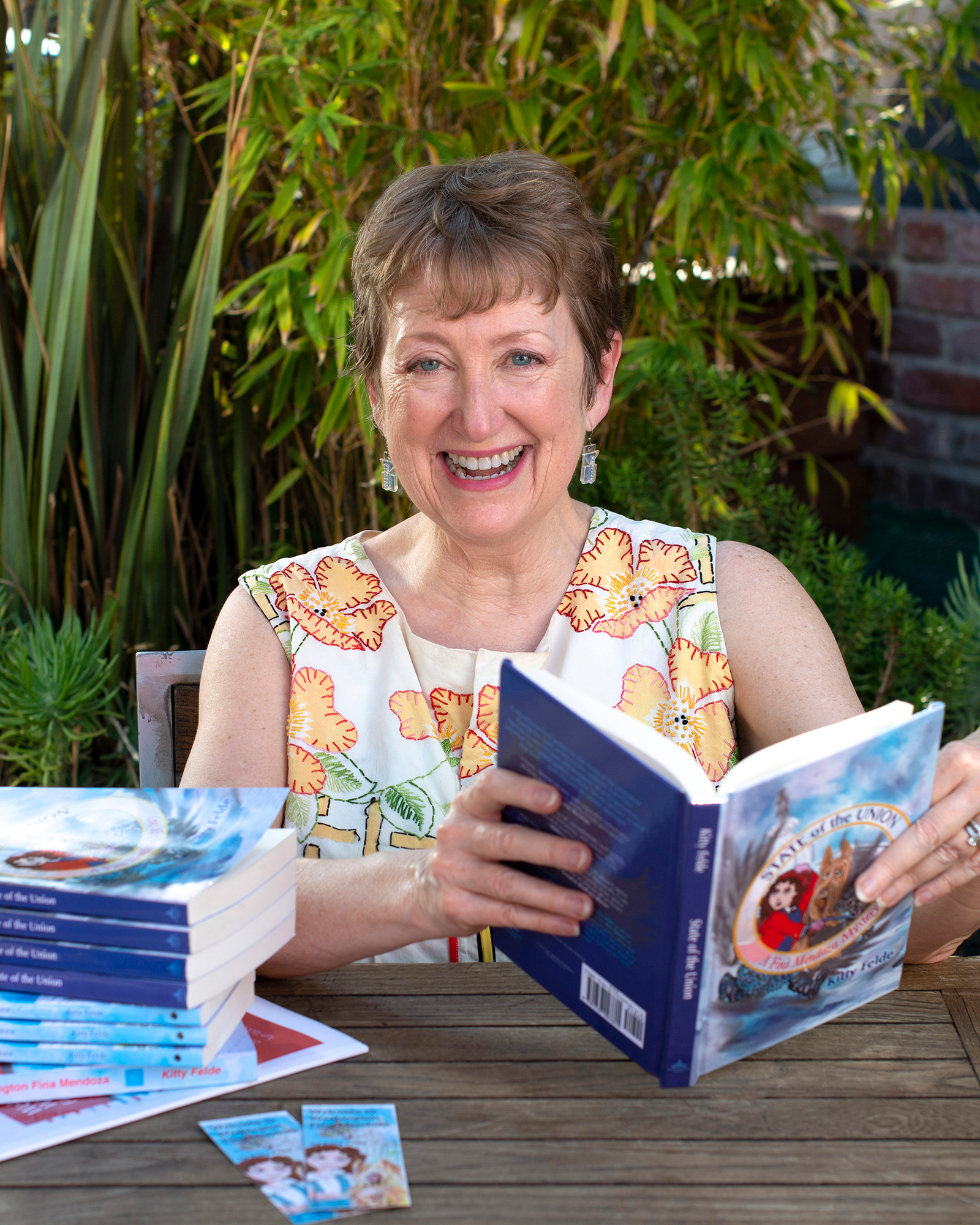
Guest Blogger ~ Kitty Felde

I’ve fallen down the rabbit hole of research. Dangerous, I know, because researching is a great excuse for not writing. But often you find unexpected treasures that can sometimes become an essential part of your mystery.

I write two mystery series.

The Fina Mendoza Mysteries follow the adventures of the 10-year-old daughter of a congressman from California who looks for the Demon Cat of Capitol Hill and the bird that pooped on the president during the State of the Union address. They’re actually a civics lesson in disguise, with teacher’s guides and a “Facts Behind the Fiction” blog.

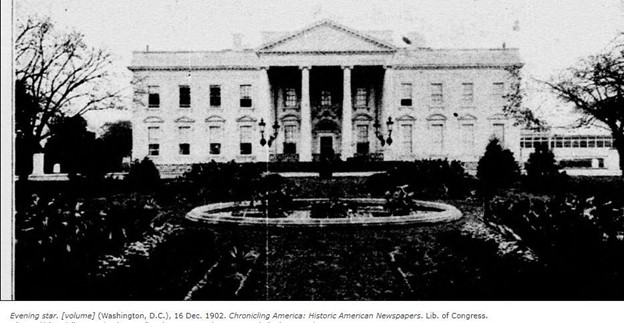
I also write a historical mystery series set in Theodore Roosevelt’s White House, featuring his outrageous daughter Alice as our amateur sleuth.

Both require research. A lot of it. In many ways, Fina is easier because I covered Congress for a decade and if I have questions, there are human beings on the Hill who I can tap for the answers.

For Alice, I’ve been using the vast newspaper records available online at the Library of Congress. Chronicling America, a partnership between the Library of Congress and the National Endowment for the Humanities, is a free, searchable database of American newspapers from 1777 to 1963. If you’re writing about an era before or after that, the LOC has a secondary collection of newspapers from 1690 to today.

There’s a map where you can discover ethnic newspapers across the country. Who knew there was a German newspaper in San Diego and a Finnish one in Washington state? There were dozens of African-American newspapers from Butte, Montana to Miami, Florida.

I fumbled around at first, but found absolute gold in the digital pages of Chronicling America.

Because Murder on the Potomac: a Princess Alice Mystery was set in 1902, I had so many questions.

How did police get around town. Did they ride horses? Drive motor cars? Bicycles? Who were they? A profile of “Well Known Men of the Metropolitan Police Force” in the Washington Times helped me create my policemen characters – including one who was active in the temperance movement.

What happened at an inquest of the era? The Evening Star  had a full report of one particular proceeding. Though I admit I was distracted by the ad for furniture on the same page that featured a $22 “Polished Mahogany-Finished Toilet Table.” A what?

I needed a place for a body to be discovered. The Washington Times reported on a years-long battle to either fill in or fence the James Creek Canal. Little more than a sewer, neighbors labeled it a “death trap” where five bodies a month were pulled from the mud.

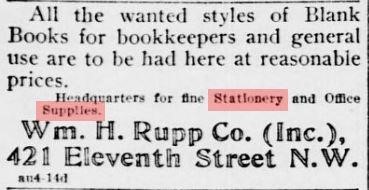
For one scene, I needed the name of a stationary store where my amateur detective could find a blank book to record her clues. I searched “stationary supplies” and found an advertisement at the top of the page in the Evening Star.

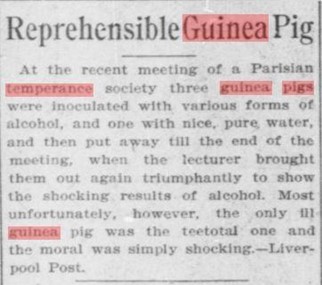
My favorite gem didn’t happen in Washington at all. TheWashington Times, like papers and TV news today, reprint sensational or odd stories from around the world. This one involved a pair of guinea pigs at a temperance meeting in Paris. The experiment was designed to demonstrate the destructive power of alcohol. One animal was given water, the other alcohol. Guess which one got sick.

There were challenges. I was overwhelmed. I wanted to read everything. (Anything to avoid staring at a blank screen and actually have to write. But my lousy eyesight made it difficult to see an entire page on a 13” laptop. I wasn’t sure how to find what I needed. And when I found a juicy tidbit, what was the best way to keep track of it? Was saving links the best way to capture the information?

I am no research genius, but let me save you the learning curve and share my tips:

  • SEARCHING:
    • Narrow down your search parameters. If your work is set in 1939, look for newspapers from that year. If it’s set in Pittsburgh, narrow your search to just papers from Pennsylvania.
    • Try various search terms. If you get too many hits with “police,” try “detective.”
    • You’ll soon discover which newspapers go with the sensational, which have the most advertisements. Ads are great to help you describe clothing of the era or which stores or restaurants were frequented by your characters.)
  • READING
    • If you’re using Microsoft Word, use the snipping tool. You can isolate the articles you want to keep, and save images for future reference or inspiration. And for those of us who are visually challenged, you can save it IN A LARGER SIZE. 
    • Images are also helpful while you’re writing. I often drop an image into the manuscript if there’s a quote I want to use or a detail that’s perfect for the scene. (And then I delete the image.)
  • ORGANIZATION
    • DO keep track of your links. It will save going back and searching all over again. Note the source and date of the article, just in case you do have to go back and search.
    • I’m sure your graduate school training will have given you a better way to organize your research. Me? I keep a simple Word or Google doc where I list topics I’ve researched. Sometimes I drop in a line or two, sometimes an image, but always a link. (At first, I kept a numbered “footnote” file at the bottom of the document, but since I’m not including my research in my notes, I gave up on that.)
  • PERMISSIONS
    • If you’re considering including images in your book, take note of the copyright and who owns it. You might want to start asking for permission now to use the material later, long before you’re done with the book. If the answer is “no,” that gives you time to find an alternate image.

Good luck! And happy reading.

Kitty

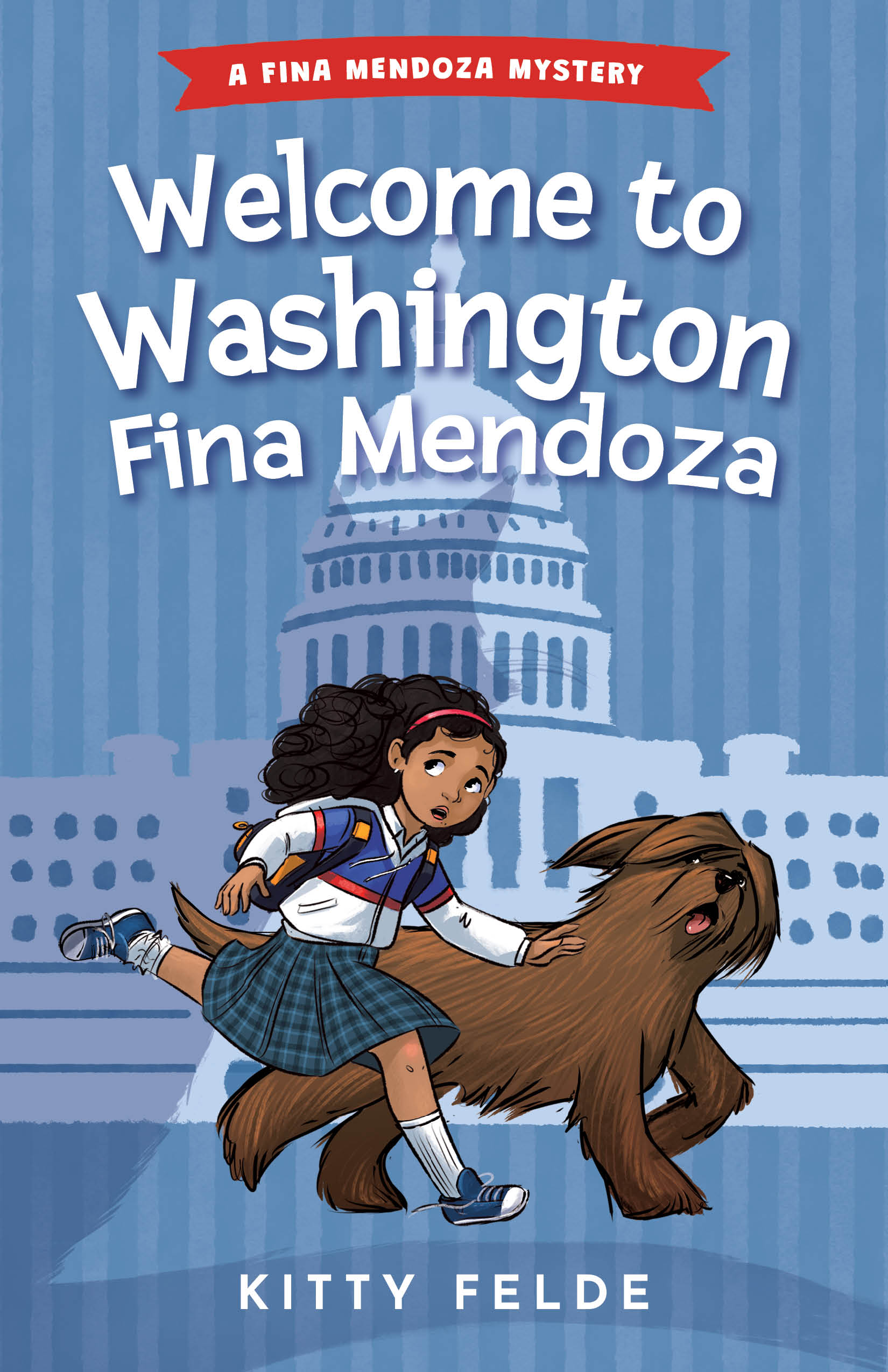
 WELCOME TO WASHINGTON FINA MENDOZA:

The West Wing meets Nancy Drew. Legends say if you see the Demon Cat of Capitol Hill, you’re cursed with bad luck. Ten-year-old Fina Mendoza just saw it. And the last thing her family needs right now is more bad luck. The only way for Fina to save her family from future “cat”astrophe is to solve the mystery of the Demon Cat of Capitol Hill.

 STATE OF THE UNION:

The 10-year-old daughter of a congressman solves mysteries in the U.S. Capitol with the help of a big orange dog named Senator Something. Her latest case: find the mysterious bird that pooped on the president’s head during the State of the Union address. Is it Chickcharney, the legendary bird from the Caribbean? Did it fly to Washington D.C. with a secret message for the president? Or Congress? Or is the message for Fina from her mom who passed away not so many months ago?

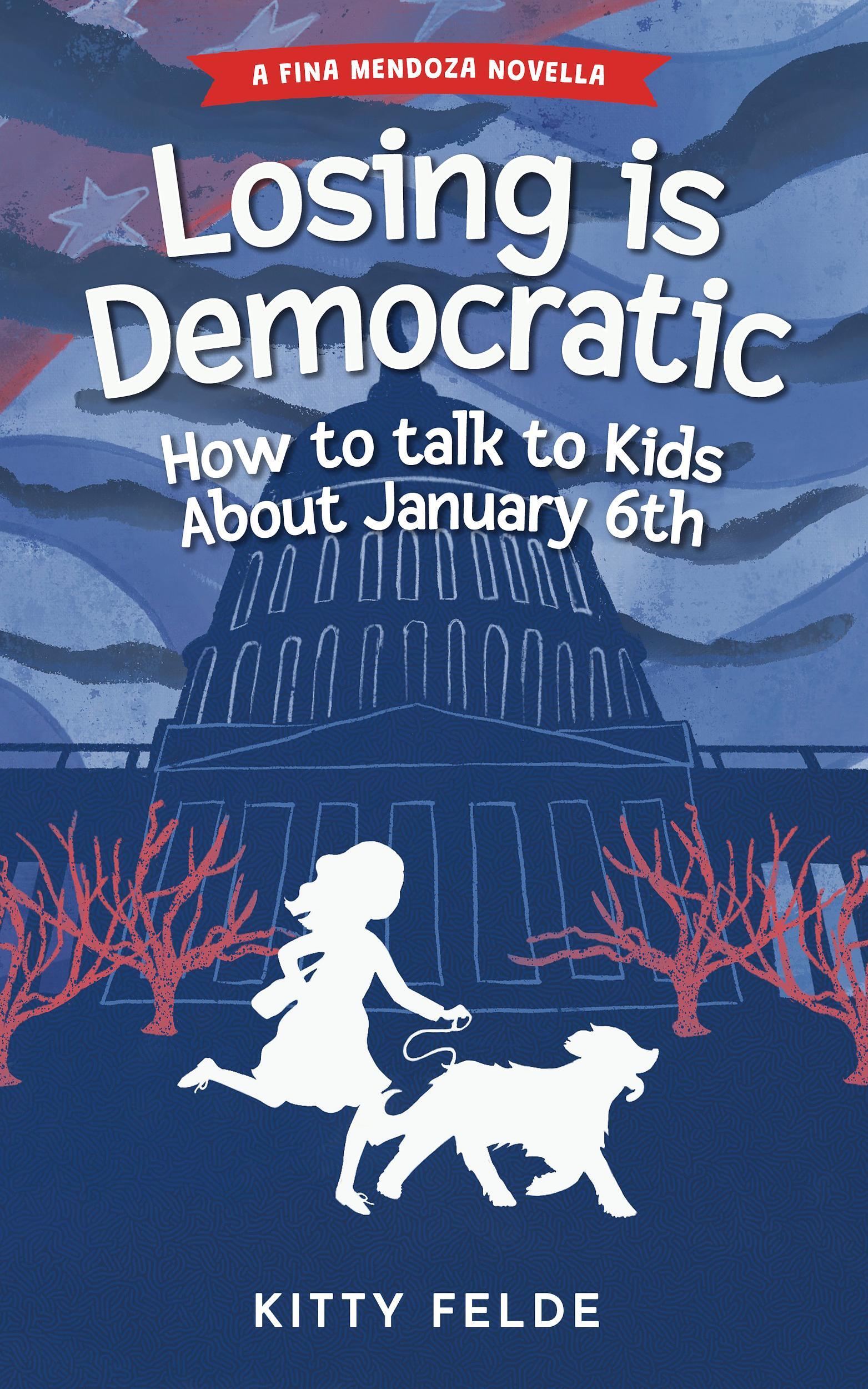
 LOSING IS DEMOCRATIC: HOW TO TALK TO KIDS ABOUT JANUARY 6TH:

A Latina protagonist of spunk and smarts worries about her congressman father on January 6, 2021. Fina Mendoza, our amateur detective, is in the middle of an investigation to find out who stole the 5th grade pizza. But all thoughts of detection go out the window as she watches on television as a mob breaks into the Capitol. Is Papa okay? Most of Fina’s classmates have parents who work inside that building as well. Their teacher calms their fears turns the event into a teaching opportunity and students discuss the importance of both winning and losing, whether it’s in a baseball game, a reading competition, or an election.

In addition to her Alice Roosevelt mysteries, Kitty Felde is the author of Welcome to Washington Fina MendozaState of the Union, and Losing is Democratic: how to talk to kids about January 6th – mysteries for children designed to introduce civics education. They are also available as an episodic podcast The Fina Mendoza Mysteries. Kitty is an award-winning public radio journalist. She is also Executive Producer of the Book Club for Kids podcast.

X – https://x.com/kittyfelde

Facebook: https://www.facebook.com/CreatorofFinaMendoza

LinkedIn: https://www.linkedin.com/search/results/people/?firstName=kitty&lastName=felde&origin=SEO_PSERP&sid=4zI

Instagram: https://www.instagram.com/kittyfelde/reels/

I See Characters

Every writer puts a bit of the people around them into their characters. We can’t help it. A friend has a quirk that we like and we give it to a character. A relative has a situation that would make for a great subplot, we use it. Even though we are writing fiction, bringing in the bits of real life that we see brings those fictional characters to life.

Last month while working at a NIWA (Northwest Independent Writers Association) booth selling my book and those of other authors in the organization, some unusual characters came by and talked to us. One of my strengths is being a good listener. Only there does come a point with some people when even I started getting antsy and wish the person would move on. Either physically or with their topic.

One person who has stopped by our booth the last two years that I’ve been there is a man who likes to discuss how the government is listening into everything that is going on and how he believes the aliens will soon return to save the planet. He gets very adamant about why he lives off-grid and how we are all being tracked. I’m thinking someone with his perspective on life will show up in one of my books.

Another young man, well, young to me, I believe he might have been late twenties or early thirties. He had a British accent, wore his hair in a shoulder-length bob, and had on a typical t-shirt a male his age would wear and then he had on a skirt that was tight enough across his hips that you could tell he was male if his voice hadn’t given him away. He had a dog on a leash. As he talked to us, he constantly pushed the hair away from his face, adjusted his glasses, and kept his dog from wrapping the leash around his legs. He was quiet, talked a little about the books and how he’d thought about writing, but he didn’t have a clear vision of what he wanted to write.

The third person who captured my attention and sent a chill up my back was a woman. She walked up to the booth dressed in a long flowy skirt, matching sweater, and a silk scarf around her neck. She looked like the wife of a businessman or a professional herself. Her smile was wide, her eyes lit up with the smile and she said, “Hello. I’m here to spread love. Elon Musk and I are building a world filled with love. Come join us and together we can make the world a better place.” I smiled and said, “That’s nice. The world could use more love.” She asked about a couple of the books, then reiterated that she and Elon needed help to spread the love. I nodded and smiled and then- the creepy part. Her eyelids started fluttering, her eyes kind of rolled up, and her smile disappeared. When she stared at me anger simmered in her eyes and she said, “I know where the bodies are buried. I do. I know where the bodies are buried.” I had no words for that response from her. Then as quickly as she’d changed, the smile was back and she said, “I have more love to spread, ” and walked away.

I was speechless for a few minutes. The other member of NIWA who was in the booth with me had been on the phone while I was talking to the woman. I sat down, grabbed a pen and a piece of paper, and wrote down everything she said and how she looked.

And that woman is a secondary character in my September release, Down and Dirty, book 6 in the Spotted Pony Casino mystery series.

It is encounters like this that give writers the fodder for their stories.

Guest Blogger ~ PJ McIlvaine

The Monster Mash by PJ McIlvaine

A few summers ago, I was at a writing crossroads in my writing life and personally. I was a Jill of all trades: screenwriting, articles, interviews, essays, and kid-lit picture books. My first attempt at writing an adult book had failed miserably. It was a Stephen King rip-off that a big mucky muck agent had derided as “mediocre.” After I cried buckets of tears, I realized he was right. Call me many things, but not that. I vowed never again.

I’d long nursed two very different ideas: the first idea was a middle-grade coming-of-age about two brothers on summer vacation in Montauk who decide to create a monster in a failed attempt to save their parent’s floundering marriage. The other idea was a gritty, bad-to-the-bone adult thriller about a man who can’t remember exactly what happened the hot summer night his mother and brother were brutally murdered.

It was Labor Day. With the grandkids back to school, I began writing. It soon took over my life. Hunched for hours on the kitchen table, the words poured out of me. I wasn’t just in the zone, this was a white-hot blazing inferno on auto-pilot. I based my characters on people I knew and loved: my troubled brother and our dysfunctional family plus my imagination. I tossed in lots of pop and political culture, too, things I loved and hated. It was a heady brew of fact and fiction, and I loved every minute of it even though I had no idea what I was doing. Would it even work? Who knew? Not me. I was so scared that I refused to give it a title. For a long time, it was known only as THE THING.

Well, I finished THE THING–more likely, it had finished with me–after two intoxicating months. My brain was mush. I had no idea if my book–now titled A GOOD MAN–was publishable. Hell, I hadn’t even thought of anyone reading it. I write family stuff. Nice, family stuff. This was brutal, full of coarse language and behavior, and truly evil people. I knew it would probably–no, undoubtedly–turn some people off. But I hadn’t written it for some people. I had written it for me; in hindsight, it was therapeutic and I got a lot of ghosts out of my head. I like to say that some books need to be written. Well, this book chose me. I didn’t choose it. But since it had, I ran with it and pushed my boundaries far beyond what I thought myself capable of.

The road to publication wasn’t easy. Agents passed right and left. I heard every reason in the book and then some. They liked the voice, they hated the voice. They loved the characters, they hated the characters. There was too much sex. The main character was too unlikeable. I killed too many people. And the language. One agent who strung me along for weeks finally told me in no uncertain terms that A GOOD MAN was in their opinion–the words I’d dreaded–unpublishable and unmarketable as written. My sole consolation was that she didn’t say it was mediocre. That was probably my lowest point. I quietly mourned and consoled myself that it just wasn’t meant to be. I told myself the next book. For authors, hope is an eternal spring.

And then–just like in a Hollywood movie–a reputable British publisher appeared and offered a publishing contract. She told me in no uncertain terms that she thought my book–my poor little red-headed stepchild whom I loved fiercely and would defend with every breath of my being–was “brilliant.”  I wasn’t about to disagree and quickly signed the contract. The book, published in August 2024, became an Amazon best-seller. Who knew? Not me.

So what are my takeaways? Sometimes you have to take a leap of faith and trust your gut despite the nagging voices of doubt in your head. Challenging myself to write with abandon and permitting myself to fail were wonderful gifts that keep on giving. Also, you can’t please everyone. The only thing a writer can control is the writing. The rest is up to the universe and even then, you still need a good deal of luck and magic.

Monsters are real. At least, the ones in my head are, but I put them to good purpose.

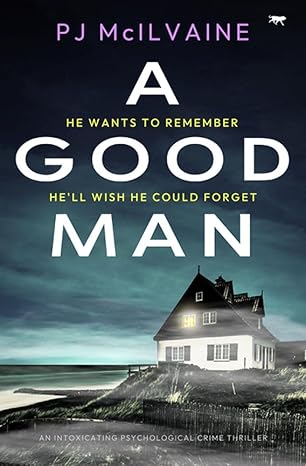
A GOOD MAN

Decades after a brutal childhood trauma, a famous novelist finds his life shattered once again, in this unsettling psychological mystery thriller.

After years of turmoil, Brooks Anderson is sober and has a stable life with his wife and two kids. He should be enjoying life, but the persistent nightmares and sleepwalking tell a different story.

As hard as he’s tried, Brooks can’t run away from the defining event of his life: the senseless murders of his mother and brother during a vacation in Montauk. An eight-year-old Brooks was the sole survivor of the carnage, which left him in a catatonic state. He buried his pain and eventually overcame his demons. Or so he believed.

Now an unscrupulous journalist is threatening to write about the deaths. Fearful that the truth will be twisted to suit sordid ends, Brooks decides to write his own book, despite the grave misgivings of his agent, wife, and father.

However, when the journalist is brutally killed, Brooks finds himself in the authorities’ crosshairs. To prove his innocence and exorcise the past, he digs deeper into his psyche and that fateful summer. His relentless pursuit of the truth soon leads Brooks down a slippery slope that challenges everything—and brings him face-to-face with the real monster of Montauk . . .”

“‘A Good Man’ provides the kind of insolent first-person narration that is reminiscent of John Self’s in Martin Amis’ ‘Money’ or Mickey Sabbath’s in Philip Roth’s ‘Sabbath Theater’. . . . Perfectly entertaining and well-crafted . . . McIlvaine writes with a ferocious wit and great breadth of knowledge. ‘A Good Man’ offers all the surprises and shocks that a mystery should.” —Newsday

Buy link: https://geni.us/AGoodMan

PJ McIlvaine is a prolific best-selling author, screenwriter, and journalist.

PJ is the author of the twisty adult contemporary crime psych thriller A GOOD MAN (Bloodhound Books, August 2023),  THE CONUNDRUM OF CHARLEMAGNE CROSSE  a YA alternate history adventure set in Victorian London(Orange Blossom Books, September 2023), VIOLET YORKE, GILDED GIRL: GHOSTS IN THE CLOSET a MG historical supernatural mystery (Darkstroke Books, 2022), and the picture books NO SUCH THINGS AS DRAGONS (Roan & Weatherford, 2024) illustrations by K.M. Brown, and  LITTLE LENA AND THE BIG TABLE (Big Belly Book Co., 2019), illustrations by Leila Nabih.

PJ’s Showtime original movie MY HORRIBLE YEARwas nominated for a Daytime Emmy. Her writing has appeared in the New York Times, Newsday, Crime Reads/Lit Hub, Writer’s Digest, and elsewhere.

PJ lives in Eastern Long Island with her family along with Luna, an extremely spoiled French Bulldog/couch potato. Also, she’s distantly related to the French philosopher/feminist/writer Simone de Beauvoir (PJ not Luna).

Website: https://pjmacwriter.com/

Facebook: https://www.facebook.com/pj.mcilvaine

Twitter: https://twitter.com/PJMcIlvaine

Instagram: @pjmcilvaine

Goodreads: https://www.goodreads.com/author/show/19256202.P_J_McIlvaine

Amazon Author Profile: https://amazon.com/author/pjmcilvaine

Guest Blogger ~ Elizabeth Crowens

A few years ago, I interviewed the most prolific writer I know, Heather Graham Pozzessere, for Black Gate magazine. https://www.blackgate.com/2018/10/10/the-poison-apple-talking-about-ghosts-an-interview-with-the-queen-of-many-genres-heather-graham/ Writing since 1982, she’s produced over 300 bestselling novels, often mixing romance with suspense and the paranormal, especially in her Krewe of Hunters series. Many people in the mystery/thriller community knew her, but apparently few in the speculative fiction arena were familiar with her work, which was why I wanted to introduce the Black Gate community to her fantastic writing.

Since it’s one thing to knock off a quickie and let your editor polish it and another to have to make it almost perfect before turning it in, I asked her if editing got any easier as more books went down the pipeline. Obviously, she’s built a long-term relationship with her editors, but I also suspected after that many books one got much better at the craft, which also sped the process along.

Although Hounds of the Hollywood Baskervilles is technically my first bona fide mystery novel in print, altogether I have written ten novels which include unfinished works-in-progress, unpublished manuscripts, and published books in other genres. For each of them, I hired freelance editors. For my first novel I hired three, an expensive ordeal, but I was learning the craft of writing as I went along. In a certain way, it was like having a private writing tutor.

By now, I’ve learned a lot from my mistakes. The editing process is a lot faster. For certain elements, I have it down to a science which I’ve nicknamed Search and Destroy. I should probably propose to teach this in a session at a writers’ convention, but this technique helps slash and burn word count and helps eliminate redundancies. The great thing about it is that anyone can do it using Microsoft Word and the Find and Replace function under the Edit dropdown menu.

In a nutshell when we are writing, all of us use certain words far too often. Try doing a word search for common conjunctions such as but and although, adverbs such as maybe (and not only the ones with ly endings) and prepositions such as up and down. See if you can make your sentences more concise. Many times you can also spice up your prose or dialogue with better synonyms. Once you go through your manuscript, it’s amazing how other errors will scream out at you. However, using my Search and Destroy technique still doesn’t eliminate the value of having a second or third set of eyes review your manuscript. – Elizabeth Crowens

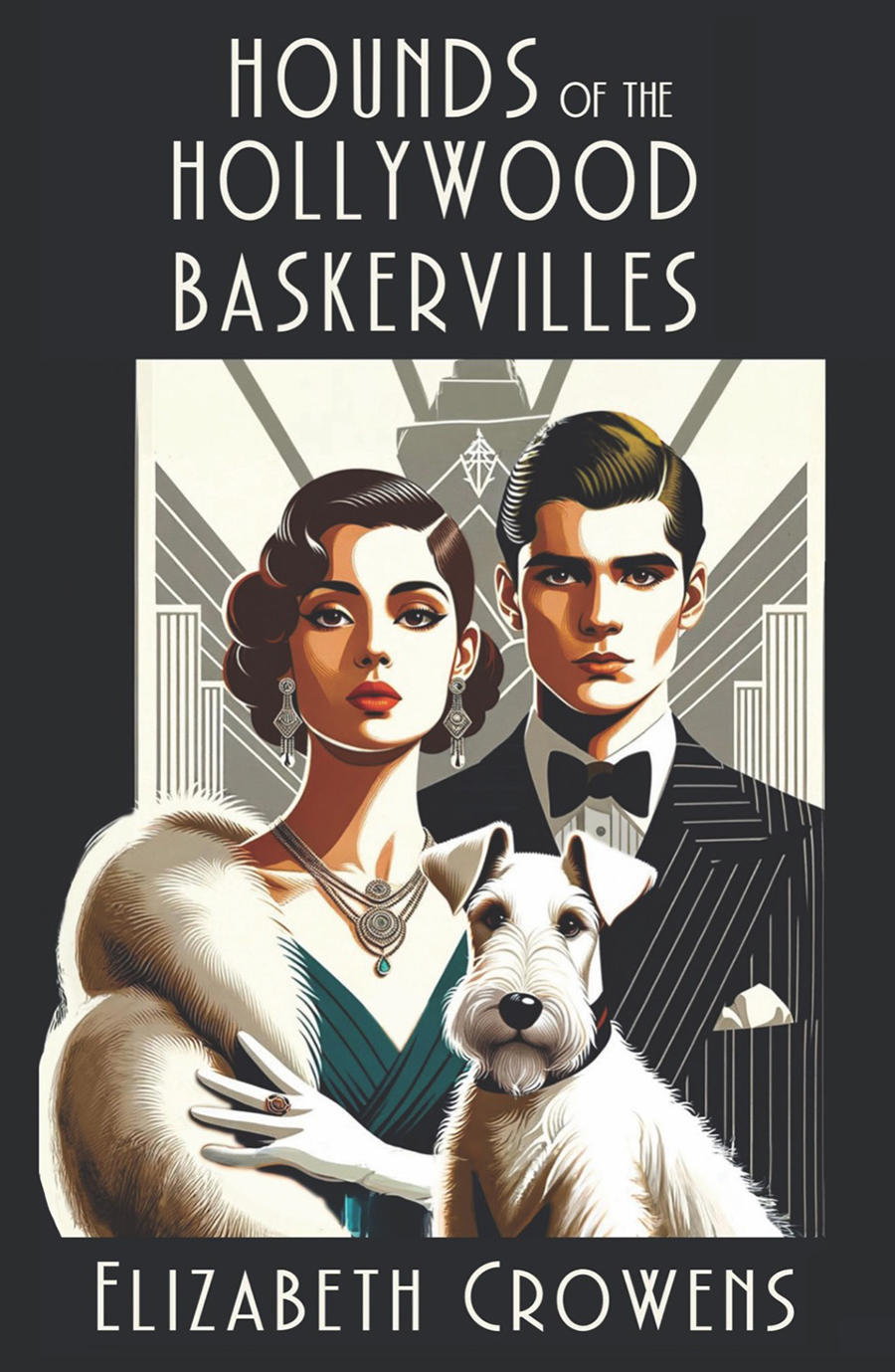
Hounds of the Hollywood Baskervilles

Asta, the dog from the popular Thin Man series, has vanished, and production for his next film is pending. MGM Studios offers a huge reward, and that’s exactly what young private detectives Babs Norman and Guy Brandt need for their struggling business to survive. Celebrity dognapping now a growing trend, when the police and city pound ridicule Basil Rathbone and ask, “Sherlock Holmes has lost his dog?” Basil also hires the B. Norman Agency to find his missing Cocker Spaniel.

The three concoct a plan for Basil to assume his on-screen persona and round up possible suspects, including Myrna Loy and William Powell; Dashiell Hammett, creator of The Thin Man; Nigel Bruce, Basil’s on-screen Doctor Watson; Hollywood-newcomer, German philanthropist and film financier Countess Velma von Rache, and the top animal trainers in Tinseltown. Yet everyone will be in for a shock when the real reason behind the canine disappearances is even more sinister than imagined.

Buy links: Bookshop.org https://bookshop.org/p/books/hounds-of-the-hollywood-baskervilles-a-babs-norman-hollywood-mystery-elizabeth-crowens/21021163

Amazon: https://www.amazon.com/Hounds-Hollywood-Baskervilles-Norman-Mystery/dp/1685125425/ref=sr_1_1

ISBNS:                                    978-1-68512-542-4 (paperback) $16.95

                                                978-1-68512-543-1 (ebook)  $5.99

Elizabeth Crowens has worn many hats in the entertainment industry, contributed stories to Black Belt, Black Gate, Sherlock Holmes Mystery Magazines, Hell’s Heart, and the Bram Stoker-nominated A New York State of Fright, and has a popular Caption Contest on Facebook.

Awards include: Leo B. Burstein Scholarship from the MWA-NY Chapter, NYFA grant to publish New York: Give Me Your Best or Your Worst, Eric Hoffer Award, Glimmer Train Awards Honorable Mention, two Grand prize, and six First prize Chanticleer Awards. Crowens writes multi-genre alternate history and historical Hollywood mystery. Hounds of the Hollywood Baskervilles, which won First Prize in both Chanticleer’s Mark Twain and Murder & Mayhem Awards and placed as a Finalist in Killer Nashville’s Claymore Awards for Best Humorous Mystery, was released in March 2024.

SOCIAL MEDIA HANDLES:

Facebook.com/thereel.elizabeth.crowens

X.com/ECrowens

Instagram.com/ElizabethCrowens

LinkedIn  https://www.linkedin.com/in/elizabeth-crowens-5227804/

Goodreads  https://www.goodreads.com/author/show/15173793.Elizabeth_Crowens

AUTHOR WEBSITE: www.elizbethcrowens.com