
I probably should connect more with Regan McHenry, the realtor-protagonist in my first series, Regan McHenry Real Estate Mysteries because Regan started out as me. But “Nancy” only made it until she found a body. I was so disturbed by that event that I had to put some distance between me and make believe. So, the truth is, I connect much more with downsized-out-of-her-Santa-Cruz-County-Law- Librarian position and newly minted private investigator, Pat Pirard.
It’s not unusual for my characters to start out as people I know. Starting with real people works well for me until I want a character to do something my real person wouldn’t do. Often, they refuse to do what the story demands quite forcefully. Rather than argue with my characters, I have learned the best way to handle the situation is to change their name so they will become more mailable and bend to my will, although sometimes not without an argument.
There are only two exceptions in my name changing strategy. The first is Dave in the Regan McHenry Real Estate Mysteries. The other character who has always retained her real name is Pat.
The real Pat is one of the most interesting people I know. She’s inquisitive, daring, friendly, resourceful, and curious, traits she retains in the books. it’s fun to take some of her idiosyncrasies and incorporate them into my written protagonist. The real Pat giggles. In my books I say she sometimes giggles; the real Pat insists she never does. Both Pats, real and written, are incredible markswomen who always carry a 357 Magnum revolver with them, the real Pat in her purse, my Pat in the leopard briefcase she sports. Both Pats love bold jewelry and wear it liberally.
In the past, both Pats were the Santa Cruz County Law Librarian. The real Pat retired from that role and was happy to devote more time to the side hustle she had: being a PI. My Pat was downsized out of her job on her thirty-fifth birthday and had to become an unlicensed private investigator, not so much because she loved being a PI, but out of necessity to pay the bills.
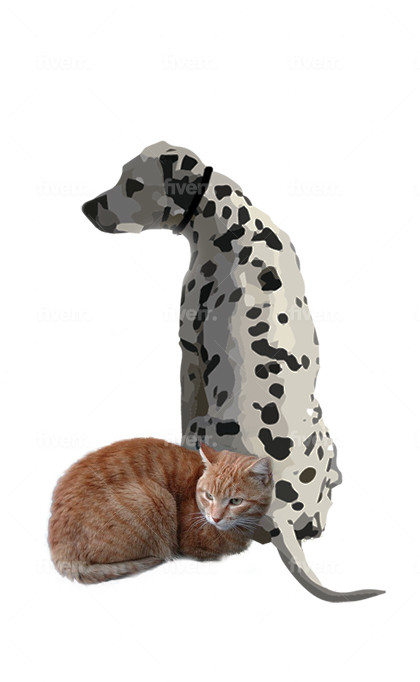
The real Pat is confident about who she is and what she wants. Pat Pirard started out unsure about how to be a PI, struggled with deciding about a romantic relationship, and wondered if she could solve a case and get a paycheck before she and her pets, Dot, her Dalmatian, and her ginger tabby cat, Lord Peter Wimsey, got evicted because of non-payment of rent.
In the series, time moves realistically with Pat getting her next assignment at the end of each book or immediately after the previous book ends. What Lucy Heard is my Pat’s sixth job and begins with her taking on a jury selection assignment, a role the real Pat has done but says was so stressful she will never do it again. My Pat, who has no experience with jury selection, reluctantly agrees to give it a try even though she isn’t looking forward to working with the famed attorney who has made her feel manipulated when she worked for him in the past. With each of Pat’s cases she’s been gaining experience and confidence and has learned to trust her instincts, but in this book, it feels like she’s starting over and will have to build belief in her abilities from scratch.
She accepts the challenge, though, and does a credible job with jury selection, happy to help because she believes the accused man’s bizarre story about how his fingerprints wound up on the murder weapon and why he was at the murder scene. The problem is that Pat sits in the courtroom and hears all the witness testimony which contradicts what the accused man told her. Self-doubt swamps her and she becomes concerned she’s helping a guilty man get away with murder.
She decides the only way she’ll be able to sleep at night is to solve the murder, something the police feel they’ve already done. After investigating and looking at things differently, she thinks she’s finally figured out what really happened. Unfortunately, her solution to the murder seems as far-fetched as the story the accused man told. How Pat tries to prove her thesis makes for some silliness and a few story kinks.
Thank goodness the real Pat approves of how my Pat solved the murder so I’m free to keep using her as a character and delighted to continue to bring a friend to the pages of mysteries.

 Ladies of Mystery
You must be logged in to post a comment.