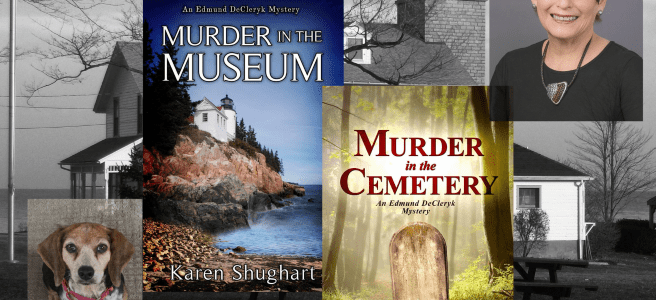
The Wine Blog by Karen Shughart

I’ve always believed that it’s easier to write about what you know, which is why wine features so prominently in my Edmund DeCleryk mysteries. Like my husband and me, Ed, and his wife Annie, live in the northern Finger Lakes region of New York, the second largest wine producer in the U. S. Wine is very much part of the lifestyle here.

Our own wine journey began many years ago. Our kids were in college, our careers at their peak, and we came home each night exhausted. We made the transition from workday to evening by having a glass of wine (or sometimes for Lyle, a Scotch) before dinner.  We caught up, chatted about our day, and even when my husband traveled for business, we designated a time to call each other, evening drink in hand. Although now retired, we continue the tradition to this day.

This image has an empty alt attribute; its file name is restaurant-love-romantic-dinner.jpg

One weekend we were invited to a dinner party at some friends’ house. We were asked to bring a dish to share and a bottle of wine to pair with it. It was the genesis of a gourmet group that met quarterly for many years, rotating hosts. A specialist at a wine store helped us choose the wines to go with each course. We quickly learned that to enjoy wine is to slowly sip and savor it.

Some of us took a cruise together from San Francisco Bay, along rivers that led to the Napa, Sonoma and Carneros wine regions of California.  Each evening we’d dock and before dinner attend a wine education session. The next morning we’d board a bus that would take us to charming towns for vineyard tours, wine tastings and to explore galleries and shops.

One weekend Lyle and I traveled to the Finger Lakes; a short drive from where we lived in Pennsylvania. We were enchanted by the wineries and restaurants, the vibrant jazz scene, and postcard-picture beauty.  We purchased an 1890s cottage on Lake Ontario; after retirement, we decided to make it our permanent home.

We joined a wine club.  At a series of monthly classes at New York Kitchen in Canandaigua, we learned about regions around the world where wine is crafted and how terroir, the natural environment in which grapes are grown, results in differences in color, smell and taste of the same varietal.  We cleaned up our musty basement and created a wine cellar in what was once a cistern, dry as a bone with thick stone walls and floor and about 56 degrees year ‘round.

Over the years I’ve learned a lot about wine, and I write about it in my mysteries. It is, after all, part of the local lore, and an integral part of the culture. And just like Lyle and me, having a glass of wine at the end of the day is a way for Ed and Annie to unwind and share their stories.
Promoting Covid-Way by Karen Shughart

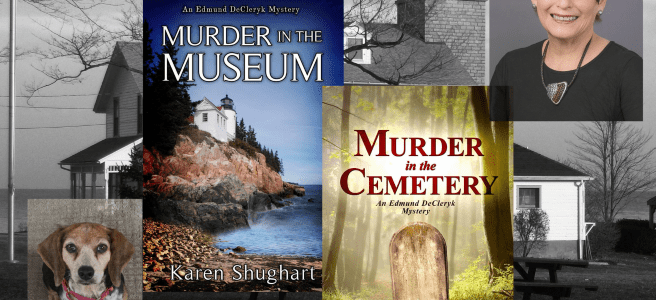
I had planned to write this month about traditional ways of promoting books. My second mystery, Murder in the Cemetery, was released last February by Cozy Cat Press, and I had already lined up book signings, talks, appearances at mystery writers’ events, a book-launch party, and an appearance as a panelist at a mystery readers’ conference. But then Covid 19 hit, and one-by-one everything was cancelled. It’s a difficult time for book sales when the normal avenues of promotion are no longer available.

My publisher, Patricia Rockwell, aware of the challenges facing authors during the pandemic, produced a YouTube video, shot by my friend Tom Lightfoot, where I prepare one of the recipes from my first book, Murder in the Museum. It’s been well-received. I also hired a publicist to promote my books on social media, recognizing how important it is and how inexperienced I am.

A free-lance writer, Laurel Wemett, has been an amazing supporter, announcing the publication of book two in last summer’s edition of the lovely regional magazine, Life in the Finger Lakes; then reviewing it for the 2020 November/December issue. Later she wrote a blurb for the e-version of the magazine on how the cover of book one placed #13 out of a field of 360 in a monthly cover contest sponsored by AllAuthor. She also sent the cooking video to Mike Murphy who interviewed me in his weekly column, “Eat, Drink and Be Murphy”, about the marrying of my books with cooking for the Daily Messenger and Wayne Post print and online newspapers.

I learned about AllAuthor from Patricia, who has been instrumental in encouraging all of us authors affiliated with Cozy Cat to promote in non-traditional ways. With her encouragement, I applied and was accepted as a member of the Crime Writers Association of the UK, a lofty organization with a presence in the US.

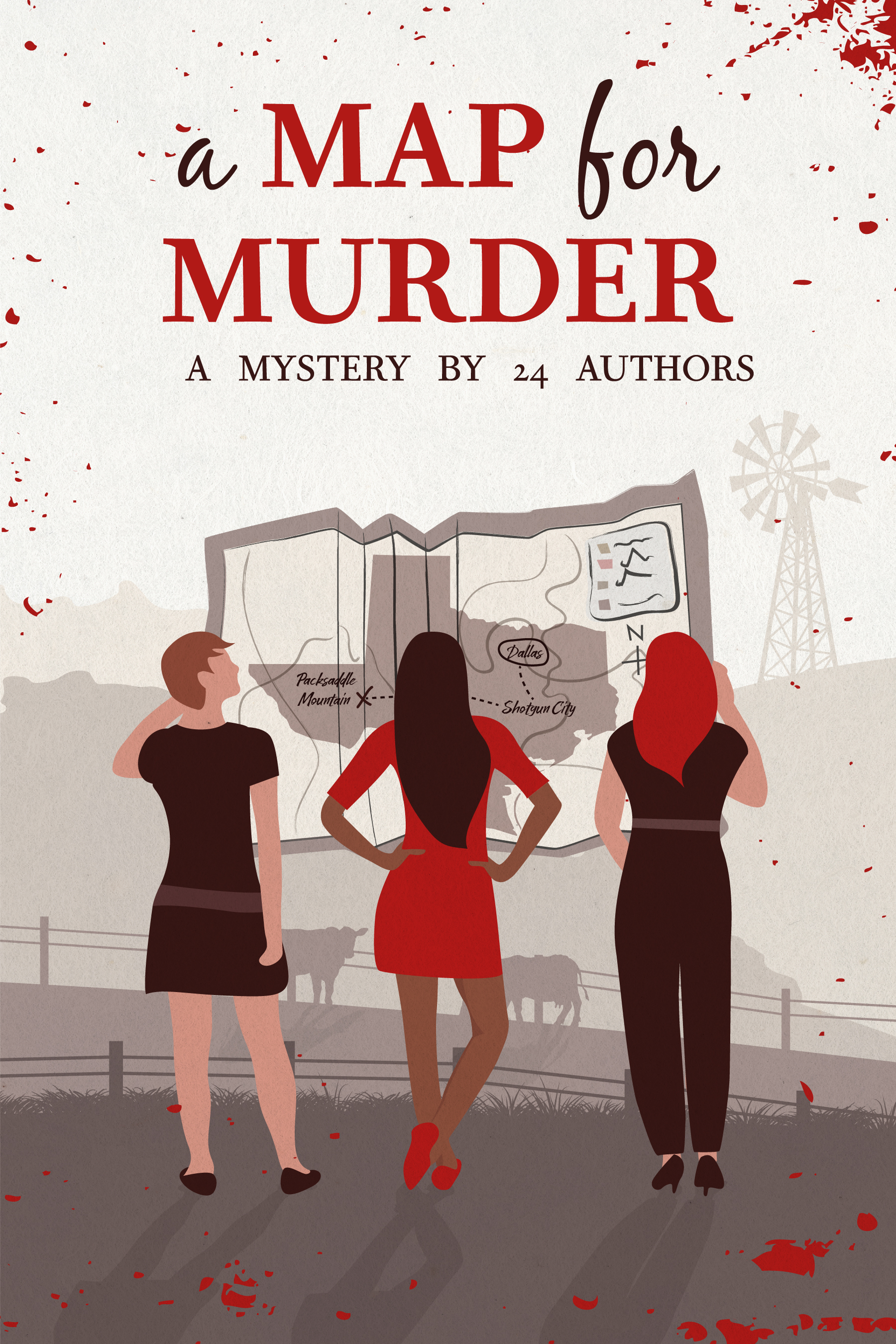
Finally, I participated in writing one of 24 chapters for the newly released book, A Map for Murder. It was lots of fun, and I think readers will enjoy the zany, fun-filled adventure three young women have in solving the murder. We authors recently were filmed talking about the book that you can view on YouTube.

All of the above has helped call attention to and generate very respectable sales for my books, and I’m grateful for the help and encouragement I’ve received. To those of you who read my monthly blog and have sent messages of support, I thank you.

So yes, 2020 turned out to be different than I thought it would, but in times of Covid and new book releases, it turned out much better than I ever expected. Hopefully this year will be less surreal, and we’ll be able to resume a semblance of normalcy in our lives.

A Love Story by Karen Shughart

“He alone is great who turns the voice of the wind into a song made sweeter by his own loving.” Khalil Gibran

In the fall of 2016 my mother suffered a series of strokes and went into a nursing home in Pittsburgh, where she lived. My father had died; I became her power of attorney and had her mail forwarded to me here in New York. That December she received a letter with a return name and address that I vaguely recognized. I opened it.

It was letter from a man named Norge Santin, who was inquiring after my mother, our family, and Leonard, my mother’s brother. Then I remembered that Norge was a childhood friend of theirs when they were growing up in Ohio.

My uncle had died earlier that month; after reading the letter I wrote back, apprising Norge of his passing and my mother’s health issues. He responded quickly, saddened by my news. He knew who I was, he wrote, we’d met when my parents lived in Ohio shortly after I was born.

What ensued was a friendship between us, for a time through letters, then by email and phone. Norge grieved with me when my mother passed three years ago and comforted me when one of my brothers died last summer. Each time we made contact, he ended by offering prayers and blessings for my uncle and mother and sending love to me and my family.

He filled in some blanks. I learned that he and my uncle were not just friends, but best friends, starting in third grade. When the two young men graduated from high school they were drafted, it was World War II, and their college plans were placed on hold. Norge returned from the war, got his degrees, married, and had children.

Leonard was not so lucky. Suffering a breakdown during the war from which he would never recover, he spent his remaining years in and out of VA hospitals and group homes. My siblings and I knew his tragic story; our parents made sure he was always part of our lives. What I hadn’t known was that Norge remained a devoted friend to Leonard throughout his life. During visits when Leonard was withdrawn and unresponsive, he’d sit quietly with him, holding his hand.

Eventually our family moved Leonard to Pittsburgh. Norge, despite living in Ohio, continued visiting my uncle until Leonard decided that he no longer wished to see him. Maybe it was too painful to be with Norge, we’ll never know. Norge respected his wishes and never contacted him again, but his love for his friend never ceased; he contacted my mother to receive updates, up until the time when I opened that letter.

By 2019 Norge’s health had declined, he had trouble reading emails and spoke haltingly over the phone. I wanted to meet this man I’d grown so fond of, so that October my husband and I drove to Ohio to visit Norge and his wife, Therese. We were warmly welcomed and spent a lovely afternoon; all of us feeling as though we’d known one another forever.

Because of Covid there were no return visits, but we talked regularly, most recently just before Thanksgiving when I promised to call again before Christmas. Before we ended that conversation, Norge confided he thought his time was near. I told him I loved him, he said he loved me back.

Two weeks ago, I received a call from one of Norge and Therese’s daughters that broke my heart. This tender, humble, gentle and honorable man had passed and Therese, despite her own grief (they were married for 68 years), wanted to make sure I knew. His death, at 94, occurred almost four years to the day of the death of my uncle.

I’m so glad I decided to open that letter, my life is immeasurably enriched because of it. Therese and I share a strong bond; I’ll keep in touch with her and visit when it’s safe. And I miss Norge already. Rest in peace, dear friend.

Gratitude and Poetry by Karen Shughart

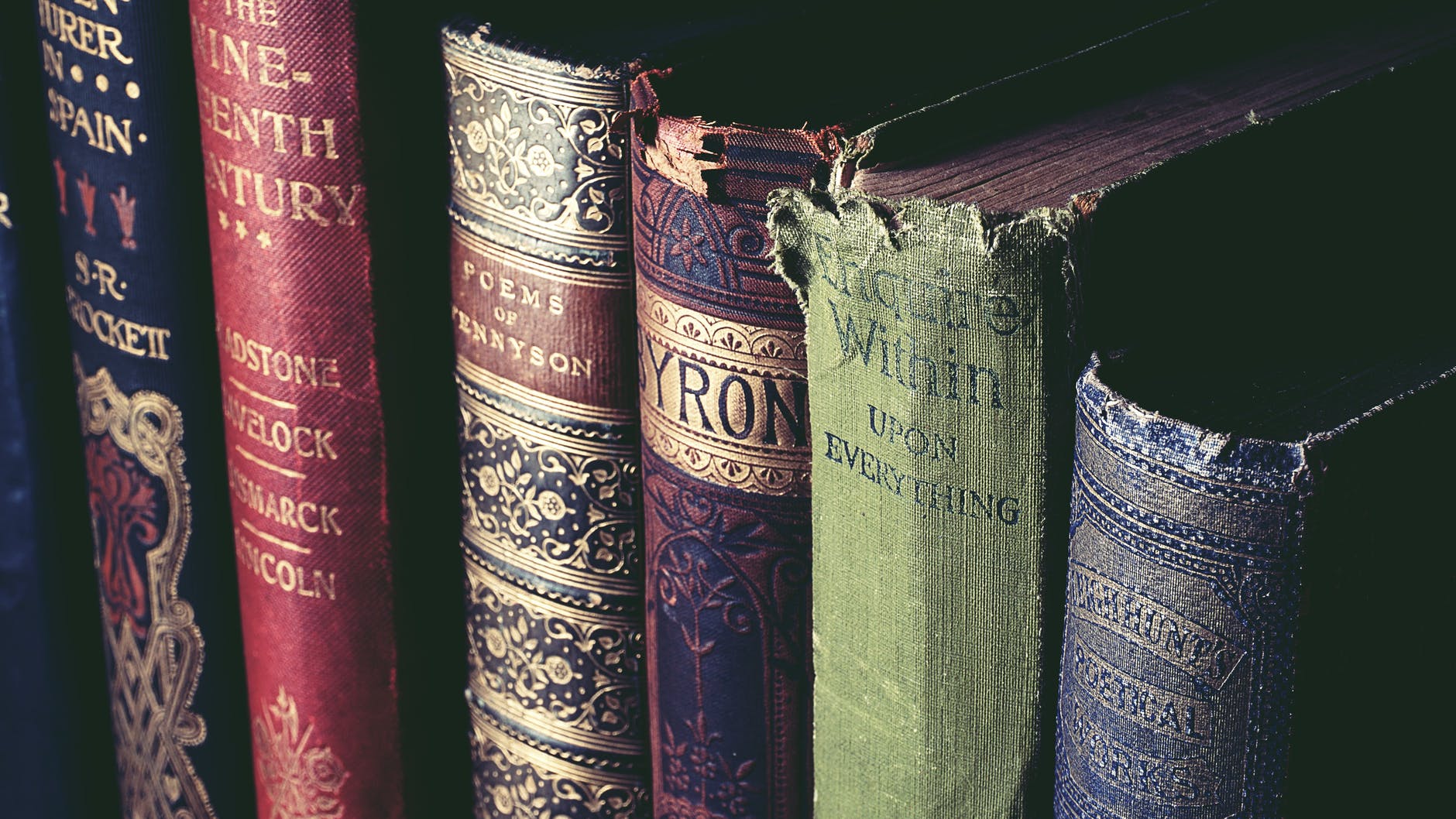
For many years the poetry books I collected, starting in my teens, sat on our bookshelves untouched. I have no idea why I stopped reading poetry, but I did.

Then, one cold and rainy afternoon last month, I made myself a cup of tea and after pulling several books off  a shelf, curled up on the loveseat in front of the fire and began to flip through the pages. I intended to find poems of gratitude to be used for this blog, but I got off track, delighting in rediscovering poems I had loved and admired regardless of topic.

Photo by Suzy Hazelwood on Pexels.com

In high school,  I was introduced to the Romantic poets: Wordsworth, Coleridge, Keats, Shelly, Byron, and Blake; whose works beckoned me to understand the world through nature, imagination, revolution and those marginalized in society. I memorized stanzas that I can still recite because they so filled my heart.

Later, still in my teens, I was drawn to The Rubaiyat of Omar Khayyam, a lyric poem that presents deep feelings and emotions on subjects such as life, death, love, and religion. Did it help clarify or shape my own identity? Probably not, as my own experiences and travels unfolded in their own unique way, but at the time, I was entranced by it.

As an English major in college, I read and discussed the works, both in and out of the classroom, of  contemporary poets like John Barth, who was in residence at my university; Laurence Ferlinghetti;  Karl Shapiro; Leonard Cohen; and  Wallace Stevens, who, in 1955, won the Pulitzer Prize for Poetry for his Collected Poems. To me, his poems resonate like verbal music and his perfect control of language evokes a myriad of complex feelings.

Throughout my college years and beyond, I discovered, read, and admired the works of many more poets, Walt Whitman and T.S. Eliot among those, but also the Welsh poet, Dylan Thomas.

My father, who was born in 1919, graduated college and then went to serve our country during World War II.  One of George Patton’s scouts, he received two bronze stars. He was a fierce man: in his morals, ethics, and values; his love for his family and for his country. Towards the end, his fierceness continued as he battled serious health issues that never seemed to daunt or derail him from living the remainder of his life to the fullest.

The eldest of his four children, I was the first to read a eulogy at his funeral. I never could have  expressed what I knew of my father’s spirit better than Thomas’ poem, “Do not go gentle into that good night”, written for his dying father in 1947, the year I was born.

So, I guess this blog really is about both poetry and gratitude. Gratitude that I had a family that encouraged education, an education that exposed me to poetry, and a family that embodied and still does today, the meaning and actions of love.

October by Karen Shughart

The leaves have turned, some fallen, and walking through the village our feet trample upon a carpet of brilliant colors. Stacks of pumpkins: pale green, yellow, orange, and white, are artfully arranged on steps leading up to front porches or peek out among decaying flowers. Wreaths rimmed with leaves of every shape and color, small green and white gourds, slender wheat stalks and delicate twigs adorn doorways, some homemade; others purchased at local craft shows.    Artfully placed wicker or galvanized metal baskets filled with pinecones are redolent with cinnamon and cloves.

On a cool morning, just after the rising of the sun, small herds of deer congregate in yards, nibbling away at their morning libations, white-tipped tails pointed straight up, in case of danger. But in our village there’s no need to fret;  instead early walkers pull out cell-phone cameras to capture the moment and the deer, with their soulful eyes alert, continue their task once they realize they are safe.

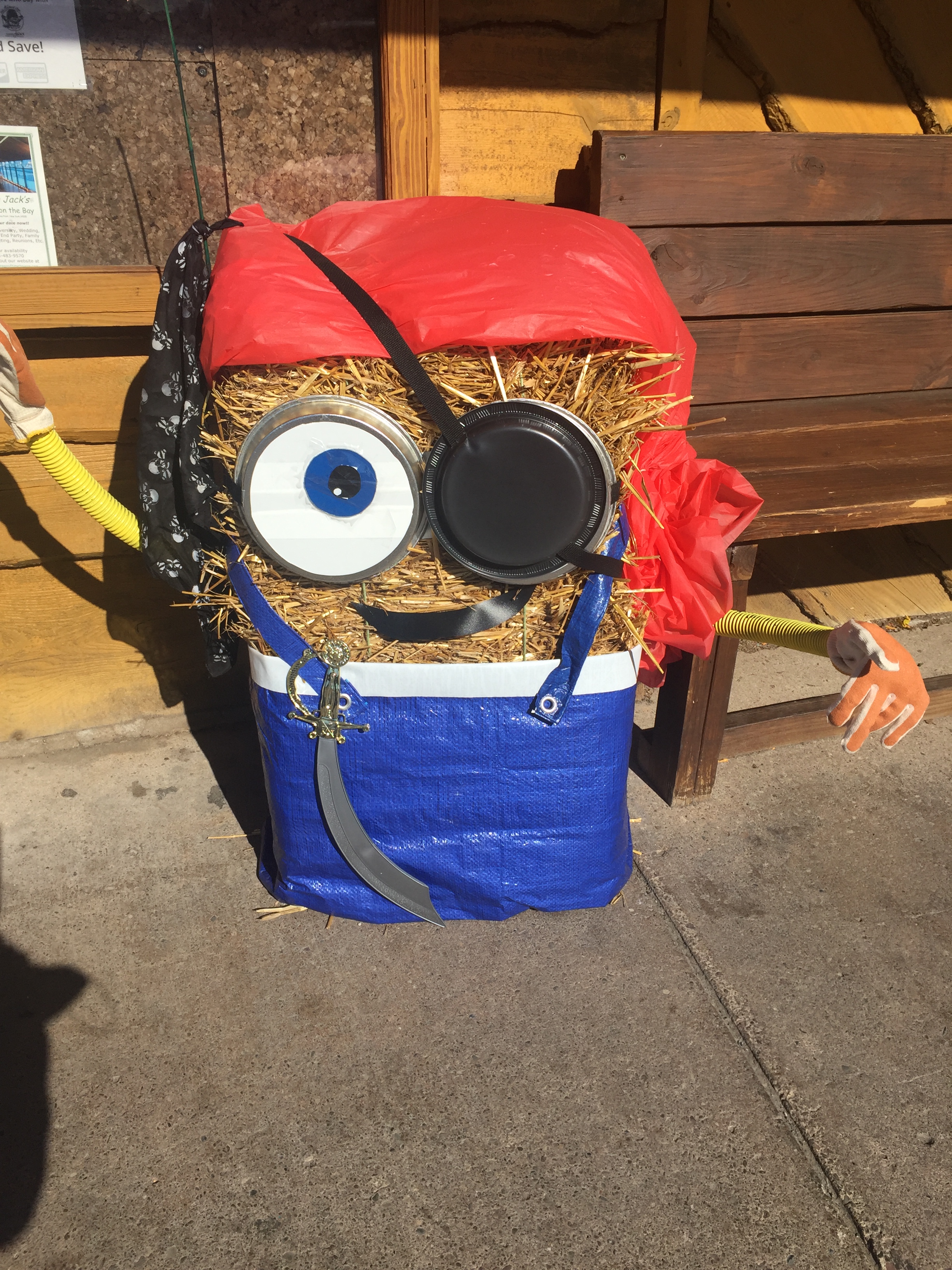
A block away our neighbors turn their yard into a ghoulish graveyard with tombstones covered in spidery cobwebs indicating those who are buried there:  Barry DaLive; Emma Goner; Ima Rotten, Ben Better, Anita Moore-Tishan, Berry D. Hatchet. Here and there, skeletons sway from the ghoulish branches of trees, some with limbs now barren, and you’ll see hay bales made to look like Minions, courtesy of the Neighborhood Association.

The screech owls, quiet during most of the summer and through September, now make their presence known. Their eerie sounds, terrifying at best, can be heard after most have of us have gone to bed, reminding us that something, soon, will be afoot. It’s called Halloween.

Halloween, here in our village on the south shore of Lake Ontario, when the nights are cold and an occasional early snowfall adds to the mood, is really a season. You can feel and see its presence starting not too long after Labor Day. Everyone is excited about Halloween: the children, most of all, and their parents who help them with their costumes, but also adults whose children have grown. There used to be house parties, and parties at restaurants and pubs, a time to let loose, enjoy the season, some folks in costume; others, not. This year will be different.

Here the celebration of Halloween is a throwback to earlier and safer times. Parents accompany the younger ones, who knock on our door yelling “trick or treat”, then reach out with their plastic pumpkins, open at the top, for the treats. It’s safe enough for the older ones to travel by themselves in groups. In our village, we all look after them. Well-trained in niceties, they remember to say “thank-you”, tiny ones urged on by their elders lest they forget. People in this village understand the concept of gratitude.

October is a time of transition. With its deep brilliancy it reminds us that slowly creeping stealthily in behind it is winter, a time of white silence and shadows.