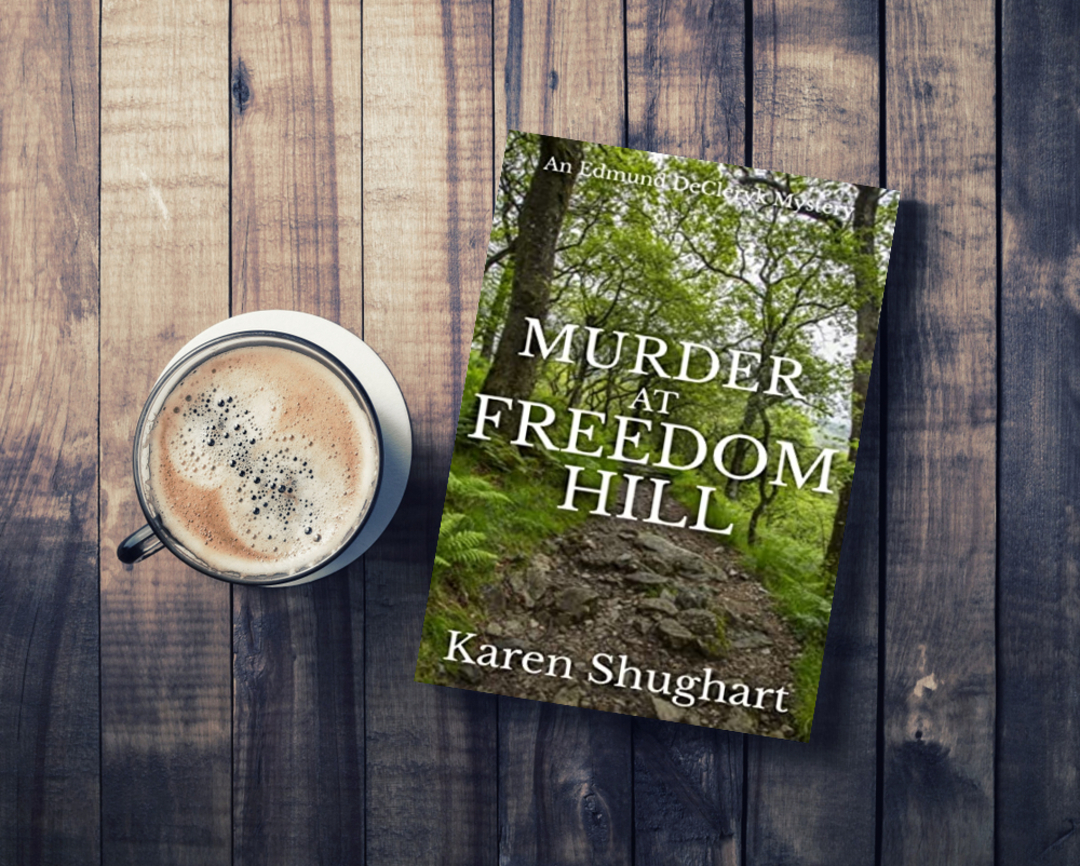
The Peace That Follows Chaos by Karen Shughart

December is chaotic here on the south shore of Lake Ontario in New York state, but in a good way. It’s busy and a lot of fun, but by New Year’s Day we’re exhausted and ready for some quiet time. The season starts the weekend after Thanksgiving, but then the entire month is filled with parties, shopping flings, festivals, gift exchanges, impromptu gatherings, and food – lots, and lots of food – both the cooking and eating of it.

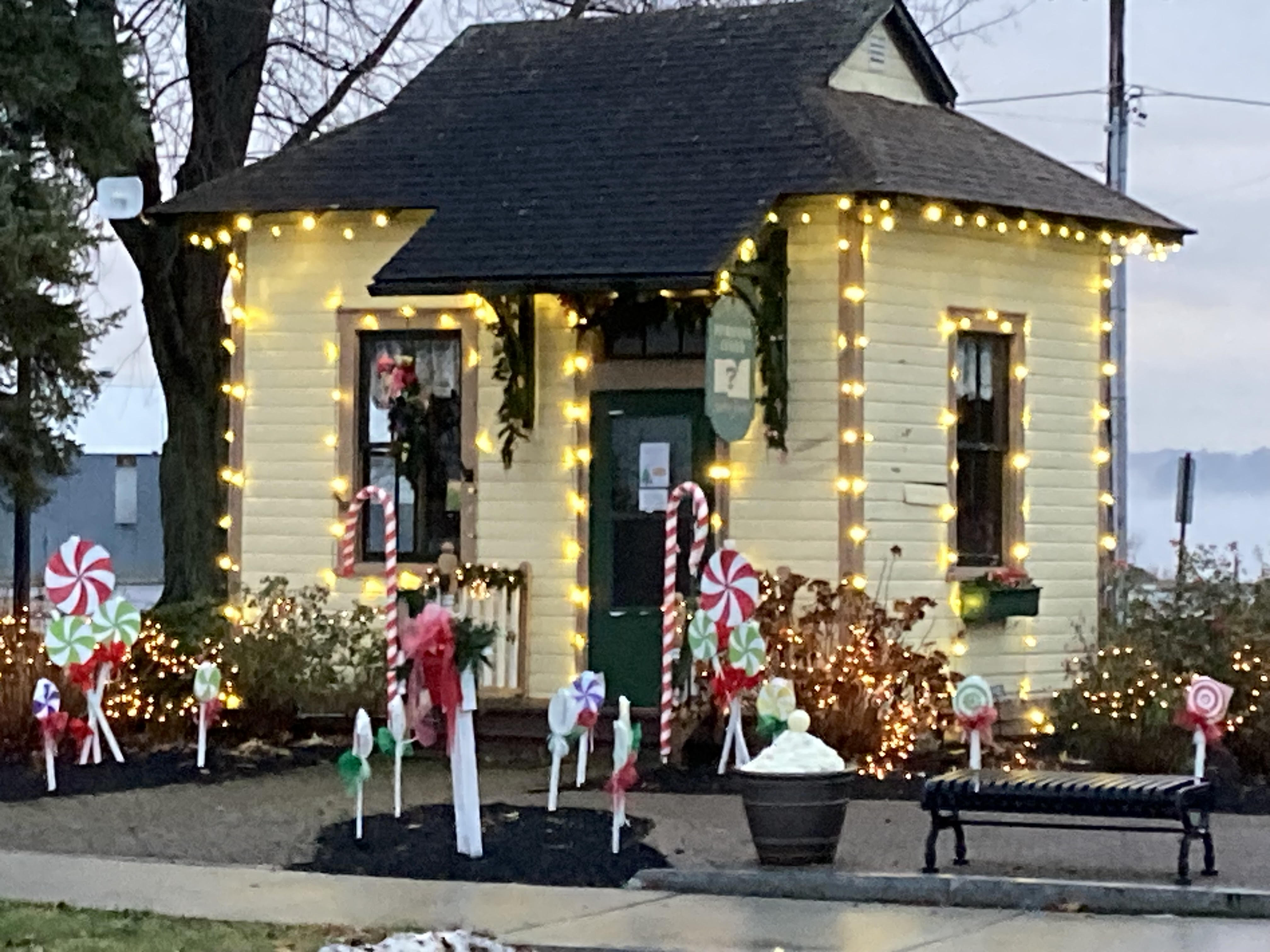
Decorating is big up here, and although we don’t do much of that, just a little festive touch or two both in-and-outside our house, many friends and neighbors go full bore, hoping to win or place in a contest sponsored by our Neighborhood Association for the best outdoor decorating. And many of them do.  Frankly, it’s quite impressive, and more than a little magical.

Now it’s January. The decorations have been stored away for another year, the snowbirds who flew north for the holiday have migrated south again to spend the rest of the winter in warmer, sunnier climes. The days are a bit longer, and while that’s certainly good news, they’re a bit grayer, too, and there’s more chance of snow. While we loved the hustle and bustle of the previous month, we breathe a sigh of relief.

We greet our like-minded neighbors when we walk each morning, but other than the roar of the waves crashing on the beach or the sound of the wind, it’s quiet. A couple restaurants and almost all the shops have closed until spring, and there’s not much traffic, hardly a vehicle to be seen traversing through our streets.

Now our gatherings are small ones: intimate dinners with friends at the restaurants that remain open; a pot of soup or chili with a small group at our house on a Sunday evening; a ladies’ night out; or for my husband, the regathering of his summer golf group for lunch and playtime at a virtual, indoor facility.  I happily resume my yoga classes. We venture to the city to take advantage of the cultural offerings there: a symphony; a Broadway show presented by a traveling touring company; or special exhibits at museums and galleries.

I’d been making good progress with the fourth book of my cozy series, but during December that project was mostly put on hold. This is the month when I commit to moving forward with my writing, and have been spending at least part of each day expanding the story as I continue with the first draft. Then, later in the afternoon, I read, fire burning in the fireplace, a cup of tea in hand.

Some friends and family who don’t live where we do wonder how we manage during this time of quiet and isolation, with weather that’s fickle and can change in a minute or two. For us it’s a time of centering and peacefulness, and it’s very beautiful with white caps on the water, grey skies intermittently clearing for brilliant blue and bright sun, starry nights, and a landscape dotted with wheat, rust, faded green and brown. Because many of the trees are barren of leaves, I can see the lake and bay and the tops of the two lighthouses that flank each end of our village beach from several rooms in our house.

By March, we’ll be ready for a change and begin to search for signs of spring: daffodils peaking above the thawing ground; buds starting to swell on trees and bushes; a greening of the grass. But for now, we’re enjoying the peace that follows chaos.

A member of Crime Writers’ Association of the UK ( CWA), North America chapter, Karen Shughart is the author of the Edmund DeCleryk cozy mystery series, published by Cozy Cat Press, including the award-winning Murder at Freedom Hill.  All books have historical backstories that provide clues to why the crime was committed, and recipes at the end. They are available in Kindle, Kindle Unlimited, paperback, and Audible.
Let There Be Light by Karen Shughart

My husband and I live in a charming maritime village on the south shore of Lake Ontario in New York, the prototype for Lighthouse Cove, the village where my Edmund DeCleryk cozies are set. This time of year in our village activities surrounding the holidays abound, and there truly is something to do for people of all ages: festivals; tree lightings; parades; caroling; shopping and dining opportunities, and a judged competition for the best outside holiday decorations.

 I especially like writing about the seasons in my books. In my third, Murder at Freedom Hill, the crime occurs just before Thanksgiving with the investigation continuing through the entire holiday season. I enjoy describing how the folks living in Lighthouse Cove celebrate, with light-filled activities that juxtapose the dark, horrific murder that has occurred.

Ed, a retired Navy SEAL and former police chief, now works as a criminal consultant who is hired by the current police chief to solve the crime. His wife, Annie, head of the local historical society and museum, curates exhibits, organizes special events, and because of the historical backstories that frame each crime, often becomes involved in the investigation.

One of these special events occurs early in December, when the days are short and darkness prevails. A Festival of Lights, held on the grounds of the museum, provides diverse groups with an opportunity to showcase the ways in which light plays an important role in their cultures during this time of year:

Photo courtesy of Lyle Shughart

“The Holiday Festival of Lights was held in the park next to the museum the following Saturday evening and started at dusk. Tall stadium field lights provided illumination, and the museum staff and volunteers had strung multi-colored holiday lights on bushes and around tree trunks. Several portable fire pits had been placed at strategic spots near park benches to provide warmth.

The Neighborhood Association maintained a booth that offered free hot chocolate and cookies. Other booths, with representatives from local Christian, Jewish, Muslim, and Hindu congregations, offered information about their holiday customs including the significance of light, and samples of traditional holiday food.

Santa ambled through the crowd passing out wrapped red and white candy. A group from near Tug Hill brought live reindeer, tame enough to pet. Children hopped on the back of a fire truck, a huge wreath on its hood, for a ride around the block, speakers blaring seasonal winter songs.

A large evergreen tree located in the middle of the park was festooned with multi-colored lights; a Chanukah menorah, Kwanzaa kinara, and clay diyas—oil lamps representing the Hindu holiday of Diwali—flanked the tree on large tables on either side.

Towards the end of the evening, the high school student chorus handed out sheets for a sing-along and led the community in a diverse selection of melodies representing all the groups at the festival.”

A definition of the symbolism of light from the National Gallery of the UK states: “Across cultures, light is an ancient symbol of understanding and intellectual thought: it is the opposite of ignorance, or darkness. Almost universally, the dark is …frightening and sinister, associated with things we cannot understand. Light is said to conquer darkness and to bring order out of chaos.”

We all need a little light in our lives this time of year, so, let there be light!

Setting the Scene by Karen Shughart

All the books in my Edmund DeCleryk cozy mystery series are set in Lighthouse Cove, NY, a fictional village on the south shore of Lake Ontario, with the crimes occurring in the present but are related to something that happened in the past. In book one, Murder in the Museum, a map dated 1785 discovered in the historical society museum – led by sleuth Ed’s wife, Annie – and a journal dated 1845 found at an archaeological dig in Toronto, Canada, provide clues to why the victim was killed.

In book two, Murder in the Cemetery, a relic at the cemetery where casualties of the War of 1812 are buried; long-lost letters written by the wife of a patriot transported to England as a prisoner of war during that time;  a missing artifact at an exhibit at the Victoria and Albert Museum in London, England; and a diary discovered at an abandoned farmhouse help Ed and Annie solve the case.

In book three, Murder at Freedom Hill, the crime is thought to be related to the victim’s ancestry, his forebears lived in a settlement where free people of color lived harmoniously with abolitionists who helped transport escaping slaves to Canada across the lake before the Civil War. Another heinous deed, related to that settlement, is revealed during the investigation of the murder.

But what the books also have in common is that I weave into the plot the seasonal setting.  After book one, instead of just one prologue I decided to write two, the first with the historical backstory and the second describing the season.

I continue descriptions of the weather throughout each book, it helps to construct the mood. For example, Murder at Freedom Hill begins in November, before Thanksgiving. In one of the early chapters, Ed discovers that the village mayor has been murdered. A beloved member of the community, the mayor also served on Annie’s board of directors and the two had become close friends. After conferring with Detective Brad Washington at the crime scene, Ed gets into his SUV and drives to the museum to tell Annie about his death. Lots of sunshine and a clear sky start the day, but then the weather changes:

“The brilliant sky at sunrise had made way for clouds the color of brushed pewter that hovered over the roiling silver lake. The day looked like an antique photograph: sepia; gunmetal grey; milky white and black; faded like withered grass. The direction of the wind had changed, picking up speed from the northwest, with fallen leaves swirling around the museum parking lot as Ed pulled into a spot. The temperature had plummeted- winter silently creeping in like a cat about to pounce upon its prey.”

What I enjoy about writing cozy mysteries is the ability to expand description if it fits into the plot, and the weather can either give readers a sense of doom and gloom or provide an interesting juxtaposition to an odious deed.

Karen Shughart’s cozy mysteries are published by Cozy Cat Press. She’s currently working on book four of the series, Murder at Chimney Bluffs.

October by Karen Shughart

October is without a doubt my favorite month, filled with a bounty of richness and color that I embrace before the landscape turns into subtle shades of brown and beige. Here in the northern part of New York state, on the shores of Lake Ontario, there are breathtakingly beautiful days this time of year: cloudless cerulean skies; a Caribbean green lake with meandering white caps, perfumed like the ocean without the brine; a piercing lemon-colored sun that warms the coolness in the air, and crisp nights with a carpet of stars winking and blinking in an ink-stained sky.

By now many leaves have turned bright with shades of yellow, gold, deep rust and red, but until our first frost, the lawns will remain green.  The sea grasses in our backyard, almost as tall as our house, have feathery, burgundy tassels and, when the wind blows in from the northwest, sound like the gentle ebb and flow of waves on the water. Stately pine trees, red-berried evergreens and hollies provide contrast, reminding us that life continues, even in winter.

Burnap’s Farm Market – Sodus, NY

The farmstands, with domes of potted mums for sale in a riot of colors, will remain open for the rest of this month and into the holiday season. Berries, peaches and plums, lettuces, cucumbers, and zucchini, have been replaced with other fruits and vegetables that can be stored for longer periods of time and will warm our bellies on cold nights: local apples of every variety; hearty winter squashes; purple-green kale; cabbages; potatoes, and multi-hued varieties cauliflower.

In October I replace the summer cushions and pillows on the wicker furniture on our front porch with ones more representative of the season. Halloween is big here, so some of the pillows are patterned with pale green, orange, and white pumpkins with deep green and purple leaves and vines. Instead of sitting on our deck for our late afternoon happy hour, my husband and I move to the porch, drinking wine and welcoming friends who stroll by and then stop for a drink and to chat.

November is just around the corner, and there will be plenty to celebrate then, too, but for now I’ll rejoice in this beautiful month of October.

Karen Shughart is the author of the Edmund DeCleryk cozy mystery series, published by Cozy Cat Press. Her third book, Murder at Freedom Hill, recently was awarded first place in the mystery category and third place in fiction in the International Firebird Book Award competition. She is currently working on book four, Murder at Chimney Bluffs.

Let It Go by Karen Shughart

There’s a certain amount of pressure for all authors, regardless of how they’re published, that’s self-imposed. We set out to write a book and determine the time frame for finishing it, and therefore must adhere to some sort of schedule. And for those of us who are with traditional publishers, there’s the added pressure of submitting our book at an agreed upon deadline,

When I started writing my Edmund DeCleryk cozy mystery series, I wrote every day. I didn’t set a specific number of hours but instead spent time at the computer until I was either so exhausted that I literally couldn’t see straight or was happy with the advancement of the plot. In the past this has worked well for me, but this summer it didn’t.

Let me explain.  We live in a resort village that is a bustling hive of activity during summer months. Our beautiful scenery, gorgeous waterways, pristine beaches, and a multitude of activities centered around what we call Summerfest results in visits from family and friends, picnics, cookouts, concerts, festivals, outdoor movies, yoga classes, boating excursions and, on cool nights, time spent with friends drinking wine around a blazing fire pit watching the stars.

This year in particular, I was also happily bombarded with invitations to do book talks and signings, sometimes more than one a week. In addition, we took three short trips: to visit family; for a couple’s getaway; and when I participated as a panelist at a  mystery lovers’ conference in another state.

I must admit, at first I felt anxious about my inability to carve out time to continue writing my fourth novel, Murder at Chimney Bluffs, after making good headway last winter and spring.  Then I took a deep breath and thought. ‘It will be done, and isn’t a big part of life enjoying experiences that could help make my writing be even better? Let it go.’

And I did. When my publisher emailed me to get a sense of when she could expect my next book, I responded that I thought I could submit it to her a year from this coming November or maybe even December, but not before. She thanked me and said no problem. When I gave talks and attended signings, which I really do enjoy, I wasn’t the least bit anxious about not writing.

At the entrance to a town a little west of us there’s a huge sign that announces “Where Life is Worth Living”.   And that’s certainly true about this place we call home.  I finally conceded to the pressure to write and allowed myself to enjoy every minute of every day and relax about not keeping to a schedule. I’ll get it done, I know. There’s something to be said for letting go.

Karen Shughart is the author of the Edmund DeCleryk cozy mystery series published by Cozy Cat Press. She lives on the south shore of Lake Ontario in a village in New York state that’s the prototype for Lighthouse Cove, the s fictional setting for her books.