
Splits, Murders and Happy Endings

by Janis Patterson

I have a split personality. No, really it’s true. I do.

Part of the time – as Janis Patterson – I delight in writing the foulest murder, stories of people who exterminate their fellows without a thought or qualm – and what is really scary is that I like it! I delight in finding new and obscure ways of killing someone, and am absolutely over the moon when I discover how such a heinous act can be gotten away with scot-free. (The only unfunny part of this was when in real life a truly creepy person asked me if I do consulting. Brrrrr…..)

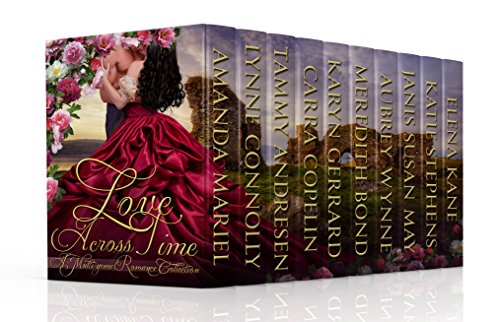
However – the rest of the time – as Janis Susan May – love-across-time-cover I’m an unabashed romantic who writes tender stories of two imperfect people surmounting obstacles and finally find the perfection of true love. I adore giving them trials and misunderstandings and difficulties and differences of opinion, making it seem that they will never get together… then just when things look darkest bringing them together in a satisfying happily-ever-after ending.
And never, hopefully, shall the twain meet.

So what causes this rather radical dichotomy? I have no idea. I just know that some stories demand romance and hearts and flowers, while others have to have revenge and murder. Those of you who know me know a little about my working process – I don’t plot and I don’t do character sheets or anything like that. The stories just come… and so do the characters, independent people who simply walk in, tell me their name (and Heaven help me if I try to change it) and what they’re going to do. Far too many times I don’t feel like I am writing but instead merely transcribing.

It makes for an interesting work process. On the other hand, I am never bored. And neither are my readers.

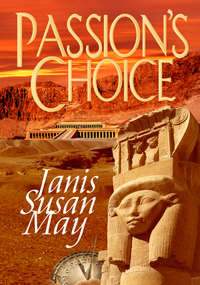
For example, my Ancient Egyptian time travel romance PASSION’S CHOICE is now not only a standalone novel, it is also included in the Love Across Time box set – ten full novels by bestselling authors, right now on sale for 99 cents at Amazon! An unbelievable bargain you should go get immediately! PASSION’S CHOICE is the story of Elissa, an average young American woman on a tour in Egypt when she falls over the railing at Deir el Bahri, temple of the female pharaoh Hatshepsut. The only thing is, when she hits the ground the temple is under construction, and the general in charge of the project believes her to be a pleasure woman. (You can guess what that is, can’t you?) Before she knows what’s going on, Elissa finds herself in a dangerous masquerade at the pharaoh’s court, one that not only puts the life of the man she loves at risk, but the fate of Egypt – and perhaps the future – as well.pc-web-small
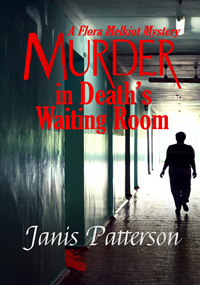
By contrast, my newest murder mystery release is about arrogant, wealthy, aged sleuth Flora Melkiot, who has been called the dark side of Miss Marple. In MURDER IN DEATH’S WAITING ROOM, Flora has been confined to a rehab facility by her painfully conventional daughter, an act that infuriates Flora, who says it was only a little traffic accident and she could manage perfectly well with a broken wrist in her own home. Then first one of the patients and then another are brutally murdered, and Flora once again finds herself in the position of solving the crimes. As always, Flora is convinced that she can do anything… and usually she not only can, she does. When drugs get added into the mix, what should be a place of healing comes perilously close to becoming a death trap. midwr-web-promo-small
See? Two completely different kinds of writing, genres, even characters, but just one of me. One of my longtime beta readers – who has read almost every word I’ve ever written – looked at me one day and asked how I did it. How did I manage two such different genres, two such different conventions, two such different worldviews and do both of them equally well. I thought for a minute, then gave her the only answer that was possible.

I don’t have a clue.

Enough!

by Janis Patterson

I have gone into full rebellion mode. Yesterday afternoon I hadn’t gotten anywhere near my daily word count and that upset me, as I am very serious about my writing. But I couldn’t write. Actually, I was doing pretty good to breathe and sit upright. All I could do was sit at the computer, staring fixedly at the screen and moving around the puzzle pieces on my favorite jigsaw site. Usually I restrict myself to one jigsaw a day, two if The Husband is watching something on TV in which I have absolutely no interest. (For reasons I won’t go into right now my work computer is in the family room…)

Yesterday, though, I went from one puzzle to another, mindlessly putting the pieces together, all the while telling myself I’d get to work right after I finished this one… I lied. Finally I knew if I didn’t lie down I’d fall over, so I left the computer and laid down on the couch and watched a little mindless TV until it was time to get up and fix supper.

And had an epiphany. I was exhausted, pure and simple. Between the holidays, getting ready for the holidays, cleaning up for the holidays, shopping for the holidays, wrapping gifts for the holidays, baking for the holidays, holiday parties, plus some family issues, and writing my regular group blogs, starting a newsletter for the first time, doing a couple of promotional appearances and arrange more, and – oh, yes – working on my new book, all on top of regular life, including cooking, cleaning up, laundry, looking after our furbabies and keeping The Husband happy… I was forgetting something.

Me. In the rush to get everything done, I was forgetting that I am no longer a spring chicken with boundless energy and stamina. I was forgetting that if I go down, pretty much everything else goes down with me and probably won’t get done. I was forgetting that this is my life too, and while there are things that must be done, I deserve to have a little fun as well.

So – learn from my mistakes and don’t pummel yourself into the ground like I did. The things that are essential will get done. Learn to enjoy again. Take your time. Prioritize. I’m not going to freak out if the wreath doesn’t get hung or if we have sandwiches for supper two nights in a row. This selectiveness is not only good for your heart and your stamina, it is good for your soul. You will learn what is important – family, friends, the joy of the season, a good day’s work. You can’t do it all (at least for any length of time or with any quality of life) so enjoy what you can do.

Life is short – make the best of it. And, most importantly of all, be good to yourself, for you are the best gift you can give to yourself and your loved ones.

Merry Christmas! Or, if you don’t celebrate Christmas, may you have the happiest of holiday seasons.

Flying High

by Janis Patterson

The Husband is an avid rocketeer and even has a Level 1 High Power rating. That’s heavy, folks, and means he can send up huge rockets. So why am I talking about rockets on a mystery writing blog?

I could say it’s a mystery to me why anyone likes sending up rockets, but that would be a cheap shot. I just know he’s not alone. There are thousands of hobbyists across the country and at least two national organizations. (I don’t pay that much attention to that part of it.) Our local chapter has at least two dozen members, and I remember being surprised that several of them were women. Of course, I am a member, but that’s only because of a family membership. Plus the fact I like some of our local members very much, and our group’s going out for dinner after a meeting is always a delight.

The rockets not so much. First of all you have no idea of how many parts go into a rocket, and considering how spread out they are during construction apparently not one can touch another while the rocket is being built. Second, every rocketeer needs multiples of different sizes of rocket bodies, which to me look just like cardboard tubes. Frankly, our sunroom (rocket central in our house) looks as if a pipe organ had exploded in there.

Thirdly, building a rocket takes an unimaginable amount of time, energy and money. Especially money. A dedicated rocketeer can spend up to a year building a rocket – deciding the size, creating the fins and attaching them, putting in the motor mount, calculating motor size, choosing a parachute, deciding whether or not to have a GPS and/or a camera, choosing the paint colors and design, then doing a base coat while the thing is still in pieces… then once the rocket is finally completed spending endless hours putting on the final finish. Sanding, painting, buffing, sanding again, painting again, buffing again… all for the dubious joy of sending the thing aloft with a whisssth, as likely as not never to be seen again! AAAAUGH!

Once in an attempt to understand I talked to The Husband about this. He didn’t see anything that wasn’t immediately obvious. “What’s to understand?” he asked. “It’s fun.”

Fun. Humph. I would really just as soon watch paint dry. Which, if I think about it, is not a very fair statement. The Husband seldom (like once every couple of years) reads fiction, yet he accompanies me to my local MWA meeting, whether or not the subject is one that interests him. Of course, directly after that I go with him to his rocketry meeting, where I know I won’t find anything that interests me beyond the cameraderie of dinner afterward.

However… I was born with an overdeveloped fairness gene, and must look at the other side. He finds fiction boring, much prefering history. He has always been absolutely astonished that I can spend an entire day at the computer wrestling with a storyline, weighing one word against another over and over again, sometimes barely conscious of what is going on around me (do NOT ask about the burned roast!) until I am so knackered I can barely stand and still enjoy it thoroughly… most of the time.

“It’s fun,” I tell him. The look he gives  me is probably equal to the one I give him. If I have learned anything it’s that we must be tolerant and supportive of our spouse’s passions, no matter how incomprehensible they might be to us!

Of Concerts and Self-Publishing; Are They So Far Apart?

by Janis Patterson

I went to a concert a couple of nights ago. That’s not unusual – I’ve been in and out of concerts on both sides of the conductor for most of my life. What makes this one different is that it was an amateur orchestra – an organization of people who got together to play magnificent music just because they love it. No remuneration other than applause for a lot of time spent practicing and rehearsing. And the program was ambitious – all challenging works by Beethoven, Bizet, Tchaikovsky, Bach, Mozart and Dvorak. As the concert was free, the members of the orchestra even paid for the audience’s intermission refreshments out of their own pockets. This is the truest and most shining example of the word amateur – one who does something for the love of it.

Was the concert flawless? No. There were unintended sharps and flats here and there, and one of the second violins definitely needed more practice on his/her fingering, but in spite of the flaws – or perhaps because of them – the evening was most definitely enjoyable. It was not the icily-perfect rendition of a professional world-class orchestra (which I also love), and perhaps was the more charming because of it. The mistakes were not egregious, and the love the performers had for the work shone through every note, even the ‘off’ ones.

Over the years the word amateur has been tarnished to a near-slur, degraded to mean a fumbler, an incompetent, any number of other derogatory terms, but that’s not right. A true amateur is one who does the best he can, one who learns and simply for the love of something

There are exceptions, though, and we can find far too many of them among the plethora of self-published books flooding the world. An amateur musician realizes that at the very least he must learn the basics of music, that he should be able to reach a certain level of knowledge and technical ability before even attempting a concert. It seems that the amateur writer does not.

No one would think of saying “I’ve always wanted to play in an orchestra” then sit down in front of an audience, grab an instrument and start banging away on it without any knowledge, instruction or practice.  That, however, is just what so many wanna-be writers do. Just because they speak English with a modicum of proficiency they think they can write a novel. They string together a fair number of words and, convinced that they are only minutes away from being rich and famous or at the very least being regarded as that magical creature ‘a published author,’ throw the book up on any sales platform they can reach. The words developmental editor, copy editor or even spell-check do not seem to exist in their vocabulary. The resulting messes degrade the entire idea of self-publishing.

Like a lot of currently/formerly traditionally published authors I self-publish. There is a growing number of authors who have never done anything but self-publish who produce wonderful books, books that are often better than the current examples of traditional releases. Despite this, ‘self-published’ is used among the ignorant and the spiteful as a code word for amateurish (in its worst connotation) rubbish, and this hurts us all. If we cannot raise the level of knowledge among the unprofessional writers, we can at least do our best to correct a wide-spread notion among the public that all self-published books are a thing inferior. Even if some of them are.


Who’s In Charge Here?

by Janis Patterson

Once someone asked me to do a workshop on creating characters. He had read several of my books and was impressed with how ‘real’ they all were. Could I, he asked, share my creation process?

I told him I couldn’t do such a workshop, and explained why, but somehow I don’t think he believed me. And I couldn’t blame him, because it’s pretty unbelievable.

You see, I’ve taken all the workshops. I’ve done character sheets and created questionnaires for them, some even to the extent of their favorite flavor of Jello. And every character so created died. Just faded away into cardboard flatness. I have never ‘just created’ a major or even secondary character. Minor characters and walk-ons, yes; but let’s be honest – one doesn’t have to go very deeply into a character who appears just a time or two and has only a couple of lines, if that.

So what do I do to have these apparently wonderfully realistic characters? The basic truth is, I stay out of the way.

You see, my characters come to me. They march into the story and tell me what they’re going to do. If I say the leading man has to have sooty black hair and he says he has a curly red mop, I have to go along. If I don’t, he’ll go sit in the corner with his back to me and not say a word. He won’t speak to me, he won’t do what I tell him to – he just lies there like a lump. Trying to bend him to my will is sort of like trying to make pantyhose out of an oak tree. Sooner or later – if I’m smart – I give in.

It’s the way I’ve worked all my life. I believe in character-driven stories (always have) and therefore by necessity have become a thorough pantser. Though I do have some vague idea of where the story is going, and usually a pretty good idea of where it’s going to end (though not always!) for me writing is simply hanging on for dear life until the characters are satisfied.

On one of my mystery novels I knew from the beginning who the murderer was going to be. There were several villains of one persuasion or another, but the murderer was going to be someone special. I wrote along happily, until about the last third of the book, when I had a sinking sensation in my stomach that the person I had always thought the murderer couldn’t have done it.

Urk.

Okay, I thought for a while and decided that another character just had to be the murderer. Except a chapter later I found he couldn’t have done it either. All in all, I changed the murderer’s identity five times in the last third of the book, and for one reason or another not one of them could have done it.

Double urk.

I was almost to the point of giving up when like a light from above the perfect solution came to me. It was a character I had never associated with the murder and for a reason that had never occurred to me, but everything fit together as if it had been planned from the beginning – means, motive and opportunity in one well-wrapped package. I finished the book with ease. But then – there was the problem of clues. The solution was perfect, but now I quailed at the thought of having to go back through the entire book and plant clues to the murderer. One should always play fair with the reader, after all…

Finally I girded myself for the task and plunged in… where I found to my utter amazement that they were already there. I did add one or two more, just so I’d have some feeling of being in control, but the story would have worked equally as well if I hadn’t. When I think of how many hours I spent worrying and how many scenes I wrote and then trashed…! It would have been so much simpler if I had just sat back and let the characters do the heavy lifting.

That was several years ago and that book is still selling well. It has also won more awards than any other of my books.

My current Work-In-Progress is a straight romance set in the Palo Duro Canyon kindle world of the fantastic Carolyn Brown (who is also a friend, I’m proud to say) and it is ticking along most pleasingly, which means the characters are behaving quite well. Jeri and Doug are total opposites – she’s a sophisticated globe trotting photographer, he’s a tall, strong and handsome rancher – and their mutual attraction is working just fine. I was about 10K into the book when all of a sudden her half-sister who is also her agent (and who I had no idea even existed) started banging about and now she’s worming her way into being a major part of the story… and perhaps the heroine of yet another book that I had never even thought of!

Years ago my late – and adored – mother, a supremely practical woman, listened to me talking about writing with something like despair. “They’re your imagination,” she said half angrily, half condescendingly, “they should do what you say.” Of course, very few living people ever defied my mother… When she tried to write a book on her own, though, she changed her tune. Apparently her characters were a strong-willed as mine. It was a pretty good book, too, but unfortunately she died before it was finished. I’ve been asked why I didn’t finish it for her (like I did her memoir THE LAND OF HEARTS DELIGHT) I can only say that her characters won’t speak to me and I have no idea of where she was going with it. It’s sad.

The Husband has no intention of ever writing anything except a technical report, but when I tried to describe my writing process to him, he thought for a moment, then said “Sounds like possession to me.” He might be right. I just know that I can only pretend to be in control.