Merry Christmas!

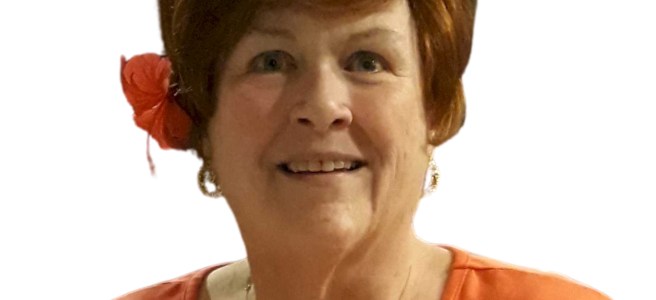
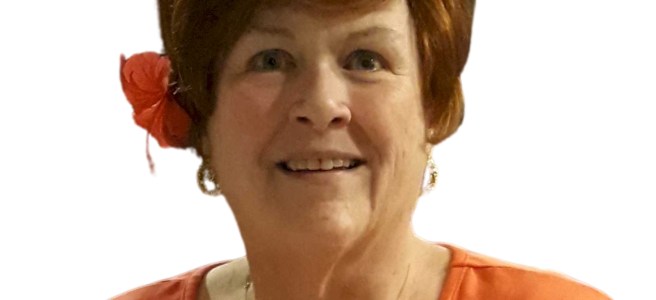
by Janis Patterson


Maybe that’s not a politically correct greeting, but right now I don’t really care. I am wishing each of you the very best and most joyous thing I can think of. After a very hard year almost exactly halved between a crushing load of work and several unexpected, life-threatening surgeries (where some of my nurses said I died on the table for at least a minute, but my records don’t reflect it – who knows) and an unexpectedly long and difficult recovery (which isn’t over yet) I kind of think I have the right to say what I want. Which I usually do anyway, but let’s pretend it’s because of the season.


Anyway, I usually try to talk about things writing-related, but today I am too imbued with the spirit of the season and just plain happiness so I’m going to talk about other things, like our trip to Germany which ended just at the beginning of the week. This was a week of touring small Southern Bavarian cities with charming Christmas markets – a small (6 people) tour run by a friend which we have taken several times during the years. This particular tour was also a special ‘thank you for not staying dead’ present from my wonderful husband who has spent the last few months doing precious little except taking great care of me since the surgeries.


Can I make a confession? I have been feeling pretty good, but did not realize I was really too weak to make this trip properly. I spent a lot of time sitting on the sidelines instead of touring, but in a way that’s all right. We had taken this trip before and so had seen what most of the group was seeing for the first time. Perforce I was seeing things from a different viewpoint, and it truly was a wonderful experience. I actually saw the spirit of Germany as well as the holiday trappings. And I was impressed.


Germany is an incredibly clean country. We drove through big cities, small cities, tiny villages and down narrow country lanes. There were no wandering plastic bags (and yes, they do use them) or trash. Leaves were neatly raked. There was some painted graffiti in the big cities, but none elsewhere. There were no junked or abandoned vehicles to mar the landscape. I saw no evidence of vandalism anywhere. Everything was neat, tidy, well painted and on the whole charming. It was very refreshing.


The people were delightful, polite and caring. When it was noticed that I had some problem with mobility there were more offers of arms and chairs and help than I could count. One man even offered to carry me over a stretch of rough ground – which, considering my bulk, was most of unwise of him! I did allow him to give me the support of his arm over the uneven ground. While the tour group was exploring a market, I went to the grocery store to buy some of my favorite sweetener to bring home. The door was unexpectedly heavy and I was struggling with it when a man – a villager – dashed across the road to open it for me. He was a local and not associated with the tourist industry at all. Just a nice man. I don’t speak German and he didn’t speak English, so we just smiled a lot, said thanks in our own languages, then he tipped his hat, went back across the street and on with his own business. A fleeting but lovely encounter.


Not speaking the language of the country can have some interesting consequences. One night the group decided to go to a special restaurant, one that was just beyond my comfortable walking distance. Most of the group walked, but three of us decided to splurge on a cab. (Wise!) Getting there was okay, but when it came to coming home we got a cab driver who spoke no English and none of us spoke German. My husband had the presence of mind to pick up a hotel brochure, so we could show him where we wanted to go. The driver nodded happily … and then took off in the wrong direction. I immediately tried other languages, but he understood none of them. (And my command of most of them is not THAT bad.) He tried a couple of languages, none of which I even knew what were. To make things worse, the other lady in the party was melting down, convinced that he was carrying us away to a dark and unseen future. Finally in pure desperation I tried my abysmal Arabic and the cabbie’s face lit up as he replied in the same tongue. Not that things were easy then. He spoke the Syrian dialect, and I can barely mangle the Egyptian version, but it was good enough to get us turned around and on the right road home. We chatted (sort of – as best we could) all the way back and everything ended happily.


If there is one thing I admire about Germany it is their enthusiasm for Christmas. Even in the tiniest village there are banners and tinsel strung along the streets. The cities are pure extravaganzas of Christmas cheer. In hotels and shops and even humble groceries there are signs, plaques and sculptures proclaiming “Frohe Weihnachten” (Merry Christmas). You hear it from people, too, whether you know them or not. I frankly gave up trying to pronounce it (German and I really do not get along!) and just replied Merry Christmas and it was fine.


Perhaps I have a warped view, or am just a Christmas junkie, or perhaps it is just because we were in tourist areas and treated with kid gloves, but it was indeed a magical time. I missed a lot of our tour because of my infirmities, but I also gained a fresh insight into a wonderful land and people.


And that is the end of my peroration on my year, my trip and my fascination with Christmas. I promise I’ll get back to writing topics in January, but in sharing this with you I get to relive it, and I’m selfish enough to find that wonderful. Wishing you all a Merry Christmas, and a wonderfully Happy New Year!

Of Dinosaurs and Digits

by Janis Patterson


Be warned. There is a rant coming!


I am old. I must admit it. Some people might even call me a dinosaur… an appellation I am proud to claim. I mean, how nifty to have someone talking about you and being interested in you a couple of million years after you died!


I even wrote my first real book on an ancient manual typewriter. (My very first book was done with pencil and paper, but I was only four I hadn’t learned to type yet. I was ten before I could convince my dad to teach me.) Then, a couple of books later I graduated to a portable electric – an SCM in cloud blue – and boy, did I feel like I was in tall cotton. It was like heaven, and the bulging muscles the manual had built up in my fingers gradually faded away. My problem was paper. Paper was (proportionally) more expensive then than now and each draft required paper. Lots of it.


I became adept at adapting and scavenging. I’d use old drafts, slash a Mark-A-Lot through the typed side (which bled through to the other side, creating some interesting problems on occasion) and type the new story on the back. Then one day I got lucky. A business in the building where I worked went out of business and put half a dozen reams of their stationery out for garbage. Needless to say the garbage didn’t get them. For at least three books I felt so elegant typing my rough drafts on 35lb (I think – it was definitely heavy) deckle-edged grey paper. Sad thing was, there had to be a clean final copy typed for submissions. In those antique days there were no Xeroxes, just a very messy and expensive wet process copy machine, so you had to watch your one precious clean copy like a hawk, or go spend the time typing a second one.


Finally computers came in. My first memory typewriter/computer was an Olivetti, at the time the world standard instead of IBM, which wasn’t selling in the US so they were practically giving them away. It had about a two page memory and showed one line of copy at a time. And we writers were delighted. I used that for about two books then IBM PC clones became affordable even to poor writers like me and I adapted. I gave the Olivetti to my mother, but she could never master it. She’d call in tears so often trying to make it behave – it did work as just a regular typewriter just as well and was grade-school simple but she and it never did mesh, so I finally took it away from her and gave it to some charity.


With a small succession of ever-more-useful PCs I upped my output and was very happy. Some of the later ones even had internal memory, but the luxury of saving to a floppy disk was wonderful. The best thing, however, was the cut-and-paste function. Until that cut and paste was actually that, with scissors and cellophane tape and a lot of retyping.
I went through computers fairly quickly, as the older PCs seemingly weren’t made to last. Nowadays though, the computers are made to last, but the MicroSoft programs are ‘upgraded’ with depressing regularity and even more depressingly higher prices. This is what made me so angry with MS that my darling husband gifted me with a Mac Book Pro eight years ago, and it has ticked along happily ever since then except for a couple of swelling battery replacements.Yes, there was a learning curve, but I overcame that through pure fury at MS, and now have acquired two more Macs, one solely for long distance travel and another waiting in the wings to supplement my ageing Pro.


And still MS tries to keep their bottom line by dictating ever newer program ‘upgrades.’


This is the basic point of this rather angry little screed. Why must we continue buying and rebuying to get new features that we do not use, do not need and do not want in order to keep support for the programs we do use, need and want? Why doesn’t MS put out a ‘writers version’ – slimmed down, practical and simple to use – that doesn’t have something unwanted and complicated added on with deadly and costly regularity? Same reason they are becoming reluctant to sell a program in a one-time buy, preferring instead to make customers rent it so they can bloat and complicate it even further with ‘improvements.’


The answer is obvious, and I could describe it perfectly with one or two possibly rude words that no lady should ever use.


And that is why I’m exploring and switching to other ‘office-style’ suites. Someday I am going to find the perfect one, and when I do I’ll share my choice with you in case you should want it.


Of course, I could – and do – just keep using the version I like, but I live in terror of my data simply evaporating some day. (I do keep various versions in various formats – paranoia can save your life…) If necessary, I could go back to the manual typewriter or (though my aged fingers tremble at the thought) plain white typing paper and a pencil.


The thing is, writers should be concentrating on their writing instead of having to constantly juggle with the tools of writing. Is that such an outrageous concept?

Who’s In Charge Here?

by Janis Patterson

Every so often one of my writers’ groups will conduct a workshop on ‘how to create a character.’ I’ve taken a few of them and the methods range from a half-dozen point checklist to a six page questionnaire that goes into such depth as the character’s favorite flavor of Jello, the schools he attended, what kind of pet he had as a child…. You get the idea.

I’ve tried them all, and each time created a deep, multi-faceted character. A completely dead deep, multi-faceted character. They had all the proper points, but they never came to life on the page. Working with them resulted in all the joy and sparkle of Silly Putty. Oh, they moved from Point A to Point B when I directed them, and spoke the words I put in their mouths, but they were reminiscent of nothing so much as Gumby or King Kong – their movements were obviously stop-animation instead of really coming to life.

So I quit taking classes and went back to what I’ve always done – letting the character come to me. Almost every writer has snorted with disbelief when I tell them about the birth of my characters, but – other than my occasional forays into how-to-create-characters classes – it’s always worked for me.

So what do I do? Nothing. My characters simply walk in, tell me their name, and start fitting into the vague storyline that I’ve started with. And yes, they tell me their names. Once I really didn’t like a character’s (the hero!) name and changed it. He didn’t like it, so he shut up and refused to speak to me again until I changed it back to what he wanted some three weeks later. Then the writing simply flowed because of his cooperation.

Who said writers had complete control in their own world?

I know this technique (technique? maybe dictatorship?) wouldn’t work for all writers. Huh, it may not work for any writer besides me, but that’s the point. Even if I’m the only one it works for, it does work for me. I know the character’s-favorite-Jello system works for some people. It doesn’t work for me, but I’m glad it works for them.

What I’m trying to say is that there is no one singular this-way-only technique for writing a book. The only thing that we all should do is write a good book. How we write that book is up to us. There are many good techniques, probably some I’ve never heard of. The important thing is that each writer has to find the one that works for him. Or which ones work for him. There’s no rule saying you can only use one technique. As long as you turn out a good book, it doesn’t matter.

Are You Listening to What They Are Saying?


by Janis Patterson

Books are a widely varying commodity. Some are so wonderful you could live in that world forever. Some are so bad you don’t even try to finish them. Most fall somewhere in the middle. Right now we’re dealing with a new kind of book, a kind of zombie product written by the abomination of AI and released by the overwhelming hundreds. Luckily – for now, at least – they are recognizable primarily for their lifelessness.


So what is it that binds these widely varying standards together – good, bad and zombie?


There are lots of things, but I believe a lot of it is dialogue. Good books have the characters speaking as if they were real people – not interchangeable cardboard cutouts. Of course, this is occasionally a rule that can be tweaked. In a futuristic sci-fi populated with human-android characters, the speech patterns and word choices would be different than in a light-hearted Regency romance, and each choice should be congruent not only with the time and setting of the book, but with the status/occupation/ethnicity of the individual character.


For an only slightly exaggerated example, everyone is familiar with the slave Prissy’s exclamation during the battle of Atlanta sequence in Gone With The Wind – “I don’t know nothing ‘bout birthing no babies.” As offensive as some modern readers might find it, her heartfelt cry is commensurate with her time, her status and the situation of the scene. Just imagine how jarring it would be if she were to say : “Good gracious, Miss O’Hara, I am completely ignorant of the processes involved in delivering a baby.” That would pull the reader right out of the scene. To a large extent, language equals character.


And the principle doesn’t really change no matter what the genre, though the actual words probably will. In a hard-boiled detective story, a police sergeant is not going to speak the same way as a career petty thief. In a western, a wealthy rancher with political aspirations will sound different from a brow-beaten saddle tramp. In a Regency romance a high in the instep duke will have a completely different vocabulary and range of meaning than a poverty-stricken dock worker. In a contemporary romance sometimes the difference will be less blatant, mainly because of the ubiquity of books and television acting as influencers, but there will be noticeable differences.


Just to make the convoluted even more so, know that all the above can be overridden if the plot demands. Perhaps the duke is working on the docks to find out who is stealing his fortune or something. Perhaps the weary saddle tramp is really a Pinkerton man out to investigate the rancher whom he thinks is really setting himself up as a dictator. Perhaps…. you get the idea. Confustication upon confustication. But you must play fair with the reader – not by telling him from the outset what is going on, but by allowing him to listen to the various people and find out the truth for himself.


Language equals character.


And if you’re writing a hard sci-fi about three-eyed, blue-skinned Orychiks from the Dyinolive galaxy with no humans involved you’re pretty much on your own… just remember that in almost every society the ‘elites’ (for want of a better word) speak differently than the ‘hoi polloi’ (again for want of a better word) primarily as a matter of status. I think this need for distinction, for individuality (even in a herd sense) is hardwired to people’s/being’s innermost self. Even among most animal species there is a distinct pecking order.


Just remember two things – language creates and showcases character, and you must play fair – enough that the reader can follow along with you and understand, even if you do pull a few tricks along the way.

Hobby Me This

Some of you sharp-eyed readers will notice that this is an old blog, and you’re right. I apologize, but to be honest I’m not yet back up to my fighting weight after a pair of life-threatening surgeries and I didn’t want to desert you all completely. Please bear with me this month and next month I’ll have something fresh for you. Thank you.


by Janis Patterson


Mention hobbies/crafts and people generally think of needlecraft, or scrapbooking, or making things, or painting either on canvas or cloth or wood, or… the subject is endless, as everyone who has ever visited a Michael’s or Hobby Lobby knows.


I’m different. Still. My hobby is Ancient Egypt. Studying, visiting, crafting, writing about… anything that concerns Ancient Egypt. I’ve been that way since childhood. By the age of nine I had read every book the Dallas Public Library system had or could borrow on the subject of Egyptology. (Although in the interest of full disclosure I will admit that when I was nine there were a lot fewer books on Egyptology!) I met the man who would become my husband through Egyptology and it was in the moonlit English garden of the Mena House Hotel at the foot of the Pyramids (yes, those pyramids!) that he proposed to me. The North Texas Chapter of the American Research Center in Egypt was founded in the den where I now sit. Through this mania I have been fortunate enough to meet almost every Egyptologist of note in the last 30 or so years and am blessed to call several of them dear personal friends.


So how does this little bit of personal history aid my writing? Aid? Reshape and re-form is more like it. On my first trip to Egypt back in ’92 (before I even met my husband-to-be) my mother and I took a cheap tour to Egypt. It was like returning to a place I loved, even though I had never been there before. I took conspicuous note and pictures and wrote several stories about Egypt then and now. Some didn’t sell (trad pubbing only back then, when others decided what writers should write) but one did – a big time-travel romance called PASSION’S CHOICE. Thanks to the dictates of my then publisher it was what was considered at the time a ‘dirty’ book. Nowadays – meh. Time came the rights finally came back to me and I wanted to rewrite and take out the naughty bits, but the story was so tightly constructed it couldn’t be done, so I left it the way it was. By then I was self-publishing and decided just to let it ride.


Fast forward a couple of years, a marriage to a man as Egypt-obsessed as I, a couple of trips over there and then in ’10 we were on a group tour with some others from our ARCE chapter and on the way back to Luxor from the quarry at Geb el-Silsila the bus stopped on a whim at the necropolis of El Kab.


Out of such tiny incidents all kinds of things grow.


The necropolis is huge, but the centerpiece are four beautifully decorated tombs. They have been open since the Middle Ages, but the colors are still vivid and the statues of the deceased ones still alarmingly lifelike. In one of the tombs there is a painted graffito in a language no one could identify. Two of the scholars on our tour put their heads together and decided it was a debased form of Ancient Phoenician. Cool! I actually knew people who could read Ancient Phoenician! (Actually, years later the late great Eugene Cruz-Uribe (I think) did translate it, as it was proved to be a dialect of Ancient Egypt written in a weird form of demotic.)


Anyway, those lovely tombs gave me an idea and after a while I was working on the story of THE EGYPTIAN FILE, a modern romantic adventure. The only thing was I couldn’t remember in which tomb the graffito was, so, as a member of the EEF listserv, I put the question out. There’s a saying that when you ask five Egyptologists a question, you get eight answers and a fistfight. Not quite that bad, but I did get some very passionate answers.


Two of them were super special. One was from Jane Akshar, an Egyptologist and hotelier, and the other was Dr. Dirk Huyge, Curator of the Art and History Collection of the Brussels Royal Museum and Director of the Belgian Archaeological Mission to El Kab. They were both very helpful and both of them became dear friends. I named them both as ‘researchers in residence’ in the acknowledgements, because there are all kinds of little details you can’t find on the internet, such as how long it takes to get from Beni Suef to Luxor by train.


And that started something. Jane and I corresponded regularly and she, in another life an IT specialist, became not only a dear friend but my web-maven and looked after my website. Dirk was fascinated by the process of writing – and totally tickled to being in a book – so one day in early January 2015 he and I were chatting by email and he said, we’re going to the dig in March, why don’t you and your husband join us?


My jaw dropped. Civilians never get to stay in dig houses. Never. I told him I’d talk to the hubby and let him know. We were in budget mode and trips to Egypt are expensive, so the rest of the afternoon I tried to anticipate his objections and how to counter them. Finally he came home from work and I said, “Dirk wants us to come stay at the dig house and I think…” I got no further, because he said, “When do we leave?” That was January 5th, and on March 15th we were in Egypt. We got to stay close to a week in the dig house, sandwiched in between our dear friend Dr. Salima Ikram and a BBC film crew.


The result was a lovely little murder mystery called A KILLING AT EL KAB. It’s still one of my favorite books. And last September we took a Nile cruise for two weeks. I was just going to enjoy… I wasn’t going to work or anything. The Husband laughed and bought me a (refurbished) MacBookAir for a travel computer so I could do a trip diary… which I did and you can find on my website if you dig a little. He does know me… I came home with about half a new book, A FIRSTCLASS KILLING, set on a luxurious Nile cruise boat. So far it’s great fun!


So perhaps Ancient Egypt isn’t a ‘classic’ hobby, but it’s mine. I do needlepoint some Ancient Egyptian design pillow covers, and at the moment am working on a broad collar necklace with colored beads and opaque cabochons, but it is the land and the time itself which are my real hobby. And I love it!


The thing I am trying to tell you is that you can never tell from where a story will come. I never thought to write a book set in Ancient Egypt… and now I’ve written several. Don’t ever overlook something you love as fodder for a book. Look at all the needlework/knitting/whatever books there are. Or baking. Or singing. Or… well, you get the idea. When you can combine two passions the outcome just has to be something special.