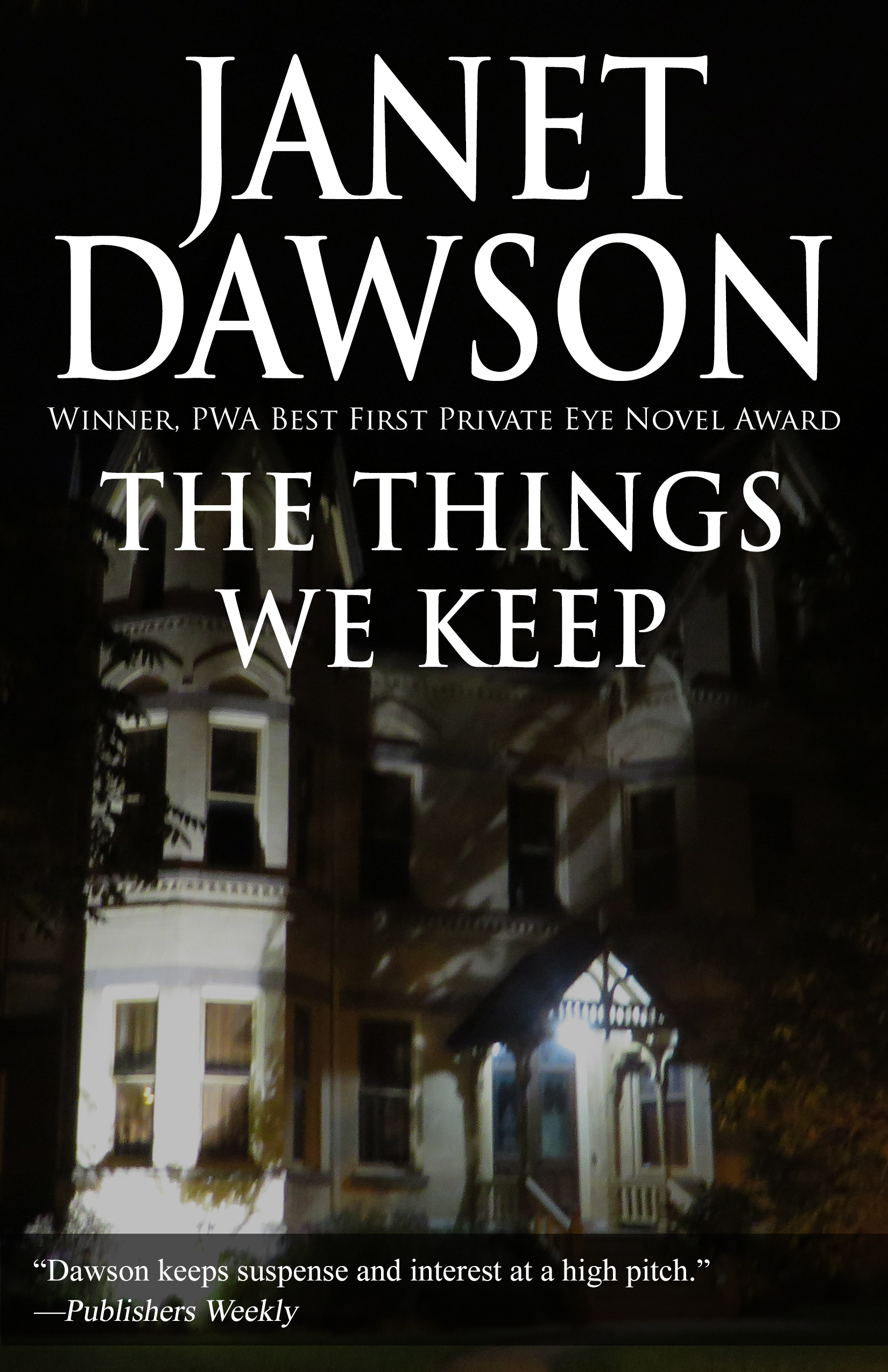
The Things We Keep

It began with a house.

On a sunny Saturday morning, I headed to the Farmers Market in Alameda’s West End. I found a parking spot about a block away, in a residential neighborhood.

The house on the corner was an old Victorian. That’s a term describing those houses built in the era from 1880 to the early 20th century. These houses are common in Alameda. This one was a Queen Anne, a style that often features bay windows and turrets.

This particular house hadn’t been painted in a long time and a number of the window panes were cracked and dirty. Abandoned, I thought. But no, there was a car in the driveway, on that day and on several other Saturdays. Someone was living in the house, despite the state of disrepair.
It made me wonder about the stories hidden within those walls. As writers do, I made up my own story, asking myself, “What if?”

What if my Oakland PI Jeri Howard found a footlocker full of old bones in that house?

As Jeri says in Chapter 1, “I had a feeling this old house had secrets, lots of them.”

The title was always The Things We Keep. Because in life, as in fiction, the things people keep often reveal a lot about them, and the past.

As Jeri investigates any of the cases put to her, she sifts through the tangibles and intangibles that accompany people through life. In Bit Player, an earlier book in the series, Jeri found clues by reading letters that her grandmother wrote.

Now, in The Things We Keep, the bones that Jeri finds are tangibles, along with other items inside the footlocker. DNA and dental records may provide answers, but those are the purview of the police and Jeri has no control over if and when. But discovers clues in other ways. Old newspaper articles accessed online add flesh to the bones. Jeri also finds resources in property records, as well as internet archives and databases.

At one point she searches the California Department of Justice Missing Persons database:

The faces of the missing stared back at me. So many people, their lives and those of their families interrupted. Birthdays and anniversaries uncelebrated, questions unanswered.

The photographs were displayed on the web page – children, teenagers, young adults, older people, male and female, of all ethnic groups. In some cases there were multiple photos, some of those computer-generated to show what the person would look like now.

Photographs are indeed an important element of Jeri’s investigation. She talks with a woman who has a box of photos, hoping that the images will provide clues:
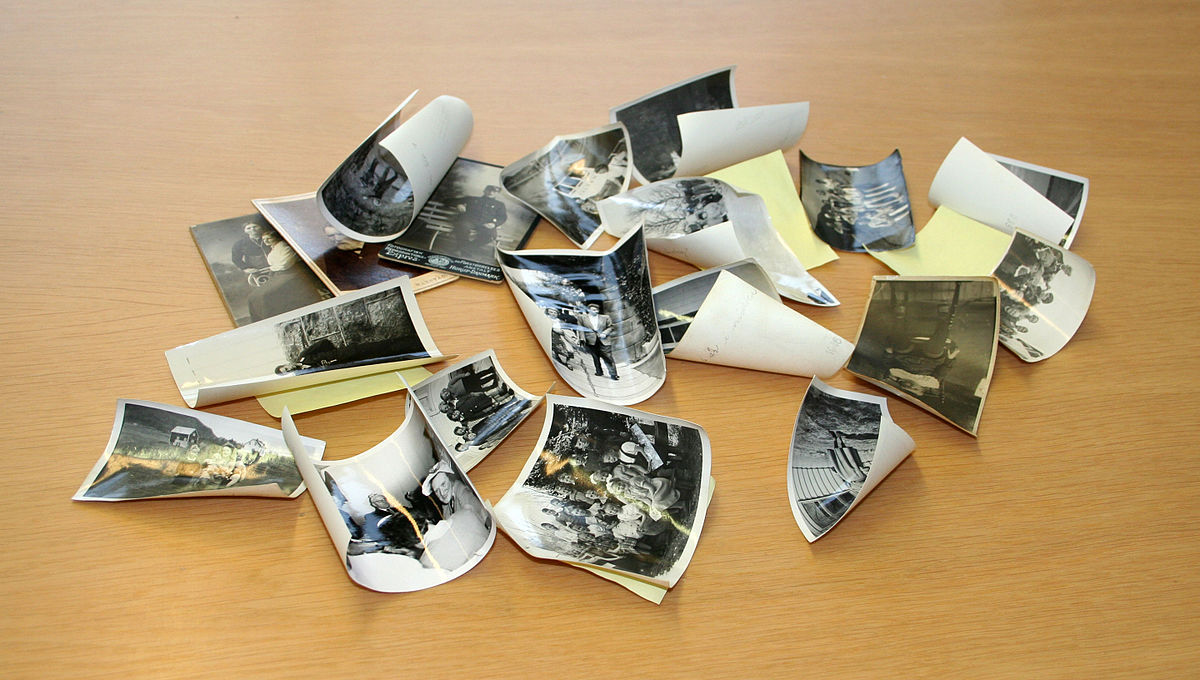
“I keep telling myself I should have this stuff digitized, but I haven’t yet. It was a long time ago. A lot of these snapshots are so faded you can barely see who’s in them.”

She removed the lid and took out several smaller envelopes that held photos and negatives, the kind you’d receive when you had a roll of film developed, back before the digital age.

Those are the tangibles. The intangibles are peoples’ memories, which are often selective and incomplete, colored by their own experiences.

There are many versions of the truth and Jeri must determine which story has the most veracity. The things that people have kept over the years will ultimately lead her to the resolution of this case that stretches back decades.

My Characters Won’t Behave!

I recently watched the delightful holiday movie, The Man Who Invented Christmas. Charles Dickens, played by Dan Stevens, is irked by poor sales figures on two recent books. He’s got family issues, financial stress, and this leads to writer’s block.

He needs money, so he must write another book. When his publishers pass on his idea for a Christmas novel, he vows to publish it himself. Sound familiar? Yes, it does these days.

Trouble is, Dickens doesn’t have an idea—yet. It creeps into his head, fostered by his habit of writing down interesting names and collecting words and phrases. Then he searches for an appropriate name for his main character which, as any writer knows, must have the right sound and personify the character.

Scrooge—if ever there was a perfect name for a character, that’s it. Dickens speaks the name and quicker than you can say “Bah, humbug!” Ebenezer appears, grumpily played by Christopher Plummer.

He’s not happy. He’s not cooperating either. Neither are the other characters who show up to plague Dickens. Mr. and Mrs. Fezziwig, Marley’s Ghost—they’re upset that Dickens plans to kill off Tiny Tim and they won’t shut up. As for Scrooge, he’s nasty and on target when he lobs his opinions and observations at Dickens.

All the writers among you, raise your virtual hand if this has ever happened to you.

It does to me, despite the fact that I say, “Wait a minute, you’re not real. I made you up. How dare you have a mind of your own.”

In Till the Old Men Die, I was sure that one character was responsible for the deaths of two murder victims. Then another character jumped up and down, hands waving, and said, “No, I did it!”

Then there are the characters who are supposed to be walk-ons, there to further the plot of one particular book. However, not content with being one-offs, they start showing up in other plots. I have a character from an earlier Jeri Howard book, Water Signs, who appears in The Devil Close Behind and my new book, The Things We Keep. Another character who had a brief role in Jeri’s case Witness to Evil wound up as the protagonist of my suspense novel What You Wish For. And there’s Tidsy, in Death Rides the Zephyr, the first in the Jill McLeod California Zephyr series. She’s in two books out of the next three and may wind up with her own novel.

Ah, well. Follow where the characters lead. I’ve discovered that if I try to make them do things they don’t want to do, I wind up wandering through the writer’s block maze.

The character who now exhibits a mind of her own is Jeri Howard, the protagonist of my long-running private eye series. After The Devil Close Behind was published, I thought it might be time to close the book on Jeri. After all, 13 books is a good long run. At the time I didn’t have an idea for #14.

Then it began to creep into my head, shoving aside the historical novel I’d just started and elbowing its way to the front of the line. A house in Alameda that looked neglected, one I saw in the neighborhood near the Saturday farmers market. It wasn’t abandoned, though. Someone was living there.

The writer in me began asking questions. Especially, what if? What if there was an old Navy footlocker hidden in that house? What if Jeri opened it, and found human bones? Of course, Jeri is going to find out whose bones and what happened to those people.

Find out in The Things We Keep, which will be published in March 2023.

Getting it Right

The historical mystery looked promising on the library shelves. I checked it out and started reading. A few chapters in, a glaring historical inaccuracy pulled me right out of the narrative.

The book takes place in 1855, in a New England town. In one scene, the protagonist goes to the post office—which has a sign reading United States Postal Service.

No. No. No. Definitely no.

The United States Postal Service didn’t exist until 1971, after former President Richard Nixon signed the Postal Reorganization Act of 1970. Before that, it was known as the Post Office Department, or simply the Post Office.

I had a similar experience when reading another historical mystery set in 1950. The protagonist mentioned having read a world-famous novel in the early 1940s. That would have been nearly 20 years before the novel was published.

I found myself thinking that a good editor—or copyeditor—should have caught that. Of course, editors these days were probably born after the Postal Reorganization Act went into effect.

I realize I’m writing fiction, a delicate balancing act between plot, characters and setting. It’s that framework we call willing suspension of disbelief. I write a good story and readers accept that reality and those characters who move around my plot and setting. I want readers to believe that a private eye named Jeri Howard and a Zephyrette named Jill McLeod can solve crimes and catch killers.

When writing my novels, whether set in the present (with historical references) or set in the past, I strive for accuracy. To be fair, I may get it wrong. But I’m careful.

I knew that was important for the Jill McLeod California Zephyr series, set in the early 1950s. There are train buffs call railfans, a natural audience for the books, since my protagonist is a Zephyrette, a train hostess and a member of the onboard crew. I knew that if I made any mistakes, I would hear about it from the railfans.

I was quite chuffed, as the British say, when I did a book event for the first in the series, Death Rides the Zephyr, at the Western Pacific Railroad Museum in Portola, California. One of the volunteers, an older man, approached me. He said he’d read the book and he wanted me to know that I got it right, both the train stuff and the history.

Music to my ears.

I want readers to get caught up in my stories. I don’t want to make errors, however small, that that pull readers out of the story. They might not return.

Gifts of the Season

“Christmas won’t be Christmas without any presents.” That’s what Jo March says in the opening paragraph of Louisa May Alcott’s Little Women.

Years ago, when we’d ask Dad what he wanted for Christmas, he’d always say, “A happy family.” It became the gentle, wry family joke. One year, while prowling around a secondhand bookstore, my brother found a book called The Happy Family. He bought it, wrapped it up and put it under the tree. Dad loved it. Now that Dad is gone, I’d give the world to hear him say it again. But I have the gift of that memory, and many others.

I start thinking about presents even before I do my after-Thanksgiving ritual of decorating my house and tree for Christmas. I am of an age where I don’t need more stuff. In fact, I’m really trying to get rid of stuff. So are most of the people on my list.

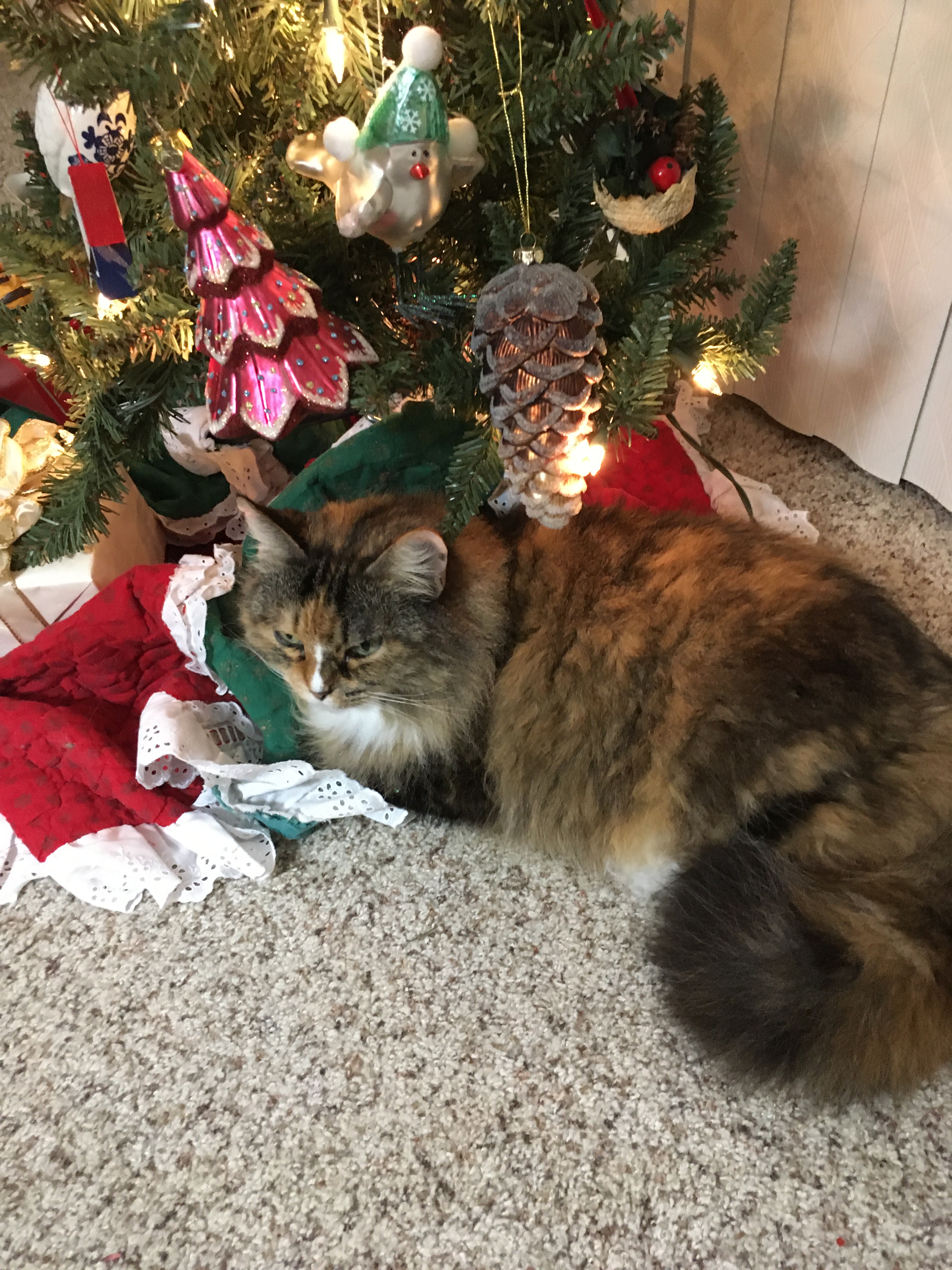
But still. It’s nice to have something under the tree (besides Lottie, AKA Mama Kitty). Chocolate, for example. Make mine dark.

If I’m really ambitious and I start early enough, I’ll sew. This is not one of those years.

When giving gifts, I’d like it to be something the recipient will use. Or eat. A pound of coffee. One doesn’t actually eat coffee, though I know java junkies who would happily chew the grounds to get a caffeine fix. That said, French roast is definitely a plus during the holidays.

Back to gifts that can be consumed. I have a terrific recipe for cranberry chutney, and I’ve been known to make lemon curd and apple butter. Baking is good. My holiday tradition is pumpkin bread, with fresh pumpkin puree made from my Halloween pumpkins. I’ve also been known to make biscotti, scones and big chewy ginger cookies. In fact, this year I have a special request for those cookies.

What about me, as the gift recipient? As noted above, I don’t need more stuff. I’m getting rid of stuff. But there are gifts I’m grateful for. A character in the movie Miracle on 34th Street calls them “those lovely intangibles,” and further says that they are the only things that matter.

Start with the gift of good health. That’s a big one. The past three years have been an obstacle course. Thank goodness for Covid vaccines and boosters. And flu shots. If you don’t think influenza is a big deal, I refer you to John Barry’s stunning and comprehensive look at the flu epidemic of 1918-1919. It’s called The Great Influenza: The Story of the Deadliest Plague in History. The book should be on everyone’s reading list.

I made it through 2020 wearing masks, limiting contact with people and sanitizing my hands like crazy. In 2021 had knee replacements. Both knees at once. That was an adventure. The medical adventure for 2022 was cataract surgery on both eyes. For 2023 and beyond, the best gift of all would be not to have any repair jobs on any more body parts. And it would be really great if we could finally get out of this Covid labyrinth.

And the gift of good health for other people. I have family and friends who were diagnosed with various types of cancer and/or had surgeries, who have spent the past year-plus dealing with the treatment of same and the aftermaths of that treatment. Then there’s my elderly mother, who had a long recovery from a fall.

The gift of warm and dry, with a roof over my head. As I write this in early December, it’s unseasonably cold for the San Francisco Bay Area. I’m back in my office running an electric space heater to keep warm. At least I am inside and comfortable, even if my fingers sometimes stiffen up.

And importantly, for a writer, I am grateful for the gift of time to write, time to go off into my own little fictional world and create plots, characters and settings. I spent so many years working at full-time jobs and shoehorning the writing into early mornings and weekends that it is a gift to be able to sit down at my computer and spend the whole day at my avocation.

And the time to enjoy the season, queuing up my Christmas movies and listening to my Christmas CDs.

How about you? What are the gifts of the season for you and yours?

Soup Weather

November. Sunrise comes later and sunset comes sooner. Though I live in California, the nights are chilly. I bundle up on the sofa, a fleece throw over me, book in hand, and a cat or two jockeying for position on my lap. What’s for dinner? This time of year, it’s usually soup.

I start with the basics. Onion and garlic sauteed in olive oil. Add lots of veggies, whatever is to hand. Carrots for color, mushrooms, a handful of fresh spinach. Toss in that leftover cauliflower or broccoli. Add cans of tomatoes and pinto beans. I like pinto beans in my soup.

I add homemade broth made from leftover chicken or turkey bones. Perhaps I’ll add a splash of Worcestershire, soy sauce or even rice vinegar.

Then it’s herbs and spices, going beyond salt and pepper. Toss in oregano, or maybe a pinch of tarragon. With so many spices to hand, I’m experimenting with smoky paprika, cumin and coriander. Cayenne and chili, curry and sometimes even cinnamon or nutmeg for something different.

Soon there’s a fragrant pot of delicious homemade soup simmering on the stovetop.

And what does that have to do with writing? Plenty.

When I’m writing a novel I start with the basics. Instead of onions and garlic, it’s plot, characters and setting. Decisions must be made. Will it be first person, or third, or a combination of both? That depends on what kind of novel I’m simmering.

The plot thickens—sorry, couldn’t resist that, as long as I’m going with the cooking analogy. Suffice to say I want my soup to have plenty of variety and flavor. And my novel to have a story full of twists, turns and surprises.

The Jeri Howard novel I’m finishing up, The Things We Keep, is one such pot of soup. This is the 14th book I’ve written with Jeri as protagonist, so I’m well acquainted with my fictional Oakland private eye and the world she inhabits. On that basic framework I build my story, and I think this one has its share of plot twists.

As for the setting, this time Jeri is sleuthing in familiar Bay Area territory. In other books I’ve taken her farther afield, though for the most part in California, though she goes to New Orleans in The Devil Close Behind. In Witness to Evil, I sent her to Paris, though she eventually wound up in Bakersfield.

As for characters, I do have a list of staples. Jeri’s father Tim, now retired, who at the start of the series was a history professor and a major player in Till The Old Men Die. Her fiancé Dan, who has his first appearance in Bit Player. Longtime attorney friend Cassie Taylor, who has appeared in several books since the first, Kindred Crimes. I enjoy adding new characters to the mix and if I like them well enough, they get return appearances. For example, New Orleans private eye Antoine Lasalle, who appears in The Devil Close Behind, has a walk-on in The Things We Keep.

It’s soup weather, a comforting bowl on a chilly night. Or several nights. Because soup melds flavors when it sits in the fridge overnight. I can put it on the stove again and add new herbs and spices. Basil this time or lemongrass for something different.

Novels, like soup, can always be revised.