Soup Weather

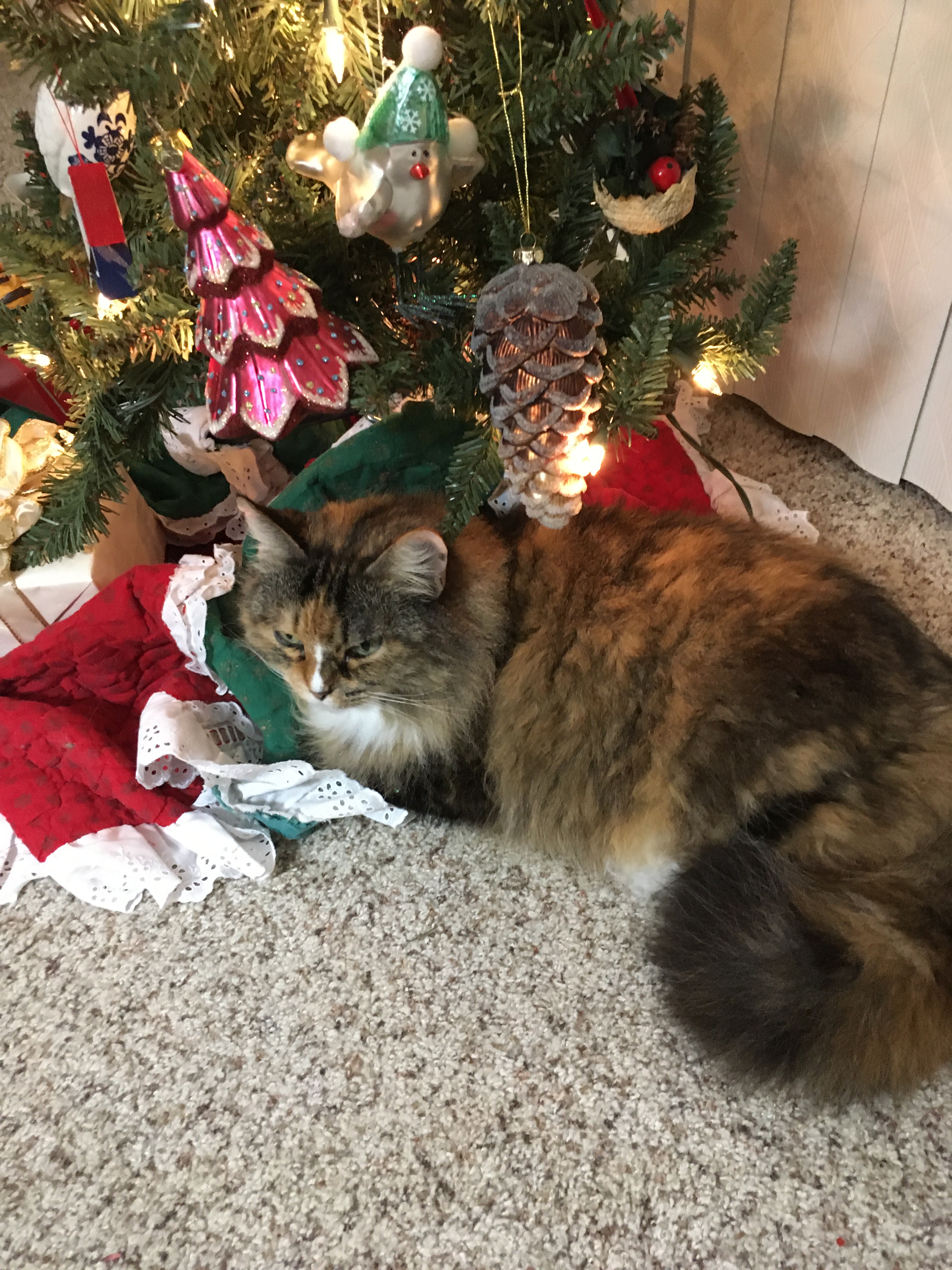
November. Sunrise comes later and sunset comes sooner. Though I live in California, the nights are chilly. I bundle up on the sofa, a fleece throw over me, book in hand, and a cat or two jockeying for position on my lap. What’s for dinner? This time of year, it’s usually soup.

I start with the basics. Onion and garlic sauteed in olive oil. Add lots of veggies, whatever is to hand. Carrots for color, mushrooms, a handful of fresh spinach. Toss in that leftover cauliflower or broccoli. Add cans of tomatoes and pinto beans. I like pinto beans in my soup.

I add homemade broth made from leftover chicken or turkey bones. Perhaps I’ll add a splash of Worcestershire, soy sauce or even rice vinegar.

Then it’s herbs and spices, going beyond salt and pepper. Toss in oregano, or maybe a pinch of tarragon. With so many spices to hand, I’m experimenting with smoky paprika, cumin and coriander. Cayenne and chili, curry and sometimes even cinnamon or nutmeg for something different.

Soon there’s a fragrant pot of delicious homemade soup simmering on the stovetop.

And what does that have to do with writing? Plenty.

When I’m writing a novel I start with the basics. Instead of onions and garlic, it’s plot, characters and setting. Decisions must be made. Will it be first person, or third, or a combination of both? That depends on what kind of novel I’m simmering.

The plot thickens—sorry, couldn’t resist that, as long as I’m going with the cooking analogy. Suffice to say I want my soup to have plenty of variety and flavor. And my novel to have a story full of twists, turns and surprises.

The Jeri Howard novel I’m finishing up, The Things We Keep, is one such pot of soup. This is the 14th book I’ve written with Jeri as protagonist, so I’m well acquainted with my fictional Oakland private eye and the world she inhabits. On that basic framework I build my story, and I think this one has its share of plot twists.

As for the setting, this time Jeri is sleuthing in familiar Bay Area territory. In other books I’ve taken her farther afield, though for the most part in California, though she goes to New Orleans in The Devil Close Behind. In Witness to Evil, I sent her to Paris, though she eventually wound up in Bakersfield.

As for characters, I do have a list of staples. Jeri’s father Tim, now retired, who at the start of the series was a history professor and a major player in Till The Old Men Die. Her fiancé Dan, who has his first appearance in Bit Player. Longtime attorney friend Cassie Taylor, who has appeared in several books since the first, Kindred Crimes. I enjoy adding new characters to the mix and if I like them well enough, they get return appearances. For example, New Orleans private eye Antoine Lasalle, who appears in The Devil Close Behind, has a walk-on in The Things We Keep.

It’s soup weather, a comforting bowl on a chilly night. Or several nights. Because soup melds flavors when it sits in the fridge overnight. I can put it on the stove again and add new herbs and spices. Basil this time or lemongrass for something different.

Novels, like soup, can always be revised.

What Comes Next?

I’m nearing completion (I hope!) of my 14th Jeri Howard novel, The Things We Keep. Fellow Ladies of Mystery author, D. Z. Church read the latest draft and pointed out words I’d left out and words I’d repeated. She pruned instances of words I habitually overuse – “so,” “then,” and “now.” She also took out many of the commas that I love to sprinkle all over my work. More importantly, she indicated several rough spots requiring attention. Yes, we all need that second pair of eyes. I’m now in the process of revising the draft.

I’ve been working on this book for nearly two years and hoped to finish it by the end of 2021, but as we know, life intervenes.

Once the book is finished, there’s the whole prepublication drill. Already have a cover – here’s a first look! I’ll create the front and back matter, format the book and write snappy descriptions that will make readers want to buy the latest Jeri. Publication date, copyright – a lot to do.

After that, what next? That’s a question recently posed by several people. A good question, since at any one time I am juggling six or seven plots in my head, always looking ahead to the next project.

I get emails asking if I’m going to write another book featuring Jill McLeod, my sleuthing Zephyrette, who solves crimes in the early 1950s while working on the streamliner train known as the California Zephyr. The short answer: yes, I have a plot in mind. That answer also serves for Kay Dexter, the geriatric care manager protagonist of my book The Sacrificial Daughter. Then there’s Maggie Constable, the retired San Francisco Chronicle reporter from my novella, But Not Forgotten. I like Maggie a lot and she needs a book of her own. In the meantime, she puts in an appearance in The Things We Keep.

Other characters clamor for attention. One of them is Mrs. Grace Tidsdale, the redoubtable Tidsy, who appears in several Jill McLeod novels. She’s a woman of strong opinions and actions, with an interesting past. That’s a trait she shares with Rose Laurent, the former stuntwoman, actress and director who appears with Jill and Tidsy in Death Above the Line. Both women have backstories I want to explore.

Characters and plots roam through my head, the characters with their hands up, waving, and shouting, “Me next!”

I have ideas for several standalone novels and pages of plot notes and character sketches to go with them. The Mendocino book, which takes place in that remote village on California’s north coast. The Guam book, which harks back to my days in the Navy on that Western Pacific island. The dysfunctional family book simmering on the back burner for years.

Well, you get the idea.

What comes next? I suspect it will be the historical novel I started two years ago. I was already several chapters into it when I got the idea for The Things We Keep, which appeared in my head and jumped the queue.

Once I return to that book, I’ll be steeping myself in New Mexico history in the late 1870s and early 1880s, doing research from a whole pile of books I’ve collected over the years. That will be quite a change from Jeri Howard in the 21st century.

Fresh Eyes

I recently sent the manuscript of my latest Jeri Howard novel, The Things We Keep, to a writer friend. This is the third complete draft and it’s ready for a pair of fresh eyes.  At this point I’ve been working on the book for nearly two years, give or take a few hiccups in my life and adventures.

I know what I mean to say. And since this is the 14th book in the series, I am quite familiar with Jeri and her world. Plot, character, setting—I think all the parts fit.

But— Did I say it in a way that will engage readers and draw them into the book? Are there any plot holes lurking between points A and Z? Are the characters behaving the way I’d intended? Or are they escaping from their personas, wandering down byways I didn’t intend and bouncing off unexpected walls?

Will that other writer’s fresh eyes see what I see?

Well, I just got those comments, so I’ll find out.

Speaking of fresh eyes, yeah, I have a pair of actual fresh eyes. Well, fresher. I had cataract surgery in August. Double knee replacement last year, cataract surgery on both eyes this year.

I really hope I’m done with repairing and patching body parts, at least for the time being.

When traveling by air, I have to tell the TSA folks at the airport that I have bionic knees so they can send me through that booth where I have to raise my arms and get scanned. I learned that the hard way when I set off the alarms at Denver International Airport.

As for the eyes, the surgery is recent and I’m still doing the drill with eyedrops, being careful about bending and lifting. I’m told it can take four to six weeks to adjust. So far, so good.

My ophthalmologist tells me my vision is now 20/20 in both eyes. Considering that I’ve worn glasses since I was ten years old, and probably needed them before then, this is a big deal. I still wear glasses for reading and the computer, essential activities for a writer, of course. I can now drive without glasses perched on my nose. And things are really, really bright. Wearing sunglasses all the time when I go outside.

The onset of cataracts was gradual. Optometrists started mentioning it about 15 years ago, saying something like, “You’ve got the start of cataracts but it’s not too bad yet.”

Last year, I went to see the optometrist and told him my distance vision had “gone to hell,” as I put it. It was increasingly difficult to see street signs. Those cataracts that weren’t yet a problem? Now they were. Like having gray clouds in my field of vision. Now I don’t. Did I mention that things are really, really bright?

Fresh eyes. All the better to edit and revise The Things We Keep.

The Social Media Conundrum

Facebook. I first heard about it maybe 15 years ago. I was about to be laid off from an administrative job at the University of California and part of the deal was a bunch of classes offered by UC on how best to look for a job. In addition to tips on writing resumes and interviewing, one suggestion was to create a Facebook account. Supposedly that was to get the word out that I was looking for employment.

In the long run, I found LinkedIn more useful for the job search. I tried Twitter because an author at a book event said that one had to be on Twitter. I thought and still do, that Twitter is absolutely useless and I don’t get it. Talk about a waste of time. I’ve posted things on Pinterest, but not lately. As for the rest of the social-media-de-jour, Instagram, TikTok, or whatever else is out there or might be next week—not interested.

But Facebook had a certain appeal and still does. I like posting photos of my kitties, the roses blooming in my garden and that peach pie I baked (For me! All for me!). Posts with news from friends and acquaintances. Posts that alert me to an article or a video that might be interesting.

But I’m at the point where I’m thinking seriously of leaving Facebook.

Thinking. Not quite there, though getting closer. Adorable kitty pictures aside, it’s a real time-waster. The political stuff—well, we’ve all been inundated with that over the past few years.

And I’m really tired of all those ads. I have only to think about buying something and I swear, my Facebook feed is full of ads for the very same. More ads than anything else these days.

So yes, thinking of leaving Facebook. But— ???? Is Facebook useful to me as an author? As a way to connect with readers? I don’t know.

I have a personal Facebook page that is limited to “friends” and an author Facebook page which is visible to everyone. On the author page, I post announcements—news of a new book that I’ve written, alerts about a deal for one of my books. Links to one of my blog posts here at Ladies of Mystery. Information on a forthcoming newsletter or a favorable review. In the pre-pandemic days, I would let people know that I would be speaking at this library or that bookstore. Or announcing the title of my panel at one of the mystery conventions.

I do that as well on my “friends” page, but I limit it. The “buy my book” stuff gets old, I know. Maybe the kitty pictures do, too.

So, what’s the solution? Or is there one?

I can certainly address the time-waster issue. Right now I’m on a Facebook diet, limiting my daily exposure. And if I leave the platform, what next? Do I post kitty pictures on LinkedIn? It’s not really that sort of platform.

I’m interested in hearing suggestions, so put your thoughts in the Comments section.

We Hold These Flaws

Today is the Fourth of July. I’ll spend a couple of hours this morning watching the local parade, which passes my condo complex, sitting in a camp chair and greeting neighbors. I’ll shut the windows to keep out the sound of those @#$%^&* illegal fireworks.

I’ll also watch a movie. That may seem like quite a segue, but I grew up at the movies. In years past, my mother’s family owned movie theaters, from the silent era on.

The movies also play a role in my novels. In my Jeri Howard book Bit Player, Jeri’s case takes readers back to Hollywood in the 1940s. My most recent Jill McLeod book, Death Above the Line, finds Zephyrette Jill taking a break from riding the rails, She winds up in the cast of a film noir. She also meets a former actress who was blacklisted.

The movies of choice for the Fourth of July are Yankee Doodle Dandy and 1776. In the first, Jimmy Cagney dances across the screen as that quintessential song and dance man George M. Cohan. And 1776 gets me every time, with William Daniels as John Adams. Benjamin Franklin is played by Howard Da Silva, who was blacklisted, for real.

So, watching these movies is a holiday tradition. It’s all good, right?

Yet lately, I’m bothered. There’s a blackface number in Yankee Doodle Dandy.

I know blackface is a theatrical tradition dating back to minstrelsy in the mid-19th century in the United States. In the 20th century, there are Al Jolson in The Jazz Singer and Bing Crosby in Holiday Inn. That’s why I can’t watch Holiday Inn, for all that many folks consider it such a classic. That blackface number in Holiday Inn is excruciating. And the one in Yankee Doodle Dandy makes me wince.

So, 1776. I’ve seen the musical on stage several times, and I have the DVD of the movie. The most difficult part, for me, is the battle and compromise over slavery. Just a movie, right? With terrific performances and wonderful songs? Well, it’s a movie with lots of undercurrents and lots to think about. Those founding fathers “twiddle, piddle and resolve,” according to the lyrics of one song, as they argue about whether to declare independence and then about the writing of the declaration. We’re still arguing about the constitution that followed, facing—or not—the consequences of those actions in Philadelphia all those years ago.

Flawed people, living in different times. Those founding fathers were white men of property who viewed the world through that lens, despite Abigail Adams’s admonition to her husband to “remember the ladies.” Unfortunately, that didn’t happen. And the slaves? Well, three-fifths of a person, a compromise at the constitutional convention that increased the power of slave-holding states.

For decades, from the 19th to the 20th century, many white performers and audiences didn’t see anything wrong with performing in blackface, though this 21st-century person finds it difficult to look at those stereotypes.

What does this have to do with writing? A lot, in my opinion. Flawed people. That’s what we’re dealing with when we write fiction. The characters I create wouldn’t be very interesting if they were perfect. In Witness to Evil, Jeri Howard’s case leads her into a confrontation with white supremacists. I wrote that book in the mid-1990s. I wish it wasn’t so relevant now.

In the Jill McLeod books Death Rides the Zephyr and Death Deals a Hand, readers glimpse how passengers aboard the trains in the early 1950s often treated African American porters with disdain and disrespect. And in the first book, a baseless accusation of theft. That’s the way things were back then and including that in the novels informs the picture I create of the times.

I make decisions when I write, determining how much, or how little, information about those flawed people goes into the book, and what it’s meant to convey.

We hold these flaws—a necessary part of the creative process.