Recycle, Reuse, Throw it Out—Maybe

I don’t consider myself a pack rat. Others may differ. Well, maybe I will admit to pack rat tendencies. But not the whole rat. I don’t have empty plastic yogurt tubs and months’ old stacks of newspaper cluttering up my home. I really do try to recycle and reuse, and throw out, if need be.

I am, however, a paper magnet. It’s a tendency acquired early in my writing career. I spot something in the newspaper or a magazine, clip it out and set it aside, thinking I might use that someday, in a story or a novel.

And I have. Here’s where recycling comes in. Back in 2005, I clipped a short article from the San Francisco Chronicle. The story concerned a stash of old wallets found in the rafters of a barracks at Camp Roberts, in central California. It’s a California National Guard base now, but during World War II it was an Army training base. The contents of the wallets dated back to that era, the 1940s. The theory was that the wallets had been stolen, all valuables removed, and the wallets then disposed of in the rafters. I was so intrigued by the story I kept it pinned to my bulletin board. And indeed, I did use the story in a Jeri Howard novel—Bit Player.

I started writing in the ancient times before computers and the internet, so I would stash all these clippings and assorted notes in file folders. Some of those folders date back decades and are still hanging around in file boxes, taking up space in my office. I really would like to purge that paper. But I am reluctant to get rid of anything that I might use someday. I know, I know, the mantra of a pack rat.

These days, with the internet, I can save the article onto my computer, or at least the URL. Saves paper and space, that’s for sure. I can even use my iPhone to scan documents. I have file folders of clippings and notes awaiting such action. Then maybe I can throw out all that paper and free up some space in my office.

There’s another kind of throwing out. I’ve excised scenes from novels and told myself the finished work is better for it. At times, though, I reuse a scene. In the Jeri Howard novel Nobody’s Child, Jeri gets shoved off a BART platform in San Francisco. That scene originally appeared in an early version of Till the Old Men Die. I really like the excitement of the scene, with Jeri’s narrow escape from an onrushing BART train. Too good not to reuse.

I also recycle and reuse characters. An earlier unpublished novel had a character named Lowell Rhine. He was a shifty character. I liked the name, so I recycled it in Cold Trail, using the moniker for a somewhat shady lawyer. As for that unpublished novel, and another lurking in my files, I have some recycling and reusing in mind.

Frequently characters who appear in my books wind up in other books. History professor Lindsay Page first appeared in the Jeri Howard novel Witness to Evil. Later she had her own book, my standalone novel What You Wish For. After attending my 50th high school reunion, I wrote a novella, But Not Forgotten, about a semi-retired reporter named Maggie Constable, who attends her reunion, determined to solve a long-ago mystery. I like Maggie a lot, so she appeared in my most recent Jeri Howard book, The Things We Keep. Maggie is going to have a book of her own, as soon as I can get around to it.

And yes, I did write a short story about a pack rat. Entitled Pack Rat. I’m not as bad as the guy in the story. Really.

Get On With It

My work-in-progress is a historical novel. It’s a first draft and I’m working on it in fits and starts, given the interruptions that life throws at me.

Lately I’ve been thinking about transitions. Now, the dictionary describes a transition as the process or period of changing from one state or condition to another. That could mean transitioning from one place to another. Or in the case of a character, looking at how that person is changing internally or emotionally.

Both these definitions are appropriate in terms of the novel. My protagonist does have some internal and emotional changes in store. But right now, she’s changing from one location to another. So, I need to move her, and two other characters across the landscape from point A to point B—and not take forever doing it.

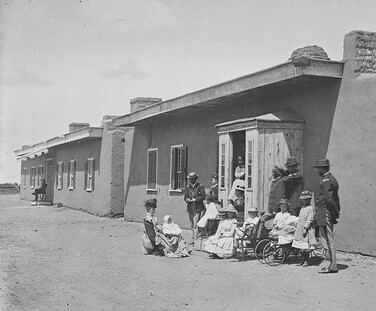
The book takes place in the late 1870s. My protagonist, Catriona, is the daughter of an officer in the frontier army. In the early chapters of the book, she leaves Fort Garland, Colorado, heading to New Mexico to join her father at Fort Stanton, his new post. With her are two companions, a young woman named Martha and a man named Eusebio. I’ve been writing scenes describing these three people on the road to Santa Fe, where they will make a stop before heading farther south again and arriving at their destination.

Agonizing over minutiae is part of my writing process. On the other hand, describing the journey is useful information to help me visualize what I’m writing about and want to convey to readers.

So lately, I’ve spent lots of time thinking about the route, which doesn’t always follow the asphalt roads of the present day. These people are traveling on dirt roads and trails, which sometimes cross streams by going through the water rather than clip-clopping over a convenient bridge. I’m visualizing the terrain, which involves mountains, rivers and high plains. And pondering how many miles a horse-drawn wagon can cover in a day, given the terrain and the condition of those roads.

After mulling it over, chewing on it, and examining it every which way, I finally decided to get on with it. Readers don’t need to follow along on every dusty mile of that journey, taking in the sights during the day, cooking over a campfire, and sleeping under the stars at night. One day and one night, that’s really all that’s needed to give the appropriate information.

Besides, I want my characters to get to their destination so I can move along with the plot.

Jump ahead, already.

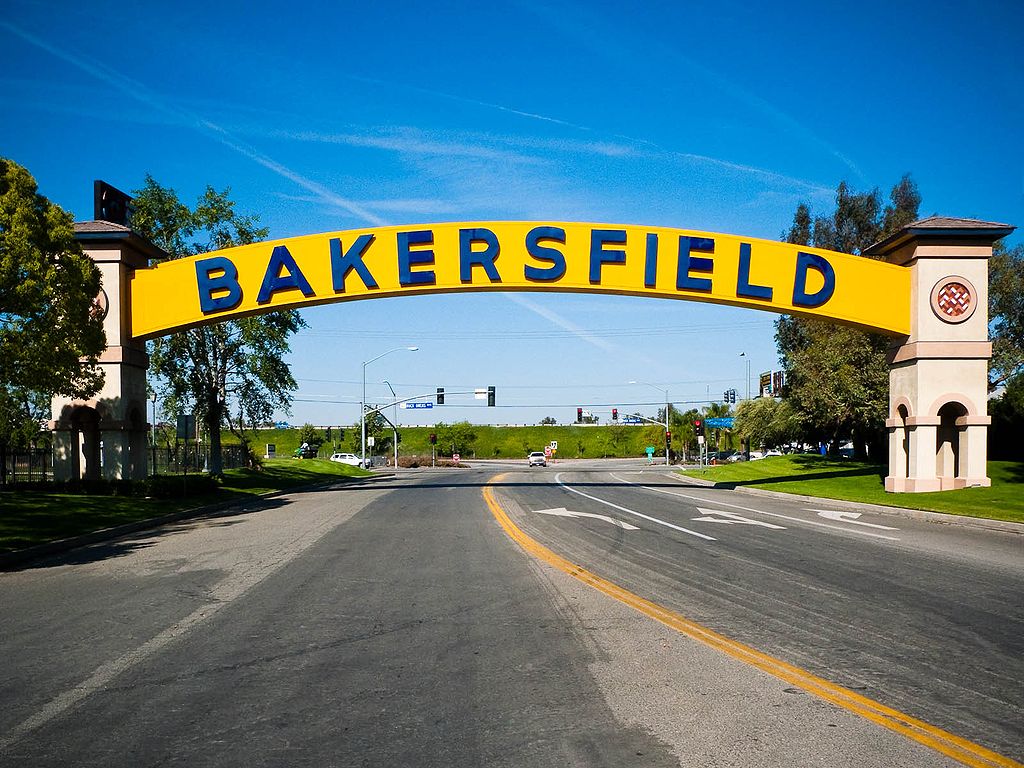
I’ve done this with other books, of course. When I was writing Witness to Evil, a Jeri Howard novel, I had Jeri down in Bakersfield. She was stumped and so was I. What happens next? I jumped ahead and put Jeri on the freeway, heading to Los Angeles. Next think I knew, after finding clues and interviewing people in LA, she was on the road again, this time to San Luis Obispo and then Fresno, before returning to Bakersfield with lots of fresh clues. And me, lots of new chapters.

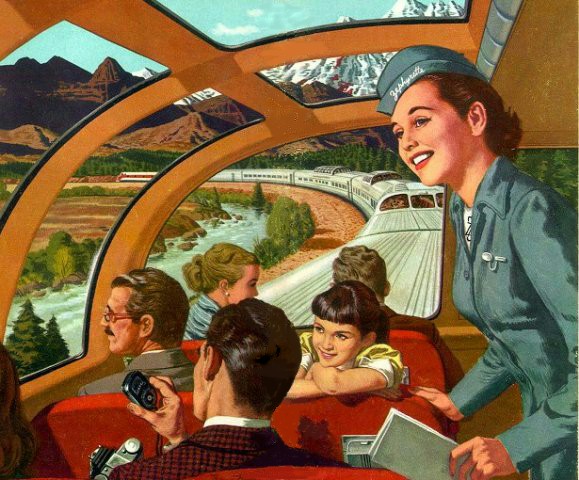
I also write the Jill McLeod series, featuring my sleuthing Zephyrette back in the early 1950s. Much of the action in those books takes place aboard the train known as the California Zephyr. And I must work within the framework of the train schedule. When writing the first book, Death Rides the Zephyr, I had timetables all around me. Not just the timetable for the train passengers, but the timetable that showed the work rotation of the crew, which was different. Again, it wasn’t necessary to write about every mile of that train journey. It was enough to give readers a glimpse of the changing scenery and the feel of the train rocking along the rails. After a long day seeing to the passengers’ needs, Jill is entitled to go to bed in her Zephyrette’s compartment and wake up the next morning, miles down the track and ready for a plate of railroad French toast in the dining car.

A Change of Scene

As I write this, I’m living in a hotel, with my cats, because new flooring is being installed in my condo—finally! It has been six months since the great condo flood upended my life. I never thought it would take this long, but it has. Now I can see that light glimmering at the end of the proverbial tunnel. Soon my cats and I can come home!

A change of scene can be valuable when writing, in a couple of ways. I’m in this hotel room, supposedly with no distractions, unless I count the cats walking over the keyboard. But they do that at home. Surely I can focus on the book I’ve been writing (or neglecting, of late).

Changing location works in other ways. Case in point, Witness to Evil, the seventh Jeri Howard novel. The first half of the book is set in Paris, while the latter half takes place in Bakersfield, California. Talk about a change in scene! I did location research in both places, though a second trip to Bakersfield was a lot easier, since all I had to do was get on the freeway and drive.

At some point during the writing process, I found myself staring at a virtual brick wall. What happens next? I didn’t know. What I did know was Jeri had to go to Los Angeles to follow a lead. So, I put her on highway 99, headed south. Following one lead led to another and yet another. I wrote six chapters in rapid succession, taking Jeri from Los Angeles to San Luis Obispo to Fresno. When Jeri and I got back to Bakersfield, I had a clearer picture of where I was headed with that book, and where I needed to fill in information and clues.

I had another change of scene in the early stages of writing Death Above the Line. It’s the fourth book in the historical series featuring my sleuthing Zephyrette, Jill McLeod. She’s accustomed to working aboard the sleek silver streamliner known as the California Zephyr, as it makes daily runs between the Bay Area and Chicago. However, in this novel, she’s been roped into playing a Zephyrette in a film noir. In the first draft, I had Jill reporting for duty at a movie studio located in the waterfront district of Oakland. It’s an area I’m familiar with, having worked there in one of my day jobs.

But the location just wasn’t working. I had to make a change. I moved my movie studio to Niles. It’s part of Fremont now, but at the time I’m writing about, 1953, it was a separate township at the mouth of a canyon carved by Alameda Creek. And it has a movie-making history. The town was the western site of Essanay Studios, which made silent films there from 1912 to 1916. That’s where Charlie Chaplin filmed The Tramp.

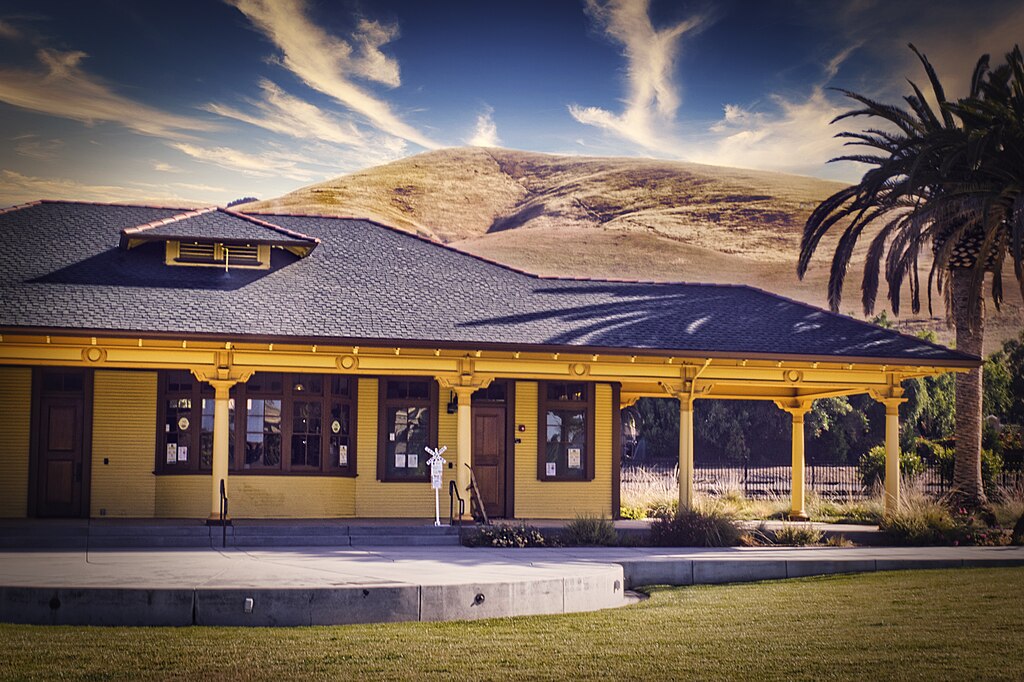
I put my fictional studio in an old warehouse near the historical Niles train station. The change of scene worked. Since I’ve been to Niles many times, riding the historic train there and having afternoon tea at a favorite shop, I was able to visualize my characters moving in and out of the building, walking the familiar streets.

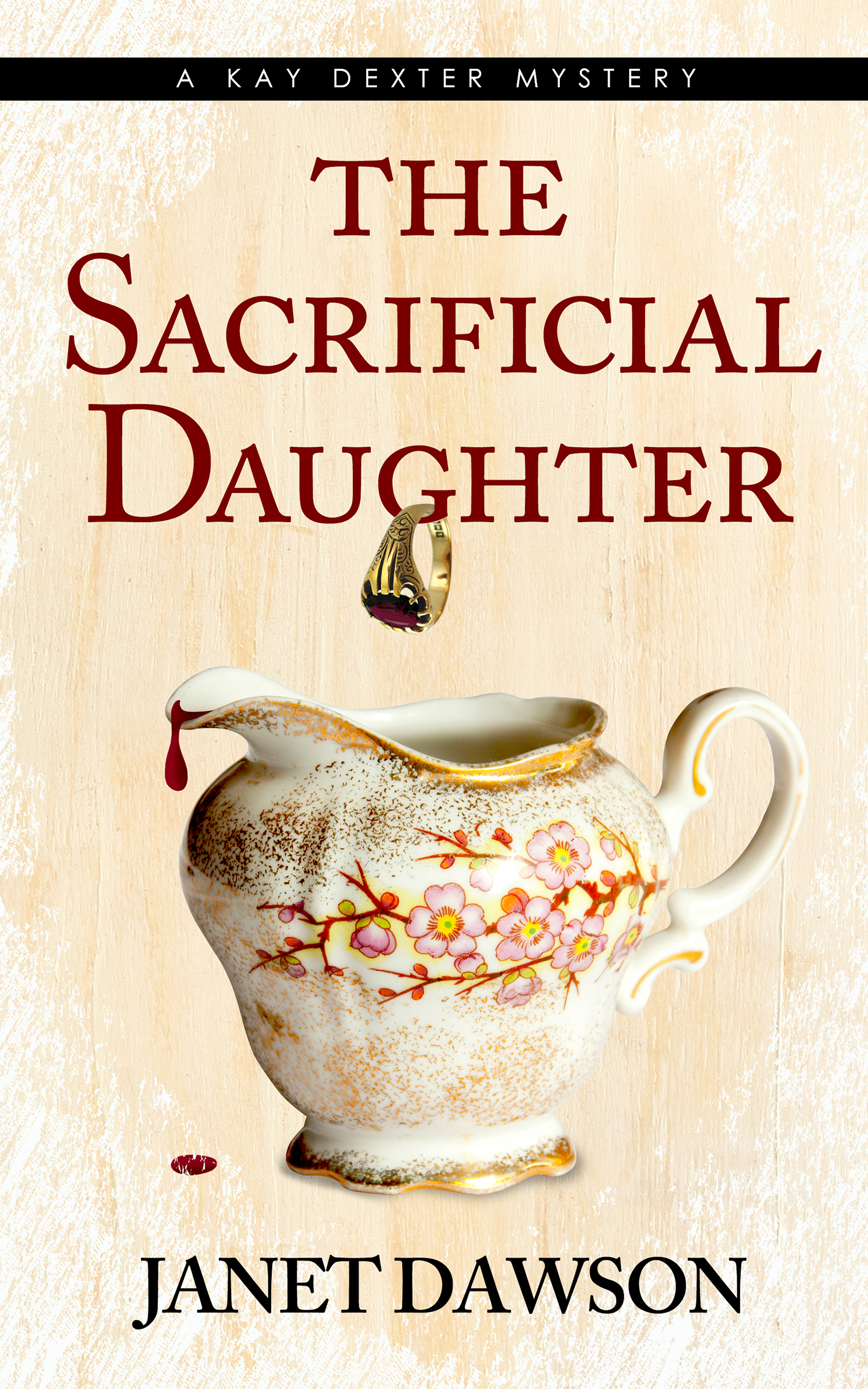
Another change of scene occurred when I was writing the first book in my series featuring geriatric care manager Kay Dexter, titled The Sacrificial Daughter. I use actual locations for my other books. For this series, however, I decided to use a fictional town set in a fictional county in the Northern California Sierra Nevada. Both the town and the county are called Rocoso, a Spanish word for rocky. This was definitely a change of scene, in several ways. A fictional setting allows me to make up the way a place looks, as well as its history, culture and inhabitants. Another way it works is that I borrowed a great deal of the location and terrain from a real place, picking up a real Colorado town and moving aspects of it to Northern California.

Whether it’s Bakersfield, Niles, or Rocoso, a change of scene invigorates my writing.

What Goes Under It All

I’m thinking about undergarments.

Lest you think that’s peculiar, I’m a writer, working on a historical novel. And thinking about what my characters wear.

More about the undies later. Let’s talk about what goes over them.

My long-running Jeri Howard series is contemporary, set in the present day. Jeri is a private investigator. I was a woman in my thirties when I began the series, but I’m aging faster than Jeri is. As an investigator, Jeri wears comfortable clothing, usually pants, though in Where the Bodies Are Buried, she dresses up in a business suit and low heels to go undercover as a legal secretary.

Most often she wears comfortable shoes, since she may need to walk distances as she tails a suspect on a city street. She certainly doesn’t want to stand out in a crowd when she has to duck into a doorway or a coffee shop to avoid being seen. In Cold Trail, she hikes over the hills in a regional park, following a lead.

So, Jeri dresses a lot like I do. I favor casual and comfortable. My wardrobe consists of a lot of T-shirts and stretchy pants. As I write this, my feet are ensconced in warm comfy slippers.

I’ve never felt the need to detail Jeri’s undergarments, though I do mention at one point that she sleeps in an oversize T-shirt.

Then I started a new series, set in the early 1950s, featuring Jill McLeod, a Zephyrette on the California Zephyr, the sleek streamliner train that ran between San Francisco and Chicago from 1949-1970. The current Amtrak version is a successor to that passenger train. Jill is a train hostess, the only female crew member. Her job is to walk through the train from time to time, keeping an eye on the passengers and what they need. While she’s on duty, Jill wears a uniform. It’s teal blue, with a skirt and jacket worn over a white shirt, and a military-style cap. When Jill is off-duty, however, she dresses in the styles common at that time. It’s the era of full skirts and dresses with waists, and Jill’s hair is styled in the popular poodle cut.

Speaking of undies, that was the era of girdles and bullet bras. I’ve never written about Jill’s undergarments, but in one book I have her climbing into her berth in a pair of comfortable pajamas.

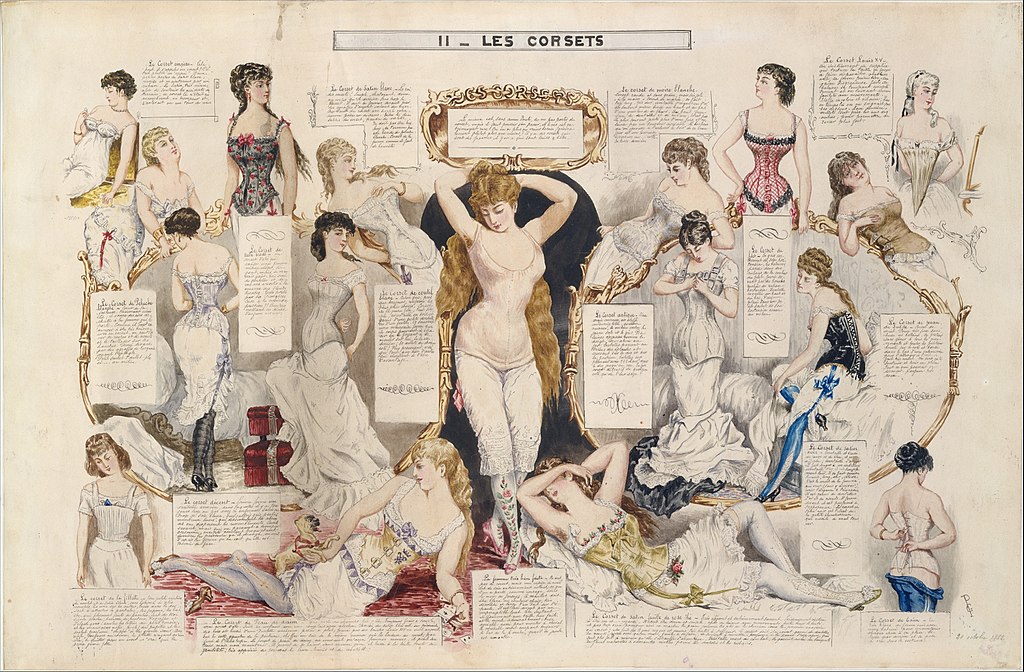
On to the historical novel—and more about undies. The book I’m working on is set in the late 1870s. I am currently obsessed with researching what people wore. I bought a book called Clothing Through American History: The Civil War through the Gilded Age, 1861-1899. I found a sidebar titled “The Layers of a Proper Lady’s Toilette.” It describes nine layers and 25 pounds of clothing to make up the proper undies for a lady, and goes from stockings to drawers, to chemise, petticoat and corset. We won’t even talk about the damn bustle.

How in the hell did women function when confined in this cage of fabric and metal? I suspect we could have another blog post on how women’s fashions interfered with their lives as well as their movement. And not just in the nineteenth century, and earlier. Remember when it was scandalous for women to wear pants? And when many women, my mother included, strapped themselves into girdles?

We will draw a veil over those bell bottoms I wore, just about the same time I bought those platform heels and fell through a door. Jeri would never do that, at least I don’t think so.

I’m not sure the protagonist in my historical novel wears all that clothing, though. Things were different on the western frontier, where farm wives sewed weights into the hems of their skirts to keep them from blowing up and showing off their undergarments. In the late nineteenth century, women did in fact wear split or divided skirts for riding horses, something I’ve eagerly adopted for my protagonist, since she’s traveling in the first part of the novel, sometimes on a wagon seat and sometimes astride her own horse.

I haven’t decided what to do about her undies. She’s independent enough to push against societal norms. Will that extend to foregoing a corset? I guess I’ll find out.

Getting To Know Martha

I’m working on a historical novel set in Colorado and New Mexico in 1877-1878. The book, based in part on real events, is one I’ve been wanting to write for years. I’ve done a lot of plotting, planning, research and thinking about it, as I weave together fact and fiction.

My protagonist, Catriona, is the daughter of an officer in the frontier Army. I’ve gotten to know her well, though on occasion she surprises me. She’s resourceful and independent, as a young woman must be following her father from fort to fort. But she’s also constrained by the strictures of the times and the restrictions put on young unmarried women. She’s particularly annoyed by officers’ wives who keep trying to find her husbands among the unmarried officers.

There’s a secondary character named Martha, who has become more important. She’s every bit as resourceful and independent as Catriona, with a far different back story, though the two women have things in common. They are both young, unmarried, and seeking their own way in the world.

Martha is African American, born enslaved on a plantation in Missouri, five years before the start of the Civil War. How does she get from a Missouri plantation to a frontier fort in Colorado in September 1877? How does she travel? How does she support herself along the way?

Domestic service comes to mind. Martha can cook and clean, and look after children. While doing research, I discovered that that servants were in high demand at frontier forts. An officer’s wife would write to an employment agency and hire a young woman to help out around the house. The maid would arrive and quickly get a marriage proposal from a homesteader or a soldier.

Martha could also be a laundress. The Army employed women who spent their days on what was called Suds Row, washing all those blue wool uniforms. These women were often Black as well as White, and frequently older laundresses were the wives of higher-ranking enlisted soldiers. And Martha can sew–she’s very good with needle and thread. Maybe somewhere along the line she’ll become a dressmaker.

So, Martha has skills and resources, enough to hire on with a family that’s moving out west. How do I bring Catriona and Martha together at that fort? There is a point at which their back stories intersect, and it has to do with the frontier regulars, as the post Civil War Indian-fighting Army was known.

After the Civil War the Army shrank to a fraction of its wartime size. Officers who had higher rank while commanding volunteer troops during the war found themselves stepping back in rank when commissioned in the regular Army. For example, George Armstrong Custer was a brigadier general commanding volunteers during the Civil War. When the war was over, he was commissioned as a lieutenant colonel in the regular Army, sent off to fight the Plains Indians. We know how that ended at the Little Big Horn.

After the war, promotion was slow. It could take years for an officer to advance. Black troops, many of them former slaves who volunteered to fight for the Union, also joined the regulars and became known as Buffalo Soldiers. Some White officers, with the prejudices of the day, didn’t want to command them. The Army then provided incentives. Officers who agreed to command Buffalo Soldiers got faster rates of promotion.

So, there is the intersection. Martha’s brother is a Buffalo Soldier, Catriona’s father is his commanding officer.

I had a back story in mind for Martha, but it’s currently taking a few detours. She has a mind of her own and other ideas about where she came from and how she got here. She’s taking me in a different direction, and I am paying attention to that, researching her, getting inside her head to see who she is and how she wound up in my story.

It’s a fascinating journey for Martha—and for me. I haven’t figured it out yet, but I’m getting there. I’m doing my research, happily burrowing down rabbit holes to find answers to questions. With this book, my rabbit holes include life in the post-Civil War Army, Buffalo Soldiers, the Indian Wars, especially related to the Mescalero Apache tribe, and women in the trans-Mississippi west.

I find inspiration for Martha’s story in the colorful history of Black women in the west. Such as Stagecoach Mary Fields, who owned cafes, took in laundry, looked after children—and used a stagecoach to deliver mail in Montana. From all reports, she packed a wallop and didn’t suffer fools gladly. She also like baseball and gardening. She impressed a young Montana boy named Gary Cooper, who met her when he was a child and talked about her years later.

Then there was Cathay Williams. She was from Missouri, too. Born a slave, she worked as an Army cook and laundress. When the war was over, she enlisted in the regulars, under the name of William Cathay. She served for three years as a Buffalo Soldier with the 38th Infantry. When a post surgeon discovered she was a woman, she was honorably discharged and went on to work as a cook at Fort Union, NM.