Writing the Season

Suddenly it’s December. Holidays. I celebrate, and so do my characters.

Death Rides the Zephyr, the first in the series featuring Zephyrette Jill McLeod, takes place in late December 1952. Jill is leaving Oakland on December 22. The eastbound run of the sleek train known as the California Zephyr is heading for Chicago, due to arrive Christmas Eve. Jill will have a layover in the Windy City, spending Christmas in a hotel rather than with her family. Before Jill leaves, her parents and siblings give her presents, including the latest Agatha Christie book (a Christie for Christmas!).

Her father tucks money in her new wallet. “So you can have a nice Christmas dinner while you’re in Chicago,” he said. “Go to the Pump Room. Your mother and I ate there once, before the war, and it was a real treat.”

When I researched the book, I learned that the Zephyrettes—train hostesses—would have parties for children traveling on the trains, especially during holidays. In keeping with that real life tradition, my fictional Zephyrette Jill hosts a mid-afternoon Christmas party in the train’s dining car. She’s picked up Christmas stockings and candy at Woolworth’s. Now she enlists the help of passenger Mike Scolari, a WWII veteran, to stuff the stockings.

Mike roots around in the bag of goodies and finds:

“Hey, Hershey’s Kisses. My favorite. Did you know there was a shortage of Hershey’s Kisses during the war?”

“Yes, and I really missed them.” Jill loved Hershey’s Kisses, and the little chocolate candies had been in short supply during and just after the war. Rationing of raw materials during that time meant no aluminum foil for the wrappers.

I discovered that tidbit during my research into what brands of candy were popular in the early 1950s. I had to use it!

It’s a great party, by the way. Even the conductor shows up to lead the kids in a chorus of “Jingle Bells.”

But it’s a mystery. It’s winter, the train is traveling through canyons next to a frozen river and rugged mountains covered with snow. A passenger disappears and then Jill finds a body in a sleeper car. We’re into murder-on-the-train territory. Even though Jill’s favorite Christie sleuth is Miss Marple, she will have to use her little gray cells to catch the killer.

One of my Jeri Howard novels features a different take on the holidays. Jeri is an Oakland private investigator. In Nobody’s Child, she looks into a young woman’s death and a child’s disappearance. Jeri feels grumpy, her holiday spirit missing, though she and family members have tickets to a theatrical version of A Christmas Carol. And she winds up seeing the Oakland Ballet version of The Nutcracker twice, which is one time too many. As she puts it, “I’m Nutcrackered out.”

I particularly like a scene where Jeri is in the lower-level lounge of the Paramount Theater in Oakland, where The Nutcracker performances take place: “There seemed to be a large contingent of little girls in frilly dresses and patent leather shoes, pirouetting over the black carpet. One of them grande jettéed right into my shin.”

Jeri searches for information on the dead woman’s past among the East Bay’s homeless community. When she sees A Christmas Carol, the juxtaposition of the homeless people on the streets outside the theater and Dickens’ words ring true—and close to home.

Then there’s this scene, where Jeri visits a house decorated for Christmas:

In the corner at the other end of the sofa, a small pine tree had been festooned with a couple of strands of lights, a meager collection of glass balls, and some homemade decorations, colorful construction paper loops, and popcorn chains made of popped kernels strung on thread. I saw a gray-and-brown striped tomcat sitting on the sofa arm, a blissed-out expression on his face as he gnawed at the popcorn. He’d already managed to pick clean several strands of the chain.

Toward the end of the book, Jeri tracks down Terry Lampert, looking for information on a homeless man who calls himself Rio. Lampert, who knows Rio from their shared past, says he gave Rio a ride. Why? Jeri asks.

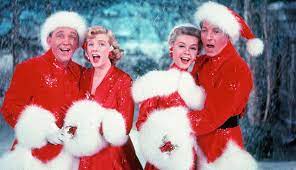
“You ever see White Christmas?” he asked. Then he smiled. “Of course you have. Everybody’s seen White Christmas. You remember that scene early on when Danny Kaye asks Bing Crosby why they’re gonna see the sister act? Ol’ Bing says, ‘Let’s just say we’re doing it for a pal in the Army.’”

“And Danny Kaye says, ‘It’s a reason. It’s not a good one, but it’s a reason.’” I smiled back at Lampert. “Is that the only reason?”

The man opposite me shrugged. “It’s a little bit of, there for the grace of God. If I hadn’t met my wife, that could be me, living on the streets.”

It’s a mystery, right? And Jeri’s going to get to the bottom of things. She finds the people she’s looking for, solves a murder, celebrates Christmas with her father, and spends New Year’s Eve with a new fella.

Whatever holidays you celebrate during this time of year, whether it’s winter solstice, Hannukah or Christmas, may you have companionship, wonderful things to eat, and hopes for the future.

Decluttering

My condominium is small. When I first looked at the place nearly 30 years ago, it seemed quite large. Well, it was empty when my real estate agent and I unlocked the door. I remember thinking, wow, all that closet space!

Of course, all the rooms, and the closets, are now full. As my cousin says, stuff expands to fit the space available, plus two boxes.

So, stuff. Too much stuff.

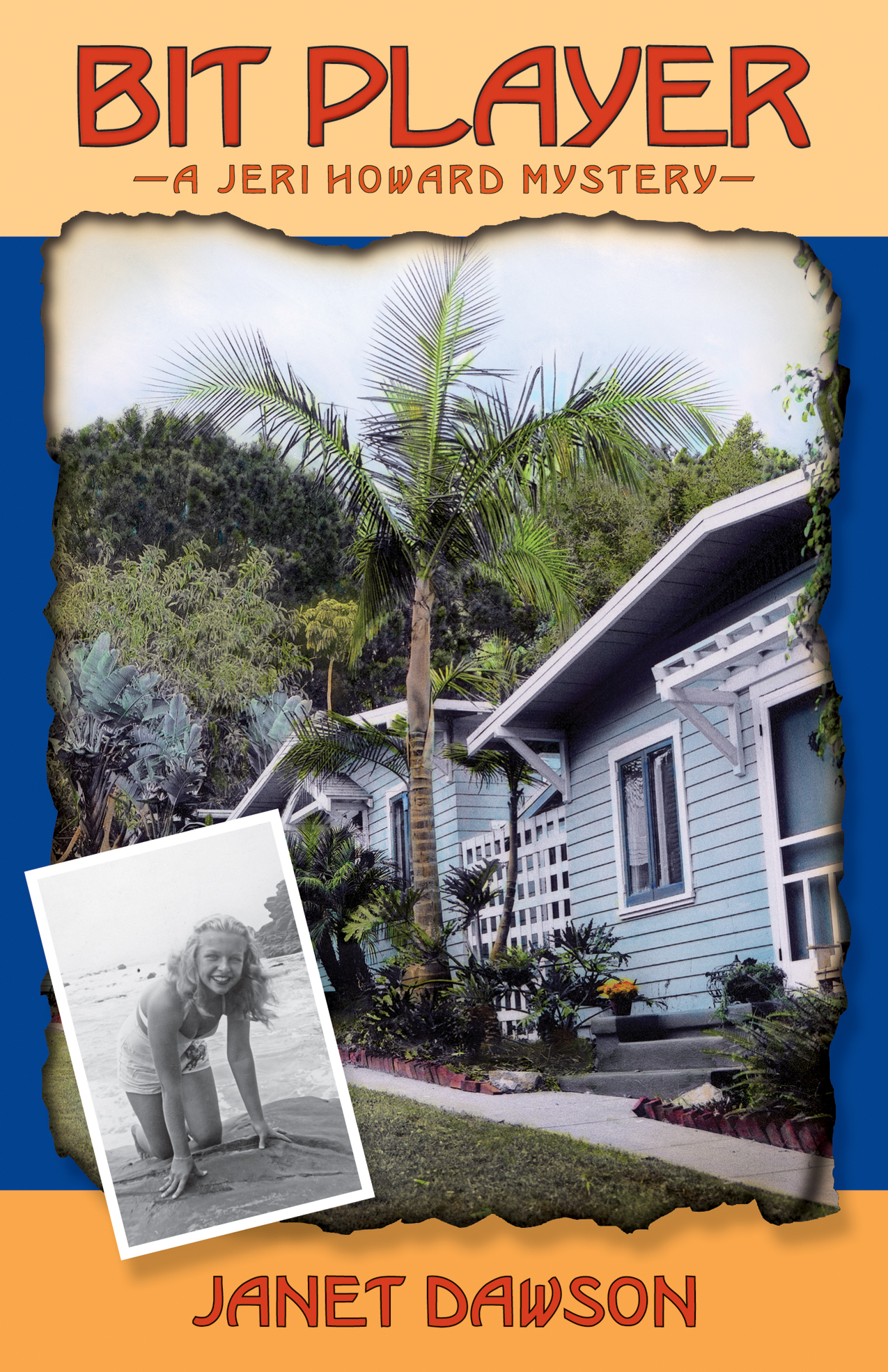
I’ve been cleaning my office as long as I’ve lived here. At least that’s what it feels like. I have a lifetime accumulation of books, paper, and assorted dustcatchers. Some of these have sentimental value, such as books that have been signed and personalized to me. As for the knick-knacks, they too have sentimental value. Then there are those files of newspaper clippings, saved because they that might possibly find their way into a book. They sometimes do. I once clipped a small article from the San Francisco Chronicle and kept it for several years, vowing that I would use it, some day. And I did. It wound up as an important plot point in Bit Player.

I’m such a paper magnet. Through the years I’ve written down story ideas and notes for plots. I still have all those pieces of paper. If I ever get writer’s block, I’ll know which file folders to mine for material.

These days, of course, I can copy the URL of a pertinent article and paste it into the work in progress.

I’ve rid myself of old bank statements and old contracts for books that are no longer in print. Making an effort not to keep anything past a year, unless it’s tax stuff.

Letters, remember those? Missives written before the advent of email? I save letters. The ones from my grandmother are tucked away in a folder, and they are important to me.

What do I save? And what do I throw away? That’s a question Jeri Howard asks in Bit Player, as she sorts through old letters written by her grandmother to solve a decades-old mystery.

Clothes? Since I retired from my day job some years ago, my wardrobe is decidedly casual. I start a donation box and when it gets full, I take it somewhere. Most recently, a local thrift shop. Books go to the Friends of the Library for their book sale.

However, getting rid of stuff is not a matter of opening a large garbage bag and sweeping the offending stuff into the bag. Clearing away clutter is a very personal thing. It involves decisions about what to keep and what to throw away. Sometimes the answer to that conundrum varies, depending on the mood I’m in at the time. Lately, the refrain of, “Maybe I’ll need this something,” is giving way to, “Why am I keeping this?” And that’s a good thing.

I’m not at the “Hoarder” stage yet but sometimes I wonder. At least I got a short story out of the subject. It’s a cautionary tale, called “Pack Rat.”

Got It Covered

Ebooks were a new thing when the rights for the first nine Jeri Howard books reverted to me. I wanted to republish the novels as ebooks myself. That was a time-consuming project, as I had to have them converted into electronic files, which involved having the actual books scanned. I found a service that would do this, but spent the next six months proofreading. All sorts of things affected scans, from the quality of the paper to specks of dust on the page.

I still find mistakes, though not as often now. The quality control gremlins at Amazon do point out those errors. At least now I’ve become quite skilled at correcting those files myself, thanks to Calibre software.

Cover art was an important aspect of republishing the books. Kindred Crimes, first in the series, was published by St. Martin’s Press, while the next eight were published by Fawcett Books. The US covers were all over the map. Some good, some that left me scratching my head.

The British covers? Awful. Really awful. Dreadful, even. The Japanese covers were terrific.

Original Paperback

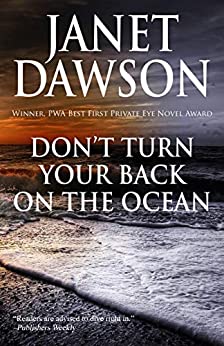
For Don’t Turn Your Back on the Ocean, which mostly takes place in Monterey, I told my Fawcett editor that it would be nice if the cover had something to do with the contents of the book. I remember being quite pleased at the pelican that appeared on the cover. The new cover has a more brooding look, but still has that all-important ocean.

As for that business about the cover having something to do with what’s in the book, that’s apparently an author thing. People in marketing tell me that it doesn’t matter to the potential reader. After all, said reader is looking to buy a book and often that’s based on what they see in a small thumbnail on a computer screen.

New Ebook Cover

Back to those ebook covers. I really wanted to have a unifying look, something that said: this is a series. I’m now on my third set of covers for those first nine books and I’m please with them. The artwork for each cover is different but you can certainly tell they are all books in the Jeri Howard series.

I also have nine books published by Perseverance Press. The covers for the Jeri Howard books are quite different. Those for the Jill McLeod/California Zephyr series have a unifying look: trains, since they are historical mysteries about a Zephyrette on a long-distance train. Now that Perseverance Press is closing, the rights for those books are reverting back to me. For the Jeri Howard books, I’m working with a cover artist to put new covers on the ebooks, covers that jibe with those on the first nine ebooks.

As for the train books, as I call them, those will get a cover reboot. Back when they first came out, I was hoping to use the old California Zephyr advertisements, which have a distinctive 1950s look. But I couldn’t figure out who had the rights to those images. The train images that we used are great, but this is a cozy series and I’d like to rebrand them as such. The new covers may have illustrations that resemble the old ads.

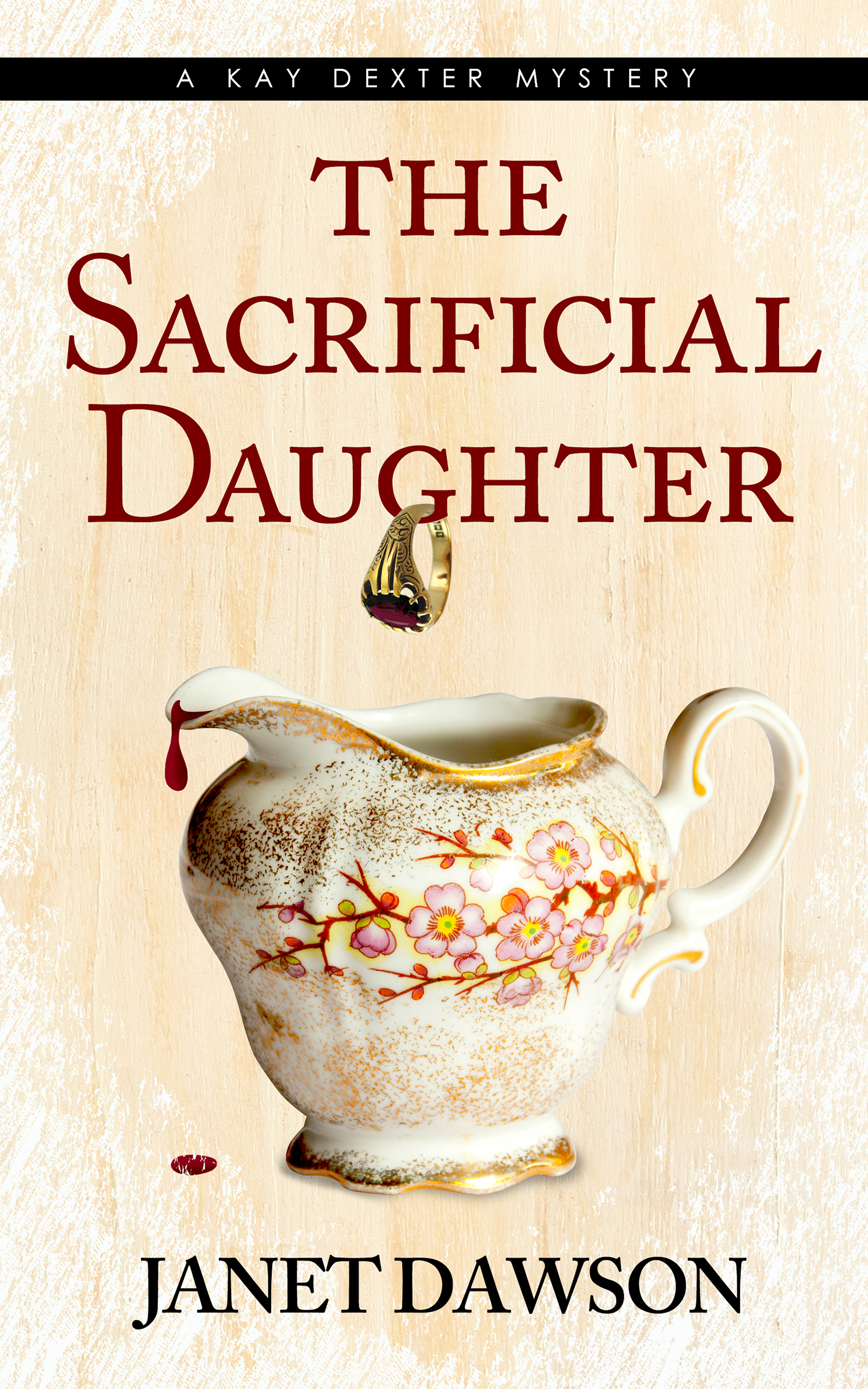
Earlier this year I published The Sacrificial Daughter, the first in the Kay Dexter series, which features a geriatric care manager in a fictional Northern California town. The series is more cozy than hard-boiled. I wanted a great cover, but I resisted the impulse to add a cat. I tried designing a cover myself and quickly discovered that’s not really my skill set.

I turned to a cover designer who read the book and came up with several designs based on suggestions I gave her. None of them worked. Some came close, but… Then the cover designer came up with something on her own, an image we hadn’t even discussed.

Yep, that was the one. It clicked. It was just right.

And that is what’s on the cover of the book.

Music, Music, Music

“Put another nickel in, in the nickelodeon, all I want is having you, and music, music, music.”

If you are of a certain age, like me, you’ve heard that song. You might even know what a nickelodeon is.

The song is called “Music, Music, Music.” It was recorded in 1950 by Teresa Brewer and the Dixieland All Stars. It was the B side of the recording. But the bouncy, effervescent tune, with 1950s written all over it, became a major hit.

What has this got to do with writing mysteries? Well, if you’re writing a historical novel, or even a contemporary one, music is a great way to define time period and setting. The Jill McLeod novels take place in the early Fifties, 1952 and 1953. One method of giving the readers the flavor of the times is to mention what music Jill and her friends and family are listening to.

In The Ghost in Roomette Four, Jill is having a conversation with her younger brother Drew. He’s a guitarist in a blues band and has an upcoming gig at a club in West Oakland. He disparages a popular song of the time, “How Much is that Doggie in the Window.” If there was ever a song that says early 1950s, it’s Patti Page singing about that dog.

And nothing says Bakersfield like country music. In Witness to Evil, my private eye Jeri Howard is heading south down the valley, listening to Patsy Cline. When she goes to New Orleans in The Devil Close Behind, well, New Orleans! In the first chapter, Jeri goes to Preservation Hall with her father. Hey, second-line parades and musicians on the corner, playing traditional jazz, with Jeri dancing on the sidewalk.

I’m writing another Jeri Howard case, this one called The Things We Keep. I keep running into the Sixties, with plot, characters, and setting. One character, Gloria, lived in San Francisco’s Haight district during the 1960s. She was the lead singer for her boyfriend’s band and proudly claims she knew Janis Joplin. And by the way, she was at the Monterey Pop Festival in 1967. Talk about the flavor of the times. Picture Janis on some stage in the Haight, singing “Piece of My Heart.” Or Jefferson Airplane, with Grace Slick vocalizing “White Rabbit.”

Bring on the bell bottoms.

Yes, music is an effective, even essential addition to the writer’s toolbox.

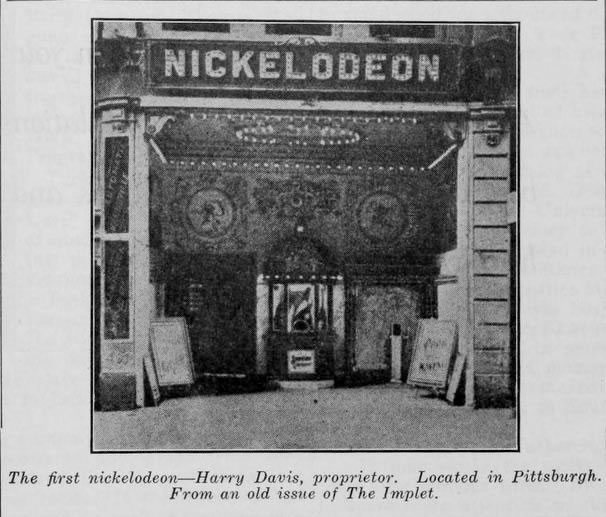
And just what is a nickelodeon?

It’s a coin-operated machine that plays music. Could be a jukebox or a player piano. The original meaning, however, was a movie theater or cinema that cost five cents.

Shove Everything To One Side – And Write

That’s what my mother used to say, back in the era when I had a day job. Time to write was limited. So I got up early in the morning and wrote before heading off to the day job.

I also had deadlines. Which would make me crazy. I felt as though I never had enough time to devote to the writing, what with said day job and the day-to-day at home. Vacuuming, decluttering, and other delights of caring for my home, as well as keeping ahead of the weeds in my garden. Exercise, yes, doing that as much as possible. And keeping up with friends and family, the social connectivity that is important in my life.

Back when I was working, I would lament the approaching deadline and the things that crop up demanding time and attention. Mom would say, “Just shove everything to one side and write.”

Okay. I shove. And I write.

That’s why the cat hair is getting thick on the carpet right now and the pile of mail remains unopened. When we went into pandemic lockdown, I swore I was going to clean out the closets and drawers. I still haven’t gotten to that.

Meetings I used to attend in person, of the local chapters of Mystery Writers of America and Sisters in Crime, were replaced by Zoom. Logging into that wasn’t as time-consuming as driving to wherever the meeting was to be held, but it still took time and I got burned out on the online meetings.

I am publishing my own work now, so the deadlines are self-imposed. But they are deadlines nonetheless.

At the end of June, I returned from visiting family in another state. Waiting for me were several commitments. One included providing feedback on several stories I’d agreed to read. Another was sending along a photo, bio, and other information to the host of an upcoming podcast. That done, I focused on the monthly newsletter I do with fellow Ladies of Mystery writer D. Z. Church. And this blog, which goes up on the first Monday of each month.

And the biggest self-imposed deadline of all—the next book.

The day job no longer consumes time and energy. But still, I feel like there is never enough time to write.

Unless I make it. Here’s what prolific author Nora Roberts says. And I concur.