Music, Music, Music

“Put another nickel in, in the nickelodeon, all I want is having you, and music, music, music.”

If you are of a certain age, like me, you’ve heard that song. You might even know what a nickelodeon is.

The song is called “Music, Music, Music.” It was recorded in 1950 by Teresa Brewer and the Dixieland All Stars. It was the B side of the recording. But the bouncy, effervescent tune, with 1950s written all over it, became a major hit.

What has this got to do with writing mysteries? Well, if you’re writing a historical novel, or even a contemporary one, music is a great way to define time period and setting. The Jill McLeod novels take place in the early Fifties, 1952 and 1953. One method of giving the readers the flavor of the times is to mention what music Jill and her friends and family are listening to.

In The Ghost in Roomette Four, Jill is having a conversation with her younger brother Drew. He’s a guitarist in a blues band and has an upcoming gig at a club in West Oakland. He disparages a popular song of the time, “How Much is that Doggie in the Window.” If there was ever a song that says early 1950s, it’s Patti Page singing about that dog.

And nothing says Bakersfield like country music. In Witness to Evil, my private eye Jeri Howard is heading south down the valley, listening to Patsy Cline. When she goes to New Orleans in The Devil Close Behind, well, New Orleans! In the first chapter, Jeri goes to Preservation Hall with her father. Hey, second-line parades and musicians on the corner, playing traditional jazz, with Jeri dancing on the sidewalk.

I’m writing another Jeri Howard case, this one called The Things We Keep. I keep running into the Sixties, with plot, characters, and setting. One character, Gloria, lived in San Francisco’s Haight district during the 1960s. She was the lead singer for her boyfriend’s band and proudly claims she knew Janis Joplin. And by the way, she was at the Monterey Pop Festival in 1967. Talk about the flavor of the times. Picture Janis on some stage in the Haight, singing “Piece of My Heart.” Or Jefferson Airplane, with Grace Slick vocalizing “White Rabbit.”

Bring on the bell bottoms.

Yes, music is an effective, even essential addition to the writer’s toolbox.

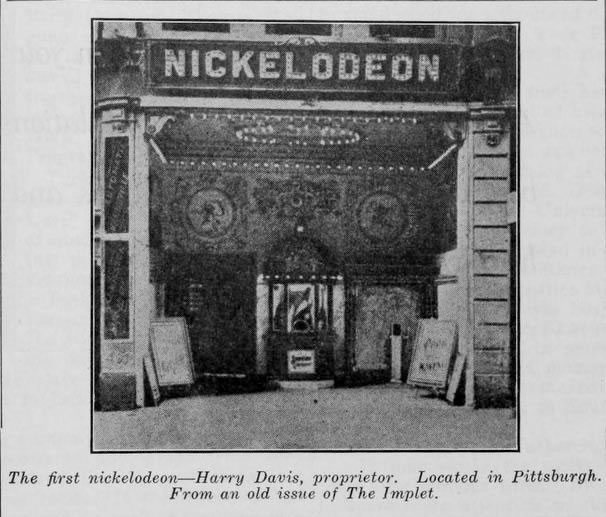
And just what is a nickelodeon?

It’s a coin-operated machine that plays music. Could be a jukebox or a player piano. The original meaning, however, was a movie theater or cinema that cost five cents.

Shove Everything To One Side – And Write

That’s what my mother used to say, back in the era when I had a day job. Time to write was limited. So I got up early in the morning and wrote before heading off to the day job.

I also had deadlines. Which would make me crazy. I felt as though I never had enough time to devote to the writing, what with said day job and the day-to-day at home. Vacuuming, decluttering, and other delights of caring for my home, as well as keeping ahead of the weeds in my garden. Exercise, yes, doing that as much as possible. And keeping up with friends and family, the social connectivity that is important in my life.

Back when I was working, I would lament the approaching deadline and the things that crop up demanding time and attention. Mom would say, “Just shove everything to one side and write.”

Okay. I shove. And I write.

That’s why the cat hair is getting thick on the carpet right now and the pile of mail remains unopened. When we went into pandemic lockdown, I swore I was going to clean out the closets and drawers. I still haven’t gotten to that.

Meetings I used to attend in person, of the local chapters of Mystery Writers of America and Sisters in Crime, were replaced by Zoom. Logging into that wasn’t as time-consuming as driving to wherever the meeting was to be held, but it still took time and I got burned out on the online meetings.

I am publishing my own work now, so the deadlines are self-imposed. But they are deadlines nonetheless.

At the end of June, I returned from visiting family in another state. Waiting for me were several commitments. One included providing feedback on several stories I’d agreed to read. Another was sending along a photo, bio, and other information to the host of an upcoming podcast. That done, I focused on the monthly newsletter I do with fellow Ladies of Mystery writer D. Z. Church. And this blog, which goes up on the first Monday of each month.

And the biggest self-imposed deadline of all—the next book.

The day job no longer consumes time and energy. But still, I feel like there is never enough time to write.

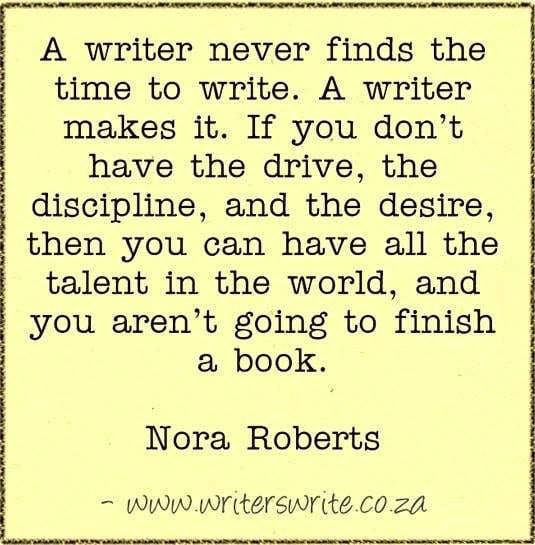
Unless I make it. Here’s what prolific author Nora Roberts says. And I concur.

In the Air, Like Pollen

It’s the question we writers often get at events: “Where do you get your ideas?”

My standard answer: They’re in the air, like pollen. Ideas for crime novels come at us from all sides. When it happens, it’s great.

A few weeks ago, I got an idea. I didn’t know whether it was a short story or whether it would grow to be a novel. The characters: a man and a woman. They are both living like recluses, away from society by choice. They are thrown together by circumstance.

Then the woman goes missing.

I started making notes and next thing I knew I had more than a dozen pages, exploring just who these two people are and what’s happening in their lives. They both have pasts that are leading them to the present. What happens in the future? Well, I haven’t yet figured that out, or how I’m going to get there. But I do have a setting now. And names for those two people. It’s been exciting to see the plot take shape in the short time these two characters made themselves known.

And apple trees are involved. Go figure.

Then there’s my novella, But Not Forgotten. Several years ago, I attended my 50th high school reunion. Yes, I’m that old. There was a big poster at the first evening’s event, listing all our classmates who had died, including the year of their deaths and the causes. I looked at the poster and said, what if? What if there was a question mark next to one of those names? What if a classmate disappeared on graduation night and was never seen again? What if another classmate was determined to find out what happened?

I thought about this as I drove my rental car to the airport. Inside the terminal, waiting to board, I took out a notebook and scribbled furiously. By the time I got home, I had my plot and characters and I’d solved the fictional mystery.

Right now I’m working on The Things We Keep, Jeri Howard’s 14th case. How did this one start? Well, it was the setting. I go to the local farmers’ market on Saturday mornings and sometimes I park in the vicinity of an old Queen Anne Victorian. Someone is living there, but the house is quite rundown. It looks haunted, as a matter of fact.

What if?

The idea pollen started flying. What if Jeri Howard finds a trunk full of bones in the attic? Two skeletons, even. Jeri has to figure out whose bones are in the trunk, how they got there, and who is responsible. Things are getting convoluted and I have a lot of plot to untangle, not to mention characters who are coming to vivid life.

Believe me, I’m having fun with this one, thanks to all that idea pollen in the air.

Confessions of a Paper Magnet

I have been doing a major decluttering job on my office. In fact, I wonder if it will ever be over. It’s the very definition of ongoing.

Decades, anyway. I’ve lived in this condo for nearly 30 years. And I’ve been accumulating stuff for longer than that. And no, we won’t talk about the walk-in closet that I’m afraid to open for fear of what might fall out.

I confess. I am a paper magnet. Show me a writer who isn’t. We collect ideas for stories and nuggets of research and stash them away like squirrels gathering nuts for winter.

Because I might use that piece of paper one of these days. It’s a plot point, a character study, an interesting setting. Or it’s just the intriguing bit of research I need to bring that scene to life.

Case in point. About fifteen years ago, I clipped a short, intriguing article out of the San Francisco Chronicle. It told the story of wallets found discarded in the heating ducts of an old military barracks at Camp Roberts, wallets with cash missing, but in many cases, personal items such as IDs and letters left inside.

Camp Roberts, World War II

Camp Roberts, which straddles the Monterey and San Luis Obispo county lines in central California, was a military base back in World War II. At the time, it was the largest military training facility around, with thousands of soldiers passing through. The base was deactivated after WWII, then reactivated during the Korean War. Nowadays, Camp Roberts serves as a base for the California National Guard.

As for those wallets, the theory was that they had been stolen from soldiers in the barracks, the valuables taken. Then the thieves tossed the wallets into the heating ducts, where they were found decades later, when the building was torn down.

A National Guard officer at Camp Roberts was taking steps to see if he could locate the wallet owners, using what papers remained. Later articles outlined some success in doing that.

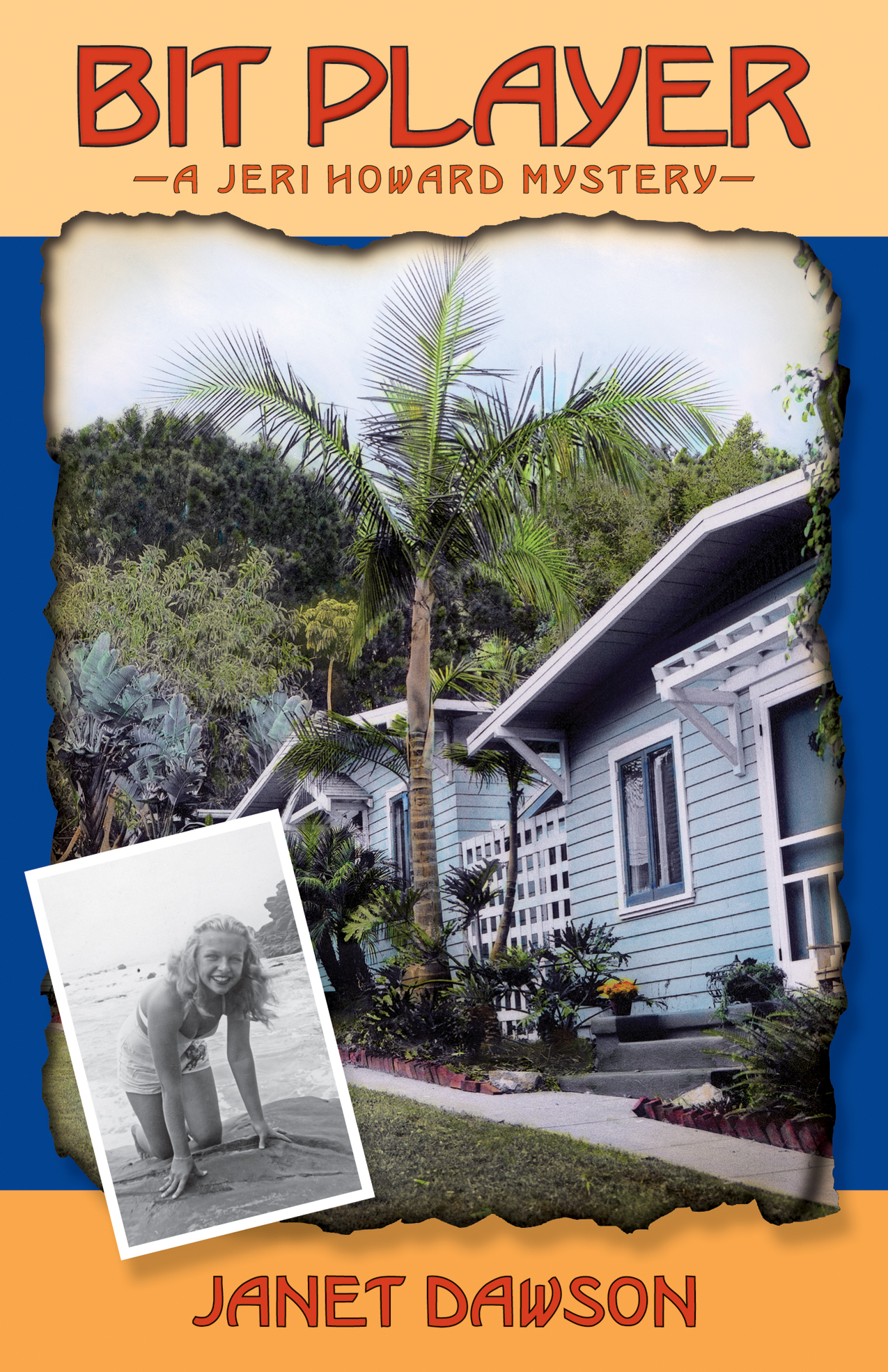
I clipped that article out of the newspaper and kept it on my desk for several years. I was sure I would use it, someday. I was right. Those stolen wallets at Camp Roberts turned out to be an important plot point in Bit Player, a Jeri Howard novel.

One newspaper article leads to another. In fact, it led me to the Bancroft Library at Cal, where I looked at the Camp Roberts newspaper during the war years. I found out what movies were playing at the base theater and what a fried chicken dinner cost at a local restaurant. And the cherry on top? Bing Crosby and his band played a gig at Camp Roberts at the time I was writing about. That’s just the sort of detail I love, one that adds flavor and spice to my writing. Of course, that mention of Bing wound up in the book.

I used to clip articles out and leave them in folders, part of a work in progress. I still get vital information for my plot from various newspaper. Though these days, I don’t save the print copy of the article, Instead, I save the URL, or cut and paste a copy into a Word document. Or the pertinent piece of paper can be scanned and saved electronically.

Much less clutter. Paper clutter, anyway. Then there’s digital clutter, which is a topic for another day.

Putting Flesh on the Bones

My work-in-progress is a Jeri Howard novel, titled The Things We Keep. In this case, the things that have been kept are bones.

Jeri, my Oakland-based private investigator, is off-duty on a Saturday in October. She’s helping friends inventory the contents of an old house in Alameda. Up in the attic, she pries open an old footlocker to see what’s inside. She finds herself looking down at a skull and a jumble of bones.

Whose bones? How did they wind up in that attic? And why?

It’s my job as a writer to put flesh on those bones.

Each book gets off to a similar start. I have an idea and I go from there, butt in chair and fingers on keyboard. A structure emerges, with a timeline that gets revised over and over before I reach the end.

With each new project there are familiar characters—Jeri, of course, and her family, friends and associates. And there are new ones that give life to the story and setting. At the start, those characters are stick figures—bones, if you will.

Right now, I’m working on a section of the book where Jeri is looking for information on a musician from the 1960s who went missing decades ago. She’s talked to his ex-girlfriend, who seems to be an unreliable source, so much so that Jeri feels the need to get another perspective. She searches out his friend from the old days, when the two men were playing guitar in a rock band. He gives Jeri another version of the missing man’s past and disappearance. Then the old guitarist tells Jeri she really should talk with HIS former girlfriend.

That’s the scene I’m working on now.

What do I know about HIS former girlfriend? Well, not much, at first. I hadn’t even been planning on her as a character, until her ex the guitarist brought her up in conversation. Once she appeared on the scene, I couldn’t even decide on a name I liked, but finally chose one—Anita—that works for now.

I had the bones and gradually I’ve been adding flesh.

Let’s see. Anita is the former girlfriend of a guy who was a musician in San Francisco in 1969, when they all hung out together in the Haight. Probably a hippie, back in the day. Now she’s an old hippie. In years, anyway. I know she left San Francisco and lived in Mendocino for a while. Married? No, never did. But she has a daughter.

She doesn’t live in Mendocino now. She migrated back down the coast to . . . Bodega Bay? No. Point Reyes Station? Yes, that works. It’s one of my favorite places and I’ve been there plenty of times, walking the streets and exploring the shops and restaurants. I can see the storefronts on the main drag even now. And taste the morning buns from the Bovine Bakery.

Besides, it’s really easier—and more interesting—if Jeri Howard can go interview people face-to-face, and that small town in western Marin County is an easy drive.

Aha! She makes jewelry. In a gallery? No, a workspace created from the detached garage at her cottage. It’s a small but comfortable space where Anita brews herbal tea. And she has apples in a ceramic bowl. I can smell them.

Anita sells the jewelry at a local gallery. What kind of jewelry? What does it look like? I’m thinking lots of colorful ceramic and silver beads are involved.

What does she look like? I decided she a mane of curly gray hair. In the past, she may have worn hippie clothes that recall the Summer of Love. But not at her current age. As I just discovered, she’s a grandmother now.

Meet Anita, who now has flesh on her bones—and provides Jeri with vital information she needs if she’s ever going to solve this case.