The Not-So-Distant Past

Left Coast Crime 2022 is coming up in Albuquerque, and I’m on a panel called “20th Century Historicals.”

A historical novel is defined as one that has “its setting in a period of history and that attempts to convey the spirit, manners, and social conditions of a past age with realistic detail and fidelity which is in some cases only apparent fidelity) to historical fact.”

Another definition, from the Historical Novel Society, says a historical novel is one set fifty or more years in the past. I moderated a similar panel at an earlier LCC, and one of my panelists had written a mystery set in 1967. That was sobering. I graduated from high school in 1967.

I write a series of historical mysteries featuring Jill McLeod, who is a Zephyrette, or train hostess, working onboard the California Zephyr, a historic train that ran during the 1949-1970 time period. The first book, Death Rides the Zephyr, takes place in December 1952, with subsequent books set in 1953.

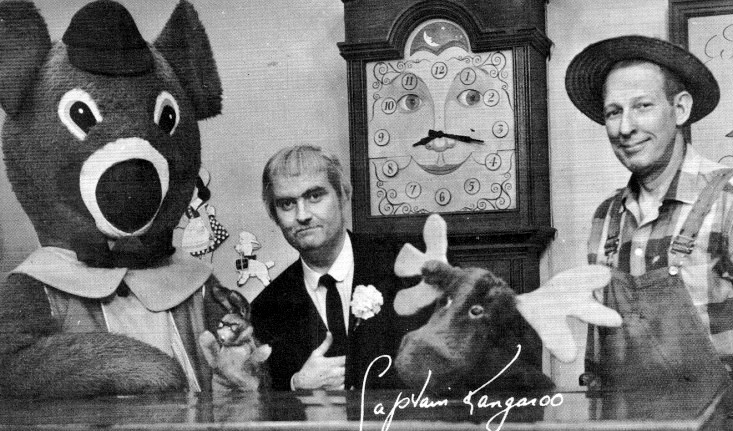
Since I’m old enough to have graduated from high school in the sixties, I was certainly alive in the early 1950s. But I was a kid. What I remember is a mixed bag—Captain Kangaroo and Miss Frances and the Ding Dong School on television. I figured out that the days were getting longer in the spring when I realized that it was still light outside when I tuned in to The Mickey Mouse Club.

Ike was president. I don’t remember much about the Red Scare, the McCarthy hearings, and the Rosenbergs. My school was segregated. So were the downtown department stores. I remember seeing signs for segregated rest rooms and water fountains.

In The Ghost in Roomette Four, there’s a scene where Jill and her sister are cleaning up the kitchen after a family dinner. Were they doing those dishes by hand? Or did the McLeod family have a dishwasher? When I was growing up, we did have a dishwasher. But that was later in the Fifties and my dad sold appliances.

That’s when I turn to the Internet. Off I went to my search engine, to find out when dishwasher hit the market. I was surprised to learn that the appliance was available in the Thirties.

An example of what happens when 21st century assumptions bump up against writing 20th century historicals? When I was researching Death Rides the Zephyr. I was fortunate to discover two retired Zephyrettes living near me. One evening, I bought them dinner and listened to them talk for over two hours. I asked what the onboard crew of the California Zephyr would have done if they’d found a dead body in a Pullman car, which is what happens to Jill, my Zephyrette protagonist. Would they radio ahead to the next station to contact the authorities?

The Zephyrette who had been riding the rails in the early Fifties shook her head. Back then they could radio from car to car, but not as far as a station or a town. No, the engineer would stop the train, the brakeman would climb a telegraph pole, and send a Morse code message to the next station.

That’s how it was done way back when. Of course, that went into the book. It made the telling more accurate and certainly added layers to the isolation of a train deep in a remote mountain canyon.

If you are attending Left Coast Crime in Albuquerque, check out my panel. It’s schedule on Thursday, April  7, at 1:15 PM on Thursday, April 7. The panel is moderated by Susan McDuffie, and fellow panelists are Michael Kurland and Rosemary Lord.

Gumshoeing

Last month, I wrote about the tools of the trade that I use to create my fiction. That got me thinking. What tools do my fictional characters use?

When I was writing Kindred Crimes, the first in my series featuring Oakland private eye Jeri Howard, I wasn’t using a cell phone, and neither was Jeri. I was using a computer, a clunky dual disk drive model, and I thought it was a major step up from the electric typewriter.

Jeri and I have made our way into the 21st century. She uses her cell phone for everything from directions to looking up information, and for talking with people, of course. As for computers, like many real-life private investigators, she uses them for research. In addition to news archives, there are many paid databases that one can access by purchasing a subscription. Jeri also uses government records that are available online.

For example, in the book I’m writing now, The Things We Keep, Jeri goes onto the California Department of Justice website to check the missing persons database. I did this myself, so I could describe it accurately. And it certainly gives flavor to the narrative.

But it isn’t all Jeri at the keyboard, looking at the screen, or Jeri on the phone, interviewing someone. That would be boring for the reader and the writer. At one point in Water Signs, Jeri says:

I could just as easily interview Rachel Leverson over the phone, but whenever possible, I prefer to do so in person. That allows me to gauge reactions, facial expressions and body language. It also gets me out of the office.

Interviewing people face-to-face gives Jeri more information than pixels on a screen. In the world of my fictional private eye, there’s no substitute for shoe leather. But it really does help that Jeri can make a call without looking for a phone booth.

Kay Dexter is the protagonist of my novel The Sacrificial Daughter. She is a geriatric care manager and has access to all the tools that software and the Internet can provide. Her clients are mostly elderly people and their families.

Once again, there is no substitute for face-to-face contact. A client might be minimizing problems or feelings and Kay might not pick up on that over the phone, but she can usually read people when she’s with them. As for those online tools, there’s a scene in the book when Kay is doing research in the library at the local historical museum. She’s looking at files and photocopies, because not all the information the museum has is digitized. Those online records frequently go back only so far.

Kay uses her powers of observation as well. Some valuable items have gone missing from a client’s home. While doing an errand for another client, she visits a local antique mall:

I turned and glanced at the glass display case on the booth’s back wall. What was that? I moved closer to the case. On the top shelf, I saw a sterling silver sugar and creamer. They looked exactly like the ones I’d seen in the china cabinet at Betty’s house, right down to the floral detail on the handles.

I also write a series of historical mysteries set in the early 1950s, featuring Zephyrette Jill McLeod. Computers? Not happening there. For Jill to solve mysteries onboard the train, and off, it’s strictly person-to-person sleuthing. Jill’s job, when she’s aboard the California Zephyr, is to observe the passengers and help with their needs. Jill notices things and she files them away in her mind, ready to access the information. Along with her ability to talk with people and tease out information, these are her biggest assets as a detective.

And that’s gumshoeing, on the ever-changing streets of the Bay Area where Jeri sleuths, to the fictional mountain town where Kay oversees clients, to Jill’s shiny train as it streaks across the west.

Tools of the Trade

Back in the ancient times when I was first published, a question I frequently got at author events was whether I did my writing on a computer. Something about that query hinted that the person asking the question hoped that, if one somehow picked the right gizmo, it would function as the magic wand and one would be a successful writer.

I was always quick to disabuse aspiring writers of that notion. My answer was usually along these lines:

Hey, it doesn’t matter what tools you use. What matters is that you write. Get those ideas out of your head and onto paper, computer screen, whatever.

An aside – best advice I ever heard came from Edgar-award-winning author Julie Smith: Don’t get it right, get it written.

Still, it’s great to have the tools of the trade. Updated tools, if that’s what you want.

I’ve always used pen, pencil, and paper. Still do. Though more about that later. I am old enough that for me, graduating from a manual typewriter to a correcting electric typewriter was a big honking deal. And when I finally got a computer, well! Dual disk drive and those big five-inch floppy disks. That was an even bigger deal. No more retyping pages over and over and over again when I made changes to the manuscript.

Then there was that dot matrix printer, the one that had strips and sprockets on both sides of the page. The pages had to be separated and the strips torn off. Those were the days!

At the time, I had a rotund gray cat named Gus. He thought it was great fun to raid the wastebasket and festoon the apartment with all those strips. I mean, the whole apartment. Out of the office, down the hall, and all over the living room.

Getting the laser printer was a step up, even if it did take up a lot of space and I could barely lift the damn thing.

How things changed over the years. The huge desktop and monitor gave way to the smaller desktop and the flatscreen monitor. Eventually came the leap to the laptop. Which certainly freed up more space on my desk.

When the laser printer died of old age, I replaced it with an inkjet. Much smaller, and I could lift it without straining my back. Even the inkjet that I replaced a couple of years back was much heavier than the one I have now.

Those big floppies became smaller disks. Then came the hard drive, with lots of space. Flash drives! Nowadays, there’s the cloud – iCloud, Dropbox, Microsoft OneDrive.

Back in July 2019, I was walking down a sidewalk in front of the Oakland Main Library. Uneven sidewalk, and next thing I knew, I was face down on the pavement. I drove myself to Kaiser, more concerned about the skin scraped off the palms of both hands than I was about the increasing pain in my left arm. Sure enough, I’d fractured my wrist. Six weeks in a cast and two of those in a sling. I had a book due in September.

I’d never learned the Dragon software, where one speaks into a mike and the voice translates into words on the computer. Microsoft Word has a similar function but it needs training and I don’t have the patience for that, particularly when I’m on deadline. I wound up dictating lots of notes into my iPhone, finding the voice recognition to be much better. Hello, Siri! But I found out that dictating a work of fiction doesn’t work very well for me. I am definitely a fingers-on-keyboard writer.

These days, I’m writing away from home, more than I used to. Even at home, I frequently get away from my desk in the office to camp out on the sofa, with my laptop, lap desk, and my black cat Clio, who doesn’t understand why she can’t get on my lap.

I also have two terrific tools that work at home or away. The Microsoft Surface Go is my baby computer. It’s a small tablet with a cover that’s also a keyboard. The only problem is that I use a separate ergonomic keyboard at home and on my Go, I’m forever hitting that Caps Lock key.

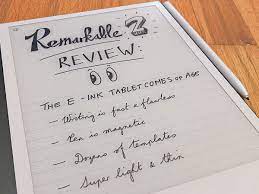
My other favorite tool is a ReMarkable 2. It’s a tablet with a stylus. I can write in longhand on the screen and can even erase what I’ve written. I can send something from the big computer to the ReM2 and edit in longhand. I can sketch out the street map of my fictional town and draw a chart or diagram to show how characters, plot points, and settings are linked.

It’s a 21st-century update of my trusty lined notebook and pen. I love it and find it quite useful, using it at home and when traveling.

It’s always about the writing, of course. But the tools of the trade can really make it so much better.


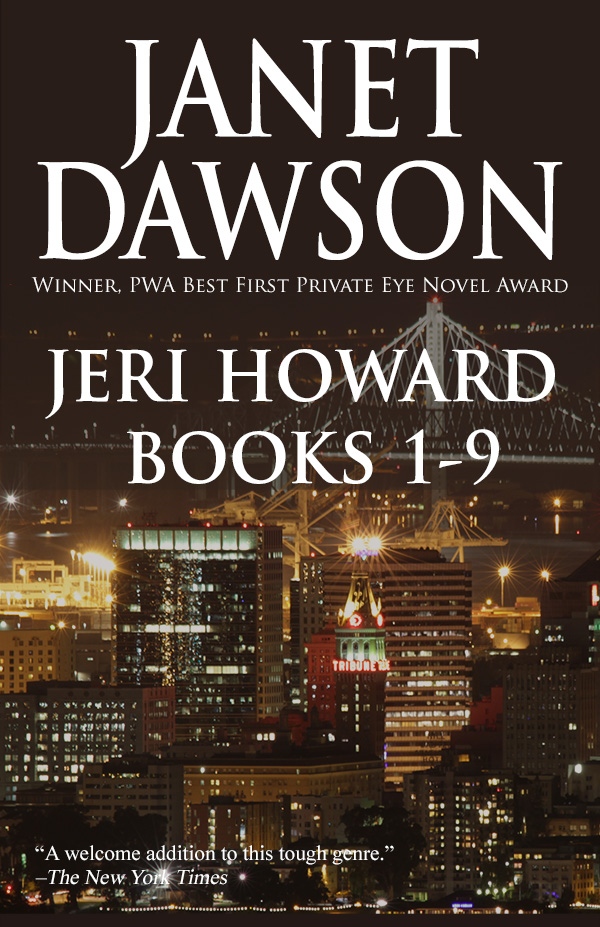
The rights to the four most recent Jeri Howard books (Bit Player, Cold Trail, Water Signs and The Devil Close Behind) reverted to me when Perseverance Press closed its doors in the summer of 2021. As a tool of the trade to increase sales, I’ve have just republished those four ebooks with new covers that mesh with the nine previous books. Plus a box set, The Jeri Howard Anthology, Books 10-13.

Now if I can just get cracking and finish Jeri Howard #14, The Things We Keep!

Let’s Begin

January. The beginning of the new year seems an appropriate time to talk about beginnings. Such as, how to begin a novel, or story.

Where is the beginning? Is it where the protagonist enters the action? Or at a point deep in the back story, a place that can be glimpsed in a prologue?

The decision of how best to start a writing project is a personal one that varies from writer to writer.

Kindred Crimes, the first Jeri Howard novel, introduces my Oakland-based private investigator. I toyed with several different beginnings and wound up with the traditional private eye opening scene: Jeri meets with her new client in her Oakland office. The man is looking for his missing wife. Seems like a straightforward case. Or is it? All is not as it seems. That much is revealed in the first two paragraphs. And as Jeri delves deeper into the case, she discovers much more.

Man, woman, and child posed in front of a thick green Christmas tree, its branches laden with silver tinsel and gold balls. He stood behind her chair, hands resting lightly on her shoulders. Her blond hair fell in waves past the collar of her red dress. In her lap she held a cherubic toddler. They smiled at the camera, the image of a perfect middle-class nuclear family, caught forever in a five-by-seven glossy.

“When did she leave?” I asked.

The second Jeri Howard book, Till the Old Men Die, took me in a different direction. An earlier version began with a scene in which a woman with a shady past shows up at the history department office at the California State University branch in Hayward, California. The shady woman wants the papers belonging to a professor who was murdered some months ago in what appears to be a random mugging. Upon reading that version, a fellow writer commented that it was a shame reader didn’t get a glimpse of the murdered man while he’s still alive. I obliged, in a brief prologue that gave readers a look at how the man was killed.

I also included a prologue in Take a Number. It wasn’t back story. Instead, it was the only time Jeri meets the man she’s investigating, Sam Raynor. Jeri’s client is in the process of divorcing this abusive man. As he talks with Jeri, he tries to charm her. When she calls him on his bullshit, he reveals his nasty, manipulative personality. The next chapter backtracks, describing how Jeri got involved in the investigation. We meet her client and get some background on the case. The husband has money but known that California is a community property state, but he’s hiding it from his wife.

Then, of course, he winds up dead. His wife is the most immediate suspect, but Jeri discovers a long list of people with motives to kill him. As Jeri says:

Sam Raynor was the biggest slug who ever oozed across my path. Anyone who wanted to kill him would have to take a number and get in line.

With the Jill McLeod series, featuring my traveling Zephyrette in the early 1950s, the first two books, Death Rides the Zephyr and Death Deals a Hand, start out in a chronological fashion, with Jill on one of her train runs aboard the train. The third book, The Ghost in Roomette Four, starts with the ghost. How could I have a ghost and start any other way? It’s late at night and Jill sees something she can’t explain. A spectral presence, or maybe she’s just tired.

I am not seeing this, Jill McLeod told herself. But she was.

Light shimmered at eye level, about ten feet in front of her. The apparition seems to have no source. None, anyway, that Jill could discern. What’s more, she could see through it.

Jill took a step toward the light. It brightened, then dimmed. She took another step. The light flickered and moved into roomette four.

For my recent Kay Dexter mystery, The Sacrificial Daughter, I went back to the client-in-the-office beginning. Kay is a geriatric care manager who helps people care for elderly family members. As the book starts, she’s meeting with a prospective client who is having a difficult time with her mother. This first chapter introduces Kay and her profession and gives the reader an idea of why someone would hire a care manager.

“I’m at my wit’s end,” Sheryl Garvin said.

I could see that.

She had the stretched-too-thin aura of someone who wasn’t getting enough sleep. Her voice sounded tired.

Beginnings. One hopes that they lead to endings. I’ve got a good start on the book I’m working on. Now that January is here, it’s time to get to work and finish it.

Accuracy – Getting it Right

The historical mystery looked promising on the library shelves. I checked it out and started reading. A few chapters in, a glaring historical inaccuracy pulled me right out of the narrative.

The book takes place in 1855, in a New England town. In one scene, the protagonist goes to the post office—which has a sign reading “United States Postal Service.”

No. No. No. Definitely no.

The United States Postal Service didn’t exist until 1971, after former President Richard Nixon signed the Postal Reorganization Act of 1970. Before that, it was known as the Post Office Department, or simply the Post Office.

I had a similar experience when reading another historical mystery set in 1950. The protagonist mentioned having read a world-famous novel in the early 1940s. That would have been nearly 20 years before the novel was published.

I found myself thinking that a good editor—or copyeditor—should have caught that. Of course, editors these days were probably born after the Postal Reorganization Act went into effect.

I realize I’m writing fiction, a delicate balancing act between plot, characters and setting. It’s that framework we call willing suspension of disbelief. I write a good story and readers accept that reality and those characters who move around my plot and setting. I want readers to believe that a private eye named Jeri Howard and a Zephyrette named Jill McLeod can solve crimes and catch killers.

When writing my novels, whether set in the present (with historical references) or set in the past, I strive for accuracy. To be fair, I may get it wrong. But I’m careful.

I knew that was important for the Jill McLeod California Zephyr series, set in the early 1950s. There are train buffs call railfans, a natural audience for the books, since my protagonist is a Zephyrette, a train hostess and a member of the onboard crew. I knew that if I made any mistakes, I would hear about it from the railfans.

I was quite chuffed, as the British say, when I did a book event for the first in the series, Death Rides the Zephyr, at the Western Pacific Railroad Museum in Portola, California. One of the volunteers, an older man, approached me. He said he’d read the book and he wanted me to know that I got it right, both the train stuff and the history.

Music to my ears. I want readers to get caught up in my stories. I don’t want to make errors, however small, that that pull readers out of the story. They might not return.