Launching a New Book by Heather Haven

Launching a new book is exciting, scary, and uncheap. Uncheap is not supposed to be a word but I hesitate to write that launching a new book is expensive. So I invented the word uncheap. Same amount of $ outlay but settles better in my mind. I like to feel positive about every aspect of my work.

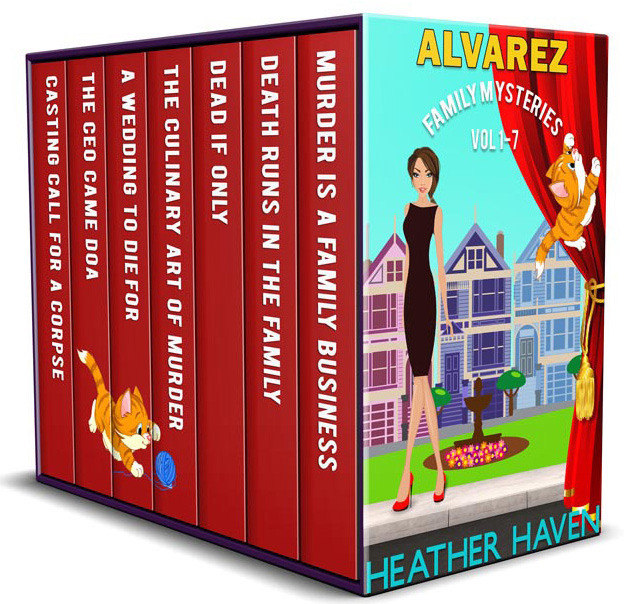
I used to do everything needed to launch a new book in the days when I was young, energetic, and poor. I’m not rich now but above all else, I’m not young anymore. And energy? Let’s just move on. But I will say no matter what, I always had a professional editor for each of my books even when I did the covers, formatting, and uploading myself. As I am a shameless but determined amateur, I still do covers for some of my books, but not the Alvarez Family Murder Mysteries. I handed that over to professionals long ago. And they have proven it was the right thing to do.

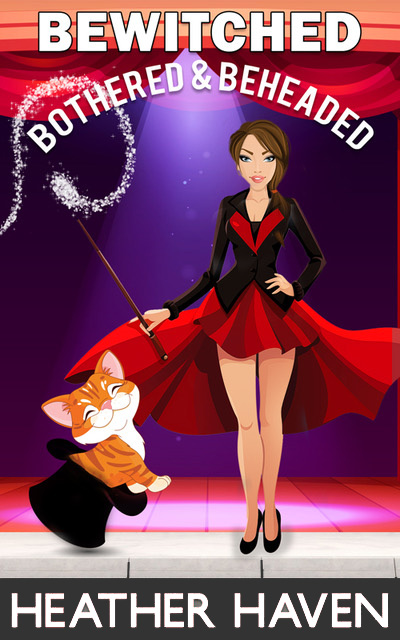
To the left is the probable cover for my latest book of the Alvarez Family Murder Mysteries, Bewitched Bothered, and Beheaded. Book 9 and counting. It needs some tweaking here and there, but essentially, this is it. Up until this book, I continued to do the formatting and uploading for the series. This time, I’ve decided to let them do everything. Ka-ching, Ka-ching. But I am anxious to start the 10th book of the series, Cleopatra Slept Here, currently but a dream. If I hand everything off, I think I can get to it sooner. The months I spend on getting a book launched takes away from any creative time I have for a new book. This may not be true for everyone, but it is for me. So I am experimenting with the less is more school of thought.

Speaking of experimenting, last May when I launched the 4th book of the Persephone Cole Vintage Mysteries, Hotshot Shamus, I decided to take some of the money I saved by doing everything myself and spend it on advertising. The Big Push. The Percy Cole series has never been the seller the Alvarez Family has been and I often wondered if it was because I never spent enough moola on it. I got my answer. NO. I couldn’t capture a large enough readership no matter how much I spent. The reviews I got from readers amounted to they loved this no s–t lady who conquered a man’s world at a time when women simply didn’t. Okay, so people who read the books seemed to like them. But I still couldn’t get enough readers to justify the investment spent on mounting each book.

Maybe it’s because the series takes place during WWII, not a glamorous time. Maybe it’s because when people read historical books they either want non-fiction or more romance and glamour in their historical fiction. Maybe it’s because I’m not well-known. Maybe it’s because the cat sleeps in the sun. But these are all conjectures. For the moment, it’s time to pull back on the Percy Cole series and concentrate on what works. And as I love the other series just as much, I will concentrate on writing the Alvarez Family.

And launching their books. So here’s to Lee Alvarez and her wonderfully eccentric family. And to all who read about them. Much appreciated.

Agatha Christie and Me by Heather Haven

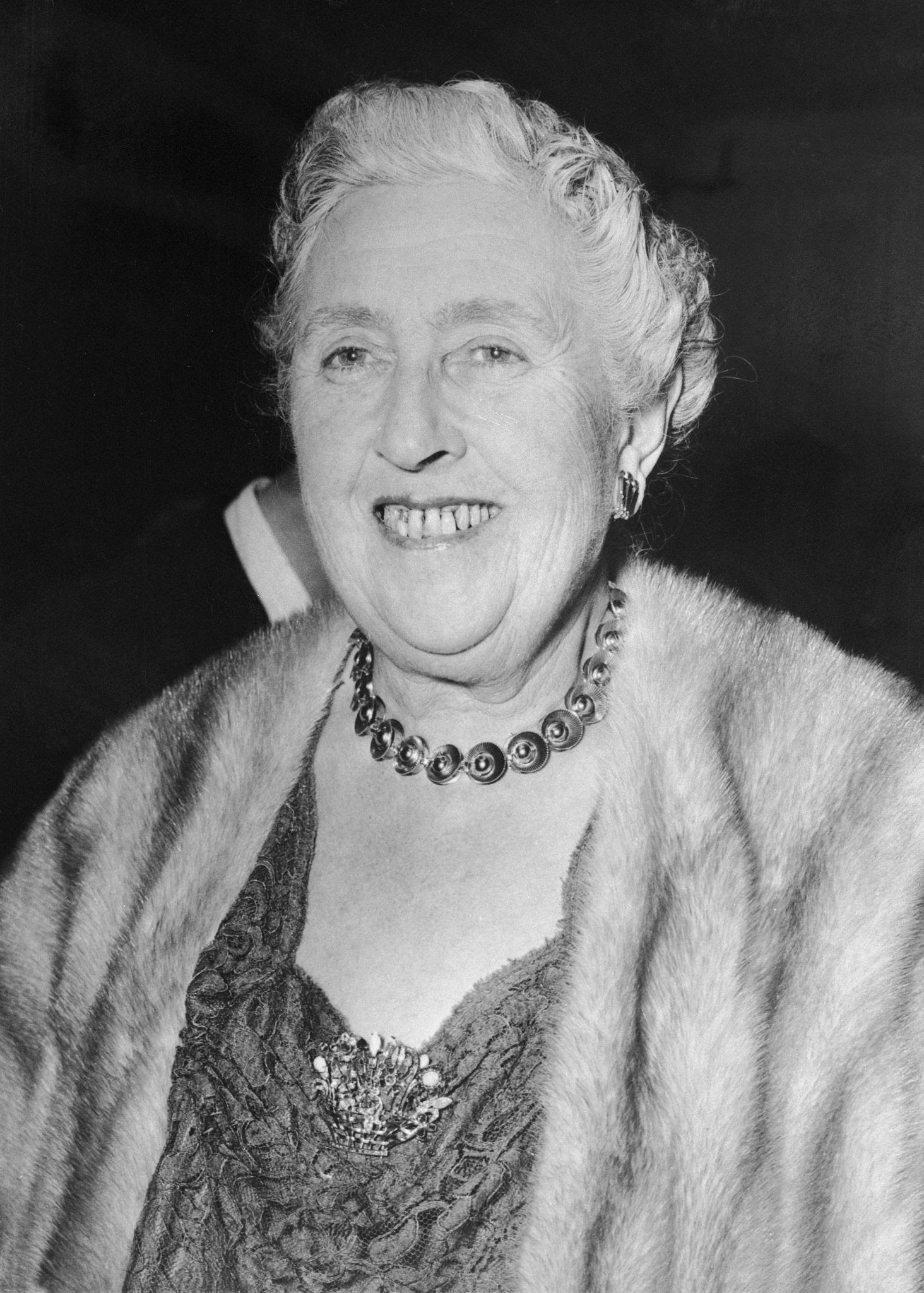
Even though I never knew Agatha Christie personally, she has been an important person in my life. I was a lonely kid and can only say the phrase, “Books are my friends” was on the mark for me. I started reading Nancy Drew mysteries when I was nine. I moved on to Agatha Christie when I was about sixteen. In the following years, I read anything that came my way, from Ernest Hemingway to P.G. Wodehouse, Ruth Rendell to Erma Bombeck. Thrown into this mix was required reading, such as “Ode to a Grecian Urn.”

But I always came back to Christie. Her books were like a trip home. I knew I would care about the characters and be certain of where they were going i.e., a solved crime, but at the same time, be perplexed by the mystery. Above all, it would be a good read. Something to savor and enjoy, to be sorry when it ended.

Arguably, but let’s not argue about this, Christie invented the genre we know today as the cozy mystery. Although, most of them were not as cozy as people like to think. If you scratch beneath the surface, you will find deceit, betrayal, greed, selfishness, and amorality. Even in her romantic mystery series with Tommy and Tuppence, these two were up against some pretty evil doings amid the charm and fluff.

It is said that the best way to learn how to write a mystery is not just to study writing but to read others who have gone before. Read the best and you cannot help but become a better writer. So, I read her a lot. From Christie, I learned the value of having a protagonist people enjoy reading about and are committed to. I learned pacing, plot building, and the element of surprise. But mostly I learned the importance of sustained good writing.

Do I write like or as well Agatha Christie? No. But this isn’t a competition. I’m me and Christie is Christie. My goal is to write as well as I can, in my way, and in my voice. But hearing her angels singing in the background helps. Seeing in my mind’s eye the day-to-day existence of her people, even in the smallest of ways. Poirot measuring his eggs. Marple knitting her latest pair of baby booties. They help me with my own protagonists’ quirks and foibles, keeping my characters interesting and believable. There may be chit-chat about the Great God Google, but to me, Agatha Christie is my goddess.

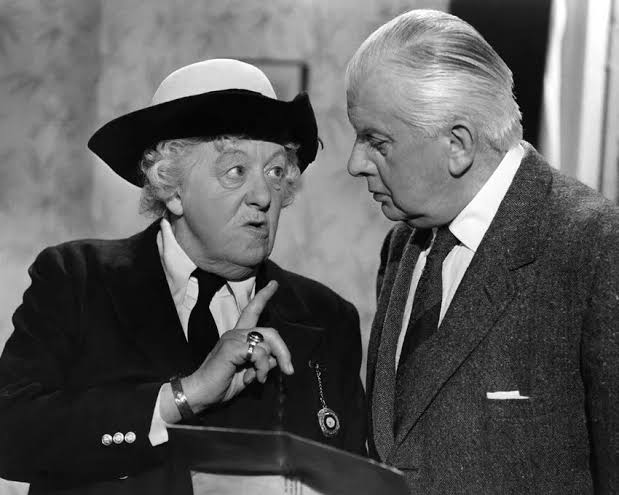
With this kind of god-like appreciation, comes a certain amount of ownership. I am quite possessive about what is done with her work in other media. I can remember seeing Margaret Rutherford on TV in four black and white movies with her playing Miss Marple and thinking, uh-oh.

Don’t get me wrong, I adore Margaret Rutherford. She was a wonderful character actress of the 50s and 60s who was in many fine movies, such as Blythe Spirit, The V.I.P.s, and The Importance of Being Earnest. She even won an Academy Award for The V.I.P.s. However, her approach to Miss Marple was more along the dotty and confused sleuthing line, with less observation and mental acuity. Rutherford also decided to add her own husband to the stories as her sidekick, Mr. Stringer. Of her performances, it was said Christie respected Rutherford, but later wrote that ”Margaret Rutherford was a very fine actress, but was never in the least like Miss Marple.” I’m with her.

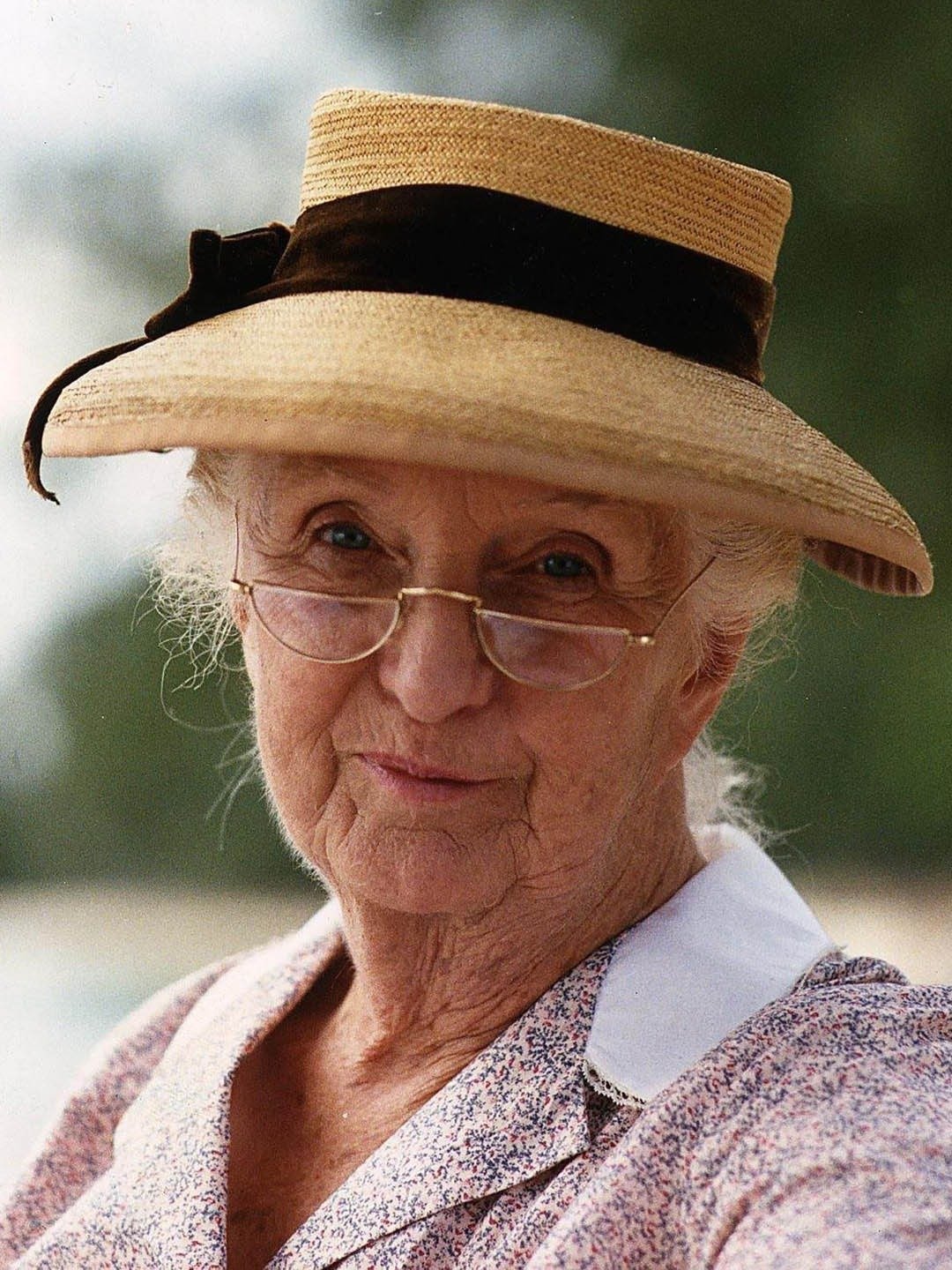
Glossing over 5’8″ Angela Lansbury’s Miss Marple played when she was 55 years old and looking as if she could fell a horse, we move on. Christie’s quintessential Miss Marple was Joan Hickson. Agatha Christie even wrote her a letter saying, “I hope one day you will play my dear Miss Marple.” Christie eventually got her wish when the opportunity arose for Hickson to star in the role at the age of 78. Others come and go, but Joan Hickson was and is my perfect Jane Marple.

Another gloss-over moment is Tony Randall playing Hercule Poirot in The Alphabet Murders. Despite adding Robert Morley to the cast, the movie didn’t work on any level. The script was compromised, the heart of the story was neglected, and Tony Randall was simply miscast. He found his feet in The Odd Couple but certainly tripped all over himself as Poirot.

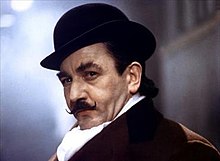
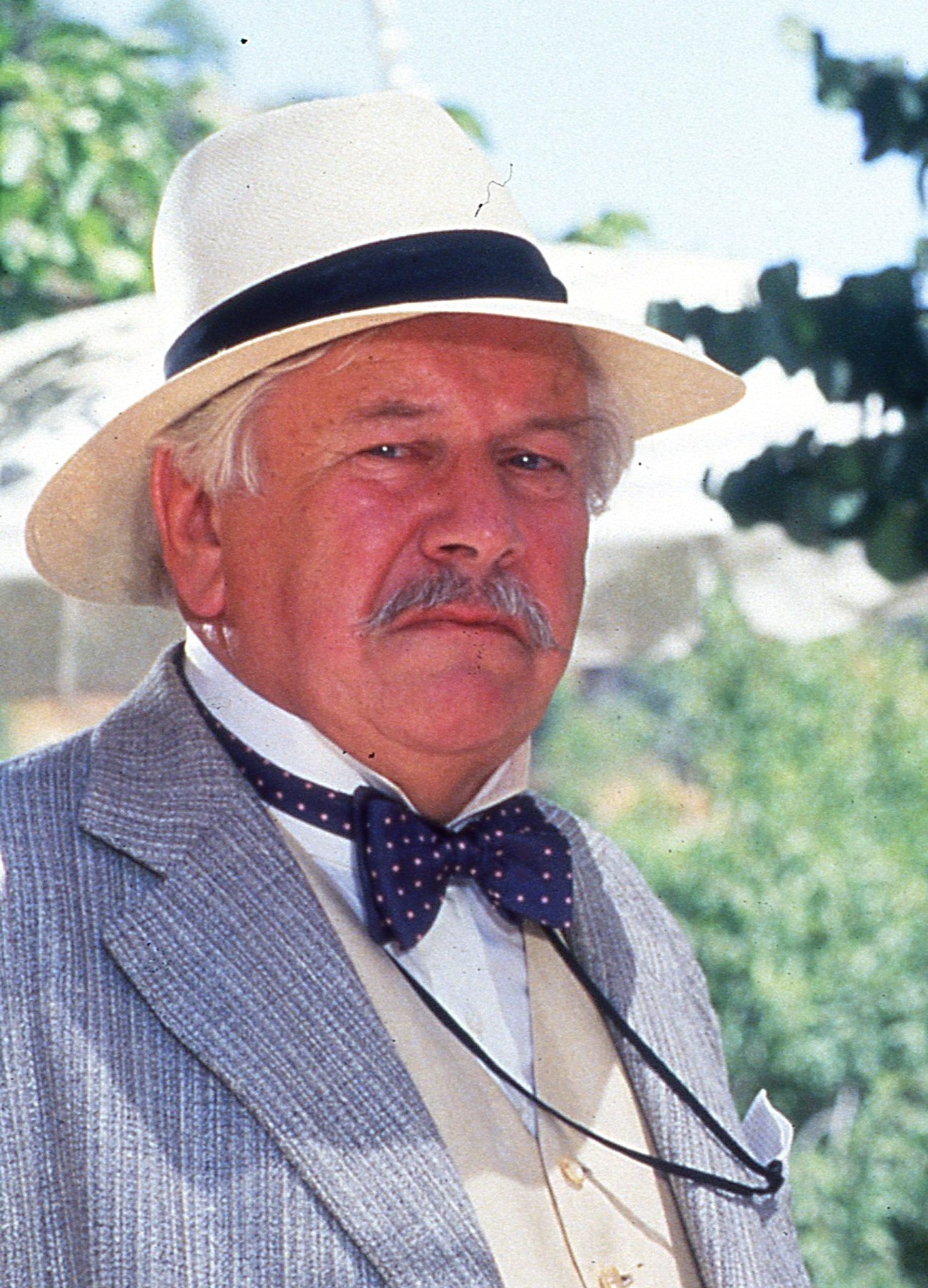
Albert Finney did Poirot one time in the movie Murder on the Orient Express. With an all-star cast, the script followed much of Christie’s novel. Thank you. Finney’s portrayal of Poirot was exacting, respectful and believable. My own respect for Albert Finney went up several notches after seeing that movie. This handsome dude who starred in the movie Tom Jones not ten years before became the excentric, middle-aged, not-so-good-looking Hercule Poirot.

Peter Ustinov played a very credible Poirot in six movies. While he didn’t look physically very much like the description of Poirot in the books, he had a great sense of fun, the intellect was there, and he honored the character and the role. And he was a wonderful actor. The films were made on location and tended to follow the plotlines, always a plus. His Death on the Nile is one of my favorite go-to movies.

But now we come to Kenneth Branagh. He’s a good Shakespearean actor, but his Hercule Poirot is more one of his fancies than what Christie wrote. His Poirot is a man with a touch of Ian Fleming’s double 0 seven in him, blondish, younger, and far more strapping than any Poirot previously done. And his mustache seems to change in every film. He’s done three films so far, all uneven, and probably plans to do more. Okay. Everybody’s gotta make a living.

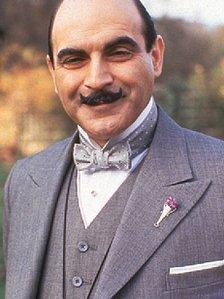
If you want to know what Hercule Poirot looks like according to Agatha Christie, either read the books or watch one of David Suchet’s performances. Because we have just gone back to quintessential. David Suchet played Hercule Poirot for nearly 25 years on television. It was a faithful version of the character. According to movieweb.com, “Throughout his 25-year tenure as the detective, Suchet managed to consistently bring to life all of Poirot eccentricities, right down to the physicalities and movement of the character — as, notably, Suchet managed to perfect Poirot’s distinct walk.”

Keeping in mind that actors need to work, and they’re going to take a job whether I like their version of the role or not, when I really want to visit Miss Marple, Tommy and Tuppence, or Poirot, I pick up one of Agatha Christie’s books. Timeless and wonderful.

To Cuss or Not to Cuss, That Is The Question by Heather Haven

I have to admit it. Even though I write cozies, and mostly humorous cozies at that, I am sometimes at a loss as to whether or not to have some of my characters talk the way they would in real life. Putting aside I am half-Italian and a quarter-Irish, for the most part, I’m considered a pretty mellow soul, and try to err on the lady-like side in my daily life. However, I have been known to let a few colorful words rip when I bang my toe or lose the tip of a freshly manicured fingernail. And do NOT wake me up with a spam call at six am asking me to buy your storm windows. It will not go well for you.

But, but, but, that is my private life. Professionally, I receive emails and comments about the fact that I write a pretty clean novel. I do. No body parts are fleshed out or described in a way that could be called salacious. I do not salache. If you want salacious, please visit Joan Collins. Who, by the way, sells about a gazillion more books than me. That should tell me something right there, but I’m not listening.

While I do write a peppery word upon occasion in my books, I don’t think it can be described as vulgar or offensive. I have Lee Alvarez describe her buttocks as her derriere. The upper, front portion I don’t talk about much. The word bosom comes to mind and if I’m feeling peppery, boobs. But I try to keep that kind of jargon or slang to a minimum. Possibly someone, somewhere might be offended. I once said “hello” and was challenged as to what I meant by that.

But what I really try to keep to a minimum is having that sway my writing or make me back off on what I’m trying to say. Because you can’t please everybody all the time. And if you play it wrong, you’re going to please nobody at any time. So, I try to please myself. I write what I am comfortable writing. I say what I want to say. But I am always aware of my contract with the reader. This is especially true for the Alvarez Family Murder Mysteries and Persephone Cole Vintage Mysteries. There are expectations and I respect that. When writing these two series, I sometimes have to rethink the selection of a word or phrase and not use the first one that came to me. It doesn’t happen often but when it does, I pick and choose with care. I never dilute or sell out, but try to be clever.

The reality is it’s easy to throw the “f” word into every other sentence. It’s easy to shock people, titillate them, and make them remember your writing for its sensationalism. That’s not me. I focus on things I consider to be important in life: honor, respect, truth, positivity, family, standing up for yourself, being good to people and animals, and making a difference, even in a small way. Oh, yes! Then I throw in a dead body. Maybe two. But I try to do it with a clean sense of fun, a lot of humor, and from a point of view that’s a little off the beaten path.

Because we’re all different. We all go our own way. And we’re all wonderful.

Happy New Year, my friends.

The Humorous Side of Writing a Mystery by Heather Haven

I don’t always write funny. In fact, some of my books aren’t funny at all. Oh, there might be something humorous said by a character now and then. But for the most part, it’s a straight mystery. However, my most popular series, The Alvarez Family Murder Mysteries, is definitely on the humorous side. My readers tell me they like the uniqueness of the family, a nice way of saying kookiness.

What they seem to also like is that Lee Alvarez, the protagonist, gets in over her head and is often involved in some funny situations. Of course, it doesn’t always have to be her. Sometimes it’s the characters surrounding her who have their lighter moments. However, the mystery itself, the whodunit part of the read, has to be there, regardless. In my humble opinion, the story cannot and should not be sacrificed for a laugh.

When I wrote comedy acts for performers that’s exactly what I did, though, write for laughs, laughs, laughs. But a mystery is a different animal and any humor added should be character-driven or situational. But I often walk a tightrope. How much humor is enough? How much is too much?

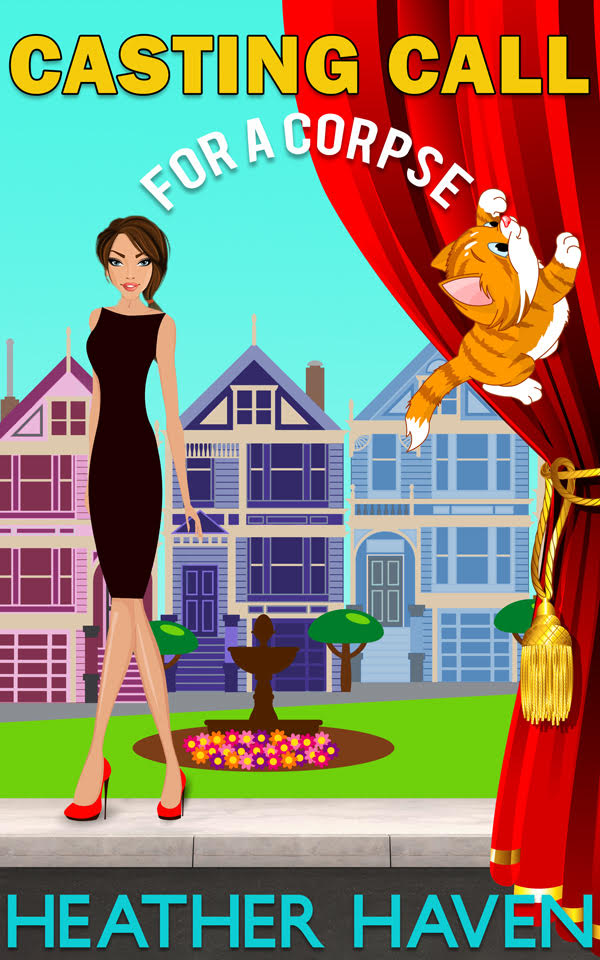
When I write a humorous scene, I try to give new insight into a character or add something to the story. When that happens I am off and away. One of my favorite examples comes from Casting Call for a Corpse, Book 7 of the series. It’s a scene involving a theatrical mishap, a not-too-well-trained horse, and Lee’s new husband, Gurn. Ordinarily, Gurn is a man in control, but at this juncture, he is undercover as a bit player in a new musical and is out of his comfort zone, which is often the key to humor.

Gurn entered from downstage right dressed in a French foot soldier’s uniform. A seemingly unconscious man, also wearing a French uniform, was slung over Gurn’s left shoulder. According to rehearsal, Gurn was supposed to cross to Gaby at center stage, say his lines, and then exit stage left. However, he halted awkwardly midway between stage right and center. When he tried to walk toward Gaby again, he simply couldn’t. Finally, he stood in one spot, looking more or less stupefied.

It didn’t take the audience long to figure out why he couldn’t move any farther. The wrist of the unconscious soldier had become entangled in one of the many pieces of gelatinous barbed wire jutting out from the fence. Whenever Gurn tried to move forward, the other man’s arm would be pulled as far as possible. It was clear the arm was insnared in the fake barbed wire. Any movement was impossible. I don’t think it was Newton’s law of physics, but something close. It became clear that unless Gurn dropped the man to the stage floor, he had to stay where he was.

Gaby, the star of the show and an old trooper, realized something was wrong. Changing her blocking, she walked over to Gurn who looked as if he would pass out at any moment. She fed him his line couched in a question.

“Tell me, soldier, were you going to ask me to please save your friend?”

Gurn opened his mouth, but no sound came forth. He may have seen many tours in Afghanistan as a soldier, but being onstage in front of eight hundred people was a new form of terror for him.

Gaby braved on. “I know if you could but speak,” she ad-libbed, “You would ask me to save your friend. So why don’t you bring him to the field hospital?

She gestured to offstage. Gurn’s jaw worked back and forth several times. He looked out into the audience with rapidly blinking eyes. Still, he could utter nothing.

“It’s right over there. Go,” Gaby finally ordered, pointing to a spot offstage.

Gurn tried to walk in the direction indicated but, once again, had to stop when the other man’s arm was pulled to full extension. Also, the wire seemed to become more tightly wrapped around the “unconscious” actor’s wrist with each tug. The actor began to struggle, trying to get off Gurn’s shoulder. Panicked, Gurn reached behind himself and the man. He gave the offending, taut wire a mighty yank as only a former Navy SEAL can do, who is in really good shape. Which was really bad.

What happened next reminded me of the nursery rhyme, This Was the House That Jack Built:

This was the man

who yanked the wire

That jerked the fence

That pulled the scrim

That toppled the backdrop

That crashed to the floor

That spooked the horse

That hauled the wagon

That galloped onstage

Then raced to the exit

But not before pooping

Downwind of upstage

A bemused audience watched the entire set crash down upon itself behind onstage actors who stood frozen in place. Once the dust settled, Gurn realized he was free of the wire holding him and his companion captive onstage. Lines forgotten, Gurn made a sprint for the wings but not before running into one of Bob the Horse’s deposits. I am not well versed on the subject of horse manure, but from what I witnessed, it can be on the slippery side. Consequently, Gurn glided like an ice skater for a pace or two. Then both feet went out from under him.

Up in the air both men went. But what goes up must come down. So down they came landing squarely in another one of Bob’s farewell gifts. Dumbfounded, the two men sat, unmoving. There was the universal moment of sympathetic silence all human beings feel for any poor sap sitting in the middle of a horse patty. The feeling soon passed.

One or two audience members began to titter. Several broke out into loud guffaws. More laughter followed. Soon no one was holding back, including Gaby. She collapsed to the stage floor, wrapped her arms around herself, and rocked back and forth shaking with laughter.

The curtain rang down. The house lights came up.

There’s more, of course. We have characters reacting to what happened and so forth. I try to have one or two of these scenes in each story. But they can’t be there unless they do one of three things: show another facet of a character, move the story forward, or add relief and/or color.

Comedy writing can be very rewarding and a lot of fun. Seriously.

Finding the Right Word by Heather Haven

Writing a novel has its frustrations. For me, one of them is often having at hand a word that kinda fits what I’m trying to say, but isn’t the right one. Thus begins the search for the missing word, the forgotten word, the word just somewhere off in the ether taunting me with its proximity.

For those all too frequent times, I have my online Thinkmap Visual Thesaurus for which I pay good money. I also have the thesaurus in Word. Both can help. But not always. When all is lost I have hubby, a former English teacher. I will babble the sentence to him, give him the awful word that came to me, the one I reject with every fiber of my being, and hope he knows what I am trying to say. Sometimes he does, sometimes he doesn’t.

If this word is still eluding me I have a decision to make. Do I stop what I am doing and begin a wholehearted search as if I were Juan Ponce de León looking for the Lost Fountain of Youth? Which he never found, by the way. Or do I carry on writing, hoping this errant word will come to me eventually? Decisions, decisions.

Dropping everything and searching for the right word pulls me out of my work, causing me to lose focus. And I also have a disease known as Maniacal Searchitus. It’s not catching, and I’ve known many other writers with this disease. I include them not because it gives me hope for a cure, but simply because misery loves company.

If left to my own devices, I can spend hours if not days getting lost in a plethora of words that suddenly appeal to me but have nothing to do with my original search. Take the word ululation. When I was at the Visual Thesaurus website, there it was. The word of the day. Ululation: the art of crying out in a high-pitched loud voice while rapidly moving the tongue and the uvula. I refrained from going to YouTube and watching a video showing this practice.

If it’s a verb I’m looking for, another trick is to go online and look at a product description. Everything is for sale. I could probably find another husband on Amazon if the one I have doesn’t learn to stack the dishwasher right. Product descriptions don’t always work. A lot of them are hackneyed and old hat. But sometimes they trigger the word I’m desperately seeking to come forward in my mind. Also, I’ve bought many an item I didn’t even know I needed using this method.

But the tested, tried, and true for me (yes, I know, hackneyed and old hat) is to put that first, awful word that came to me into the sentence, ghastliness and all. Not only does this allow me to continue with my writing, but the word will grate on me every time I see it and make me crazy. I will begin to ululate in sheer frustration. Eventually, I will stop everything I’m doing and work on the sentence until I find the exact word I need or throw the sentence out. It’s one or the other.

Because no writer wants thwarted readers ululating when the wrong word is allowed to get by.