So You Wanna Write Funny? by Heather Haven

In my far-off youth and for as long as I can remember, lurked inside me the heart of a comedy writer. I wanted nothing more than to be writing funny quips for people, like Woody Allen did for Sid Caesar on Your Show of Shows, back in the fifties. I wasn’t around then, but I’ve seen most of the kinescopes interviews with Allen and Caesar and was mesmerized. Just to make it clear, I wasn’t nearly as impressed by Allen’s foré into his own comedy shows, record albums, movies and even less impressed with his romantic encounters. What got me where I lived was him writing words for performers that made an audience laugh. I couldn’t imagine a greater existence.

One of my very first jobs as a writer in New York City was for No Soap Radio. As the name implies, we wrote funny ads and commercials for radio, had a ball and got paid a weekly salary! Does it get any better than that? Of course, the weekly stipend was so little I often had to decide if I would pay my rent or the phone bill, but by golly, I was a comedy writer. It was a short-lived chapter of my life, maybe a little more than a year, but the things I learned from that group of comedy writers have held fast for the rest of my writing life.

The art of comedy is serious business and you’d better know your business. You’d better know timing, delivery, and what the funny words are. By funny words – and most people don’t think about this – these are words that automatically cause people to smile or chortle. For instance:

Orange? Not so funny. Kumquat. Funny.

Move? Not so funny. Jiggle. Funnier.

Glasses? Not so funny. Spectacles. Funny. Or maybe more funny. Testicles? Whoa. Never mind. But in comedy, expect the unexpected. It often gets a laugh.

But back to words, if you don’t have the words in the right order, with the right rhythm and cadence, it’s probably not going to work. I’ve known comics to work on a one-line joke for weeks until they get it right.

Speaking of comics, have you noticed they often talk in violent or military terms? “I slaughtered ‘em last night” “Man, that audience was murder” “Go out and kill ‘em, pal,” phrases like that. There’s a reason for it. If you don’t get that laugh, you might as well be dead. Comics are very serious about their laughs.

Same with authors who write a funny mystery series. That corpse better be laughing when he hits the ground. Otherwise, I don’t sleep so good at night.

Learning from Streaming by Heather Haven

With Covid looming everywhere, many are staying closer to home than usual. But maybe, as this is year 3 of Covid, that’s the norm. For most of us streaming is the new pastime, whether it be music, movies, documentaries, television specials or series. These days nearly everything can be streamed.

With streaming, as with anything else, you have the good, the bad, and the noteworthy. One of the things I discovered early on with the good and noteworthy is the ability to move things along. The writers or editors know how to insert necessary information without weighing the final product down. Seasoned screenwriters, in particular, have this knack. As a writer, I have found streaming to be a learning situation.

Regarding fiction, I love pilots. The promise of what’s to come unfolds before us in 30, 60, or 90 minutes. Characterizations, backstories, wants, goals, and conflicts are thrown out to the viewer in an orderly manner. Successful screenwriters usually know what to spill right up front and when to hold it back. I try to learn from that. But as I pound at my keyboard, there’s no producer reminding me of the production costs for each scene. I often have the luxury of forgetting. I don’t think the reader does, though. I think they approach each book wanting the same economy of delivery. And I have to say, when I do write in a similar way, the novel does turn out a little better. So hats of to screenwriters.

Except I have a bone to pick with some of these guys, especially the ones writing a continuing series. Take the The Glades, my latest binge-watched series. The Glades aired from 2010 to 2013, but only recently came to my attention (I am often a day late and a dollar short). Putting aside it is a tongue-in-cheek crime drama, it takes place in southern Florida, my home turf. Frankly, I miss the sunshine state, the humidity, palm trees, even the alligators. I can live without Palmetto bugs, but then, nobody’s perfect. The locale (Ft. Lauderdale) and the mystery sucked me in hour after hour. And it didn’t hurt to have a cute Australian actor playing a smartass American cop with no social skills, whatever, who recently moves from a northern big city to a small Florida town. This cutie instantly antagonizes every person he runs into but gets the job done like nobody else can. The lone wolf. Of course, he becomes less of a loner as time goes by. I became very fond of him, the surrounding characters, and even the fake town of Palm Glade, itself. There were 4 seasons, each season ending with a cliffhanger. From the writers’ point of view, it’s a guarantee the viewer will be back to see what happens at the start of the new season.

This is nothing new. It’s done all the time. It was done in 1933 with a 12-part serial called The Perils of Pauline. However, the screenwriters knew when it was going to be over, and tied the final episode up with a happy, pert little bow. Not so with The Glades. And here, if someone plans on watching the series, is where you should STOP READING.

Imagine my surprise when the last episode of the last season ended with my cute Australian actor getting shot and killed on his way to his own wedding. He makes a pitstop to throw rose petals around the new home he’s bought as a surprise for his new bride. And there he is shot dead, mid-throw. And here I am, devoted to my finally-got-his-act-together-starting-a-new-life hero and he’s shot in the back and chest with a bride and his family waiting for him at the church. I was shocked, devastated, almost dropped my bowl of popcorn. This is not how I wanted the series to end. It wasn’t very tongue-in-cheek, it came out of nowhere, and just hung there, seriously wanting.

Now maybe the writers had thought season 5 was coming up. Cliffhanger, donchaknow. Or maybe the actor wanted out of his contract and this was his punishment. You can never come back no matter what, dude, because you be dead. But I felt like I was the one being punished. Then I remembered a home truth for most of us writing lighter-weight mysteries and suspense, no matter what the media. You want to surprise your reader/viewer, not shock them. You want to have them say, ‘aha!’ not ‘what the hey?’ At the end of it all, the reader/view should feel satisfied. So here was another good reminder for me of what not to do.

But I will move on to another story, other characters, and other conflicts because I love streaming.

To Seek an Award or Not by Heather Haven

Most writers are pretty opinionated on the subject of soliciting awards. Some believe that entering a contest, often paying a fee, is buying the award. I personally, don’t believe that is true. Hundreds of books are often entered into a contest. Sometimes larger contests have thousands of entrants. Many from all over the world. If your book can win out over those odds, I say good for you.

For some authors, being nominated by their peers is the only way to go. Sometimes that happens, sometimes it doesn’t. The nomination of a book by members of an organization or those attending a conference is lovely. It doesn’t happen often, but when it does it is, as I say, lovely. Sometimes the public nominates a particular book. In a way, it’s a popularity contest, but so what? If you have fans, if you have a following, and they want to acknowledge your book, that’s wonderful.

I have garnered a few awards over the years and I think they all add to the mix. For me, it’s a form of publicity and advertising.. Between good reviews and awards, I believe it helps a reader who may not be familiar with my work, to be willing to take a chance on buying one of my books. That’s all in all. Buy my book and read it.

If i am going to enter a contest, I try to be very circumspect. I like to know, first off, that it has merit. I take a little time, look through the credentials and past winners. Often awards are not a money making proposition for those running the contest. They have to hire readers and/or judges to read all the entries. They have to have some kind of technical or data driven system in place to handle the entries. It all takes time and money.

I recently won another award. I am deeply honored. The Drop-Dead Temple of Doom was the 2021 BIBA® Mystery/Cozy Mystery Winner! I get lots of publicity, stickers to put on my books, and received a beautiful crystal award. They even spelled my name right. I just love it.

”What’s in a name?” by Heather Haven

To complete the quote from the Bard’s Romeo and Juliet, “That which we call a rose by any other name would smell as sweet.” For many of us writers it could be paraphrased, “What’s in a title? That which we call a book by any other other name would be as read.”

Of course, the answer to that is probably no. The title of a book, as with the cover, tends to draw in many a reader, especially if you’re not well-known. It took me a while to get that. Sometimes the obvious has to come over and kick me in the knee before I realize what’s going on. Death of a Clown, my docu-fiction noir about Ringling Brother Circus circa 1942, was on the market before I got feedback on just how many people fear and dislike clowns.

There are actually people who will not under any circumstances even touch a book with the word clown in the title. Even though it won a fairly prestigious award, some readers still hesitated to buy and read it. So after a few years, I bit the bullet and changed the title (and the cover) making it Murder un the Big Top. Not one word of the story was changed, just the title and cover. It took some doing, a lot of official documents, and buying yet another ISBN number. Murder under the Big Top still isn’t my biggest seller by a long shot, but at least people don’t send me the I-would-never-read-that-book hate mail. Well, not hate mail, exactly. Dislike mail.

The first book of the Alvarez Family Murder Mysteries is called Murder is a Family Business. If I had to do it again, I wouldn’t call the book that. The title seems to indicate a more serious work to some, especially males, and has fooled many of them. They were expecting something more along the lines of “The Sopranos.” When they got a load of the family-oriented detective agency complete with a kitten and designer shoes, they were not happy. I didn’t change the title, but did create a cover that leaves no doubt this is a cozy. Between the title and cover, I think you can let a reader know that. But once again, if I had it to do over again, I would choose another title for the book.

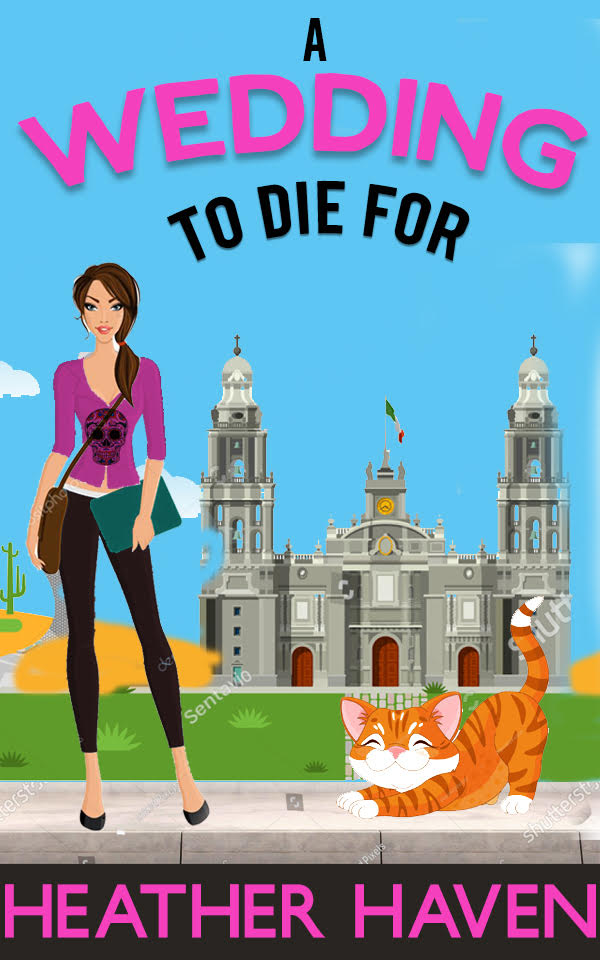
I got better at it as I went along, but still had much to learn. Take the second book of the series, A Wedding to Die For. If I knew then what I know now, I wouldn’t have chosen that title, either. Now I would put the proposed title into Amazon and see what other books come up. If I had done that with Wedding, I would have seen three other books had the same title. But as that’s the book under development by a major streaming service and production company, I’m leaving it alone. But another lesson learned.

There are some very clever titles out there, especially in the cozy mystery field. Just this year we are offered: Penne Dreadful By Catherine Bruns, Wonton Terror By Vivien Chien, and Death Bee Comes Her By Nancy Coco. For my part, one of my favorite titles for my books is The CEO Came DOA. Although the latest book of the Alvarez Family Mysteries, The Drop-Dead Temple of Doom, is a very fun title. I don’t think any guy is going to buy it thinking it’s mob related. Although, gentlemen, never trust a protagonist who knows Karate and carries a Glock 19. Even if she does wear designer shoes.

On Reading Reviews by Heather Haven

Some authors never read their reviews. I am not one of those people. I don’t read reviews often, but I like to go in every now and then and see what’s going on. If I get several people giving the same criticism in their reviews, I check it out. Unless they’ve written I’m terrific. Then I leave it alone. But I have found when the same thing is said, like comments about editing or misspelling, it probably has validity. It doesn’t matter how many eyes have seen the manuscript, one or two things are bound to get by. And they are bound to catch the eye of a reader. Fortunately, these errors are easily correctable. And I correct them as soon as I can.

It’s the other stuff. The comments on research or incorrect details. This always sends me running to an encyclopedia, either online or from my bookshelf. I try to get things right, honestly. Nine times out of ten — and I have to say this — the reader is misinformed. For instance, in The Dagger Before Me, book one of the Persephone Cole Vintage Mysteries, I mention a small refrigerator. Mini-refrigerators have been around since the 1920’s, mostly for the rich, but there. So an affluent, Broadway producer having one in his office in 1942 is not out of line. There are a few other reviews where people simply cannot believe some things were invented way back when. Everything old is new again.

The criticism about the mini-fridge is one I came across only a few days ago and prompted this article. I had done my research at the time of writing the novel, but looked it up again to be sure I was right. I was. When the reader is wrong, I chalk it up to human nature. If they are right –which has happened upon occasion — I correct the error and silently thank the person for letting me know. Speaking of being wrong, one time in another book of the Percy Cole series, I mentioned the Macy’s Thanksgiving Day Parade taking place in 1942. It didn’t. True, the parade has been around since 1924, but when the USA entered WWII, the parade was cancelled from 1942 to 1944. I had neglected to catch that. As it was only once sentence in the story, I simply eliminated the sentence altogether. And once again, silently thanked the reader for catching my error.

Recently, I got criticism in Casting Call for a Corpse, book seven of the Alvarez Family Murder Mysteries, because I .had called a Scottish policewoman’s hat a bowler. I’m just going to say that in pictures of their uniforms, one of the hat styles looked like a bowler to me. And still does. But not being a hatter, I bow to the reader’s knowledge. And because I had written the word ‘bowler’, the reader gave me only 3 stars and stated that was the reason. As I used the word only one time in the entire novel, I went in and changed ‘bowler’ to ‘hat’. Why? Because it makes no different to the story. Really, truly. If it had been integral in any way, I would have left it alone.

I have my standards. They may be low, but I have them. Deciding what to change, what not to change, when to capitulate, when not to, becomes something most of us writers get used to. For me, it’s just part of the game.