The Anthology Advantage

            As a freelance journalist, writing to deadline is as natural as breathing. When editors assign a story, they provide three essential pieces of information: topic, word count, and delivery date. Miss your deadline and kiss the possibility of a second assignment goodbye.

            This is not about editors flexing their weight. It’s about the reality of publishing. In the days before online everything, a story that didn’t arrive on time meant publications had a gaping hole in their magazine or newspaper. Gaping holes are filled when editors rush around like mad, cursing the name of the writer who missed their deadline.

            When I started to do more fiction writing than reporting, I found deadlines are often self-imposed. I will finish my first chapter by the end of the week. I will write a thousand words of my short story every day for four days. I will edit the story by Monday. I also found self-imposed deadlines are often more wishful thinking than etched in stone.

I missed the rigor of deadlines I didn’t dream up. Then I discovered anthologies. Genre writing is rife with anthologies – and anthologies have deadlines. They also often have themes, the journalistic equivalent of topic. The path ahead is paved for you. Here’s what we’d like you to write about. Here’s when you have to get it to us.

I wrote my first mystery short story, “Swan Song,” in 2021 in response to a call from the Crime Writers of Canada. To celebrate its fortieth anniversary, the national association planned to publish an anthology, Cold Canadian Crime. There was a theme (“cold” in the broadest sense of the word). There was a deadline. Count me in.

Since then, I have written fourteen more short stories. Most of them have been published, mostly in anthologies. A few have been reprinted in anthologies. At least one has been reprinted in several anthologies.

One of my recent anthology short stories is called “Maladaptive Anonymous.” In the story, the main character calls this group, somewhat disparagingly, Daydreamers Anonymous. The anthology, which will be out June 18th, is entitled: Midnight Schemers & Daydream Believers. Just as editors expect you to meet your deadline (or miss out on the opportunity), they also expect you to stick to the topic. You have lots of room to play, but the boundaries are there.

While every anthology editor has their own process, the process is usually rigorous. And appreciated. Judy Penz Sheluk, who edited Midnight Schemers, had three rounds of readers and after the first and third round we were provided with feedback – and helpful suggestions for improvements. There were also at least three rounds of proofreading. At some point, you think this is overkill until in the final proof you discover your main character has titled their head. In the published version, their head is now tilted.

 As a short story writer, anthologies bring me back to familiar ground. I am given three essential pieces of information: topic, word count, and delivery date. This helps me to focus on a theme – and to go to wonderful and wacky places with plots I might otherwise not uncover and characters I might otherwise not create. And I go there by deadline.

Ties that Bind

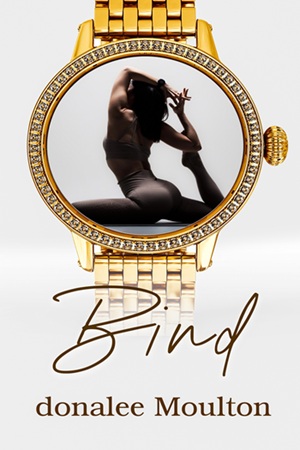
In addition to buds, baby birds, and bugs, spring has brought with it Bind, my new book. I would love to hear your feedback.

Three yogis, two cops, and one damn cute dog join forces to discover who’s stolen a Patek Philippe watch from what was supposed to be a secure locker.  Time is ticking.

Shondra (Woo Woo) Aeron, Lexie Hill, and Charlene Kurtz meet five mornings a week at the Asana Yoga Studio for a downward dog or two, one serene savasana, and a steaming cup of coffee afterwards. They’re not friends, but the theft of a very expensive watch from the gym where their studio is located draws them together – and into a bind of another type. 

To support Kristi Yee, their yoga instructor and co-owner of the gym, the three women offer to help her retrieve (some might call it stealing) financial information from her business partner. Mission successful (albeit with a few hiccups). It doesn’t take Charlene, an auditor, long to determine the balance sheet is not all it appears. Certainly, fencing a very expensive watch would help.

The partner isn’t the only suspect. The watch owner could use some money. He is having a relationship with at least two women, neither his wife. One of those women, who made the affair loudly public early one morning in the gym, has managed to cash in on her relationship. The other woman is unknown, at least initially.

The watch owner’s son, a diehard romantic, is also a suspect. His father and his girlfriend certainly think so. He doesn’t need or want the money, but his girlfriend does. At least he thinks so. He thinks wrong.

The girlfriend is also a suspect. She could, apparently, use money and she does not like her boyfriend’s father. That’s not fair, she detests him. Gym staff are also under police scrutiny as well as Kristi herself.

One conundrum for Halifax Police Detective Michael Terrell: how could someone remove the watch from a busy changeroom locker? Admittedly, the owner lost his key, which he usually does at least once a week, but you’d have to know what locker the key opened or try each locker in the change room. Warriors three to the rescue. Their task, at the request of Terrell (who seems to have a thing for Woo Woo, a reflexologist) is to try and penetrate the inner gym sanctum.

They fail, hilariously. But in their failure comes one undeniable conclusion: whoever stole the watch knew exactly what locker to open and what they would find inside.

Throughout the investigation a number of other more personal issues arise. Lexie clearly has a thing for a gym employee. (It’s not what you think.) Someone is repeatedly trying to connect with Charlene. She resists. (It’s not what you think.) Every once in a while, Woo Woo gets a message from another world. (It is what you think.)

Namaste.

Entitled 2: Giving your book a title to remember

Last month we talked about giving your story a title. Unlike article titles, book titles are usually the domain of the writer.

This may be because the writer has a closer connection to the topic, the editor wants the writer to do the work, or the writer and editor see it as the author’s prerogative. But just because the book writer usually develops the title doesn’t mean the editor will accept it. They will tell you if they don’t like it, and why. They will tell you if it won’t work, and why.Let’s look at what constitutes – usually – a good book title, and then I will use my first book as an example.

Because book titles are one of the first things a potential reader sees, they need to hook that reader. It’s recommended the title give away a little something about the plot and the nature of your book. Is it going to be action-packed, romantic, whimsical?

Here are the three main ingredients in a strong title:


LENGTH. 
Shorter is better. Shorter tends to be more memorable, more powerful. Some experts advocate for the one-word title, but one-word titles are more limiting for search engines. Fewer examples are found. The recommendation: three or four words.


IMPACT.  
The title should draw the reader in because it is evocative; it speaks to what lies within the pages of the book. It sets the stage for what they can expect.


UNIQUENESS.
Titles that we can remember, titles that stand out from the crowd are winners. This may be a play on words, a pun, a jab, a literary reference, a phrase that speaks to mind, heart and spirit.

In short, titles are essential to the sale of a book. And they are not easy. Let’s look at one title I’m very familiar with.

My first book is Hung Out to Die. It’s a murder mystery. The main character is CEO of a cannabis-production company in Elmsdale, Nova Scotia. As I was writing this book, a funny aside started to take place involving a word the main character had never heard before: Chunderfuck. In my mind, that became the title of the book with asterisks replacing two of the letters in the last syllable. I then built on this concept. Future books would have similar fun but profane titles: Numb Nuts, Dick Wad…. You get the idea.

book cover from Hung Out To Die

It was not meant to be. As I was starting to shop around my book, I realized the title might lead agents and publishers to conclude the book would be darker, edgier, grittier than it is. Indeed, it’s actually funny. I also didn’t want to turn off publishers before they even read the book. I went with a working title instead: So, A psychopath walked into a bar. In my mind, the book would still be called Chunderf**k, an issue I would raise with my publisher as soon as I had one. Which I (with gratitude) did. My publisher, BWL Publishing, was more than open to changing the title. But not to Chunderf**k – and not for the reason you might think. Search engines don’t pick up asterisks.

Dammit.

So the book became Hung Out to Die. It’s a play on words, drying plants is linked to cannabis, and the victim dies by hanging. It’s short, it’s got some oomph, but let’s face it. It’s no Chunderf**k.

I’d love to hear your thoughts on titles. And asterisks.

Giving your story a name that resonates


I’d like to start by telling you a bit about myself – and my experience with titles. I am a freelance journalist and have written hundreds, actually thousands, of articles for print and online publications across North America and beyond.

One of the things you soon learn as a freelance reporter is that editors write the titles of articles. This is not always the case, but it is usually the case.  There are a number of reasons for this, and we’ll discuss those. In a minute.

First, I’d like to share with you the options article writers have when it comes to titles. One, you can come up with a title that you think reflects the article, is clever or straightforward or funny – whatever attribute you think will appeal to readers. If the editor likes it, they may use it. If they don’t, they will write their own. More often than not, they will write their own.

Years ago I did an article on a trademark dispute involving use of the Bluenose, Nova Scotia’s famous schooner. My title went something like this: Ship disturbing trademark battle erupts in Nova Scotia. I thought that was very clever. My editor did not. Well, she may have, but the title she used ultimately went something like this: Nova Scotia businesses barred from using Bluenose name.

On the other hand, I wrote an article on champagne and called it “Liquid Bling.” My editor wrote to say she loved the title, and she used it.

My feeling was it never hurt to include a suggested title, and no one usually knows the story as well as the writer. But good titles take time to craft, and on many occasions the articles I submitted did not have a title. They had a descriptor: Profile of Donald Duck, Article on the pros and cons of ducks vaping, Conference report from Ducks Unlimited. I was leaving the work to the editor.

And here’s what editors are looking for in an article title. (1) Something that grabs the reader’s attention (2) Something that describes what the article is about (3) Something that is not longer that the first paragraph of the article itself (4) Something that makes them want to read the article or shows them why they should.

Are you likely to get all that in one title. Probably not. But that is what is behind the words that introduce an article. Often those words are more dramatic or more urgent or more intense or more gripping than the article itself. Indeed, most of the time someone objected to an article I wrote it was the title that set them off.

And I didn’t write it.


Dammit. I’m a suspect.


book cover from Hung Out To Die

I’m reaching for the hallway switch when I notice a light three doors down. That’s Norm Bedwell’s office. And that’s unusual. Our comptroller is typically among the last to arrive. Only a fresh honey cruller from Tim Hortons has ever changed his timeline.

I’m running to Norm’s office now, tirade at the ready. The only thing that can prevent the outside security system from working, aside from someone hacking into our server, is if the door doesn’t latch firmly behind the entering employee. A loud audible click lets you know the system is armed, and then you can move forward. Employees are trained to wait for the click; if they don’t, an alarm will sound for two minutes, albeit relatively soft as alarms go. But at this time of day, no one is around to hear it.

It must be Norm’s fault, which may mean the system has only been down for minutes if he just arrived. It’s a question I’m tossing at our comptroller even before I’ve stepped inside his office.

Norm doesn’t answer.

He can’t because he’s swinging from a rope tossed over an open beam (the designer’s brilliant idea), a noose tight around his neck. He’s blue, but not as blue as I believe a dead man should look. This poses a dilemma. I need a few moments to assess my options and identify the safest and most effective course of action. However, I am aware I don’t have the luxury of time. I’ve seen enough Law and Order episodes to know if you don’t call the cops immediately, the delay in time will get noticed, and you’re more likely to find yourself on the suspect list.

Dammit. I’m a suspect.

This realization hits at the same time I’m dialing 911. The perky young woman on the other end asks how she can help.

“I’m in the administrative office of the Canadian Cannabis Corp., and my comptroller appears to have hanged himself. He is dangling from a noose and turning blue.”

“Sir, I have radioed for police; they are on their way,” she says, inhaling to continue with her script.

I cut her off. “Look, I know I shouldn’t disturb anything, but Norm may be alive. I’m going to grab his legs, so the noose doesn’t cut into his windpipe.”

Great, now she knows I understand how hanging kills someone.

Itdoesn’t matter. I’m going to reduce the pressure around Norm’s neck. His feet are tucked into the crease in my left arm, his testicles on par with my bottom lip. I’m not a small man, 6’2”, and I work out regularly, so I can maintain this, albeit a distasteful posture, for quite some time.

I hear sirens, and it hits me. The police won’t gain access to the building without destroying expensive technology. I explain this to the 911 operator. She is not that interested in the cost of our tech.

“I’m going to get someone to open the gate for the police,” I tell her. “That means I’ll have to hang up. I’m on the third floor of the admin building, inside the only office with a light on. My name is Riel Brava. I’m the CEO.”