
A Mystery That Almost Wasn’t


DSC_0194-final

     Now that the holidays are over and I’ve broken all my New Year’s resolutions—why do I bother to make them?—I’m about to publish my next novel. It’s a stand-alone mystery set in Southern California and San Francisco. It’s a book I wrote between the first and second books of my Florida series featuring Detectives Andi Battaglia and Greg Lamont. The book, which I called PSYCHIC DAMAGE, was hard for me to write, and when I finished it, I didn’t like it much.
I didn’t like the protagonist, a whiney, nail-biting woman named Eva Stuart who can’t make decisions on her own, is addicted to going to psychics to get advice on how to live her life, and leaves a really desirable man because she thinks he doesn’t love her as much as she loves him. The story begins with the murder of her favorite psychic.
When I finished writing PSYCHIC DAMAGE, I wondered why I had thought this would make a good story. I wasn’t happy with it, but I did what I had to do. I sent it out to agents, took it to a couple of conferences where I pitched it to agents and publishers, etc., etc., but I got no serious bites. I decided no one else liked my protagonist either.
So I buried the book and went on to write the second book in the Florida mystery series, SO MANY REASONS TO DIE. I liked that one. It didn’t give me any trouble, and I liked Andi Battaglia and Greg Lamont, my characters.
Several people who had read the whole or portions of PSYCHIC DAMAGE asked me what had become of it. I said I didn’t like it, so when I finished it, I put it aside. One person in particular, my writing teacher, kept reminding me of this novel that I had written. She kept telling me it was good. “Go back and read it,” she said. “See what you think now, after a couple of years.”
For a long time I didn’t do what she suggested, didn’t go back and read it. Finally, exasperated and having trouble with the third novel in the Florida series (must I always have trouble with my books? Will nothing ever come easily?) I reread PSYCHIC DAMAGE. And what do you know? It’s not a bad book at all. It’s a good book. I like it. I still don’t like Eva, my protagonist, but she does have a significant character arc in the book. She becomes a better, more self-assured person, no longer relying on psychics and able to stand on her own. She even stops biting her nails!
I hope when PSYCHIC DAMAGE is published, you’ll read it and let me know if you learn to like Eva Stuart while you read the book. I did!
WHERE DO YOU START YOUR STORY?

copy

I’ve been cleaning out some old files lately and came across some early writing I’d done. What I found particularly interesting was at least fifty pages of introduction I had written for my first novel, SO MANY REASONS TO DIE. Apparently when I began the book, I felt it necessary to bring my readers up to date on everything that had happened before the murder, so that they would know all the characters and their roles in the story.

So I introduced all the characters, got them all together in a Cover__8x5preliminary meeting, and then, many pages later, the murder happened. By that time, I now realize, I would have lost any readers who had begun the book. Readers want to get to the conflict in a reasonable length of time. They don’t want to know all the characters intimately before anything happens. That can be filled in later, in back story.
That is definitely the way modern novels—genre and literary—are written. Charles Dickens, who of course was paid by the word and wrote his books to be published in serial form, was expected to write a leisurely start, a lot of character and descriptive detail and to have the action led up to gradually. But, he wasn’t competing with television, movies, iphones, e-books, and all kinds of other distractions. He was the distraction. So, writing has changed, and writers have had to change with it.

I remember feeling that there was no way I could delete that first fifty or sixty pages, but I did, and no one missed it—not even me. The murder had already happened when the book opens, the murder scene is retold from various characters’ points of view, and the book is a lot shorter—and read by more people.

Sometimes, though, it’s difficult to know where to start a story. In PSYCHIC DAMAGE, due out this spring, I began with a murder: a driveby shooting. That was the beginning for quite some time and lasted through much editing, but finally I changed the story to the setting which had inspired its creation. In the building where I worked, there was a floor between the fourth and fifth floors, called the four-and-a-half. I’d had occasion to go up there from time to time and had thought several times of it being the perfect spot to Jans Photooverhear something mysterious—some foul deed about to be done or just having been done. It became the setting for the first scene of PSYCHIC DAMAGE when the protagonist, Eva Stuart, overhears talk about a murder which has been committed: the driveby shooting that had originally been the first scene. I think it reads better that way. I hope you’ll agree.
A book has to grab me within a few pages, either by action or character or setting. If not, I don’t continue reading. Sometimes I’m more patient, but I want to know what I’m reading about. What makes you keep reading? How long does it take you to get into what you’re reading or to put it down and say, “Boring!” I’d love to hear from you.

EVOKING A TIME AND PLACE

copy

I read a lot of mysteries, naturally, because friends write books and there are always new and exciting mysteries to dive into. But sometimes I take a break from these and read other books: non-mystery novels, biographies, and nonfiction in general. I also belong to a book club, and the choices of the members are often different from the books I read on my own. Since I’ve become a writer, I’ve become much more aware when I’m reading a book of the skill of the author in taking me into a place or time so fully that I feel as if I am actually there.
I recently read a book by Sigrid Nunez called THE LAST OF HER KIND, which takes place in New York at the end of the sixties and into the seventies. This was a book that plunged me back to that time. It was a time of civil unrest: the 1968 Democratic convention in Chicago, riots and takeovers of buildings by university students, the assassinations of Bobby Kennedy and Dr. King, among other events. There is an evocation of an LSD trip by the woman experiencing it that made me remember how assiduously I had avoided trying the drug. The book made me uncomfortable in the same way that I remember being uncomfortable then, as though I had been dropped back almost fifty years and somehow entered a strange planet full of people who were entirely different from those I thought I knew.
Some books bring me such a sense of actually being in the setting among the characters that a return to mundane life is almost painful, returning to earth from a fantasy trip and being forced to pick up my bookmark to mark my place and go back to work or to whatever task faces me. I was like that as a child, always lost in the world of a book, reluctant to face the monotony of long division or algebra.
James Lee Burke’s Louisiana mysteries bring me into the oppressive heat of New Orleans; Tony Hillerman’s description of the Navajo world makes it come alive; I don’t remember the settings of Agatha Christie’s books because I was always too immersed in the puzzle; but Ellis Peters’ medieval tales evoked the monastic setting and the period; and Elizabeth George created a fascinating English world including an entire Oxford college in one of her mysteries.
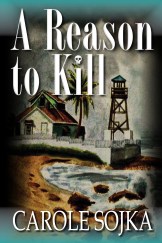
Recently I visited my friend in Florida where I have set my two mysteries: A REASON TO KILL and SO MANY REASONS TO DIE. We made a trip to Vero Beach, a city north of where my friend lives and where I had never been. It’s quite a well-to-do area, and I immediately began to set some scenes from the book I’m currently working on in that town: more expensive than Burgess Beach where Andi and Greg, my two detectives live and work, with houses set both on the Indian River and on an island facing the Atlantic Ocean. I find myself absorbing details of new places, trying to remember my feelings when I’m there, in an attempt to recreate new settings in my writing.
Do you enjoy new settings in your reading or writing? I’d love to hear about books that evoked memories from you or made you want to travel there.

BOOKS I’D LIKE TO WRITE

DSC_0194-final      I often think about the books I’ve started or thought about but never really got down to writing. Lawrence Block in TELLING LIES FOR FUN AND PROFIT, said he had a friend who, on being asked where he got his ideas, said that he said that “there was a magazine published twice a month called The Idea Book,” and that he, as a professional writer, had a subscription. There isn’t any magazine called The Idea Book, but there are lots of stories in everyone’s life that can become novels or short stories.

I started to write a mystery novel a long time ago, set in a just post-colonial African country. I didn’t get very far, but it was clearly based on my experiences in East Africa as a Peace Corps volunteer. I’d love to go back to that. I have lots of ideas about what would happen, and, because it would be a murder mystery, who was the victim and who the murderer. But when I started writing the story in the pre-computer age, it was so difficult to edit my work on a manual typewriter that I gave up.

How did writers manage before computers? I have to give them a lot of credit for perseverance. I know writers who still write by hand, but I would never have the patience. I want to correct as I go along, and having to rewrite paragraphs or put arrows directing me to some other section would be unbelievably frustrating.

Another idea I had, which began a novel that never got beyond the first chapter, was the result of talking with a woman I met on an airplane. I don’t remember where we were going, but she told me that she worked during the day as an attorney and had a night life as a rock singer. It may well have been something she made up for my benefit, but it gave me a wonderful idea for a novel. I worked on it for a while, but I never got very far. Not enough courage at the time, I guess.

The more I write, the more ideas come to me. I loved the report that fellow Ladies of Mystery blogger Jane Gorman wrote about on September 21st regarding the buried mystery train. That would make a great story. Murders reported in the local paper give me ideas for mystery novels. I kept a clipping for a long time about a man who was arrested years after the body of a woman he worked with was found in the trunk of her car. In a mystery story, the hero–cop, private investigator or amateur sleuth–would have found out much earlier that he was the murder. Fiction can be much more organized than life.

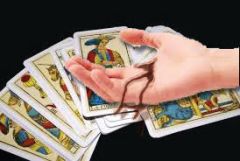
Most recently, I read a book called PSYCHIC JUNKIE: A Memoir by Sarah Lassez.Jans PhotoThe book made me think of creating a mystery about a woman who is addicted to going to psychics and letting  them guide her life. This led me to write PSYCHIC DAMAGE, a thriller which is due out in early 2016. I hope you’ll look for it.

Ideas for stories are everywhere. You just have to look around you. What do you do with your ideas? Don’t throw them away! Save them for stories.

WHAT DO YOU DO WHEN YOU GET STUCK?

DSC_0194-finalMarilyn Meredith, another of the Ladies of Mystery, wrote a blog in July about whether you as a writer are a plotter or a pantser and how to know which you are. Plotters of course plan everything out even before they start to write. They may outline or write all the scenes down on 3 x 5 cards which they post on bulletin boards. Maybe they don’t do a formal outline, but they have a pretty good idea of who the characters are, what the plot is, and who the bad guy is.

I was never able to do an outline, even when it was a school assignment. The whole process seemed beyond me. So, clearly, I have to be a pantser, someone who sits down daily at the computer and doesn’t have a clue where the story is going. Most of the time this works for me. I have a vague idea when I finish one day where I’m going to do the next. The scene unfolds in my head as I write, the characters take over and the story moves along. I said, usually it works. Sometimes, though, it doesn’t and that’s when I pull up the unsticking ideas I’ve gathered over the years.

Stephen J. Cannell, a great mystery writer, now deceased, spoke at a meeting of the Sisters in Crime/Los Angeles chapter to which I belong and passed on a good thought: when you’re stuck, think about, “What are the bad guys doing?” He said he used that often as a way to approach the story from a different perspective.

As the writer, this works because you are now out of the head of your protagonist, the head in which you’ve become stuck, and are thinking about the story from the point of view of the bad guys. Sometimes, often for me, I don’t know where the bad guys are going either, but looking at the story from their point of view usually gives me an idea of what they’re up to.

I used this dictum in the book I’m currently editing, PSYCHIC DAMAGE, which is due out in the spring. I had two of the bad guys talking about the heroine who has something they want. I wrote a scene, and the scene got me unstuck. Later I realized I didn’t need it, but it had served as an unsticking tool.

As a pantser, I find that my subconscious often puts clues in the book which help me get unstuck. What does this discovery, found in Chapter Two, mean in the scheme of the novel when I write it? Often I don’t know when I write it, but I’ve learned to have faith that I will find out the meaning further along in the book. And it is often an unsticking tool, something that clarifies where the story is going. I’ve learned not to delete those clues that I don’t understand when I write them. They may come in handy later.

I got another unsticking suggestion from a friend, also a writer. She suggestion that I try writing from the point of view of another character or characters and see what that told me about the story. And it worked. I wrote from the point of view of a man who disappeared, and he told me enough about what his plans were to get me unstuck.

I suppose writers who outline don’t get stuck, or they get stuck in the outline process, not in the writing. But I do enjoy writing when I don’t know how things are going to turn out. If I had it all outlined, I’m afraid I’d feel as though I’d already written the book.

I remember one writer saying that when she got to the end of her book, she realized that no one could have committed the murder, so she had to go back and make it possible to solve. That does happen to us pantsers, but it’s all part of the fun of writing.

What about you other writers? How do you get unstuck?