Lie, Lady, Lie: A Grammatical Short Story

In which a liar lying on a beach lays to rest all possible confusion about the words for reclining, telling falsehoods, and setting things down.

Lie, Lady, Lie

I should be at home laying tile in the kitchen, but I instead I’m lying on the beach. I called my husband—ex-husband-to-be—and lied, telling him Grandpa’s home health aide had called in sick and that I’d have to stay with Grandpa all day. The kitchen can wait. We’re only fixing it up so we can sell the house for a higher price after we move out and go our separate ways. I lie on my back and close my eyes, lay my phone on the blanket, and then remember to turn it off. When I’ve lain here long enough, I’ll get up and wade in the waves. But not yet. When was the last time I was free to just lie around and be lazy? I swear, I married a slave-driver. I’m not going to miss him. Once, I lay in bed until nine o’clock and Dan listed all the things I could have accomplished if I’d gotten up at seven. On a Saturday. Today, I’m making up for lost time

I wake with a start, wondering how long I lay asleep in the sun. I reach for my phone to check the time, but it’s not where I laid it. My hand grabs a man’s ankle instead. I look up to see Dan’s attractive young assistant, Sebastian, holding my phone and smiling down at me.

“Bad lie.” His voice is low and teasing. “Your grandfather’s house is on Dan’s way to the office. Your car wasn’t there. And he said he heard gulls in the background when you called.”

Darn. The best-laid plans of weary wives … “And he sent you to make me go home and lay tile? You’ve got to be kidding.”

“He sent me to go look at a property we’re leasing for the business.” Sebastian takes off his shirt and lays it on the sand, then lies beside me, propped up on his elbow, grinning. “Of course, when he mentioned your call, he complained about what a lazy wife he has. He doesn’t appreciate you, Celia. So, I lied, too. And here we are.”

His half-bare body is as beautiful as I’ve often imagined it would be. The longing that has lain dormant in both of us for years awakens, and we embrace. On someone’s radio in the distance, Bob Dylan’s classic love song, “Lay, Lady, Lay” is playing. Sebastian laughs. I ask him what’s so funny, and he says, “It’s such a sexy song, but I always wonder what he wants her to lay across his big brass bed? A silk duvet? Granny’s crocheted afghan?”

“Her body, silly.” I kiss his neck and nibble his earlobe. “He wants her to lay her body down.”

“Then he should be asking her to lie—”

“I already did. ” My fingers caress his lips.  “We both did.”

*****

For more fun with lie and lay, check your mastery of these words with a couple of quizzes.

http://www.grammarbook.com/grammar_quiz/lie_vs_lay_1.asp

https://journalism.ku.edu/interactive-quiz-lielay

I’ve never written anything in first person present tense before, so this experiment was fun for that reason as well as my attempt to incorporate every possible variation on lie and lay in a story as short as NPR’s three-minute fiction. (I’m sorry it’s not a mystery, but with the characters both lying and lying, the thematic words lent themselves more to a tryst.) I was inspired by Jane Gorman’s entertaining homophone post and by my encounters with lie/lay confusion in print and in speech.

Occasionally, I take yoga classes taught by a young woman who understands the human body and teaches well, but she uses the transitive verb lay for the intransitive verb lie. When she wants her students to assume a supine or prone position, she says, “Lay on your back,” or “Lay on your stomach.”

In some parts of the country, this is a regional speech idiom, and of course it occurs in popular music. Perhaps that’s why it’s confusing for writers. I’ve found lay/lie errors in published books, overlooked by editors and proofreaders. Even the grammar-check function in Word is confused, and occasionally tries to supply the incorrect word. It found fault with one of the two quotations from the ungrammatical yoga teacher and not with the other.

I can’t bring myself to make any of my characters talk the way she does, even though it would be more realistic if a few of them did.  What about you?

Comments welcome! Lay it on!

Photo credit: The lead image was originally posted to Flickr by J.C. Rojas at http://www.flickr.com/photos/jcrojas/194663540
 

The Body (Not the Dead Body) in Mystery Fiction


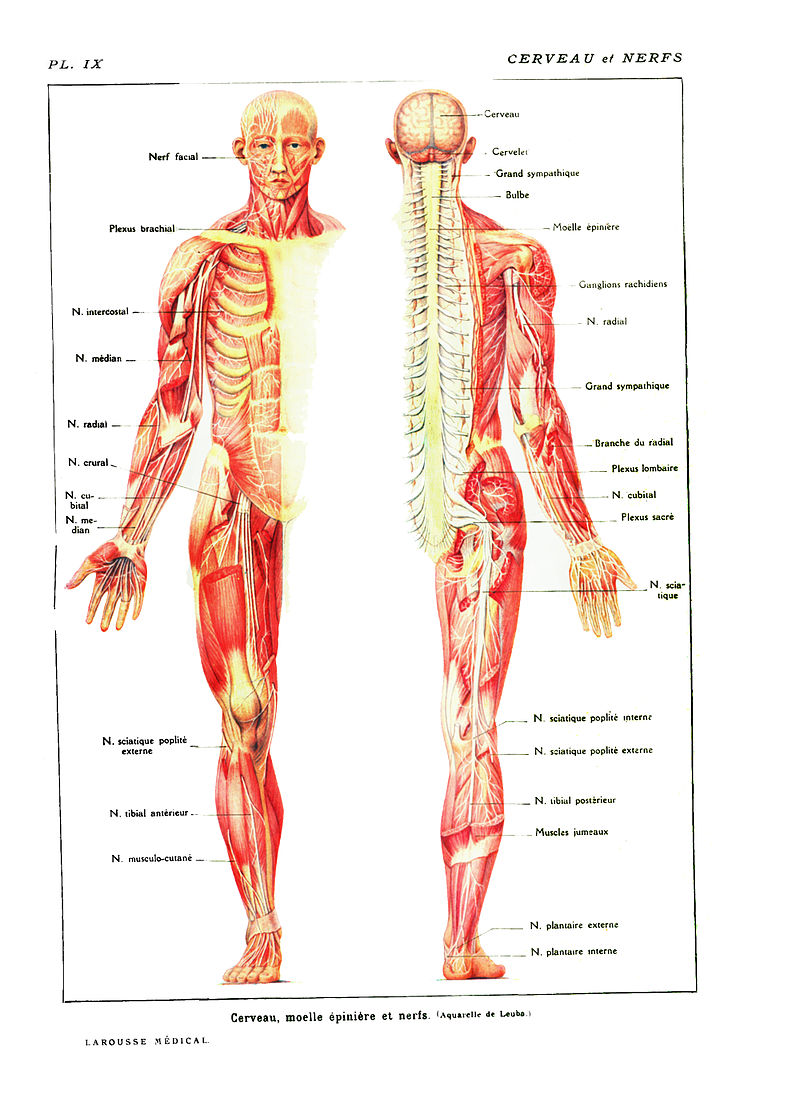
 Though body is the central element of all experience, it’s easy to take it for granted until it fails in some way. The flesh and bone and nerve that makes up a human are resilient and yet also shockingly vulnerable. Having spent my academic career in the field of Health and Exercise Science, of course I’ve paid considerable attention this subject, but I also think about it as a reader and as a writer. What place do illness, aging, and injury have in the books we read for entertainment?

It depends on how lightly we want to be entertained. In Henning Mankell’s Kurt Wallander series, Wallander’s poor diet, lack of sleep, and high levels of stress have cumulative effects throughout the series. His struggles to regulate his habits and to cope with his declining health are portrayed with affecting intimacy and realism. Meanwhile, the protagonists in humorous cozies often have junk-food habits and hate to exercise,  yet they remain healthy and attractive and able to escape from danger with adequate agility, experiencing no worse negative consequences than five or ten pounds they would like to lose. The same common health behaviors can be written as tragic flaws or comic flaws, depending where the book fits in the genre spectrum.

Injuries are common in mysteries, from bullet wounds to twisted ankles to head injuries. In recent years, the latter have been handled with more accuracy as we better understand concussions. The person investigating the mystery is now less likely to get knocked on the head and push through with nothing but a lump and a headache. Recovery is slower than it was once thought to be, and new awareness of the cumulative effects of repeated concussions, from depression to dementia and other problems, may keep writers from giving their lead characters too many blows on the head.

The sleep deprivation that protagonists sometimes endure in mysteries ought to make their reaction time slower, their short-term memories less reliable, their emotions harder to control, and their attention span fragmented. Adrenaline will help in an emergency, but not for an entire day. I’ve seen this portrayed realistically in some books and inaccurately in others. Science has shown that no one can actually train herself to function without adequate sleep, though this may be one of the hardest health misconceptions to correct, perhaps because tired people (like drunks) overestimate how well they are doing.  To some extent, we  can learn to handle the stress of fatigue and recognize how it affects us, but we can’t sustain normal cognitive and physical functioning.

Some health conditions and injuries are random—the roll of the genetic dice, the roll of a car off the road—but in fiction, out-of-the-blue disasters can seem contrived. A character’s health challenges can play a role, though, and a great variety of physical conditions have a place in a realistic representation of the world.

In M.L. Eaton’s When the Clocks Stopped, the first book in her Mysterious Marsh series, the lead character Hazel, an attorney, is pregnant and gives birth, and in the next book she’s nursing her baby. These natural aspects of her life add depth to the stories and complexity to her crime-solving efforts. In Anne Hillerman’s latest mystery, Song of the Lion, retired Navajo Police lieutenant Joe Leaphorn lives with the effects of both aging and serious injury and finds meaning, purpose, and dignity within his limitations, helping a former colleague to solve a case. Still the deep, complex character he was when Tony Hillerman introduced him twenty-one books ago, Leaphorn has gone through life changes, and so have readers who have been with the series since the beginning.

I intentionally started the Mae Martin series with my protagonist in her late twenties, so I would have decades of her life to explore, with all the changes those years will bring— emotional, professional and physical—for her and the people close to her.

As a reader, do you notice or think about characters’ health? As a writer, how to do you handle it?

*****

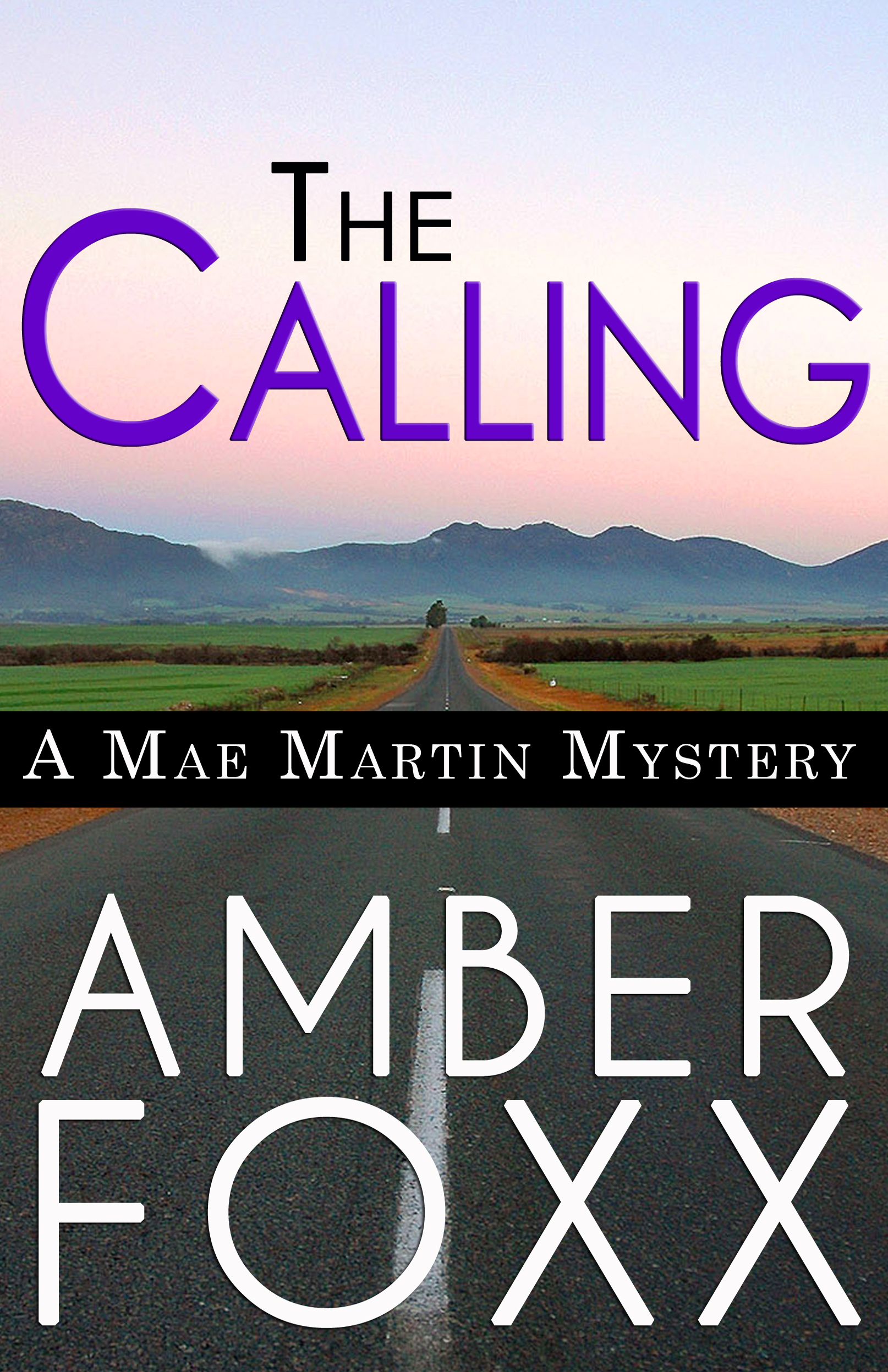
Book one in my series, The Calling, is on sale for 99 cents through this weekend on all e-book retail sites.

The Calling

The first Mae Martin Psychic Mystery

Obeying her mother’s warning, Mae Martin-Ridley has spent years hiding her gift of “the sight.” When concern for a missing hunter compels her to use it again, her peaceful life in a small Southern town begins to fall apart. New friends push her to explore her unusual talents, but as she does, she discovers the shadow side of her visions—access to secrets she could regret uncovering.

Gift or curse? When an extraordinary ability intrudes on an ordinary life, nothing can be the same again.

The Mae Martin Series

No murder, just mystery. Every life hides a secret, and love is the deepest mystery of all.

Daily Practice

      About five years ago, I made a commitment to write daily. How many words? It doesn’t matter; the act itself does. Sometimes I put in hours, sometimes only thirty minutes. Now that I’ve retired early from academic work, I look forward to many days as a full-time writer. However, while I was packing, downsizing, moving across the country, unpacking, and doing all the paperwork of setting up in a new place, I only had time to write a paragraph each night before going to bed. So why did I bother?


One, it kept me in touch my work in progress. Even the briefest engagement with it feeds the underground springs, the aquifer of ideas. As long as I make that daily connection with the characters, they stay alive in my mind and show up to join me, in a way, while I’m doing things like walking or running that tend to promote creative free flow.

Skill is the other reason I keep the daily commitment. Like practicing yoga daily, writing keeps my verbal skills flexible and my imagination in shape. In one of my brief writing sessions while on the road, I came up with some lines I love so much I’m afraid they may be darlings I’ll have to kill. Nonetheless, they gave me insight into a character’s thinking about relationships and intimacy, an “aha” moment inside his head.

I take breaks from individual books. I’m working on Book Seven while Book Six is being critiqued, and then I’ll get back to revisions on Book Six while Book Seven rests. The separation from each story helps me see it with fresh eyes, but so far I don’t want a break from writing.

Do you take some days or weeks off between projects or do you write daily?


Reading Aloud

I had no idea how revealing this would be. A lot of authors say they read their works in progress aloud to find typos and missing words, and it does bring those up, but the real discovery for me was the emotional content. That sounds odd, doesn’t it? Wouldn’t I know? I felt it while I was writing, but after a few revisions, I started to doubt the book, to wonder if it was sufficiently compelling even though my critique partners said it was. When I read the dialogue aloud, I discovered the full intensity of the conflicts.

Another revelation was the excess detail in a number of scenes. When I’m revising silently, I tend to debate whether or not a line needs cutting. Does it give depth and flavor, or does it slow things down? When I was reading aloud, there was no question. I did this as if I were the voice actor for an audiobook, and if I couldn’t bring energy into certain material, if I couldn’t act it, it was interrupting the scene, not adding to it. I cut about 900 words that didn’t seem excessive when I did my “cut revision.” From now on, the “audio revision” goes into my writing process toolbox.

The Dunning-Kruger Effect and Writing

You may have heard of this phenomenon, but if you haven’t, here’s the short version: studies by Dunning and Kruger found that competence and confidence don’t always go together. Being a professor, I’ll give an academic example. Students who have the least knowledge of a subject often think they did best on the exam. They lack the foundation from which to question themselves and are amazed when they get Fs. Students who understand more of the material tend to be critical of their performance, in part because they assume others worked as hard as they did. Also, they know enough to know they aren’t perfect. Their sighs of relief when they get As and Bs are sincere. They had doubts. Confidence goes back up when students have real mastery, but not as high as the confidence of the truly ignorant.

What does this have to do with writing? I don’t know about you, but I had no idea how bad the first novel I wrote was at the time I finished it. The theme and the setting still speak to me, and the characters have potential. The writing, however, makes me cringe. I know enough to recognize its faults now and am glad I didn’t inflict it on anyone. Salvaging it would be more work than it’s worth.

Having reached competence but not genius, I’m now in the dip in the confidence curve. I’m stunned that my critique partners haven’t suggested major changes in my work in progress. They noticed places where I could improve it, of course, but I expected they would find problems in the plot, and they didn’t. They said the mystery works. Maybe it flowed well because it started with material I cut from an early draft of the book before it, Ghost Sickness, and because it deals with themes I care about: ethics, spirituality, health and illness, and the exploitation of desperate people.

Nonetheless, before sending it to the next set of readers, I’m going through it to see where it could tighten up further now that I’ve been away from it for a couple of months, drafting the book that follows. So far, I’ve kept myself from acting on the urges of the little demon in my head that’s telling me I should rearrange huge chunks and cut others. I can think of important scenes I almost cut from two other books, scenes which turned out to resonate deeply with readers, so I’m not giving in to the demon, but I wonder if I’ll be relieved or alarmed if the next set of critiques don’t tell me to tear it apart and start over.

Over the Easter weekend, I did my first ever book signing event. After ten years onstage acting and then twenty-odd years as a college professor, I didn’t have jitters about either the reading or the question-and-answer session. It was informal and enjoyable. I sold a few books and got feedback that I should narrate my own audio books, so I trust that my perception of success is not a Dunning-Kruger effect. I plan to try reading the WIP aloud after I complete the current round of revisions and see if it feels alive and ready for an audience. I’ve never done that as part of my self-editing process, but it may be exactly what I need. The actor in me may notice pacing and energy in ways the silent reader doesn’t. If I hear it and cringe as if it were that old first manuscript, I’ll know I have more work to do. If it plays, then it’s ready for the next beta readers, and I’m ready for whatever they tell me. The challenging thing about the Dunning-Kruger effect is that when it applies to us, we can’t tell. One of many reasons I can’t live without my betas.