Call Me Inaccessible

Cell phones are so convenient in real life life and so inconvenient in fiction when you want to strand a city girl on an unlit road in the desert on a cold winter night. So inconvenient when you want characters to be inaccessible to each other. Unless you set your stories far enough in the past, people can be reached and can call for help. Normally, I work the hyper-connected nature of life into my plots, but once in a while I need to cut off my characters’ communication. How can I do it without over-using the obvious and without too much of a deus ex machina effect?

Battery running out? I’ve used it a total of twice, in different books and with different characters, and I think that’s about as many times as I should use it.

Phone lost or stolen? In Snake Face, I have a stalker take her victim’s phone. In Death Omen, I have two children hide an adult’s phone so he won’t receive a call that would get them in trouble.  I think I’ve hit my lost-or-stolen maximum.

Phone turned off while driving?  One of my ongoing characters does this. He doesn’t trust himself to handle any distractions. I leave mine on and ignore it until I can pull over, but I see plenty of people talking on phones or even texting while they drive. They don’t make any effort to be safe. The National Safety Council and the Scientific American both say that hands-free devices are no safer than hand-held phones, but it’s not uncommon to believe that hands-free systems must be safe since they’re often built into new cars. If we’re writing realistically, not idealistically, that means driving isn’t an obstacle for a lot of folks. They can be reached by phone, even with a short delay for the safety nuts like me.

Phone off for sleeping? Maybe. But some people take their phones to bed with them.
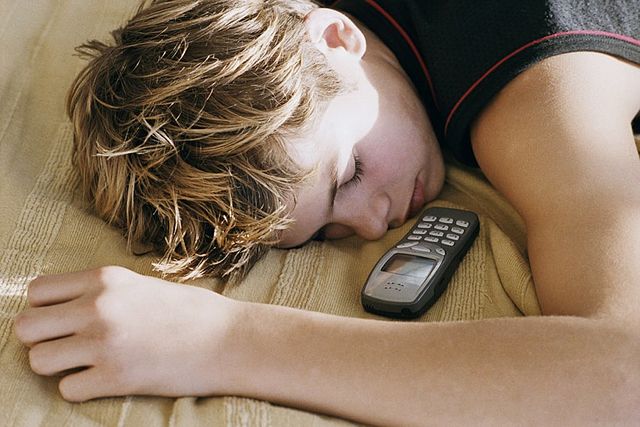
No signal? I’m about to use that for the first time. In traveling all over the country, I’ve seldom been in a place with no signal, but when I was doing research for my work in progress set partially in the ghost town of Chloride, New Mexico, one of the many unexpected facts I learned was that there’s no cell phone reception in town or within a ten-mile radius. It makes sense. The town is in a canyon. But it hadn’t occurred to me to use my phone any of the times I’d been there. The museum owner told me about the cell signal problem when I asked about internet service. I’d expected there might not be any, but Chloride stays in touch with the world through DSL internet—and landline-only phone access. (In case you’re wondering: ghost towns aren’t always uninhabited. They are ghosts of their former selves. Fourteen people live in this one.) I’d wanted to have a character get stuck on a country road outside Chloride at night, unable to make a call, and I’m so glad it’s realistic. I’ll be able to set it up as an established fact of life there well in advance.

Have you used up your quota of no-signal events? How about something strange?

Recently, I tried to make a cell phone call to a local business and got the message: “This call cannot be completed as dialed.” I checked the number in the phone book, called again, and got the same message. I looked up the business online. It was still open, with the same number listed. Weird. My bill was paid and my phone was working. I didn’t get bad reception or no reception, and when I tried calling friends, I got the same message. Naturally, I researched this phenomenon. For most people who experience it, it’s an ongoing (though unexplained) problem in a specific place. I was calling from my apartment, where the phone has worked well for a year. Could there have been too much cell phone traffic? In Truth or Consequences? June is the off-season, when it’s too hot for tourists to come to the hot springs. Some locals who can manage it leave town, too. Who could be making all those calls? If I want this mysterious problem to occur in a book, it had better be a frequent one and not pop up out of the blue when I need it. It hasn’t happened to me again, and that’s just too random for fiction. Fiction has to be more believable than the chance events of real life.

Another option for making people hard to reach is to cast low-tech characters. For my other work in progress (yes, I have two in progress in the same series), this works well for my protagonist’s former in-laws. I know people who don’t have cell phones, and some who don’t even use e-mail. One of my yoga students accidentally left her phone turned off for three weeks and didn’t notice. Not everyone who has the technology is particularly attached to it.

Any other ideas? Have you needed to cut off your characters’ phone access and found a creative way to do it?

Lessons from a Flawed-io-book

I seldom finish a book I don’t like, but I recently got all the way to the end of a romantic suspense audiobook that I almost gave up on.  Since I was usually exercising or doing housework while I listened, my tolerance for the book’s shortcomings was greater than if I’d been sitting and reading, and I had two reasons to endure the whole thing:

One: To find out how it would end.

Two: To learn from the author’s mistakes.

Obviously, reason number one says she did something right. Even close to the end, I had no idea who committed the murders. She laid the clues well, along with effective red herrings. I thought I knew “who done it,” but then I realized I was wrong. It came as a big surprise. I didn’t like the main characters, though, and the writing was noticeably flawed. As I said above, the flaws were educational. Each time I noticed one, I thought: I’d better not do that. Here are some examples.

  • Overused words. Characters in this book don’t turn their heads, shift in their seats, or look around; they twist. “I twisted my neck” occurs particularly often. Between reading aloud and getting input from critique partners, I catch more and more of my habitual words, but I’m afraid I acquire new ones as I cure myself of the old.
  • The descriptions of settings and actions are excessive. Detail has its place, of course. It’s useful that she gives the layout of the male lead’s house, because it’s an important setting as well as an unusual structure. But she also describes the complete décor of a rental cabin we’ll never see again, right down to the color scheme of the braided rug. A man doesn’t simply open a package, he takes a pen knife from his pocket, unfolds the knife, slices the paper diagonally, etc. Sex scenes are so long and so much alike, I could have skipped them and picked up the story again without having missed a thing (and half-way through the book, that’s what I started doing.)  Sometimes it’s okay to tell, not show. Or at least to show a lot less.
  • Not only is the food described in excess detail, far too many scenes take place in kitchens and in bars and restaurants. Yes, we all eat three meals a day, but in fiction, conversations can have more varied settings. Sameness gets stale.
  • Secondary characters keep popping in uninvited, showing up on the street, or in those bars and restaurants, in order to deliver plot points. Some even fly in from another country to have an argument face to face rather than on the phone. Their presence feels contrived. I need to make the main characters’ choices and actions drive the plot,  instead of using too many convenient intrusions.
  • The main characters are stunningly attractive, and yet they eat huge unhealthy meals (always with  dessert), drink a good amount of beer, and they never seem to exercise. How does he have that amazing rock-hard muscular body? How does she have a figure that makes everyone stare at her and desire her? They ought to look ordinary, not above average. I can be unrealistic and not notice—one of many reasons to keep getting multiple critiques. I do plenty of research, but beta readers have still caught things I overlooked.
  • Every single person in the whole book is white. I’ve never lived anywhere so homogeneous, and since I use real towns and cities as settings, my characters reflect the diversity of those places. But do I fall into some other kind of unconscious pattern with my characters? I’ll have to look for it.
  • The book is padded with conversations that could have been summed up in a sentence or eliminated altogether. I suspect the author was so fascinated by her characters and by exploring their relationships that she couldn’t bring herself to kill these long, dull darlings. My pantsing first drafts are full of material like this.  I discover a lot by writing it—but it needs to take place offstage.
  • Characters echo each other’s words. “I saw him.” “You saw him?” “Yes, I saw him.” Even if people occasionally talk this way in real life, it slows down the story. I should start dialogue where it counts, not with the warm-ups.
  • The revelation of who committed the murders comes through a spate of expository dialogue in which the two conspirators tell each other what they already know, having an argument full of “That was our plan” statements. The protagonist is a witness to this, but she’s tied up, and until that moment she never had a clue what either of them was up to. The police show up after she’s heard it all and is in mid-escape. I can’t let the mystery be solved solely by accident and chance. And if I want to reveal a secret or backstory through dialogue, I need to set it up with conflicts, questions, and challenges to bring out the information in a believable way.

I picked up some valuable reminders from this audiobook, and most have to do with cutting and revision. I need to know more than my readers do, and then choose what to tell them and how.


Committed to a Character

A fellow writer in an online discussion group asked how other authors feel about their main characters. Why do we stick with them and want to write about them?

When I started writing my series, I needed a lead character who could solve the type of mysteries I wanted to write. The “villains” aren’t killers. Some commit other types of crimes such as theft or stalking; some are fraudulent shamans or healers; some are corrupt or dangerous in a personal and spiritual way without breaking the law. My protagonist, Mae Martin, is psychic, though that’s not the only skill she brings to solving mysteries. Like any amateur sleuth, she’s observant, analytical, persistent, curious, and she’s the kind of person people turn to for help.

Except for being psychic, Mae is based on a good friend (the friend knows I did this). If I feel I’m losing touch with her, I just have to ask myself what my friend would do or say. She’s generous and nurturing, but she’ll only put up with so much, and when she speaks her mind, she can be a handful. Her willingness to help others is both her greatest strength and her greatest weakness, because she can go overboard. Mae sometimes catches herself in the act of getting too wrapped up another person’s troubles, but she ends up doing it anyway.

My friend, who is a good bit younger than me, is on her third marriage. So far, Mae is dodging number three, but she has what she calls a “man habit,” and hasn’t managed to go as long without a relationship as she meant to at the end of marriage number two. One of the things I enjoy about her is that she was raised to be a nice Southern lady, but she’s feisty and she likes to win. When she seems too good, I remember her competitive streak, and her bad choices as well as her good ones. I like her for her faults as much as for her strengths.

I once read a blog post in which an author said to give your characters just three traits—don’t make them more complex or contradictory. Interesting idea, and it may work for certain subgenres of mystery, but it’s not my approach to building characters. Though I don’t have to reveal and explain every aspect of their psyches, complex people feel more real to me, and they apparently seem real to my readers.

Some readers are deeply attached to Mae’s boyfriend, and they tend to take his side when the couple has fights; others take her side. I was strangely flattered when a friend asked me to create a character based on her so she and Mae could go through a conflict and work out some problems. This friend feels that she and Mae don’t get along as well as they did in the first few books. “I want to start out as her nemesis and become her friend,” she said. I’m inclined to do it. There’s already a character in one of the two books in progress who resembles this woman in age, appearance, and occupation. She and the real person who inspired Mae strike me as incompatible, though they’re two of my closest friends. They live in different states and have never met, but I’ll have fun throwing them together in fiction and seeing how they both grow and change through the encounter.

On Ramona DeFelice Long’s blog, she once suggested a character “I’m not” exercise: having the character list their perceptions of what they are not, and then checking to see if these things helped or hindered the character, and if these perceptions were static or changing. I found it helpful to look at how Mae sees herself, not just how I see her. After all, we can have inaccurate perceptions of ourselves. She doesn’t necessarily know herself as well as  she could, and that’s where the potential for growth comes in—the shortcomings that get her into trouble and challenge her to learn.

What keeps you committed to your series protagonist?


Disorienting Dilemma

I came across this concept in a textbook on wellness coaching: people are most likely to change when they’re faced with a disorienting dilemma. Immediately, I shifted gears from my fitness professional role to thinking as a writer. Disorienting. I pictured someone unable to get their bearings, losing their sense of direction, and being forced to look at things differently. Dilemma. A difficult choice.  Usually the hardest choices are between two highly desirable but incompatible actions, or between two equally unpleasant actions.

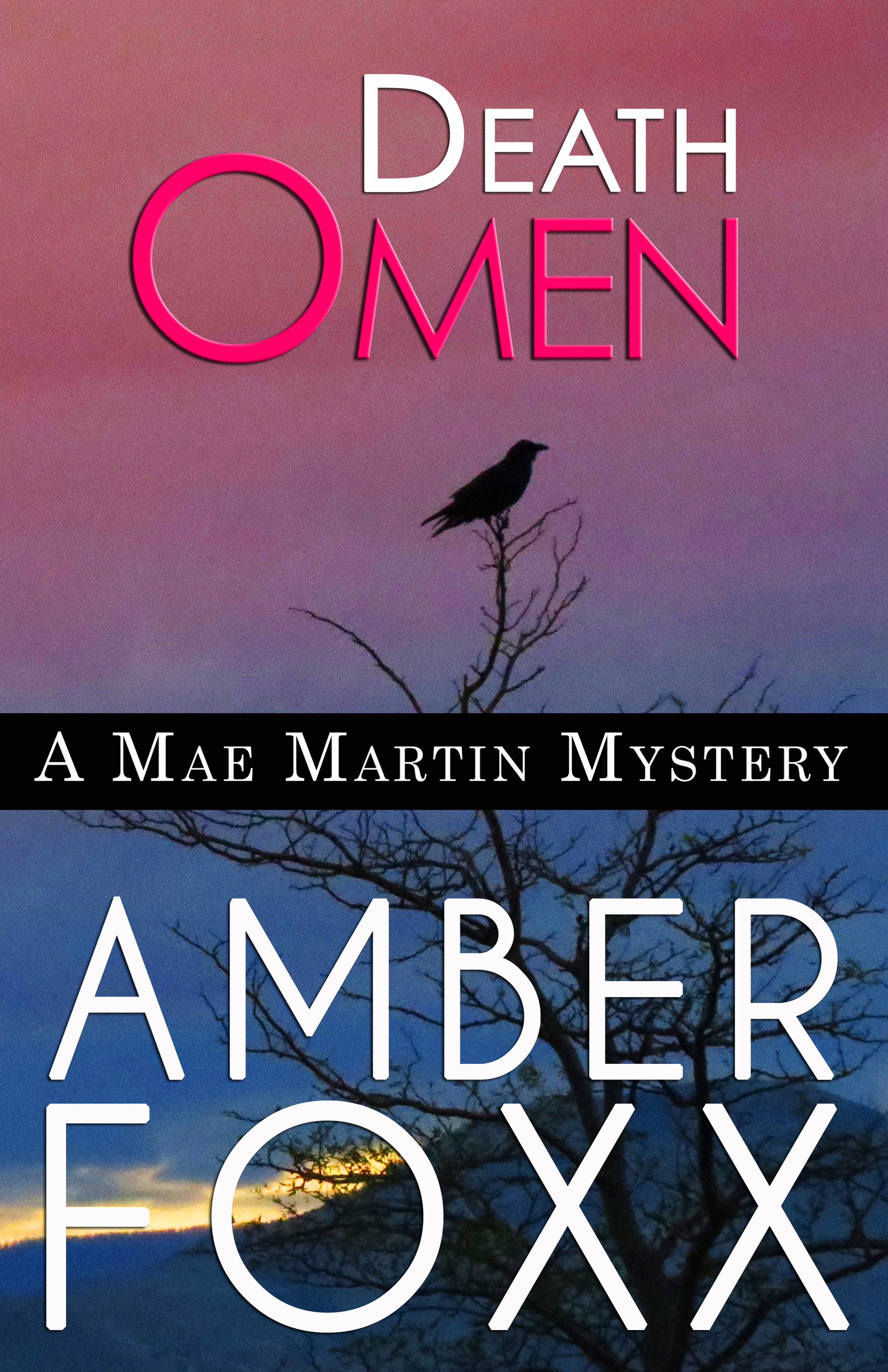
Death Omen, book six in my series, ends with the protagonist, Mae Martin, in a disorienting dilemma in her personal life, a side effect of resolving the mystery. I intended to pick up her story over a year later and get on with the next mystery, after this romantic dilemma had been partially resolved, and after one of the men involved in her difficult decision has been through a serious illness and treatment. I didn’t plan on taking readers through that rough ride with him, or through intertwined the ups and downs of the love story. But a friend who follows the series said over dinner last week that I had enough material for a whole book in exactly the stuff I’d planned to skip over.

She’s right. I’m excited about the setting and the characters in the year-and-a half-later book, and I’ve already completed the first draft, but I had a problem skipping so much, and it nagged at me during that draft. How much backstory did I need to explain the way Mae resolved her dilemma? Should I let readers simply guess some of what happened while she had two men in her life? And was I absolutely sure how it would turn out, if I didn’t tell the story?

Years ago, a critique partner warned me not to coddle my characters. If there’s something painful and hard coming up, put them through it. And I’ve followed that advice—until I almost didn’t. The completed draft has to wait and become book eight. I have to write the “gap story,” putting Mae and the men in her life in the middle of a mystery that challenges all of them, while one the men is sick and while she’s sorting out her choices in love and commitment. It will only make everything they have to do that much harder. I found an instigating event in my “scenes to recycle for unknown stories” file that perfectly sets up the mystery I need to involve all three of them in yet another disorienting dilemma.


Bad Actors

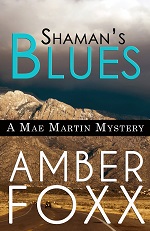
Mysteries, even the lighter ones, touch on the darker side of human nature. There is a wrong to be righted, not just a puzzle to solve. Since I don’t write about murder, I alternate between what I think of crimes of the spirit and actual crimes. The antagonist is usually based on someone who made me angry, created a sense of outrage, or gave me the creeps. In The Calling, Mae Martin encounters a professor who appears to be unethical in his relationships with female students and colleagues, and there’s a dark spiritual power around him as well. Shaman’s Blues starts with missing people, one who may be connected with a ghost, and one who claims to read auras and gives strange advice. She was inspired by someone I met many years ago in Santa Fe and never forgot—because people seemed to believe her, despite the dubious nature of her guidance. The exploitation of others’ spiritual longings and desire for healing is a theme I explore often. Living in New Mexico, where alternative medicine and spiritual seekers are a big part of the scene, I’ll never run out of material. There are many excellent practitioners here, but there are some questionable ones as well.

Because of the hot springs, the land where my home town, Truth or Consequences, is situated was a healing place for the Apaches long before Europeans arrived. Visitors come here now for retreats and to recover their health and peace of mind. I set my most recent book, Death Omen, here, for that reason. Some of it takes place in Santa Fe and on the road, but much of the third act takes place in one of Truth or Consequences’ hot springs spas. The antagonist claims to be a healer and a visionary who can see past incarnations. If she’s not what she says she is, her followers may be risking their lives.

*****

Shaman’s Blues, book two in the Mae Martin series, is currently on sale for 99 cents.