What Scares You?

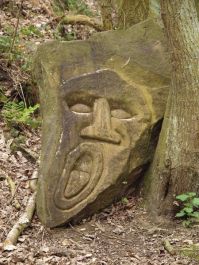
screaming-face

Since we’re so close to Halloween, I thought I’d explore my one venture into writing horror. The plotting workout of going outside my genre was educational, as it made me study the art of scaring people.

I’m at home writing paranormal phenomena. My mystery series features a psychic protagonist and there are ghosts and spirits in two of the books, Shaman’s Blues and Soul Loss. However, their roles are more mystical than frightening, and while the ghost in my prequel short story The Outlaw Women delivers some disturbing news, he’s actually quite benevolent. Mystery involves suspense and tension, and sometimes fear for the main character’s safety, but not the kind of fear that that makes the hairs on the back of your neck stand up.

In Stephen King’s analysis of horror, Danse Macabre, he has a chapter on monstrosity in which he examines the fine line between the strange and the monstrous. It’s the walk on that line that I find chilling. When the transition into monstrosity is too extreme, the impact is lost. To me, the scariest part of a horror story isn’t the gore. The blood and guts or weird slime or whatever is supposed to deliver peak terror is usually so over-the-top or icky that I’m not scared anymore. It’s the build-up that creeps me out, the sense that something is wrong at a deep, perhaps supernatural level, making it hard to fight or prevent.

Though I read horror stories occasionally, I never planned to write one. I ended up doing it on kind of a dare. In a discussion with several other authors, I brought up the fact that when author earnings are sorted by genre, the most money was in romance. None of us wrote romance. A horror writer said he’d have to try. I asked, “Horror-romance?” Next thing I knew, we were working on an anthology of horror-romance short stories based on the seven deadly sins. I picked sloth, since it was a challenge. How could I make laziness frightening? And romantic, in a scary way?

The Apache concept of bear sickness, a condition of unnatural lethargy, struck me as good starting place. Loss of control at the mental level, the feeling that something is invading and taking you over against your will, would have to be terrifying. I explored other Apache myths about bears and came up with a horror story without gore, an appropriate choice for the author of series of mysteries without murders. I was working on Ghost Sickness at the time, which is set, in part, on the Mescalero Apache reservation, so I used that locale—the same powwow, and even a couple of the minor characters from Ghost Sickness— in my horror story. When it turned out to be too long for the anthology, I set it aside for a while. Last year I released Bearing as a stand-alone for Halloween. Most people have liked it and found it creepy or chilling. However, the only review on Barnes and Noble says “Not at all scary.” The same things don’t frighten all of us. What gives you a good scare?

Bearingbearing-copy

 A tale of paranormal horror based on Native American myths.

Mikayla, young Apache woman attending a powwow with her family, becomes entranced by an outsider, a Cree man who shows up without his Apache girlfriend. As her fascination consumes her, Mikayla changes in ways both pleasurable and frightening, powerless to overcome his dark magic until it may be too late.

*****

The Calling, the first book in the Mae Martin Psychic Mystery series, is on sale for 99 cents through Oct. 28th on all e-book retail sites.

I Couldn’t Have Done It Without You, or Critique Partnering

Amber in tree final

IMG_1610jordaina1

I have a writer friend who has never used a critique partner or any beta reader other than her husband. She’s done quite well that way, but not all of us could. Whether you’re a writer who hasn’t worked with a partner, or one who has tried the process but not yet found your critiquing soulmates, I hope you’ll enjoy reading about how it works when it goes well. Each member of my main critique team* takes a turn in this post. Although they talk about me more than they mention each other, it’s not because I’m more important in this trio; it’s because I’ve been working with each of them for years, while their partnership is more recent.

Amber

Before I published my first book, I joined an online critique group. I learned much from group members who came and went, but Jordaina Sydney Robinson and I have carried on long after our formal group chose to dissolve.

The Calling, my first book, had been chapter-by-chapter critiqued with a prior partner when Jordaina joined the group, so it’s the only one of my works she ever received in a fairly polished state. For all the others, she’s been the first reader, the person I trust with my possibly off-key experiments in plotting. I appreciate her attention to emotional and psychological detail. She notices what rings true or doesn’t and what needs clarification. And she comments on what she likes as well as what needs improvement. What writer wouldn’t like to know what pops into a reader’s mind?

I found my other indispensable critique partner, Janet Simpson, when I needed someone to read a completed draft of Shaman’s Blues. After processing Jordaina’s chapter-by-chapter feedback, I needed another perspective on the whole book. Janet turned out to be great at noticing the phrases and sentence structures I overused as well as looking at the big picture of the plot and the characters. I added her to my permanent team. A valuable critique partner tactfully but honestly tells you when something doesn’t work. Her feedback on my latest book, Ghost Sickness, motivated me to give a major subplot an overhaul.

When Janet needed an additional critique partner last year, I introduced her to Jordaina, and we are now a kind of circle. We are genuine fans of each other’s work. I think this is essential for writers working together long-term. In the formal group, which was dedicated to paranormal mysteries, there sometimes were members who wrote varieties of the genre such as vampire fiction or YA that didn’t appeal to me. No matter how well-crafted these chapters were, it made my commitment to weekly critiques more of a job than a labor of love. My offbeat variation on the mystery genre—no murders—isn’t everybody’s cup of tea, either. Jordaina’s and Janet’s humorous mysteries delight me. Both make me laugh. This isn’t a chore. It’s a pleasure.

We don’t have a schedule. Each of us sends what we need critiqued—a full manuscript or a chapter or a revised section or two—when it’s ready. Sometimes one of us has a deadline, sometimes not. It works, like a healthy relationship, with balanced give and take. No rules needed.

Jordaina

Personally, I think the biggest hurdle any writer has to overcome (ever!) is the fear of showing someone their work. Whatever state it’s in, whether that be the poorly punctuated first draft that doesn’t really make total sense (I’m allergic to commas – just ask Amber, she’ll tell you!) or the most polished and shiny draft you have in you (what Amber normally sends me under the ridiculous heading of “work in progress”).

It doesn’t matter though, because whatever I send Amber, I feel safe that she won’t judge (except for my lack of comma usage – I know she tuts over that) and that she’s committed to helping me make my story as compelling as I possibly can make it.

My first book, Beyond Dead, looks very different now from the first draft Amber critiqued, and many of the larger changes in the book came from her critiques. And that’s one of the best things about critique partners – they don’t just tell you about typos and plot holes, they give you options of how to fix them. Or, at least, the best ones do. And, with Amber and Janet, I’m lucky to have two of the best.

I have a few friends who are just starting out on the first drafts of their very first novels, and I keep telling them they need to start looking for critique partners now because finding a partner that you trust is more difficult than finding a husband (not that I’m particularly looking for a husband). And anyway, I think I’d rather have a great critique partner.

Note: Some commas in Jordaina’s section come courtesy of Amber.

Janet

 I have been around a bit. I was a good time girl looking for a permanent partner, flitting from critique relationship to critique relationship, never quite finding my perfect fit. And then I found Amber. The first book in my series had been published when we bumped into each other online at Sisters in Crime and we’ve never looked back.

When Amber told me the genre she wrote, I wasn’t sure it was going to be my cup of tea but once I started reading I was hooked. For me, her plots are secondary; it’s all about her characters, and if she takes them in a direction that doesn’t work for me, then I am happy to tell her that her characters are wandering off.

What do I get in return, other than a free read of her books well before the general public get a look in? Commas. Sad but true. I have no idea where commas go either. I go from sprinkling them liberally, like confetti at a wedding, to leaving them out altogether. However, Amber is good for more than a smack upside the head in regards to the proper use of punctuation.

I’ve got a confession to make. Don’t tell anyone, but I used to write romance, and sometimes I get carried away and forget that my Daisy Dunlop books are mysteries. There is a hint of, will they, won’t they, between my two main characters and when I wandered too far down the will they path in my last book, Lost Property, Amber dragged me back on track. A couple of other people who read the first draft loved the move towards a less platonic relationship and the drama of a cliff-hanger ending, but Amber didn’t think it worked. I trust her when it comes to my books, no matter how many other people cheered me on to keep going with what I had. If Amber says don’t do it, then a major rewrite is required. Was she right? Well, the positive reviews the book is getting would indicate that I made the right decision to trust her judgement.

Honest critique relationships take time to build. Some people don’t want the truth; they just want a pat on the head. Other people don’t want to tell you the truth; they just want to tear you down to build themselves up. Amber has never been anything other than honest and open, and I can’t imagine writing a book without her input. Not only Amber’s but Jordaina’s as well. Together they give my books the polish—and commas—they need. Thanks ladies! X

Another note: Amber may have removed some of the commas in Janet’s section to punctuate Jordaina’s.

 *****

*Although this post is about reciprocal critique partnering, I’m equally grateful to my beta readers who have helped me polish my work after my critique partners have worked with me through its early stages. Among them are Claire Murray, who saw why I needed to restore the original ending of Soul Loss, Heather Stetler, who has an attentive eye for the subtle details, and Kate Collier, who knows where to cut.

If you want to explore this topic further, a recent post on Maine Crime Writers, one of my favorite writing blogs, was about beta readers.

http://mainecrimewriters.com/brendas-posts/beta-love

 

Hidden Tracks

Amber in tree final I have files with titles such as “Accidental Shooting Settlements” and “Art Authentication” as well as “Pricing Art” and “Parrot Questions.” I finally deleted the one on 1989 Aerostar vans. The struggling old van made it through Shaman’s Blues and Snake Face and retired, with no one commenting on how I’d handled its various mechanical problems. That’s how it should be. I want to hide my tracks. Readers usually shouldn’t be paying attention to my research, but since this is a blog about writing, I’m going to go backstage and show the process.

Readers notice all the scholarly articles in The Calling. This book may look as though I worked harder on research compared to the rest, but in fact it was the easiest. I didn’t venture outside my areas of expertise, and I set it in places I knew well.When I lived in Norfolk, I’d visited a number of alternative healers there and several psychics in Virginia Beach—out of pure curiosity, with no idea they would end up as background for a book.  An important character in this story is a professor in health sciences and so am I. To find the material on alternative medicine and research in the field, all I had to do was relocate the right articles. I knew where they’d been published and I remembered the content.

More often, I don’t realize how much I’ll need to know about a subject until I’m into the first draft of a book. I immediately start keeping research lists, things to look up or ask experts about, and I dig into these questions as I go along.

When the character of Jamie showed up in Shaman’s Blues, I read books about current Australian Aboriginal culture in order to understand his roots. I studied Aussie slang and was blessed with an Australian critique partner who could tell if I got it right. And then there’s his van. It’s close to being a character in the next book, Snake Face. I took notes during Car Talk. I looked up timing belts and timing chains, I looked up the last year that these vans were made with carburetors, and I looked at pictures of their engine parts. A musician who had toured with a band read the manuscript to make sure I portrayed life on the road correctly. And I consulted a couple of lawyers about a major plot point. I double-checked some details of the medical treatments and outcomes for a particular injury. And I searched out the name of a Greek drinking dance. This is, I think, typical in the creation of a book, more typical than the ease with which I could pull together the seemingly obscure scholarship in The Calling.

For Soul Loss I reread some books on neo-shamanism to refresh my memory of a strange workshop I once attended as part of a conference, and I researched Tarot cards and Cochiti Pueblo beliefs about the dead. I also had to find out what was involved in setting up a festival. For Ghost Sickness I had to study up on parrots, since several play roles in the story, and also looked into rodeo injuries, and many matters related to art. Even though I’d set the story in familiar places, I revisited the Mescalero Apache reservation and took a careful, observant walk through Truth or Consequences to make doubly sure that certain events could happen as I wrote them. I could go on and on. It’s amazing what I discover that don’t know—or what I’ve forgotten that I thought I knew. But that list with the heading “Look Up” eventually gets crossed off and ideally readers have no idea I had to work so hard on that van. All they need to care about is the character driving it.

A Letter from the Antagonist

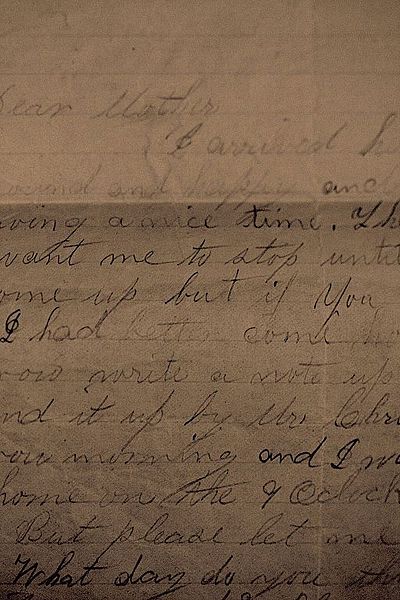
handwritten_letter_texture_for_layers_(2980933249)

For one weekend this past fall, my personal antagonist was Amber in tree finaltechnology. I’ll spare you the whole story. The short version is this: I couldn’t access my work in progress due to various computer issues and I was having severe withdrawal symptoms from not writing all day. It’s as bad as not exercising—I feel strange and incomplete if I go without either for a full day. I had to write by hand.

Fortunately, there’s one thing I always do by hand for each book, and I was at exactly the right point in the work in progress to do it. Before the final version of the plot is set, but after I can see where it’s going, I write the story in the first person from the antagonist’s point of view. No scenes, no dialog, just that character’s voice telling what happened and why. This exercise gives me insight into the complexity of the oppositional characters’ feelings about their actions. It also helps me keep track of events offstage, so I can weave in all the loose ends. Since I never include scenes from the antagonist’s point of view in a book, this process doesn’t have to be polished. All it needs to do is flow.

My mysteries aren’t about murder, so my antagonist characters aren’t villains or killers, though the opposition character in Snake Face comes close. Sometimes they commit crimes; sometimes they manipulate people without being criminal. I noticed, after reading Princeton professor Harry Frankfurt’s concise, humorously titled but serious work of philosophy, On Bullshit, that I tend to cast bullshitters in the antagonist’s role—Charlie in The Calling and Jill in Soul Loss. Maybe, after years in academia, I’ve come to think bullshit is a crime.

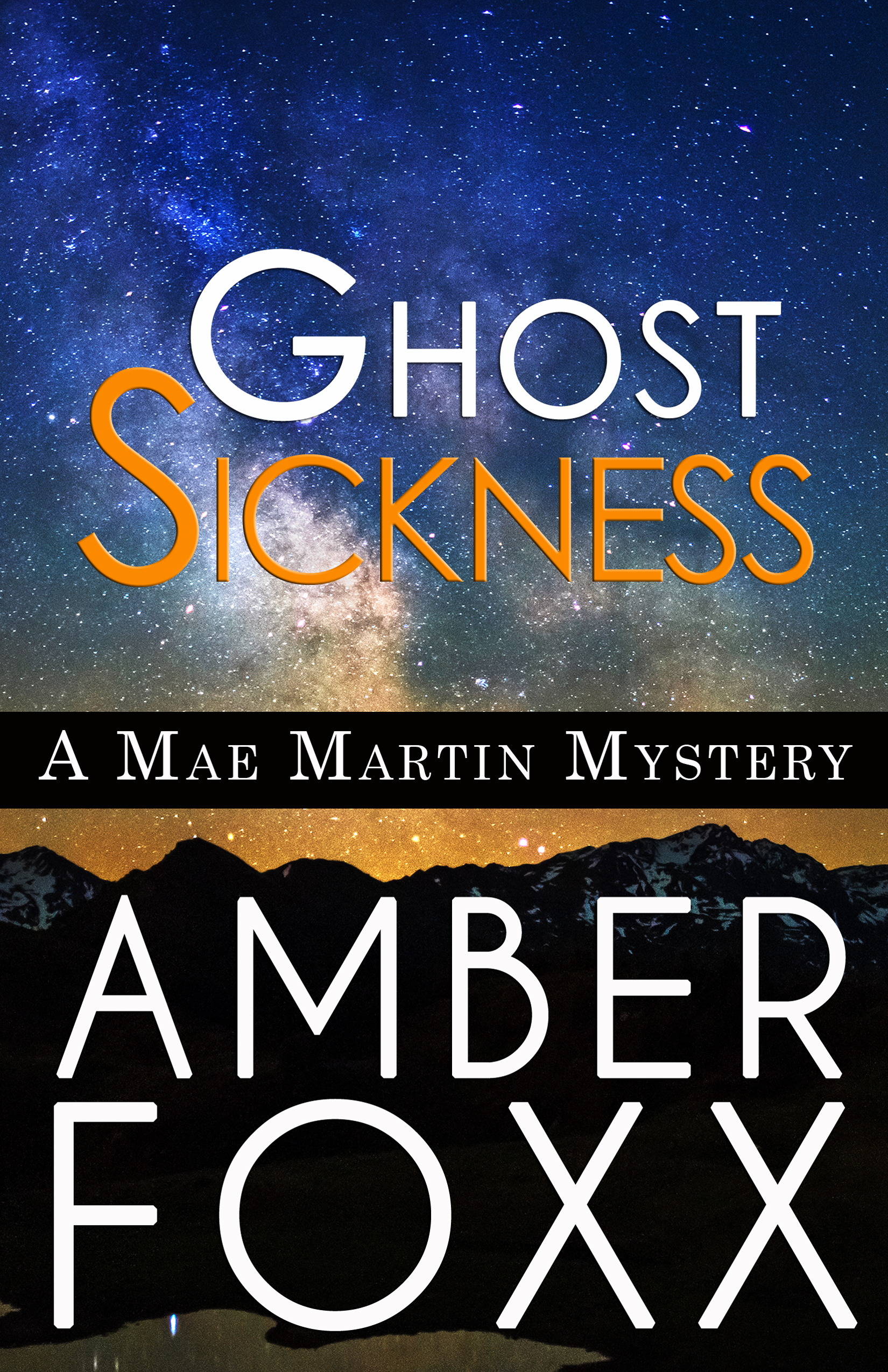
During my weekend without a computer, I invited a puzzling and deeply secretive character to tell his story as if he were sitting down and confiding in me. Or I might say, since I ended up with his hand-written narrative, he wrote me a letter. From that document I discovered which clues would need to come next in gradually revealing his story, and what would need to be saved for the end. He told me things I didn’t know about the people who helped him, and surprised me with a revelation of his deepest motive. I’ve recently wrapped up the book, Ghost Sickness, which is coming out in August, and I’m looking forward to doing this exercise with the new work in progress, even without enforced separation from my computer.ghost sickness ebook

*****

 Yesterday, inspired by a power outage, I posted on my other blog about an additional writing-by-hand creative process, the story mandala. https://amberfoxxmysteries.com/2016/07/20/monsoon-moon-and-mandala

A Sympathetic Protagonist

Amber in tree final                                              Mother_and_baby_ducks

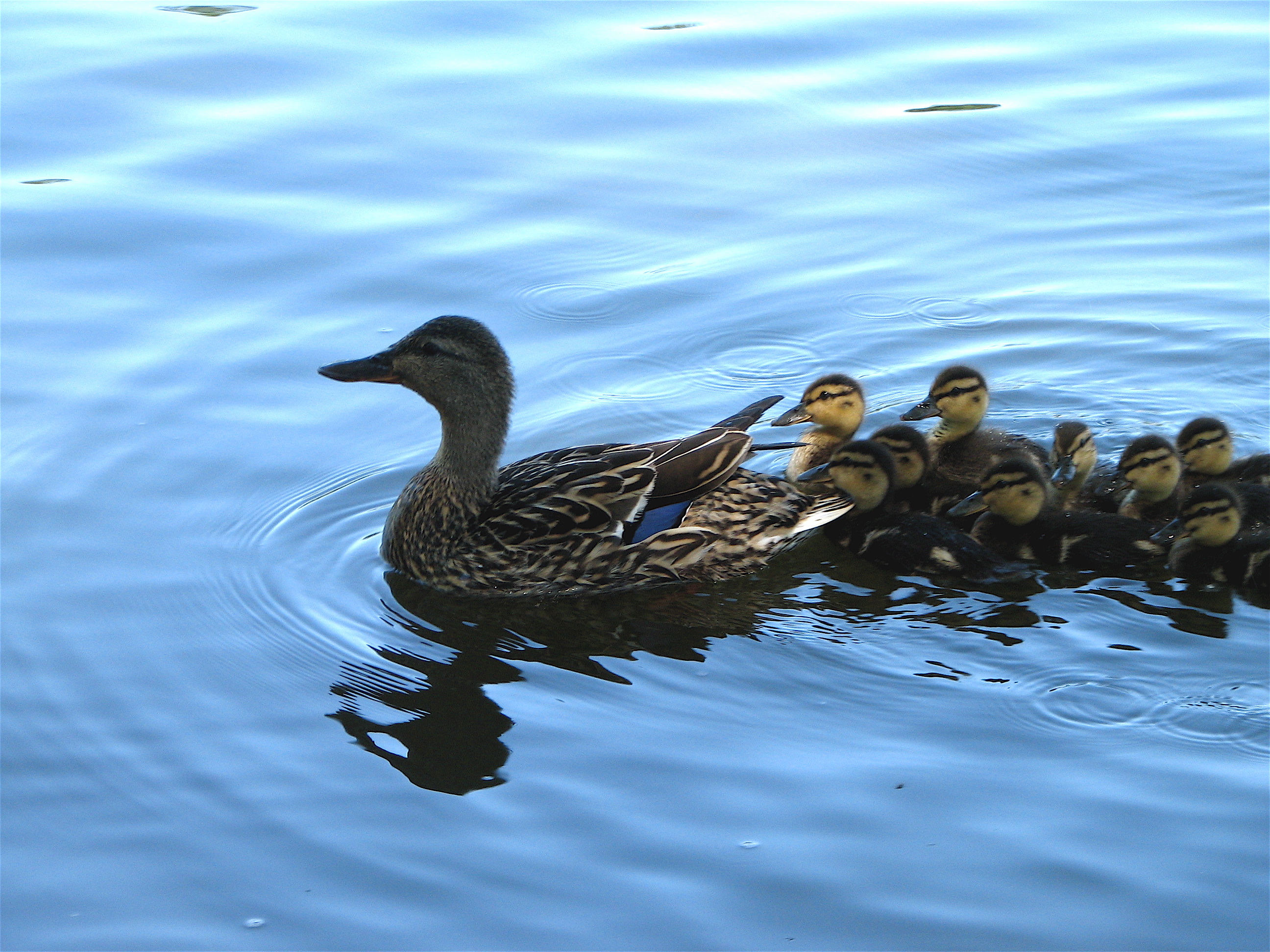
The park was deserted—all mine. Perfect. My plan: run laps of the trail for four miles, and come home with plot developments for my work in progress. I took in the beauty of the setting and slipped into creative mode as my legs fell into the rhythm of running, ready for free-wheeling improvisation. Then, up the stream bank came a mother duck followed by a swarm of fluffy brown-and-yellow ducklings. It was a tough climb for their little legs, and I wondered if they would all make it up the steep slope. On my next lap, I checked. None seemed to have been left behind. At first, I couldn’t count the babies, they were so numerous, active and close together. When I finally could see them clearly, I counted eleven.

She herded them to hide behind her as well as possible when I neared and quacked them into order when they strayed too far. I wondered if she felt overwhelmed by the responsibility. Could she count to eleven? Could she tell them apart? After I’d passed a few times, she began to warn me off, making a soft hissing sound. The next time, she hissed and waddled toward me. The next time, she lowered her head and charged, eyes narrowed, hissing for all she was worth. I honored her efforts with a burst of speed, letting her think she had scared me. I don’t know if there is such a thing as courage in ducks, but she struck me as brave, a small animal going after an adult human.

A couple with an off-leash dog arrived on the far side of the park. I jogged across and let them know about the ducks, in case their dog might be tempted to chase. They said he took no interest in things like that. I went back to the trail. No ducks in sight, not even in the stream. How she had swept all eleven into hiding so quickly, I don’t know. It was an impressive exit. Unlike the dog, I took an interest. Distracted from brainstorming my work in progress, I got wrapped up in the drama of the ducks, feeling as if I somehow knew what it was like to have too many ducklings and to strive to defend them.

Pardon me while I anthropomorphize. The mother duck has some excellent characteristics for a sympathetic protagonist. In spite of being better equipped for flight than fight, she chooses not to fly from danger, though that would be her own best defense. Instead, she tries to fight. Protectiveness in relation to weaker beings is a trait that makes readers care about a character. Flaws, in the right dose, also help readers identify with a protagonist and feel compassion for her. The brave mother duck is imperfect. Waddling at me while throwing a hissy fit, she’s a comical yet touching inconvenience. Her success in driving me off the path gives her moments of illusory triumph, but in reality she’s the underdog—underduck sounds funny—and she’s chasing a red herring, unable to realize I’m no threat to her fuzzy eleven. Against hawks and cats, the real enemies, she’s far less likely to succeed. The odds are stacked against her and her ducklings, hypervigilant though she is, but she because she’s a gifted escape artist, she stands a chance. Readers root for the character who might—but might not—make it.

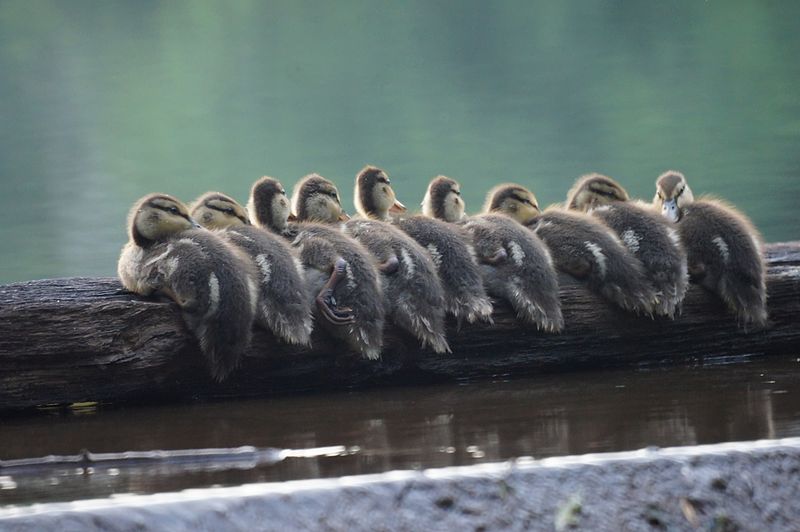
On my next run in the same park, I found that nature had taken its toll. She’s down to nine ducklings now. The loss of two makes her story stronger. She charged me with even more ferocity, straight away without allowing me a few laps before she attacked. The struggles in pursuit of a meaningful goal, the setbacks, and the sense that the protagonist is reaching her limits and still not quitting: all of this keeps the reader emotionally involved and turning the pages. I have to close this “book” since I leave Virginia for New Mexico tomorrow, and I won’t see the next chapter, but I’m rooting for the nine remaining baby ducks to survive, and for their hard-working mother to eventually see them fly. And I’ll keep her in mind as write this summer, checking that I have all my ducks in a row for establishing an engaging protagonist.

babyducks