
Sometimes it feels like the publishing process is changing daily, with information on new strategies and technologies flooding our email boxes, not to mention the bounty of scam offers to showcase our books in book clubs and on podcasts. Yet some things change slowly or not at all, especially the themes, tropes, and story lines in traditional or cozy mysteries.
I’ve been thinking about this over the last year or so because of a mystery I wrote some years ago that was published by Midnight Ink and did reasonably well before the publisher dropped its mystery line. Felicity O’Brien is a farmer who is also a healer, and she treats this ability matter of factly—she has a skill, or a gift, if you prefer, to alleviate pain and heal where she isn’t in conflict with a greater power (the Deity). She grew out of my years of working with holistic practitioners treating men and women with HIV/AIDS before there were any treatments for the disease. The massage therapists, reiki practitioners, and others had a remarkable impact on many of the patients. And although we never tried to analyze it, those of us on the periphery recognized that some practitioners brought the patient to a greater level of health than would be expected. Felicity has the same capacity to induce health.
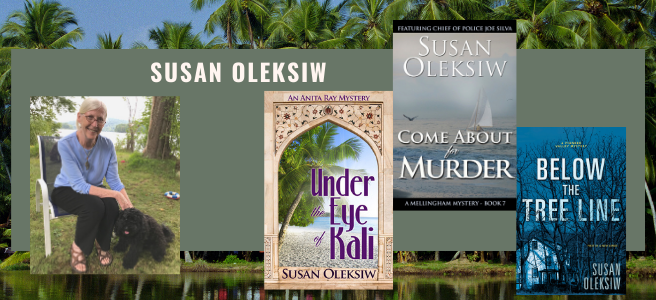
When I tried to interest a mass market paperback publisher in the series, the publisher who had happily published several of the Mellingham series and later the Anita Ray series said no, they didn’t do paranormal. They did send it out to one of their readers but I never heard about it again, and now accept that it has drowned in the slush pile.
The problem with this is that the mind-body connections seem too other-worldly, too unscientific, too far out there. And I too understand that. I grew up with the same perceptions that some things fell into a category that might be fun but couldn’t be taken seriously—ghosts, various forms of the paranormal and the like. Science was serious, the paranormal was not. But that’s no longer true.
I like to read widely, and one of my interests is neuroscience. Only as an adult, long out of school, with the current emphasis on books on aspects of science for the general readership could I have come across some of the more interesting titles I’ve found, and one in particular astonished me. In Cerebral Entanglements by Allan J. Hamilton, the author, a neurosurgeon, talks about the current state of neuroscience including research into the mind-body connection.
In one chapter in particular he talks about experiments with individuals who (this one is called the viewer) could study an assigned image and send it mentally to another individual thousands of miles away (the receiver), to someone they didn’t know and who had no idea what the image was. The image was chosen at random at the last minute. As it turned out, “receivers could exhibit an uncanny ability to generate an accurate impression from the sender.” The author goes on to say that “the results have been replicated in dozens of laboratories by different researchers.” (p. 239)
Researchers have also produced the same results in tests of precognition—the receiver could draw the image even a day before it was to be sent and before the sender had received the image to be sent.
Not every person has these skills or capacities, which is probably a good thing. But the abilities do exist in many of us and may be used for nothing more important than thinking hard on hurrying the person ahead of us in line at the coffee counter.
Mental telepathy, ESP, whatever it is called can hardly be called a fantasy trope in fiction if laboratories around the world are confirming its existence in replicable experiments. Skeptics can still reject the process out of hand, and for most people that would be correct. Not everyone can transmit mental images or receive them. But some people can.
So where does that leave Felicity O’Brien? I treated her healing powers and the insight that comes with them as fairly ordinary, a capacity passed down through the female line along with the advice to treat it carefully and respectfully. Otherwise, it was an ordinary trait not different from an ability to sing or pick up a new language easily. Her capacity does not extend to saving the world, instigating spontaneous combustion to block a criminal’s flight, or anything else fantastic or magical. Her capacity is ordinary, just a part of her ordinary life on the farm.
It will take a while for literature to catch up with science—it’s usually the other way around. In the meanwhile I have to consider the next act for Felicity. Will she embroil herself in another suspicious death, or will she just try to keep her farm going and her father healthy in the nursing home? Do I have to wait for common knowledge to absorb new science on the paranormal before Felicity and her inherited talent can be taken seriously by publishers? That would probably require far greater change than what is typical for publishing. I wait but also ponder other options.

 Ladies of Mystery
I don’t think your character is that out of the box. I think readers these days would enjoy such a character and her stories.
LikeLike