Guest Blogger ~ Kris Bock

Kris Bock on Two Very Different Heroines in her Mystery Series

My two mystery series have first-person (past tense) narrators, so I’m writing from their close point of view and the reader gets their thoughts. A novel, being fiction, doesn’t merely copy people from real life, of course. Still, an author might use bits and pieces of several people to create some characters, and completely make up others. We might also use personal experience – a great way to develop characters who feel authentic!

In the Accidental Detective humorous mystery series, a witty journalist solves mysteries in Arizona and tackles the challenges of turning fifty. I wrote it as I was facing fifty, and Kate has some of the same concerns, such as perimenopause and aging parents. I drew on my experience with chronic back pain, which sometimes throws off my walking stride, in order to write about Kate’s bombing injury and use of a cane.

Those things bring Kate to life, but she’s not me. I’ve been a full-time freelance writer for nearly 30 years, but I’m definitely not a war correspondent. Kate is me if I’d gone into journalism instead of other forms of writing – and if I was much more outgoing and fearless.

My new mystery series, The Reluctantly Psychic Mysteries, star Petra, who can touch an object and sense the emotions people have left behind. To create her character, I tried to imagine what it would be like growing up with a “gift” like hers. She avoids friendships so she won’t have to explain her psychic power or feel like she’s spying on people. Because she’s such a loner, she has many pets. She went into geology because it typically doesn’t force her to handle objects that have emotional residue from prior handling.

In some ways, she’s less me. She’s younger than I am, at thirty. I have no psychic powers. But I drew on the more anxious, cautious parts of myself in creating her, and used plenty of imagination to explore what it might be like to grow up with a challenging psychic power.

Extrovert or Introvert

Because these two characters are so different, they investigate mysteries in very different ways. Professional journalist Kate is used to interviewing people. She’s had practice seeking out the truth. People ask for her help, and she craves the adventure.

Loner Petra has childhood trauma due to neglect, abandonment, and betrayal from both family and friends. She tries to understand people’s behavior so she can protect herself. Her caution and fear mean she overanalyzes everything, but that works pretty well for an amateur detective.

Readers seem to like both characters. People think Kate is fun. They enjoy her eccentric sidekicks, including her sister, her father, and a couple of her father’s wacky friends. Many people would like to be like Kate – or they identify with her attempts to start over in midlife. Readers have said:

“I so related to Kate and her struggles to get back to her regular life. Can’t wait for the next book in this series!”

“A fifty-year-old who is wondering what she wants to do when she grows up? That’s more like it! Bock’s story offers proof positive that no one outgrows the need for more maturity and self-discovery.”

“I loved her smart world traveler, foreign war correspondent heroine. I loved reading a story where the heroine is so fascinating, as fascinating to me as the mystery.”

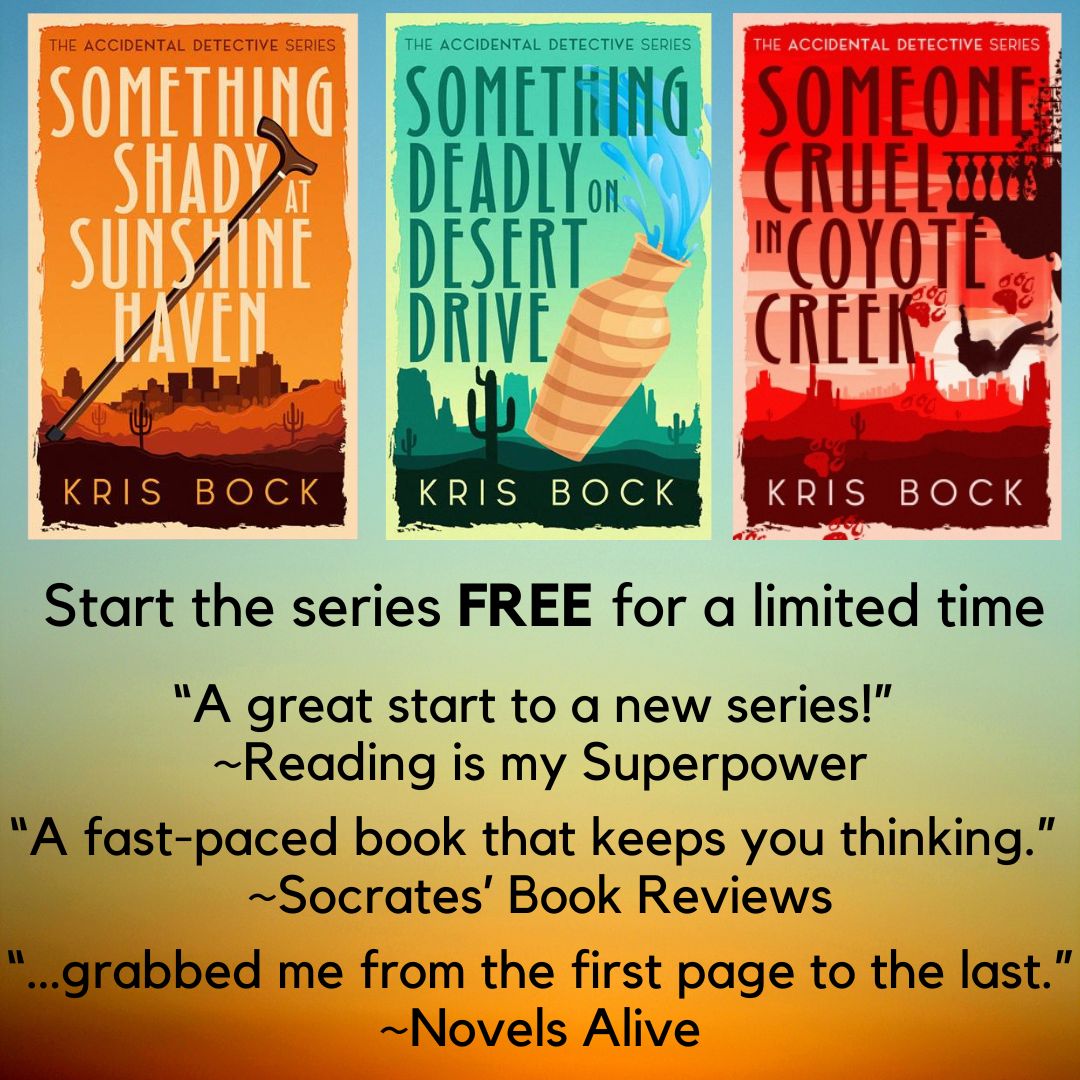
Something Shady at Sunshine Haven (the Accidental Detective book 1) is FREE this month at all E-book retailers!
From Isolation to Friendship

Most people don’t want to be Petra, but they sympathize with her (and often identify with her caution and anxiety). Book reviews have said:

“What truly resonated with me was Petra’s emotional journey. Her anxiety about being discovered, her cautious approach to forming friendships, and her affection for her pets (the cats! the ferrets! my heart!) made her character incredibly relatable. I found myself laughing, gasping, and perhaps shedding a tear or two.”

“What wrecked me emotionally was Petra’s struggle with trust. She’s spent her life pushing people away to protect herself, but now she has to rely on others to solve this murder. That slow, painful opening-up? The tentative friendships? I felt every second of it… Petra’s journey is one I won’t forget.”

“Petra is such a compelling lead. Her psychometry isn’t just a plot device—it’s a curse that’s shaped her entire life… And her journey from isolation to finally letting people in? Perfection.”

I’m sure most readers don’t have psychic powers. (If you do, please tell me all about it!) So why do people respond so much to Petra’s isolation? Maybe because we can feel isolated for so many reasons: neurodiversity, gender nonconformity, being artist types in a corporate world, feeling out of tune with our community’s or country’s politics … Who among us feels “normal”?

Petra masks her true self most of the time, for her safety, but she craves connections with people who understand and accept her. Don’t we all feel that way some (or much, or all) of the time?

Maybe Kate and Petra represent reasons readers turn to books: We want to identify with characters and believe they would like us too, or we want to feel what it would be like to be entirely different – or sometimes a bit of both.

A Stone Cold Murder: The Reluctant Psychic Murder Mystery book 1: Petra Cloch has the gift, or curse, of psychometry – she can sense the emotions people had while wearing or using objects. Now she’s starting a new job at a quirky private museum in smalltown New Mexico. When she picks up a rock in her new office, she feels flashes of rage, fear and death. Everyone says her predecessor died in a car crash, but what if he was murdered? If he died because of the job, she could be next.
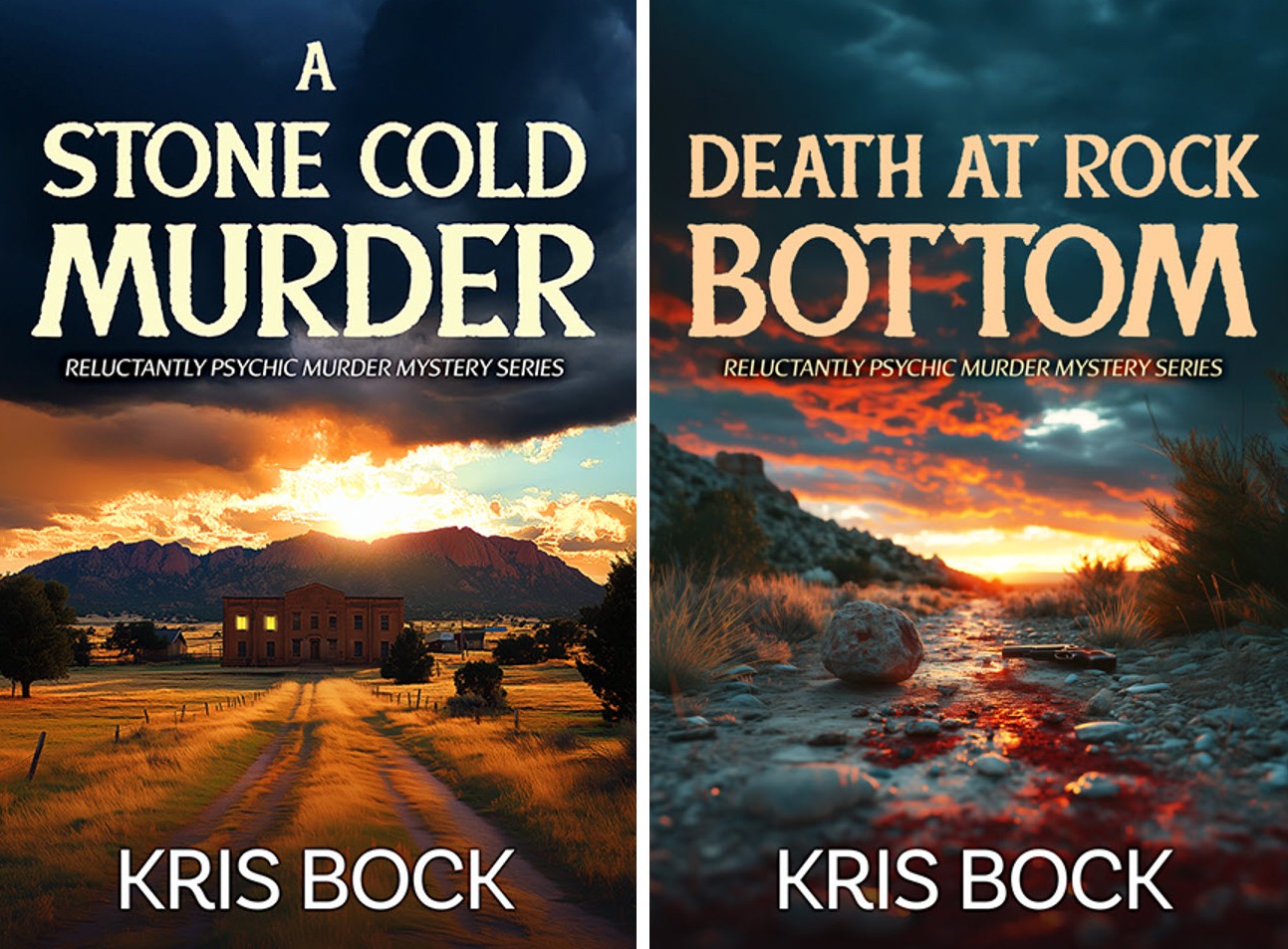
Purchase link: https://tulepublishing.com/series/reluctantly-psychic-murder-mystery/

Readers say:

“[A Stone Cold Murder] is both heartwarming and suspenseful. For those who appreciate mysteries that offer depth, a distinctive supernatural element, and a protagonist to cherish, A Stone Cold Murder is an essential read.”

“The murder mystery is fantastic. The idea that a museum curator was killed with a rock (how chillingly ironic) and that Petra is the only one who knows? Genius. And the small-town setting? So atmospheric. The Banditt Museum feels like a character itself, full of hidden corners and whispered history.”
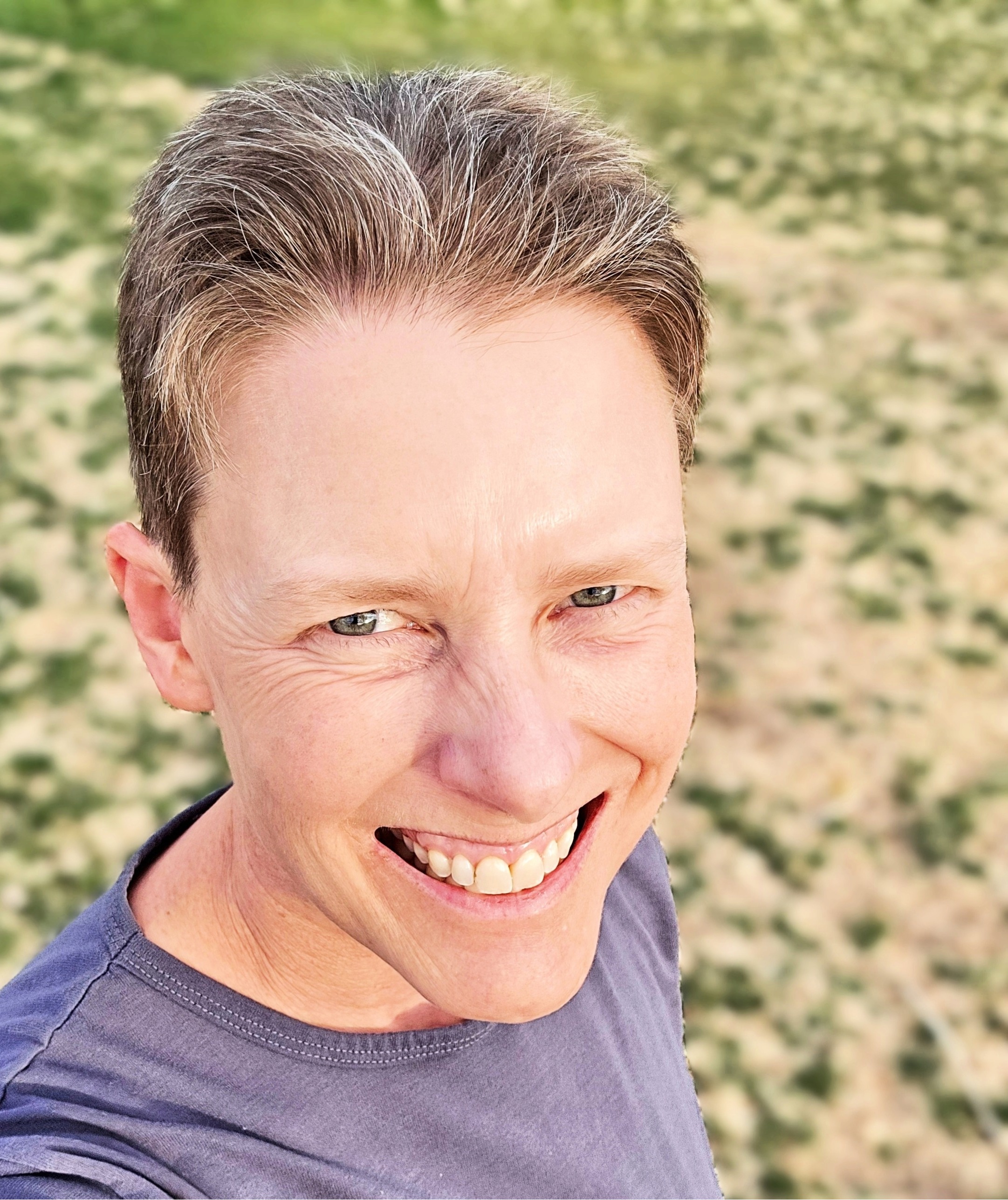
Kris Bock writes mystery, suspense, and romance, often with Southwestern landscapes. The Accidental Detective humorous mystery series starts with Something Shady at Sunshine Haven, which is FREE this month at all E-book retailers!

Sign up for the Kris Bock newsletter and get an Accidental Detective short story, a Reluctantly Psychic short story, and other freebies. Then every two weeks, you’ll get fun content about pets, announcements of new books, sales, and more.

Kris’s romantic suspense novels include stories of treasure hunting, archaeology, and intrigue. Readers have called these novels “Smart romance with an Indiana Jones feel.”

As for Kris’s romance, the Furrever Friends Sweet Romance series features the employees and customers at a cat café. Watch as they fall in love with each other and shelter cats. Start the series for free at all e-book retailers!

In the Accidental Billionaire Cowboys series, a Texas ranching family wins a fortune in the lottery. Who wouldn’t want to be a billionaire? Turns out winning the lottery causes as many problems as it solves.

Kris also writes a series with her brother, scriptwriter Douglas J Eboch, who wrote the original screenplay for the movie Sweet Home Alabama. The Felony Melanie series follows the crazy antics of Melanie, Jake, and their friends a decade before the events of the movie. Find the books at all E-book retailers.

Find Kris:
Website

Kris Bock newsletter signup

GoodReads Author Page

BookBub

BlueSky

Amazon US page or Amazon UK page

VILLAINOUS REWARDS

Hello, Ladies ~

Have any of you cried when you had to kill your villain? I’m not sure why, but it upset me greatly when my villain in “Chaos in Cabo” sailed off a cliff in a hail of bullets. I sobbed as I finished Alida’s story, trying to find comfort in the fact that she sacrifices herself to save Antonio, the man she loves.

Or maybe I listened to a recent reader who said, “I love that your villains find redemption, but don’t you think they should also pay for their crimes?”

Years ago, when I submitted my very first manuscript, “Murder in Margaritaville,” to agents and editors, I received the standard “No Thank You” form letter. But each letter had an interesting addition: You do write a very good villain.

Encouraged by the repeated comment, I studied how I had written my villain. Of course, as with all my characters, my villains are created with traits from people I’ve met throughout my life. From men who treated me badly to women who betrayed our friendship, I have a plethora of evil qualities to attribute to my villains.

I also learned from studying how I wrote my very first villain, Damian Garza, that his character had more depth than my heroine, Clara. Another tidbit was that I wrote Damian in third person instead of Clara’s narrative in first person. However, the biggest revelation was discovering that writing in the voices of my three main characters — the heroine, the hero, and the villain — allowed me to create more three-dimensional characters.

“Murder in Margaritaville” would never obtain an agent or publishing deal. Luckily for me, though, my fabulous friend, Paty Jager, helped me begin my self-publishing journey, and this novel became “Malice in Mazatlán.”

The words, “You do write a very good villain,” have stuck with me throughout my writing career and helped to hone my process. I always start with a title because, for me, the title guides the story. The next book in my Mexico Mayhem Series is “Lost in Loreto.” It took me a few months to decide who was lost and what had caused them to be missing. The cause, of course, originates from my villain’s actions. When the opening line appears in my writer’s brain, I get giddy with excitement to know how the story begins.

Now that I know my villain’s crime, I spend time with him or her asking those pertinent questions: Why? How? When? What? Where? At the beginning of my villain, Arlo’s story, he has no redeeming qualities at this point. But I know from experience that it can change as the other characters begin their search for the missing Gabriella.

In this series, my hero, Javier, is a character who has moved forward from “Chaos in Cabo,” but I needed to introduce a new heroine. In “Lost in Loreto,” this character was a bit of a challenge. When Scarlett Quinn finally materialized, I was thrilled with the direction the story would now take. Oh, what “fun” she’s going to cause.

I usually know the general storyline of the novel I’m writing, although I’ve had characters change the trajectory of their story, which changes everything. In “Lost in Loreto,” I knew as soon as I researched the location of the crime, fleshed out my victim, and wrote the first chapter … what awaits my villain, Arlo. And if my characters stick to their roles, I doubt any tears will be shed when Arlo receives his “punishment.”

Even though I’m back to working on my next WIP, tears still fill my eyes when I think about Alida. I know she needed to pay for her crimes in some fashion, but until I wrote her last two chapters, I didn’t know she would be the one to end her story.

I’ve written six novels and three novellas now, and I’m so thankful for the creative license that self-publishing allows me. Without anyone demanding a finished product by a certain date (except me, of course), I can work on three different books at the same time if I want to.

But I’m also thankful for the time those agents and editors took to tell me: You do write a very good villain.

Happy writing, Ladies, and may all your villains be deliciously villainous!

The Book without End

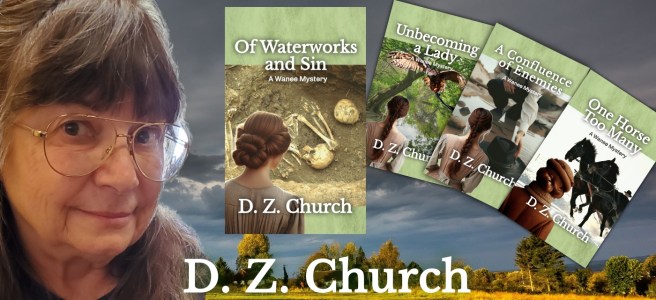
There are some strange pitfalls for those of us who write by the seat of our pants. And pantsers come in all sorts of varieties. There are those who start out knowing the beginning and end. Those who have specific emotions and adventures they want to tell. Those who do a brief outline, including chapters and chapter headings as hints. So, as you can see, a wide, wide variety of pants are involved.

I fall into the I know the mystery in the book, where I want my characters in the end, what I want to put them through, and, a real plus, I know what they were up to and how they were relating with each other at the end of the preceding book. Since I do not write detective stories, no one walks into my characters’ offices to hire one or the other or calls over the phone (especially since the telephone has just been invented).

Do you know how much I love The Rockford Files? Of course, that may be an enduring affair with James Garner, whom I first saw at the drive-in leaning on a Quonset hut in a movie that I was too young to see. The drive-in showed the kid-friendly movies first, then the adult movies. I never could sleep through the second feature, unlike my older sister, who could zonk out pretty much anywhere. All of which is off topic, but maybe not. When writing the first draft, which is really the world’s longest synopsis/outline, I distract easily. Especially when a new character pops into the tale, or when I find the perfect historical nemesis to worry my hero(ine), like James Garner in that movie, though I think Marlon Brando was the star.

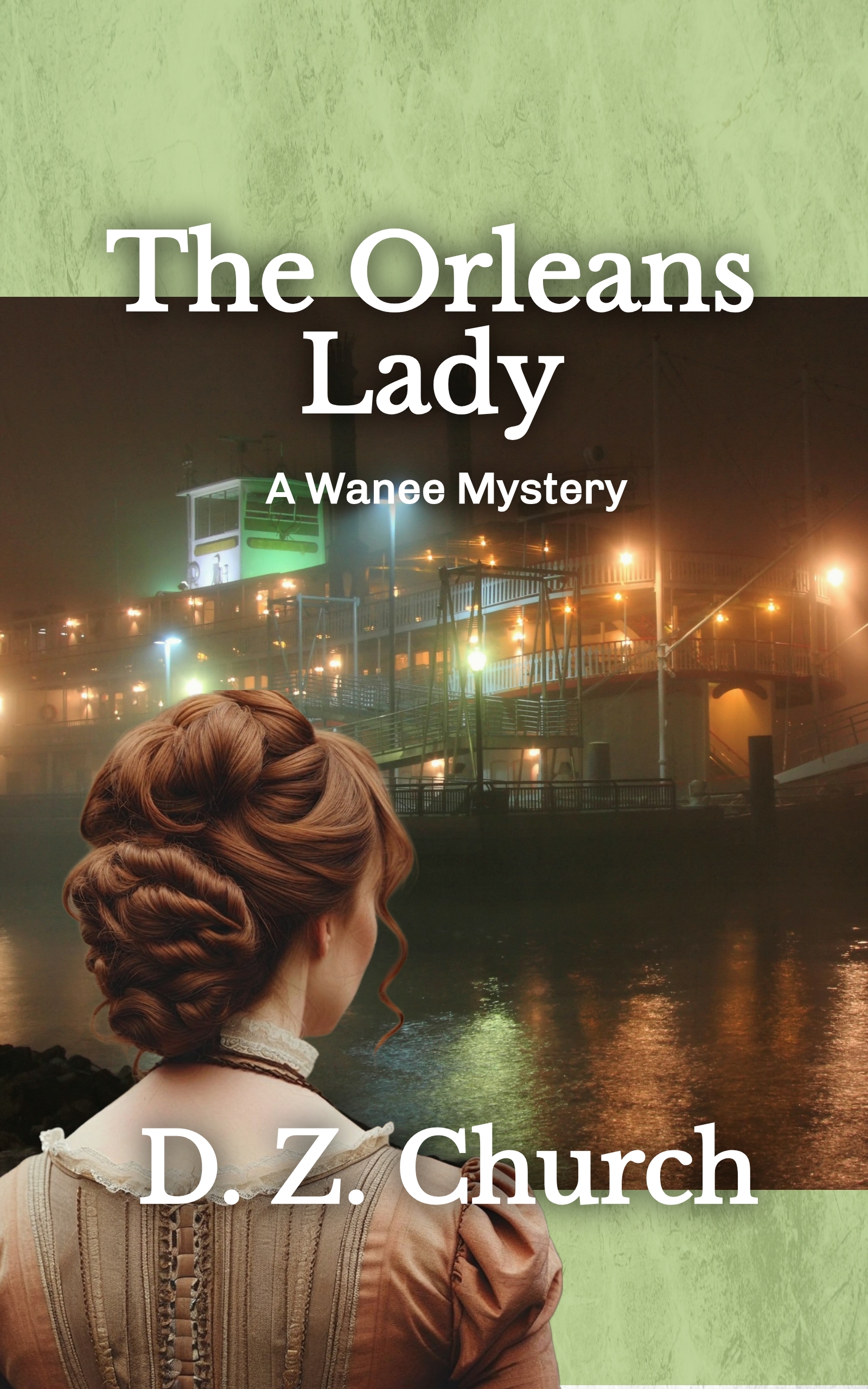
Draft cover

Imagine then, the distractions when you are writing a historical mystery/adventure taking place on a Mississippi riverboat in 1877. So many possibilities for action, adventure, scoundrels and growing passion. Oh, my!

I have the perfect beginning, three riverboat tickets to find a missing person, and two men wooing the same woman (one believing he is in the lead), that being the ending to the preceding book. And what I hope is the perfect ending. Though, to be honest, I am still struggling because the ending as envisioned will cause upheaval in my little town of Wanee, not to mention complicating the rest of the series. Though I admit to being eager to give this particular complication a keen run for years.

I thought I had the tale in hand until I discovered a wonderful, magical, evil, talented man who became the first gang boss in Chicago. One with ties to New Orleans. The whole book went south, which was good since the boat was on its way to New Orleans.  By south, I mean, it was suddenly invigorated in unanticipated ways, which required rewiring some of the plot, then, while seeking adversaries to the boss, another historical discovery added yet more possibilities and whimsy.

Which means the passengers have been meandering toward the ending I wrote months ago. So long ago that the text disappeared from the end of my working draft, where I drape things like that. You know those bits and pieces that fit somewhere. Or, in this case, the destination for the entire book, like Memphis for my Waneean passengers, if they make it that far. I found it in an archived draft from last month, when it suddenly occurred to me that if I didn’t hang the ending off the paragraph I was writing, the book would never end. 

Now, part of the problem is that I enjoy my Waneeans, their characters, and their conniptions, and part of it is that the ending is a conundrum, because of what it means for the series in the future. As for the length, the Cora Countryman books average 84,500 words. The new one? Well, it sits at 90,000, meaning I have some trimming to do. Which, as any pantser knows, is what the second, third, fourth, fifth — draft is all about.

So, Sayonara for now (hint, hint).

Find out more about me at: https://dzchurch.com.

Guest Blogger ~ Glenda Carroll

Where Did I Put That Plot?

By Glenda Carroll

            Plots don’t come easily to me. When I first started writing the Trisha Carson amateur sleuth mysteries about ten years ago, I sat down and blithely typed away following any idea wherever it took me. But that stopped working. I aimlessly spent time chasing after dead ends … nicely written, to be sure, but instead of moving the plot along, it stopped it cold. I wasted so much time.  I realized that I needed more control over what happened and when.  I’m not a plotter, as you can tell. I enjoy the freedom of following whims. So, this hasn’t been an easy step for me. But I’m trying.

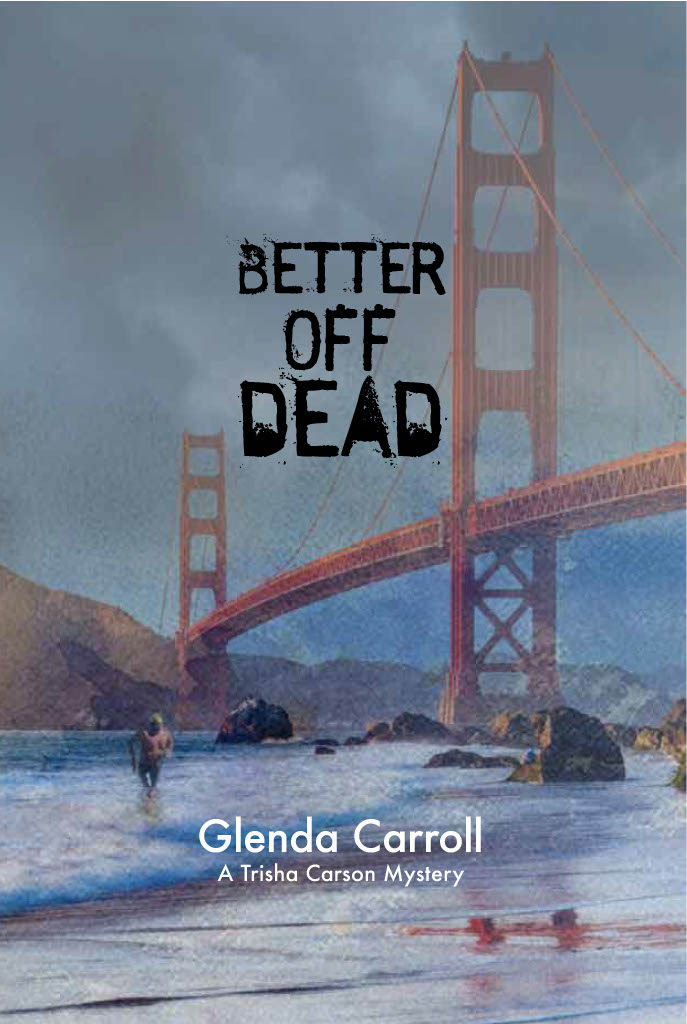
 Take Better Off Dead (BOD), the latest book in the mystery series. Like all the mysteries before it, I knew the catalyst for the plot. It’s always based loosely on something true. In the series, each book swirls with an undercurrent of open water swimming.  That’s usually the true part.

 Almost fourteen years ago, a solo swimmer in the Maui Channel Swim, a 10-mile relay race between the islands of Lanai and Maui, was sucked under a powerboat by the propeller wash near the finish line. He suffered catastrophic injuries to one arm which had to be amputated and one hand that was reattached although it had two finders missing. I wasn’t there, but I read about it. Things like that stay in the back of my mind especially when I’m swimming in open water like the San Francisco Bay in Spring and Summer and Fall.  It came to the surface when I began to think about BOD.  I knew I wanted to use the idea of a horrible boating accident. But I needed a victim, some potential murderers and a realistic answer to the question, “why?”

            I lingered over the concept of a premeditated horrific accident but could go no further. At the time, I was also tutoring first generation, low-income high school students in English. One sophomore was reading Shakespeare’s Hamlet and wasn’t thrilled about the language. He didn’t understand Elizabethan English and no amount of my prompting and wheedling made the play on par with a Marvel comic book. That is until I told him the story of Hamlet, his dead father, his uncle and his mother in everyday language. It went something like this:  Hamlet, the prince of Denmark, is at university when he learns of his father’s death. While returning to the family castle, he runs into the ghost of his dad who tells him that his brother, Hamlet’s uncle, poisoned him and that he wants revenge. The revenge part sparked his interest.

 I lingered on how Shakespeare killed his actors: drowning, poisoning, stabbing with a sword, stabbing with a poisoned sword. I compared it to the violence running through video games or a superhero movie. What if Hamlet was the Hulk? That caught his attention. I convinced him to come up with a modern-day plot based on Hamlet. He bought into the idea.  So, we read the play, both the contemporary translation and the Elizabethan language version and he jotted down notes to help him with his video game. That’s when the light bulb went off.  If my student could update Hamlet, so could I. Later that evening, following Shakespeare’s plot, I started writing … modernizing the famous revenge tragedy. The moody Hamlet became Harrison. His dead father and the very much alive brother turned into Andy and Marty Barlow, wealthy Marin County financiers. That’s all the kick I needed. The story began to fall into place.

I can’t say the rest was easy, but I could see a path ahead of me. As part of the Acknowledgement in Better Off Dead, I thanked Will Shakespeare. Without him and Hamlet, there would not have been a Book 4 in the Trisha Carson series.

I’ve started Book 5, and it revolves around a skull found on a San Francisco Bay beach covered in eel grass. (That’s the true part.) Do you think I learned anything from my experience with Better Off Dead? Unfortunately, no. I have no idea what to write next.

BETTER OFF DEAD: A Trisha Carson Mystery

Successful Marin County, Ca financier, Andy Barlow, is training for a competitive open water swim in the cold San Francisco Bay. Unexpectedly, his support boat runs him over midstroke, killing the swimmer instantaneously. Consumed with grief and anger, Andy’s college-aged son Harrison, returns from London to probe what really happened. Although the local sheriff’s office and the Coast Guard have closed the case, Harrison refuses to believe their findings. He reaches out to amateur sleuth Trisha Carson to hunt down the real killer.

Trisha digs into the man’s history and finds fractured relationships in his family, his business and his marriage. There’s clearly more than one person who had reason to seek a deadly revenge, but would they go as far as murder?

Amazon – paperback, ebook

https://www.amazon.com/Better-Dead-Trisha-Carson-Mystery/dp/B0DXKTJRK2

Barnes & Noble – paperback, ebook

https://tinyurl.com/u4tt9nas

Audiobooks

Apple:  https://tinyurl.com/y5t5jw34

Audible:  https://tinyurl.com/yy5anbwr

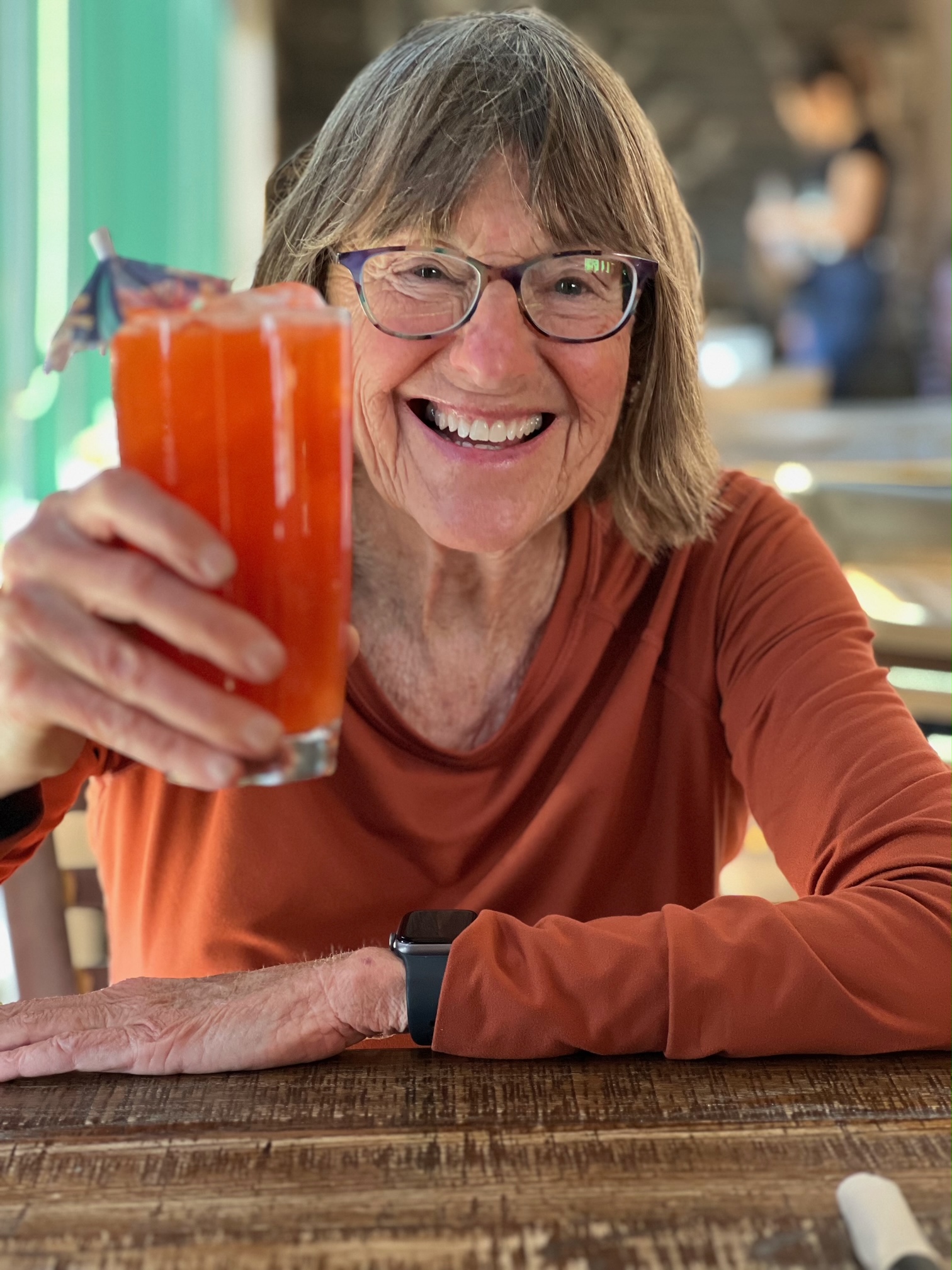
Glenda Carroll is the author of the amateur sleuth Trisha Carson mysteries set in the beautiful San Francisco Bay area. The fourth book in the series, Better Off Dead, came out in Spring 2025. It’s available in paperback, ebook and audiobook. Alas, Carroll hasn’t won any awards; hasn’t even been short-listed for one. Glenda spends more time swimming than writing. She also tutors first generation, low-income high school students in English and History. She is the current president of Sisters in Crime, Northern California.

She lives in Northern California with her dog, McCovey.

Website: glendacarroll.com

Amazon: https://tinyurl.com/y5mmhh55

Indies United Publishing House Lcc: https://tinyurl.com/ycynyr8a

Barnes & Noble: https://tinyurl.com/u4tt9nas

Audible: https://tinyurl.com/yy5anbwr

Facebook:  https://www.facebook.com/glenda.carroll

Instagram: https://www.instagram.com/glenda.carroll/

Bluesky: ‪@ggcarroll.bsky.social

Settings and The Three Bears

It wasn’t hard for me to pick the setting for my mystery/thriller series. I’d always wanted to write one set in the valley where I grew up and still live. I love this valley with its green trees, lush vegetation, beautiful orchards, majestic mountains and gorgeous rivers.  And it’s fun to write about murder and mayhem in a place that is so serene and beautiful.

However, there are things about setting my stories here that I never considered before I actually started publishing my books.

Like the woman who said she and a friend had been talking and wondered which people in the valley I was writing about. I told her that I have never used a real person in my books. Rather I use a culmination of people I’ve known or read about.

This wasn’t the first time someone has asked me if I use real people when I write. I say the same thing every time. No, no and NO! These are fictional characters and are not based on any real person, dead or alive.

On the other hand, a lot of my readers who live here or have lived here, or visited here in the past, love it when I mention the name of a road or a building or an orchard because they know exactly where it is. Although, I must admit, I’ve taken some creative liberties and added a few places that aren’t really here. Or moved things where I needed them for the story.

My Three Bears Story:

When I wrote my first book, a standalone mystery/suspense titled, The Truth Will Set You Free, I had wanted to set it in Hood River. But after writing a few chapters, I realized my town was too big for the story I wanted to tell. So, I moved it to a small town east of Hood River called Moiser. After I’d written a few chapters, I realized it wasn’t working. Moiser was just too small. So, then I headed west of Hood River to the small town of Cascade Locks, and it was just right!

After that book came out, I was selling my books at a Christmas Bazaar in Cascade Locks and a lady picked up one and read the description on the back. As she read, she said, “Oh, oh, oh.” Her voice rose and lowered with each utterance. Then she turned to the lady with her and said, “I’ve got to buy this. I know exactly who it’s written about.”

Since I don’t know many people who live in Cascade Locks, three in total, I knew she really didn’t know who it was about. But she bought the book and hopefully she enjoyed it.

Right now, I’m working on a standalone that I’m setting in The Dalles, a town thirty miles east of us. Why did I pick The Dalles? I spent a couple of days there last spring selling books, and I met some wonderful people. They shared stories of their town that I was fascinated by. While I’ve been to The Dalles many times over the years, I’ve never spent a lot of time there.

I love it that The Dalles has the oldest bookstore in Oregon, Klindts Books. There’s a lady in The Dalles who used to do graveyard tours. I still need to talk to her. The old buildings downtown are reputed to be haunted. Like a lot of towns in eastern Oregon, the businesses in town have gone away or moved to the west end of town. They are trying to bring in new businesses, and there are some exciting things happening. I had no idea it was such a fascinating place.

I love JA Jance’s Sheriff Joanna Brady books. The way she writes about Bisbee, Arizonia made me long to go there. When I finally did, it was nothing like what I’d imagined while reading her books. I wrote to her, and she wrote back saying writers can make any setting interesting. She certainly did.

How important is setting to a story? I’ve read books that were set in big cities and thought it could’ve been any big city in the states. And I’ve read books set in small towns that could’ve been any small town. And then there are the books where the setting is like another character. That is what I’m striving for.

When my first book came out a lady bought it and told me later that she and her husband drove to Cascade Locks to see the town where the book was set. I loved it that she thought about the book after she finished reading it and enjoyed it enough that she wanted to see the small town it was set in.

I know of a lot of authors who spend a great deal of time researching their settings. Whether they do it by actually traveling to the place or reading everything they can get their hands on about it.

Even though my books are set in such a familiar place, I find myself having to look at a map to get the name of roads and sometimes drive around to make sure that what I’m writing about is actually where I think it is.

Maybe someday I’ll go further afield. I’d love to set a book in some places I’ve been, like Venice or Vienna or the Swiss Alps. And I’d be happy to travel to different places for research. Of course, I’d have to stay a while!