Guest Blogger ~ Denise Forsythe

5 Tips on Researching a Novel

by Denise Forsythe

As a writer of both short stories and novels, I’ve grown accustomed to research. It is a part of writing, much like plotting and editing. Because I’m naturally curious, I have to limit the amount of research I do on any given subject.

When I began writing Misconception, a domestic suspense thriller, I had no idea how much research I’d need to do. That’s because up until then I’d been a short story writer and only needed to research small bits of information to propel my plot forward.

A tried-and-true pantser, the ideas that combined to form the plot led me to realize just how much research was needed.

The book contains medical research on infertility, psychological research on personality types and disorders, employment research on workplace disputes and criminal law research, including jail/prison conditions for female inmates.

What worked for me and what I will share are five tips on how to get through the research hurdle.

1) To avoid long gaps in writing while researching subjects, consider doing just enough cursory research. That means conducting research prior to or early on during your first draft. That way you’ll avoid having to correct large parts of your story or manuscript later on. In my case, as I was writing Misconception I decided to set the story in Chicago. I felt the large city coupled with challenging weather would set a moody tone for the domestic suspense thriller. This is especially beneficial when you are deep into developing characters and plot points. Once you are at a point to take stock of what you’ve written so far, you can continue researching and filling in any gaps. This can also reduce the chance of falling into a rabbit hole by limiting what you need to advance the story.

2) Create a system to keep track of research sources. I use Scrivener to write my manuscripts. The software provides a handy corkboard to place website links right next to the page where the information will be placed. It’s important to obtain at least two to three resources for each subject, to ensure information or resource isn’t outdated or incorrect.

3) While artificial intelligence resources can be helpful, I would caution their use. Though a resource like ChatGPT can narrow down resource options, it isn’t a replacement for doing your own thorough research. Some resources I used included: WebMD and Health.com for medical conditions, university educational programs for fertility specialty information, past news coverage of sports and team rivalries, news coverage and/or documentaries on jail conditions, fertility health associations, hospital chapel coverage by local newspapers and a website called Lifeway that offers examples of funeral sermons.

4) Check and recheck sources. It’s a good idea to use respected sources for medical and legal research and avoid copying what you see on television or in movies. Tapping into my past experience as a paralegal working for a New York City DA’s office, I knew my knowledge of criminal law wasn’t enough to flesh out the details of Cassie Nichols’ harrowing journey through the Wisconsin legal system. Make sure to drill down to the state, and sometimes the city, when it comes to researching criminal law. I researched specific areas from a state and local angle, going so far as to find real accounts of what jail conditions are like and locating transcripts of initial court appearances so I could use the information as a guide. If you are good at deciphering medical jargon, by all means do so. If you’re not, don’t be afraid to reach out to an expert. A helpful website to assist in locating an expert in a field is HARO or helpareportout.com.

5) Do a final fact check while the book is in self-editing mode. Things change, especially when it comes to legislation. My book was about a third of the way complete when I discovered that it couldn’t be set in Chicago, as planned. During research I learned that in the state of Illinois, in vitro fertility treatments are covered by insurance, whereas in Wisconsin they are not. This was an integral aspect of the plot, given the tension between the main character, Cassie Nichols, and her husband Jake. The financial strain burdened the already stressed couple, adding to the tension. Because I wanted to retain the moody weather as a backdrop to intensify certain scenes in the psychological thriller, I chose to move the setting to a fictional town in southeastern Wisconsin near where I grew up.

Though research may seem daunting, with a little strategy it doesn’t have to be painful.

Misconception
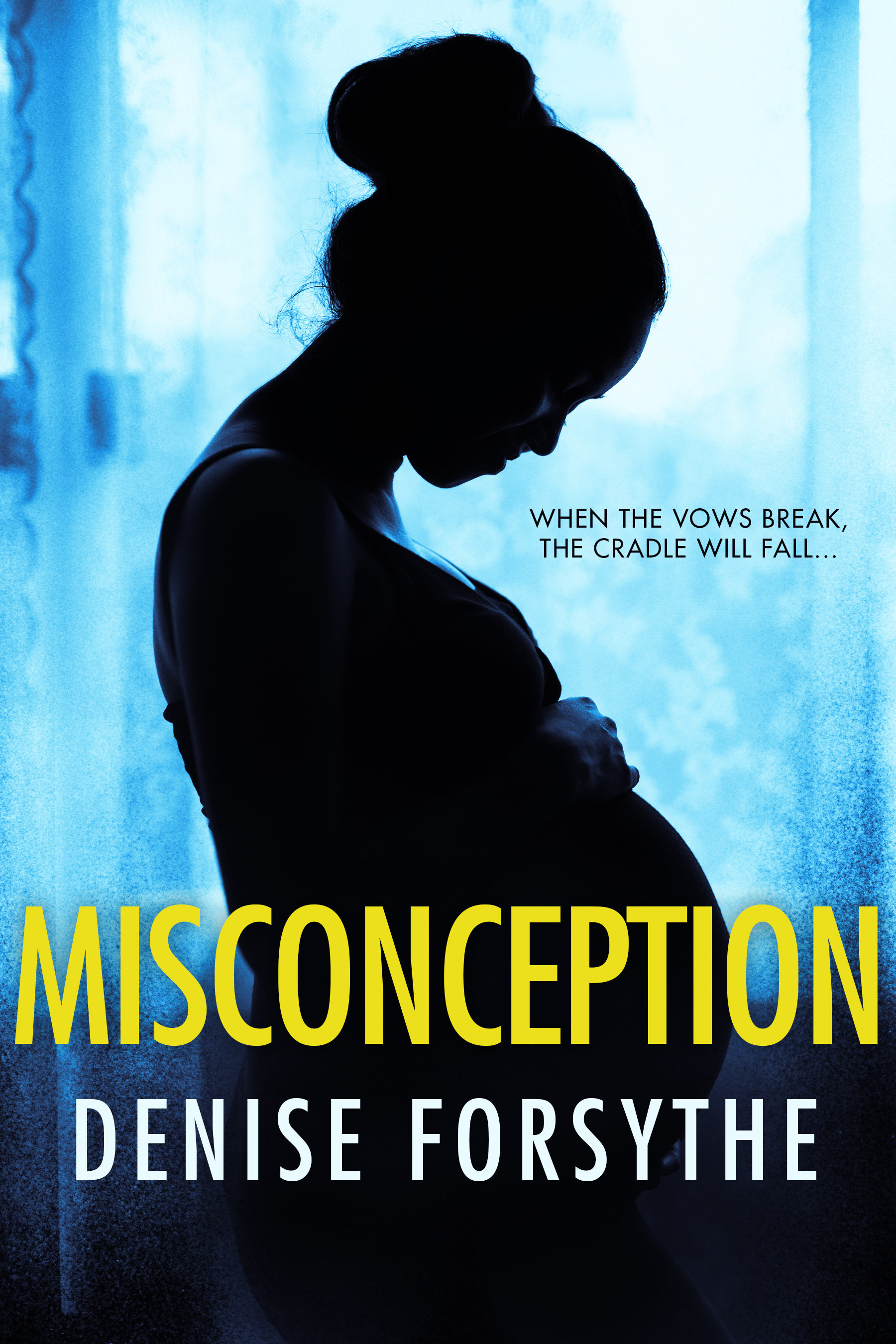
Cassie Nichols wants a baby. Badly.

She’s certain a baby will anchor the crumbling relationship with her husband, Jake, who she suspects is having an affair.

But after a miscarriage and continued trouble getting pregnant leads the couple down the frustrating and expensive road of in vitro fertilization, Cassie finds herself running out of time.

Pumped on hormones, fueled by anxiety, and believing it is the only way to save her marriage, she does the unthinkable to ensure a viable pregnancy.

Now, the happy family she envisioned remains out of reach and is instead wrought with lies, deception, and murder.

universal buy link: https://books2read.com/misconceptionbyDeniseForsythe
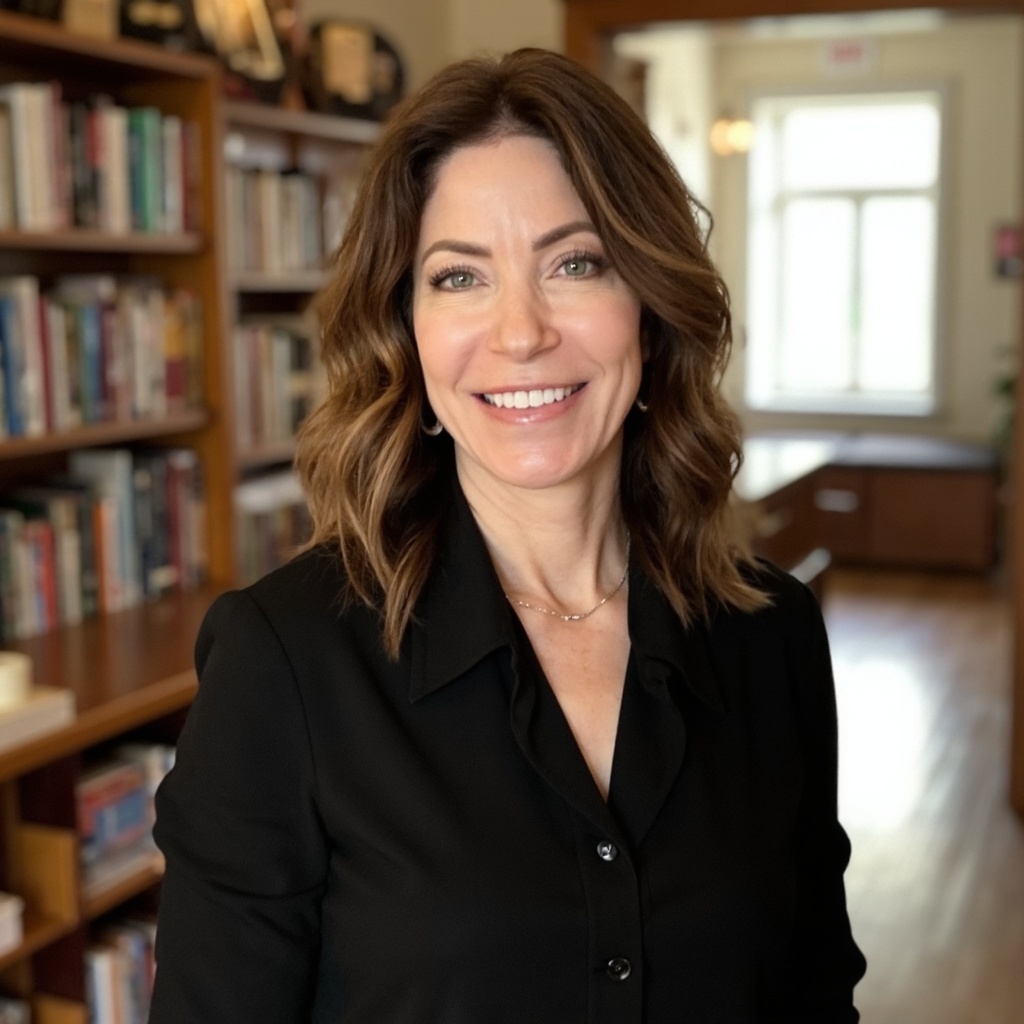
Denise Forsythe is the author of the domestic suspense novels Misconception and the forthcoming Misconstrue.

An award-winning and recognized writer of mystery, horror, and science fiction short stories; you can find these works under the pen name Denise Johnson (see author page).

A member of Sisters in Crime, Inc. and multiple Sisters in Crime chapters, she is a Charter Member of the Sisters in Crime

Grand Canyon Writers chapter and its current vice president.

She resides in the Southwest with a precocious Labradoodle that keeps her on her toes.

Visit her at her website:deniseforsythedotcom to learn more about freebies, upcoming book projects, and book signing events.
Finding that special passage

I’ve been taking time this summer to catch up on my reading, which is a fancy way of saying that I’m reading those books that I’m embarrassed to say I never read when they came out or, in the case of a bunch of dead white men, when I was in college.  I’m picking out books with titles known to just about everyone.

Reviewers are prone to lot of literary fallacies—the main character is really the author, the entire novel is autobiographical, the hero is the author’s cousin who got into drugs in exactly the same way, and on and on. These reviews can spoil the book for some of us, me, for instance, by messing up how I see the entanglements. I’m glad to not read the reviews, and go by nothing more than the familiarity of the title. Who hasn’t heard of Erica Jong’s Fear of Flying, or John Updike’s Couples? Both gave rise to hours of juicy gossip and, just as likely, a lot of ill will. I’m glad to ignore the warnings, which are also suggestions on “how to read” the book. I don’t need to be told where the story blossoms into personal truth.

Often when I’m reading I come to a passage that stops me, holds me from riding forward on the narrative river. There is something in the tone, the detail, the feeling that tells me this really happened. This is real, this is the truth. It could be lines in the dialogue, a setting and how the main character, or a secondary character, reacts to it; it could be a surprise, a reversal, in behavior, a character stepping out of character. But the sense that I’ve come to something out of the author’s life is compelling and convincing—the feeling conveyed reaches me. The passage may go on for several pages, or no more than a few paragraphs, but it does come to an end, and the story flows on as before.

I occasionally recognize the same quality in nonfiction, when the author comes to a moment of truth, as it were, and her struggle with it is revealed on the page. It may or may not be the issue that is the focus of the work, and may not be resolved, but it’s there for the reader to recognize and dwell on. I found this in Sister Helen Prejean’s Dead Man Walking, and have wondered if she returned to it later.

Occasionally a reader will ask me if a certain passage is real, or, more likely if it’s another writer, she’ll say, that really happened. And in most cases she would be right. When we’re writing, we’re pulling things out of ourselves to make sense on the page, and after doing this for a while, a few minutes or an hour, we may be so deep into the excavation, touching things set aside, that we don’t record in our own mind that this is different from the surrounding passages. 

Choosing a setting because it’s real and readers will recognize it is not the same thing. Using a real politician as a character because he is known to readers isn’t the same thing either. The passage that stands out is something whose meaning and experience is known only to the writer, but when it is shared, it is recognized and felt as special by the reader.

For me, as both writer and reader, this is the best part of the entire experience because I know I’ve come to a passage that is true and unique, lived and remembered and shared. 

Summer flowers bring?

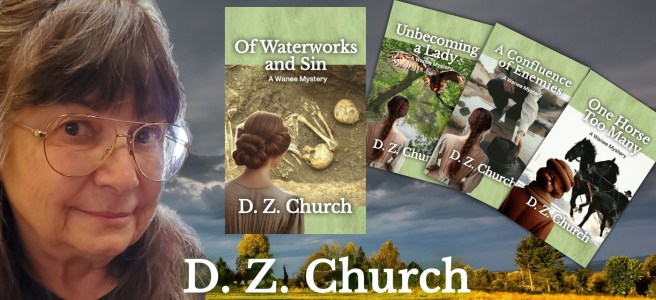
We have a gorgeous flow of Mule Ears (Wyethia) and Queen Anne’s Lace (Daucus carota) that swirls down the hillside behind our cabin, forming a river of color. While Mule Ears happily look like their sunflower cousins, Queen Anne’s Lace bears a striking resemblance to plants far less friendly. It brought to mind a 700-word mystery I wrote, featuring Cora Countryman (The Wanee Mysteries) and her brother Jess, on another summer day, 149 years ago on the Illinois prairie. I hope you enjoy it!

Queen Anne’s Lace

Photo by Vika Glitter on Pexels.com

Cora Countryman sat on a rock in a fast-running stream that bisected her brother Jess’s farm, watching a stand of delicately flowering Queen Anne’s Lace bobbing white in the breeze. Cows grazed nearby, a fat catfish swam in the shadows of the hazelnut bushes, and bugs glistened on a summer breeze that wafted the perfume of carrot, parsnips, and timothy grass warmed by the sun.

Across the stream, a white fence boxed in three graves. One was fresh; two were not. Cora waded across the knee-deep water, the hem of her plain calico smock held high, her feet bare, and leaned on a fence post. The new grave was marked by a plank, two question marks and a date scratched into the wood.

Jess had found a man and a woman right here, their bodies near tied in knots, their heads in the flowing stream, the girl clutching flowers in one hand. He buried them, no postmortem by the town’s doctor, no undertaker, nothing but a few words muttered over their open grave.

Not that Cora was a romantic, far from it. As soon as she was able, she intended to leave her hometown, her brother, her mother (wherever she was), and her suitors to see the world. She spun in her bare feet at the possibilities – London in the fog, Boston in the rain, Egypt in the sun, dark men with dark ways. She would be fearless but carry a derringer for insurance.

She spun again and tripped. Checking her feet, she discovered a fire ring, its rocks jumbled. The fire had been doused by water, leaving a sheen on the charcoal. In the same rush that knocked rocks aside, a tin cup had tumbled under a neighboring bush.

“Cora,” Jess called from upstream, wiping his hands clean on a thick stand of grass. “Louisa has supper on the table.”

Cora held up the tin cup. Jess joined her, fingering the cup as she had, then shrugged.

“How old were they?” Cora asked, eyeing the fire ring for more clues.

“Young. He was in trousers over a red union suit, which served as his shirt. He’d pushed up his sleeves in the heat. The girl was young, maybe sixteen, in a plain blue calico dress, short like yours. They looked to be out on a picnic by the hamper I found.”

“When you found them side-by-side, their heads underwater, weren’t you curious?”

Jess handed her the cup, wiping his hands on his trousers. “Just wanted to get them in the ground. The boy had welts on his arms, and they had thrashed about before they died. I didn’t want what they had. No mystery there.”

“They might have been murdered or committed a lover’s suicide to be together forever. What about their families?”

“They were diseased, Cora. The best thing to do was get them buried.” Jess began picking Queen Anne’s Lace, gathering the tall stems in his left hand, the delicate white heads of the flowers forming a lacy umbrella. “There was a name in the basket. When I gave it to the Constable, he said he’d track down their folks.

“What flowers was she holding?” Cora asked, toeing the ground around the fire ring. When a tuber emerged from the coals, she lifted it from the ground with her toes. One end was cut. She let it fall, wiggling her toes in the charcoal.

“These.” As he shook the lacy flower heads, several ladybugs took flight.

“Not those?” Cora pointed to a stand of white lacy-headed flowers downstream.

Jess grinned. “Do you find mystery everywhere?”

“You missed it, but I’m right, right?”

“The girl dug a tuber to make tea for their picnic.”

“Believing it was parsnip by the smell,” Jess said, holding the cup to Cora’s nose.

“Purple spots will kill you lots.”

“As our thieving mother used to say,” Jess said, turning for the farmhouse and supper.

Find me at: https://dzchurch.com, where you can sign up for my newsletter and discover more about my books. To follow Cora Countryman, find the series at: https://www.amazon.com/dp/B0CPW5H3LM

CHALLENGING SISTER

Happy Summer, Ladies ~ I wanted to start by thanking all of you who reached out during my sister Lori’s illness, and to let you know she passed away on June 2nd.

My sister, fourteen months younger than me, always challenged me to be a good big sister.

Lori loved tossing her baby bottle from her crib and squealing until someone would retrieve it. Our single mom, Rita, would be busy cooking, cleaning, or getting ready for one of her three jobs, so I would toddle over and hand my baby sister her bottle. Lori would enjoy it until she wanted attention again and then toss it overboard again.

Lori challenged me to be my sister’s keeper when we were little girls. My job was to hold her hand, ensuring she stayed out of trouble when Mom took us shopping or to visit our grandparents’ small mom-and-pop store. On one exciting trip to Sears to shop for new summer sandals, I let go of Lori’s hand, and she wandered off.

“Where’s your sister?” Mom asked, frantically looking around the store. I shrugged and looked around, too.

My mother shrieked and raced toward a display of bathroom toilets, where my little sister sat perched on an avocado green throne.

“I go big girl potty, Mommy.” Lori beamed despite Mom snatching her from the toilet. She pulled up my sister’s panties and smoothed her sundress. Before leading her away from the display, my mother made the mistake of looking in the bowl where Lori had left a tiny brown deposit.

Needless to say, we didn’t go back to Sears for a few years.

As teenagers, Lori challenged me to be a less stuffy older sister. I was prone to wearing turtlenecks and loose-fitting Levi’s, while Lori preferred a hipper wardrobe of scoop-neck T-shirts and tight bellbottoms. One day, she and I went to the Medford Center to do a little shopping. Even though enough time had passed and we could have shopped at Sears, we decided on JC Penny’s. Lori stuck me in a dressing room and brought me clothes to try on.

I wore one of my new outfits to school the next day: a yellow blouse with cap sleeves and dark blue denim bellbottoms. I finally got my first compliment from a boy I liked when he said, “Nice jeans.”

As adults, Lori became an unwavering source of support when my son, Derrick, was diagnosed with autism, and I found myself a divorced mother of two. She watched my boys. She encouraged me to date. She taught me how to dance.

Despite her helpfulness, my relationship with my sister was also difficult. Sometimes I wanted to walk away from her instead of trying to mend whatever bridge she’d burned. So, as I said at the beginning, my sister Lori was challenging, and I share this story because I believe our relationship taught me how to shape characters for my books.

Whether I’m writing a Hero, a Heroine, or a Villain, I know I infuse my characters with some of Lori’s personality traits.

Clara in “Peril in Paradise” has Lori’s indomitable determination to find revenge for her daughter. In “Redneck Ranch,” Harley and Busy’s best friend relationship is a take-off of mine and Lori’s sisterhood. In “Vanished in Vallarta,” Jade is on a mission to find her missing little sister.

My female or male villains reflect some of her flaws, too, such as her unreasonable jealousy or sense of entitlement. Though Lori wasn’t necessarily evil, she did have a mean streak that, at times, she directed at me.

Over the last seven months, Lori challenged me to be a better writer. A better storyteller. A better editor.

She wanted to help me edit my current novel, “Chaos in Cabo.” I set her up with chapters, blue and red pens, and the nine things I look for in each chapter. The senses: Sight, Smell, Sound, Taste, Touch. And the nuances, I think, bring realism to my story: Accessories, Clothing, Eyes, Hair.

Lori valiantly tried to read each chapter and mark these items off the list, but she had a hard time focusing on the story. However, she did ask good questions, so the end result for me was that I was able to explain my editing process to another writer who asked if I would edit her novel.

My sister Lori was a challenge to the end. She died on June 2nd, my son Derrick’s birthday.

We had a lovely family day on June 1st, her son’s birthday. We played games, ate pizza, and enjoyed an ice cream cake. I spent the night at her house, and we stayed up late talking and laughing.

The next morning, Lori seemed a little tired but otherwise fine. She commented about not being able to get into heaven if you weren’t always a good person. I told her that if she wanted forgiveness, all she had to do was ask God. She got quiet for a few minutes and closed her eyes. Then she said, “I feel bad that I get to see Derrick before you.”

My phone pinged because someone liked my Facebook birthday post for Derrick, and I showed Lori his picture.

She grabbed my hand, and my sister, who never asked me to pray with her before, said, “Can we say a prayer for Derrick’s birthday?”

I nodded and said, “Happy Birthday, Derrick. We hope you’re having a great day in heaven. Aunt Lori and I are laughing about Grandma Rita and Grandma Betty arguing over who gets to bake you a cake. I love and miss you, big guy! Aunt Lori wants to say something.”

Eyes closed, she squeezed my hand and said, “Happy birthday, Derrick. I miss you so much. And I want you to know I’m coming to see you soon.”

Lori drifted off to sleep and seemed fine throughout the morning. Then, just after noon, her breathing became labored, and she appeared to be in a coma. Her husband called the Hospice nurse, who was running late, and she said she would be there as soon as possible.

Keith and I took turns holding Lori’s hand and making her comfortable. Neither of us was in denial that her time was near, but neither of us was ready for her to go.

My challenging little sister went to heaven at 1:50 pm on Monday, June 2, 2025.

Several people said to me after Lori passed away that they were sorry she died on Derrick’s birthday, to which I replied:

“I’m not because I believe my loving son reached his strong hand down from the heavens and said, ‘Come on, Aunt Lori … it’s time.’”

Over the rainbow and from heaven, my little sister challenged me to lean into my faith and share her peaceful passing with others.

Hug your family members, Sisters!

Guest Blogger ~ Melissa Westemeier

The story behind Old Habits Die Hard begins in 2004 when I attended the University of Iowa’s Summer Writing Festival where I met four women who would become my writing partners. One of those women shares the author credit on Old Habits Die Hard, Mariana Damon came up with the idea of a murder taking place at a retirement community set in a renovated church. When I met Mariana in 2004, the spunky woman from Nebraska with a low voice, wild red curls and long flowing skirts was writing a murder mystery set in a fictional reservation in the southwest, featuring a Native American police officer solving a crime involving a murder and ancient artifacts. Mariana’s writing journey took her next to France, then to Cambridge, England, and finally to Kuwait before her dementia made further work as a writer impossible to pursue.

Mariana and I shared many trips together over the years we worked together and often bunked up together, too. We’d share our secrets, dreams, wishes, and histories deep into the night. Wickedly funny and brave, Mariana’s generous spirit meant I could trust her with anything, she’d be honest and loyal in every circumstance. It’s funny how our lives mirrored each other’s—we both taught English in public schools, both lived in the Midwest, both mothered only sons, and both set aside our own ambitions for our spouses’. She was truly a sister from another mister.

In 2021 another partner, Marni Graff, and I visited Mariana in her new home at a memory care facility. During our time together Mariana shared her desire to write one more murder mystery, so Marni and I gamely took notes and helped her flesh out ideas for a setting, murderer, victim, motive, and cast of characters. “Death at the Abbey” was set in the assisted living facility where she lived before her condition worsened, and she had a terrific concept for an opening scene.

Marni, Mel, Mariana 2021

Marni and I felt tremendous sadness at our friend’s struggle with her disease and helplessness as dementia stripped away her capacity to focus, let alone write. “We should write it for her,” I suggested to Marni over breakfast before we boarded our flights home. It seemed like a fitting tribute to our friend if we could flesh out her final idea and put her name on it. We’d left the character worksheets and plot outline with Mariana, so I jotted down what we could remember in a tiny notebook.

A year later I was between projects and dug that little notebook out of my purse. I’ll just flip through it and see what I might be able to do—maybe turn these ideas into a short story. I’d never successfully written a murder mystery before, but Marni has written eight of them, so I figured I could get things started and Marni could clean up my mess and we’d take it from there. The joke was on me because when I came up for air, I’d written 30,000 words, almost half a book! I sent the pages to Marni and our other writing partner, Lauren Small, to get their feedback. Their response was overwhelmingly positive and encouraging so I kept writing. Four months later I had a complete, polished draft of this book, retitled Old Habits Die Hard.  

I preserved Mariana’s original ideas. Sister Bernadette, a retired nun, solves the murder of Toni Travi at The Abbey with the help of her former student, Detective AJ Lewis. All six of Mariana’s original characters are in the story, and the opening scene is all Mariana’s. She’d determined who committed the murder and why, so it was up to me to fill in the rest. AJ’s less heartbroken and much younger than she’d planned him to be, but I hope she’ll recognize him and be happy with how he turned out.

Mariana Damon sparked this series and it’s exciting to take her ideas further than she imagined they’d go. Neither of us expected that visit in 2021 to result in a book and we certainly didn’t predict a series would happen. It’s pretty cool how our friendship that twenty years ago wound up with both of us on the cover page. Old Habits Die Hard and I’m honored to be Mariana’s ride or die until the end.

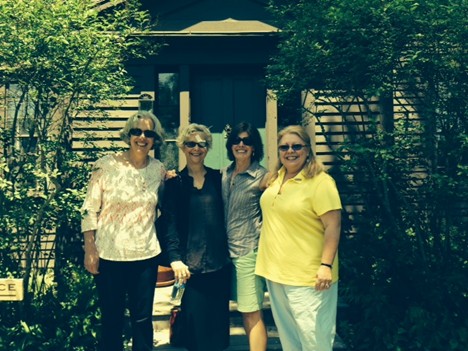
PHOTO: Lauren, Mariana, Melissa & Marni Summer 2014

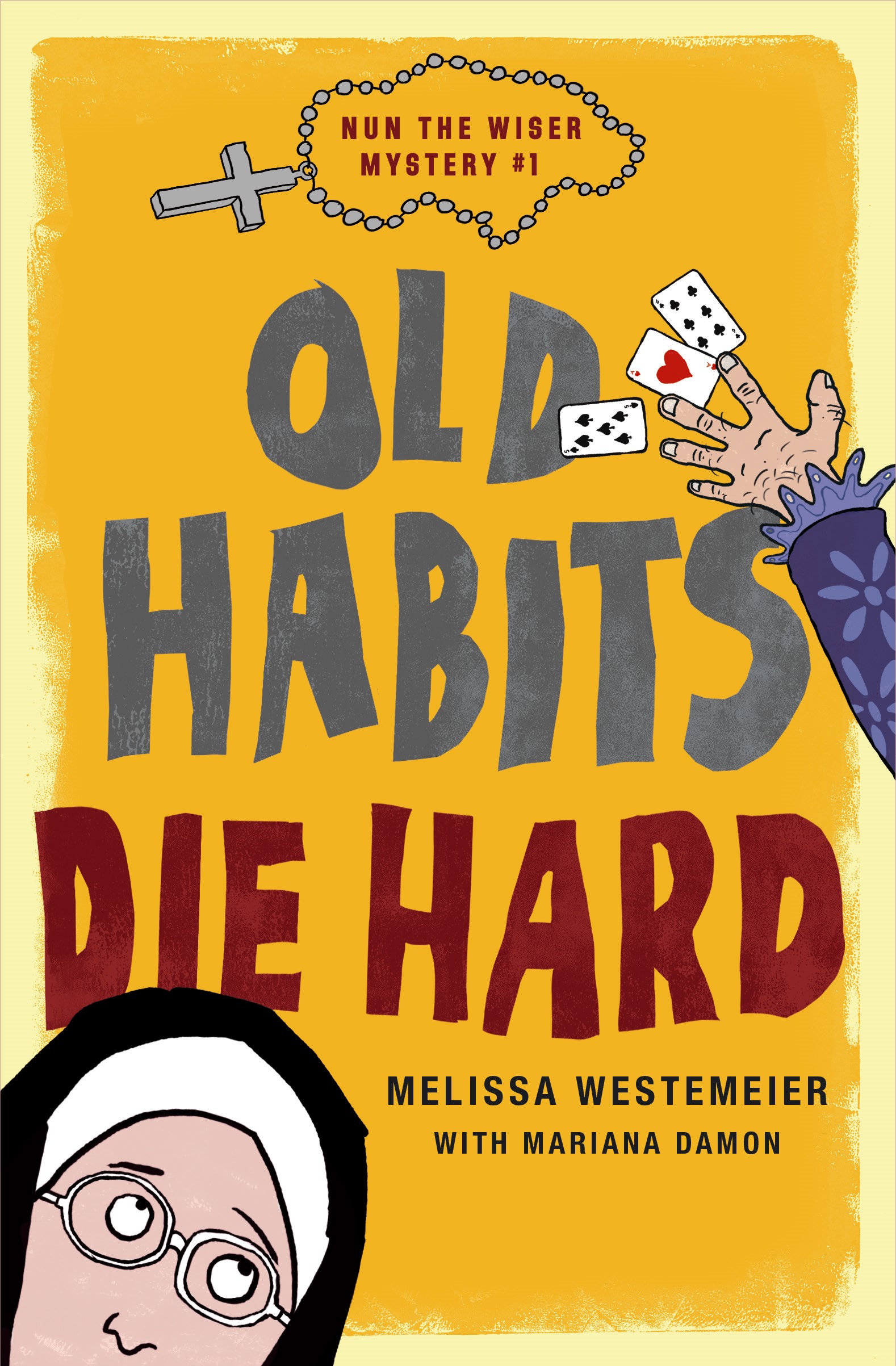
OLD HABITS DIE HARD:

When retired nun and teacher Sister Bernadette returns with her fellow residents to The Abbey: Senior Living, she is the first to discover the body sprawled in the hallway of the converted school where she once taught English and now lives.  Instead of freezing with horror, Sister Bernie has questions. Lots of them. Why does Toni Travi, the bedazzled and bejeweled resident from apartment 218, have so much chest hair? Did anyone at The Abbey know Toni was a man? Was Toni’s death related to allegations that she cheated at cards? Where’s the murder weapon? Who had motive? And did someone kill Toni, or the man hiding beneath the Revlon foundation and blonde wig? 

Detective AJ Lewis is charge of the investigation though Sister Bernie acts as if he is still her student. With unholy stubbornness, she dogs his every step, eavesdrops, sneaks beyond the police tape and offers conjecture and clues. He wants to keep her safe, but she’s determined to lend a helping hand—it’s her habit, after all!

BUY LINKS

Google Play https://play.google.com/store/books/details/Melissa_Westemeier_Old_Habits_Die_Hard?id=4oorEQAAQBAJ&hl=en_US&gl=US&pli=1

Amazon https://a.co/d/exKs6zn

Kobo https://www.kobo.com/us/en/ebook/old-habits-die-hard-6

Barnes & Noble https://www.barnesandnoble.com/w/old-habits-die-hard-melissa-westemeier/1146452143?

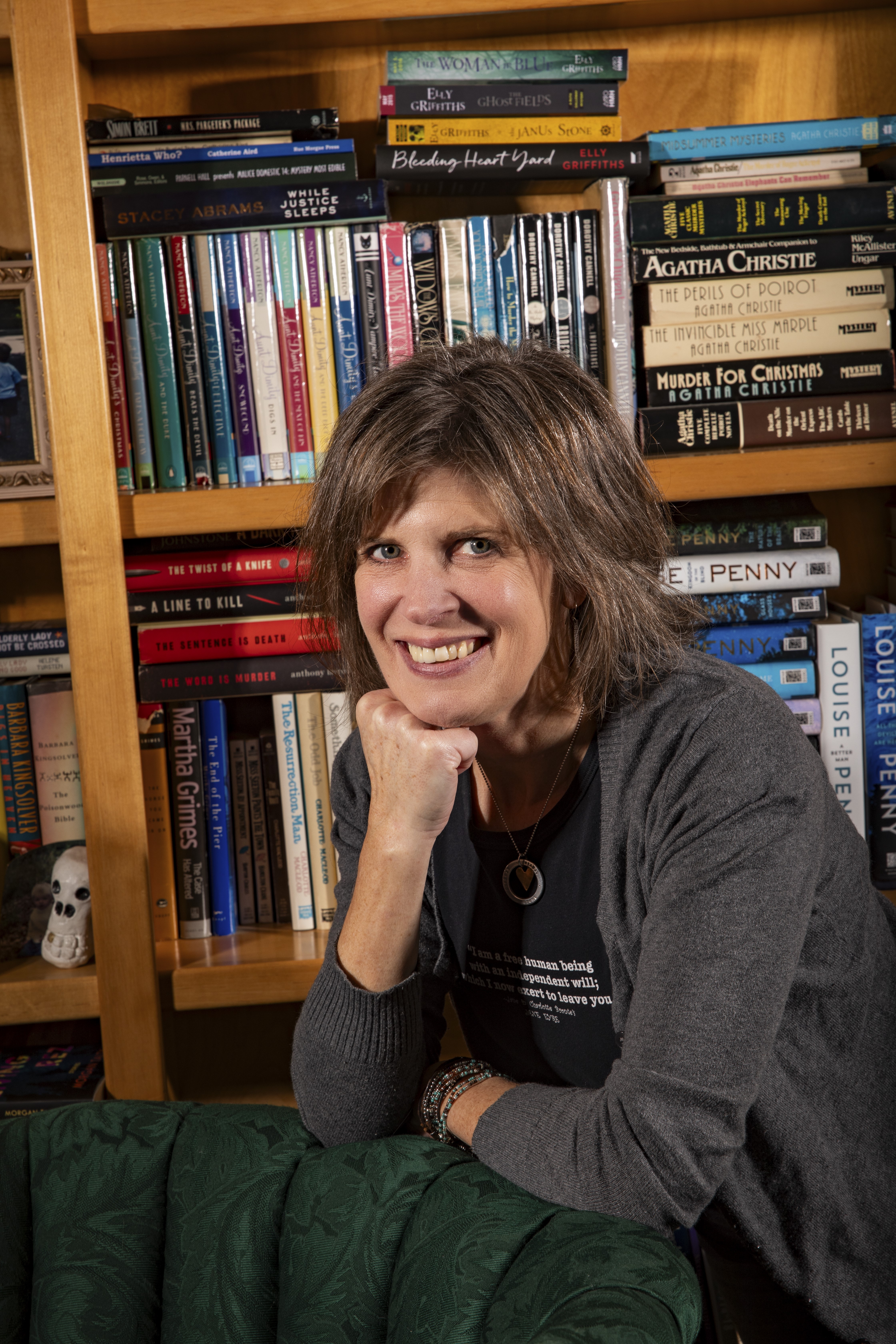
Melissa Westemeier is a Sister in Crime and teacher from Wisconsin. She uses humor to explore serious subjects, and her published books include murder mysteries, rom-coms, and a trilogy loosely based on her years tending bar on the Wolf River. She likes her coffee and protagonists strong and prefers to work barefoot with natural lighting.

MEL’S Website: https://www.melwestemeier.com/

Facebook https://www.facebook.com/profile.php?id=100027992959383

Instagram  https://www.instagram.com/mwestemeier/

Bluesky  https://bsky.app/profile/mwestemeier.bsky.social