Guest Blogger~ Zaida Alfaro

The Hidden Track: A Miami Music Mystery, is the third and final book of the Miami Music Mystery series, and it serves as a culmination of everything the series has been building towards. In this final installment, readers are taken on one last thrilling ride through the vibrant music scene of Miami, with a mystery that not only ties up the story arcs of our beloved characters but also brings resolution to the long-standing questions and tensions that have been simmering throughout the series.
The book follows the same characters we’ve grown attached to, but with deeper layers of growth and development. They’ve come a long way from the first book, with their personal lives and relationships more complex and interwoven into the unfolding mystery. In The Hidden Track, the stakes are higher than ever. The main character, Vy, faces a challenge that requires not only solving a crime but confronting personal demons, facing difficult decisions, and navigating the delicate balance between their musical passion and the dangers that come with it.

What sets this book apart is the sense of closure it provides, while also giving readers the chance to reflect on the themes that have been consistent throughout the series—loyalty, trust, and the power of music to heal and connect. The music itself is integral to the story, not only as a backdrop but as a vehicle for the plot, with song lyrics and performances playing key roles in solving the mystery. Music is a language of its own, and in this book, the hidden track symbolizes the final piece of the puzzle, something that’s been waiting to be discovered all along.

Wrapping up the Miami Music Mystery series has been an emotional and reflective journey. After working on these characters and storylines for over five years, it feels surreal to finally bring everything to a close. There’s a mix of happiness and sadness—happiness in knowing I completed the vision I set out for the series, but also sadness in letting go of the world and characters I’ve spent so much time with.

The process of tying up loose ends in the final book was both challenging and rewarding. Every subplot needed resolution, and I wanted to make sure the characters’ growth and the mysteries were satisfying to readers. There were moments of doubt, especially with the last few chapters, but pushing through and seeing it all come together was worth every bit of effort.

What’s also been important for me is knowing the story has reached its natural conclusion. While it’s bittersweet to say goodbye to Miami, its music scene, and the characters who’ve made it so special, I’m proud of what I’ve created and the way everything has come full circle.

I feel a sense of accomplishment, but I also look forward to exploring new projects. There’s a mixture of pride in the series’ completion and excitement about what comes next. It’s been a chapter of my life that I will always cherish, and I’m grateful for the readers who have been part of the journey.

THE HIDDEN TRACK
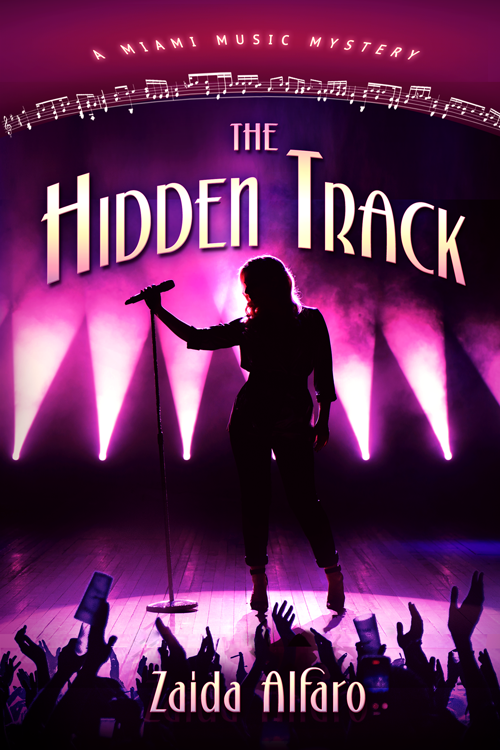
Vy has finally hit her high note. After years of clawing her way through the ruthless music industry, dodging dangerous rivals, and surviving murderous encounters, her dreams of stardom are within reach. With a record deal secured and her debut single climbing the charts, Vy is ready to shoot her first music video—a moment she’s been rehearsing in her mind for as long as she can remember.

But as always in Vy’s life, nothing stays in tune. As tensions crescendo and chaos threatens to drown her out, Vy must find a way to keep her creative vision intact. All the while, shadows from her past echo through her mind—could there be someone still out there, determined to see her career hit its final note?

As Vy’s close-knit band of friends and collaborators face their own personal trials, the stakes have never been higher. Has Vy’s murderous melody finally ended, or is there still danger lurking in the final verse? In the end, will Vy get the happily ever after she’s fought so hard for, or is there a hidden track playing a haunting melody, waiting to pull her back into the shadows?

Buy link: https://linktr.ee/Zaidamusic

The vibrant city of Miami, Florida, serves as the heartbeat of the Miami Music Mystery series—a city I deeply cherish, having been born and raised there. Like the series’ protagonist, Vy, I am a singer-songwriter and Grammy-considered independent artist, with a profound passion for music and literature. 

Years ago, I discovered cozy mysteries and was immediately captivated by their engaging, intriguing, and often humorous storylines. Inspired by these works, I decided to merge my love of music with my newfound passion for storytelling. This led to the creation of my debut novel, The Last Note: A Miami Music Mystery. 

Following its success, I continued Vy’s story In the Key of Dead: A Miami Music Mystery. Drawing from my own life experiences, I wove elements like phobias, dream sequences, and quirky personalities into the narrative—all grounded in truth. Through these novels, I aimed to share my love for Miami, its rich Cuban culture, my family, and the world of music. 

Now, with the release of The Hidden Track, the final book in the Miami Music Mystery series, I’ve brought Vy’s journey to a thrilling conclusion. This latest installment delves deeper into the city’s vibrant backdrop and Vy’s evolving story, tying together the mysteries, challenges, and triumphs that have defined her journey. 

I hope readers feel the same passion for Miami, music, and storytelling that I’ve poured into these novels. It’s been a joy to bring this series to life and share a piece of my world with you. 

Zaidamusic.com

Instagram/Twitter: zaidamusic

Facebook: zaidaauthor and zaidamusic
Guest Blogger ~ M.E. Proctor

Bop City Swing, or When Writers Click

By M.E. Proctor

We should write something together, I’ve heard these words many times. The suggestion is always vague and about as binding as the clichéd ‘let’s do lunch one of these days’. Many years ago, a friend and I planned to write a book. He was a big science fiction fan, so that’s what we decided to do. I delivered the first chapter. My friend never produced chapter 2, and I ended up doing the entire thing. It turned into a four-book dystopian series, The Savage Crown.

So, when fellow crime writer Russell Thayer typed in a social media chat that “Tom should go after Gunselle someday. Imagine the interrogation scene!” I agreed that bringing our two recurrent short story characters together was a cool idea, but I doubted it would go anywhere.

I was wrong. We’re a year later and Bop City Swing is on the bookshelves. Even better, Russell and I are working on another mystery featuring the same two leads.

Russ’s creation is Vivian Davis, aka Gunselle, a contract killer. He has written more than twenty short stories spanning the late 1930s-early 1950s with her in the starring role. My guy (he’s in a dozen stories so far) is Tom Keegan, a homicide detective in 1950 San Francisco. A professional killer and a cop, in the same place at the same time … sounds like a match made in Noir heaven.

Early last year, Russ and I both happened to have pieces published at the same time in two different magazines. A mash-up—in the vein of CSI meets Law & Order—was top of mind again and we started brainstorming ideas for a short story. What if she’s hired to bump him off … What if they’re after the same killer… We eventually decided to build the story around a political assassination that would involve both characters, coming at it from their respective angles. The detective investigates the case, in straight procedural fashion, and the contract killer is embroiled in it sideways. She didn’t commit the crime.

We never discussed the mechanics of the collaboration. It felt natural to tell the story from a double point of view (POV), Russ writing the Vivian-Gunselle chapters, while I wrote Tom’s scenes. The differences in our styles fit the particular voice of our respective characters. If there were awkward disparities or rough edges, we figured we could polish them off after the first draft.

Russ sent me a snippet of Gunselle being hired for a job she dislikes—fixing somebody else’s mess, i.e. the assassination (that plot line was discarded later on)—and a few days later, I sent him Tom’s arrival at the crime scene, the ballroom of a luxury hotel. The suspect is a musician in the jazz band hired for the event.

Everybody knows that most of the research should be done before starting to write the story, it’s a lot more efficient, but we were both eager to get something going. Now, with two scenes drafted, we had to make sure we were historically correct on the when and the where.

The when would be 1951, an election year. That November, San Francisco re-elected the incumbent republican mayor, Elmer Robinson. The fictional who (the victim) would be Charles Forrester, the democratic challenger launching his campaign at a June fundraiser. Where would be the Palace Hotel, conveniently located downtown, with a good size ballroom—an internet deep dive delivered period-accurate floorplans.

We knew when, where, and who, but like our two lead actors, we were stumped by the motive. Why was Charles Forrester shot? We wouldn’t find out for a while.

Writing a story is like a treasure hunt. Every sentence, written on the fly, contains potential clues. Here’s an example. The decision to make the killer a jazz trumpeter gave the plot a definite slant. It also gave us the opportunity to dig into the rich Bay Area music scene of the early 50s, the various clubs, the talent on display, the racial tensions, the lure of the city at night, the early involvement of the Mob in the drug trade. Russ had touched on the music angle in some of his stories and brought all that background into the plot, with great secondary characters. One of them, Maggie, became central to nailing down the motive and the final resolution. Through Maggie, we also touched on the war, only six years in the past, and its aftermath, how deeply it scarred many characters in the story.

Very soon, the project was no longer a short story. Bop City Swing had turned into a book.

During the months it took to complete a solid first draft, we had a couple of mini-debates. One of them was about who would enter the scene first.

Homicide cops always get there after the fact, by definition. We decided to start with Gunselle and put her in the ballroom, at the very beginning, before the shots ring out. That gave us the story hook. She was hired for the hit and somebody beat her to it. She’s pocketed the down payment. For doing nothing. As a professional, it sticks in her craw.

Another discussion was about the key confrontation between our two characters. Up to that climactic moment, they’d both gone through their moves separately, with only a glancing accidental contact that showed mutual interest. Yes, this is where it gets sexy … Who would write that scene, in whose POV? We considered writing it twice, in a ‘he says, she says’ tango, but it proved clunky. I wrote the initial scene, from Tom’s voice, then Russ took it and turned it around. It worked a lot better that way, Gunselle initiates the event and is the more active character. It was also fun to write Tom’s reaction afterwards.

We initially wrote our respective scenes separately. After a few weeks, we built a master document that we carried all through to the end, highlighting changes, constantly adjusting things. Russ writes snappy action scenes and I tend to be atmospheric. In the master document, we started blending things. He added bite and I added background.

Mid-way through the process, we built a timeline. The characters were all in motion and the investigation picked up speed. A beat-by-beat sequence of events helped us figure out the ending. None of what happens in the last act was in the cards from the start.

The time we took to consider options, writing them and discarding parts of them, might appear to be a waste but was crucial in coming up with the best solution. The beginning of the story, in particular, was rewritten multiple times. Part of the fun in a collaboration is having your partner put something on the table that you would never have come up with on your own.

Writing is a solitary pursuit. Sometimes, it feels good to share. Russ and I had so much fun, we’re doing it again. There will be more Tom and Gunselle in the future. I’ll keep you posted!

—-

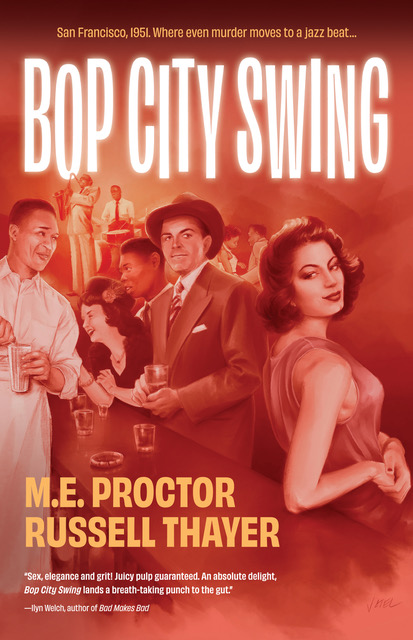
Bop City Swing

San Francisco. 1951.

Jazz is alive. On radios and turntables. In the electrifying Fillmore clubs, where hepcats bring their bebop brilliance to attentive audiences. In the posh downtown venues where big bands swing in the marble ballrooms of luxury hotels.

That’s where the story begins, with the assassination of a campaigning politician during a fundraiser.

Homicide detective, Tom Keegan, is first on the scene. He’s eager, impatient, hot on the heels of the gunman. Gunselle, killer for hire, is no longer there. She flew the coop, swept away in the rush of panicked guests.

They both want to crack the case. Tom, because he’s never seen a puzzle he didn’t want to solve, no matter what the rules say. Gunselle, because she was hired to take out the candidate and somebody beat her to it. It was a big paycheck. It hurts. In her professional pride and wallet.

The war has been over for six years, but the suffering and death, at home and abroad, linger as a horror behind the eyes of some men. And one young woman.

Bop City Swing is the brainchild of Russell Thayer, author of the Gunselle stories, and M.E. Proctor, who occasionally takes a break from Declan Shaw, her Houston PI, to don Tom Keegan’s gray fedora.

Buy Links:

Bop City Swing is available in eBook and paperback

On Amazon at https://www.amazon.com/Bop-City-Swing-Proctor-Thayer/dp/B0F4DSSQ9V/

From reviews:

“A wild ride down the neon-lit streets of post-WWII America, with bebop wailing in the nightclub on the corner, the white witch pumping through the veins of the junkie on the barstool, three slugs draining the life from the charismatic politician with a shady past, and enough snappy dialogue to light up the faces of Raymond Chandler and James M. Cain.”

M.E. Proctor (www.shawmystery.com) was born in Brussels and lives in Texas. The first book in her Declan Shaw PI series, Love You Till Tuesday (2024), came out from Shotgun Honey, with the follow up, Catch Me on a Blue Day, scheduled for 2025. She’s the author of a short story collection, Family and Other Ailments, and the co-author of a retro-noir novella, Bop City Swing. Her fiction has appeared in VautrinToughRock and a Hard PlaceBristol NoirMystery TribuneShotgun HoneyReckon Review, and Black Cat Weekly among others. She’s a Derringer nominee.

Social Links

Author Website: www.shawmystery.com

On Substack: https://meproctor.substack.com

Facebook: https://www.facebook.com/martine.proctor

Twitter: https://twitter.com/MEProctor3

BlueSky: https://bsky.app/profile/meproctor.bsky.social

Instagram: https://www.instagram.com/proctormartine/

Russell Thayer’s work has appeared in BrushfireTough, Roi Fainéant Press, Guilty Crime Story Magazine, Mystery Tribune, Close to the Bone, Bristol Noir, Apocalypse Confidential, Cowboy Jamboree Press, Hawaii Pacific Review, Shotgun Honey, A Thin Slice of Anxiety, Rock and a Hard Place Press, Revolution John, Punk Noir Magazine, Expat Press, Pulp Modern, The Yard Crime Blog, and Outcast Press. He received his BA in English from the University of Washington, worked for decades at large printing companies, and currently lives in Missoula, Montana. You can find him lurking on Twitter @RussellThayer10.

WEEPING WILLOW

Hello, Ladies ~ Sorry this post is late. I’ve been at our cabin for the long weekend, which doesn’t have internet. I tried to upload my blog a couple of times while in Lincoln City, but the internet at most places is spotty at best.

When my husband, Randy, and I bought our house in Donald, I was thrilled we had a willow tree in our backyard. The lovely eight-year-old tree helped to block the city’s big blue water tower.

Since our lot sat at an angle and backed up to a farmer’s field, we couldn’t see our neighbors on either side of us. I loved the illusion that we lived in the country surrounded by beautiful crops.

Of course, as time ticked by, my beloved willow tree grew taller and broader as we grew grayer and rounder, the unstoppable march of time making all of us older.

Every fall, Randy and I would struggle to keep up with the never-ending shower of colorful leaves blanketing our patio, creating a slick carpet of decaying debris. Spring would bring the dropping of the budding leaves’ cuticles, which looked like a sea of bumble bees inhabiting the patio.

Our now-massive willow tree also had branches that extended over flower beds, causing plants to die or grow in weird directions to capture some sunlight. Randy’s biggest fear was that the now forty-foot tall and thirty-five-foot-wide tree would fail, and the branch looming over our roof would do some serious damage.

We finally had to make the gut-wrenching decision to cut down our majestic Weeping Willow. I cried as the arborist and his crew dismantled the tree in sections. But the hardest part for me was when he shot poison into the lonely stump. He’d just killed something I’d enjoyed for years.

During this time, I was working on the first draft of my novel, “Chaos in Cabo.” I’m close to typing The End and working on tying up all my story threads. I’ve been struggling with how to end my villain’s story. As the arborist and his crew cut down my willow, it occurred to me that I grew attached to things … including my characters.

Even though I know she needs to be punished for her crimes, the idea of sending her to prison pains me. My alternative idea, having the man she loves kill her, seems so harsh.

Why is it so hard for me to let go? I mean, my villain is a fictional character. It’s not like I meet her for Happy Hour every month. And I usually fashion my villains after people I’ve met who wronged me somehow. This female villain was named after a woman who stole the guy I was dating after pretending to be my friend. So essentially, I’d be virtually settling a score with her. Right?

In my past novels, I’ve redeemed a few villains, punished a few, and, of course, a few have died. In “Malice in Mazatlan,” I faced the same dilemma as I’m experiencing with “Chaos in Cabo.” I loved my villain, Sarita Garcia, so much that I decided I couldn’t end her story, and she appeared in “Vanished in Vallarta.”

As Randy and I approach retirement, I’ve been faced with “letting go” of things. Downsizing is painful, but I find joy in donating items or handing off family treasures to the younger generation.

I recently gave pieces of décor to a niece. She was so thrilled she sent me a thank you note with pictures of the repurposed decorations in her small house. It made me think about what my readers might expect as they read one of my novels. Maybe they’ve decided in their minds as they read “Chaos in Cabo” that this villain seriously deserves her just desserts and isn’t worthy of being “repurposed” or “redeemed.”

One of my readers said they loved that I infuse my villains with qualities that make them human to balance their evilness. She said, “I find myself rooting for your villains despite their crimes.”

But can I justify allowing the villain in “Chaos in Cabo” to live since she threatens the lives of people from her lover’s past? He would be devastated if she killed his loved ones and would never be able to forgive her, which would create a prison of a different kind.

While I’m sad at the loss of my beautiful tree, the plants in the flower garden that once were shrouded in shade are thriving. I like the idea that letting go of something opens up possibilities for brighter occurrences… and, hopefully, rewarding stories for your readers.

Happy Memorial Day, Ladies! I hope you had a fabulous day with family, friends and … your characters!

The End of a Newsletter

I’ve been a member of the Authors Guild for several years, but didn’t host my website there until SquareSpace told me I couldn’t have a newsletter without a certain kind of email, which I didn’t know how to create. Rather than learn what was probably a pretty easy task, I decided to move my website to the Guild. Once there I could tap into their newsletter function.

After barely using it for the last few years, I received a notice that the Guild has decided to drop the newsletter function from its website citing both cost and logistics. I can hardly blame them. I’m probably part of the logistics issue, since almost every quarter I had trouble figuring out how to get the newsletter out there, into cyberspace. Hector sent me clear instructions, which became less clear as time passed between newsletters until, after a while, they ceased to make any sense at all.

I won’t miss the newsletter function, and I’m pretty sure the few people who asked to get the modest publication from me won’t miss it either. Let me be the first to say it: My newsletters weren’t riveting. I can’t even remember what I wrote. Several author newsletters come into my email box regularly, and I scan them. Some are archly self-deprecating. Some are breathless with news. Some are clearly filled with, well, filler because the writer has better things to do than write something for this medium. And some are interesting, the result of thought and effort. I’m impressed.

For most writers, from what I can see, newsletters have the main purpose of reminding readers that the writer is out there, working away on whatever the current project is, and making sure that readers don’t forget her or him. It’s basically the wave and calling yoohoo across the street.

Once in a great while I get one that I enjoy reading mostly because it’s not a sales pitch; it’s about something in particular that I’m interested in, or become interested in because of the short piece the writer has taken time to develop. But most newsletters could end and I wouldn’t miss any of them.

What I do miss, to my surprise, is my old site on Blogger. It was nothing but a blog page with my books listed on the side columns and a growing list of followers. (Silly as it is, I was proud of that.) It was easy to manage, and easier to find. But life got complicated and a website seemed the better choice. I wouldn’t say that today.

I haven’t been keeping up with my blog because I don’t want to waste my time writing and anyone else’s time reading something that is contrived rather than something that really is on my mind. I do have a few of those coming up, but here’s where things get tricky. Once I acknowledge that something is nagging at me, I spend some time thinking about it. And then a solution appears, and the problem no longer nags at me and hence I no longer have an interest in writing about it. I doubt I’m original in this. When I look at it this way, I’m surprised anyone gets a newsletter out there, regularly or irregularly.

This is all of a piece with my love/hate relationship with social media. The AG newsletter was reliable in that I could vet comments (deleting those that I found offensive or fishy) and keep out the inevitable bots and scammers. Since hackers seem to descend on various sites all at once, without any logic behind their choices that I can see, I sometimes think I should delete everything on social media, but I’m not sure that would solve any problems.

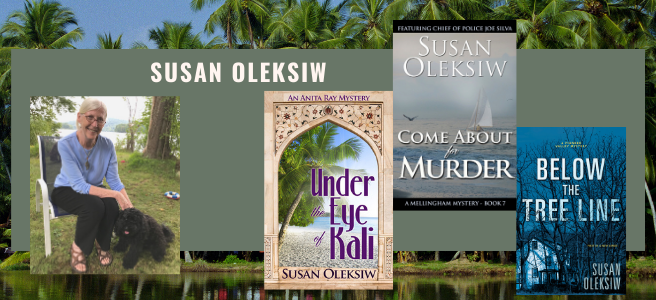
What you’re reading now is the typical writer’s unsettled grappling with a blessing and a curse—social media in all its forms. If we write or do anything creative, we want to reach an audience, we want our work to be read, and we want readers to be able to reach us. The journey between writer and reader is fraught with shoals, quicksand, hurricanes, sea monsters, a broken compass, pirates, and sometimes worse. It’s easy to forget that a good newsletter is an ongoing conversation with individuals who know the writer’s publications and interests and views; a reader who may, as has happened to me, talk about a character as though he or she were a friend of the family, someone known and cared for. I have friends who write to me about Anita Ray, and sometimes giggle about things Auntie Meena gets up to as though they had just seen her. These readers remind me of how fond I am of her, and why I keep up the Anita Ray series. (There’s another one in the works.)

So what is the upshot? I may send out one more newsletter informing people that this one is the end, and then hope they’ll pay closer attention to my blog. But that also means that I have to pay closer attention to it. 

I write for this blog, Ladies of Mystery, faithfully once a month. To this light burden, I can probably add a blog post at least once a month on my website. We’ll see how that goes. Right now, blogging occasionally is enough for me. And I’ll keep looking for problems to write about.

Being There: Writers and Actors

It’s no secret that actors and writers have one big, big thing in common. Well, at least in my book. When faced with a tough scene, actors draw on their own memories and emotions to emote and draw us all in so that we believe in their every breath. There are so many great examples of this, but one that has stuck with me since I first saw To Kill a Mockingbird is the scene where Atticus (Gregory Peck) and Scout (Mary Badham) discuss her mother’s pearls. The emotion was so genuine, the theater so dark, and the patrons next to me so enraptured that I was present in that moment.

Like actors, writers seek the motivation and moment in our past to make what we write as real as the scene in ‘To Kill a Mockingbird’ was to me. We aren’t always successful, nor are actors, but it is in the trying.

One might ask, what could a successful businessperson know about poverty, worry about the next meal, or a place to sleep, well? While waiting to hear if yet another job interview with another ad agency would end in employment, I opened the linen closet in my roommate’s apartment (actually, I bunked on her couch). I spent several sleepless months there, the folks across the hall were the noisiest lovers in the entire frigging world. To this day, I suspect kink, when they stopped, about three, I slept.

On the day in question, I went to the cardboard box where I kept my money and was reminded that I had $79.00 left to my name. I owed my more-than-gracious roommate rent, gas for her car (the one she let me drive to my interview), and money for the phone bill. If I got the job, I had barely enough money left to ride rapid transit until I received my first paycheck. I sat with a plunk on my roommate’s couch and stared at the wall. The ad agency called the next day. I never looked back, but to this day, every time one of my bank accounts ends in $79, I freak out so badly that I sometimes transfer money from account to account just to change the final digits.

And where do I go when I need to describe action? The same place every writer does, the part of our brain where we stow our wild and risky adventures.

When I was eight, my family took a road trip in our massive aqua and white Nash Rambler. The one with the Nash seat, the front seats dropped all the way down, making the inside of the car into a king-size bed. It was a wonderful beast. To this day, I think of it and grin until it hurts. One night, we arrived at the campground on the Suwanee River very late and, rather than pitching the tent, dropped the seats, and the four of us—Mom, Dad, and sister Lynn slept four abreast.

In the morning, the air was so dense with moisture that it formed a haze. A few minutes in it and your clothes felt moist. My sister, a notoriously robust sleeper, was still sleeping, and Mom was wrestling with the coffee pot, when Dad held up the Frisbee and motioned for me to follow him to an open field.

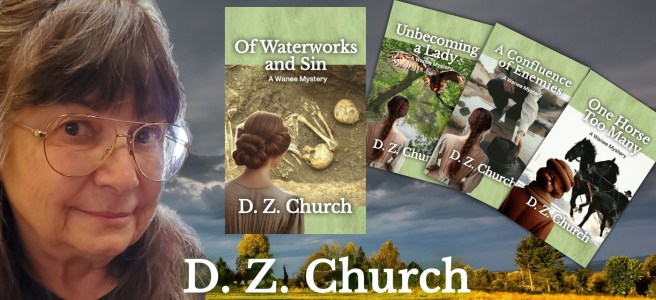
Dad sent soft passes my way, I’d grab them, that is, until a Great Horned Owl swooped out of the early morning mist, grabbed the hair on the top of my head, and tried to fly away with me. Dad threw the Frisbee at the owl and ran toward me, maybe to grab my feet as I was lifted into the air. The owl flapped its wide wings and flew away with a hank of hair in its talons. That memory of how scared, fascinated, and small I felt was available when I needed to describe the owl attacks in “Unbecoming a Lady,” the first book in the Wanee Mystery series.

Writers keep these moments in their back pockets. It is remembering, applying, and interpreting them that results in the descriptive words on the page, just like actors rely on their past to create character. And, like them, we never know what tidbit from the past will meet the need and allow us to leave our readers gasping, or sobbing, or in wonder, as Atticus and Scout do every single time I rewatch ‘To Kill a Mockingbird.’

Find me at https://dzchurch.com, where you can discover all my books and sign up for my newsletter.