

As I listen to my contractor pound nails, rip wood, and clamber about outside my cabin, I have come to newly appreciate the relationship between writing and construction. Oh, we all know and acknowledge the concept of scaffolding, or how to eat an elephant one bite at a time. I’m not writing about that. This blog is about five steps in the construction process that parallel the writing process. The list does include, the need to show up every day on time at the building site with your tools strapped around your waist, i.e., sitting in your writing chair in your designated writing space and applying your skills to the work you do.
Step 1: Don’t go out to bid without knowing what your final product will be. In my case, we are updating the exterior of a cabin in the mountains driven by the ‘bleeping’ insurance companies. This requires, among other things, that to meet the insurance company’s timelines, the deck must be rebuilt using the same footings. Not unlike genre requirements, footings define the building parameters, including the number of support beams and joists. So the question becomes, do I want my deck to adhere perfectly to the existing footings or do I want the stairs to bend in the middle, as in stretch the genre (building) requirements to devise something more interesting without forcing the readers into a paroxysm of horror by reshaping the genre or the building inspector to require costly, time-consuming permits. Once this step is done, you have defined the genre or general scope of the work, be it a book or deck.
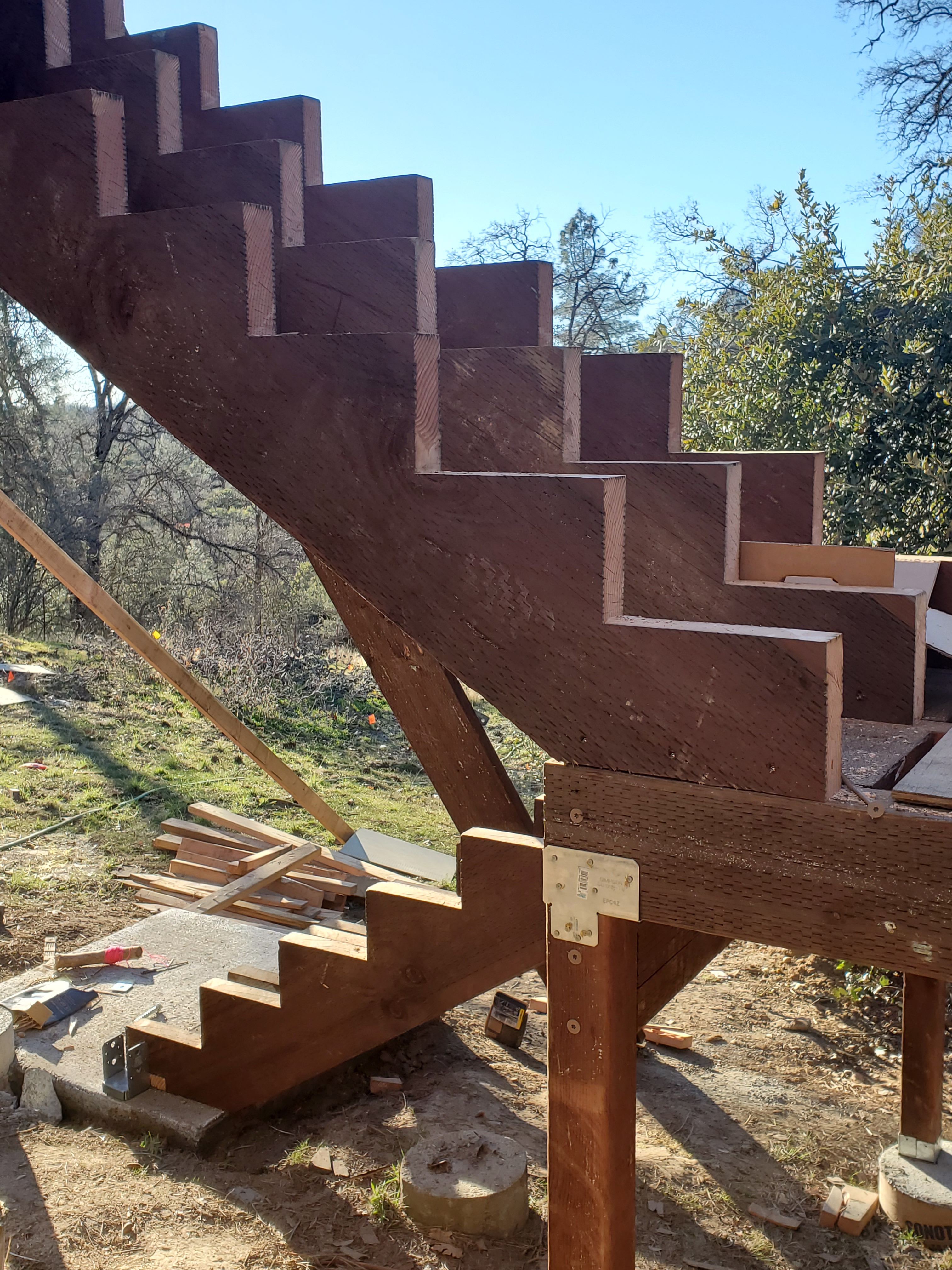
Step 2: Have a realistic plan for construction that estimates the materials and superstructure required. In short, outline your scope of work (by whatever method you use). Define your characters (joists). Define their relationships and how they support each other and the events (bridging). Who does what to whom, when, where and how. At least, know where your story starts and why and where it ends. And, if you write historical fiction, measure twice and cut once. Research, then double-check your research so that the time period unfolds seamlessly as you write. Fixing historical errors once they are embedded in the story can be like a trip to ‘the cold place’ and upend your plot.
Step 3: Anticipate change. Something always comes up that requires replacing, rewiring, or rethinking (materials plus 20%). Always. Don’t stress, go back to your plan. If the change doesn’t benefit the building or the plot – ditch it. If it enhances the final work for the reader, weave it in so that the warp and the woof are smooth cohesive and complementary. The story will benefit from the enhancement or twist.
Step 4: Have the construction inspected by an outsider. Building inspectors come to the site; reviewers don’t, but they are a must. I don’t mean the folks who write reviews for your web or social sites. I’m talking about a circle of readers, willing to tell you when something is off, when it isn’t, and what the story might need. Take them seriously, then …
Step 5: Ensure that work not only passes inspection but continues until it fully meets your expectations, including any changes required. Then read it, as in read it again, and again, and again. Try an AI grammar checker. Have someone else read it for grammar errors. If it is historical fiction, find someone who understands that word usage might be a tad different back then. Trust me, at least one embarrassing word or grammatical error will escape you. You’ll find it lurking in the first chapter or whatever page your proof happens to open to as you relish your baby. Fix it. Get another proof. Then, take the next step.
Time for an open house! Or, rather, time to publish, send out for media review, advertise, market, and pray. And, if you need siding, have the cover done by professionals. Don’t worry you can still write all your own text, have AI write the cover text, or have the cover design group do the same.
What good is a great deck without new siding on the house?
For more information about me or my books, check out https://dzchurch.com, or to buy my books, go to Amazon and search on D. Z. Church; they’ll all pop up.

 Ladies of Mystery
Great post and so true!
LikeLike
Great comparison! Fun post. The descriptions are perfect.
LikeLike
I love this comparison. As someone who had to unexpectedly meet new requirements for the insurance company after my husband died, I understand the motivation of meeting the demands of the inspector, controlling the contractor (who has a few ideas you might be interested in, to enhance the job, of course), and watching that calendar move week by week. One of the pleasures of crime fiction is the “tactile” pleasure of working out the story, something Dorothy L. Sayers mentioned and I have always remembered. We construct our tales. Your comparison is spot on.
LikeLike