

The Devil’s in the Details: Eco-fiction in the mystery genre
When my husband, John Yunker, and I embarked on a four-day hiking trip in one of the most remote areas of the world, we had no idea we’d bring home the idea for a novel we would write together. (We also had no idea we would survive writing a murder mystery together.)
But though Devils Island is our first co-authored book, it’s not our first collaboration. In 2011, noticing a dearth of opportunities for authors writing environmental fiction, we co-founded Ashland Creek Press, a boutique publisher focused on books about the environment and animal protection. From the day we opened for submissions, we’ve received far more environmental novels than we could ever publish — and now, thirteen years later, “cli-fi” has become a genre of its own.
Both John and I have written our own novels about endangered species — John in The Tourist Trail, and me in My Last Continent and Floreana — and once we learned about the plight of Tasmanian devils in Australia, we knew we’d found our next project.
But we had to ask ourselves: Can a serious environmental topic like endangered species be addressed in a genre often considered “beach reading”? The answer we came up with is: Absolutely. And perhaps it’s even more effective than tackling such subjects in a more “literary” genre.
Here’s why: We’ve seen, over the years, as both writers and publishers, that readers can be wary of environmental books. When it comes to climate change and animal protection, the news out there can be difficult: the planet is heating up; species are disappearing. Readers like to read, in part, to escape to somewhere else — mentally and emotionally, even if not physically. So we aimed, with Devils Island, to write a story that offers a fun escape (a glamping trip in one of the most beautiful places in the world), while also sharing what makes the real-life island of the novel so important (it is part of the conservation effort to save Tasmanian devils).
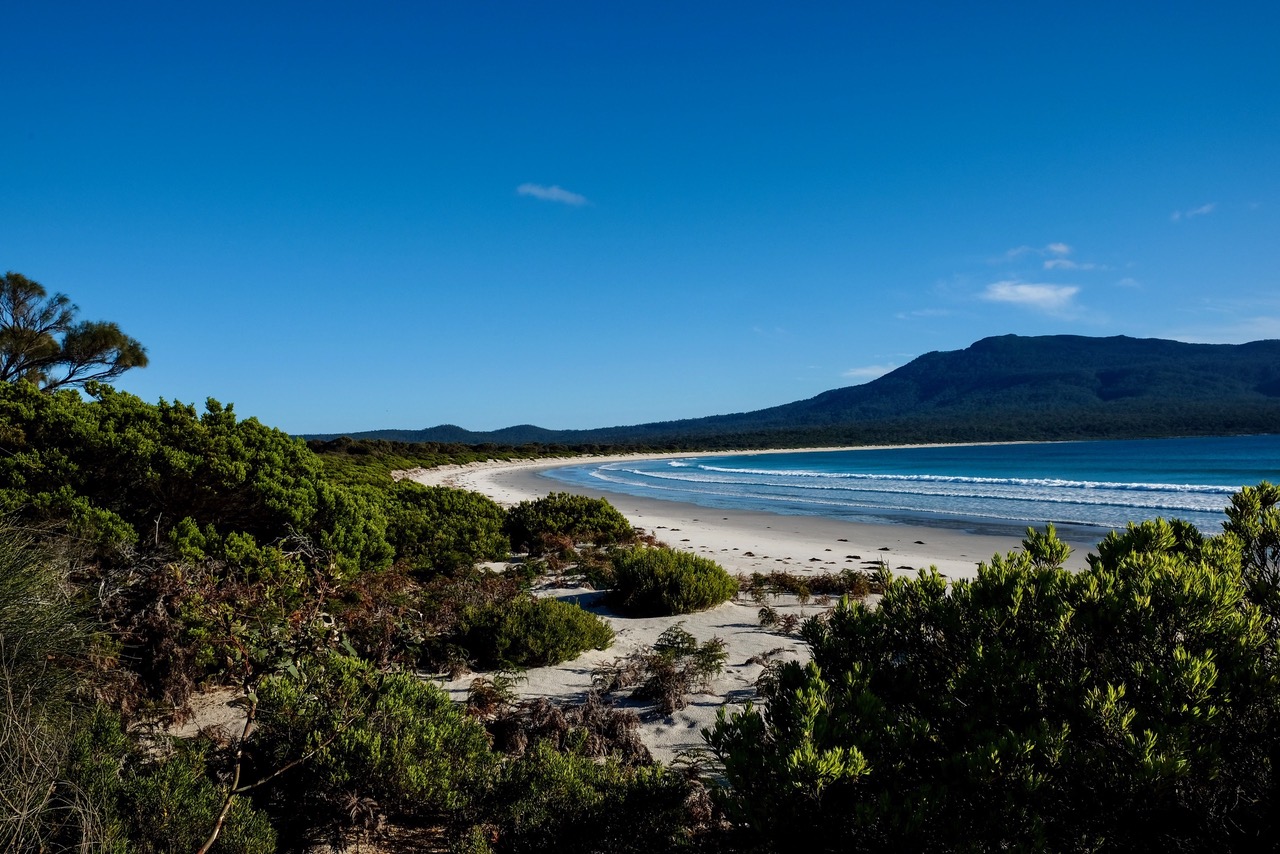
What we learned during our journey to Maria Island, a tiny island off the coast of Tasmania, is that Tassie devils are being reintroduced there because it is so remote; it’s the one place offering them hope for survival from a contagious facial tumor disease. To give ourselves literary freedom, we call our fictional island Marbury, and we created Kerry, a naturalist-turned-guide who herself is escaping the tough world of rescue to lead tourists on a trip where she’ll get to feel the optimism of sharing a place of hope with travelers. (Little did she know one of her guests would go missing, and a storm would cut off all communication with the outside world.) The secrets and lies of the hikers — and the disappearance of one of them and the death of another — is the focus of the story, but along the way, we’ve snuck in myriad details that will teach readers about the amazing Tasmanian devils (among other creatures) and the efforts to protect them.
And this is where eco-fiction meets mystery — in the details. Locked-room and closed-room mysteries are nothing new to the genre, but by setting a suspense novel on an island where conservationists are rehabilitating an endangered species is a detail that goes a long way toward readers’ understanding of the issues. And while the human characters are center stage in Devils Island, an individual devil character plays a small but important role — and myriad other animals make appearances as well.
Mystery novels include plenty of red herrings — but these don’t have to be limited by human plot twists. We decided that one subplot of Devils Island would be all the more resonant if it was about another issue facing Australia, that of poaching and wildlife smuggling.
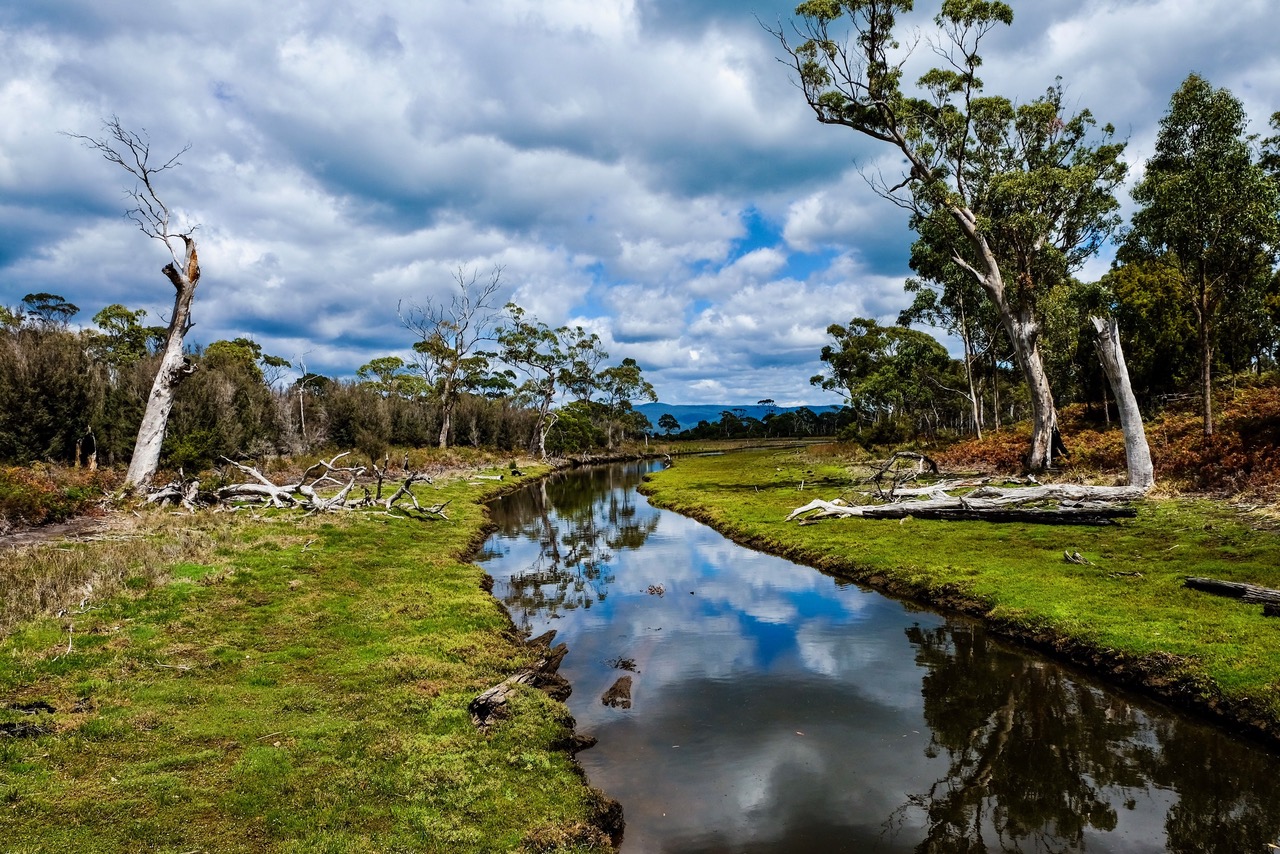
And mystery writers never neglect setting — and this, too, can be effective in an eco-mystery. Nearly every part of the world is suffering the effects of climate change, from stronger hurricanes to increasing wildfires. In Devils Island, it wasn’t a stretch to conjure a storm that would cut off all contact between the hikers and the outside world. Alternatively, climate change can provide an atmospheric backdrop, as in Jane Harper’s bestseller The Dry, in which the tinder-dry farming community that has suffered from years of drought reveals the stress of the climate crisis on this community and ratchets up the tension in the story as well.
Characters, of course, propel stories forward — and they can also provide details of context and backstory for animals and the environment. In Devils Island, Kerry brings both naivete (this being her first time around as a lead guide) as well as expertise (she knows everything about devils and most of the wildlife from her former job). Another thing characters provide is conflict, and author Cher Fischer provided plenty of this in her eco-mystery Falling Into Green (published by Ashland Creek Press) in which ecopsychologist Esmeralda Green, a vegan with an electric car, falls in love with a carnivorous, Hummer-driving television reporter.
Mystery novels are all about figuring out who did what, and an eco-mystery is no exception. But adding details that reveal environmental issues, the plight of animals, and our changing world can create stories that are not only fun to read but make us think about our planet as well.
Devil’s Island
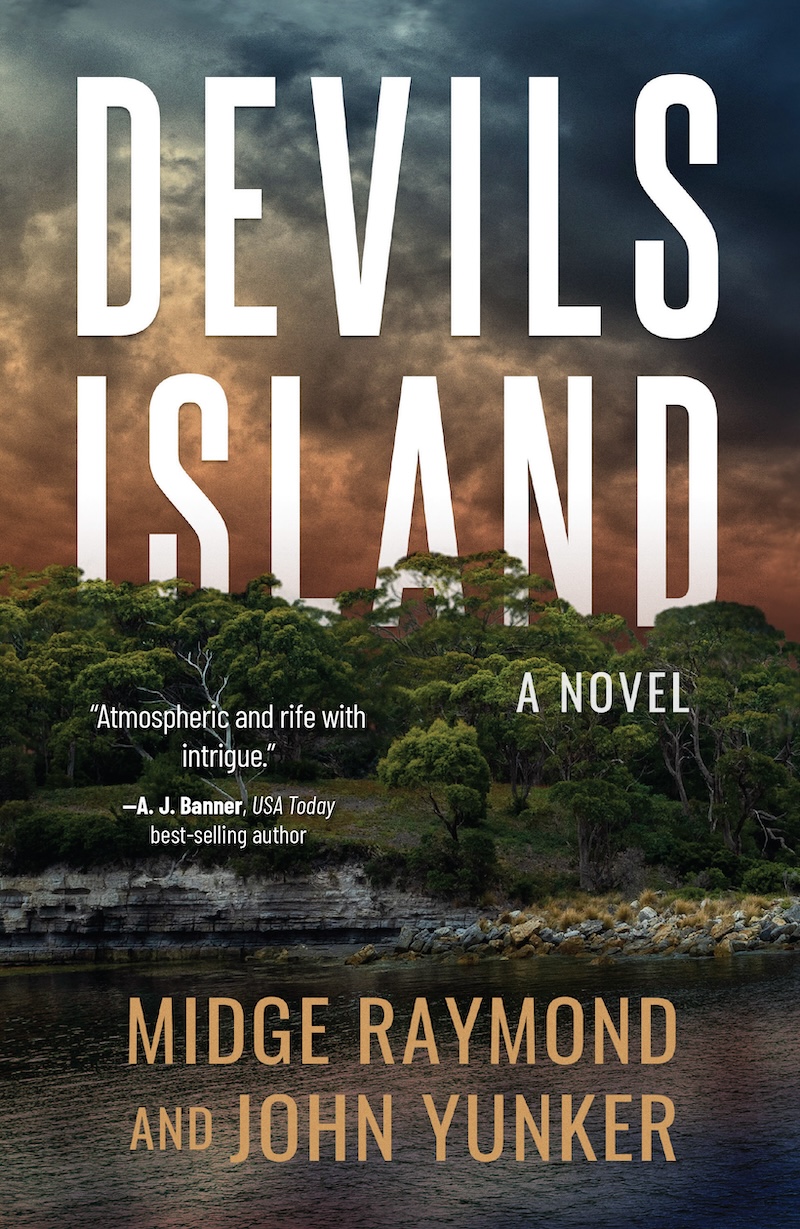
On a remote island off the coast of Tasmania, an Australian wilderness guide embarks on a four-day hike with six guests—and arrives at their destination with only two.
Devils Island is home to abundant wildlife and is the ideal place to re-introduce endangered Tasmanian devils. It’s also a region where travelers can see firsthand the unspoiled drama of Australia’s wild places. For naturalist guide Kerry, the trip offers a respite from the grueling work of trying to save an endangered species. American college classmates Brooke and Jane have a chance to reconnect after years of estrangement. Two Australian couples hope to escape their big-city lives and enjoy the company of longtime friends.
When Jane disappears on the first night, the group assumes she has wandered too far in the stormy weather. Yet it turns out she has a secret connection to one of the other guests—and when another hiker is found dead in camp, the group finds itself isolated by the worsening storm and wondering who among them might be responsible.
Amazon: https://www.amazon.com/Devils-Island-John-Yunker/dp/1608096149
Bookshop.org: https://bookshop.org/p/books/devils-island-midge-raymond/21171253?ean=9781608096145
Barnes & Noble: https://www.barnesandnoble.com/w/devils-island-john-yunker/1144401474?ean=9781608096145
Oceanview Publishing: https://www.oceanviewpub.com/books/devils-island
Buy a signed copy: https://midgeandjohn.com/purchase.html

Devils Island is the debut collaboration by Midge Raymond and John Yunker. Midge is the author of the novels Floreana and My Last Continent and the award-winning short-story collection Forgetting English. Her writing has appeared in TriQuarterly, American Literary Review, Bellevue Literary Review, the Los Angeles Times, the Chicago Tribune, Poets & Writers, and other publications. She earned a certificate in private investigation from the University of Washington. John is the author of the novel The Tourist Trail; editor of the Among Animals fiction series and a nonfiction anthology, Writing for Animals; and his plays have been produced or staged at such venues as the Oregon Contemporary Theatre, the Source Festival, the Centre Stage New Play Festival, and Association for Theatre in Higher Education conference.
Website: https://midgeandjohn.com/
Instagram: https://www.instagram.com/midge_and_john/
Facebook: https://www.facebook.com/MidgeandJohn/



 Ladies of Mystery
You must be logged in to post a comment.