The Intersection of History and Fiction

I’ll tell you a story, a once-upon-a-time story, full of passion and loyalty, skullduggery and tragedy. It’s about a prince and princess who travel to a faraway land where they encounter all sorts of dangers. The prince dies and the princess spends the rest of her life shut up in a castle. Sounds like a fairy tale, right? But it’s all true.

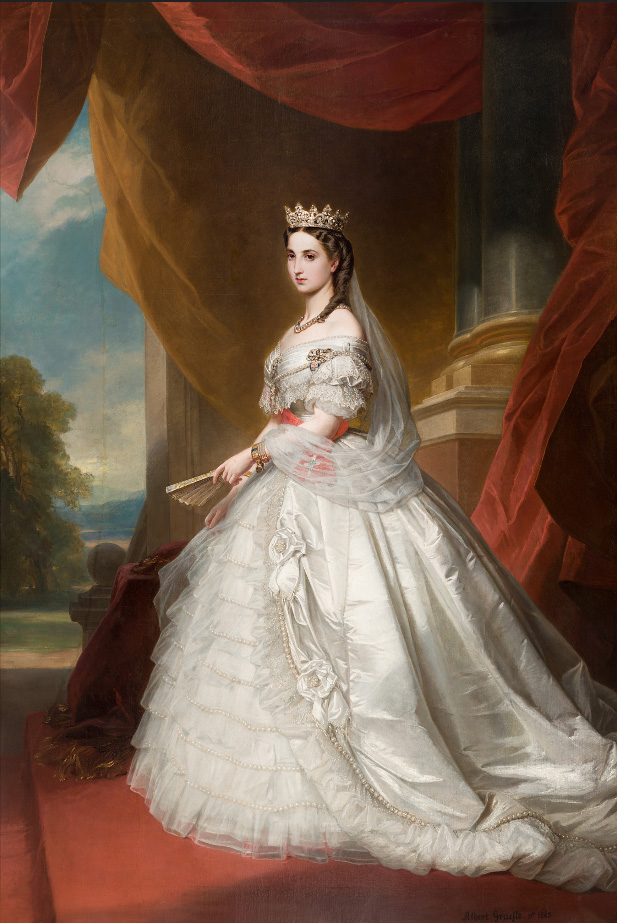
The players are Maximilian, younger brother of the Austrian emperor and his wife Charlotte, a Belgian princess. Together they leave Europe and travel all the way to Mexico, where they are proclaimed emperor and empress by conservative monarchists who are trying to dislodge the republican government headed by President Benito Juarez. These European royals and their empire are propped up by French troops sent by Napoleon III, who wants to expand the influence of the French empire.

All this happens in the 1860s when the United States and its Monroe Doctrine are occupied by that contretemps known as the Civil War. To refresh your memory, the Monroe Doctrine asserts US pre-eminence in the hemisphere and excludes foreign intervention. Despite being focused on dealing with the Confederacy, the US government is not having any truck with the imperial interlopers and continues to recognize Juarez as the legitimate president of Mexico.

When the Civil War ends, the US provides money to the Juarez government. American volunteers, done with one war and ready for the next, pour across the border to join Juarez’s forces. Maximilian has never been popular with the Mexican people, and his tenure as emperor hangs by an increasingly fragile thread.
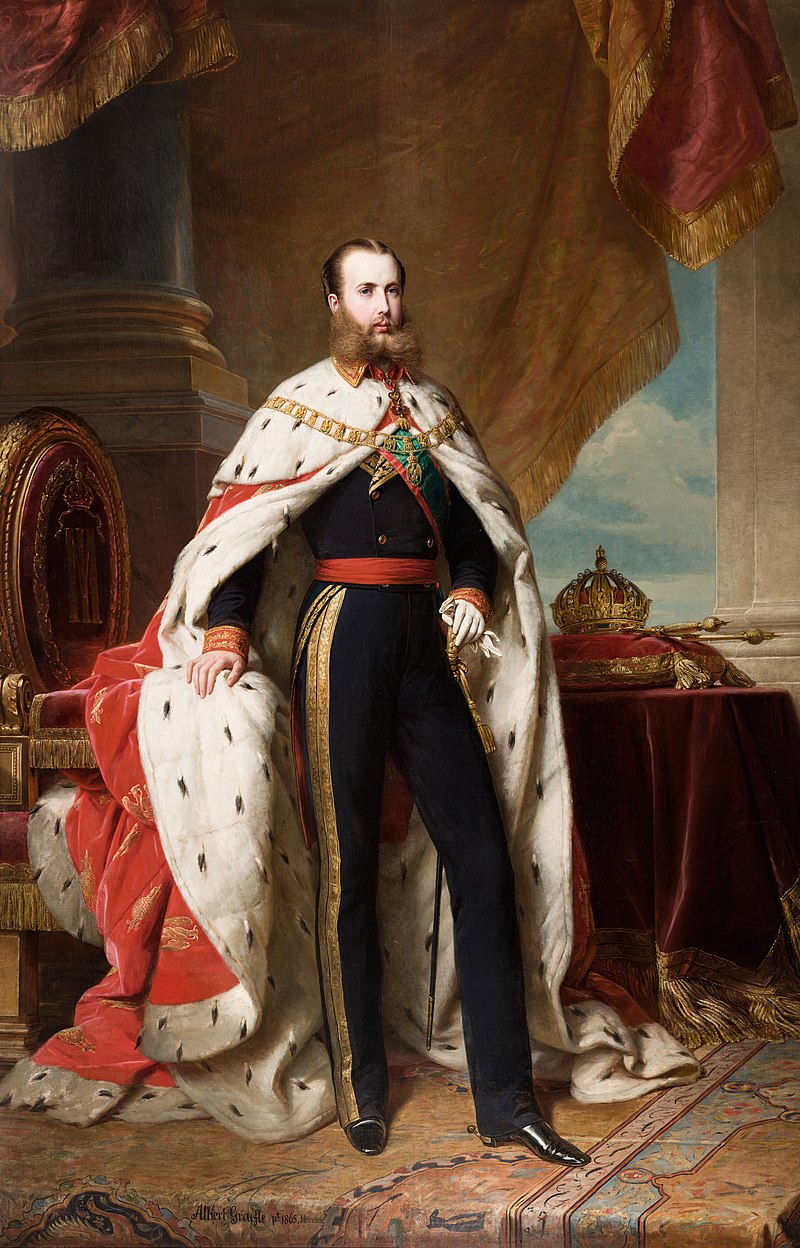
In January 1866, Napoleon III, facing a restive French public that wants no part of this expensive boondoggle, cuts his losses and gets out, withdrawing French troops. Maximilian keeps fighting, eventually losing the battle of Queretero. Captured in May 1867, he is executed by firing squad the following month, his remains eventually returned to Austria.

And what of Princess Charlotte, now the Empress Carlota? Well, that’s the part of the story that really fascinates me. In 1866, Carlota sets sail for Europe, hoping to dissuade Napoleon III from withdrawing his support. Her entreaties go nowhere. Her mental health, suspect even during her time in Mexico, deteriorates. She’s sure that people are out to get her, and maybe they are. She leaves Paris for Rome, seeking the Pope’s help. There she has a breakdown. Carlota spends the rest of her life in Belgium, shut up in a couple of castles. She dies in 1927 at the age of 86, having survived World War I and outlived the players in this bizarre episode.

What a yarn. It’s irresistible. To me, anyway. I’d never heard of Maximilian and Carlota until my first visit to Mexico, over 50 years ago. Looking for something to read, I prowled the paperback rack in a gift shop at a Mazatlan hotel and spied a book on the subject. I bought it, read it, and have since added a number of history books and biographies to my collection, for many writers have been fascinated by Maximilian, Carlota and their Mexican adventure.

The novel I bought in that hotel gift shop is called The Cactus and the Crown, by Catherine Gavin. It uses the emperor and empress as a backdrop for the main plot, which involves a young southern woman, Sally, who leaves the United States with her brother, heading for Mexico with a group of ex-Confederates who plan a new life in a place they call Carlota Colony. And yes, this colony of southern expatriates really did exist, for a short time. Sally and her brother, a doctor, take up residence in Mexico City, where he starts a medical practice and Sally falls in love with a French soldier. And both siblings are drawn into the imperial circle. Just as I was drawn into this improbably but true story.

Stories lie at the intersection of fiction and history. I’m fascinated by what happened to Carlota. Someday, maybe, I’ll write a novel about it. A once-upon-a-time story, about a princess in a castle, shut up with her memories and madness. Because that’s what writers do.


It’s coming soon! The Ladies of Mystery Cavalcade of Books will go live from November 15 through December 31, 2024, featuring books by all of the Ladies. Be sure to check it out! There will be links on the Ladies of Mystery blog site, as well as on my website, at http://www.janetdawson.com.

Guest Blogger ~ Helen Hynson Vettori

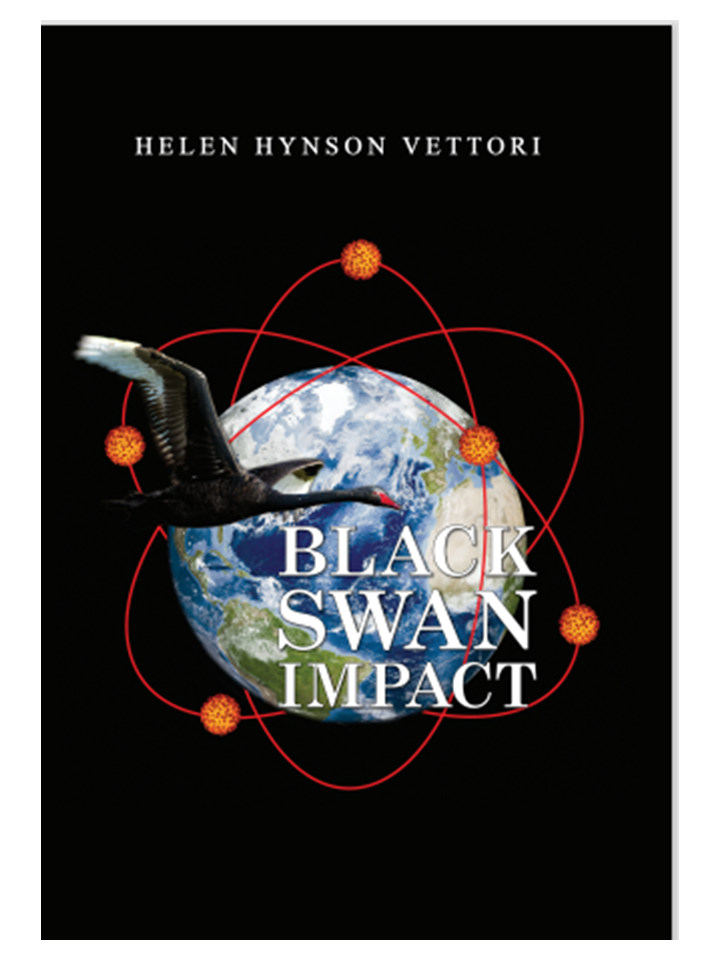
  Helen Hynson Vettori wrote the sci-fi political thriller, Black Swan Impact, because of her utter dismay regarding the U.S. Federal Government’s response to SARS COVID-19. When COVID-19 emerged, she had already retired from the Department of Homeland Security workforce. During her years of service, she helped plan and prepare for biological threats, to include pandemics. She rose to a position as an emergency management fellow and even won an award for outstanding emergency management achievements related to her efforts for planning and preparing for biothreats. As the COVID outbreak gripped the world, she became increasingly appalled by official actions or lack thereof compounded by confusing messaging.
     During lockdown family phone calls or Zoom meetings, Vettori would ask questions like, “How can this be?” or “Why aren’t they using the pandemic plan with the strategies and messaging that have been in place for years?” In response, her sister turned those questions toward an idea. She challenged Vettori by saying it sounded like she had a story bottled up inside. That observant sister was right. Vettori wrote the first draft of Black Swan Impact, first titled Black Swan Catastrophe, in two weeks. Then both her brother and her sister helped the author to focus on certain aspects of the plot and characters, expanding and enhancing them until Vettori ultimately brought the sci-fi political novel to fruition.
     One can argue that Black Swan Impact is fiction and improbable. Yet there are truths woven throughout the novel, including the fact that some people will or won’t follow orders and strategies, particularly when they are politically motivated and garbled in messaging. The truths embedded in Vettori’s novel stem from her vocational subject matter expertise and life experiences. Helen Vettori NEMAA, NSFP-EM appeared in her signature block when she was a member of the US Department of Homeland Security (DHS) workforce. The professional acronyms signified her subject matter expertise in emergency management. She earned noted knowledge and skills over the course of years through education, valuable mentoring from those immersed in the field, applied applications, and leadership initiatives. She even received affirmation of her contributions by being awarded employee of the year award in 2013. However, her career in DHS as an emergency manager did not solely influence her as she wrote Black Swan Impact. Indeed, there were other elements that enabled her to create a plausible world facing an unimaginable threat from a novel, virulent pathogen. Her eclectic background afforded her unique, first-hand knowledge that she wove into the plot. Those other career paths were serving the National Capital Region as an EMT paramedic by joining the Bethesda-Chevy Chase Rescue Squad, acting as a senior medical intelligence analyst at the Protective Medicine Branch, earning a master’s degree in strategic intelligence, and becoming a staff member of Counter Narcotics and Terrorism Operational Medical Support.
     When it was time for her to retire from the federal government, she devoted her full attention to endeavors like travel until the 2020 pandemic lockdown barred that. Like everyone, she fell captive to the situation. Her frustrations regarding the muddled response led her to write, which became cathartic. Vettori credits that process for her to be able to move away from anguish and disbelief by channeling those emotions into the sci-fi political thriller, Black Swan Impact. They allowed her to craft a plot laced with credibility and striking scenes garnered from some of her amazing life journeys. Further, she hopes the story will enable readers to learn from the dystopian tale. “If readers think COVID ruined 2020,” she said, “then they can leap to 2113, to see how PYV more than challenges humanity in my sci-fi political thriller Black Swan Impact. Then readers can take away the implied warnings and combine them with our memories of COVID pandemic issues to help us to avoid repeating mistakes during future crises.”

BLACK SWAN IMPACT

In 2113, people inhabiting the Earth believe that peace and prosperity will forevermore be their way of life on the third planet in the Sol System and elsewhere as they move further into space. That optimism bursts, when Dr. Syia Case, Director of Epidemiology from the National Institutes of Health and wife to the White House Chief of Staff, raises the alarm that Earth is facing an emerging pandemic crisis the likes of which had not been seen before. Initially, President Daniel Piper looks to Dr. Case as his favored subject matter expert to assist him and the White House Crisis Action Team plan and prepare for and respond to the novel pathogen. However, when Piper steers the United States toward questionable courses, Dr. Case and the strident voices on the task force find there is more than a virulent virus to fight.

 Austin Macauley Publishers – https://www.austinmacauley.com/us/book/black-swan-impact 

Amazon – https://www.amazon.com/Black-Impact-Helen-Hynson-Vettori/dp/B0CVLHG3TY

Barnes And Noble – https://www.barnesandnoble.com/w/black-swan-impact-helen-hynson-vettori/1144944171?ean=9798889100911 

A seventh generation Washingtonian Helen Hynson Vettori served the National Capital Region first by joining the Bethesda-Chevy Chase Rescue Squad as an EMT/Paramedic. Then she taught at a private school in Rockville, Maryland until 2001. Post 9/11, she joined the Department of Homeland Security workforce as the Senior Medical Intelligence Analyst at the Protective Medicine Branch. When that branch was defunded, she transferred to a new position at the National Incident Response Unit. There she performed all aspects of emergency management duties but specialized in planning and preparing for biological incidents to include pandemics. After retiring from the federal government, she followed passions like reading, traveling, and painting. Currently, she lives in Leesburg, VA with her husband. Vettori and her husband have two grown children both of whom are married and one grandchild. 

https://helenhvettori.substack.com

Instagram (@HelenHVettori), and Facebook (@ Black Swan Impact)

Painting by the author and photographed by Megan Genova