Guest Blogger ~ Kathleen Donnelly

Crime Solving K-9s

As a retired K-9 handler for Sherlock Hounds Detection Canines, I spent the last 19 years working to help keep schools safe with my four-legged partners. We used friendly dogs to find drugs, alcohol and gunpowder. When I started this career, I had no idea how much it would influence my writing and genre.

I have so many stories and memories about my experiences with the dogs. One that always comes to mind happened with my first dog, Sammy. Sammy and I arrived at one of our schools and the principal said, “I believe we have a kid dealing drugs here, but we’re not sure where he’s keeping them. Do you mind if we check the parking lot?”
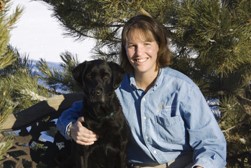
KATHLEEN & SAMMY

I agreed and off Sammy and I went to sniff around some vehicles. I insist on keeping any checks random so that we’re never targeting a student, but I did ask the principal to tell me the color of the car. It was black. So that day, we started checking black cars in the parking lot. After checking a few vehicles, we came upon a black four-door coupe and Sammy’s body language changed. Her tail pointed straight up in the air and her muscles tensed. Even her breathing changed as she inhaled the air and worked to pinpoint a scent. She alerted on the front passenger door.

But she didn’t stop there.

Whipping around, she ran back in front of me and went to the trunk of the vehicle, promptly alerting there as well. The phrase, “trust your dog” kept repeating through my head. I told the principal that we needed to check not only the interior of the car, but also the trunk. Sammy had alerted on both spots on the vehicle for a reason. I would soon find out it was a very good reason.

In the front glovebox, there was marijuana. But what was in the trunk? The student didn’t want to open it and I soon discovered why. When he did, there was a sawed-off shotgun. I rewarded Sammy with her toy and praised her for a job well done. She’d not only helped to keep a school safe and maybe even saved a life, but she had also solved a mystery.
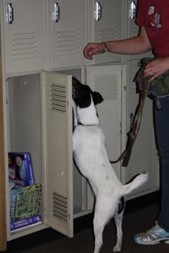
NELLIE WORKING A LOCKER

As I continued to work and gained experience with more dogs, I started to realize how much dogs, or more specifically their noses, could help us solve mysteries. When we would recertify with our trainer in Oklahoma, he would always show us the dogs he had in training for law enforcement. I watched him work the dogs for tracking, apprehension, finding narcotics, and much more. Our trainer had arson dogs and even told stories about training dogs to find human remains.

Meanwhile, I was pursuing my other passion of writing. As I learned more about writing mysteries and thrillers, I thought, why am I not including a K-9 character in my books? They are the ultimate crime solving partners. At this point I had worked K-9s for about ten years and I had a better understanding of the bond between dog and handler. I knew that my next book would have a K-9.

That was the beginning of the National Forest K-9 series. Now, three books in, with the latest release being KILLER SECRETS, I have found as much passion for writing dogs on the page as I did working dogs. In fact, this fall I am not going back to school. I am now a retired K-9 handler. I’m looking forward to continuing to write my stories and let my main character, US Forest Service law enforcement officer Maya Thompson and her K-9 Juniper, a two year old Malinois, solve mysteries in a fictional Colorado forest.

I love weaving in the strong bond between dog and handler. Along with Maya and Juniper, I have a new series coming out in late 2025. This is a romantic suspense series and the first book will feature an FBI Crisis Canine and his handler. As I wrote a new canine character, I enjoyed diving into a different type of K-9 work. They are amazing animals.

I’m not the only one who thinks so. In fact, I think over the past few years, there are enough K-9 crime solvers that I would say it has become its own genre. I’d love to know, do you love K-9s in books? I look forward to hearing from you and I also want to thank the Ladies of Mystery for inviting me to their blog as a guest.

Killer Secrets:
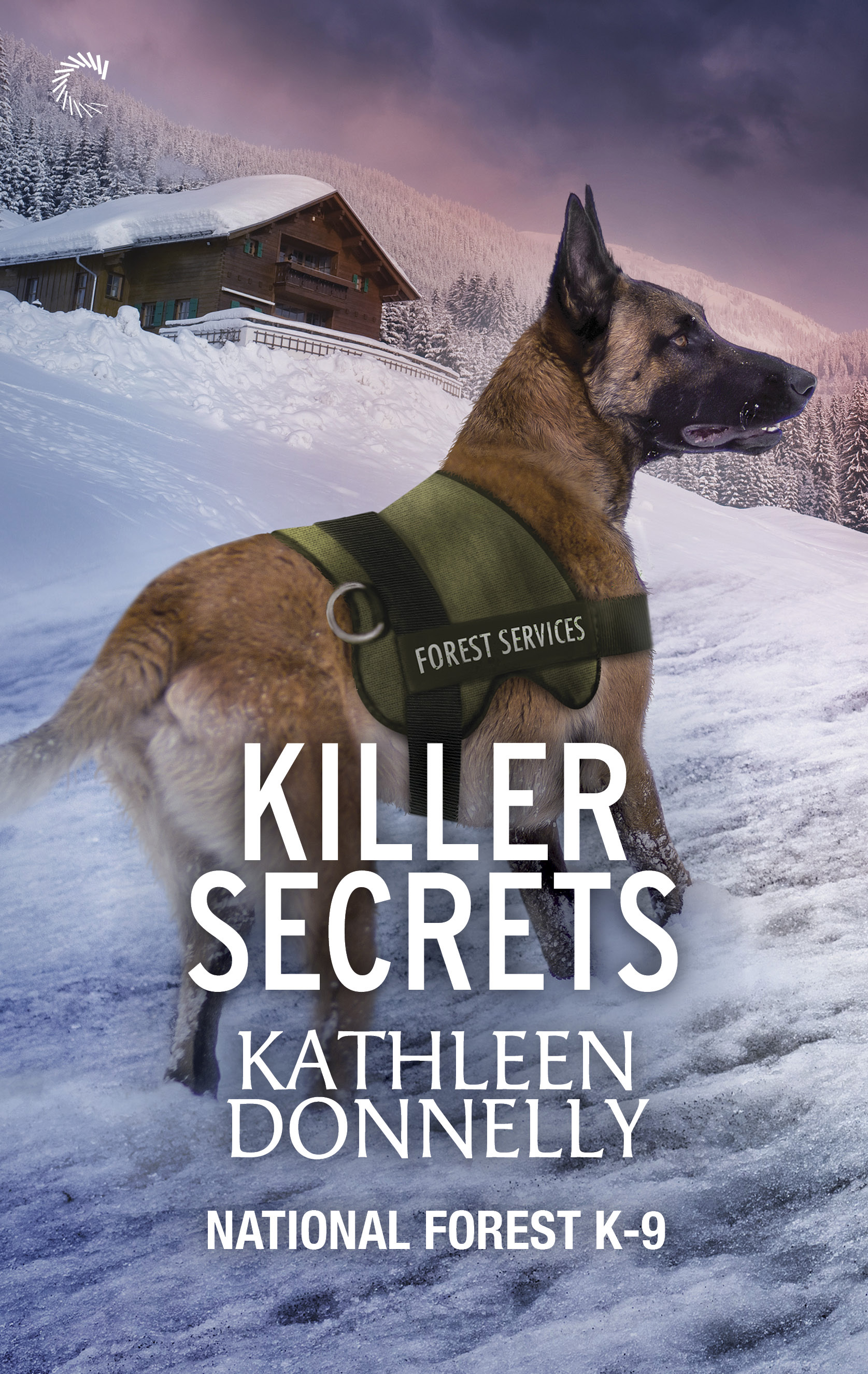
A small town’s deadly past is exposed in the newest installment of the suspenseful National Forest K-9 series by Kathleen Donnelly.

Until an avalanche ripped down a mountainside, exposing a serial killer’s dumping grounds, Antler Valley, Colorado was a quiet town. Now Forest Service officer Maya Thompson and her beautiful K-9, Juniper, must catch the murderer before they become the next targets.

With the neighboring town’s new overconfident sheriff deterring the entire investigation, a murderer on the loose and heartthrob deputy Josh Colton racing through her mind, Maya is at a crossroads. Josh is ready to go all in, but Maya has one foot out the door. As she lets her guard down, she needs to accept that she’s falling deeply in love with him, no matter how risky it may be.

When evidence from the Antler Valley victims links the murders to deaths in other ski towns, secrets long buried are unearthed. Maya and Juniper must run toward an answer, though finding it might lead them directly into a fatal trap…

Where to Purchase:

My Website—Killer Secrets—Book #3 in the National Forest K-9 series

Amazon: https://a.co/d/7e62hR9
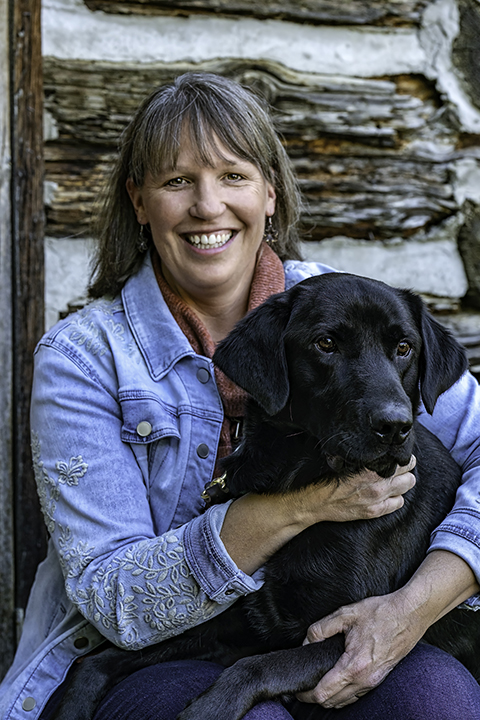
Award-winning author Kathleen Donnelly is a retired K-9 handler. She loves crafting realism into her fictional stories from her dog-handling experience. Her debut novel, Chasing Justice, won a Best Book Award from the American Book Fest, a PenCraft Award and was a 2023 Silver Falchion finalist in the Suspense category and Readers’ Choice Award. Her second book, Hunting The Truth, was a Colorado Authors League finalist in the mystery category and a Silver Falchion finalist for the Readers’ Choice Awards. She lives near the Colorado foothills with her husband and four-legged coworkers. You can sign up for Kathleen’s newsletter to receive her free short story eBook collection, Working Tails.

Website:

www.kathleendonnelly.com

Newsletter Sign-up:

https://kathleendonnelly.com/#newsletter

Social Media:

Facebook–@AuthorKathleenDonnelly 

Twitter–@KatK9writer

Instagram–@authorkathleendonnelly

Goodreadshttps://www.goodreads.com/author/show/22280955.Kathleen_Donnelly
Reading Old Work

For the last few weeks I’ve been thinking about the old mss left unfinished. Some are in my computer. Some of them are on paper, stacked in a closet, shoved into the back where I can’t see them. That’s probably a good thing because if they were visible I’d pull them out and litter my desk with them.

There’s nothing wrong with any one of them, and several came very close to a sale. But there is something not quite right. Every writer knows what I’m talking about—the story we loved and worked on and with a gasp of hope sent off to an editor or an agent. And then it sat there, on someone’s computer or desk, gathering dust of being pushed lower and lower on the list of titles in the TBR file. The question becomes, what do we do with them? Do we reread and rework them? That’s a definite possibility. The more I learn, the more I rethink what I’ve done and recognize where I could have improved the story by changing the setting, developing the villain more, heightening the tension, or removing the extra secondary characters. But I don’t do these things in a novel. I might do some in a short story, but not in a longer work. And I think I know why.

Some years ago I was an avid fan of Margery Allingham’s Albert Campion mysteries. The first one appeared in 1929, The Crime at Black Dudley, and others followed fairly regularly into the 1960s. I don’t know if many people read her work anymore, but she was considered one of the great British mystery writers of her time. After reading through her entire list including a couple of novellas, I came across her first mystery, The White Cottage Mystery, published in 1928. This is only a year before her first Albert Campion story. And I was startled at the difference between the two., and the extent of her growth and development as a writer between her first and her second book. It’s an experience I have always remembered. 

We grow and change as writers. If our work sounds the same year after year, we’re not growing and it’s time to stop and ask why. I don’t want to write the same book year after year. There has to be something different, some sign of a new perspective, a new challenge. I can see this same ambition in some of the writers I read, but not in others. 

When I pulled out some of my old mss and had the passing thought of rewriting and updating them, I was frozen, and here I think I was so for a good reason. Whoever I was back then I am not her now. To bring one of those old mss up to the level I would want to write today would be to dismantle and basically erase it. Each line, each feeling and action would have to be different because I’m different. The story was good for its time and in some instances that’s twenty or more years ago. I was different and the world was different.

I’m in a long phase of decluttering the house I’ve lived in for over forty years, but I doubt I’ll toss out those mss, not just yet. Each one tells me something about writing, finding a voice, developing a voice through time, challenging ideas and creating new ones. I liked some of those stories more than others, and the failure of some weighed on me more than others, but like any other experience that comes to an end, I let those novels go and moved on.

The one important thing I remember is that even though they didn’t sell, they made me the writer I am today, with their lessons and discoveries, their pitfalls and graces. For that alone I will probably keep them for a while longer.

Me, a Tree, and a Cat Named Blue

Have you ever had one of those days when writing anything much less a mystery is beyond your ken?

That’s me. My inner workings are consumed by the loss of a massive, centuries old pine tree and my cat Blue’s determination to regain cat-dom.

A month ago, Blue had a stroke and went all bobble headed. He could not stand up, much less walk. I had to feed him at intervals throughout the day and night, holding his bowl so that he could eat. But he ate. Not enough, still … that was then, and this is now. I bought him a bowl that required him to stand up to eat hoping to get him on his feet. He stood. He eats like a pig, snuffling as he snarfs. I took him out each day, steading his body between my legs then, with my hands, showed him where his front feet went, hoping his back legs would follow. They did. I urged him to keep his head up as he walked. He does. Now.

He’s sixteen years old. A glorious, big Russian Blue and he has the heart of twelve others. Today was a big day, I moved the donut where he resides away from his food bowl and litter. The plan being he would have to walk and exercise his balance. His first outing to his food dish went well, though he had a hard time finding his way back to his newly moved donut. Still, he did.

After the stroke, I thought we would have to let him go. I thought wrong. He is a gamer. Sometimes, I wonder about his memory. He doesn’t seem to recognize his name. Hard to tell with a cat though. My husband and I kid about renaming him Roomba because he always returns to his donut. Still, he’s with us and progressing. I don’t think he will ever be the cat named Do-Do, left at the SPCA at a year-old, unadopted for two years until he saw my husband and wouldn’t let him go. Boys!

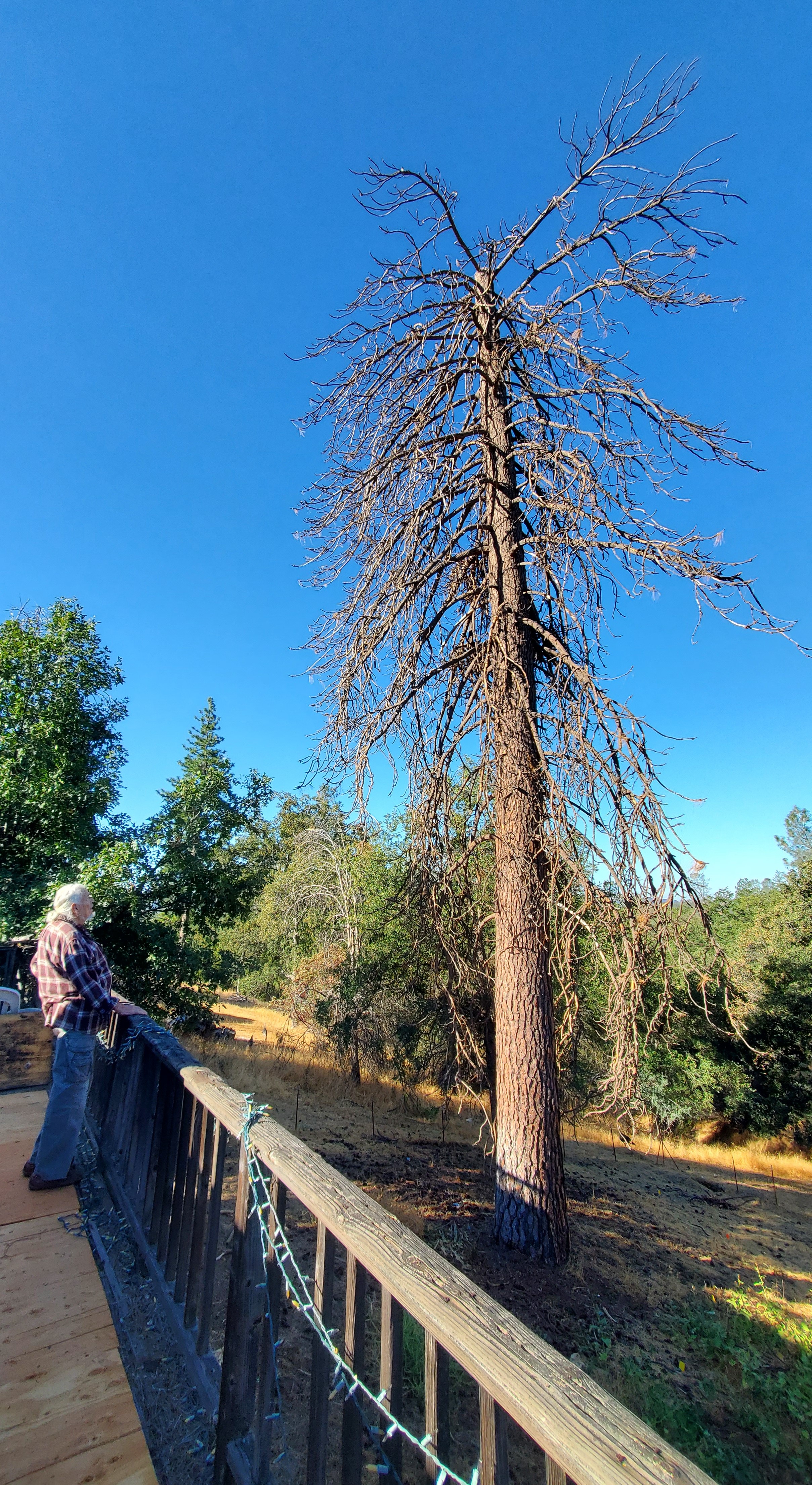
Speaking of whom, husband that is. He spent a full year trying to save the 112-foot Jack pine that dominated the view out our back slider. The wind blew in the pine bore beetles. The tree took the first onslaught and shook it off. Then a second wave hit it. The top died, though the lower branches clung to life. An arborist recommended fertilizer, my husband fertilized, watered, babied, talked to, prayed for, and fought for that tree. When Pacific Gas and Electric wanted to cut it down, claiming it could fall on wires over sixty feet away and uphill, he stood his ground. In the end, we negotiated with them to top it. They took 32-feet off it, and it still clung to its needles, sheltering crows, squirrels, woodpeckers, and even vultures.

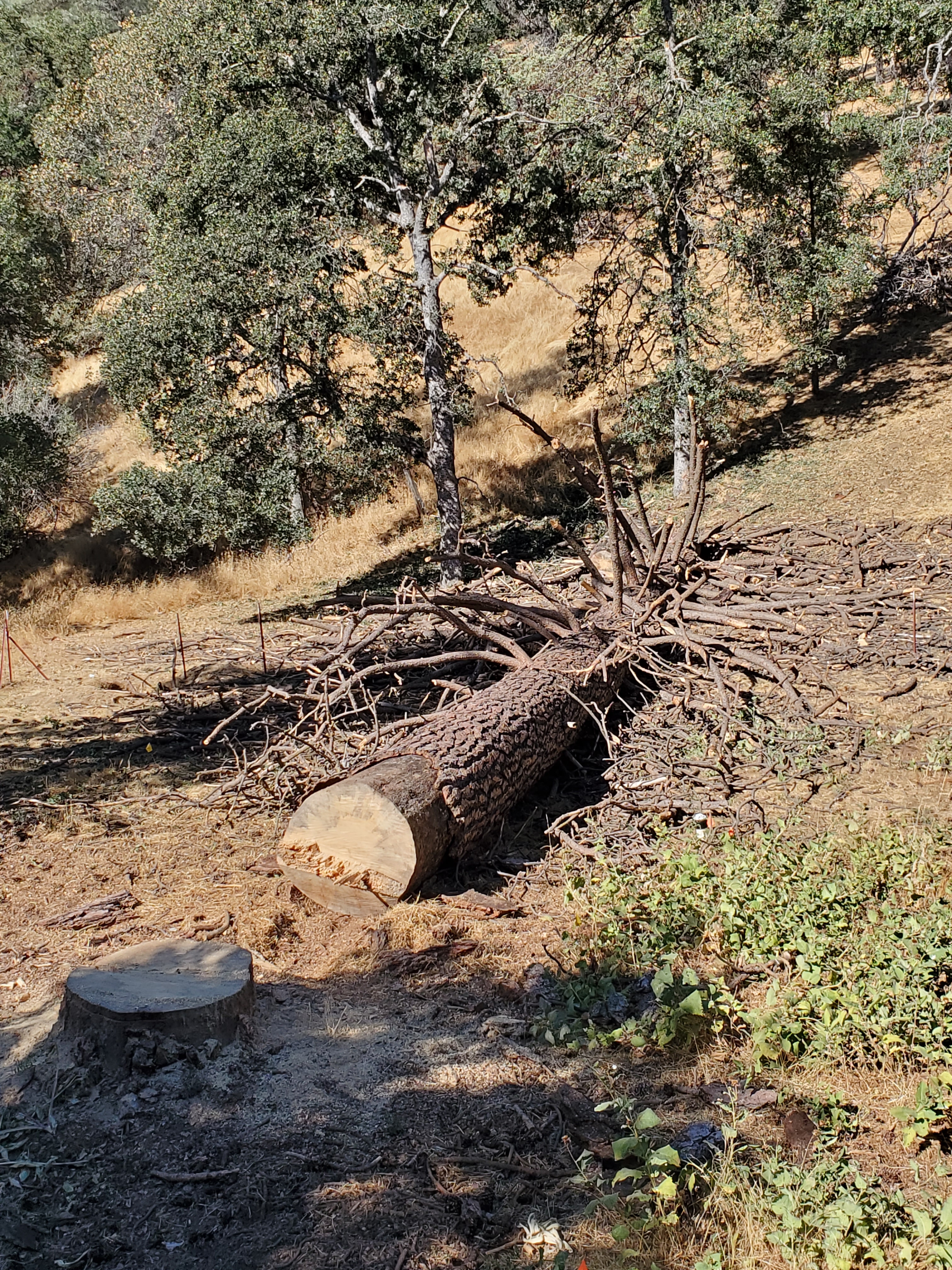
Today it is gone, a skeleton lying down our hillside so far that the woodcutters had to take twelve feet off the top to pull its brittle bones onto our property. They can’t cut it up right now because the rest of their team and the truck they need are working a fire burning in the High Sierra. Meaning, until the National Fire Service releases the team from duty, we have the shattered remains of a once mighty tree to mourn.

About now you’re asking yourself, what does any of this have to do with reading or writing mysteries. This, I am struggling with the fifth book in my Wanee series. And all I can think of is them, a cat named Blue, and tree named Frank. Yes, Frank. And my husband.

Two fought to the end to overcome the ravages of climate change, the other perseveres, step by step, falls, then gets back up and takes another step. So, get with it, girl, word by word, sentence by sentence, paragraph by paragraph, you will have a book. It is so hard, it’s easy.

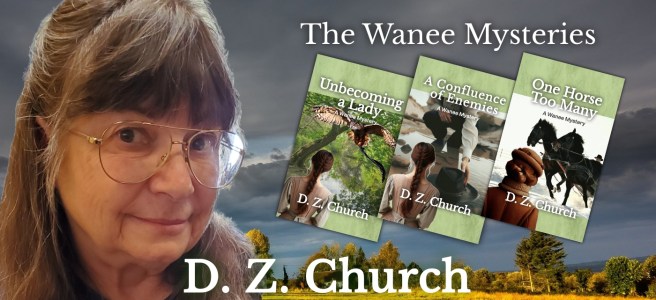
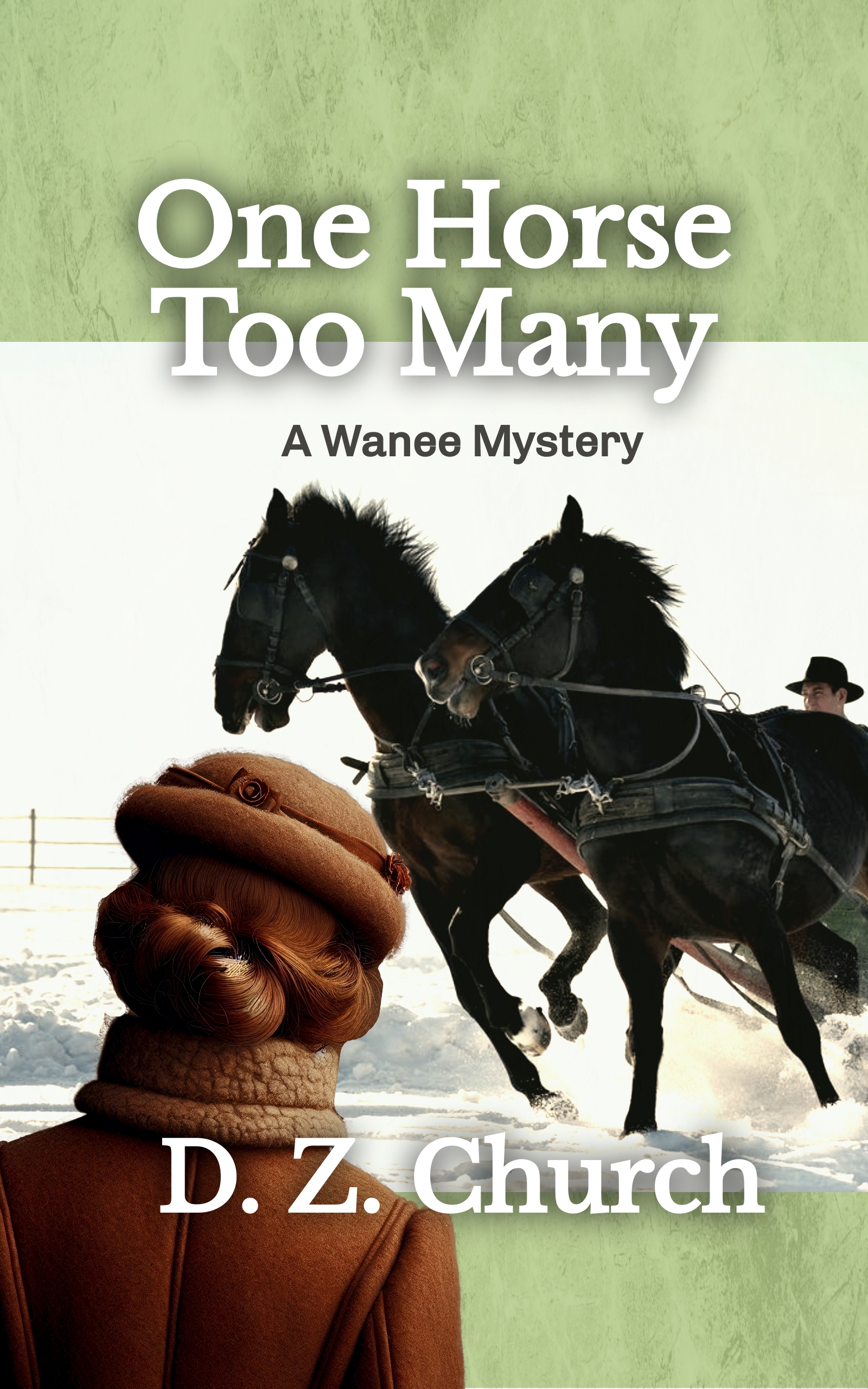
One Horse Too Many, the third book in the Wanee Mysteries is now available. According to a couple of other Ladies of Mystery it is a “really strong entry into the series” and “another winner in a great series.”

For more information, to sign up for my newsletter, or buy a book, go to https://dzchurch.com.

NATURE OR NURTURE

Many years ago, as an aspiring writer, I ventured into the punishing realm of seeking a book deal for my first novel, “Peril in Paradise.”

Oh, what a glorious dream until the inevitable “No Thanks” letters began to arrive. Yes, I’m “rejection letters” old.

But I found encouragement among the “Sorry, “Peril in Paradise” doesn’t fit well with our current publishing format,” or “We don’t feel your novel is right for us” letters. Several no-thank-you letters commented similarly: “You do, however, write a very good villain.”

Besides giving me much-needed hope as a struggling novelist, their kind words told me two things: Since I wrote my villain in the third person, I write better in that voice than I do in the first person. And… I’m a tad dark and twisted!

When I wrote my villain, Damian Garza, in “Peril in Paradise,” I gave little thought to his backstory. Instead, Damian revealed himself to me as I wrote the book, creating a need to understand him better. Of course, this caused me to ask myself the “What, Why, When” questions, which led me to the age-old curiosity … Are villains born, or are they formed by their environments?

Now that I’ve written five novels and three novellas, I’ve learned to ask the three W’s sooner and outline what caused my villain’s evilness. Why does he or she desire to hurt people? When did their darkness begin to shadow their personalities?

Or were they simply born evil?

In my quiver of Google-related searches, I have a file labeled: Antisocial Personality Disorder (ASPD). This term encompasses both sociopath and psychopath disorders. Mental health professionals define ASPD individuals as having a consistent disregard for rules, social norms, and repeated violations of other people’s rights.

When I started my journey with Damian, I knew I wanted him to appear to be “Prince Charming,” which fits the persona of someone with ASPD. I also knew Damian would have little regard for other people’s feelings. Before I did my deep-dive research, I had created a villain who broke the law, was manipulative, and deceitful. Damian didn’t think twice about aggressively mistreating women and felt no remorse for his nasty behavior.

As much as I needed Damian to be a sociopath, I also felt a need to explain his wickedness, which brought me full circle. Did Damian mistreat people because he was born evil, or were his actions a byproduct of believing his stepmother had his mother killed? Had he been a beguiling child or wicked youngster biding his time until he could unleash his anger on those around him?

Recently, a reader shared how much she likes that my villains feel like real people, not cartoon stereotypical characters.

With each novel, I introduce myself to a new villain or villainess and ask myself the same questions: What? Why? When? Nature or Nurture?

Personally, I’m not sure if people are born evil. Although, with all the crime in the world, it seems as if this scenario could be true. It’s just hard to imagine a tiny baby destined to be a serial killer or a terrorist from birth.

I tend to believe people are genuinely good at heart … until they are not. My villains could have all been heroes at some point in their lives. Sarita Garcia could have married, had children, and learned to love running her father’s leasing company. Raptor might have lived a wonderfully boring life with Belen if the two had made it safely to Arizona. Carl Yates probably would’ve made a decent husband if he hadn’t suffered abuse at the hands of his aunt. But Sam Arnold seemed destined to abuse women, allowing his dark side to determine their fate.

When I met Joe Carson in “Whispering Willows,” I was conflicted. Joe wanted to be good, but his mother’s darkness smothered him, driving him to evilness. Joe created an opportunity for me to see if a villain could be changed and nurtured back to goodness.

As a Christian, I’ve always believed in forgiveness, so I asked this question for Joe: If he truly believed in Jesus and asked to be forgiven for his sins, would his newfound faith deliver him from his wicked ways? Would he embrace the comfort of God’s word and the peacefulness of knowing his soul is saved? Would Joe Carson rejoice with joy in his new-found destiny in heaven?

Happy Fall, Ladies of Mystery!

Guest Blogger ~ Joanna Vander Vlugt

Lost in Plot

As a writer, what excites you? What makes your heart speed up and you experience that eureka moment? What causes you to type so fast your typing teacher would be impressed? Yes, I’m showing my age.

One piece of advice I was told when I started writing was write what you know. We’ve all heard that. Before I retired, I worked for 33 years in the provincial government. My career began as a Supreme Court Assistant in the Nanaimo Crown Counsel Office (prosecutor’s office). The files that came across my desk involved murder, sexual assault, break and enter to commit theft, and more.

The authors I read were Minette Walters and Dick Francis. Given my job and what I liked to read, no wonder I like writing legal thrillers. However, I cannot write a novel involving an innocent victim, because of what I’d seen at work. An author once told me that if you can’t write a fictional scenario where a character is murdered, then you shouldn’t be writing mysteries. There were times when I questioned writing thrillers.

Over the last five years I wrote and published three legal thrillers. In the back of my mind an idea for a time travel book, inspired by a black and white photograph, was itching to be written. After the publication of my last thriller, Spy Girls, I jumped genres and began writing that time travel. I usually write in the first person, but for the time travel, I chose third person to separate myself from my heroine’s voice in my previous novels. Writing in third person is a challenge, because I still find myself slipping into first. However, I’m enjoying seeing my heroine through other characters’ eyes.

In the first draft (the draft no one will see) the story takes place during the second world war. As much as I tried, I didn’t feel a connection to the story I’d been waiting so long to write. What was my problem? At my book club, my neighbour commented about the unfairness of the legal system. I had my first eureka moment.

While researching my story, I had become fascinated with women’s contributions to the war effort, which included much more than giving up silk stockings, and my story had turned into a war novel. That wasn’t what I wanted to write. I spoke with Christina Strasbourg of Agents Helping Writers. I asked how I could work in this additional legal plot line? Christina advised that I was trying to cram too many plot lines into a single story. She said, “You have enough going on here for two novels.” My editor of my previous novels has pointed out fizzling plot lines during constructive edits.

Guilty.

Christina suggested that my time travel could have the second world war as a backdrop, but it didn’t have to be the focus. She mentioned the novel, The Boy in the Striped Pajamas, as an example. She then asked, what excited me about my story? I told her, my heroine and the legal undertones. Then, write about that. For some reason, I thought writing a time travel meant it couldn’t have a legal slant. That thirty-minute discussion with Christina saved me hours of work. Christina also said that what I cut, could always be used in a second book. Once I locked into the main plot line, my elevator pitch was a snap.

If you’re wondering if being a pantser caused this dilemma, my answer is no. Before I began writing my time travel, I had converted to being a plotter.

I started with the first chapter. I cut scenes which didn’t contribute to the main legal story line. I’m halfway through this draft of rewrites, and I have cut approximately 14,000 words which I’ve saved on a document titled “extra”.

My time travel is coming together. I’m excited writing it, and I’m connected to the story and the characters. There’s still hard work ahead but that’s part of writing. I read an article about drafts and cutting words. I can’t remember the author, or the exact words. But basically, I’m not to despair about the words and scenes I cut, because those words and scenes, although they didn’t make it into the story, they had the important task of propping up the story until the final words and scenes could take over.

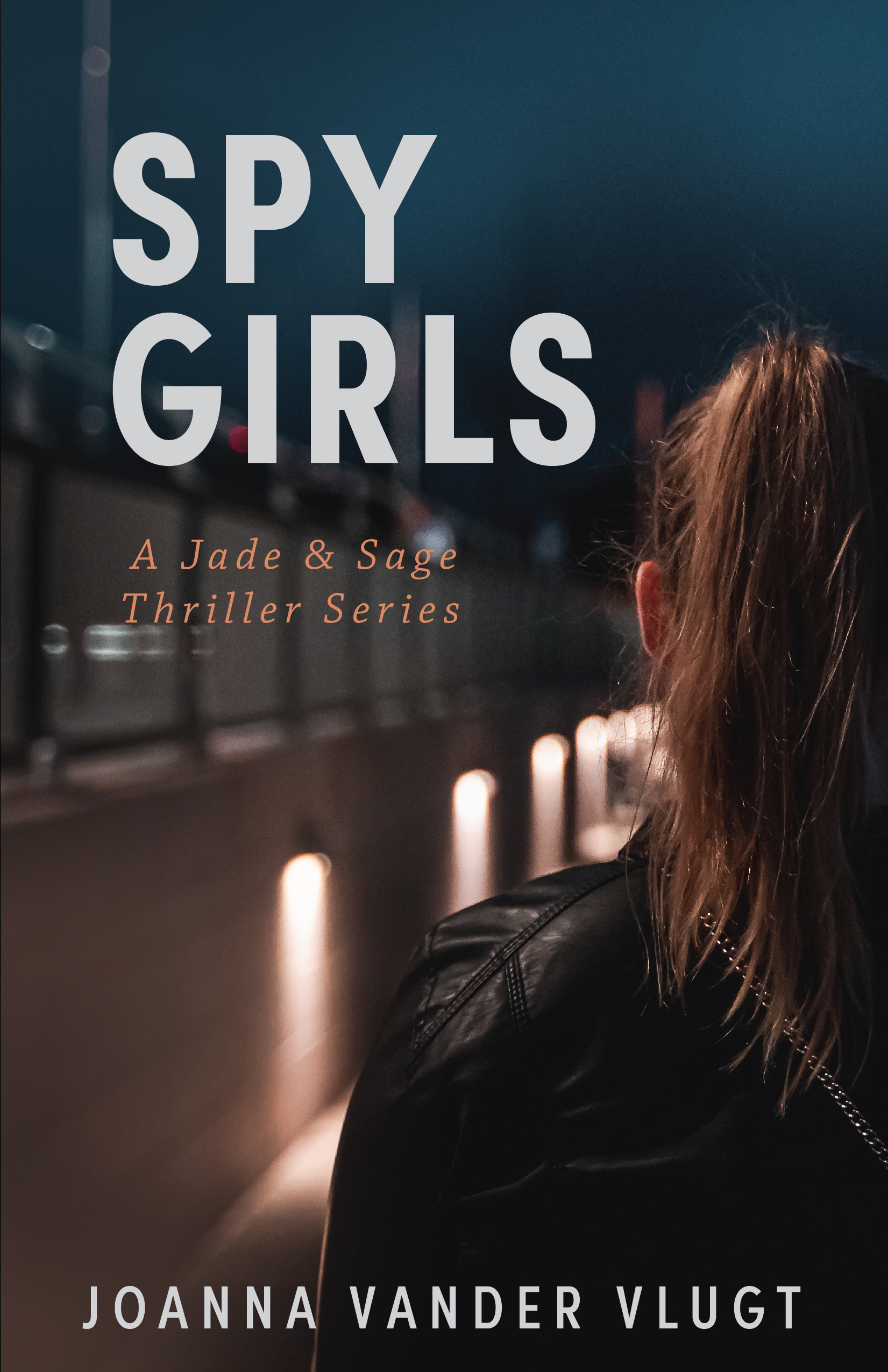
SPY GIRLS

A CIA action officer is released from prison. A Chief Justice is murdered, and the Law Society is scrutinizing Jade Thyme’s conduct. Jade’s life can’t get much worse until she is coerced into finding an elusive double agent. Tangled in lies and political agendas, high speed chases and sticky bombs, can Jade outplay a dangerous Hungarian assassin before her own life is terminated?

Spy Girls is adrenaline-fueled, adventure packed with heart-pounding action, unexpected twists, and a riveting plot that keeps readers hooked from the first page. With lives hanging in the balance and loyalties questioned, trust in each other is the only way to survive. But even the strongest bonds can be tested when faced with external threats and personal demons.”

—Joe Goldberg, author of the award-winning The Spy Devils thrillers

Buy links:

Amazon Canada: https://www.amazon.ca/Spy-Girls-Jade-Sage-Thriller-ebook/dp/B0CJ3P9Z1B

Amazon USA: https://www.amazon.com/gp/product/1999068440

Barnes & Noble: https://www.barnesandnoble.com/w/spy-girls-joanna-vander-vlugt/1144627069?ean=2940179143550

Joanna Vander Vlugt is an author and illustrator. As a teenager, she drew charcoal portraits and wrote mysteries. Now, she uses Copic markers to illustrate motorcycles and graphic novels. Under the pseudonym J.C. Szasz, Joanna’s short mysteries Egyptian Queen, and The Parrot and Wild Mushroom Stuffing were both published in Crime Writers of Canada mystery anthologies. Her essay, No Beatles Reunion was published in the Dropped Threads 3: Beyond the Small Circle anthology.

Joanna draws upon her 13 years’ experience working in the prosecutor’s office and 10 years working in the Office of the Police Complaint Commissioner for inspiration for her novels. Joanna is the VP of Memberships for the Sinc-CW. Joanna has just released her novel, Spy Girls, the third in her Jade & Sage series. Spy Girls was selected as the Chick Lit Book Cafés International Book of Excellence Award for best spy thriller and suspense. Joanna’s novels, art and podcast can be found at joannavandervlugt.com.

Website: www.joannavandervlugt.com

Instagram: joannavandervlugt_author_art