

I was recently in New Mexico, where I spent several days in Lincoln and nearby Fort Stanton, in the mountains in the southeastern part of the state.
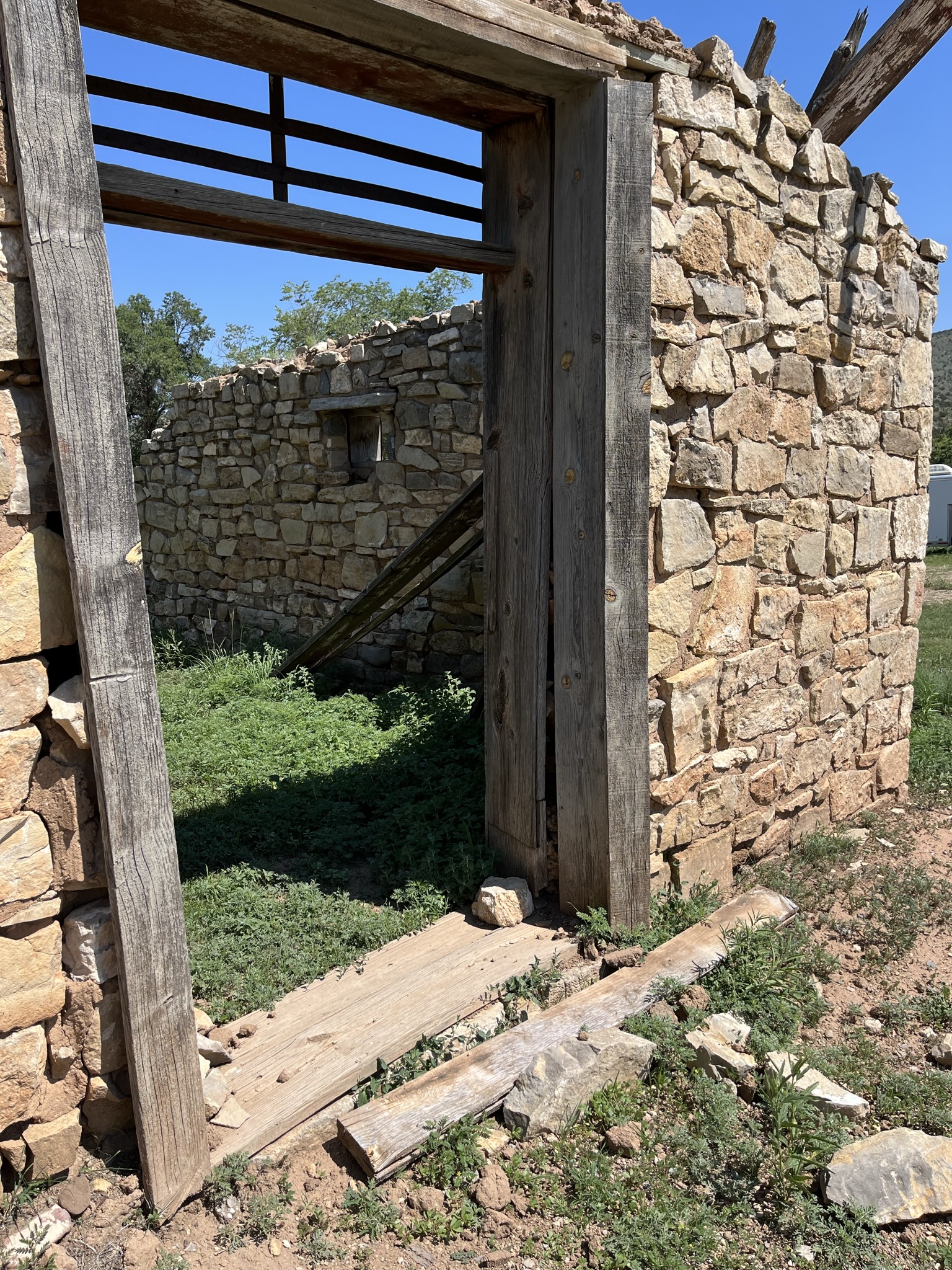
I call it location research. I look at places, landscapes, and buildings, poking around in old buildings and imagining what they looked like 150 years ago. Did this valley have that many trees way back when? Was that building there during the time of my novel? If not, what was in that spot, and what did it look like? I need to figure out what a character might see when exiting a store or residence.
That’s why I also went to Santa Fe, where I spent productive hours in the Fray Angelico Chavez Library at the New Mexico State Historical Museum. My time in the document and photo archives at the history library gave me access to maps and old photos of the places for my work in progress, a historical novel taking place in New Mexico in the late 1870s and early 1880s. It involves the Lincoln County War and yes, Billy the Kid puts in an appearance, along with a number of other historical figures.
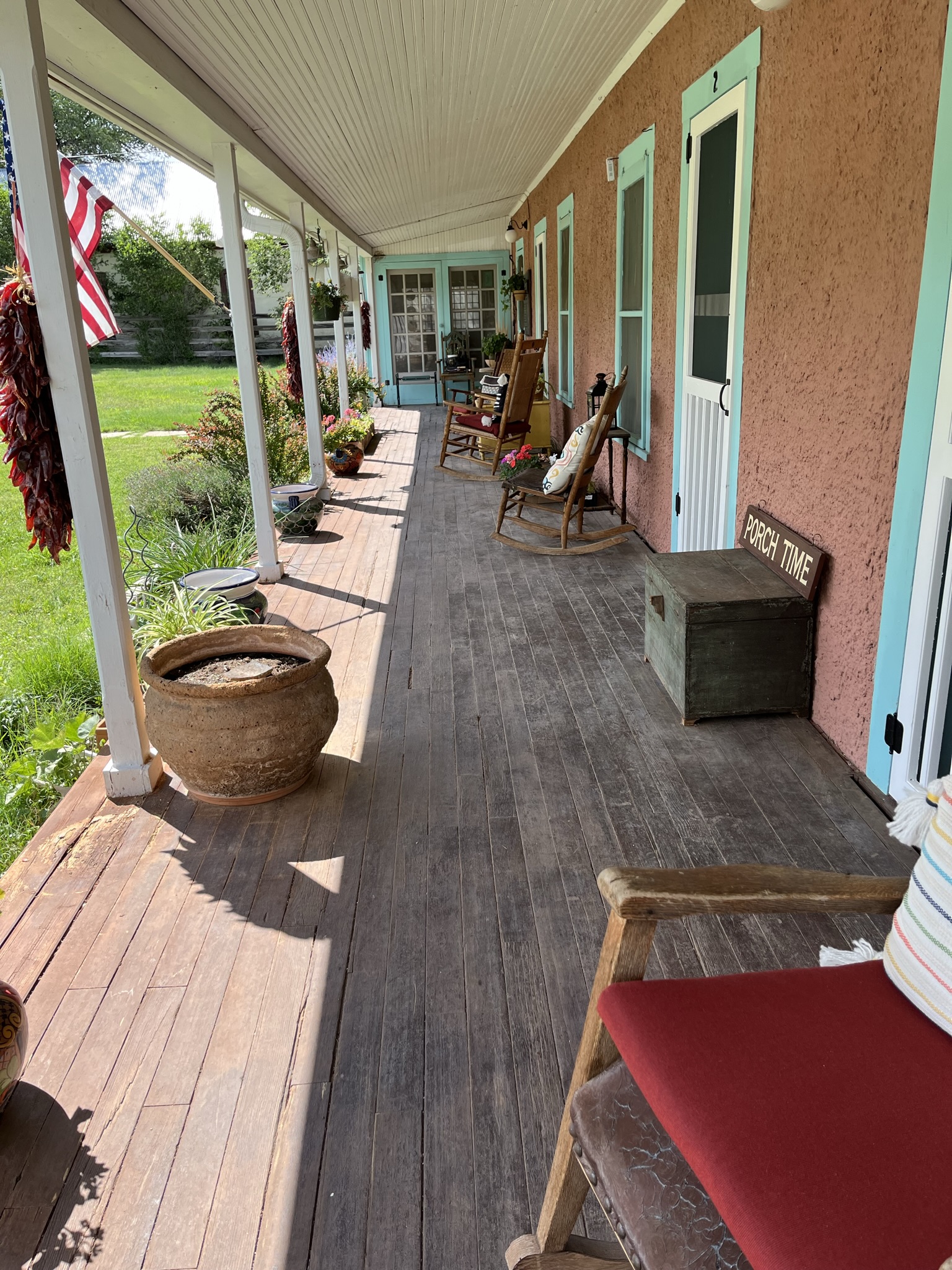
While in Lincoln, I stayed at the Wortley Hotel, now a bed and breakfast. The original hotel was built in 1872 and in operation during the troubles in Lincoln County. I spent a lot of time sitting on the front porch of the hotel, rocking, watching the passing parade of people visiting Lincoln. I mean, the whole town is a New Mexico state historical monument. I also watched the birds, watched the flowers, watched the light change. When I sat on the back porch of the hotel, I heard water rushing by in the nearby Rio Bonito, in addition to the clucking chickens from the proprietors’ coop down the hill.
I walked the historic grounds of Fort Stanton, a well-preserved frontier fort, though it has been amended, remodeled and tinkered with since it was founded in the 1850s. Since my protagonist is the daughter of an Army officer stationed at the fort, I wanted to see what the officers’ quarters looked like, keeping in mind that they were rebuilt in the 1890s, with a second story and kitchens added. However, during the era I’m writing about, the kitchens were in separate buildings out back. That’s important information to have when my protagonist is cooking dinner. Fortunately, when I toured the unit that’s open to the public, I found an architectural drawing showing how the old quarters looked.
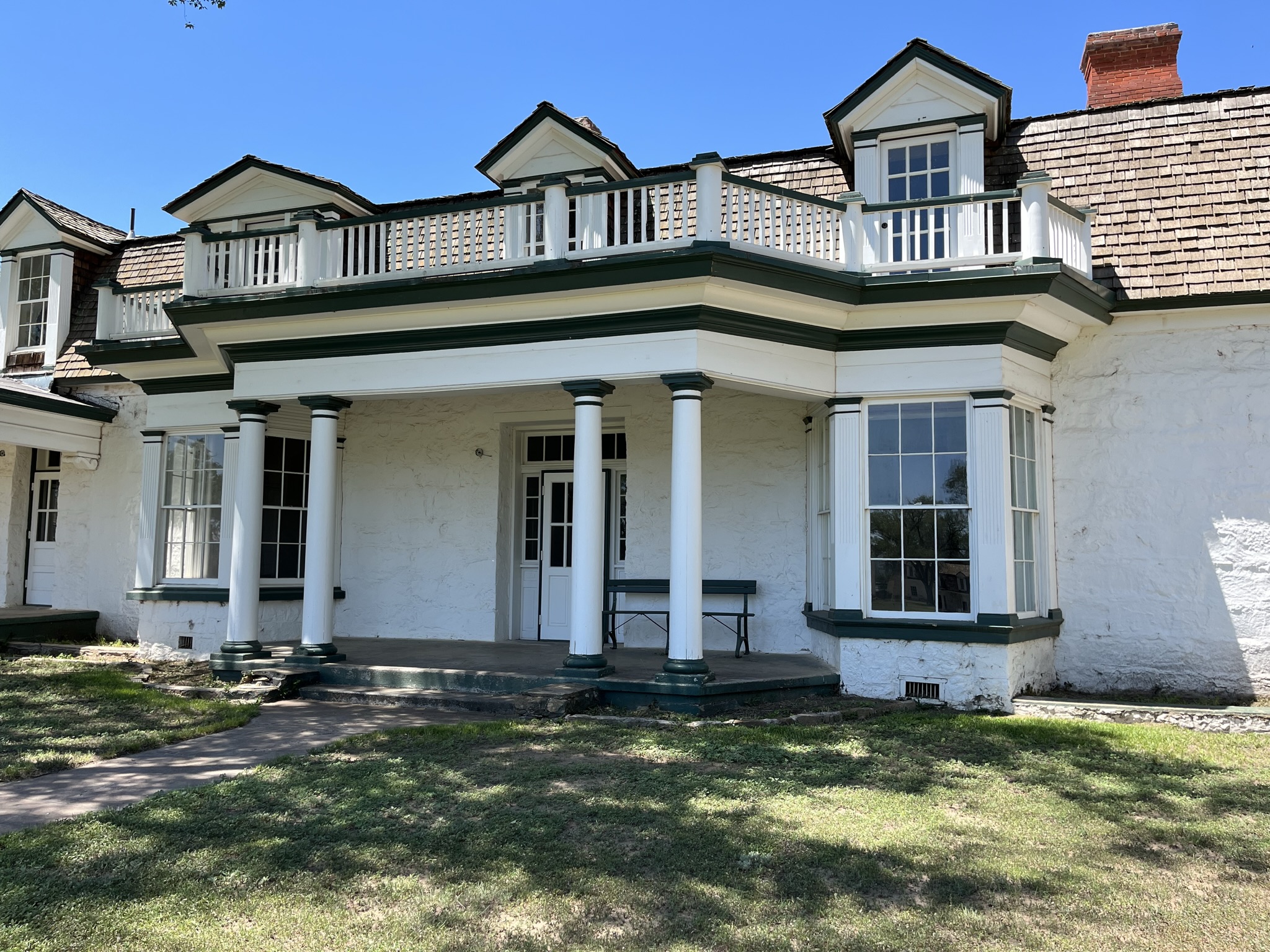
Talk about history. This particular unit had been occupied in the 1880s by Lieutenant and Mrs. John J. Pershing. Recognize that name? They called him “Black Jack” Pershing, perhaps because he commanded African American troops known as Buffalo Soldiers. He’s the one who led an expedition to Mexico in 1916, going after Pancho Villa, and when the United States entered World War I, he was named commander of the American Expeditionary Forces.
While at Fort Stanton, I learned that the landscape around me looked very different way back when. Now the pinon and junipers dot the rolling hills around the fort, but back then it would have been grassland. The photos I got from the history library underscore that.
I also learned about the murder in the dining room at the Wortley Hotel, back in the bad old 1870s. What? I’d never heard that one. It seems the victim was a Buffalo Soldier stationed at the fort, which was home to several units of the Ninth Cavalry. The soldiers would often come to town and have a meal at the Wortley. At that time, the hotel dining room had a big table and people sat down where there was a vacant seat. In this case, a white patron took offense at a black soldier, pulled a gun and killed him.
After Fort Stanton was decommissioned in the 1890s, it became a hospital for people with tuberculosis. That era lasted for decades. Then, in World War II, the fort housed German prisoners of war. The information gained about this is outside the focus of research for my current WIP, but full of potential for historical mysteries. My little gray cells are already thinking about plots and characters, even as I sit at my computer.
And I’m recalling how good it felt to be sitting on that hotel porch in Lincoln, NM, rocking, watching the world, and the birds.

 Ladies of Mystery
I love researching for books I’m writing. And when I find nuggets that spark another book… that’s magic! It sounds like your research trip was meant to be with all the great information you discovered. Fun post!
LikeLike
Paty, yes, I came away from this trip with several idea that could lead to other books. I enjoyed getting away and having the time to relax, as well as do my research.
LikeLike
I feel like I’ve been there after reading your post. You bring the whole area alive, and I want to go there. I’ll settle for reading your book when it comes out. Great post.
LikeLike
Thanks, Susan. It’s a fascinating place to visit and I hope that my book does it justice.
LikeLike
One of the best articles I’ve read in a long time. Filled with history, reverle, I would love to say I was shocked by the white man killing the black soldier, but it those days murder like that happened all the time. You didn’t mention if anything of consequence happened to the shooter, but I can only hope so. I have to add, if the book comes alive the way you have made this article come alive, I can’t wait to read it.
LikeLike
Thanks, Heather. The stories I’ve heard is that the locals formed a posse to go after the shooter but don’t know if they found him. I really hope to make the book come alive. Working on it!
LikeLike
Loved Lincoln when we visited. what a cool place to do research!
LikeLike
Yes, it’s a beautiful setting.
LikeLike