Guest Blogger ~ Jacqueline Diamond

I never thought of myself as a rule-breaker but…

One “rule” prescribed for novelists is to establish your “brand” and stick to it. Romantic comedies? Write a zillion! Medical-themed romances? Stick with that! Mysteries with a medical twist? Make that your one-and-only.

Although I have a good imagination, I can’t picture spending more than forty years writing basically the same type of book over and over. Or maybe it’s because I have a good imagination.

Since I sold my first romance (Lady in Disguise) in the early 1980s, I’ve published more than one hundred novels. They include mainstream mysteries and paranormal suspense, romantic comedies and contemporary romances.

Isn’t that enough for any writer? Well, no.

About ten years ago, after completing my Safe Harbor Medical romance series for Harlequin, I felt an urge to use that small-town hospital setting for mysteries. Since that type of novel didn’t align with Harlequin’s needs, I decided to venture into self-publishing.

I’d already begun reissuing some of my earlier books, including the mystery Danger Music, so I had a sense of the technical requirements. This turned out to be a rewarding creative decision that resulted in my Safe Harbor Medical mysteries, starting with The Case of the Questionable Quadruplet.

The four books in the series feature a young widowed doctor who solves murders in conjunction with his cranky, private investigator sister-in-law. Much as I enjoyed writing them, though, that series eventually reached what felt like a natural conclusion.

In the meantime, I’d become intrigued by cozy mysteries with talking cats, magical villages and mystical libraries. What I needed was a fresh, original take on the genre.

Coincidentally (or so I thought), with the end of the Covid lockdown, my husband and I seized the opportunity to travel to a place I’d always been intrigued by: Prague, in the Czech Republic. This turned out to be an inspired, and inspiring, choice.

Prague is a gorgeous city with an impressive literary history. We stayed at the Art Nouveau Palace Hotel, whose café was once a meeting place for artists and writers including Franz Kafka.

I’d heard tales of a golden age in Prague when Jewish intellectual life flourished. Since that’s my ancestry, I especially loved the stories of a magical rabbi who created an artificial man of clay, called a Golem, that acted as a protector for Jews.

Unfortunately, they needed one. The Austro-Hungarian empress Maria Theresa, a religious bigot (and mother of Marie Antoinette), expelled the Jews from Prague in December, 1744.

Don’t you wish you could right the wrongs of the past? Maybe I could… in fiction.

What emerged from my offbeat mind was a reimagined, alternate version of Prague, ruled by wizards. When an evil queen tried to seize their city, they pooled their powers and accomplished the near-impossible, shifting their land halfway around the world.

The disruption shook loose and redistributed their town’s intrinsic magick, with surprising results. One of these was to imbue humanlike speech into a breed of cats. Yes, talking cats!

In a realm isolated from their surroundings (the West Coast of what became the United States), their culture developed in a unique way. Nearly three hundred years later, a young woman, an orphan who has no idea she’s from this enchanted city, is “summoned” there to discover that she’s inherited the town’s ancient library from her grandmother, who’s been murdered.

To solve the mystery and bring justice for her grandmother, she has to awaken her hidden powers. Along the way, she finds a touch of a romance and realizes her longtime companion cat, Kafka, has the power of speech.

The writing process was fun and challenging, splashed with humor and danger as my heroine, Chess, and I explored this new world. The climax proved even more exciting than I’d hoped, with a dash of bravery by Kafka and his pals.

My favorite review came from National Book Award winner Neal Shusterman, who wrote, “Master storyteller Jacqueline Diamond draws you in to this magical feline mystery, enchanting you page after page. You’ll fall in love with Chess Vevoda, and the wild world she’s stumbled into!”

A Cat’s Garden of Secrets launches my Forgotten Village Magical Mystery series. It’s complete in itself—no cliffhanger endings in my novels.

Now, I’m happily writing the next book, A Cat’s Nose for Murder, with a storyline that gives Chess and her cat a new mystery to solve and a little more romance (for both of them).

A Cat’s Garden of Secrets is my 109th book. But in a sense, I feel like I’m just getting started!

A Cat’s Garden of Secrets
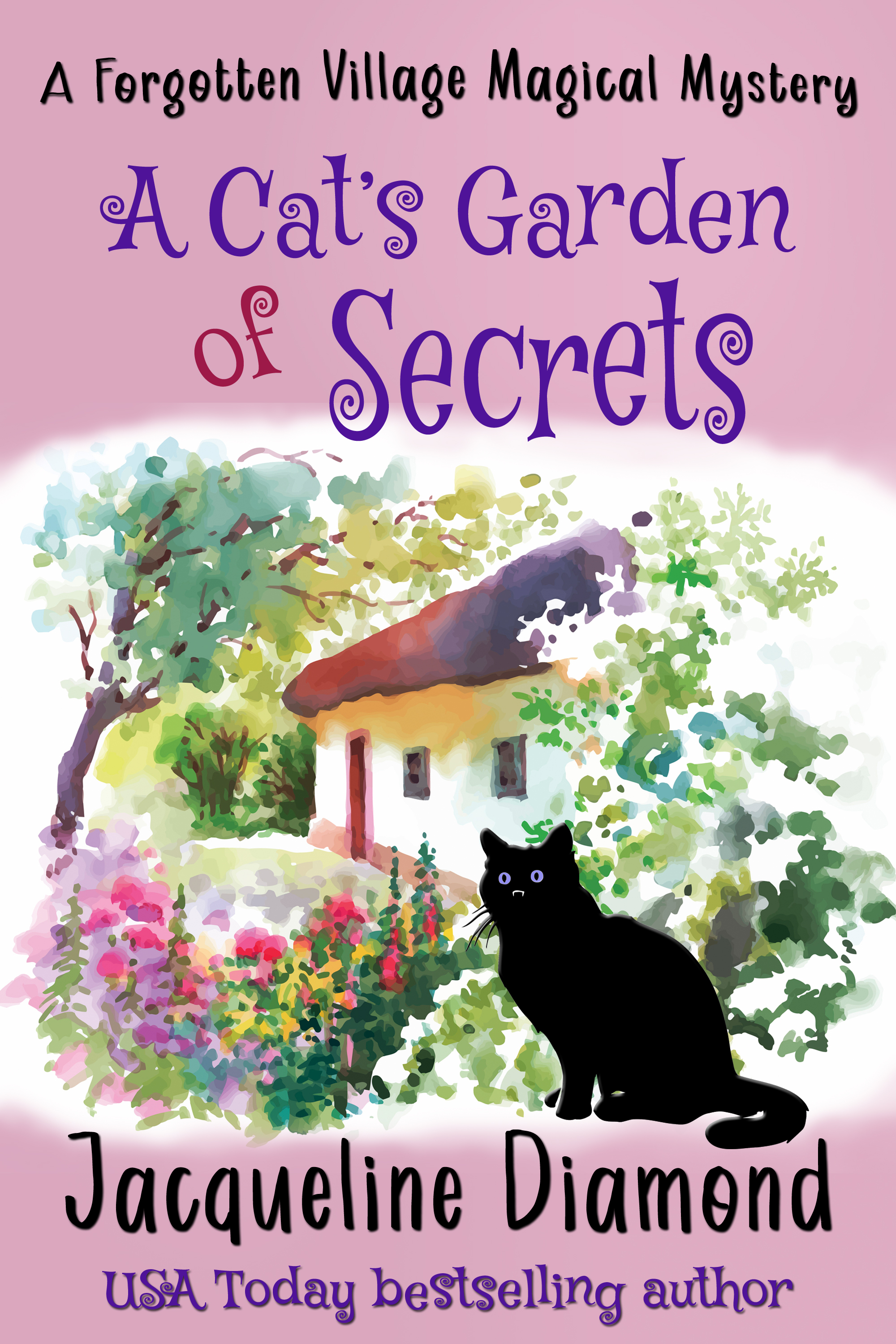
Awakening magical powers? Yes! Solving a murder, sure. But turning into a cat? Who, me?

On the weirdest day of my life, my cat starts talking, my car kidnaps me to a charming hidden village, and I inherit a mystical library. Plus, I discover I have superpowers!

As an orphan who grew up in foster care, I had no idea I came from an enchanted land full of furry shapeshifters, including—surprise!—me. Or that I had a gifted grandmother, who’s been murdered. Now it’s up to me, with the help of a handsome, otherworldly detective and my know-it-all cat, to uncover the truth… if someone doesn’t kill me first.

Enjoy cozy mysteries with talking animals? Love tales of awakening supernatural abilities and small-town bookstores and libraries? Discover why National Book Award winner Neal Shusterman wrote, “Master storyteller Jacqueline Diamond draws you in to this magical feline mystery, enchanting you page after page.”

Buy links:

Amazon: https://www.amazon.com/dp/B0CR4KYCM9

Barnes & Noble: https://www.barnesandnoble.com/w/a-cats-garden-of-secrets-jacqueline-diamond/1144921034?ean=2940185636138

GooglePlay: https://play.google.com/store/books/details?id=Kcn9EAAAQBAJ

Kobo: https://www.kobo.com/us/en/ebook/a-cat-s-garden-of-secrets

Smashwords: https://www.smashwords.com/books/view/1542627

Apple: https://books.apple.com/us/book/a-cats-garden-of-secrets/id6480234897

Audio https://www.amazon.com/dp/B0CR5PBK9Y
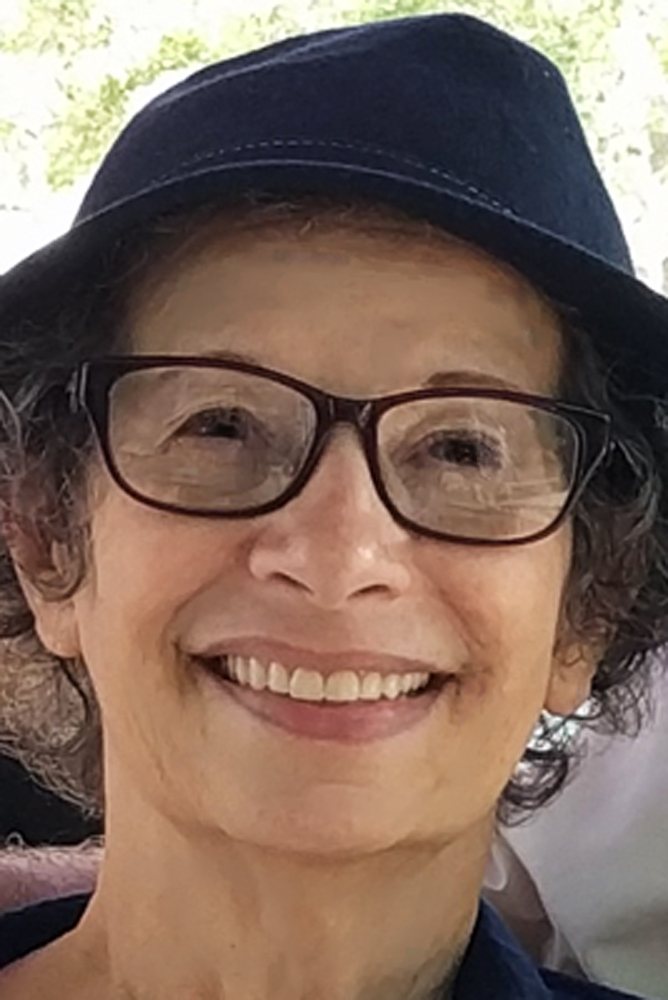
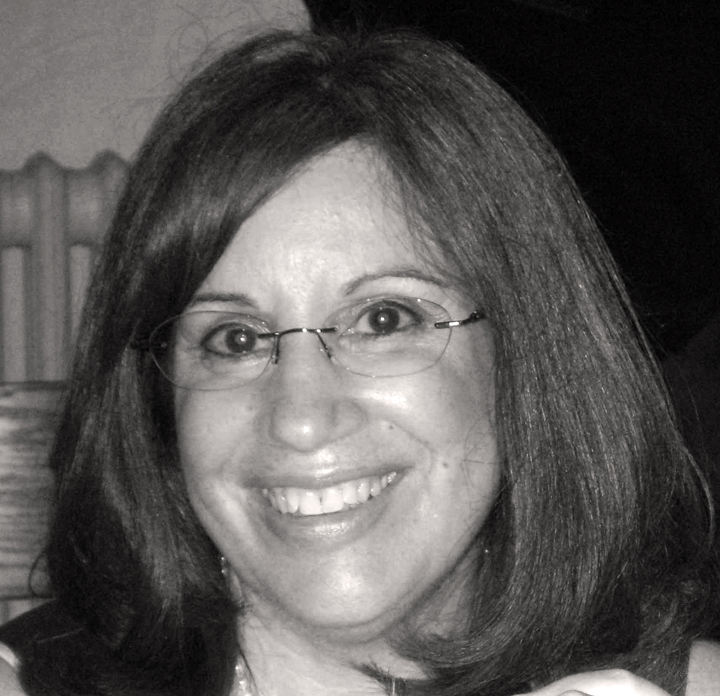
USA Today bestselling author Jacqueline Diamond has sold more than 100 novels in popular genres from fantasy to mystery to medical romance to Regency. A former Associated Press reporter, Jackie has traveled widely, and currently lives in California. Among her honors are a Romantic Times Career Achievement Award and a Thomas Watson Foundation fellowship. A Cat’s Garden of Secrets launches her Forgotten Village Magical Mystery series. You’re welcome to learn more about her and her books on her website, Jacquelinediamond.net.
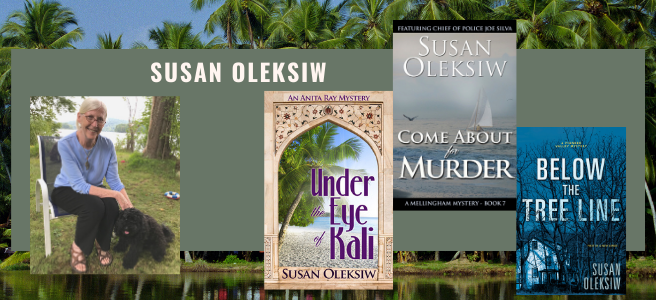
In Praise of Envelopes

Scattered around the house, until I finally gathered them in one place, were a number of pretty, well-decorated pads of paper in various colors. Some are aqua with little sprigs of white flowers in one corner; others are yellow, or pink, or off white with cute titles such as To Do, or Not To Do, with a row of colorful books at the bottom, below the hand-drawn lines. Some only say Notes in florid fonts. Some have bouquets in the corners and others have snowflakes along the borders. My favorite is the collection of library book cards that used to be found, stamped, in the back of every book. I never use any of these.

I also have a stack of journals I received as gifts. They come with nice covers and silk bookmarks, and beautiful pages, some lined, some not. I don’t use these either. When I travel, I take a plain black Moleskine journal, the small size, and it’s just the right tool for a short vacation, about a month or less.

For taking notes, keeping track of my to-do list, I use envelopes, plain white, usually used envelopes. I can’t break myself of the habit. When I get the mail the first thing I do is examine the envelopes, hoping for one that isn’t stamped or printed on the back, torn or stained. The envelope might end up with coffee spots on it, or smears of butter from a morning pastry break, but I don’t want it to begin that way. I want pristine, a pure white envelope calling me to list all the goals I have for the day, the list of things I believe, in my arrogance or delusion, that I will get done in the next ten hours. I can be very ambitious, and with small handwriting to accommodate the space, I can list a month’s worth of tasks on the back of a No. 10 envelope.

When I think about it, I admire my smarts in choosing this disposable vehicle for my ultimately disposable thoughts. The item is plain, it fits neatly into my hand, and there’s room on the back for additional notes and clarification. Because the No. 10 envelope, a standard size, is 4 1/8 in by 9 1/2 in, it is roomy enough for a clear statement of the task but not so roomy that I’m tempted to get wordy. There’s no point in a to-do list if it reads like a lecture or an essay. In addition, it folds neatly to fit into a pocket, and slides into my purse easily.

This week I cleaned my desk and found no less than seven (that’s seven) envelopes packed with things to do, books to read, household chores to get to, handymen to keep in mind for various repair jobs (I live in an old house), and writing ideas so terse I had no hope of ever figuring out what I had intended. That’s okay. I always tell myself if it’s a good idea, it’ll come back—several times—until I either get to it or discard it. I’d crossed out much of the items on each envelope, and as I read through the remainder I smiled at my plans, and was glad to let them go. I have new ones now.

There’s another reason I like envelopes, one that I rarely admit to myself. You can probably guess what it is, or who I’m going to refer to. In my quiet writerly life, I’ll never rise to the level of him, the great one, nor will I ever write anything so perfect as to be quoted decades or centuries after I wrote it. But here I sit, with my stack of envelopes honored by having its own desk drawer, thinking of what is possible with a simple envelope. The great man’s example is simple and can be summarized by anyone, and is always worth remembering and thinking on. Be direct, be honest, be brief. This is good advice for the writer, no matter what she writes on. Thanks, Abe.

Coloring in Characters

I woke up in a cold sweat, dreaming that all the main male characters in my books were raven-haired and blue-eyed. Why raven hair; why blue-blue eyes? With a toss in bed, I divined that it was because my eyes are like cesspools. I envied every blue-eyed person I saw. I even married one. Reassured, I went back to sleep.

A few hours later, a vision of Grieg Washburn, from Saving Calypso, all five foot eleven, dark brown hair and blue eyes of him made me sit straight up in bed. I began inventorying .

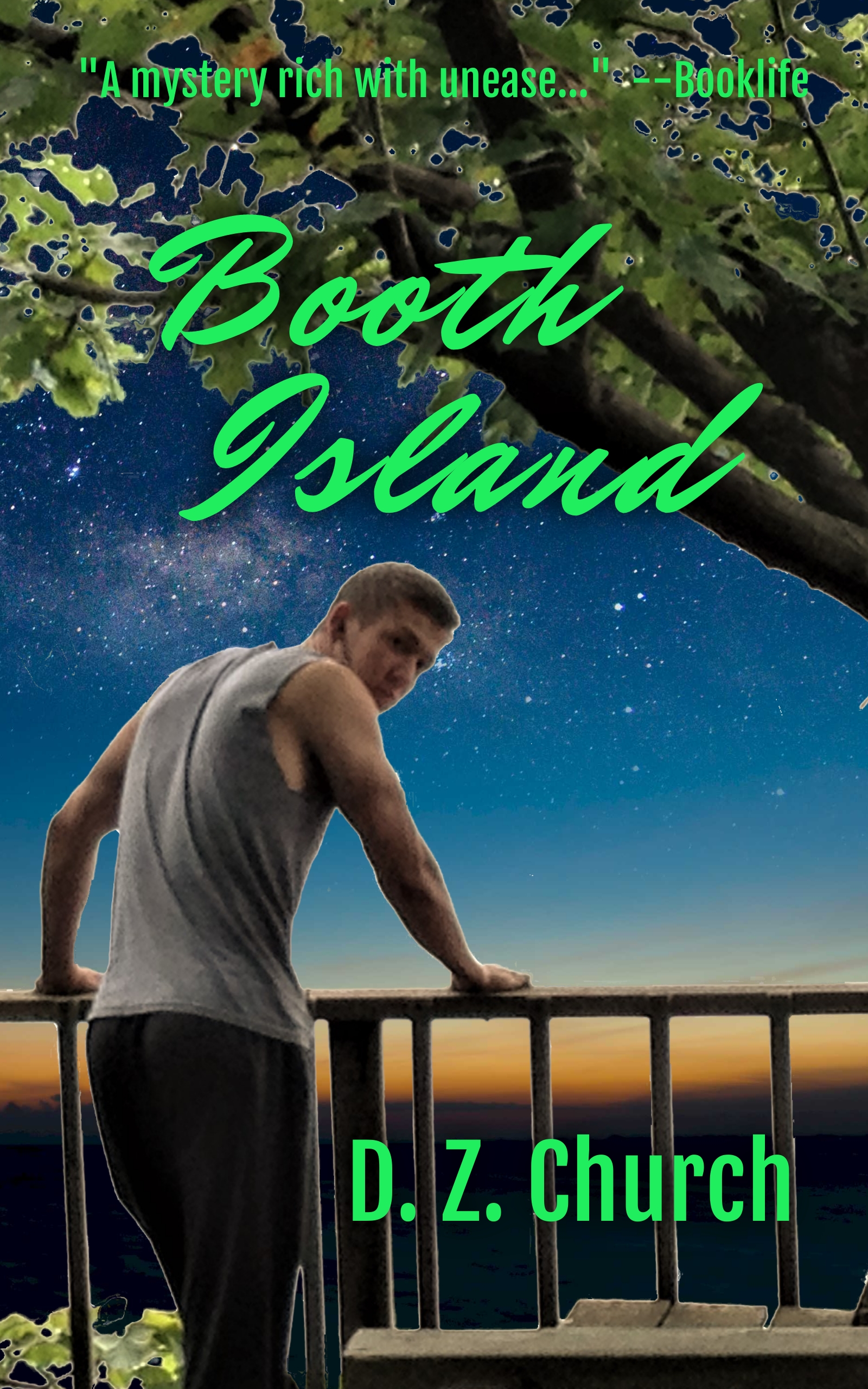
Perfidia, one café au lait with brown hair and gray eyes and another with brown hair and deep blue eyes, so blue they appear black. Booth Island. Dark hair, dark eyes. “Beneath the black horn-rims, his eyes, noir, schwarz, beltza, svart, black in any language, absorbed the light in the room.” Glasses, too. Two wins.

The Cooper brothers of the Cooper Quartet, one tall, dark and blue-eyed, one red-headed with amber eyes. 50/50.

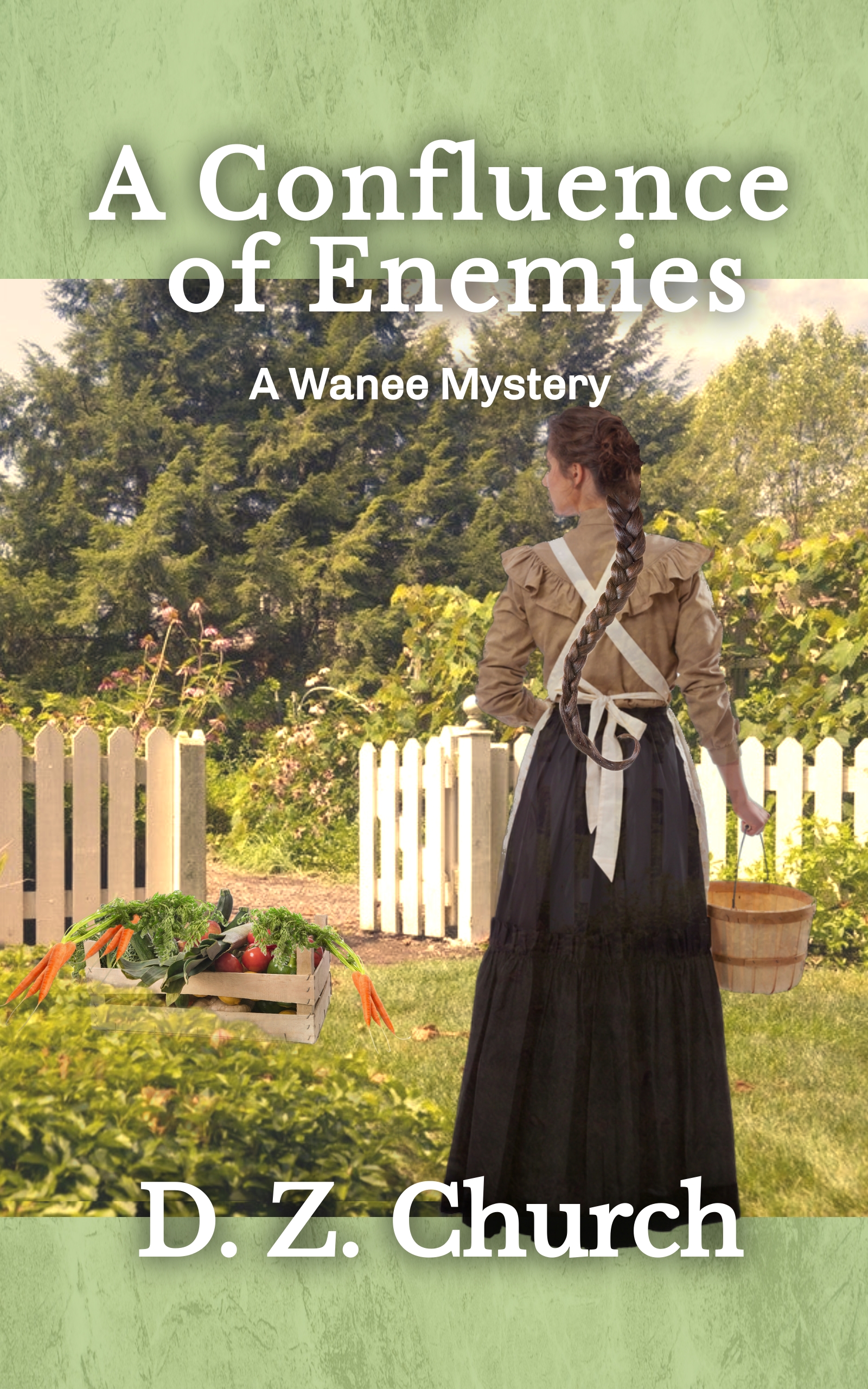
Doc and Kanady in the Wanee Mysteries, one with brown hair and gentle, soft brown eyes, the other with hair “the color of a shrew’s back” and sharp blue eyes. 50/50.

So, what was the crazy dream all about? Invention of character, I suspect.

As writers plot, we envision the emotional and physical strength the protagonists and antagonists will need. Should they stand out in a crowd or disappear? Does self-loathing or self-love color their world. Who are they ethnically, from where do they hale, what made them them? We see them in living color, dark, light, shadowed and paint them through their actions, other characters’ perceptions, or self-observation. To me, a character’s hair, eyes, complexion are tells that create an image and a touchstone for the reader, leaving the reader with a bias for the good or bad.

And off we go with a spot of good guy, bad guy:

Booth Island. Sturdevant’s eyes roved over my shirt and down my shorts to my sandals. Meanwhile, I studied the jagged scar over his left eye that continued into his hairline. It was new since he was cuffed and taken into custody, as were the glasses he now wore. Horn-rims. The left lens was as thick as my little finger. His black hair was shorn short on the sides, unmasking a thickly scarred depression above his left ear. Dark stubble stained his strong jawline and accented the hard lines of his mouth.   Good guy   ☐ Bad guy   ☐ Both

Saving Calypso. Rafe was tall, broad-shouldered and powerful from living off the grid or perhaps from his years in the U.S. Army. He had a generous nose, an engaging mouth, sweet blue eyes, and a square chin. He wore his dusty blond hair in a thick braid, uncut since he had hiked into the mountains.  ☐ Good guy  ☐ Bad guy  ☐ Both

Perfidia. He not only smelled male; he smelled like money, lots of it, as though he had been rubbed in it since childhood. His too-close-together eyes were a deep, dark blue with black corona. His umber hair would have been in ringlets if not for the expensive, stylish cut that left it long in the back and waving over his ears.  ☐ Good guy   ☐ Bad guy  ☐ Both

Dead Legend. Mike Bowen hadn’t changed in the twelve years since Byron had last seen him, still stocky, his sandy blond hair still in a butch. He had one of those faces that had battled its way through school. His nose had a slight drift to the left. He had a scar through the blond of his right eyebrow.  ☐ Good guy   ☐ Bad guy  ☐ Both

A Confluence of Enemies. Thime hunkered down on his wagon and offered his right hand, palm up, for the shake. A welted scar disfigured the soft side of his right forearm. Mr. Kanady glanced at it, his shoulders squared, his head bobbed back until he stared into Thime’s blue eyes. At that moment, Cora noted, the two men might pass for brothers. Except Thime was years older and inches shorter. It was their shared coloring and a certain sharpness in their eyes. ☐ Good guy   ☐ Bad guy  ☐ Both

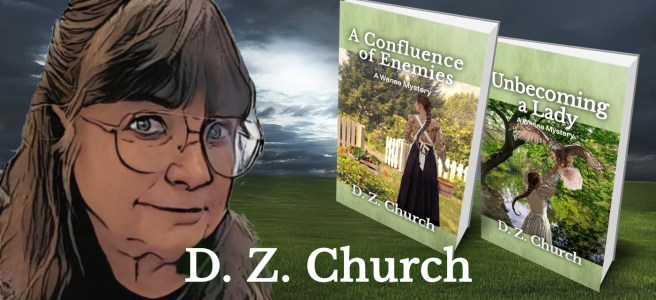
For more on visit my website dzchurch.com where you can order a book, sign up for my newsletter, and learn more about each book.

Guest Blogger ~ Laury A. Egan

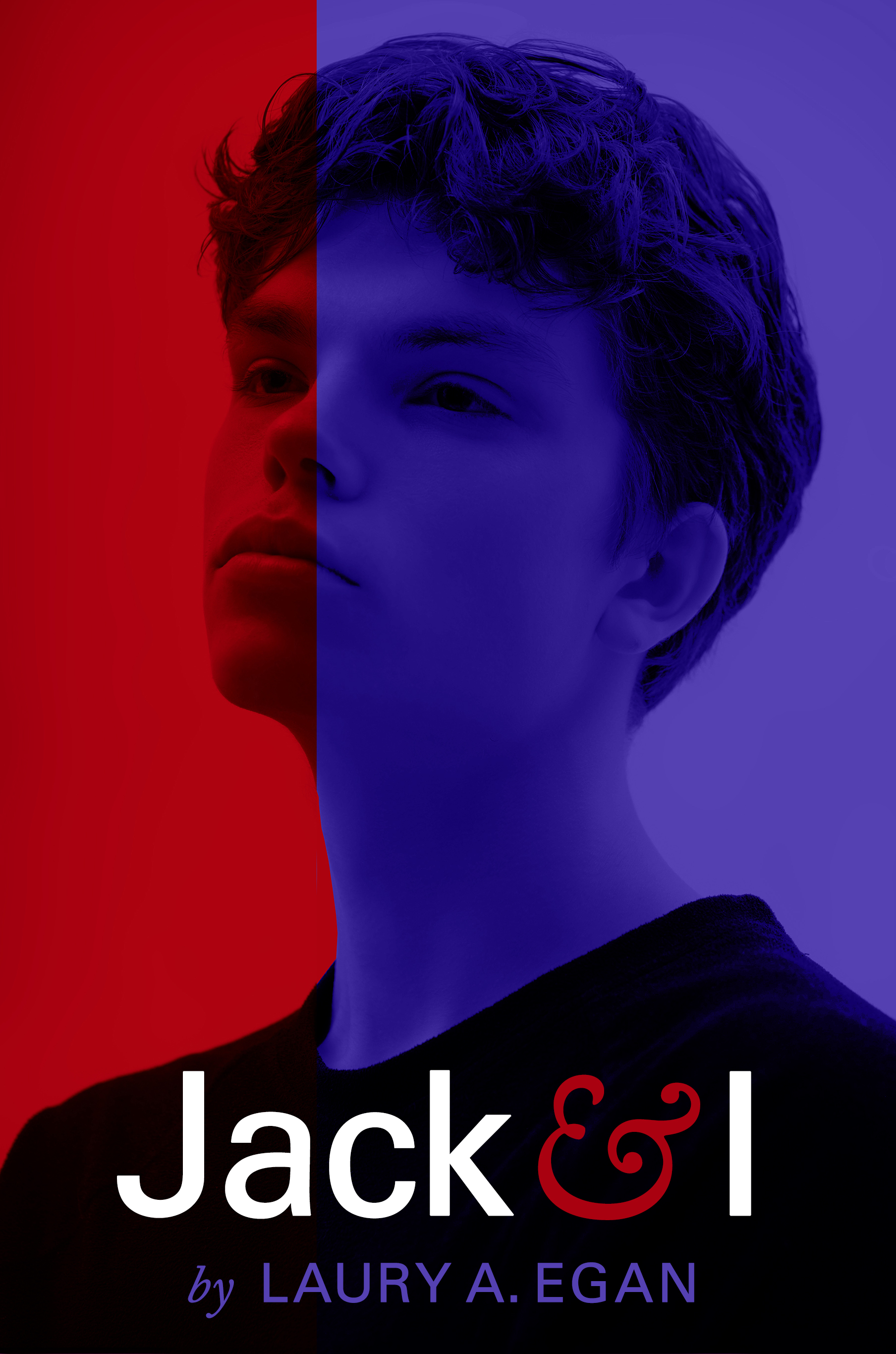
Creating Jack & I

Ever since reading The Three Faces of Eve and Sybil (a case later reported to be a sham), I’ve been fascinated with Multiple Personality Disorder, now named Dissociative Identity Disorder. After additional contemporary research, I decided to create a character who suffers from this disorder, featuring the “host” Jack’s narration in first person and the “alter” Jack’s narration in third person, interchanging the two in each short chapter. This twin structure allowed for more intimacy with the beleaguered host and a slight distance from his sociopathic alter. Since we all have dark impulses that we subjugate (or mostly do), the novel gives the reader the opportunity to experience what it would be like if we acted on our more sinister desires in a kind of Dr. Jekyll/Mr. Hyde manner all the while maintaining our moral selves.

Jack Kennett is a character who slowly emerged in my mind as I wrote, whereas his alter appeared with immediate presence. Sometimes, the “bad guy” characters are easier to imagine, but as the words accumulated, the host teenager evoked more sympathy because he was dealing with the usual issues: shyness, peer discomfort, and his frustrated feelings for a girl, but also was struggling with dire problems: Jack had experienced severe trauma in infancy (the cause of the personality split), lived in a series of foster homes with some foster parents who re-traumatized him, and dealt with an alter who subsumed Jack and committed crimes, engaged in sexual promiscuity and prostitution, and constantly undermined his attempts to be a normal sixteen-year old boy. In addition, whenever his alter takes over, the host experiences memory loss, though on occasion he can piece together what his alter has done. These blackout states are an intriguing literary device for a writer.

In interviews, I’m often asked why I set most of my novels in the 90s. Simple. By doing so, I’m able to avoid the pesky problems of technology since most people didn’t have internet service or use cell phones until later. These tools allow others to access a character and learn where he or she is and for people to do quick research and be in constant communication with the world, thus making a writer’s job more difficult, especially in a suspense story. In Jack & I, the absence of technology let me concentrate on the interaction between the two primary personalities and those who come into contact with them. This would have been an entirely different story if set in current times. For example, Jack (the host) would have learned about his psychological condition by researching his symptoms on the internet and wouldn’t have had to struggle with many of the mysteries that plagued him.

Another common question: why do I frequently write in the psychological suspense genre? One of my first literary influences was Patricia Highsmith, who loved to devise innocent characters who become victims, usually due to entrapment by an antisocial, manipulative person such as her brilliantly conceived Tom Ripley. Taking a page from Highsmith, Jack & I combines the innocent and the sociopath in one body. An economical structure allowing for dramatic contrasts in behavior, personality, emotions, and thoughts.

This novel was tricky to create in many ways. Keeping the host Jack semi-ignorant of his alter’s activities meant I needed to find strategies for him to become aware of these actions despite his amnesiac states. So, although the reader has the full picture of what’s happening, for Jack to understand the extent of his dire circumstances proved to be a constant challenge as he dips in and out of presence.

I hope readers will be intrigued by the book’s psychological complexity but also by the suspenseful plot. Will Jack and his alternate personalities ever fuse or fine a way to live together? I welcome comments or questions via my website or social media!

A psychological suspense novel about two teenage boys. The twist? They’re both named Jack and both inhabit the same body. “Mostly I was relieved to put distance between Jack and myself, although this wasn’t possible because I am Jack, too. And sort of not Jack. I am I, or rather, I am me.”

1994. Jack Kennett is sixteen and suffers from un-diagnosed Dissociative Identity Disorder (Multiple Personality Disorder). Abandoned at age two, Jack has been in the New Jersey care system all of his life: foster homes and once placed for private adoption with the Kennetts, a family he adored, especially their daughter, Cara. As the divisive war between the two personalities escalates, Jack (the host) is in despair and feeling powerless as he experiences amnesiac events and must deal with his alter’s promiscuity, truancy, and illegal acts. How will the war between the personalities end?

Amazon link: https://mybook.to/jackandi

GoodReads: https://www.goodreads.com/book/show/209445898-jack-i

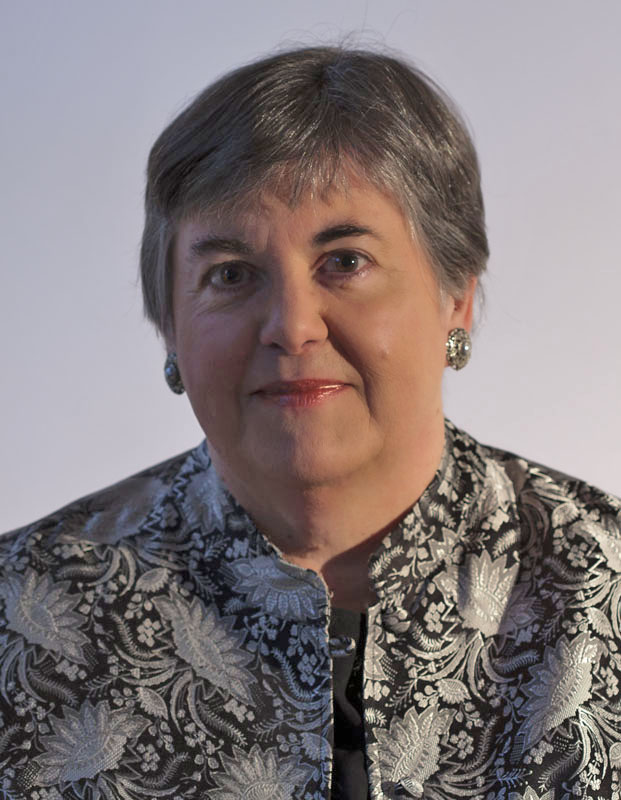
Laury A. Egan is the author of fourteen novels, including suspense titles such as The Psychologist’s Shadow, Wave in D Minor, Doublecrossed, The Ungodly Hour, and Jenny Kidd as well as a collection, Fog and Other Stories. Four limited-edition poetry volumes have been published, and eighty-five of her stories and poems have appeared in literary journals and anthologies. She is a reviewer for The New York Journal of Books and a 2024 recipient of a New Jersey State Council on the Arts Individual Artist Award in prose.

Website: www.lauryaegan.com

LauryA.Egan@EganLaury

https://www.facebook.com/laury.egan

https://www.instagram.com/laurya.egan

Guest Blogger ~ Lois Winston

The Importance of Character Arcs

Every book needs two elements—a plot and characters. Most writers understand that their story is comprised of a beginning, middle, and end. The beginning is about the Call to Action or what makes the protagonist get involved in the story’s events. In the case of mysteries, this is a murder or another crime. The middle details the steps the protagonist takes on her way to figuring out whodunit. The end is all about how the protagonist solved the crime—the finale, where the perpetrator is caught, and the denouement, where all the various strands of the story are satisfactorily explained.

What many newer authors don’t understand, though, is that the characters in a book must also have their own arcs. This is especially true in series where reader follows various characters through the course of many books. Character growth is essential. No character should be in the same emotional and mental place at the start of either a single title book or a series. When that happens in a series, the author is merely writing the same book over and over with only the names, places, and crimes changing in each subsequent story.

All recurring characters in a series need arcs, not just the protagonist. However, the arc doesn’t have to be in the reader’s face. An arc can be subtle and develop over time as the series progresses.

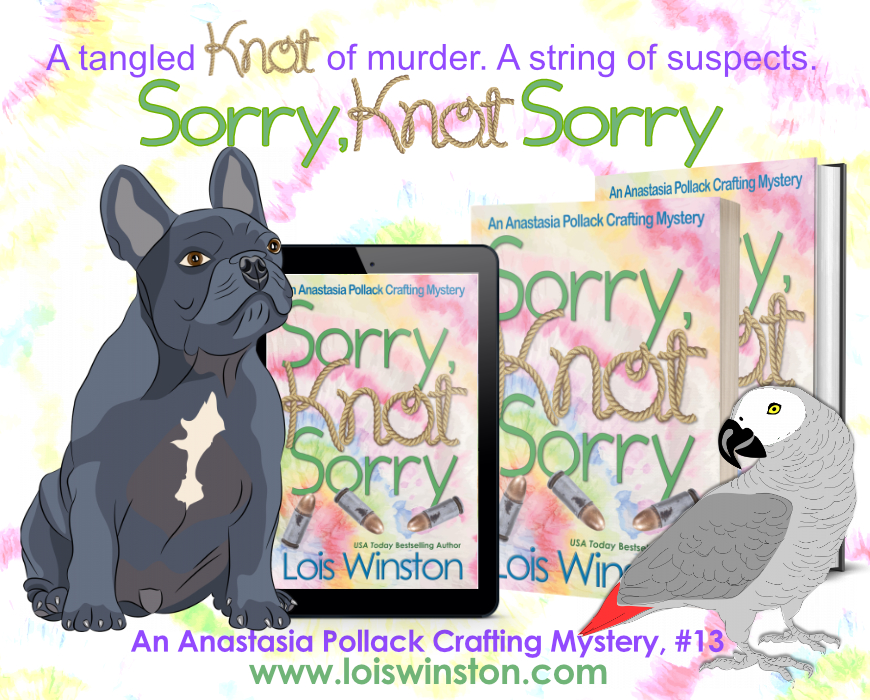
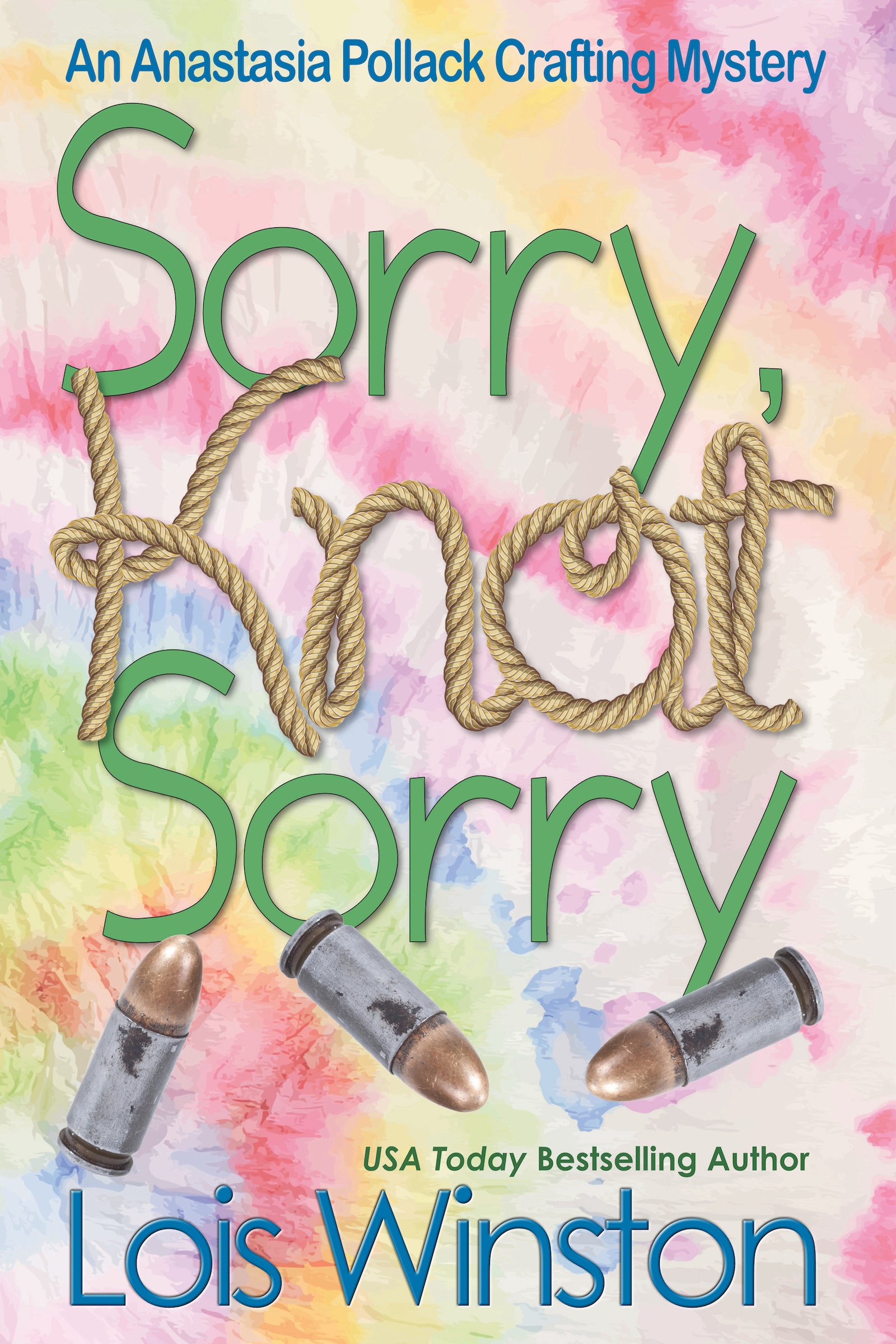
In Sorry, Knot Sorry, the recently released thirteenth book in my Anastasia Pollack Crafting Mystery Series, Anastasia’s relationship with Detective Sam Spader takes a major turn. Detective Spader was first introduced in Revenge of the Crafty Corpse, the third book in the series, when he suspected Anastasia’s communist mother-in-law Lucille of murdering her roommate at a rehabilitation center.

Readers of the series know there’s no love lost between Anastasia and Lucille. However, although Lucille has many flaws, Anastasia knows she’s all bark and no bite. So she sets out to find the real killer. Spader has continued to pop up in subsequent books in the series, and his relationship with Anastasia has grown from adversarial to one of grudging respect.

In this latest book, a man is gunned down in front of Anastasia’s home. There is little in the way of clues and no witnesses. The sheriff’s office is short-staffed due to vacations and a summer flu bug that has hit many county employees. Plus, there’s no money left in the annual budget to hire more officers. The detective admits he needs Anastasia’s help. He knows she has a way of seeing things that others often miss.

Over the course of eleven books, Spader has grown. He’s not the only one. The story arcs of many of the characters in the series have continued to develop. Some character growth has been for the better, some for the worse. But everyone changes in some way, making for a series that continues to grow beyond just the number of books.

Sorry, Knot Sorry

An Anastasia Pollack Crafting Mystery, Book 13

Magazine crafts editor Anastasia Pollack may finally be able to pay off the remaining debt she found herself saddled with when her duplicitous first husband dropped dead in a Las Vegas casino. But as Anastasia has discovered, nothing in her life is ever straightforward. Strings are always attached. Thanks to the success of an unauthorized true crime podcast, a television production company wants to option her life—warts and all—as a reluctant amateur sleuth.

Is such exposure worth a clean financial slate? Anastasia isn’t sure, but at the same time, rumors are flying about layoffs at the office. Whether she wants national exposure or not, Anastasia may be forced to sign on the dotted line to keep from standing in the unemployment line. But the dead bodies keep coming, and they’re not in the script.

Craft tips included.

Preorder Buy Links (releasing 6/4/24)

Amazon https://amzn.to/4a8JyVJ

Kobo https://www.kobo.com/us/en/ebook/sorry-knot-sorry

Nook https://www.barnesandnoble.com/w/sorry-knot-sorry-lois-winston/1145047275?ean=2940186076698

Apple Books https://books.apple.com/us/book/sorry-knot-sorry/id6479363569

USA Today and Amazon bestselling and award-winning author Lois Winston writes mystery, romance, romantic suspense, chick lit, women’s fiction, children’s chapter books, and nonfiction under her own name and her Emma Carlyle pen name. Kirkus Reviews dubbed her critically acclaimed Anastasia Pollack Crafting Mystery series, “North Jersey’s more mature answer to Stephanie Plum.” In addition, Lois is a former literary agent and an award-winning craft and needlework designer who often draws much of her source material for both her characters and plots from her experiences in the crafts industry. Learn more about Lois and her books at her website www.loiswinston.com where you can also sign up for her newsletter and follow her on various social media sites.