Launching a New Book by Heather Haven

Launching a new book is exciting, scary, and uncheap. Uncheap is not supposed to be a word but I hesitate to write that launching a new book is expensive. So I invented the word uncheap. Same amount of $ outlay but settles better in my mind. I like to feel positive about every aspect of my work.

I used to do everything needed to launch a new book in the days when I was young, energetic, and poor. I’m not rich now but above all else, I’m not young anymore. And energy? Let’s just move on. But I will say no matter what, I always had a professional editor for each of my books even when I did the covers, formatting, and uploading myself. As I am a shameless but determined amateur, I still do covers for some of my books, but not the Alvarez Family Murder Mysteries. I handed that over to professionals long ago. And they have proven it was the right thing to do.
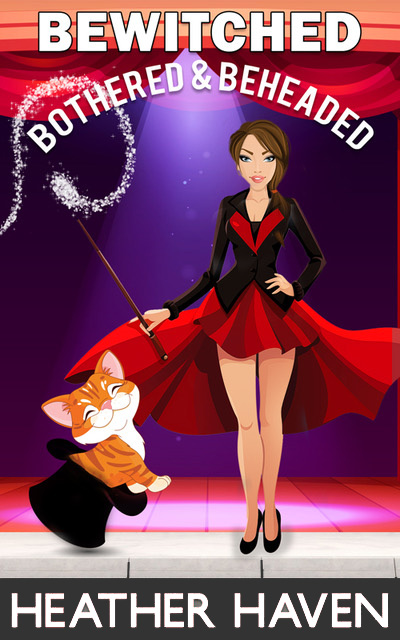
To the left is the probable cover for my latest book of the Alvarez Family Murder Mysteries, Bewitched Bothered, and Beheaded. Book 9 and counting. It needs some tweaking here and there, but essentially, this is it. Up until this book, I continued to do the formatting and uploading for the series. This time, I’ve decided to let them do everything. Ka-ching, Ka-ching. But I am anxious to start the 10th book of the series, Cleopatra Slept Here, currently but a dream. If I hand everything off, I think I can get to it sooner. The months I spend on getting a book launched takes away from any creative time I have for a new book. This may not be true for everyone, but it is for me. So I am experimenting with the less is more school of thought.

Speaking of experimenting, last May when I launched the 4th book of the Persephone Cole Vintage Mysteries, Hotshot Shamus, I decided to take some of the money I saved by doing everything myself and spend it on advertising. The Big Push. The Percy Cole series has never been the seller the Alvarez Family has been and I often wondered if it was because I never spent enough moola on it. I got my answer. NO. I couldn’t capture a large enough readership no matter how much I spent. The reviews I got from readers amounted to they loved this no s–t lady who conquered a man’s world at a time when women simply didn’t. Okay, so people who read the books seemed to like them. But I still couldn’t get enough readers to justify the investment spent on mounting each book.

Maybe it’s because the series takes place during WWII, not a glamorous time. Maybe it’s because when people read historical books they either want non-fiction or more romance and glamour in their historical fiction. Maybe it’s because I’m not well-known. Maybe it’s because the cat sleeps in the sun. But these are all conjectures. For the moment, it’s time to pull back on the Percy Cole series and concentrate on what works. And as I love the other series just as much, I will concentrate on writing the Alvarez Family.
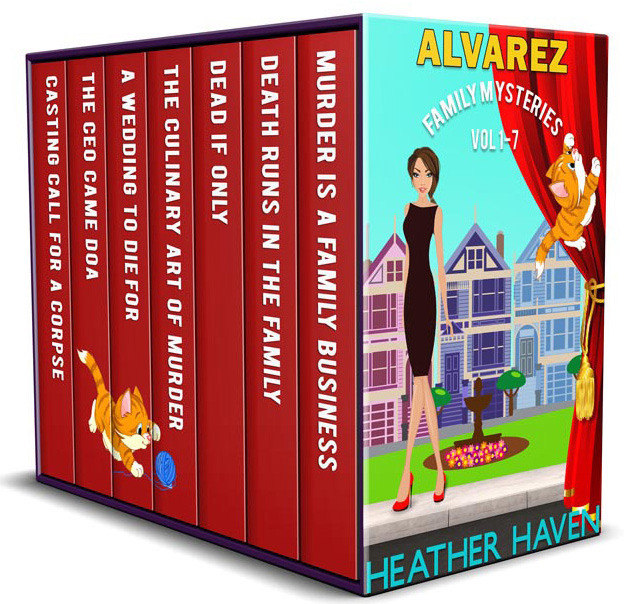
And launching their books. So here’s to Lee Alvarez and her wonderfully eccentric family. And to all who read about them. Much appreciated.

What Goes Under It All

I’m thinking about undergarments.

Lest you think that’s peculiar, I’m a writer, working on a historical novel. And thinking about what my characters wear.

More about the undies later. Let’s talk about what goes over them.

My long-running Jeri Howard series is contemporary, set in the present day. Jeri is a private investigator. I was a woman in my thirties when I began the series, but I’m aging faster than Jeri is. As an investigator, Jeri wears comfortable clothing, usually pants, though in Where the Bodies Are Buried, she dresses up in a business suit and low heels to go undercover as a legal secretary.

Most often she wears comfortable shoes, since she may need to walk distances as she tails a suspect on a city street. She certainly doesn’t want to stand out in a crowd when she has to duck into a doorway or a coffee shop to avoid being seen. In Cold Trail, she hikes over the hills in a regional park, following a lead.

So, Jeri dresses a lot like I do. I favor casual and comfortable. My wardrobe consists of a lot of T-shirts and stretchy pants. As I write this, my feet are ensconced in warm comfy slippers.

I’ve never felt the need to detail Jeri’s undergarments, though I do mention at one point that she sleeps in an oversize T-shirt.

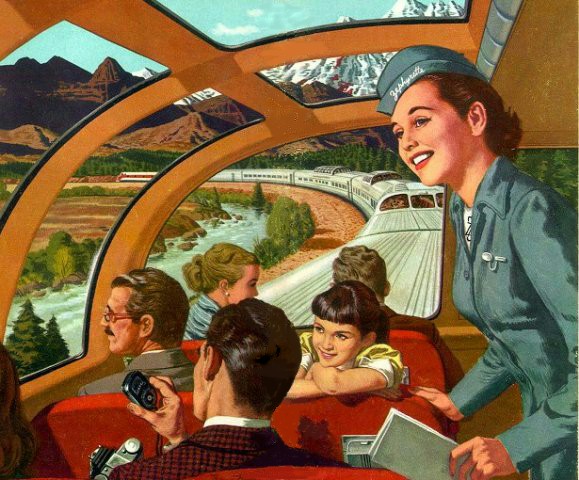
Then I started a new series, set in the early 1950s, featuring Jill McLeod, a Zephyrette on the California Zephyr, the sleek streamliner train that ran between San Francisco and Chicago from 1949-1970. The current Amtrak version is a successor to that passenger train. Jill is a train hostess, the only female crew member. Her job is to walk through the train from time to time, keeping an eye on the passengers and what they need. While she’s on duty, Jill wears a uniform. It’s teal blue, with a skirt and jacket worn over a white shirt, and a military-style cap. When Jill is off-duty, however, she dresses in the styles common at that time. It’s the era of full skirts and dresses with waists, and Jill’s hair is styled in the popular poodle cut.

Speaking of undies, that was the era of girdles and bullet bras. I’ve never written about Jill’s undergarments, but in one book I have her climbing into her berth in a pair of comfortable pajamas.

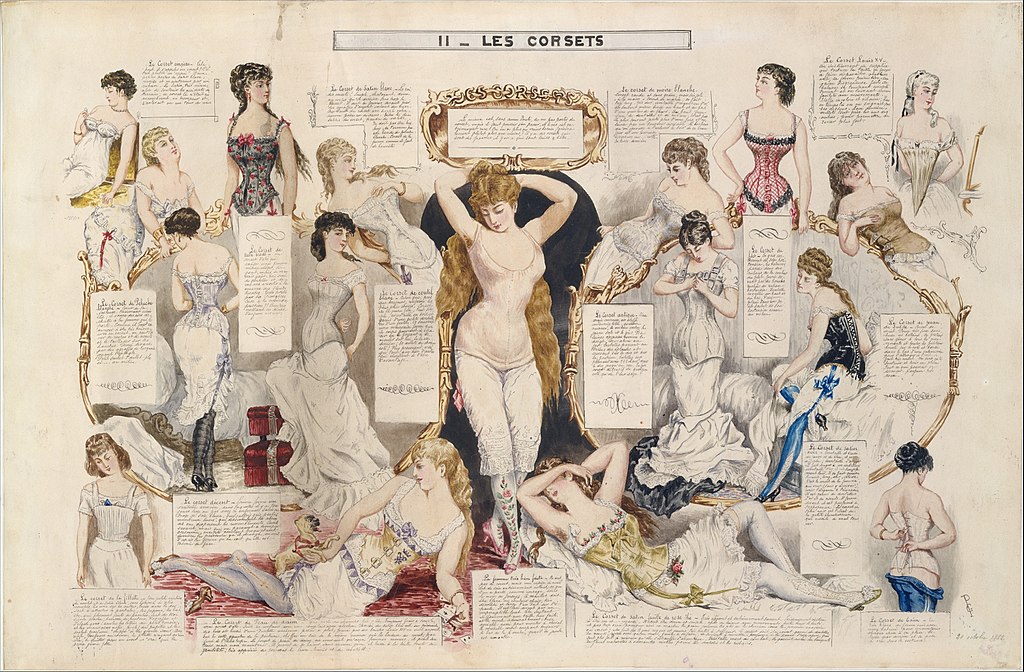
On to the historical novel—and more about undies. The book I’m working on is set in the late 1870s. I am currently obsessed with researching what people wore. I bought a book called Clothing Through American History: The Civil War through the Gilded Age, 1861-1899. I found a sidebar titled “The Layers of a Proper Lady’s Toilette.” It describes nine layers and 25 pounds of clothing to make up the proper undies for a lady, and goes from stockings to drawers, to chemise, petticoat and corset. We won’t even talk about the damn bustle.

How in the hell did women function when confined in this cage of fabric and metal? I suspect we could have another blog post on how women’s fashions interfered with their lives as well as their movement. And not just in the nineteenth century, and earlier. Remember when it was scandalous for women to wear pants? And when many women, my mother included, strapped themselves into girdles?

We will draw a veil over those bell bottoms I wore, just about the same time I bought those platform heels and fell through a door. Jeri would never do that, at least I don’t think so.

I’m not sure the protagonist in my historical novel wears all that clothing, though. Things were different on the western frontier, where farm wives sewed weights into the hems of their skirts to keep them from blowing up and showing off their undergarments. In the late nineteenth century, women did in fact wear split or divided skirts for riding horses, something I’ve eagerly adopted for my protagonist, since she’s traveling in the first part of the novel, sometimes on a wagon seat and sometimes astride her own horse.

I haven’t decided what to do about her undies. She’s independent enough to push against societal norms. Will that extend to foregoing a corset? I guess I’ll find out.