Guest Blogger ~ Mollie Hunt

Ten years, ten Crazy Cat Lady mysteries.

Ten years ago, my high school best friend said to me, “Let’s publish your book.” She was an editor. I was a writer, unpublished even though I’d recently completed my ninth fiction manuscript. I’d been trying the query route, but I never had the patience to carry it through. When I finished a book, I’d send out a frenzy of query letters to everyone in the marketplace manual but then get tired of waiting for that one good response and start another book. Writing books fascinated me; trying to pitch them did not.

I’d completed three mysteries, a thriller, and three and a half sci-fantasies when on a trip to Mazatlán Mexico, I began something new. With the warm breeze off the Pacific Ocean and the sound of marimbas playing in my ears, I penned the first chapters of a cat-themed cozy featuring a cat shelter volunteer. This one felt different; even then I knew it could be a series.

That story, Cats’ Eyes, was the one my friend the editor said we should publish, and we did.

After Cats’ Eyes came Copy Cats and then Cat’s Paw. The Crazy Cat Lady Cozy Mysteries found its voice and established its living characters. I kept coming up with new things for my shelter volunteer Lynley Cannon to do and new crimes that only she could solve. Her varying clowder of cats helped in their catly way, along with her octogenarian mom, her teenage granddaughter, her shelter buddy, and a hunky humane investigator. When I sat down at the computer, the stories would write themselves.

And now, ten years later.

I’m about to publish a new Crazy Cat Lady mystery, Cat House, and this one is special for a few reasons. It’s the tenth in the series, ten being a milestone. It takes place in my own neighborhood, and though the exact locations are fictional, anyone familiar with the Hawthorne district of Southeast Portland, Oregon will be able to visualize some of the features. And if you’ve read any of my series, you know I incorporate cat information into each story and include cat facts and snippets at the beginning of each chapter. Like my character Lynley Cannon, I am an devoted cat person, a volunteer, and an advocate for all cats. If my stories can not only entertain but teach something about cats, I’ve achieved my objective.

In Cat House, I’ve incorporated a secondary storyline involving a cat being treated for Feline Infectious Peritonitis. Up until recently FIP has nearly always been fatal to the unfortunate cats and kittens who contract it, but now there is a cure. Sadly, however, the drug to treat FIP isn’t approved in the United States, so sufferers have to look elsewhere. To get this storyline right, I needed to do quite a bit of research, and not just the internet kind. I reached out to a friend who had successfully treated an FIP kitten with “black market” drugs she obtained through an online group. I also learned of FIP crusader Peter Cohen and his cat advocate work. I was able to interview Peter and find out a whole lot more about why we can’t get this lifesaving drug in the US.

I included Peter’s interview as an afterword in Cat House. My new book may be cozy fiction and light reading for those who like cats, mysteries, and happy endings, but the reader might just learn something along the way.

Right now you can pre-order Cat House for its release on October 29th. Link to Pre-order: https://www.amazon.com/dp/B0CGSXLYTP

Cat House

Book 10 in the Crazy Cat Lady Cozy Mystery Series
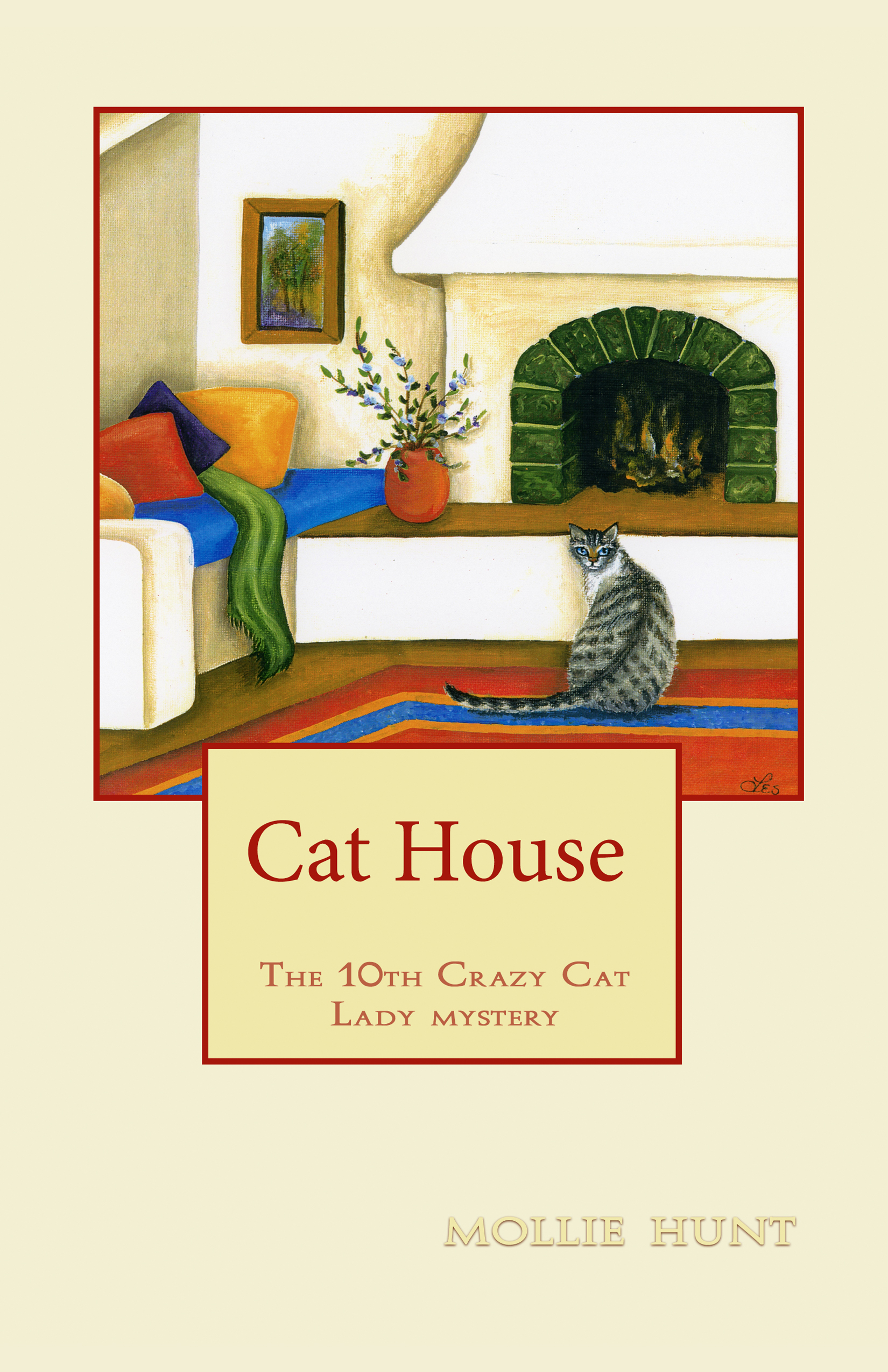
This Halloween, the cats are hiding, and the monsters don’t wear costumes.

Young men from the Portland-Seattle area are going missing. It’s just another sad headline to Lynley Cannon—until she starts her new cat sitting job for an enigmatic neighbor.

An off-limits room, a suspicious phone message involving drugs, and the sudden appearance of a missing man’s cat arouse Lynley’s suspicion, but how far can she go before the consequences of her cat-like curiosity turn deadly?

https://www.amazon.com/House-Crazy-Lady-Mystery-Book-ebook/dp/B0CGSXLYTP
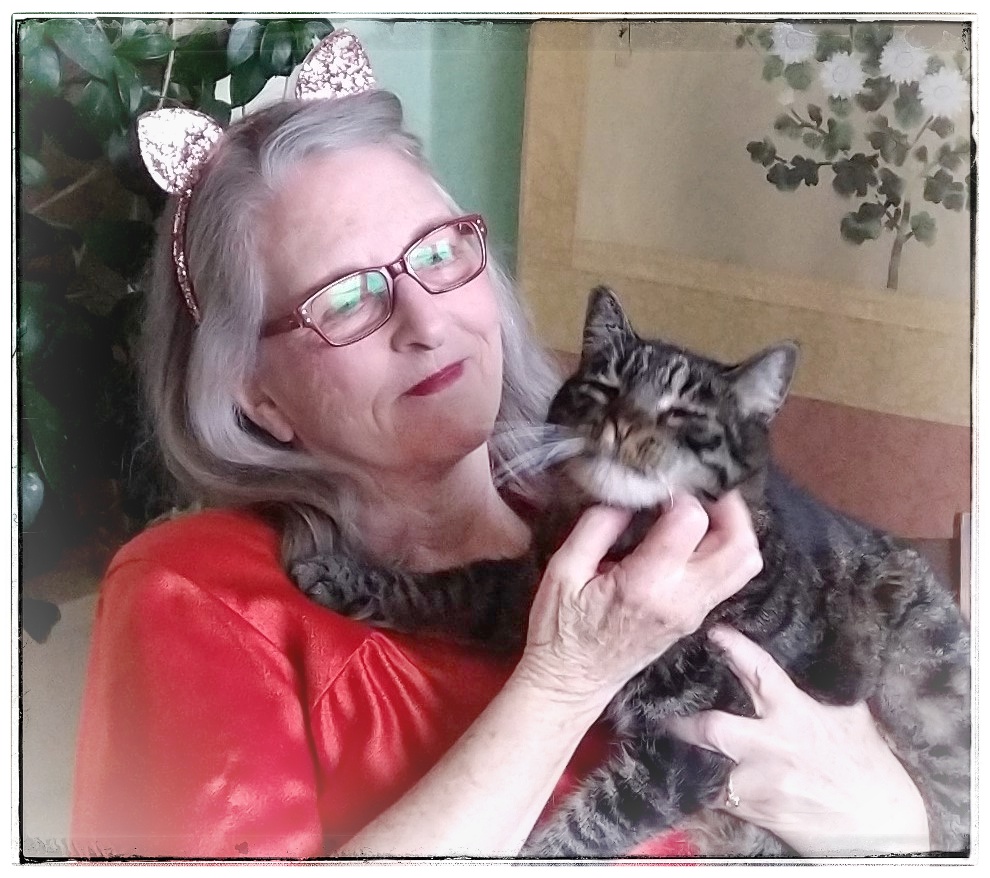
Cat Writer Mollie Hunt is the award-winning author of two cozy series, the Crazy Cat Lady Mysteries and the Tenth Life Mysteries. Her Cat Seasons Sci-Fantasy Tetralogy features extraordinary cats saving the world. Mollie also released a cat-themed COVID memoir. In her spare time, she pens a bit of cat poetry as well.

Mollie is a member of the Oregon Writers’ Colony, Sisters in Crime, the Cat Writers’ Association, Willamette Writers, and Northwest Independent Writers Association (NIWA). She lives in Portland, Oregon with her husband and a varying number of cats.

You can find Mollie Hunt, Cat Writer on her blogsite: https://molliehuntcatwriter.com/

Follow Mollie’s Amazon Page: http://www.amazon.com/author/molliehunt

Facebook Author Page: http://www.facebook.com/MollieHuntCatWriter/
Consequences and Truth

Sometimes, it seems as though every YA novel is about a dystopian world populated by evil, conniving adults who would do anything for power. People are starving, living in fear, fighting for existence, sometimes eating each other. And along comes a girl, a boy, a set of boys and girls with some superpower. Great archers, wizards, vampire slayers, and so on, who through their trueness and bravery vanquish the evil adults.

I ask you to think about that message. All government is bad. All adults in power are bad. A few youths are the heralds of virtue. It reminds me of the old disco song, Holding Out for a Hero, sung by Bonnie Tyler.

Where have all the good men gone
And where are all the gods?
Where’s the streetwise Hercules
To fight the rising odds?

Whatever happened to youths who overcame the obstacles of being a teen? Those books are out there with some censored by the arbiters of taste, unlike books where adults are killed wholesale or turned into mice.

I acknowledge that all youths and adults are not reading YA dystopian novels, but a lot are. What attracts them? I would wager that the teens and pre-teens, like we all did when that age, are grappling with adulthood, want control, and yet feel disenfranchised by adults refusing to see that they are pre-adult and capable of remarkable things. Thus, the appeal of a story that is based on this very angst. But think of the world promoted by these books.

Lack of faith in anyone who is in charge. Couple that with some social media time and – whoa – it all gets ugly fast since truth can be a bit hard to come by in a world of influencers pushing beliefs that may or may not be exactly true. If you believe all adults are evil, and you can’t trust anyone in power then you are ripe to be attracted like a bass to a shiny spinner by those who claim to be that hero you need.

Because these books sell well, the genre is packed. Admittedly, our current future has a tint of that dystopia (fire, floods, famine, war, lies). Now that the Mockingjay kids are all grown up, can they provide us a hero, or will they watch in expectation as evil actors take control of the world, and, yes, untrustworthy adults? Yikes!

I don’t know. Either way it gives me the whim-whams.

Our responsibility

So about now you’re wondering what the heck this blog has to do with ladies of mystery. Just this. As mystery writers we have a responsibility to consider the world we present to our readers. One where not every adult is a liar, villain, killer, rapist, serial killer or stalked by one (especially across books in a series).

Our heroes and their supporting cast may be flawed but they are human with human skills. For those of us who write historical mysteries, we are careful in our presentation of fact as we weave it into the fabric of our story.

Our mysteries provide a respite from the crazy world, a land where no matter what, everything turns out right. Justice lives in our pages. The bad ones get their just desserts. And along the way, we present our readers with some truths, comfortable or uncomfortable.

Whew, now that’s all off my chest.

Holding Out for a Hero lyrics © Sony/atv Melody

INSPIRATION IN THE OLD

I have been obsessed with finishing my two novels this year. Every spare minute I have is dedicated to my writing. And, God willing, both Vanished in Vallarta and Redneck Ranch will be published by the first of November.

As you all know, writing is a singular endeavor, until you have pages, chapters, a novel for someone to read, critique, edit. With these two novels, I’ve struggled with finding editors and Beta Readers.

After losing my first editor, my friend Sharon North, stepped in and took on both books. At first, I was disappointed that she didn’t like my villain in Vanished in Vallarta. After listening to her concerns and weighing them against how I’d hoped to show my villain in the story, I realized I’d been the one to let this character down. As I rewrote him, I not only showed his story better, but was also able to strengthen another character, both changes making the story stronger.

Sharon blessed me with a fabulous opinion of Redneck Ranch, which encouraged me to hand off the manuscript to my three Beta readers. These lovely women worked reading Redneck Ranch into their busy lives, while I improved Vanished in Vallarta. One of the things I find interesting is all three readers have found some of the same issues, but also problems separate from each other. Both Mary Eastman and Stacy Robinson loved Redneck Ranch, and as you’ve already guessed, their input and kudos helped me make the novel even better.

My final Beta reader, Cindy Schmid, a Montana girl through and through, made me aware of some specific story issues with regard to my descriptions of the Redneck Ranch. For instance, I decided the ranch could be five acres, but if I want to have horses and other animals, I need to picture a bigger spread. She also explained to me that Stone County, where my story unfolds, needed more history and fleshing out to make the fictional town of Stoneybrook, Oregon seem like a real place. I love creating characters and stories, but this is the first time I’ve actually created a county and town.

One of the reasons I wrote the novel, Redneck Ranch was to honor my Autistic son, Derrick, who passed away six years ago. Derrick always wanted to be a policeman or a sheriff, so I’ve created a fictional Deputy Sheriff named Derrick Austin Stone who always solves the crime in my novels and novellas. Obviously, losing Derrick was difficult and my journey to a place of zen was aided by the support of all the women I’ve named above and two friends who may not participate in the editing or reading phases of writing a novel, but their encouragement is priceless. Both Toni Hilton and Debbie Boutinen listen to my ideas about characters or my lamenting over whether the story is good, believable, or worth reading.

Cindy and Stacy are taking on the rewritten Vanished in Vallarta next and, with any luck, they will love the story as much as they did Redneck Ranch.

As I write this blog, I’m ensconced in my friend Cindy’s beautiful home in Montana on Whitefish Lake with Debbie, Sharon, and Toni. We’ve had a wonderful visit remembering how our friendships began, reminiscing about our younger days, and laughing about what old age has brough us so far.

The one thing growing old has taught me is the appreciation for the inspiration these friendships have brought me. Without their love, support, and shared interest in my writing I probably would have thrown in the towel years ago.

So out of something old, has come something new and I can’t wait to see what these few days with great friends will inspire in my next novel.

The Writer’s Retreat

Last evening I attended a small theater production on the grounds of what had once been a dairy farm and is now a location for modern dance and other events, owned by the late Ida Hahn, an “icon of the modern dance world.” The setting of Windhover, her Performing Arts Center that grew from a summer program for girls in the arts into a well-known center for modern dance and other mediums. After Ida Hahn’s death in 2016, her daughter, Lisa, has carried on the work.

I’m thinking about this now, despite many visits to Windhover over the years, because my companion and I both had the same thought. The scattering of small shingled buildings in a rocky pasture surrounded by woods and only a short walk from the ocean would be the perfect location for a writers’ retreat. The buildings are rustic, but their lights glow through the windows in the late summer evenings as artists and dancers wind down from the day. This is the time for creatives to get together to talk about their work and plans for the day.

The idea found a warm reception in both our minds, since we had both attended writers’ retreats in the past. My friend had experienced more than I have, but our feelings about them are the same. A good retreat lets the writer set aside the usual thoughts about managing life during the day and focus solely on work that too often gets shunted aside for more pressing, usually mundane matters.

In a short memoir about spending a week in a Provincetown dune shake, Thalassa (Haley’s, Athol MA, 2011), the author Allen Young describes his week in an isolated, rustic shack, his preparations and plans for coping and how he spent his days. I’ve long been intrigued by the dune shacks and the idea of spending a week in one, but the National Park Service recently announced that it was no longer going to allow this, and so memoirs like Young’s will be an historical record rather than a call to others for adventure. (The eight historic dune shacks are now being leased for a ten-year period, with the lessee responsible for all care and maintenance. I don’t know if subleasing is allowed; if it is, the dune shack experience may remain an option for others.)

Another writer invited to MacDowell went with his new, incomplete manuscript, eager to work and write what he assumed would be pages and pages every day. Instead, he found the hours alone with his WIP opening up doors he hadn’t expected, doors into rethinking his entire project and its direction. He shuffled pages, rewrote outlines, and although he would have felt this a poor use of his time at home he reported feeling he had come away with something fresh and new. I remember this story so well because he could have ignored the ideas and doubts taking form in the back of his mind and continued on with a perfectly acceptable story for an editor already interested in his work. 

We gain different things from a writer’s retreat. For some it’s the essential time to write. But for others it can be the opportunity to sit quietly with ourselves and listen to inchoate thoughts take form and gain clarity, leading us in a new more fruitful direction. And sometimes, it’s just the experience of being with like-minded people that can give us the energy we need to continue with a novel that is challenging. 

The season is ending in October for Windhover. The buildings lack central heat, so there’s no chance of gathering writers there this year. But I plan to write the director, Lisa, and invite her to consider adding this opportunity for writers to her schedule for the coming year or beyond. And I’ll continue to visit Windhover to enjoy other creative productions.

EGGCORNS, MALAPROPS, AND MONDEGREENS – A Guest Post by Author Jeanne Matthews

As a child, I recited the words of the Lord’s Prayer as I heard them. “Our Father who art in heaven, how Lord be thy name?” It made sense that you wouldn’t say an ordinary “Hi” to the Lord, and the word “hallowed” wasn’t yet in my vocabulary. Turns out, there’s a linguistic term for my mistake. I had committed an “eggcorn.”

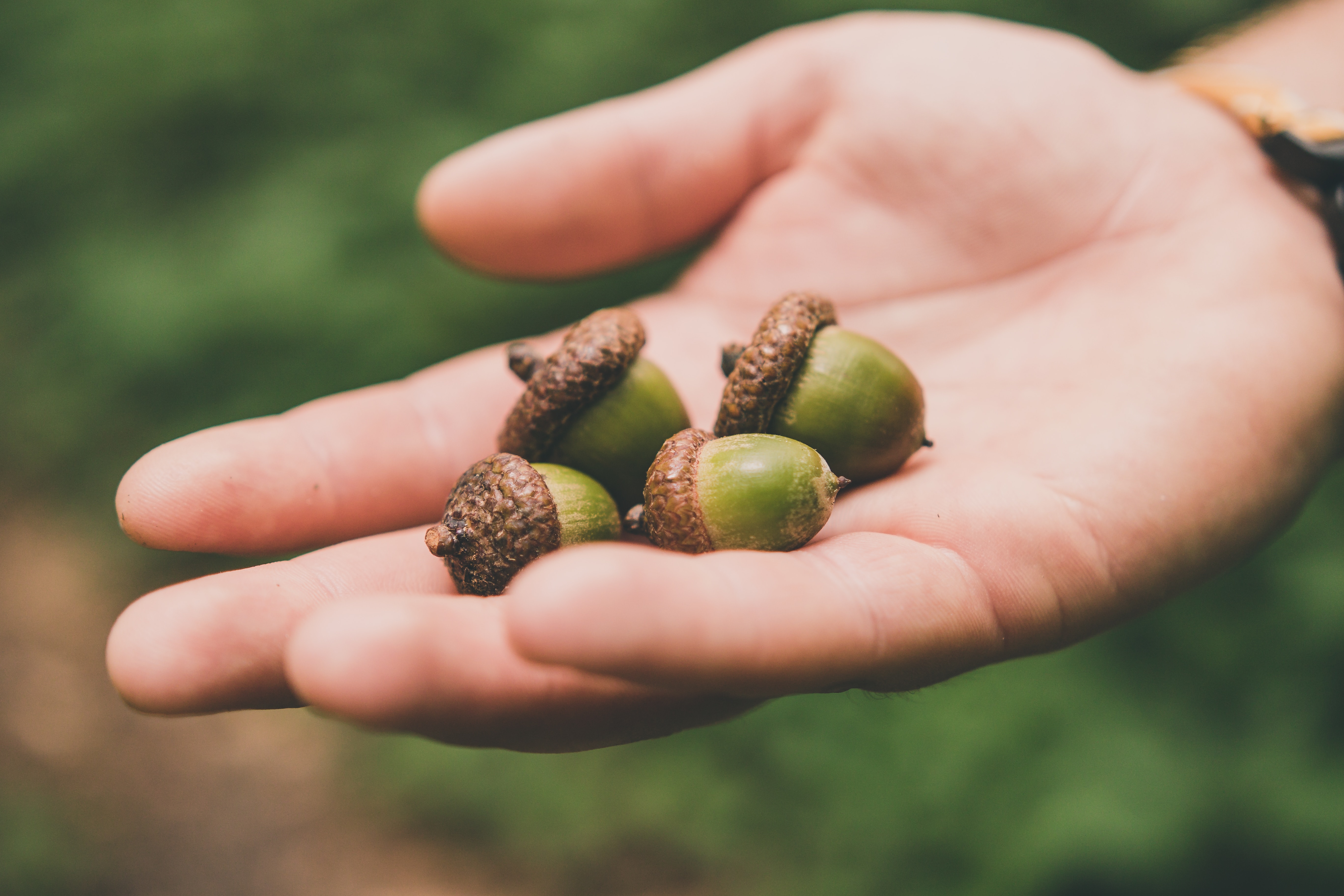
A woman who misheard the word “acorn” inspired the coinage. “From little eggcorns mighty oaks do grow.” My favorite eggcorn is a twist on the idiom “raked over the coals.” Recounting the story of a bad day at the office, a friend informed me that she’d been “raped over the coals.” I figured it was probably a mistake, but she worked for litigators. It wasn’t impossible.

The difference between an eggcorn and a malapropism is plausibility. Mrs. Malaprop, a fictional character in a 1775 play by Richard Sheridan, was forever inserting a nonsensical, out-of-context word in place of the similar sounding correct word. Malapropisms are constantly creeping into political discourse. Former Chicago Mayor Daley touted “Alcoholics Unanimous” and Australia’s Tony Abbott reminds us that “No one is the suppository of all wisdom.”

Misunderstood song lyrics are called mondegreens, a word derived from an old Scottish ballad. “They hae slain the Earl O’Moray and laid him on the green.” The writer Sylvia Wright heard it as “They hae slain the Earl O’ Moray and Lady Mondegreen.” Credence Clearwater gave us a memorable mondegreen in their hit “Bad Moon Rising.” Was that last line “There’s a bad moon on the rise” or “There’s a bathroom on the right”?

Jeanne Matthews is the author of the Dinah Pelerin mysteries.  Her most recent novel is Devil by the Tail, an historical mystery set in Chicago just after the Civil War.