Guest Blogger~Margaret Fenton

Hello to all you wonderful readers!  My name is Margaret Fenton and I write the Little mysteries, LITTLE LAMB LOST, LITTLE GIRL GONE, and LITTLE WHITE LIES published by Aaakenbaaken and Kent.  They feature child welfare social worker Claire Conover.  Claire works for the fictional Jefferson County Department of Human Services in Birmingham, Alabama.  In real life several years ago, I was the mental health consultant for the Jefferson County Department of Human Resources and was surrounded by child welfare workers as my department helped to keep their clients out of foster care.  So most of my knowledge for the books came from my living it. Sort of.

          I read primarily cozy mysteries, and have for years. One of my all-time favorite writers was Anne George, who wrote the Southern Sisters series set here in Birmingham. I got to know Anne a bit before she passed away in 2001.  We were on our way to a Sisters in Crime meeting one evening and I admitted I had some interest in writing a cozy. I had a basic idea but it wasn’t going anywhere. She said “I would think that as a social worker, you come into contact with all sorts of evil people.  You could have a protagonist who is a social worker and that could be the reason she gets involved.”

          Bingo.  Thanks Anne. I went home and wrote the rough draft of LITTLE LAMB LOST. Claire gets to work one day and one of her little clients is dead from an overdose.  The police assume it’s the mother and arrest her, but Claire knows differently. There’s some romance, too, when Claire meets Grant Summerville and they begin dating.

In the second book, LITTLE GIRL GONE, Claire takes custody of a 13-year-old found sleeping behind a local Piggly Wiggly.  I would describe my books as amateur sleuth rather than cozy, but they are on the lighter side. Yes, Claire works with abused and neglected children, but all the violence is very off-screen. 

          In the third book, LITTLE WHITE LIES, a mayoral candidate’s office is bombed.  A staff member’s body is found in the rubble, and his daughter is left at a daycare overnight.  Claire takes custody of little Maddie and it turns out her deceased father was living under an assumed name.  I wanted to put a bombing in this book.  My beloved Birmingham was known as Bombingham during the Civil Rights struggle in last century, and racism is something we still continue to confront and work on here. Claire gets a foster child in this book, too, an amazing young lady named LaReesa we meet in the second book.  This puts all sorts of stress on Claire’s relationship with her boyfriend, Grant. Plus, there’s her forbidden attraction to reporter Kirk Mahoney. 

I’m working on the fourth installment, called LITTLE BOY BLUE.  I don’t want to give too much away, but you’ll get to find out what happens when you threaten someone Claire loves. Stay tuned!

A tense, taut and timely tale featuring Birmingham, Alabama child welfare social worker protagonist Claire Conover, Little White Lies is a gripping tale about secrets, revenge, temptation and the big cost of those little white lies. 

About Little White Lies:  When the office of black mayoral candidate Dr. Marcus Freedman is bombed, Claire Conover is drawn into another mystery. While Marcus is found safe, his campaign manager Jason O’Dell is found dead in the rubble. Claire’s office gets a call about Jason’s daughter Maddie who was left at her daycare, who becomes Claire’s latest charge as she investigates what happened. 

But what—or who—is behind this attack? Turns out there are more questions than answers when it is revealed that Jason O’Dell is living under an assumed name—and he’s actually Jason Alsbrook, the son of a prominent local mine owner James Alsbrook.  James Alsbrook and his mining company have an unseemly notoriety for having the most mining accidents and deaths in Alabama. Not surprisingly, there are many people who would wish harm to him and to his family. But who would’ve acted on that hatred?

As she works to keep little Maddie safe and find out who would’ve harmed Jason—and why—Claire uncovers a complex web of deception, secrets, and lies.  As she struggles to piece together this dangerous puzzle, Claire weathers the storms in her personal life as the addition of a foster child, and a burgeoning friendship with reporter Kirk Mahoney, threaten to rip apart everything Claire holds dear.  In the end, will those little white lies  come with a big cost?  Expect the unexpected in this mesmerizing Claire Conover mystery.

Brimming with tension and a pulse-quickening plot that races from page one, Little White Lies is a clever, confident and captivating read. Margaret Fenton delivers an unforgettable novel resplendent with seamless plotting, compelling characters, and a storyline to die for. A standout novel in Fenton’s critically acclaimed Claire Conover series, Little White Lies is not to be missed.

BUY LINKS
Little White Lies – By Margaret Fenton (paperback) : Target

Little White Lies book (thriftbooks.com)

Little White Lies (Paperback) – Walmart.com

Margaret Fenton writes the Little mystery series featuring child welfare social worker Claire Conover.  She spent nearly ten years as a child and family therapist for her county’s child welfare department before focusing on writing. Her work tends to reflect her interest in social causes and mental health, especially where kids are concerned. Her favorite mystery writers are too numerous to mention, but she tends to gravitate toward amateur sleuth and historical mysteries. She has been a planning coordinator of Murder in the Magic City in Birmingham, Alabama since its inception in February 2003 (mmcmysteryconference.com). Margaret lives in the Birmingham suburb of Hoover with her husband, a retired software developer, three adorable Papillon dogs, and lots and lots of books. Her website is margaretfenton.com and she loves to hear from readers.

Reverence Lost

During the recent Perseid meteor shower, visitors to the Sunrise area of Mount Rainier National Park invaded delicate alpine flower meadows and trapped fellow visitors for hours by parking in unauthorized locations. Apparently, for most it was all about the event and the competition for space, not about the magical park they were in. The destruction of wildflowers and other alpine plants could take decades to heal. A trampled flower cannot produce pollen or reseed itself.

What wildflowers? We only wanted to see the meteors, it was dark, you know.

Trail running has become so popular that in many scenic natural areas, runners now skip the permit process, which is designed to protect the unique environment, and simply race as fast as possible through amazing regions such as The Enchantments in Washington State.

Ran the whole thing in six hours. How long did it take you?

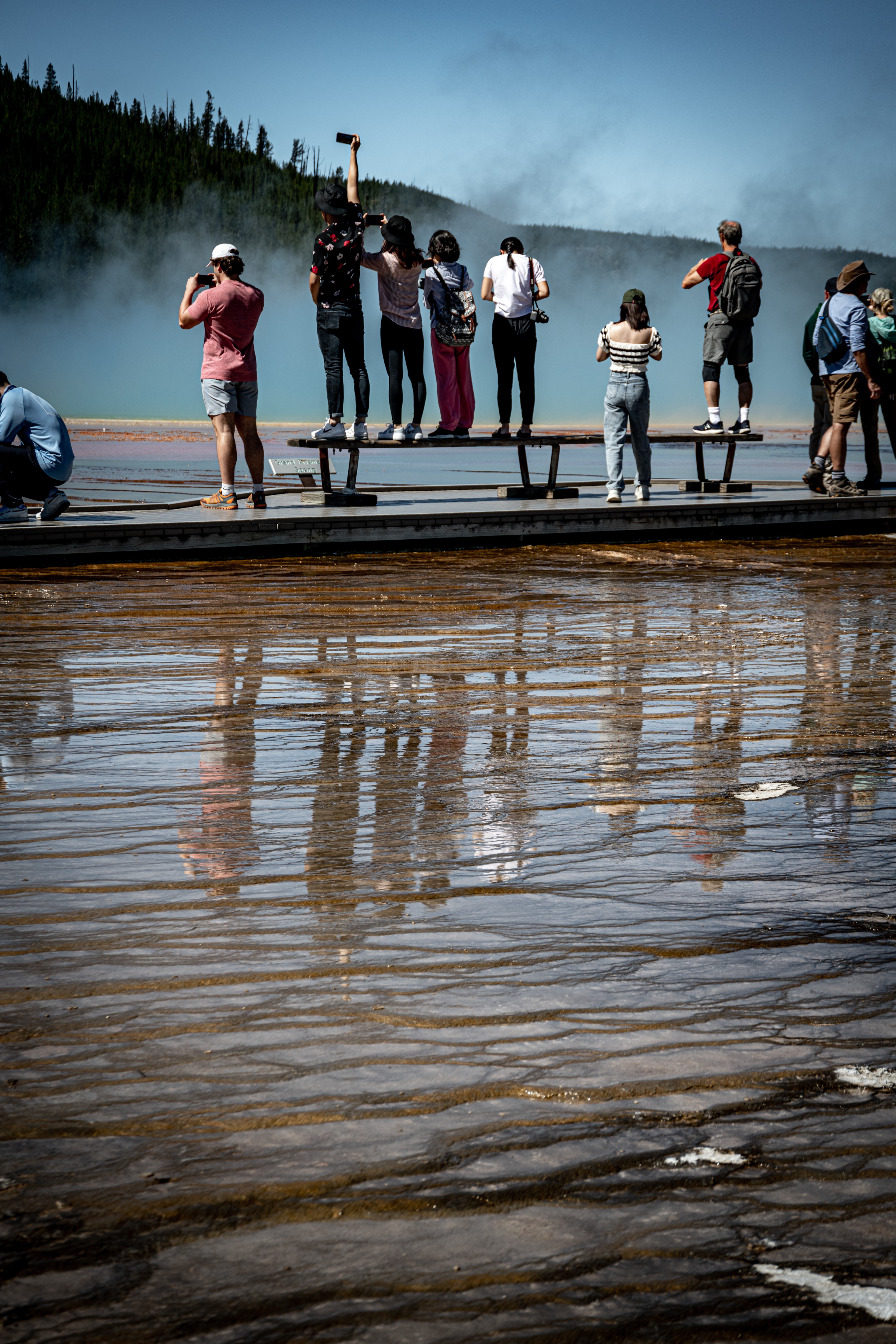
In Yellowstone National Park, so many people are taking selfies with wildlife that rangers had to issue a special warning to alert these crazies to the dangers of approaching wild animals. Visitors have been gored by bison, and elk calves have had to be euthanized after visitors separated babies from the herd.

I was only trying to pet that buffalo; why did it do that?

I recently had lunch with a tour guide from Rome, who told me that masses of tourists now line up to take selfies in iconic locations. She said that they are not interested in history or culture or experiencing any aspect of the Italian way of life. They want only the photos of themselves in front of as many landmarks as they can visit. It’s gotten so bad that the city of Portofino, Italy, has now instituted a fine for tourists who occupy spots for too long while taking selfies.

Me, in front of the Coliseum. And here I’m sitting on the Trevi Fountain. I tried to get in it, but there was this really mean cop. This is me in front of some famous cathedral; I can’t remember which one.

When I was in Iceland a few years ago, my group was oohing and aahing over all the incredible waterfalls. (The country should really be named Fossland, because foss means waterfall and the dramatic cascades are everywhere.) We’d walk and explore and hike. But we were frequently elbowed out of the way by groups wanting to take selfies of themselves against those backdrops or fly drones to capture their own videos to upload. Our tour guide pointed out to one Asian visitor the sign that read “No Drones,” about 10 yards away. The guy said, “Yes, but I’m not over there. I’m here. And there is no sign here.” These groups stayed only minutes; just long enough for each individual to take that selfie.

My hair looks good, even though the wind blows so hard in Iceland.

I’ve now heard several children say that they want to grow up to be “an influencer.” Really? Have they lost the ability to care about anything but themselves and how many followers they can attract? These individuals are all about posting online and checking off a place or experience from their “cool” list. Without the selfie, would they even remember being there? And what the heck do they do with all these pictures of themselves? Are they their own heroes? Do kids have posters of themselves in their rooms?

How can I get more people to follow me?

Personally, I find all of this very disturbing. These people may gain followers online but they seem to have lost so much in real life: a sense of wonder and respect about the natural world and the creatures we share it with; a curiosity about history and how the world works; a reverence for life itself.

Who needs nature? It’s much faster to look at all that stuff on Instagram or TikTok.

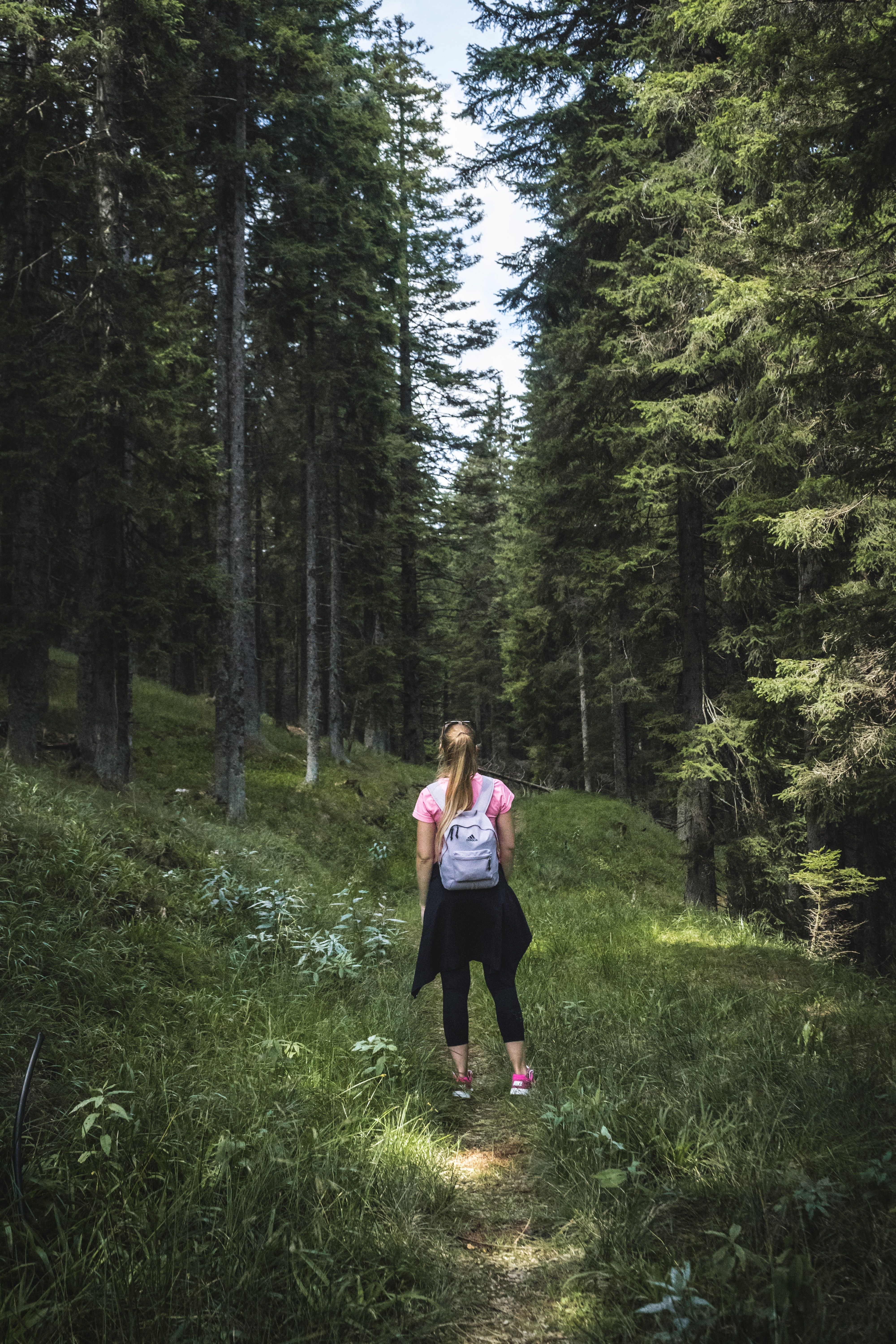
I hope that I can always infuse my writing with my reverence for the natural world by fully describing adventures (awesome or terrifying) in wilderness, observing and communing with wildlife (amazing or frightening) whenever I can, and appreciating each place (remarkable or horrifying) I encounter. I want my life to take place in real time and be as sensory as possible. Not just in an account on a computer or cell phone screen. And I certainly hope the readers of my Sam Westin series feel the same. I’m currently working on the 7th book in the series.

Happy Dancing

I don’t know about other authors but there are times my husband and family give me a look that says, they wonder about my sanity. 😉

Last month, I drove to Wallowa County where I set most of my Gabriel Hawke Novels. He is an Oregon State Trooper with the Fish and Wildlife division. The reason for my trip was to:

1) Do reconnaissance of the area where Hawke finds an unconscious woman in the wilderness.

2) Discover why Starvation Ridge was named that.

3) Attend a powwow in Wallowa County so I can have Hawke and his partner Dani attend one in the next book. I also wanted to see if I could connect with a Nez Perce tribal member who would help me add more of the culture to my books.

As usual, I dragged my sis-in-law and brother into my hijinks. Thankfully, my brother being an artist, he understands my need to see things for my books. And I’ve taken my sis-in-law along on other research adventures. First, we made the trip out Starvation Ridge so I could see it better. I’d used Google Earth and an Oregon Gazetteer to try and come up with a plausible explanation for the car stuck between two trees in the middle of forest service land. But I wanted to see the terrain better and I’m glad I did! The way I had my character discover the vehicle wouldn’t work for the area. When I came home, I rewrote the scenes where and how the car was found. Not only did I get a good look at the area, but I got a better feel for it too. And my brother added nuances to it because the story is set in April when there would still be some snow and lots of mud. Which I had written into the story, but he explained it a little bit more. Wind can blow the snow off the very top of the ridge and it’s just mud where there is snow in the trees.

Road on Starvation Ridge

Sis-in-law and I went to the museum in Joseph to find out if there was a way to discover why the ridge was named Starvation. And while we saw some great photos of the past and learned a bit more about the county’s history, we came up empty on the reason for the name. Of course, as we were driving around up on the ridge, we came up with all kinds of grisly reasons for the name. But the next day at the suggestion of a local historian, we went to the Wallowa Museum and the woman there found a book and we discovered the reason for the name. And it was nothing like what we had thought. In fact, it was pretty pathetic. According to the book, it was named Starvation Ridge because a man named Billy Smith came up on the ridge and discovered that a large herd of sheep had eaten all the grass off the ridge. He called it Starvation Ridge and it stuck. Kind of lame and not worth putting in my story. I’ll let the readers fantasize about the name as we had.

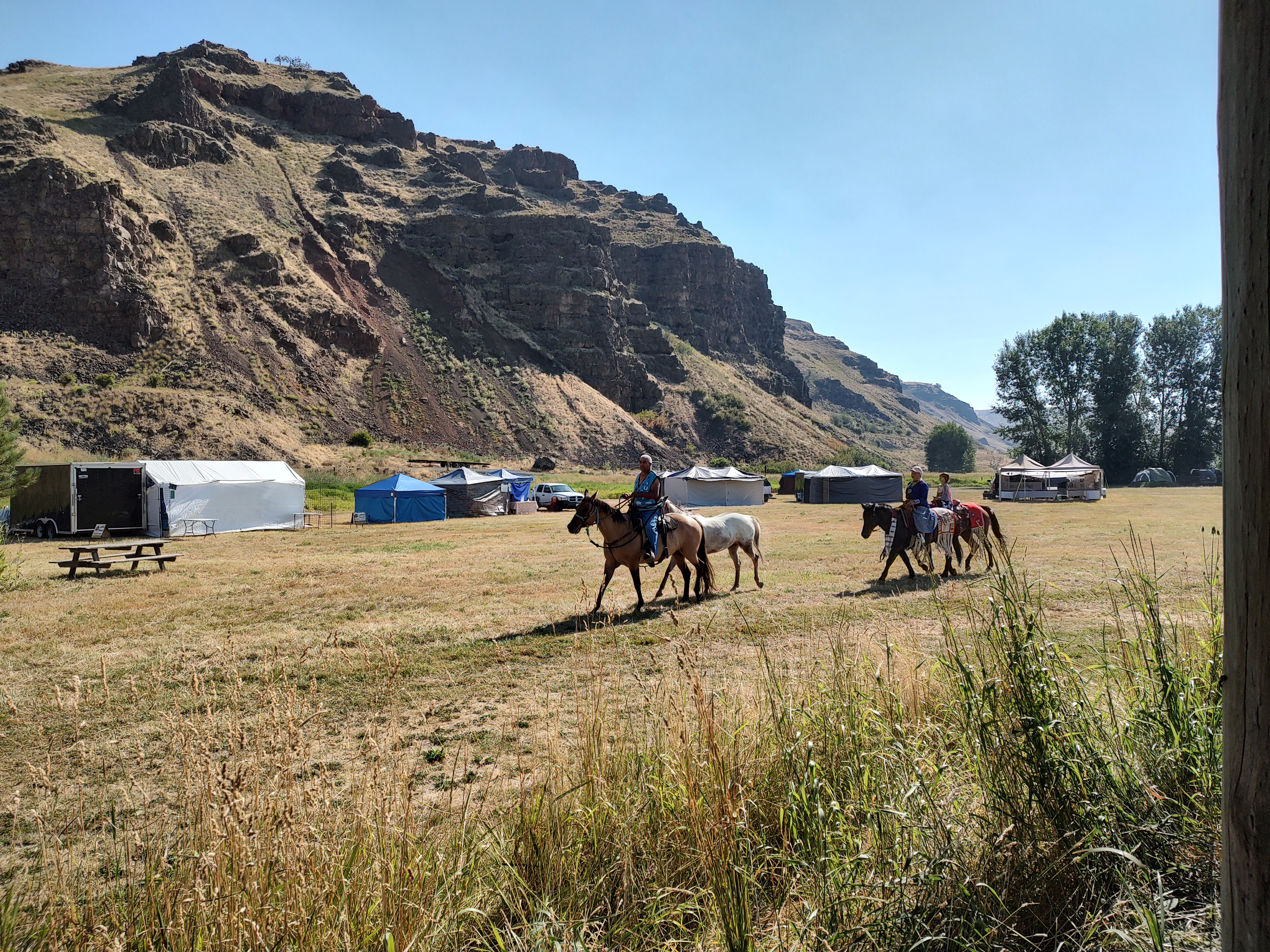
The Tamkaliks Celebration was as moving and colorful as I remembered. I’d attended this powwow a number of years ago, but after taking a class on writing Native American characters and the teacher suggested attending powwows and taking in the ceremonies and talking to people, I decided I needed to get to this one again. I also plan to have my characters attend the powwow in the next Hawke book. The songs, the welcome they give everyone, the friendship dance (we danced), and the reverence they pay to one another was so worthwhile.

Ceremony of the riderless horse. symbolizing the ancestors and those tribal members lost the past year.

The best part of the whole day was a woman that sat down in front of us. She openly explained what was happening to those around her and taught a young couple how to say her dog’s name which meant, Moose. This isn’t how you write the word, only how you say it, “Sauce Luck.” And she taught us how to say Good Morning. Again, not the way you write it but how you say it, which she explained. “Tots MayWe.” After watching her so enthusiastically sharing her culture, I sat down beside her and thanked her for explaining things and asked if she’d be interested in helping me bring more Nez Perce culture to my books. She was excited to help me! She told me about her education and her B.S. in American Indian Studies and Business and her new job that was basically teaching the Nez Perce culture to those who were interested. We exchanged names, emails, and phone numbers. I have sent her an email and she responded right away. I’m excited to have found another connection to help me make my books true to the Nez Perce culture.

And that, my friends, is why I am happy dancing!

Guest Blogger ~ DK Coutant

The lure of traditional mysteries…

I believe we are what we read, (not only what we eat). I write mysteries, but growing up I read mysteries…Nancy Drew, Trixie Beldon, and don’t tell my younger brother, but I borrowed his Hardy Boys. Years later, I became a psychology professor and taught at a University. I found I scored high on Need for Cognition. That’s a psychological dimension which indicates a tendency to enjoy thinking. I like to solve problems, solve puzzles, and it probably also explains my addiction to Duolingo. My guess is that most people who enjoy mysteries also have a high need for cognition. They like to think. If you want to find out how you score I’ve put a self-test at the end with a scoring key.

That same need to think, lead me into geopolitical forecasting. I like to untangle and make sense of disparate information. I’m not an expert on most of the topics I’m asked to forecast. I have dive into each new subject matter and narrow down the information to the essentials of a specific question I’m asked to forecast. (Do you want to give forecasting a try? Links here)

https://www.gjopen.com/

https://www.infer-pub.com/frequently-asked-questions#whatisinfer

The process of writing mysteries also relies on my desire to ruminate over ideas. I’ve got to devise a murder that will have breadcrumbs leading to the killer, but also diverse, and intriguing red herrings that might distract my readers down alternative paths.

To narrow down to my sub-genre, traditional mysteries, I don’t write super-bloody, violent books. I know some people love them and they are very popular. But in my geopolitical forecasting I track bloody conflicts and death rates. When I write I want to leave that behind. Sure, there has to be a death in a murder mystery, but, while not strict cozies, my mysteries are on the lighter side. For the reader like me, who believes there is enough violence and darkness in their world and looks for something complex, but fun, and not too pollyannish. I use my craft, to find happy endings…  and a balance in life. I enjoy my rainy days as much as my sunny ones.

Items That Compose the Need for Cognition Scale–6 (NCS-6)

1. I would prefer complex to simple problems.

1              2              3              4              5

1=Strongly Disagree                          5=Strongly Agree

2. I like to have the responsibility of handling a situation that requires a lot of thinking.

1              2              3              4              5

1=Strongly Disagree                          5=Strongly Agree

3. Thinking is not my idea of fun. (R)

1              2              3              4              5

1=Strongly Disagree                          5=Strongly Agree

4. I would rather do something that requires little thought than something that is sure to challenge my thinking abilities. (R)

1              2              3              4              5

1=Strongly Disagree                          5=Strongly Agree

5. I really enjoy a task that involves coming up with new solutions to problems.

1              2              3              4              5

1=Strongly Disagree                          5=Strongly Agree

6. I would prefer a task that is intellectual, difficult, and important to one that is somewhat important but does not require much thought.

1              2              3              4              5

1=Strongly Disagree                          5=Strongly Agree

To score yourself start with questions 3 and 4. They are reverse scored, so if you answered 1 change it to a 5, 2 changes to 4, 3 stays the same, 4 to 2 and 5 to 1.

After you have done that add up your score. A higher score demonstrates a high need for cognition, a lower score indicates an individual not as motivated to think and problem-solve.

(for more information on Need for Cognition:

https://www.ncbi.nlm.nih.gov/pmc/articles/PMC7545655/

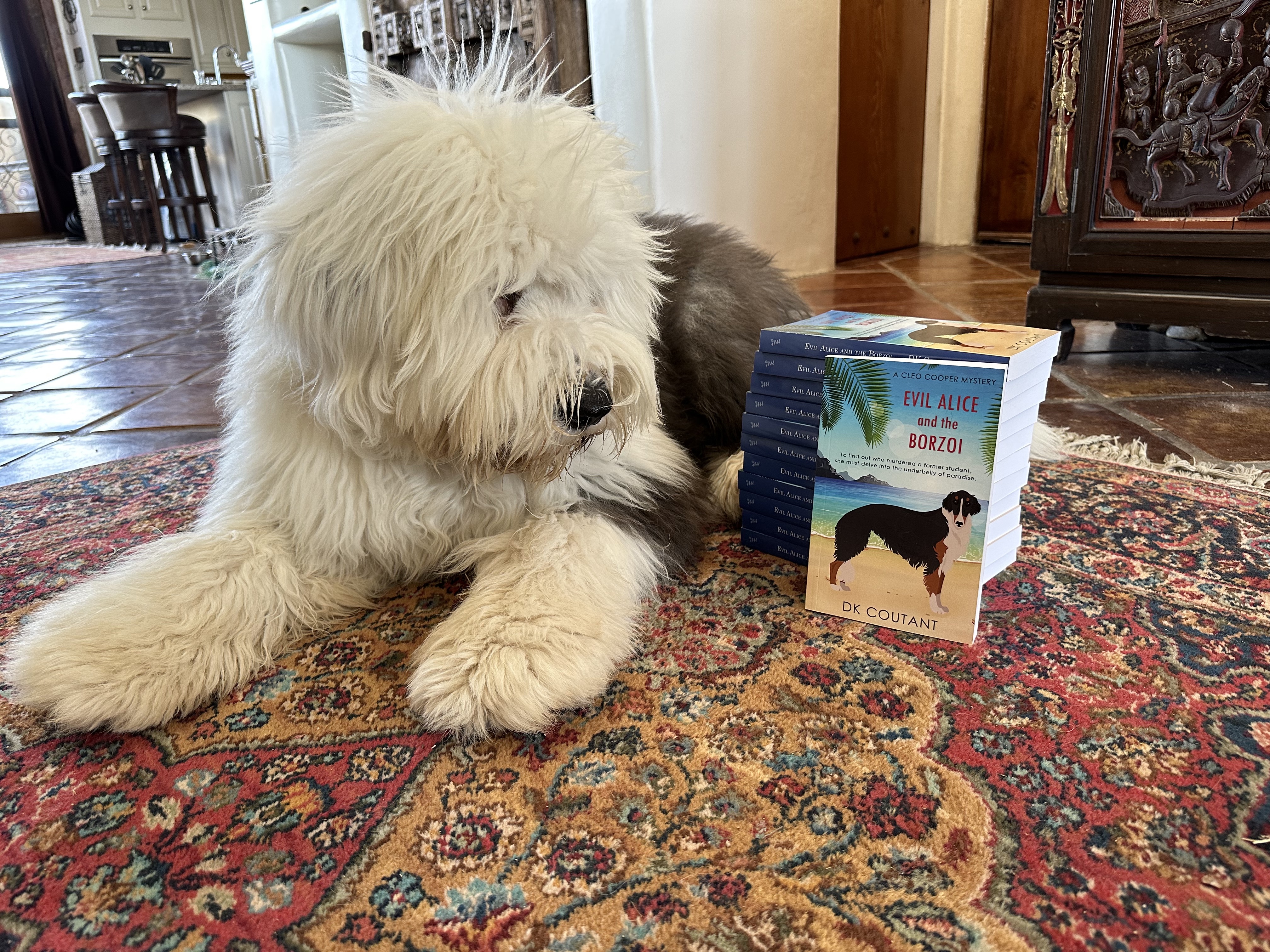
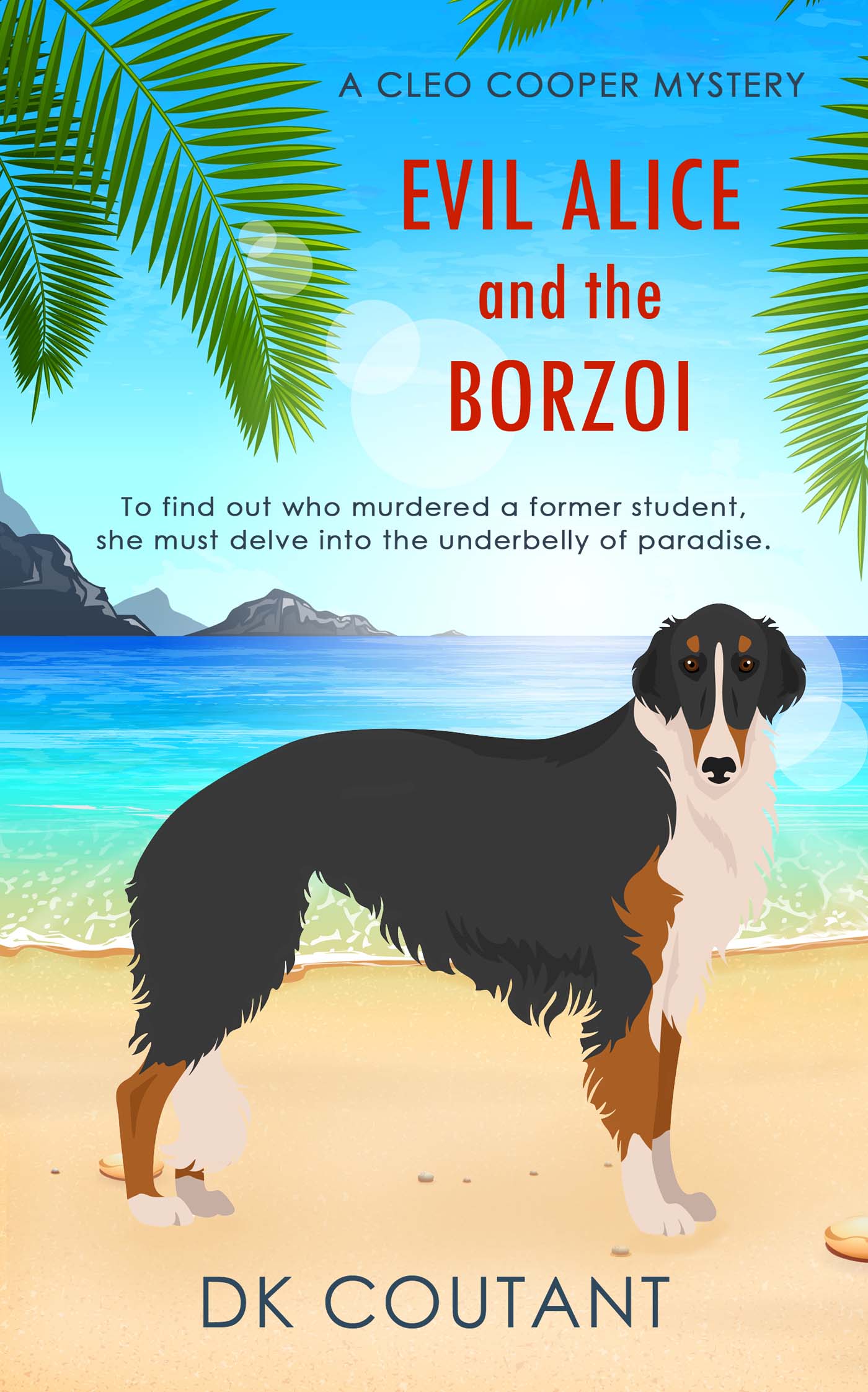
Paradise is shaken when the body of a young woman is dragged onto a university research vessel during a class outing in Hilo Bay. Cleo Cooper is shaken when she finds her favorite student is on the hook for the murder. Danger lurks on land and sea as Cleo and her friends are enticed to search for the true killer. Between paddling, swimming, and arguing with her boyfriend, Cleo discovers everything is not what it seems on the Big Island of Hawaii. But will she find the truth before she becomes the next victim?

Buy links:

https://www.goodreads.com/book/show/88564113-evil-alice-and-the-borzoi

https://www.bookbub.com/books/evil-alice-and-the-borzoi-a-cleo-cooper-mystery-book-1-by-dk-coutant

https://bookshop.org/p/books/evil-alice-and-the-borzoi-dk-coutant/19649122

https://www.amazon.com/Evil-Alice-Borzoi-Cooper-Mystery/dp/150924591X

https://www.barnesandnoble.com/w/evil-alice-and-the-borzoi-dk-coutant/1142929587

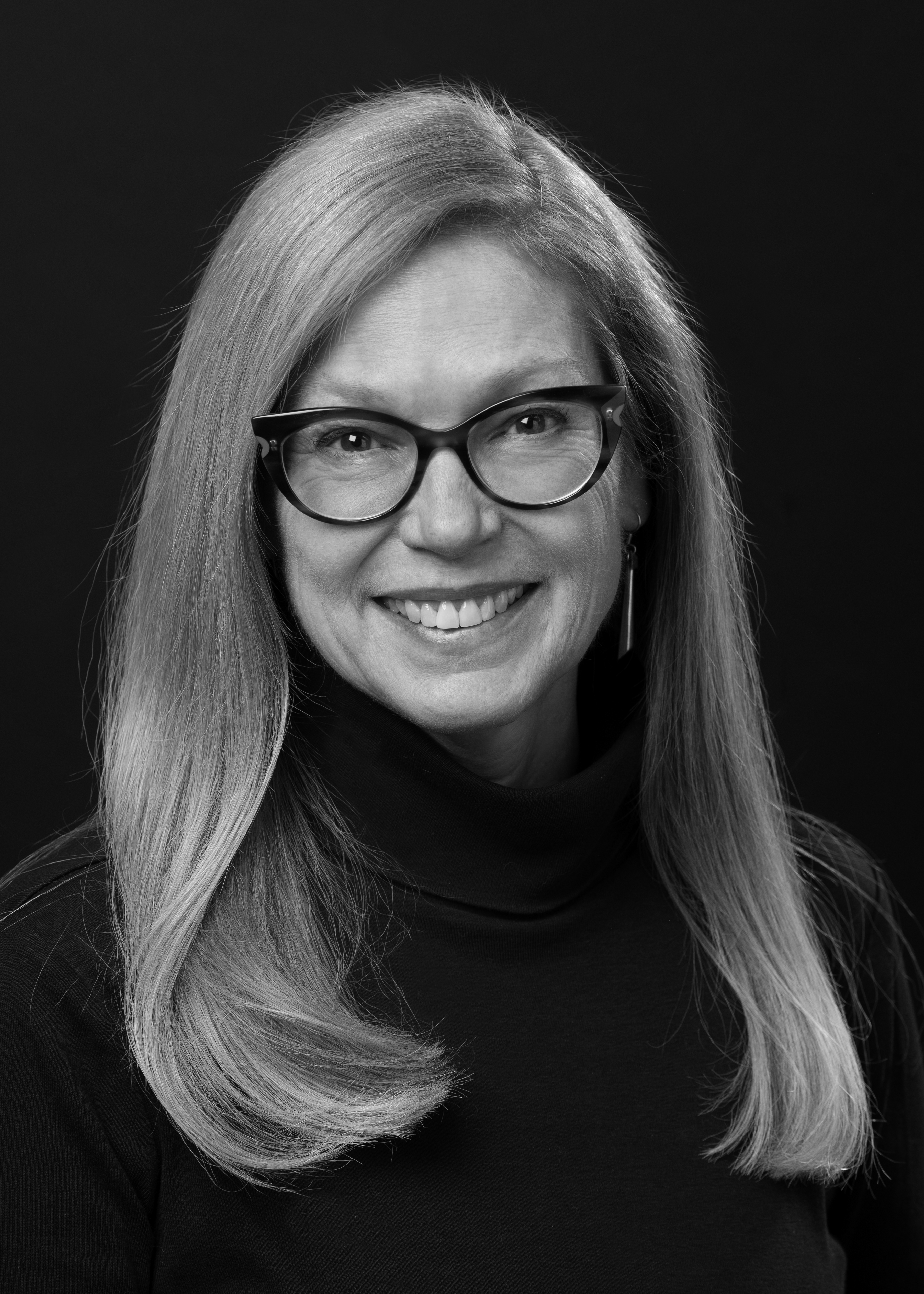
DK Coutant graduated from Davidson College with a Psychology degree, and applied her behavioral training at Sea World, training dolphins and whales. Realizing that scrubbing fish buckets might get old, she went back to school and earned a Ph.D. in Psychology. Her academic career began at the University of Southern Maine before DK made the jump to the University of Hawaii at Hilo rising to Department Chair of the Psychology Department. After many happy years in Hawaii, DK made the move out of academics to become a professional geopolitical forecaster for GJP, Inc ( https://goodjudgment.com/Inc ) and INFER  ( https://www.infer-pub.com/). Evil Alice and the Borzoi is her first work of fiction published by The Wild Rose Press.

Social Media Links:

Twitter: @dkcoutant

Instagram: @DKCandDog

Facebook: https://www.facebook.com/profile.php?id=100087049617707

Mastodon: https://lor.sh/@dkcoutant

Lost in the Cloud

I remember the days when I wrote on a typewriter. My mother had a Remington that felt like an anvil when I picked it up. When I went to college, I had an Olivetti portable. I thought I’d gone to technology heaven when I graduated to a Smith-Corona electric.

I always had a pile of manuscript pages on the desk next to my typewriter, ready for me to take a pencil and edit and then retype them.

I got my first computer about 40 years ago. I thought that was quite a step up, not having to retype pages. I could make corrections on the screen, though I printed out each chapter as I finished it.

My first printer was a dot matrix, the kind that used continuous sheets that had a little feeder strip on each side, with holes. I’d have to tear the pages apart. Those strips—well, one of my cats had a really good time with those when he got into them. Strips of paper strewn up and down the hall.

Then I graduated to an HP Laserjet the size of a TV set. It weighed about as much, too. I had that one for years before it finally died of old age. Enter the inkjet era.

I was still printing out manuscript pages, the old-fashioned way of backing up my data. I also copied files to floppy disks. Remember those? Then the floppies became smaller hard disks. Then it was flash drives. And external hard drives.

Then came the cloud, a place where one could store important data and free up space on the desktop or dispense with those disks and flash drives.

Works great. Until it doesn’t.

I recently had a hard drive meltdown. As in fried, toast, kaput. I thought my files would be safe since I was backing them up to the cloud, in this case Microsoft’s OneDrive.

But through some technological disaster I don’t understand, most of the files on OneDrive that were dated this calendar year disappeared—including the book I’ve been working on for over a year. I keep looking at OneDrive and everything on there seems to be 2022 or earlier. Except one lone spreadsheet I created on Excel in May 2023. Go figure.

After phone calls and emails with Microsoft Tech Support, the case has been escalated to the OneDrive department. Which assures me via periodic emails that they are investigating the situation and will be in touch with updates—whenever. These bland emails are meant to be reassuring.

I don’t feel reassured.

I mean, hey, the files should be there, floating somewhere in the cloud. After all, that’s the claim—store things on the cloud and your files will be safe from meltdowns and mishaps.

But no, it doesn’t look like it. I got complacent and relied too much on technology. Right now I’m longing for the low tech days when I printed out each chapter as I completed it. At least I’d have a hard copy. Or a flash drive. Yeah, that would be great. Then I could find my book.

I’m upset, since it seems increasingly likely that the files are lost in the cloud. And I do mean lost. But time spent kicking myself isn’t productive. I’ve started a synopsis of the book, memorializing what I’ve written so far. And I have started chapter one—again, reconstructing that from memory.

Say it the way Jerome Kern and Dorothy Fields did: “Pick yourself up, dust yourself off, and start all over again.”