Guest Blogger ~ Jill Piscitello

Genre Hopping

By Jill Piscitello

After two sweet, holiday romances, I decided to dip a toe into the world of cozy mysteries. As a long-time fan of the genre, I’ve enjoyed the thread of sweet romance that is often woven throughout the stories. For me, the genre is the best of both worlds. Readers’ heartstrings are tugged as they are swept along a twisting tale riddled with suspects, clues, and red herrings. They can expect suspense without graphic violence and a nice, tidy ending. Predictable? Maybe. But many genres follow a structure that appeals to a specific audience.

Similar to sweet romance, most cozy mysteries are set in small, close-knit towns. However, I find that I have more freedom to invoke a bit more humor and fun into the story. No character should ever be perfect. Flaws are much easier to relate to. But it often seems that most of the leading ladies in romance novels are gorgeous. My heroine/sleuth, Maeve Cleary, is never described as a great beauty. Much to her mother’s dismay, she’s in desperate need of a trip to the salon to touch up her highlights and lives in worn-to-death shorts and T-shirts. But she came home to mend a broken heart, not to enter The Miss Hampton Beach beauty pageant.

Maeve introduced herself right away. She’s a woman who speaks her mind and acts on instinct. Moving in with her polished and successful mother had all the makings of a critique-laden stay. I enjoy dissecting the dynamic of mother-daughter relationships and hope readers find their back-and-forth barbs entertaining.  

A Sour Note also sent me hopping from fictional towns into the real setting of Hampton Beach, NH in July. One might think building a setting from the ground up with only your imagination to depend on would prove far easier than writing about a place you know well. However, when an author creates a story world, no one can dispute what is missing or inaccurate. Writing about a popular vacation destination is filled with pressure I didn’t anticipate. In the end, I chose to invoke a creative license when writing about restaurants and other locations within the town. Readers who know the area might enjoy guessing at which places inspired a few hot spots.
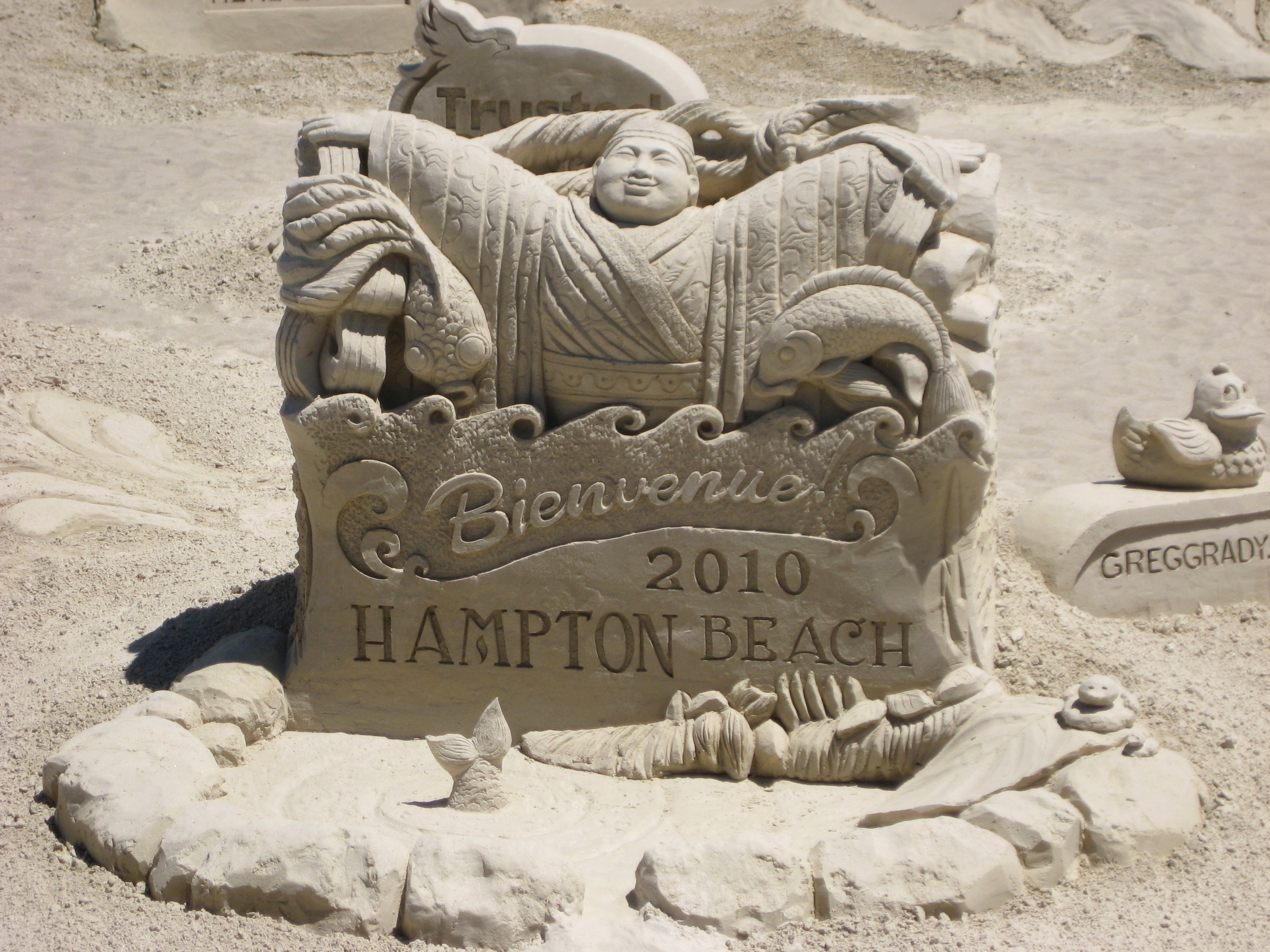
My family makes several trips to Hampton every summer. When the idea for A Sour Note took shape, I couldn’t imagine choosing another setting. The sights, food, entertainment, and people watching along one of the most popular boardwalks in the nation provide everything needed for an endless stream of writing ideas. The next book in the series will require a fair amount of research because it will occur during the off-season. I look forward to a few trips north for more insight into what the town looks like when tourist numbers dwindle and am confident an empty beach has quite a bit to offer to the cozy mystery genre.

A Sour Note (A Music Box Mystery)

When murder provides a welcome distraction…

On the heels of a public, broken engagement, Maeve Cleary returns to her childhood home in Hampton Beach, NH. When a dead body turns up behind her mother’s music school, three old friends land on the suspect list. Licking her wounds soon takes a back seat to outrunning the paparazzi who spin into a frenzy, casting her in a cloud of suspicion. Maeve juggles her high school sweetheart, a cousin with a touch of clairvoyance, a no-nonsense detective, and an apologetic, two-timing ex-fiancé. Will the negative publicity impact business at the Music Box— the very place she’d hoped to make a fresh start?

Purchase Links:

Amazon

Barnes and Noble

Excerpt:

With his mouth set in a grim line, he waited.

If anyone else had enough nerve to presume she owed them an explanation, she would respond with a solid mind your own business. Instead, the seventeen-year-old still inside her refused to tell him to get lost. “He was hiding money in his office.” This was one of those times when learning how to wait a few beats before blurting out inflammatory information would come in handy. Each second of passing silence decreased her ability to breathe in the confined space. She turned the ignition and switched on the air conditioner.

“How do you know?” His volume just above a whisper, each dragged-out word hung in the air.

“I found it.”

“When were you in his office?” He swiped at a bead of sweat trickling down the side of his face, then positioned a vent toward him.

“Last night.” When would she learn to bite her tongue? Finn’s switch from rapid-fire scolding to slow, deliberate questioning left her unable to swallow over the sandpaper lump in her throat.

“Where was Vic?”

She stared at the back of the building, wishing she’d kept her mouth shut. “He’d left for the night.” If she averted her gaze, she could pretend his eyeballs weren’t bugging out of his head, and his jaw didn’t need a crane to haul it off his chest.

“You were at the town hall after hours? Did anyone see you?”

“A custodian opened his door for me.” She snuck a glance. Sure enough, features contorted in shock and horror replaced his boy-next-door good looks.
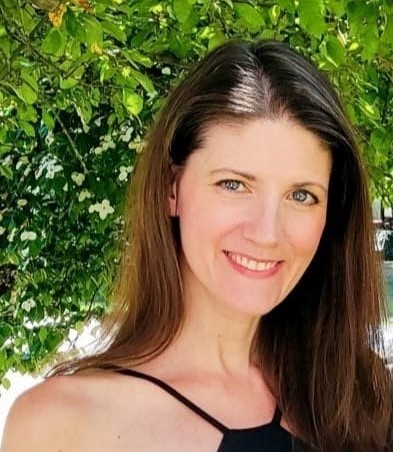
Jill Piscitello is a teacher, author, and an avid fan of multiple literary genres. Although she divides her reading hours among several books at a time, a lighthearted story offering an escape from the real world can always be found on her nightstand.

A native of New England, Jill lives with her family and three well-loved cats. When not planning lessons or reading and writing, she can be found spending time with her family, trying out new restaurants, traveling, and going on light hikes.

Social media links:

Website ~ Twitter  ~ FacebookInstagram  ~ Amazon ~ GoodReads~ BookBub

INTRODUCING …

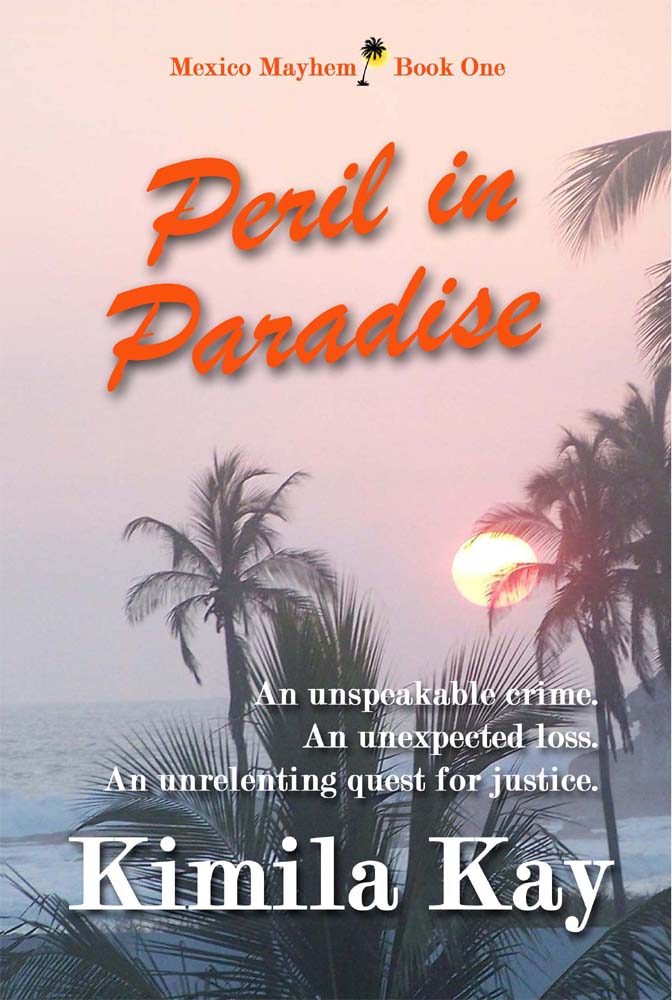
Hello, I am Kimila Kay and am so honored to be included in this wonderful group. Thanks, Paty Jager for inviting me!

A little bit about me … I’m turning sixty-six in July and very excited to begin collecting my Social Security benefits in January 2024 before they morph into an elusive unicorn. When I turned sixty-five, I discovered regardless of whether you draw SS benefits you’re required to sign up for Medicare. Something I was reluctant to do because, well, the name for me symbolizes “Old Age”, which is hard to wrap my younger thinking brain around.

Of course, there are perks that come with age, primarily life experiences which help form storylines and character development. A reader recently complimented me, saying, “When I read your books, I always see a little bit of you in your characters.” A lovely kudos considering my characters are much younger than me, but what I focused on was she can “see” my characters.

Creating interesting characters is important to me and I tend to bring a fictional someone to life, by using attributes of my family and friends. My husband’s love for me. My oldest son’s handsome smile. My youngest son’s height. A friends laugh or gesture or favorite saying. As for my villains … what I haven’t experienced, my dark mind has no trouble creating.

I began writing in 2004 and was fortunate enough to have three short stories published in the “Cup of Comfort” anthology series. And while I wish I’d followed through sooner with my first novel, “Peril in Paradise”, am thankful for those life experiences along the way which I feel improved “Peril in Paradise’s” storyline and also made me a better writer.

My Mexico Mayhem Series is more suspense/thriller, than mystery, but I recently began writing a mystery series set in Oregon. “Redneck Ranch”, the first novel in the Stoneybrook Mystery Series, takes place in a fictional town and features an autistic deputy sheriff named Derrick Stone. One of life’s tragic experiences took my autistic son, Derrick, at the age of thirty-six when he suffered a heart attack in 2017. Derrick and I spent a lot of time together and I found myself lost without our lunches, shopping days, and movie outings. Then, to be slightly overdramatic, my writing rose like a Phoenix in my mind giving me somewhere to go when my broken heart needed soothing.

As you all know, life goes on, and for me every day now includes writing. My husband Randy and I are also planning for the future, one hopefully, that finds us living somewhere in a quaint costal town in Mexico. But for now, I enjoy our small home in Donald, Oregon, our fishing cabin on the Siletz River, Randy’s feisty, black cat, Halle, and as many adventures as we can experience before life causes us to slow down.

Happy writing, Ladies of Mystery!!!

Amazon.com: Peril in Paradise (Mexico Mayhem): 9781794052451

Amazon.com: MALICE IN MAZATLAN (Mexico Mayhem): 9781957638256

Words on the Page

In one of the longest-running writing groups I participated in, our discussions often wandered into related areas but never very far afield. They were always informative, at least to me. One discussion in particular has remained with me. 

The de facto leader of the group asked apropos of nothing if we ever wrote anything other than fiction. Aside from the occasional memo for work, everyone said no, except for me. As both a free-lance writer/editor and later an employee in a social services agency, I wrote all the time. When I was freelancing, I wrote chapters for textbooks, articles short and long, lots of book reviews, and edited dozens of books. As an employee I wrote countless fundraising letters, newsletters for our donors, and a never-ending list of grant applications and reports. For me the job search meant finding an opportunity to write.

I wrote a novel (incredibly bad) in college along with short stories (mostly so-so), and in my first job afterwards, as a social worker, I wrote long detailed reports of my visits to children’s homes, foster homes, family court sessions, and other agencies. My long-winded exercises in leaving nothing out sat alongside the terser reports of my colleagues, who managed to say much the same thing in a tenth of the space. 

This observation came to me recently when in the process of cleaning out old files and boxes I came across my original notes from an early job. All that writing, all those words, as though I just had to use as many as possible whenever possible. It reminded me of my answer to a question asked in high school. What do you want to do, a friend asked. I want to write, I replied. And so I have.

Note that I didn’t say, I want to be a writer. I don’t think I’ve ever said that, or thought it. I’m not sure what it even means. I wanted to write. I wanted to get my ideas down on paper, explore them and develop them, see those sinuous strings of letters spreading across the page, coalescing into images I didn’t know I had in my head until I saw them in blue ink on white paper. Writing was like putting seeds into the ground so they’d grow into something bigger, something unanticipated but welcomed even if at first it made no sense to me.

When I look at the various mystery series I’ve written, I can see the stories I’ve used to interpret the experience of living along the New England coast, or in India during the tumult of the 1970s with Indira Gandhi, or on a farm in an isolated rural community. Some of the things I’ve said now surprise me. Did I really think that? How interesting! Each writer has different goals for any work in progress. My goals are always to discover something, see something emerge that I didn’t expect. For me, writing is like breathing. Necessary but something more.

The Pitfalls of Near History

Most of my books involve near history. That means, at any given time, someone might read a book I have written who lived in or visited the place where it is set, at the time it is set, and who remembers what it meant to them. Making near history a bit of a minefield. With historical fiction, the author takes us back to a time that we know from various historical sources. But near history, well, we lived through it.

For instance, CDR Byron Cooper is stationed at Alameda Naval Air Station in Head First. The air station has since closed. But in 1972, it was the boom and the bane of life in Alameda, CA. People remember the bustle, the jets flying over, the massive gray aircraft carriers at anchor. And the view. The Air Station was a vibrant organism then, not the runways with weeds growing through them, housing developments, and shopping centers of today. For those who remember, it is my job to reflect the energy of it as they remember it. For those who don’t remember it, the job is to create an image of it as it was. The difficult part is avoiding dissonance for one set and creating a breathing organism for another.

Pay Back, the third book in the Cooper Quartet, charts the fall of Saigon, day by day. The surrender and the U.S. exodus packed an emotional wallop for the country. People remember where they were, what they were doing and how they felt. You don’t want to get it wrong. Placing characters into the events and sharing the emotion of the moment is an honor and a tightrope. Get it right. The Cooper Quartet charts the emotional journey of a Michigan military family. Consequently, Pay Back is set in Saigon, on an aircraft carrier on Yankee Station, and in Michigan. Getting the timing right across all these locations was a challenge but essential. I was dealing with near history, history people remember, some from newscasts, some from demonstrations, some from the killing field.

My book, Perfidia, takes place in Barbados, shortly after its independence from England. The population of the island consists of the descendants of blacks brought over during the slave trade, and lily-white British landed gentry. Read Jane Austen’s Mansfield Park for a frame of reference. Since then, the gene pool has been generously stirred. Yet, in 1972, when the story takes place, it was still better to be a landed white Barbadian than a black Barbadian with a folding house. In the book, one of the few remaining Barbadian plantations is at stake. Three men vie to inherit, one is a little bit Latin, another lily-white, and the third is mixed race. So, as historical fiction, it is essential that the plot address the subtle prejudices of the time. People remember.

When the story takes place, Sam Lord’s Castle is a fixture of the island. It burned down a few years after. People who visited after never saw the castle, for those who visited before it was a treat. Don’t get the par terre wrong, or the staircases, or the type of plants or the view of the ocean. You’ll hear about it.

Near history. Challenging. Although historical fiction of any sort carries its own dangers. The history we rely on was created by contemporaneous historians, revisited, and reinterpreted repeatedly by more historians, reported by the daily newspapers of the era, and defined by biographies and interpreted by encyclopedias and textbooks. Many of these sources have or had prejudices, ideas they wished to put forward, and axes to grind. Was General Bedford Forrest a tactical genius or a beast?

So, there you go. Historical fiction of any sort – near or long ago. Challenging. I had a reviewer tell me a character knew nothing about how hard women worked in the 1870s as though she had firsthand experience. She must be very old indeed. It is enough to make you write a contemporary detective series.

Nope, not for me.

What is it about the Great Lakes? by Karen Shughart

A book I read as a child, set in the 1950s on Lake Superior, resulted in a lifelong fascination with the Great Lakes.  I can’t remember the title, I wish I could, but I do remember snippets of it: family gatherings that included winter sports and summer outings; homemade ice cream made with snow and maple syrup; berry cobblers when the sun was warm and the days long and bright.

I grew up in a city about two hours from Lake Erie, and I have happy memories of family trips there: beaches, amusement parks, and many attractions you’d find at the ocean, but without the salt or sharks. We went to the Jersey shore on the Atlantic, too, and I loved it, but for some reason I always felt drawn to that lake. Many years later, I attended college in Buffalo, NY, and when the weather cooperated spent weekends at a beach cottage owned by family friends in nearby Fort Erie, Canada.

As fate would have it, about 20 years ago my husband and I decided one weekend to explore Lake Ontario, north of where we lived in Pennsylvania.  We discovered a tiny village through the internet; found a charming B&B with water views that was a short walk to the lake, the bay, a small but bustling business district, museums and restaurants, and a quick drive to Finger Lakes’ wineries. Two weeks later we bought our house.

We never expected to live here year ‘round, we planned to use the house as a getaway, but as time went by we were drawn to the region’s many charms.  We worked diligently to restore our house, it had been built by a lighthouse keeper more than a century ago and needed loving care. There’s mystique here: shipwrecks; sightings of massive lake creatures; British ships invading our village during the War of 1812; the transporting of runaway slaves to Canada; a rumor that a tunnel under our backyard hid some of those slaves before they fled. And the brisk business of rumrunning during Prohibition.

Each season has its own appeal. Summer months we revel in the resort vibe enjoying concerts, fireworks, outdoor movies, days spent beachcombing, shopping at farm stands, and lots of gatherings on our deck. During fierce winter storms we snuggle safely in our sturdy home, fireplace burning and soup on the stove, drinking wine with friends. Spring and fall are glorious, too, with acres of fruit trees in fragrant bloom or ripened apples hanging heavily at harvest, and a clean, sweet smell in the air.

In truth, our journey here was serendipitous, and we’ve never regretted it. Like the village on Lake Superior in the book I read so long ago, it’s an enchanting place filled with warm, kind people, and a peaceful quality of life.

From the time I was a child, immersed in Nancy Drew books, I wanted to write mysteries. One night several years ago, I dreamed the plot of my first Edmund DeCleryk cozy mystery, Murder in the Museum. Since then I’ve written three, published by Cozy Cat Press, all set on our lake with backstories that depict the history of this place we now call home. Writing has been a passion for me since I was young, but I never expected that someday my dream, coupled with a fascination with the Great Lakes, would become reality.