Guest Blogger ~ Darcie Wilde

            IDEAS & INSPIRATIONS

            I am a Jane Austen fangirl.  

            I admit, I was not always.  But then, like a whole lot of people I saw the 1995 Pride & Prejudice with Colin Firth as Mr. Darcy, and I was gone.  Lost.   Yourcallisveryimportanttouspleaseleaveamessage.  Gone.

            Since then, I have read Pride & Prejudice multiple times, along with the other Jane Austen novels.  I’ve also read a lot of Austen’s contemporaries, who were between them busy inventing the modern novel and several literary genres, including Romance and Historical Fiction.  A lot of these books are really bad, but some of them a absolutely fascinating, if you’re a history nerd, which I also am.

            For all I credit Austen and her novels as one of the inspirations for the Useful Woman mysteries, I’d never really leaned into the plots and characters of what has become the most famous of her books.

            But, as we all know,  it is a truth, universally acknowledged that the writer of a series set in England in 1820 must be in want of a plot.  And sooner or later, that writer needs to look to the Great Jane.

            But in 2021, was there another version, or vision, left to write?  Pride & Prejudice has been adapted for every genre, and every character seems to already have their book.

            So, what was I going to do?

            Step One: reread the original.  If you haven’t read Pride & Prejudice, I recommend it.  It’s easy to follow and accessible.  Even better, it’s funny.  It’s sharp.  It’s suspenseful and engaging, even after two hundred years and countless adaptations. 

            Step Two: Get mad at Mr. Bennet.  Mr. Bennet is our Heroine’s father.  This is the guy who failed to save any money for dowries, or do much of anything else, like insist the girls get educated, so they could manage for themselves, or contact his relatives to help them get started in society so they actually had a chance of making decent marriages.  

            Step Three: Develop a sympathy for the three younger Bennet sisters.  These are Mary, Kitty and tragic Lydia.  Realize it must have been hard to be a younger Bennet.  Mom’s a hypochondriac.  Dad’s emotionally unavailable.  You’re constantly being compared to your two oldest sisters, and you know you’re never going to measure up because you’re not that pretty and not that witty and you’ve got no money.  So what are you going to do?

            Step Four:  Hear those oh-so-dangerous words in the back of your head What if…

            What if we had a similar situation, where a ne’re-do-well insinuates himself into a family, and tries to seduce one of the sisters?  What if the sister isn’t just a silly little thing with no idea of what she’s getting into?  What if she’s got a plan?  What if she sees this rogue as rout to getting some money of her own and away from her smothering family and perfect older sister? And what if she had help from a sister…?

            What if this situation landed in my sleuth Rosalind’s lap just before the London social season of 1820?

Darcie Wilde is the bestselling, award-winning, multi-genre author of the Useful Woman mysteries.  Her latest title The Secret of the Lost Pearls is an Editor’s Pick on Amazon and a “Must Read” book for 2022 from USA Today.
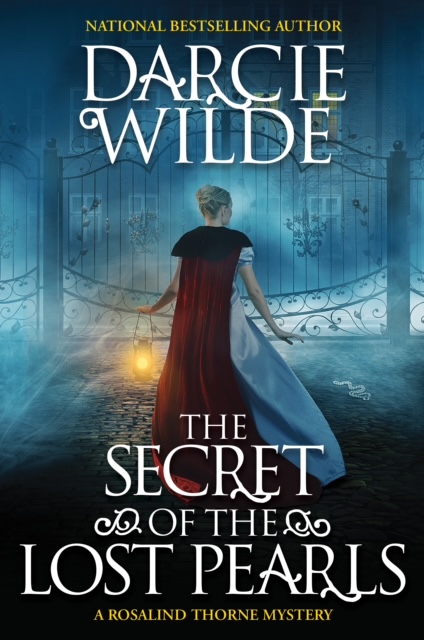
This captivating Regency-era mystery inspired by the novels of Jane Austen is perfect for fans of Andrea Penrose, Lauren Willig, and Deanna Raybourn, as readers venture beyond the glittering ballrooms and elegant parties of Regency London to the dark side of the city and its unexpected dangers.

Rosalind Thorne may not have a grand fortune of her own, but she possesses virtues almost as prized by the haut ton: discretion, and a web of connections that enable her to discover just about anything about anyone. Known as a “most useful woman,” Rosalind helps society ladies in need—for a modest fee, of course—and her client roster is steadily increasing.
 
Mrs. Gerald Douglas, née Bethany Hodgeson, presents Rosalind with a particularly delicate predicament. A valuable pearl necklace has gone missing, and Bethany’s husband believes the thief is Nora, Bethany’s disgraced sister. Nora made a scandalous elopement at age sixteen and returned three years later, telling the family that her husband was dead.
 
But as Rosalind begins her investigations, under cover of helping the daughters of the house prepare for their first London season, she realizes that the family harbors even more secrets than scandals. The intrigue swirling around the Douglases includes fraud, forgery, blackmail, and soon, murder. And it will fall to Rosalind, aided by charming Bow Street officer Adam Harkness, to untangle the shocking truth and discover who is a thief—and who is a killer.

Buy Links:

https://www.indiebound.org/search/book?keys=secret+of+the+lost+pearls

https://www.amazon.com/Secret-Pearls-Useful-Woman-Mystery-ebook/dp/B09YLRTWFX
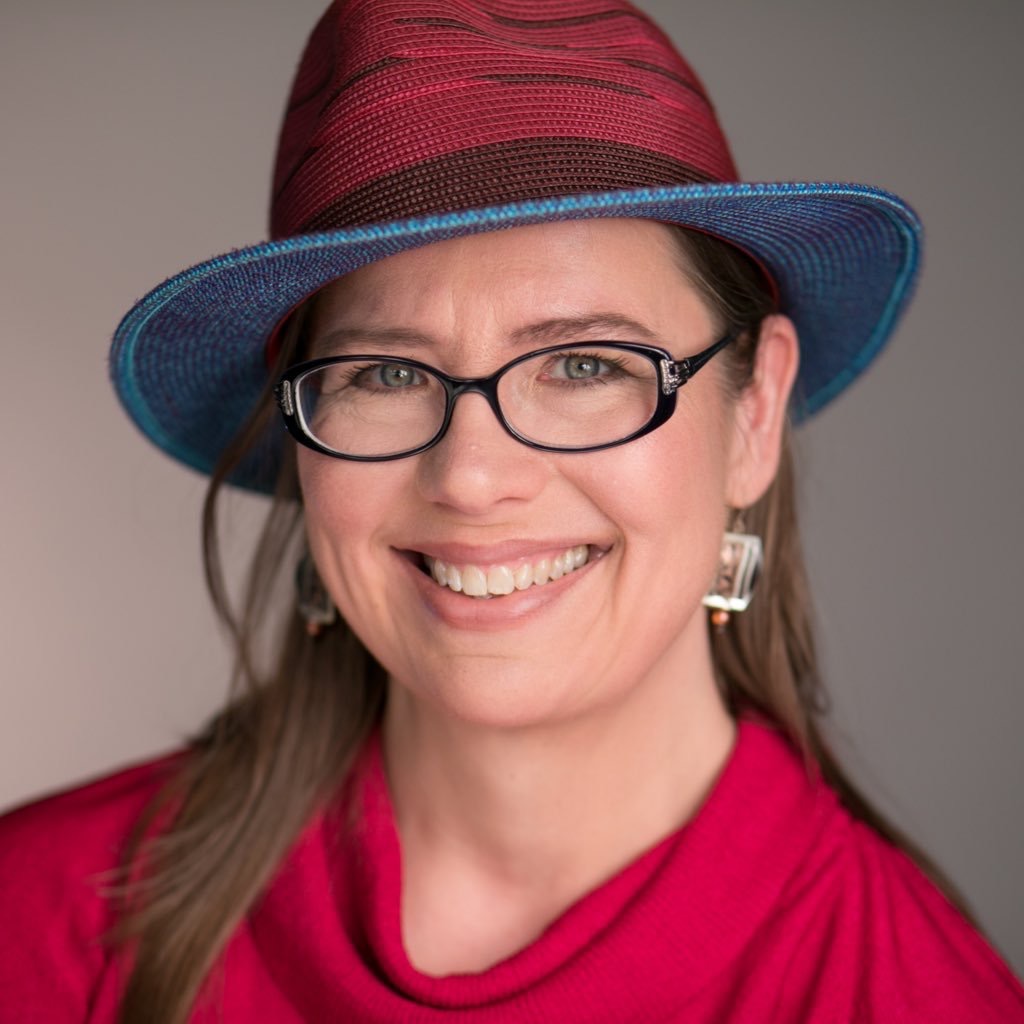
Darcie Wilde is the bestselling, award-winning, multi-genre author of the Useful Woman mysteries.  Her latest title The Secret of the Lost Pearls is an Editor’s Pick on Amazon and a “Must Read” book for 2022 from USA Today.


www.darciewildeauthor.com

Guest Blogger ~ Skye Alexander

A Good Place To Die

The real estate agent’s axiom about the importance of “location, location, location” holds true for me, too, as a mystery writer––usually the setting is the first thing I establish in a novel. The place where a story occurs provides a backdrop for the action and creates ambiance. It also grounds the tale in a time/space framework with a history, culture, and physical features that dictate what can or cannot happen there. A crime that transpires in a seventeenth-century French chateau, for instance, will be different from one that takes place on the mean streets of Al Capone’s Chicago or in a California mining town during the Gold Rush.

Sometimes the setting assumes a life of its own and becomes a character in the story, such as the marsh in Delia Owens’s Where the Crawdads Sing and the Four Corners in Tony Hillerman’s novels. In some cases, the setting serves as an antagonist, like the Dust Bowl in John Steinbeck’s Grapes of Wrath and the Parisian flood in Sarah Smith’s Knowledge of Water. The environment challenges the protagonist and either helps or hinders her efforts to solve the crime––or to stay alive.

Much as I enjoy reading about Louise Penny’s fictitious town of Three Pines, Quebec, and Susan Oleksiw’s Hotel Delite in Kovalam, South India, I didn’t want to limit my series to only one setting. Consequently, I created a cast of New York Jazz Age musicians whom wealthy people hire to perform at special events. Each stint takes the entertainers to a different location where they’re presented with a unique set of obstacles and opportunities.

The most recent novel in my Lizzie Crane mystery series, What the Walls Know, is set in a spooky castle in October of 1925. When the musicians accept an invitation to perform at a Halloween party there, they have no idea they’ll be trapped on an isolated peninsula with real-life wizards, witches, ghosts, fortune-tellers––and a murderer. The actual neo-Gothic Hammond Castle in Gloucester, Massachusetts inspired me, and I incorporated its magnificent pipe organ and some other notable features into the story. The oceanside estate of the plumbing magnate Richard Crane prompted the first book in my series, Never Try to Catch a Falling Knife. Two future novels in the series, The Goddess of Shipwrecked Sailors and Running in the Shadows, take place in Salem, Massachusetts. This city’s colorful history offered up intriguing plot elements, including the clipper ship trade and the notorious smuggling tunnels that once ran beneath the old town.

For the sake of authenticity, I physically visit each place mentioned in my novels––every house, store, hotel, restaurant, church, library, museum, park, railway station, and cemetery. If it ever existed and still does, I’ve been there. In Never Try to Catch a Falling Knife, my characters eat lunch at a resort that unfortunately burned down in the 1950s, dashing my hopes for a site visit. Luckily, though, I located an elderly gentleman whose family owned the resort when he was young and he kindly spent an evening recounting the “good old days” with me.

What are some of your favorite story locations? How do you feel they contribute to the tale? Does reading about a particular setting make you want to go there?

What The Walls Know

Halloween 1925, Gloucester, Massachusetts: Jazz singer Lizzie Crane thinks ghosts in a creepy castle are her only worry, until a woman dies of a suspicious heroin overdose and Lizzie becomes a murder suspect––or maybe the next victim.

Buy Links:

https://www.barnesandnoble.com/w/what-the-walls-know-skye-alexander/1142463455

Skye Alexander is the author of nearly 50 fiction and nonfiction books. Her stories have appeared in anthologies internationally, and her work has been published in more than a dozen languages. In 2003, she cofounded Level Best Books with fellow authors Kate Flora and Susan Oleksiw. The first novel in her Lizzie Crane mystery series, Never Try to Catch a Falling Knife, set in 1925, was published in 2021; the second, What the Walls Know, was released in November 2022. Skye lives in Texas with her black Manx cat Zoe.

Website: www.skyealexander.com

Facebook: https://www.facebook.com/skye.alexander.92

Settings and Seasons

This morning when I went out to walk the dog, the temperature was 12 degrees. When the breeze came along, it cut. But it’s also dry. When I think about winter I prefer cold and dry to warmer and wet (think snow and ice).

During my walk I often compose sentences to add to whatever I’m working on when I get back to the house, or just because I feel like writing a sentence in my head. This morning the cold held my attention, and I began thinking about how this degree of cold would affect an amateur sleuth hot on someone’s trail. Snowy and cold would make the situation even worse.

Since I live in New England, famous for its winters, most of my mysteries, long or short, are set in pleasant, or at least tolerable, weather—in spring, summer, or fall. Winter poses challenges that my characters don’t have to face, challenges that could change the plot, the direction of the story, the success of the sleuth and the authorities. Perhaps the sleuth has only a few minutes to reach a location to rescue someone, but it’s snowing, the roads are icy, the stop lights not working because of a power failure, the streets impassable in some places. The weather certainly ratchets up the suspense. (Sounds like my drive home from work years ago.)

In a city the sleuth could travel faster and more safely by subway, but at least in my area (Boston), that means a different kind of problem—subway car breakdowns. (To be fair, in Boston subway cars break down in every season.) Or, this could be the start of a story—the subway car stuck in a tunnel. When the car starts up again and makes it to the station, the riders trip over a dead body blocking the exit. Is the killer still on the car, or did that person somehow get off and escape through the tunnel? Will he or she survive in subzero weather underground?

I will admit that when I go about choosing the setting in a warmish season, I’m really thinking about myself—how easy it is to get around, to get things done, to get anywhere I want to go. Winter is a chore for me. And on cold days, though I don’t actually mind them, having grown up in New England, I’m aware of how much effort it takes to make the transition to outdoors—scarf, hat, coat, boots or heavy shoes, mittens, sometimes even a hand warmer for a long walk. But now that I’ve thought up a number of scenarios relying on cold weather, perhaps I’ll make a change.

The weather is going to remain well below freezing for the next day or two, and then warm up. That gives me plenty of time to work out the basic plot of a story set in bitter cold weather, with all the worries and challenges that come with that setting. And I get to write the story while I’m warm inside.

As we head into Christmas, I hope all of you reading this are warm inside with your families and friends, good food, and a pet if you have one, enjoying the season and the freedom to write whatever you want.

How to Survive Christmas

Some of us (actually, quite a few of us) detest the holidays. If you are single and childless, the constant commercial emphasis on family can make it seem like there’s a flashing neon LOSER sign pointing right at you, even if you cherish your purposely chosen independent existence. And if you’re not Christian, well, that’s another aspect of Christmas that you can’t appreciate. Throw in the sappy music that we’ve all heard thousands of times; it usually starts playing in stores just after Halloween. And then, there’s the ever-present reminder to buy, buy, buy; that also usually starts in stores around Halloween. All the stoppage of normal activities and the travel challenges due to the predictable bad weather add to the stress. What’s an intentionally single, childless, non-materialistic, non-religious person like me to do?

First of all, I go for a walk. There’s a foot of snow on the ground at my house right now, and it’s 13 degrees out, but I will nevertheless bundle up and go for a walk every day. Fortunately, I live close to miles of green belts and trails, and nature always soothes my jangled nerves and jumpy brain. The bare tree branches reveal bird and squirrel nests, and I like to watch the animals that are flitting about. Yesterday I saw a black squirrel leaping from one snowy tree to another. A flock of noisy varied thrushes was excitedly pecking away at apples still clinging to a tree; I’ve never witnessed that before.

Photo by James Wheeler on Pexels.com

I try to do things with friends. This doesn’t always work out so well, because a lot of them have families and are happily sucked into that holiday vortex and disappear for days, but there’s always someone who is eager to get out. I hope that families who get together actually do something other than giving gifts. I don’t remember a single Christmas from childhood for the gifts, but I do remember a few with special activities, like playing games or building snow people together.

I might give small gifts to children or the few people I know who actually need something, but I mostly resist the urge to buy more stuff that my relatives and friends don’t need. Instead, I give a nice card that includes a promise of time to help friends and family with something—an evening or day of childcare for a young couple, a miniature golf outing or beach day for kids, a helping hand with household chores or remodeling projects, a chauffeured ride for an elderly relative to visit a beloved friend in another town. Charities receive most of my year-end funds.

And I remind myself that this, too, will pass. After all, Christmas comes and goes every year. New Year’s is more my kind of holiday; a happy, hopeful start to the next year. Whatever you’re doing this holiday season, I hope you’re doing it with joy. Now, I’ve got to go out for a walk in the snow and enjoy the birds.

All in the lyrics

Christmas songs are blaring in the great room, and baby, it’s cold outside. Now and again, the lyrics to a song are so evocative they stop me in my tracks. Why? The precision, economy of words, and an image so clear that I would sell my right ear to create the same power in my writing.

Songwriters are lucky, they have a score and a singer to sell their lyrics. As writers, we have only our words, no chords, no major shifts, just the rattle of a turned page or a finger swipe. We rely on careful construction of characters, the description of a setting that is sufficient to create an image but not so detailed as to bore, and our ability to put it all together in a way that readers arrive where we want them to through the warp and weft of the narrative.

Lyrics are no different, they are images drawn so well and so clearly that they travel with us throughout our lives. Sometimes changing us, creating a longing to be or see or do. The lean, poetic cleanliness of a great lyric is something we might strive for daily.

To make my point, I picked stanzas from four songs. The first song was written long before I was a twinkle. But it is one I have known all my life and each time I hear it, I feel longing, hope, and loss. I dare you not to.

“I’ll find you in the morning sun, and when the night is new. I’ll be looking at the moon, but I’ll be seeing you.”

‘I’ll be Seeing You’ written in 1938 saw the country through WWII and onward, into infinity. NASA sent Billie Holiday‘s 1944 recording as its final transmission to the Opportunity rover when its mission ended on Mars in February 2019.  How fitting. Don’t you wish you packed a wallop like that with every line in a book?

The second song creates an indelible picture of freedom and the ties that bind us.

“Fly the ocean in a silver plane. See the jungle when it’s wet with rain. Just remember till you’re home again, you belong to me.”

Of course, it helps if Jo Stafford is singing it. If you’ve never heard her classic version of ‘You Belong to Me’ run to Pandora or U-Tube. But with or without Ms. Stafford, the imagery and emotion of the lyrics are undeniable.

Having grown up in Michigan with Motown 126 miles away, Smokey Robinson’s poetry fueled much of my music. The lyrics of my third selection never fail to get a grin and a singalong from me. Why?

“I’m stickin’ to my guy like a stamp to a letter, like the birds of a feather, we stick together. I’m telling you from the start, I can’t be torn apart from my guy.”

Because Mr. Robinson created a fulsome female protagonist with a clear agenda in only thirty-four words.

And number four brings us back to Christmas.

Christmas songs ring all the old familiar bells, a few lines, and you’re shivering in the back of your parent’s car, filled with excitement, knowing you’ll never sleep. Yet I admit that when it comes to indelible pictures, well – ‘Santa Baby.’

“Come and trim my Christmas tree with some decorations bought at Tiffany’s. I really do believe in you, let’s see if you believe in me.”

Well, do you? Money-grubbing little … gold digger.

I hope I’ve made my case that as writers with 70,000 words or more at our disposal, we might take a lesson from our favorite songs and etch rather than paint. You may disagree with the lyrics I picked, but really, how could you?

I’ll Be Seeing You by Sammy Fain / Irving Kahal

You Belong to Me by Chilton Price / Pee Wee King / Redd Stewart

My Guy by Ronald White / Smokey Robinson

Santa Baby by Philip Springer / Joan Javits / Anthony Fred Springer