Guest Blogger ~ Jane Tesh

Turn On the Ghost Light

            I had been with Poisoned Pen Press since 2004. When the company was bought by Sourcebooks, Sourcebooks did not want to continue either series even though I had many more books to go. As you can imagine, this was a blow, but I was still a Poisoned Pen author and they would accept a standalone. So I got to work.

            This was more of a challenge than I thought. I had been writing my two series since 1995 and loved all those characters. To start over with a new cast was daunting. What would I write about? Where could I set this story? What was something I knew about that I could have fun with?

            The answer to that was community theater. I’ve been in community theater productions for over forty years, so I have a lot of experience to drawn upon. Talk about drama. It is definitely in the theater, especially amateur theater with long-standing feuds and clashing egos. And there is a boatload of superstitions to play with. Now I just needed some characters.

            As soon as I have the right name, I have a character. This happens all the time, and I can’t explain it. I name them, and there they are. So I thought of the name Theodosia “Teddy” Ballard. She told me her neighbor’s cat accidentally burned down her apartment building. She missed her latest job interview, a job she really didn’t want. Her dear grandmother who raised her was going into a retirement facility, and her scheming cousin had taken grandmother’s house. She didn’t have a job or a place to live.

            So I thought of the name of her best friend and actor, Will Selms. When Will arrived, he had the perfect solution. Paula Norwood, stage manager at the local community theater, had recently fallen down the costume loft stairs and died from her injuries. The show desperately needed a stage manager. Teddy could have the job and live in the cottage behind the theater. Problem solved.

            Only Teddy doesn’t know the first thing about being a stage manager. But along with the reader, she learns all about the theater. And of course, every theater is haunted, and before long, Teddy makes the acquaintance of George, the theater ghost. George saw Paula fall and tells Teddy it was not an accident. She decides to solve the mystery.

            Something very unexpected happened during the writing of this book. Teddy and Will started to have a typical love scene when Teddy said to me, “I don’t really want this.” To my surprise, I didn’t want it, either. That’s when I realized I had never wanted it. And then, like Teddy, I found a word for this feeling. Asexual. This opened a whole new part of Teddy’s character and gave me a chance to work through what had puzzled me practically my whole life.
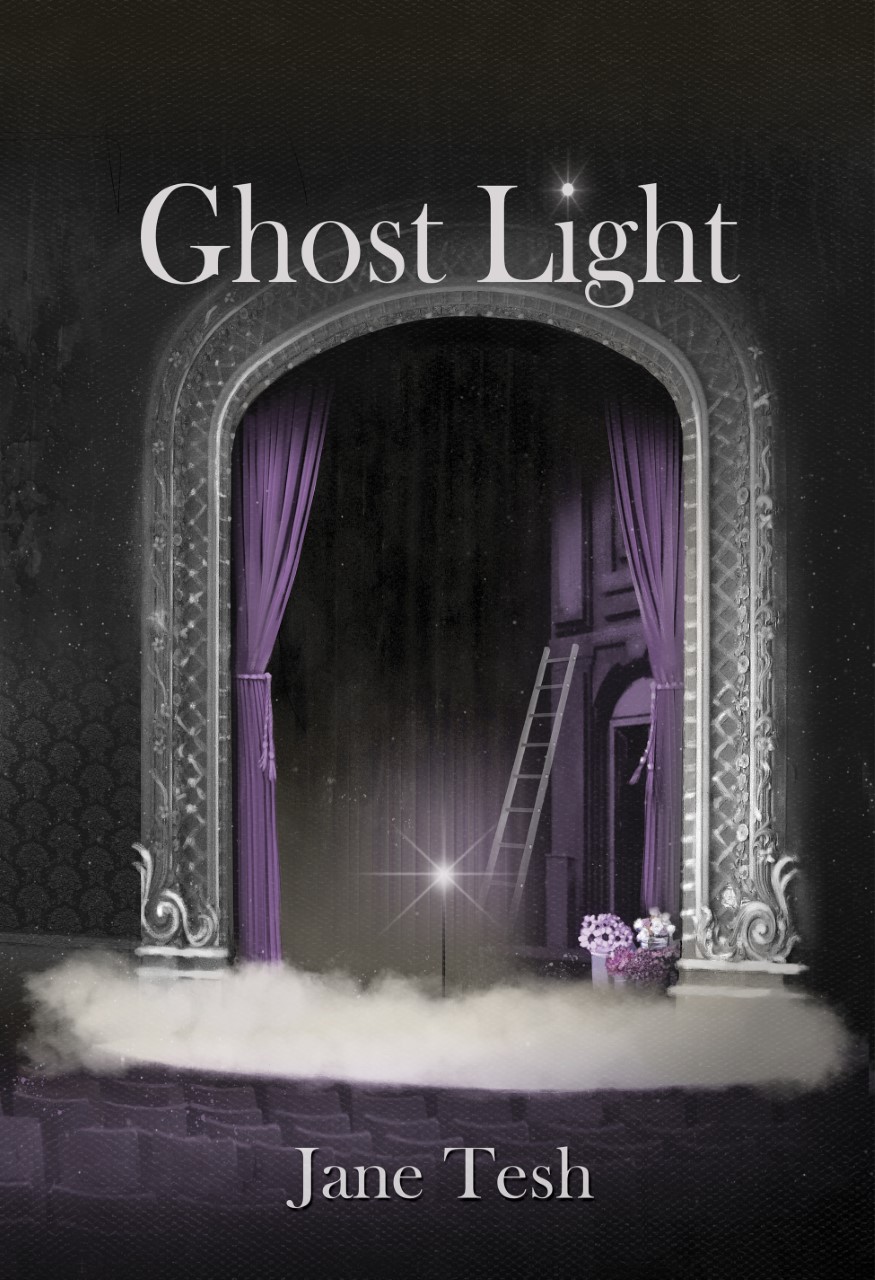
Ghost Light

Theodosia “Teddy” Ballard knows nothing about community theater, but when the stage manager for “Little Shop of Horrors” takes a tragic header down the costume-loft stairs, she agrees to fill in for the sake of her actor friend, Will. Teddy takes the superstitions and swelled heads of The Stage in stride—till she meets George Clancy Everhart, the theater ghost, who informs her that the previous stage manager was murdered and demands that she find the killer. Both investigation and rehearsals are complicated when she makes a surprising discovery about her relationship with Will—and learns that George has his own dramatic agenda.

https://www.amazon.com/Ghost-Light-Jane-Tesh/dp/1939113563
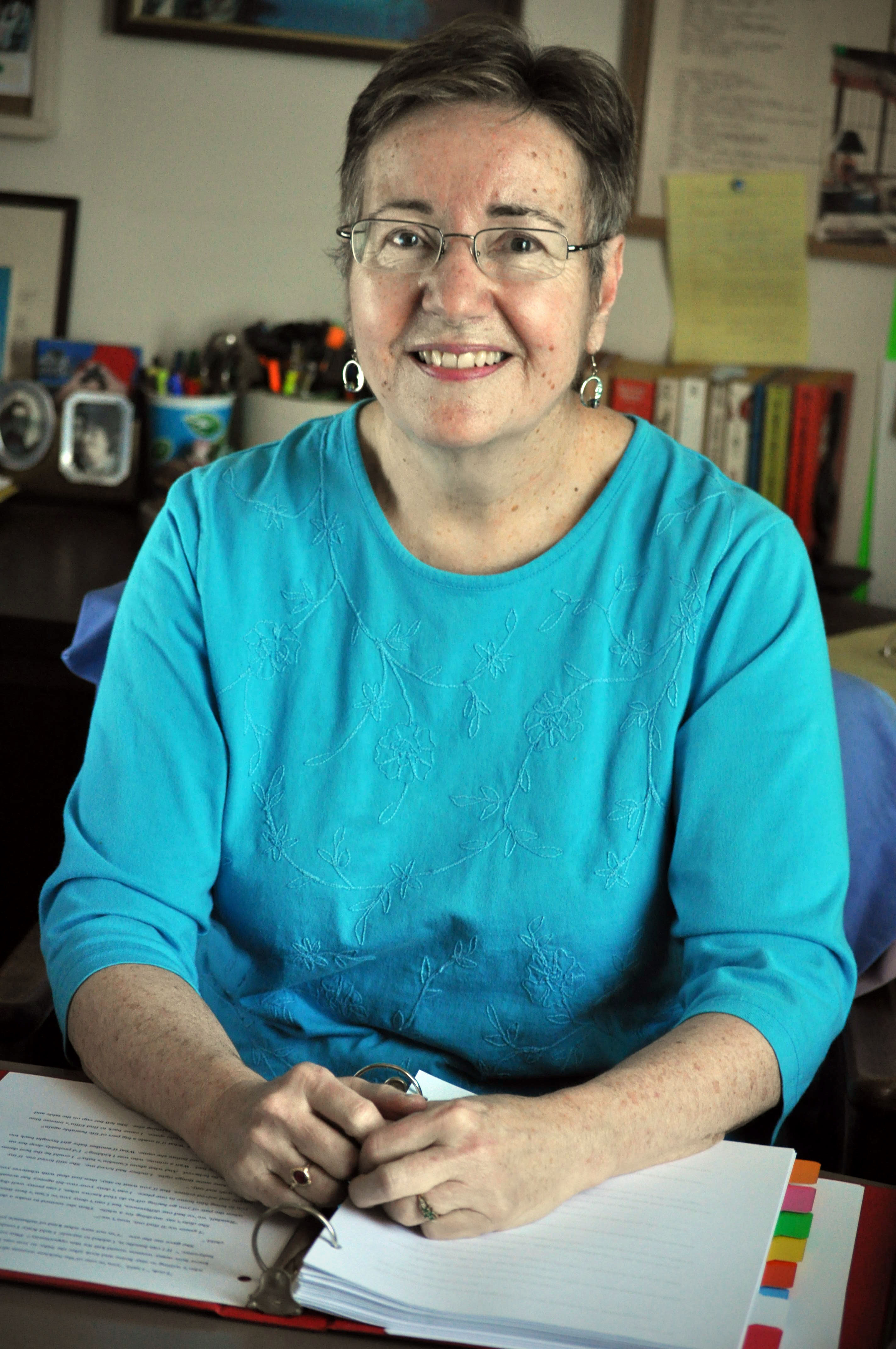
Jane Tesh, a retired media specialist, lives in Mt. Airy, North Carolina, Andy Griffith’s home town, the real Mayberry. She is the author of the Madeline Maclin Mysteries, featuring former beauty queen, Madeline “Mac” Maclin and her reformed con man husband, Jerry Fairweather, and the Grace Street Mystery Series, featuring struggling PI David Randall, his psychic friend, Camden, and an array of tenants who move in and out of Cam’s boarding house at 302 Grace Street. Ghost Light is her first standalone mystery and the first to feature an asexual heroine. She has also published five fantasy novels. When she isn’t writing, Jane plays the piano and conducts the orchestra for productions at the Andy Griffith Playhouse.

Visit Jane’s website at www.janetesh.com and her Facebook page, www.facebook.com/GraceStreetMysterySeries
Guest Blogger ~ Laura Kelly Robb

Behind the Book – Discovering the Florida Highwaymen

By Laura Kelly Robb

Zora Neale Hurston, the author of Their Eyes Were Watching God, lived her last years in Fort Pierce, a beach town on the Atlantic coast of Florida.  She lived for a while on a houseboat and later in a modest cement block rental house.  A visitor can see the makeshift desk and black Underwood typewriter Hurston used for her last pieces.

Through a National Endowment for the Humanities grant, I traveled to Fort Pierce to learn more about Hurston’s life through a week-long seminar led by Professor Heather Russell.  She told us the story of how Hurston had fallen out of favor with many critics until Alice Walker resuscitated her legacy of novels, stories, and African American folklore.

While in Fort Pierce, cultural ambassadors from the African American community  helped us understand other aspects of the town’s history.  The Florida Highwaymen, they said, had gone a long way toward putting the town on the map.  I had never heard of those artists, but our guides forgave my ignorance and led us to a gallery run by James Gibson, one of the Highwaymen.  Sitting on a stool, as casually as if he were telling us about dinner the night before, he spun tales of his companions in art, the twenty-five men and one woman, who made up the official list of Florida Highwaymen.

They knew each other, some from long contact, some only by sight, and some were blood relatives.  They were eager to get out of the sweltering fields and as far away from the punishing orange harvests as possible.  Hope came in the form of post-war prosperity, air-conditioning, and a wave of middle-class tourists. Black and white, the vacationers were driving the length of Florida.  The Highwaymen’s images of sunsets, palm trees, and scudding clouds were the perfect souvenir.

From the mid-1950’s until the early ‘80’s, the loose group of self-taught artists produced, by conservative estimate, over 100,000 paintings.  Sold out of the back of a car, sometimes on the side of the highway, for a bargain price of twenty-five dollars, the paintings traveled with their new owners all over the fifty states. Al Black, a prolific painter and also the lead salesman, could sell water to a whale they said. Money was made; oranges were not picked. James Gibson smiled and called them the best of years.

After the seminar, the story of the Florida Highwaymen stayed tucked away but not forgotten. I read reports of the uptick in interest and I saw episodes of Antiques Roadshow where the art experts valued Highwaymen paintings from $5,000 up to $10,000.  I wondered how art professionals dealt with a body of work as large as the one generated in Fort Pierce.

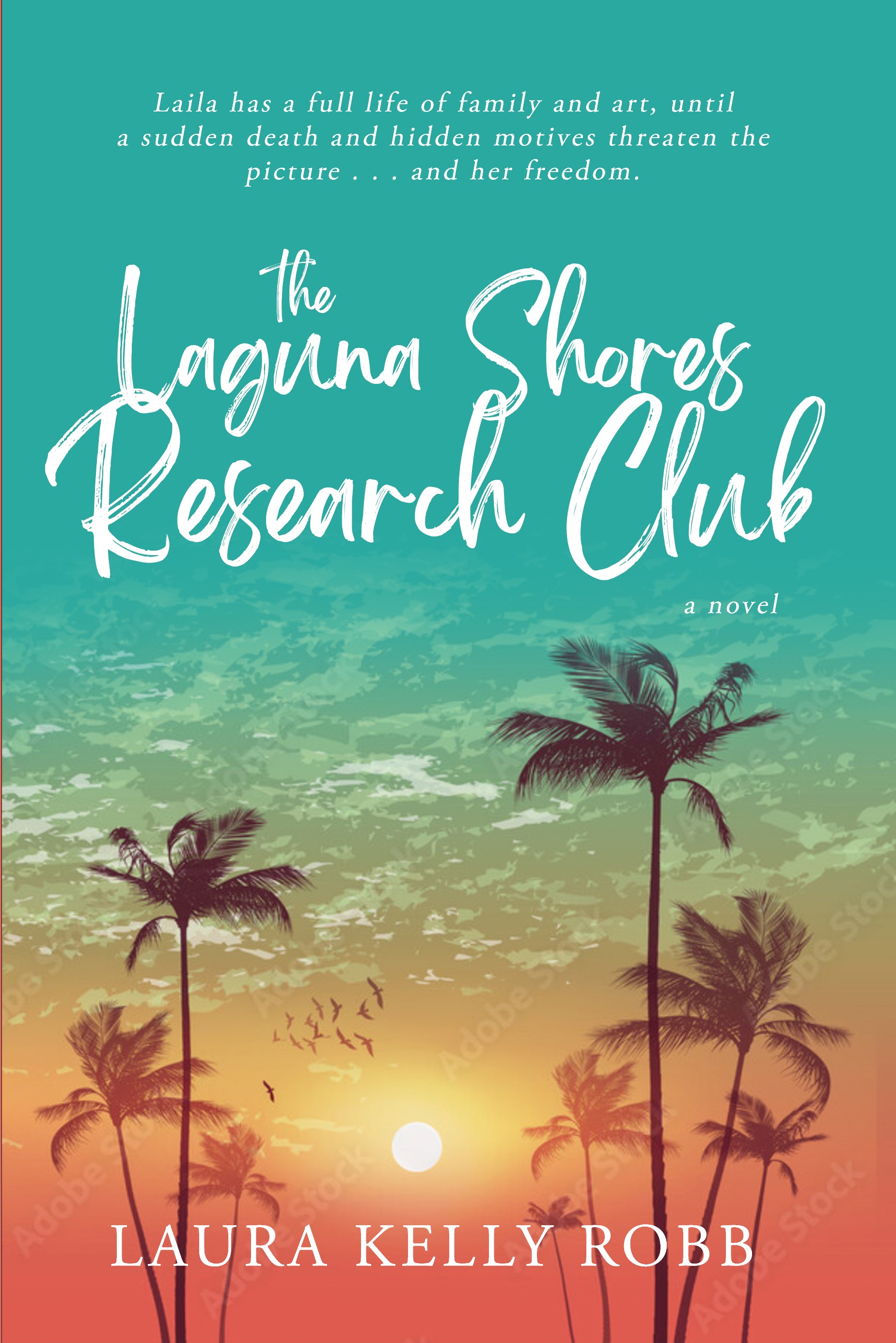
That question serves as a starting point for my mystery, The Laguna Shores Research Club (TouchPoint Press, September 14, 2022), featuring an art cataloguer, an art collector, and an ambitious museum curator in St. Augustine. The protagonist, Laila, believes her chance to get ahead in the art world lies in protecting the Florida Highwaymen.  When her friend and fellow researcher turns up dead, Laila is the one who needs protection. 

The Laguna Shores Research Club

Laila Harrow knows the best way to track down anything—or anybody—is to ask Billie Farmer. As the brains of the Laguna Shores Research Club, Billie teaches fellow members how to reach into the ether and pluck out facts.

Counting on Billie’s guidance, Laila promises the St. Augustine Museum a catalogue of Florida Highwaymen paintings that will catapult her standing in the art world. But when Billie dies suddenly, Laila is forced to pull herself out of the darkness to think like Billie and follow the facts.

Fact: Billie’s good health makes the diagnosis of a heart attack unlikely.
Fact: Her actions the night of her death hint at a looming threat.
Fact: Her condo has been turned upside down, her computer and phone missing.

With support from her friends and family, Laila vows to get to the bottom of Billie’s death. Then one last piece of information comes to light.

Fact: Laila is at the center of a dangerous game.

Amazon Paperback and Kindle

Barnes&Noble and Nook

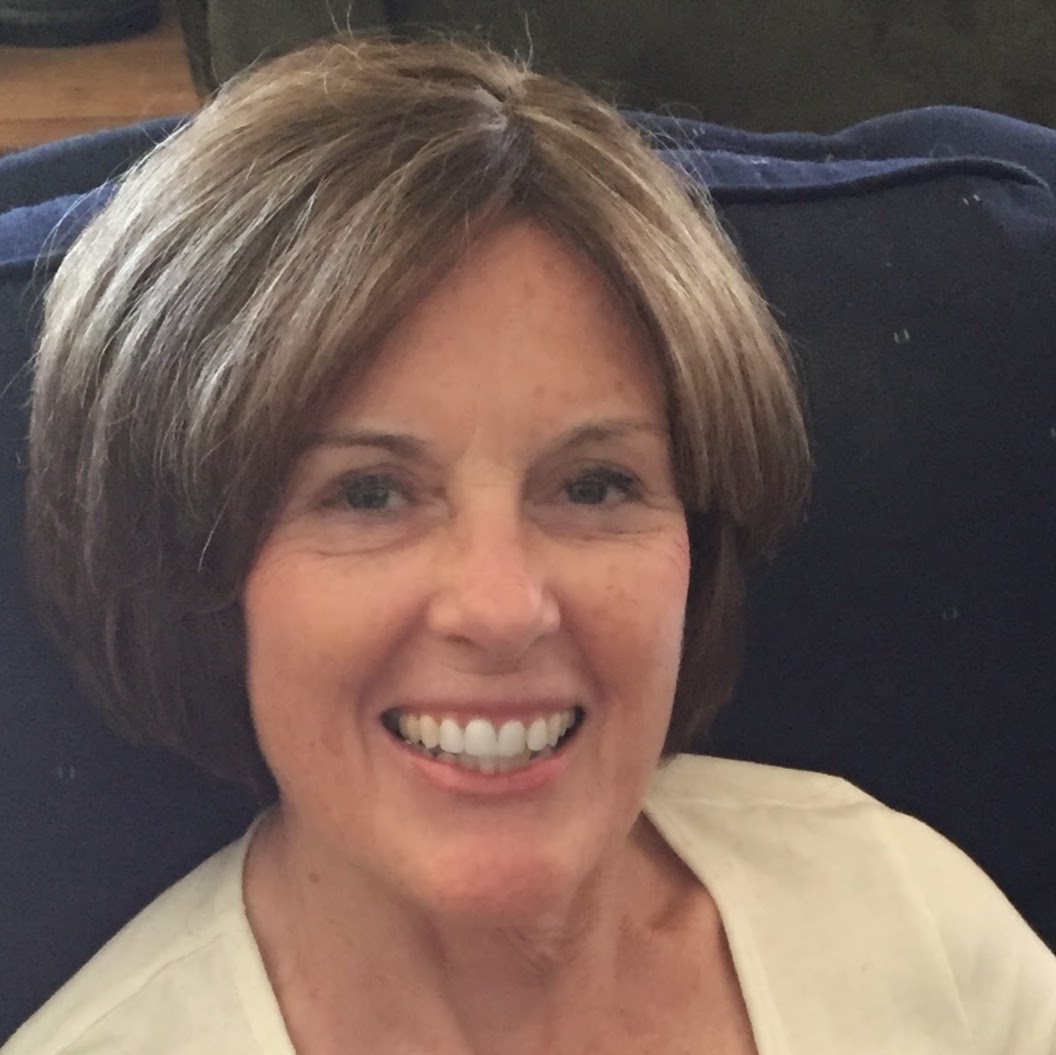
Laura grew up in New York, the fifth of six daughters.  She earned a BA from the University of Toronto and went to work in Vigo, Spain. She lived in a small village and studied part-time at the University of Santiago.  Returning to the US, she taught Spanish and History for Seattle Schools.  She began to submit short stories and write novels while getting coaching at an Iowa Writers Workshop summer session.  She now writes full-time, with a sequel to The Research Club expected in 2023.  With her husband Paul, she lives in St. Simons, Georgia and takes breaks from the heat in Friday Harbor, Washington near her three adult children.

www.LauraKellyRobb.com

Twitter: @LauraKellyRobb

Instagram: @BookHardy and LauraKellyRobb_Author

Ghosts — present, past and future

As mystery and thriller writers we deal with death – a lot. What follows is my view of how death colors a story, as informed by being farm-bred, knowing where animals go on the big truck, and the host of ghosts who populated our old frame farmhouse.

Ghosts

Ghosts were as much a part of my early life as was the knacker man, to use a British expression. There was the guy who checked the non-existent, though once-existent, oil lamps in the upstairs hallway to ensure the gas was off. He walked down the hall to a window overlooking the hog pens, stood for a moment, then walked back. Every night.

There were brothers, one that occupied a cold spot in the corncrib, and one who looked endlessly into the house through a sashed window. They died on the same day, one after another, one from want, the other from the loss. Their story fueled my imagination.

And David whose sister waited for him to knock on her wall each night before going to sleep. I met David when he warned me of a small fire in the farmyard. When I returned, the fire out, he knocked.

This leads one to believe that life is like the loaf of bread used to describe time travel, we are never far from intersecting the previous or next slices of bread.

When someone dies and refuses to move on

Booth Island deals with the death of a brother who drowned off the family island in Canada. It is he who lures his sister back nine years later.

 “I can’t. The minute I relax, my brother comes to me. I need to exorcise him, or help him cross over, or whatever the mediums would say. If not, I’ll never be happy.”

“I prescribe two servings of Finn Sturdevant with a side of Tiger Tail.” Penny hugged me. “Poor Boo. Is there an Ouija Board stashed on Booth Island?”

I wiggled my eyebrows.

When one death haunts the characters

Dead Legend begins The Cooper Vietnam Era Quartet, centering around the mysterious death of Mac Cooper. His sons navigate his legacy and his loss:  anger in Dead Legend, bargaining in Head First, acceptance in Pay Back, and resolution in Don’t Tell.

Byron Cooper’s burden: The old adage about be careful who you mess on your way up, you may meet them on your way down, went double time when everyone in the Pacific Fleet, WestPac, over the rank of Lieutenant Commander, looked you in the eyes, clapped you on the shoulder, and said knew your old man.

Laury Cooper’s hell: Laury wound the film to the August 8, 1955 edition of the paper. He found the four-paragraph story on Mac Cooper’s death; simple, to the point, almost as though it had been lifted from the police blotter.

At 2:45 a.m. August 8, 1955, the body of Commander MacLaury Cooper was found…

And resolution in Don’t Tell: Laury and Kate held hands in front of a bungalow gleaming white in the soft light of a late Hawaiian afternoon. … He pointed out the carport, the palm where someone had lurked watching the family’s descent into hell, and a hibiscus Mac had planted not long before his death.

When an accident sculpts the future

A single past action drives the narrative in Saving Calypso, consider the action mold from the previous slice of bread, rimming the current slice and slowly eating into the loaf.

“Forgive me. This must be excruciating … I drew up the will for Ray. He insisted. It was finalized the day we reached agreement on your sentencing.” Burridge’s steady brown eyes peered over the top of his glasses into Grieg’s baby-blues until Grieg’s dropped. “It wasn’t a small thing you did, boy.”

Grieg tweaked the pleat of his slacks.

Burridge squinted then poked his glasses up his nose. “Destroying a family. Killing a police officer’s son. Drunk. Chasing a girl.”

To ghosts everywhere

Characters driven by the ghosts of past actions, deaths, and loss give mysteries focus and heart, and protagonists a reason to act, creating a pulse and adding depth to the story. Paradise for a mystery/thriller/suspense writer.

Writing and Rewriting

My Monday morning zoom partner and I indulge in wide-ranging discussions with no restrictions on our wanderings. We’ve discussed business architecture in Kolkata, the renaming of Indian cities, e.g. from Calcutta to Kolkata, Maya ruins, and the writing process, which fascinates her because she’s a techie and thinks differently, she tells me. More recently we’ve been exploring figures of speech after coming across a book of them by Mark Forsyth. In The Elements of Eloquence he examines over forty figures, with wit and erudition. 

In case he has failed to make his point, Forsyth ends with a final note. “Above all, I hope I have dispelled the bleak and imbecilic idea that the aim of writing is to express yourself clearly in plain, simple English using as few words as possible. This is a fiction, a fib, a fallacy, a fantasy and a falsehood. To write for mere utility is as foolish as to dress for mere utility.” Obviously not a fan of Hemingway’s work.

Even while reading through his work, I got his other message. Look carefully at what you write. We use these figures of speech all the time anyway, he points out, even if we don’t know what they’re called and how they developed and what some good examples of them are. So, recognize them, and polish the gems in your own work. 

Forysth’s book underscores that writing is rewriting, as Richard North Patterson said (or wrote), along with every other author who has ever given writing advice. Before I even begin a story or novel I craft a first line in my head. Until I understand how I’m going to open, to begin a journey, I can’t start writing. I know those who begin by writing scenes they expect to be in the narrative at some point, sometimes the final scene, but I’m one who has to begin at the beginning, and the beginning is the opening sentence. I draft it again and again in my head, and when I think I have something that will work, that places the main character where I want her to be, then I write it down. But even then it’s not done. This is just the first stab at the opening line on paper, and I rework the phrasing several times. Forsyth’s list of figures of speech draws out the faint opportunities I might not otherwise notice.

I don’t usually feel the need to recast every sentence, but sometimes a paragraph needs to be reworked again and again. My preference is to get a sense of the narrative and characters on paper, and then rework it. I don’t write fast, so I tend to rethink and redraft as I go along, editing until I consider a paragraph or scene finished enough to be allowed to stand. I know I’ll come back to it later, probably several times.

Working slowly also means that I’m more likely to make discoveries as I go along—a character whose back story turns out to be significant to the plot in an unexpected way; a twist in the timeline that I might not have noticed otherwise; and a digression I discover I can use later. But also I can spend time teasing out greater meaning by reworking sentences, building the idea by building the expression.

Forsyth’s book came along at just the right time, giving me another way to consider a passage and recraft lines in my WIP. Reexamining every expression, recasting every line, is all part of the writing process. The first draft is really just throwing the clay onto the wheel, loading film into the camera. Rewriting is the work.

My Love Affair with Animals I Have Yet to See

One day when I was still employed at Microsoft, I was out walking the trails behind my campus, no doubt in an attempt to avoid committing homicide. (I was not cut out for a corporate career.)

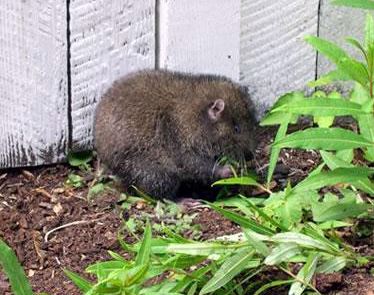
What the heck is this creature?

But homicide is not what this post is about. I was walking along the trails in a wooded area, inventing all sorts of creative murder scenarios in my head, when I almost tripped over a creature I didn’t recognize. It was about the size of an adult rabbit, with small ears and gray-brown fur and a short tail. I was, frankly, amazed. It was an animal that I, a lifelong nature lover, had never seen before! It ignored me as I watched it nibble the vegetation. I poked it with the tip of my shoe. It squeaked, but immediately went back to eating and ignoring me.

A jogger trotted by. I stopped her and asked, “Do you know what sort of animal this is?” She shrugged, replied, “Looks like a giant rat,” and jogged away.

What’s wrong with you?!” I wanted to yell. “How can you not be fascinated by an animal you’ve never seen? Do you spend your whole life on Amazon shopping for athletic shoes?”

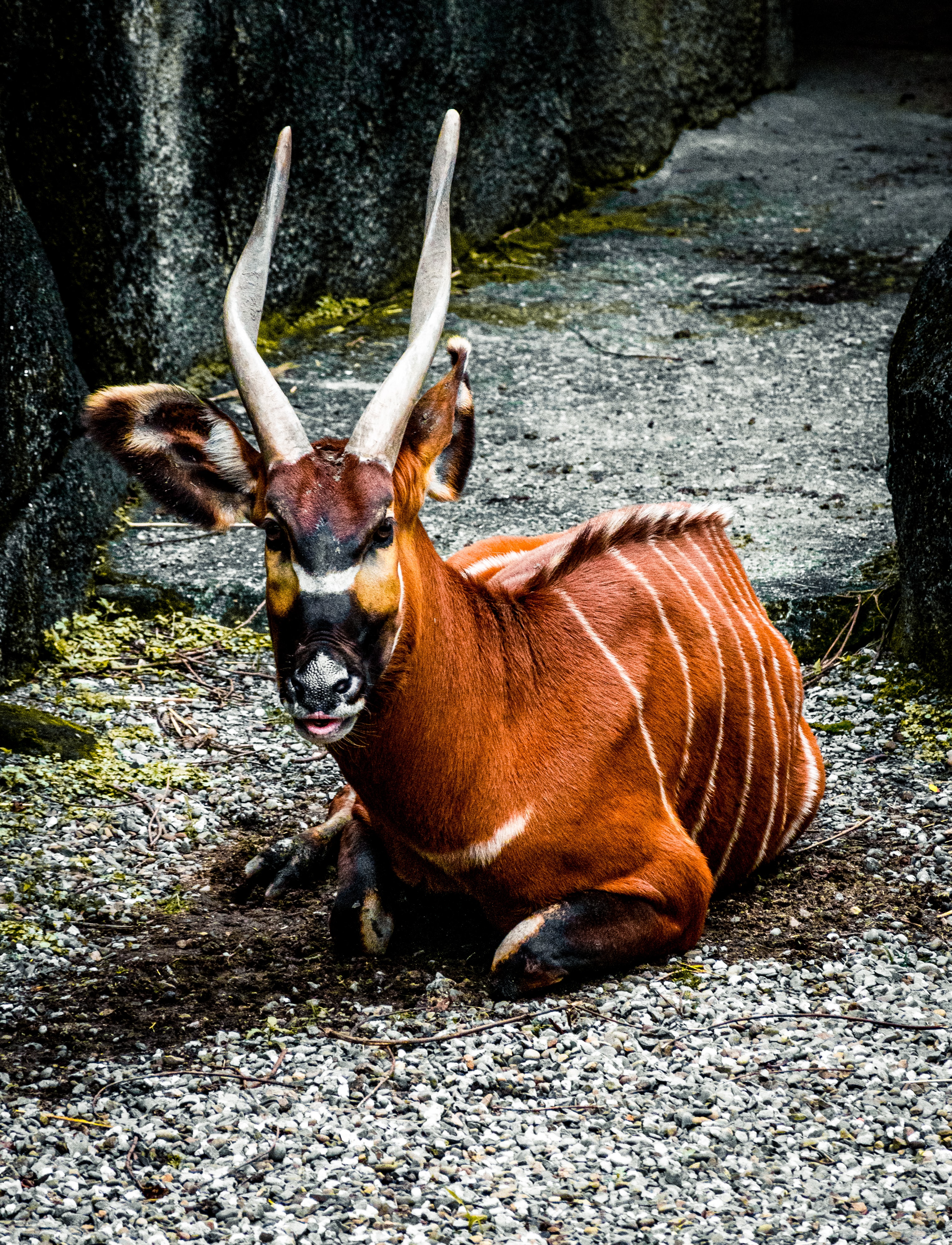
A male bongo

Okay, that’s probably not (completely) fair, and such rudeness only takes place in my imagination (most of the time). Personally, I just don’t understand how any person can walk past a tree completely filled with birds without even noticing, or how someone can not want to see a bongo in real life. (It’s a really cool striped African antelope, and no, I haven’t seen one yet.)

I went back to my office, now on a mission to identify the animal I’d seen. (Definitely a more rewarding activity than the spreadsheet I was supposed to work on.) My mystery creature was a so-called “mountain beaver” (Aplodontia rufa), which is actually not a beaver at all and doesn’t necessarily live in the mountains, which just goes to show you how common names can misdirect you. Aplodontia rufa is a “living fossil,” a very primitive mammal that’s been around for thousands of years.

I’ve since run into another mountain beaver one other time (again, not in the mountains). They really don’t register their surroundings much, but are totally focused on their food. I actually picked up the one I found in my yard and moved it away from the bush I wanted to preserve, but it merely squeaked and then went right back to the same place. I had to put these astounding creatures in a book, so I added one to a scene in my second Sam Westin mystery, Bear Bait.

All my books include at least one type of wildlife. As a hiker and scuba diver, I know some animals well: black bears, mountain goats, bobcats, way too many raccoons and coyotes, squid, octopus, morays, etc., etc. I’m always excited to see any kind of wildlife. (Rattlesnakes? Well, okay, not so much.)

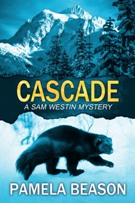
Cascade is finally published!

In my latest Sam Westin novel, Cascade (#6), I was determined to include a wolverine. I’ve never seen a wolverine, but I’m always looking for them in the North Cascades, or at least for signs of them. So is my protagonist, Summer “Sam” Westin. Of course, Cascade is a suspense novel, so I had to add a couple of avalanches, a collapsed ski lodge, and the mystery of why two teens wanted to trap a wolverine.

Maybe, one day, I’ll be lucky enough to spot a wolverine in the backcountry. And I hope I will find that bongo in Africa, too, someday soon. It’s important to me to see all these rare creatures before we humans drive them out of existence. I want to see vaquitas (tiny porpoises), pangolins (scaly anteaters), blue whales (the largest creature on earth), and oh, so many others I’m not even aware of yet.

I hope you don’t just jog by the Earth’s amazing wildlife, uninterested in any creature that is not a pet. People share this planet with so many other incredible beings! I hope you have at least one mind-blowing encounter with an awe-inspiring, non-human creature in your lifetime.