Guest Blogger ~ Nancy Lynn Jarvis

Writing PIP Inc. Mysteries is my way of keeping a friend who has moved to another state close and letting pets who have crossed the rainbow bridge live on as more than memories.

When I began writing mysteries in 2008, my protagonist was a realtor like I was. I used my experiences to enhance the story lines and told readers that as far-fetched as the real estate references were, they were all true and based on things that happened to me or my associates during my twenty-five-year career. It was easy to write authentically because I knew the business so well. But after seven books in the Regan McHenry Real Estate Mysteries series, it was time for a change.

I have a dear friend, also named Pat like my PIP Inc. protagonist, who is the most fascinating person I know. She gave me many ideas for murders and was especially helpful with bank robbery insider information she knew for my stand-alone novel, Mags and the AARP Gang, because she was on the board of the credit union where I set the robbery.

As I started formulating the PIP Inc. Mysteries series, I asked if I could use her and her background―like my Pat, she was the county law librarian and is a private investigator―as my protagonist and if she would be a consultant for the books because I knew nothing about being a private investigator and would need her help. She agreed under one condition: private investigator Pat had to have green eyes because she always wished her eyes were green.

 I made my Pat half her age, unmarried, and with an enviable figure, something the real Pat loved. When she saw the cover for the first book in the series she exclaimed that Pat had the hips she always wished she had.
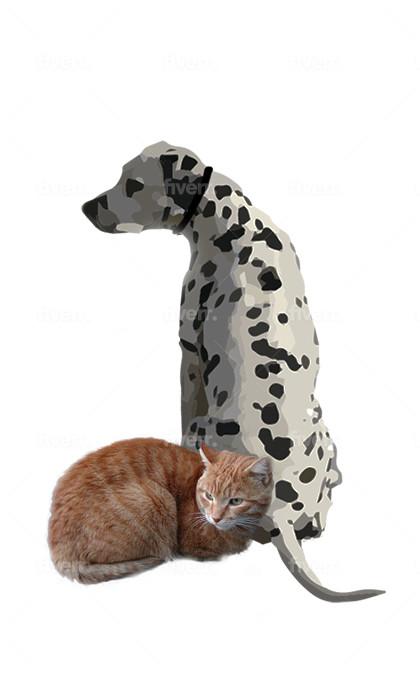
I also gave Pat two pets, a Dalmatian named Dot and a ginger tabby named Lord Peter Wimsey. Dot is based on my beloved Freckles―whose real-life antics often find their way into the books―and my husband’s cat, Wimsey. 

Having Pat as a consultant has worked out better than I hoped. She advises me on how to conduct investigations so details ring true, and she comes to Santa Cruz at least twice a year for an in-person consult. You should have seen us spying on a neighbor when she was here recently. Pat suggested we climb his security fence to see if we were right about him and what was happening on his property. When I told her that could be dangerous, she said, “Don’t worry, I always carry my Magnum 357, just like private investigator Pat does.”

You can read about the adventures of Pat, Dot, and Wimsey in the PIP Inc. Mysteries series. Book 3, The Corpse’s Secret Life was released earlier this year. The series is intended to be read in order so you might want to start with The Glass House and then The Funeral Murder before you take on the sin-eaters and undercover agents of The Corpse’s Secret Life. (And if you want to find out what that neighbor was up to, there’s always the barely fictionalized A Neighborly Killing from the Regan McHenry Real Estate Mysteries series.)
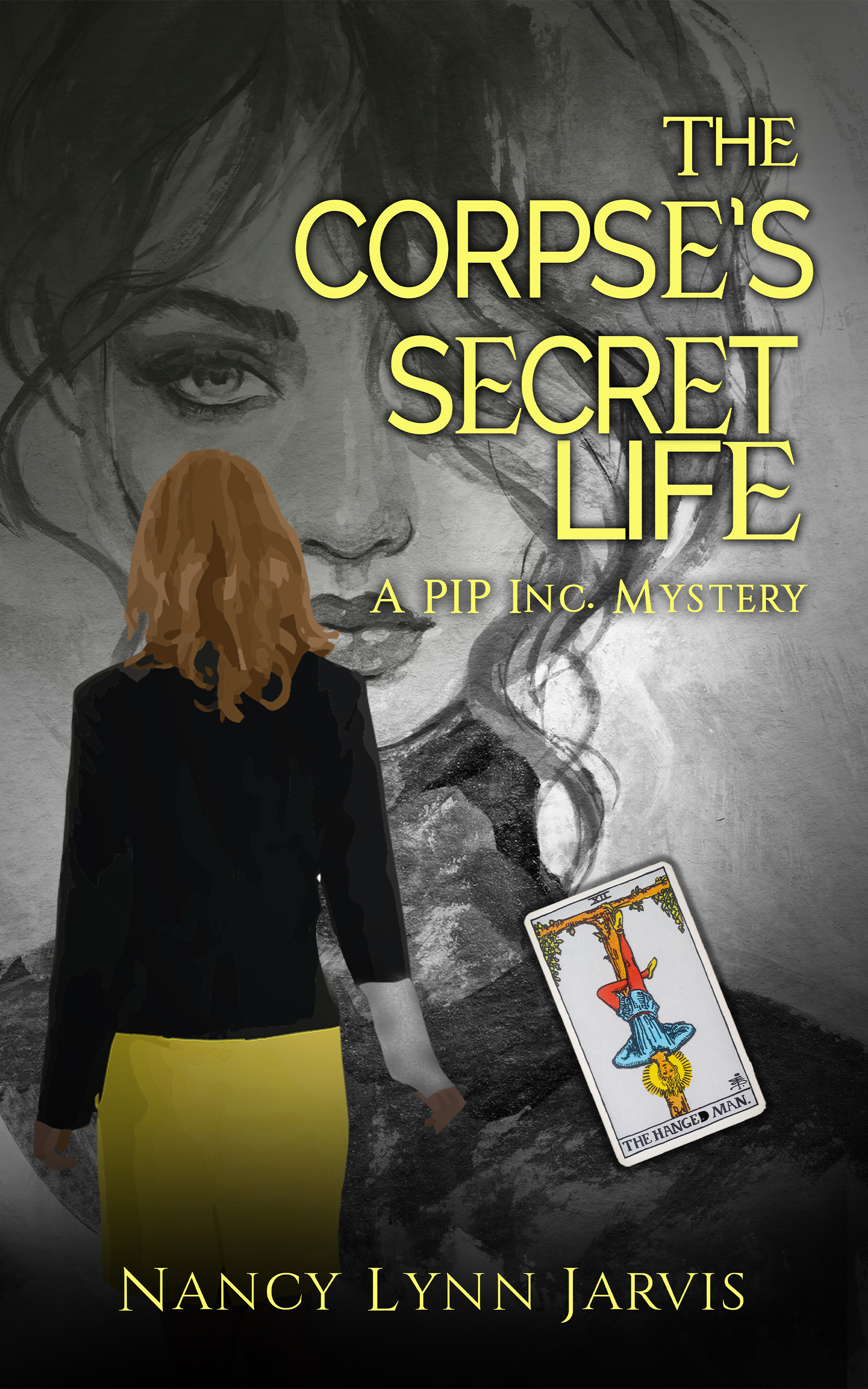
Pat’s fledgling private investigation company, PIP Inc., has a promising new case.

Pat is still wearing a wrist cast after breaking her arm in a confrontation with a killer, so when she’s hired by the City of Watsonville to unearth the identity of an older woman who died in her bed, she’s delighted that her next job promises to be a simple computer-based research project.

Why is it that things are never as simple as she thinks they will be? Pat soon discovers nothing is as it seems, beginning with a corpse who had secret identities, murder, and a post-death ritual thought to have last been performed decades ago.

 “I love this series, and this particular mystery is very entertaining.”

        Janice J. Richardson author of The Spencer Funeral Home series

“Captivating from the start! The Corpse’s Secret Life transports you into a realm of page-turning mystery… a must read”

          Maryanne Porter, author of Haunted Santa Cruz, California.

You can find her all her books here: https://www.amazon.com/Nancy-Lynn-Jarvis/e/B002CWX7IQ
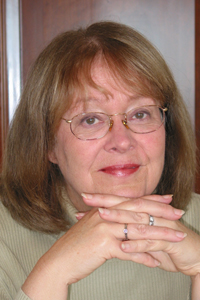
Nancy Lynn Jarvis left the real estate profession after she started having so much fun writing the Regan McHenry Real Estate Mysteries series that she let her license lapse. But after seven books, she was ready for a new adventure and is currently working on the fourth book in her PIP Inc. series which features protagonist not-quite-licensed private investigator, downsized law librarian Pat Pirard. She has also edited crowd pleasers Cozy Food: 128 Cozy Mystery Writers Share Their Favorite Recipes and Santa Cruz Weird. Read first chapters of her books at www.nancylynnjarvis.com

Facebook: https://www.facebook.com/nancylynnjarvis/

Goodreads: https://www.goodreads.com/author/show/2918242.Nancy_Lynn_Jarvis

Stories that got away & the Second Hook

My drafts tend to start out with a smart-alecky tone that slowly gets less and less so as I write. It is a mental exercise that helps me warm up to my characters. I’m used to that. What I’m not used to is a character who wants to stay funny. I’m several chapters into a book featuring a young clothing designer who wakes up in an alfalfa field after a convention ‘meet and greet’ in Kingston, Ontario. What’s written is a hoot. And there it sits. Waiting for inspiration, a different plot, another alfalfa field? Or maybe it was just a bad idea, after all one of the protagonists broke free to take on a key role in Booth Island.

Ever since I gobbled up Max Brand (The Gentle Gunman and . . .) and Alan LeMay (The Unforgiven and . . .) westerns, I have wanted to write a western. A dinner with Louis L’Amour at the Top of the Mark in San Francisco further fueled the fire. In those days, I was very up on the sheep wars and Billy the Kid so L’Amour and I had a great chat, during which he shared that Sam Elliot and Tom Selleck exemplified the characters in his books. If you haven’t read Hondo (also a great John Wayne movie) or Conagher do, they’ll hook you. As for my brilliant career writing a western mystery/thriller, it may still happen via one of the protagonists in my upcoming Wanee series.

Just like I still want to place Laury Cooper (Cooper Quartet) in Nîmes, France in 1970 and see what happens next. It would be weird though, since it would make the Quartet a Quintet and fill in a gap in the early years of the series. But still . . . what’s stopping me, read on.

A few years ago, I planned a mystery/thriller series that followed a farm woman sent from the East to marry a cousin living on an Illinois farm. I had the plot hook for ten books, beginning in 1850 through 1870s, the research started and had a line on the rest. I knew the farm, the crops and stock, and the land because it was based on the farm my father’s family settled. I loaded my research and notes to my OneDrive, put my hands over the keys of a blank screen and nothing. Why?

I’m not sure, but I suspect as Margaret Lucke (House of Desire) pointed out in a recent conversation, I needed a second hook to set the tale in motion. With the hook set, the characters feel free to inform themselves and whisper their stories in my ear until their words flow onto the computer screen.

Cover in waiting

As it turns out, like the protagonist from the alfalfa field, my farm woman migrated herself to Wanee, a fictious small northwestern Illinois town, set the first plot in 1876, and named herself Cora. Her brother Jess lives on the farm she was supposed to inhabit. When the series begins, nineteen-year-old Cora’s thieving mother deserts her, saddling Cora with debt and a boarding house with one boarder. Cora, who dreams of the single life of adventure and mystery, struggles to pay off her mother’s debts in a village troubled by post-Civil War growth while dreaming her dream of escape.

Cora’s story starts in Unbecoming a Lady, the first Wanee mystery, out soonish. The second book A Convergence of Enemies will follow next year. And Cora is currently whispering her third adventure to me nightly with help from a few Wanee friends, that’s what a second hook (in this case a disappearing mother and a restless town – is that two hooks?) can do.

Now Calypso and Grieg from Saving Calypso have something in mind, but they await a hook, I told them that and they both gave me that look. Sometimes stories don’t get away, they just wait for that second hook. And sometimes they do and should.

All books are available on Amazon, except Unbecoming a Lady. Find me at my website dzchurch.com and sign up for my shared newsletter there, too, or on Facebook at https://www.facebook.com/mysteryhistorysuspense.

BACK IN THE GROOVE—SORT OF

Attending the PSWA Annual Conference was wonderful. So rewarding to see old friends and make some new ones—plus talk writing and hear speakers and panels on various writing topics.

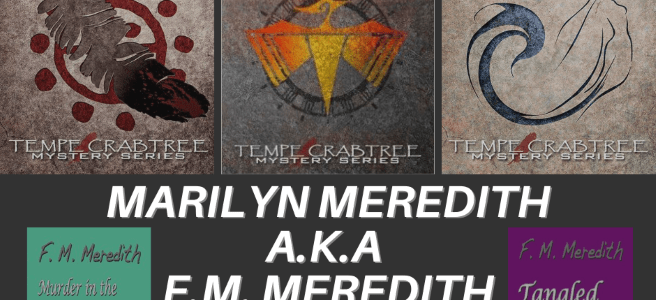
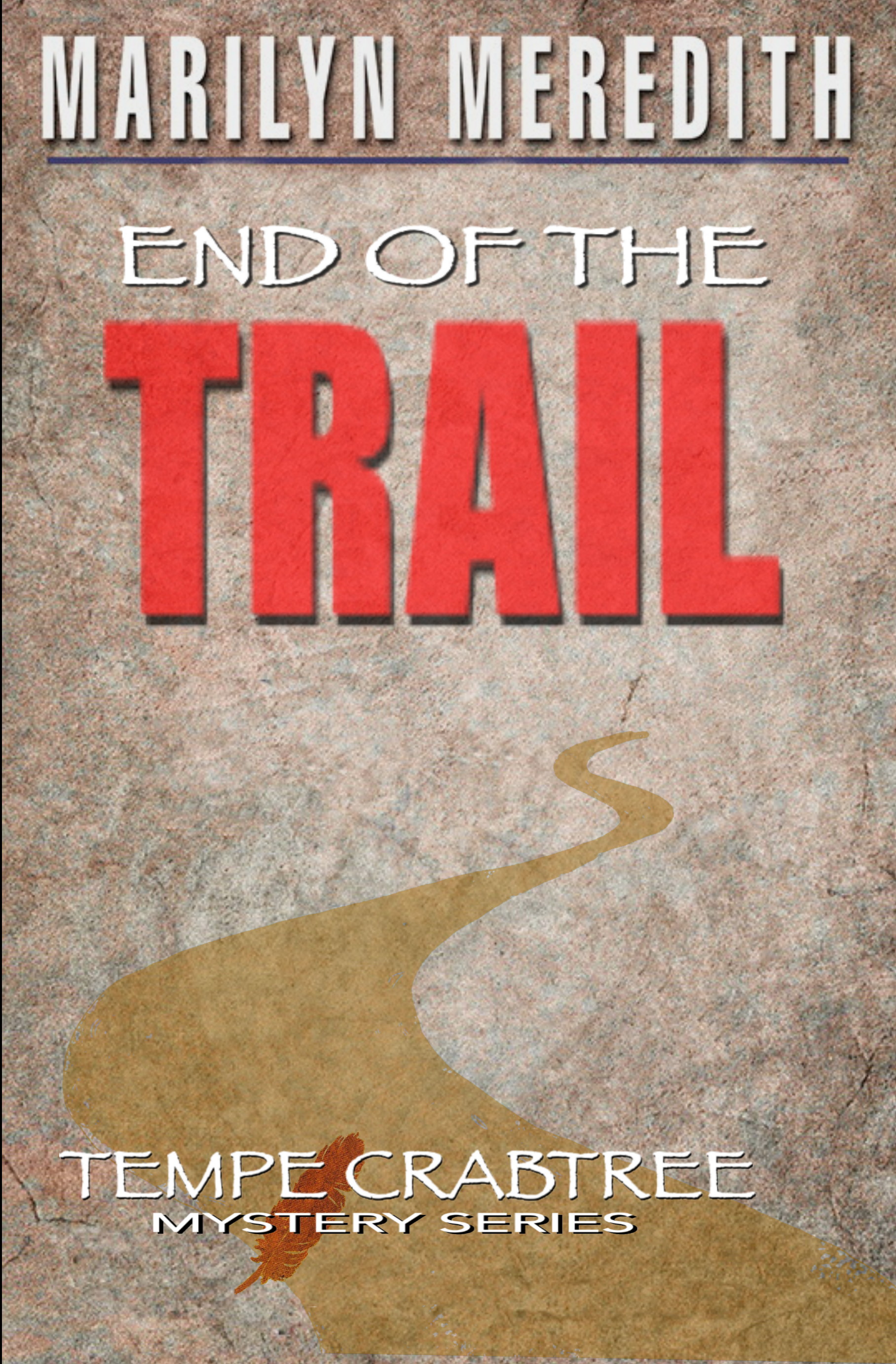
I need to write another—and the last—Deputy Tempe Crabtree mystery. Tempe is retired now and I’m ready to let her enjoy her retirement. Though I’ve had a request to put one of the ongoing characters in, one who is based on a real person and would like to see something specific happen with the character, that’s all I had. (I thought End of the Trail would be the last and then The Trash Harem had to be written. Now I need to send Tempe off with one last adventure.

In my newsletter, I asked my readers for ideas and did the same on Facebook. More ideas, but nothing that appealed.

While I was at the conference I some thoughts about what might be good in this final visit with Tempe started to pop into my brain. I even thought of a good beginning. No, I haven’t written anything down yet as I’ve had too many other things to do. When you come home from being gone six days duties pile-up: unpacking, laundry, and all the mail.

Frankly, I’ll be glad to actually be in the writing groove again, it’s been far too long. In the past, I’ve managed to write and publish two books a year. Nothing so far this year.

I’ll start like always, jotting notes down. Eventually getting to who turns up dead—where, and all those who might have wanted the victim dead. Naming and writing all the new character descriptions often comes next. Usually while I’m doing it, plot ideas will come tumbling unbidden but quite welcome.

Because I have other work I do for folks, sometimes it takes a while to get started on a new book. I am hoping for the best. I really, really want to get back to writing.

Marilyn

Discovering the Story

This post is both an apology and a discovery. I went off this morning thinking I had attended to everything that needed attending to, and then came home to realize I was wrong. So, late but here is my post along with my apologies.

When I began working on the Anita Ray mystery series I knew there would be a wedding in the story arc, and I assumed I knew who the bride would be. After two entries in the series I zeroed in on the prospective bridegroom. But after another two novels I found I was wrong. The character who was the obvious candidate wasn’t all that obvious anymore for reasons not known at first. I don’t want to give away what happened to him, but he lived to appear in a later story.

I continued with the fifth book in the series, In Sita’s Shadow. Each mystery is named for an Indian deity whose temperament matches one aspect of the story. Sita is the wife of Lord Rama, and is considered the quintessential wife, the spouse deified, her perfection unmatched in this world or any other. 

The choice of this figure for the title was meant to underscore the character of one of the main figures in the plot, but then the story got out of hand, and all of a sudden I had a love story in my lap.

Many Indian weddings, if not most, are still traditional, which means they can take hours. Every step in the ritual must be exact—the roles of the relatives are strictly prescribed, the recitations must be exact (no stumbling over the lines), and the families must meet all the requirements.

I thought it would be fun to write about a traditional Malayali wedding adapted to modern requirements, and it was. The first ritual is the presentation of the dowry. Among the Nayars in Kerala, the groom is required to provide the dowry; his “gifts” must be exactly what was agreed to. The gifts are inspected by the father of the bride and his agent before the ritual can begin. There’s something about watching two men with their agents calculating the pile of gold sovereigns, jewelry, saris with gold borders, and keys to cars or motorcycles, and more.

The guests watch it all. Women sit on one side of the room, men on the other, and we check out what the groom provided. I once made the mistake of saying, “So is that what the groom offered to give?” And the father of the bridge pounced and said, “Must give!” He was adamant, even fierce. Marriage is serious business in India.

The wedding in In Sita’s Shadow is adapted to the needs of a Westerner and an Indian woman, and figuring out how this would work required creativity as well as consulting with an anthropologist, but we figured it out, and it’s now one of my favorite scenes of all I’ve written about India. Auntie Meena, originally a skeptic of this relationship and the marriage rites between them, is won over. I hope the readers will be too.

Coming in August, In Sita’s Shadow: An Anita Ray Mystery.

Be There – Using ALL the Senses in Writing

Writers often hear “write what you know.” I have found that to be bad advice for many experts, as you’d be amazed how many knowledgeable people simply cannot explain their expertise to us common folk, so they need a translator, in the form of a ghost writer or a developmental editor. I’ve worked as both. But I digress.

Most of us fiction authors cannot experience everything that we write about. God forbid that we actually embezzle funds, dump toxic waste, set fires, or kidnap, torture, or murder people. We must rely on our imaginations or on accounts documented by others for all those crimes. But I do think it’s important to include sensory details from real experiences whenever possible.

So, when I’m out hiking, I’m always trying to truly experience everything as much as possible so I’ll remember the details when I write my Sam Westin mysteries. I would never wear earphones because I want to plug into my memory bank a wide variety of natural sounds: the low whoop-whoop-whoop mating call of a blue grouse, the groan of tree branches rubbing against each other, the roar of a waterfall, the crunching of my snowshoes on icy snow, the rumble of a distant rockfall. Scents are important, too: I inhale into my memory the grape-juice odor of blooming lupines in hot sun, the tang of broken pine needles, the whiff of smoke from a forest fire on the other side of a mountain range.

Touch is usually the most noticeable sense for me when I’m on a trail: I notice the razor-sharp edge of broken granite as I slice my leg on a rock, the stickiness of tree sap or the dampness of moss on my pants from the last place I sat down, the feel of a breeze drying the sweat on my back in summer, the sting of wind-driven sleet against my bare face in winter, the annoying bite of a blackfly in spring. In the Pacific Northwest, we often even have tastes along the trails: the tartness of salmonberries, the sweetness of huckleberries, the numbing taste of licorice ferns, the crunch of fiddlehead ferns.

And of course, sights are absolutely crucial: the myriad greens of a dense forest, the contrast of gray granite against snow, the awesome grandeur of a volcano, the terrifying crevasses in a glacier, the miracle of simply viewing the ocean or the sea of mountains that is the North Cascades. I try to be equally present, a sort of sensory sponge, when I’m kayaking or scuba diving, soaking up all the sensations the experience has to offer, because details can help readers experience the world a writer creates with words.

I’ve attended the Writers Police Academy twice. It’s an incredible experience, where mystery writers undergo some of the same training that police officers or forensics specialists or firefighters receive. I’ve learned about the difficulties of getting and matching fingerprints (fascinating), studied cases to distinguish suicides and accidental deaths from homicides (often harder than you might think), studied blood spatter (gruesome), learned how to clear a building in which an armed suspect was hiding (incredibly stressful), and shot an assault rifle (absolutely terrifying), just to name a few memorable sessions.

Seeing the wall on the US-Mexican border was an experience I’ll never forget, either, and learning from all sides about its impact on the environment and cultures was invaluable. I’ve been there twice. I absorbed so much that I got a whole book, Borderland, from the brief time I was there.

When I sit down to write a new book, I try to incorporate as many sensory details from my experiences as possible.

My next Sam Westin mystery, Cascade, includes a wolverine, an avalanche, and a collapsed building. I’ve never seen a wolverine except in a zoo, so I had to collect that information from books and articles. The book will be out in late August or early September. I’d still like to think a wolverine will appear somewhere in my future, in real life.

I’ve never been in an avalanche (thank heavens), but I’ve seen a few, and I’ve been through avalanche training. I do know what it feels like to fall through a snow bridge (only a couple of feet in my case, again thank heavens) and I’ve been caught in a whiteout in the mountains when the snow is so thick that you can’t distinguish up from down until you fall. And at the Writers Police Academy, I crawled through a simulated collapsed building in the dark. It’s more difficult and more painful than I imagined, but (yes, I’m still thankful) I didn’t have the danger of tons of debris looming above me, as many victims or first responders might in real-life situations.

I encourage everyone to do as much of what interests them as is possible. Even a frightening experience is enriching. I’m grateful that I’ve had a wide variety of memorable experiences to help with my writing, and I hope to have many more.