Guest Blogger ~ Dominique Daoust

Why I write cozy mysteries

When I was in my late teens and early twenties, I felt like I had to prove I was a dedicated reader by opening the pages of the classics.  But regardless of how many times I forced myself, I simply couldn’t connect with them, they weren’t for me.  And why bother reading something during your free time if you didn’t enjoy it?

After some trial and error, I finally zoned in on what I liked.  I’m a big fan of mysteries and thrillers, historical fiction, true crime and other non-fiction like biographies.  They all bring something to the table that resonates with how my brain works.  I love the twists and turns of a good thriller, the time travelling in historical fiction, the stark realness of true crime, and the revelations of biographies.  My Goodreads TBR list exclusively contains those genres, but there’s one more I recently added.

I think it doesn’t come as a surprise to anyone when I say the past few years have been rough.  Other than cuddling my pets and watching reality television (big shout out to RuPaul’s Drag Race!), the only other thing that kept me mentally afloat was my newfound discovery of cozy mysteries.  The laid-back, small-town settings, the quirky characters and pets, the element of mystery that still pulled me in even though it was lighthearted.  It opened my world to a whole subgenre of mystery I could enjoy without it feeling so harsh and heavy.  And who knew there were so many categories!  Cafes, bookstores, gardening, vineyards?  Cozies basically cover every hobby and profession in existence and it’s perfect (cheers to London Lovett and Vivien Chien!).

When I finally decided to start writing, choosing the genre was a no-brainer.  I could include elements I like from all the other genres I’ve been reading for years and wrap them up in a cozy little package.  My goal wasn’t to create a new classic but rather write some fun mysteries that people can enjoy.  Not only did it relieve the pressure and expectations of the end result, but they were a blast to write! 

With The Deadly Exclusives Trilogy, I’ve incorporated a setting and job I’m familiar with, all wrapped up in a historical period I’ve been obsessed with for years.  I grew up in the suburbs of Montreal, my first job was as a maid and I studied journalism.  And I’ve watched so many 1930s movies on the Turner Classic Movies channel that I can’t keep count.  I doubt any genre other than a cozy mystery could quite capture the tone I wanted. 

Many cozies have brightened my days and I sure hope my trilogy can do the same for others.   
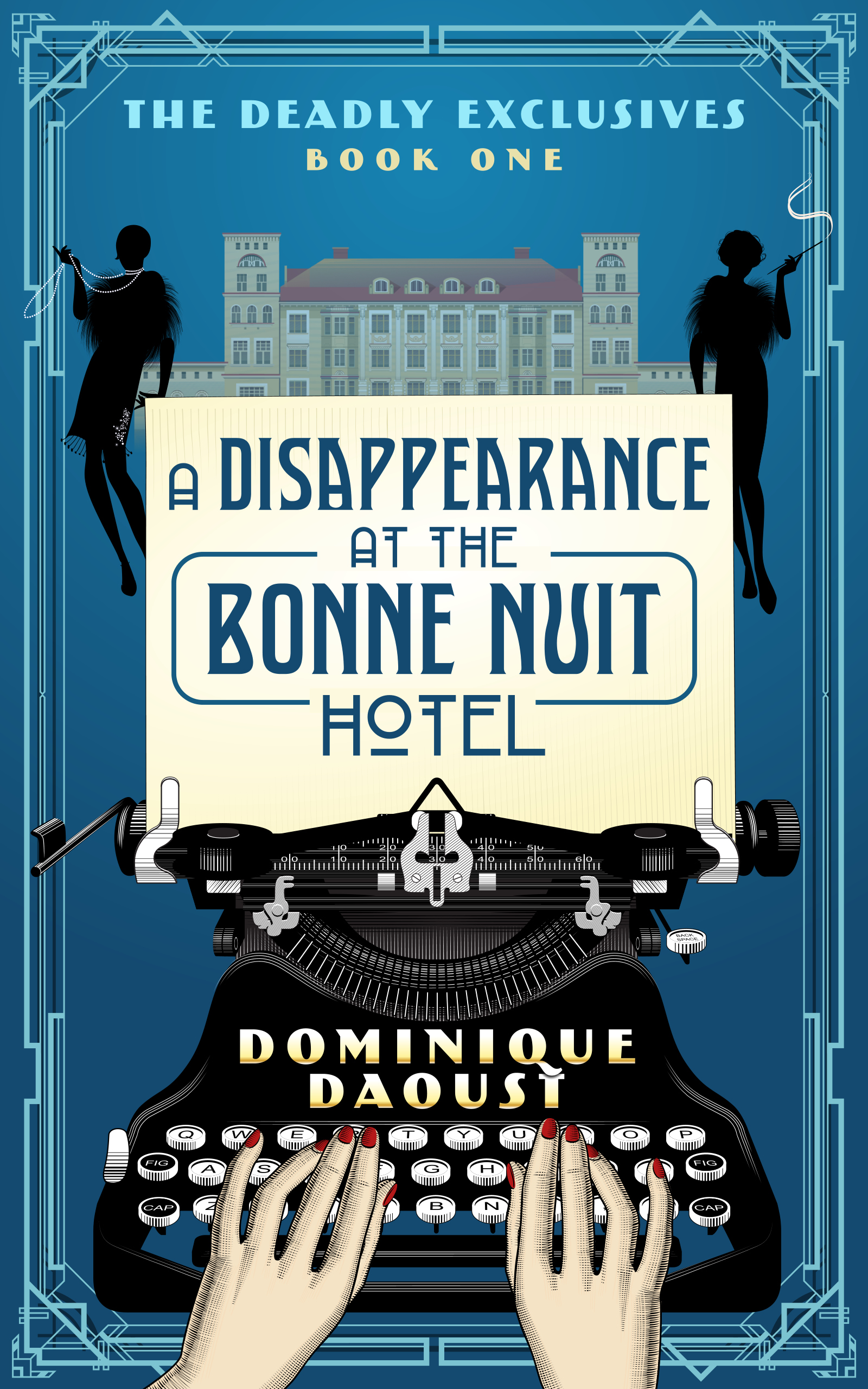
Secret sources have a whole new meaning.

Newbie reporter Rita Larose is tired of getting assigned boring stories at one of Montreal’s most popular newspapers. It’s 1930 after all, women don’t need to only write about household chores anymore! But when a high hat socialite gossips about the New Year’s Eve party at the Bonne Nuit Hotel, a riveting mystery falls right into Rita’s lap. This is her chance to prove to herself and her underestimating colleagues that she has what it takes to write the hard-hitting articles.

While going undercover as a maid to get the scoop, Rita will soon discover unexpected friendships and an unusual gift of her own to contend with. Will she be able to juggle this newfound ability while not blowing her cover and jeopardizing her career-making article?

Purchase here: https://www.amazon.ca/Disappearance-Bonne-Nuit-Hotel-Exclusives-ebook/dp/B09WVW6L53
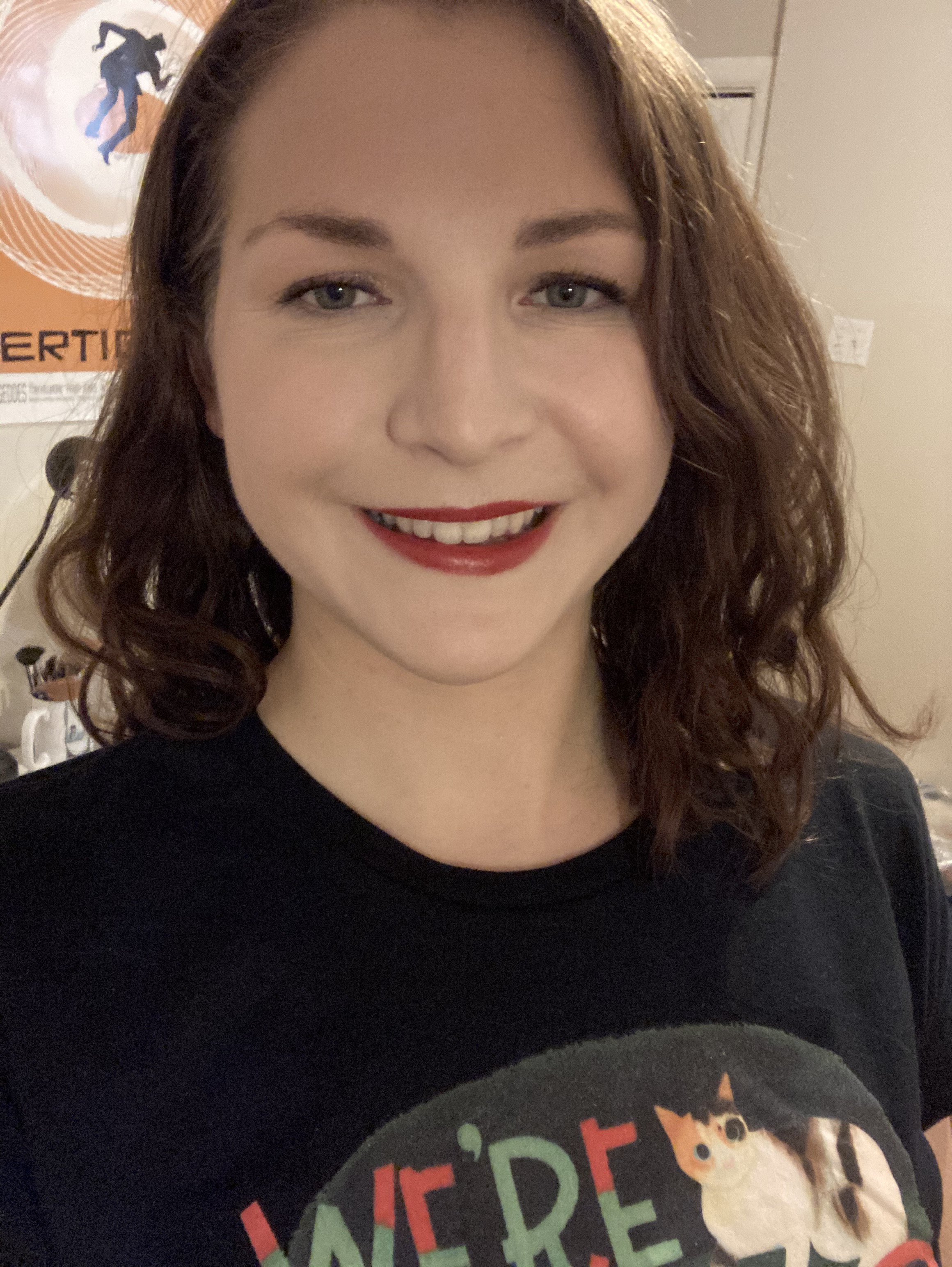
Dominique Daoust is the author of The Deadly Exclusives Trilogy. She is a journalism graduate from Concordia University in Montreal, Canada. When not reading or writing, she likes to do yoga, drink margaritas, incessantly quote Friends and listen to rap while doing mundane household chores.

You can follow her on

Instagram: https://www.instagram.com/dominique.daoust/

Facebook: https://www.facebook.com/DominiqueDaoustAuthor

Goodreads: https://www.goodreads.com/author/show/22331118.Dominique_Daoust

Print the Legend?

Midway through the second novel in my new series, I realized I needed to do more research. So, I stopped before my character’s zeal to confess his backstory irretrievably misdirected my story and the series and did more research on the Civil War.

My challenge is the character’s story involves a man the North made into and still believes was the great monster of the Civil War, while the South still calls him a hero, and the military still studies his genius. Bedford Forrest was not a West Pointer, he was not the son of Southern aristocracy but of a poor farmer who died leaving him head of the household at fifteen, he was semi-literate, and as a man made his living as a slave trader. The question is, when politics define history, what story does the storyteller tell?

I admire James R. Benn for his myth regarding Eisenhower’s distant nephew that fuels the Billy Boyle series, it is plausible, a bit humorous, and works. But who didn’t like Ike? Or am I that old? Though Ike fiddled around with his MTC driver, he never became the subject of the teeth-gnashing yellow journalism Forrest did after the “massacre” at Fort Pillow. One could argue that if most of the troops protecting Fort Pillow had not been black, the ruthless overrun of the fort would not have made the front page of abolitionist newspapers and the New York Times.

The massacre at Fort Pillow was a gift to the North. It proclaimed a Southern monster days after the 13th Amendment passed the Senate, energized Lincoln’s base in an election year, helped the 13th Amendment through Congress, and reinvigorated the Northern fight as Lincoln let Grant and Sherman loose on the South. Though excoriated, General Forrest put the skeer in the Northern generals and keep them skeered, raiding Union stockpiles, burning bridges, and winning battles against long odds right up to the end.

After the war, every time Forrest’s influence rose, the Northern press dredged up Fort Pillow, proving Reconstructionist-era politicos were as afraid of him as their generals had been during the war. Did his decision to lead the nascent Ku Klux Klan help public perception? Of course not. He lent his skills to the fledgling organization to get a Reconstruction Governor out of the Tennessee State House. When the Governor moved to the US Senate, Forrest resigned his leadership. That Klan disappeared after a few years to be reborn in the 1920s as the terrorist Klan we know.

Even now, the Northern legend that the South’s best general was a murdering, slave-trading monster is accepted fact. How then does my character tell a believable tale of an eleven-year-old boy riding with and cared for by Forrest after the boy’s father dies in battle? Will readers accept my character’s backstory, will they label me an apologist, will they ban the book? In the current climate, anything is possible.

My character stands by his story, though the other characters in Illinois in 1876 will not believe it any more than they would now. But it is an opportunity to air both sides of the argument for and against a brilliant, complicated, profane man who managed hell so well both Patton and Rommel studied him.

So, getting back to the title of this blog, at the end of John Ford’s movie The Man who shot Liberty Valance, when Jimmy Stewart’s character finishes telling the truth about Liberty Valance’s death, the newspaperman taking notes says, “When the legend becomes the fact, print the legend.” In that story, a tough, irascible man does the right thing to save a man he considers better than him. The act changes the trajectory of both their lives forever. Forrest’s “legend” changed his life and the trajectory of this country, as well, otherwise, historians say, we might have become the Confederate States of America. There is a story there.

What Being a Writer Means to Me

I started writing stories when I was a youngster. I wrote my own versions of the books I read. My first original was a story about fairies which I illustrated. My mother sent it to a publisher, who sent back a nice note telling me to keep writing, and I did for a long time.

My first efforts as an adult were rejected and I’m sure because I had no idea what I was doing. I didn’t get serious about writing until I had grandkids. My sister did our family genealogy and I decided to write an historical family saga based on both.  I had to do lots of research about places and times my ancestors lived and believe me it took a long, long time.

The second one I wrote was published by a major publishing company. I had no clue about marketing or promotion and did one book signing. When the 2nd was published, I knew a bit more.

Next came my first mystery, and another.  I’ve been at this a long time, and now have 50 published books all available on Amazon. Along the way I’ve learned so much about writing and promotion.

Besides the fun of writing and creating characters who seem as real as the people I know, I’ve had a great time over the years traveling all over the county attending writers workshops and mystery cons—Bouchercon and Left Coast Crime, plus many of the smaller ones  that have disappeared like Mayhem in the Midlands and Crimefest.

I was able to meet some of my favorite authors like Mary Higgins Clark, William Kent Krueger, Craig Johnson, Naomi Hirahara, and so many, many more. Plus, I made friends with so many other writers and more importantly readers.

When I read about how much writers and readers enjoyed this most recent Left Coast Crime, I was a tad envious, but then realized I had so many great memories of conferences past and all the interesting people I’ve met over the years.

I’m now in the process of my two favorite writer pursuits: 1. Planning for and promoting my latest book, the last in the Rocky Bluff P.D. series, Reversal of Fortune and 2. Putting together ideas for my next Deputy Tempe Crabtree mystery.

Being a writer is a wonderful and rewarding part of my life in so many ways.

Reversal of Fortune is about the death of a fortune teller. It’s available in paper and for Kindle on Amazon: (I wrote this series as F. M. Meredith)

Writers’ Groups

Twice a month I moderate a writers’ group for men and women writing in diverse genres. This isn’t the first group I’ve worked in, and probably won’t be the last. 

Two people make a group, which means the novel I wrote in college was the topic of a group consisting of me and the typist and sometimes me and my boyfriend. But the first group whose intent was to bring its members’ work to publication was one I joined in 1989, and attended regularly for several years.

I’ve been thinking about groups and their purposes lately because even though I’ve been moderating the current group for several years, I rarely contribute. This one began as a walk-in opportunity for library patrons, but with the advent of the pandemic, we switched to zoom, and over the last several months, using a private (not library) zoom account, we have decided to become a private group, freezing the membership to its present number.

We are here for different reasons. Most groups are organized around a single goal that every participant agrees to. The group focuses on a certain genre, for example. A writer I knew back in the 1990s wanted to start a group for those working on crime fiction set in foreign lands. Since I wasn’t yet writing the Anita Ray series, I was out. The group fizzled. Another group was for established writers, those who had published at least one book in any category and now wanted to work on mysteries. That was fine until the woman who assumed the role of moderator invited writers she met and liked, which changed the dynamic. The unwritten rule that the group decided on whether or not to send an invitation to join after meeting the writer was buried and forgotten. The group of professionals helping others develop their work morphed into an entirely different series of sessions.

Other groups popped up over the years. I enjoyed one that included four people, including a moderator who gave lots of advice and then checked up on us to see if we followed it. I didn’t last long. In another we got assigned pages to read and comment on, which felt like work in addition to what I was writing.

I have enjoyed and learned from every one of these groups, but probably not what the group organizers were expecting. First, the more diverse the genres the better. A poet among mystery writers will teach about language and the rhythm of language. Writers of fantasy among literary fiction writers will challenge others’ imagination. Writers of nonfiction in a group of novelists will challenge us to describe reality, settings, physical details with greater precision. 

But mostly, groups of any kind of diversity will teach us about human nature. I still look back on some of the earlier groups to pluck out humorous or unexpected quirks for a fictional character. There’s nothing like watching writers grapple with different points of view on something intensely personal to them to see an emotional range in human behavior. The more diverse the group, also, the wider and more free-flowing the discussion, something I always enjoy.

Every writers’ group I’ve ever been in has been a terrific learning experience for which I’m grateful—the good will, the insight, the language skills, the thoughtfulness, the overall support. Writers are generous people, always ready to help their colleagues. I may not get (or ask for) help with a specific piece, but I gain every time I listen and learn.

Back to Real Life?

Like so many, especially those of us who live alone, to me life has felt in suspension for the last two years. So it’s fantastic to get back to doing all those things I did in pre-lockdown days, although I know that the pandemic is not quite over and this newfound freedom may be temporary.

Happy Mystery Authors at Left Coast Crime Conference 2022 Banquet

Last week I attended the Left Coast Crime Conference, in person, in Albuquerque, New Mexico. There were challenges. The hotel had recently changed hands and the staff seemed surprised to have a conference on their hands, although the contract had been in place (with the old owners) for two years. The hotel bar closed at 9pm, which, if you’ve ever hung out with authors, you’d know is a crisis, and the surrounding areas in Albuquerque seemed to be occupied now mostly by the homeless and drug-addicted. The only food venue in the hotel was understaffed and under-supplied. But the Left Coast Crime organizers had intelligently required all attendees to be fully vaccinated, so we felt reasonably safe and oh, so happy to see and talk to all our fellow mystery authors and mystery lovers. Left Coast Crime is not a writers conference but a fan conference, so many attendees are not writers, but readers and leaders of reading clubs, which makes this conference all the more special. And of course, we are all mystery fans.

It’s impossible to take a good photo at Carlsbad Caverns without professional gear, but here’s a hint of the scenery.

After the conference, I went on a little exploration of southern New Mexico. First, to Carlsbad Caverns, which turned out to be much more spectacular than I anticipated. Rather than taking an elevator, I walked down the spiraling path into the caverns (1.25 miles and a descent of around 750 feet) to get to the Big Room, which has a 1.5 mile path that encircles the cathedral-like structure. The experience was magnificent, and I loved the cool, quiet, uncrowded walk down so much that I walked back up the same way.

I also went hiking at Dripping Springs Recreation Area near Las Cruces, where I visited ruins of an old ranch, asylum, and mountain lodge wedged back among the rock formations. The park volunteer told me there is an oryx (!) in the park, and I kept a sharp eye out for that African antelope, but he stayed hidden. I felt so sorry for the poor oryx, an exotic import from a previous landowner who favored shooting rare species. What does an African antelope think about being stranded in a foreign country with only free-range cattle for company?

Lodge Ruins in Dripping Springs Recreation Area, New Mexico

I explored the area as a solo adventurer this trip, happy just to be outdoors and seeing new sights. And it was marvelous to be in the company of all the creative authors and appreciative readers at Left Coast Crime.

Is this real life again? I’m cautious, and I’m fully vaccinated, and oh, I so hope we can all share in many good times to come!