MISSED WRITING OPPORTUNITIES AND WHY by Marilyn Meredith

Not too many years ago, when our chapter of Sister in Crime and many who wanted to be mystery writers and a program chair who brought in great speakers, not only did I get some great ideas for plot from them, but also was asked to write a book for them.

One would have really been fun. Our chapter went to the nearby airport and heard and viewed all about the police and sheriff’s helicopters. We heard exciting tales about what they did and arrests they’d made. One of the police pilots seemed to focus on me while he was talking. Afterwards, he came and asked if he could speak with me.

He wanted me to write a book about him and all of his exploits. He offered to take me on “fly-alongs” so I’d know what it was like to fly all over the big city and spot criminals, and sometimes actually land to arrest them. Believe me, I wanted to do it. I took his card and told him I’d get back to him.

At the time, I owned and operated a licensed home for six women with developmental disabilities. My husband and I ran it together. The big city where the police officer and his helicopter were stationed was about an hour and a half drive from my home. Though truly torn, I knew it wouldn’t be fair to my husband or the women I cared for to be away as much as giving a book like this justice—so I turned it down.

The second opportunity was when our SinC chapter had a police detective from the coast who told us all the details about a horrible murder of a teenaged girl, by three teen boys. Afterwards, he asked me if I’d co-write a true-crime book with him about this horrendous crime. Again, to do the job right, I’d have had to be away from home far too much. However, that wasn’t the real reason I turned it down. The thought of interviewing the parents of the dead girl and those of the boys was not something I wanted to do. I know all of their hearts must be broken.

And I’ll close with the one opportunity I accepted and wished I hadn’t. I accepted the job through a ghost-writing company that I’d worked with before, to write the story of a big time but supposedly reformed drug dealer. I didn’t have to meet with him in person; we did everything through email. His story was fascinating. He managed to avoid being caught while selling to some of the most influential people in a wealthy beach community in southern California, and then his change of life style when he moved to Hawaii.

We seemed to get along fine. He was happy with what I’d written until it was time for him to make his final payment. He became verbally abusive, told the company I worked for I hadn’t written anything the way he wanted. The worst of his emails came when I was at the Public Safety Writers Association’s annual conference. I sent him an email telling him where I was and who I was with: all sorts people from different law enforcement agencies from police, FBI, NSA, etc. and I planned to seek their help. That stopped him. I never heard from him again. I have no idea if he published his book—and frankly I don’t care.

I’m not quite sure why those memories popped up, but I thought you might find them interesting.

Have any of you ever turned down a writing opportunity?

Marilyn
The First Line

In every creative writing class the instructor is sure to note at some point the importance of the first line. These few words should grab the reader, and lead her into the rest of the story. We all know the classic first lines by Tolstoy and Chekhov and Chandler and Christie, but those don’t really help us with writing our own. I didn’t always recognize the brilliance of some first lines, which made coming up with my own even harder.

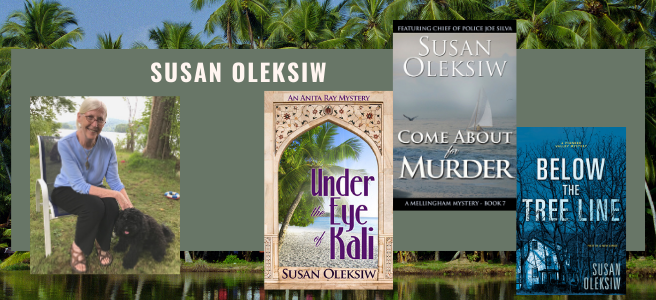
At first the issue seemed to be to write something intriguing. For the first book in the Mellingham series, I wrote and rewrote the first line along with the first chapter, writing, in the end, three first chapters and stacking them one in front of the other. In the end I was persuaded to cut most of them, and I ended up with what I thought was a pretty good first line for Murder in Mellingham. “It had been some time since Lee Handel had ventured out willingly on a social occasion, but his wife, Hannah, had reassured him that this party would be safe.” This line sets the stage for the evening to come but not much else. That line introduced the first of seven titles in the Mellingham series.

The first line of Under the Eye of Kali, the first in the Anita Ray series, was even less connected with the story to follow, but it set the scene nicely. “Guests from various foreign countries began filling up the Hotel Delite dining room, taking every seat at the main table—this was a small hotel, only eight rooms, with the owner’s, Meena Nayar’s, suite on the top floor, and that of her niece, Anita Ray, above a separate garage.” This was the first of four books, with a fifth one waiting on my desk.

You would think by the time I came to write my thirteenth book that I would have mastered the art of the first line, but you’d be wrong. Below the Tree Line opens with what I regard as a terrific line, but it isn’t necessarily the best first line for a mystery novel. But I didn’t come to this conclusion until recently. Below the Tree Line opens with this: “On the third night Felicity lifted the shotgun from its place in the cabinet, and this time she loaded it.” There isn’t much wrong with this line as it stands, but it doesn’t tell you as much as you might think about what’s coming next.

After publishing dozens of shorts stories and thirteen novels, I tried a new approach in creating the perfect first line. I don’t know if the result is perfect, but I established a definition of that first sentence that works for me. I now consider the first line as the apex of a pyramid, and the story is within that pyramid. Whatever happens must be traceable back directly to the first line. This by itself means extraneous scenes, extra characters, digressions into backstory, or a humorous or romantic subplot that is more filler than mystery, are all to be excluded.

In my current novel, now with my agent, I rewrote and reworked the first line more than a dozen times until I had something that, like a math or drawing compass whose points never deviate as they draw the circle, could embrace the entire story, holding each part in tight, streamlining and smoothing the narrative. This, then, is the first line of So Comes the Reckoning: “The first time Renee watched a man die, she was eleven years old, kneeling beside him as he lay on the ground.”

As I wrote the 82,000 word story I kept that first line in front of me and asked myself repeatedly, Is what I’m writing now linked to that statement? If not, why not? It was hard to find myself jettisoning entire chapters because I seemed to think they were needed but could find no connection to the first line and its implications. Why was she there? Why was this a first time? Why did she not, as an eleven-year-old child, run away or at least stand apart? The implications of those words kept me on track.

Since then I have come to appreciate the difference between a good snappy sentence and a good first line to a particular novel. They are not necessarily the same. The challenge is to combine them in such a way that the story unfolds from those opening words. It’s an ongoing challenge.

Why Does This Character Torment Me So?

He refuses every name I give him. Argh!

Everyone else in my newest historical series is comfortable with their names. The nineteen-year-old heroine Cora Countryman’s name is a combination of names from my hometown in Illinois, the model for the booming prairie town in the books. But my hero . . . he refuses to cooperate! His name has changed so many times that my computer screen has erasure holes.

Kewanee, Illinois Historical Society

Names are everything, right? Normally, once the character sketch is complete, they pop into my head and stick. Finn Sturdevant, Grieg Washburn, Brendan Whitelaw, MacLaury and Byron Cooper. But this guy is a puzzlement. He was comfortable being Israel Francis (Rafe) Kaufman from Chicago in the first book, then when I started plotting the second book, wham, he announces he is from Tennessee and demands a new name.

Overlooking the obvious and assuming I have some control over my stories, perhaps I should have given more time upfront to his backstory. I thought I had it all figured out; it’s just . . .

In book one we learn that he was a drummer boy at the Battle of Chickamauga, went to an Eastern college, and is now a newspaperman. Then while plotting book two, he insisted he was a Southern drummer boy, not Northern, and all bets were off.

Bless his heart, the change added depth to the plot, the series, and his character.

So, Israel Kaufman from Chicago permutated to Bedford Kaufman because what name conjures Civil War Era Tennessee more than General Nathan Bedford Forrest. The former Israel Kaufman was semi-okay being Bedford Kaufman, but the Tennessee census indicated that there were literally no Kaufmans in the state in the 1870s.

So, we settled on the surname Kanady. Bedford (Ford) Kanady appealed to him, enough for a complete name change. But he is a tad prickly about his image and worries that the name is a bit card-sharky. There was talk of Harry Kanady, but he claims it is a gunslinger’s name. ‘Just not me‘ has become his mantra. In addition to the census, we have tried to find his using name generators, birth records, online family trees, yoga, and standing on our heads in a corner.

He insists the name must convey savvy and internal toughness. Oh, and a hint of danger, a hazy past, a sharp tongue, and a few visible and invisible scars. He believes he is the kind of guy you see buying stamps at the Post Office who conjures an intriguing fantasy involving magic markers and dark rooms.

Come on . . . you know the type!

Wait a minute! Would Jason Bedford work? Jason . . . Jase, perhaps, to his friends. He isn’t thrilled with Jason. It feels a bit modern, possibly too Western movie for him. There is definite hesitation on his part.

I’ll let him ponder Jason for the night, maybe introduce himself to a few of the other characters. You know, try it on for a while before another search and replace. Wait! Now he speculates that he likes the initial J. and is leaning toward J. Bedford Kanady. Why an initial makes a difference, I don’t know. But he likes the unknown of the J., the rhythm of the full name, and the hint of je ne sais quoi in the diminutive of Ford.  It could work. Maybe? Sounds stuffy to me. But if he likes it . . . whatever!

THIS GUY IS DRIVING ME NUTS!

As promised, here are the solutions to LAST MONTH’S FIRST LINE QUIZ. I am sure you all aced it.

First Line of BookTitle of Book
Last night I dreamed I went to Manderlay again.Rebecca
All the Venables sat at Sunday dinner.Cimarron
The whole affair began very quietly.Madam, Will You Talk?
They were interviewing Clint Maroon.Saratoga Trunk
Nothing ever happens to me.My Brother Michael
It was a cold gray day in late November.Jamaica Inn
They used to hang men at Four Turnings in the old days.My Cousin Rachel

SUMMER IN SODUS POINT by Karen Shughart

It’s like a grand, sweeping piece of classical music, starting out slowly and gradually building until it reaches a crescendo; imperceptibly winding down and then soaring to a breathtaking ending.

That’s pretty much what it’s like living in Sodus Point in the summer. Located on the south shore of Lake Ontario, we have seasons, defined seasons, and for three-fourths of the year it’s quiet. There are fewer than 900 permanent residents.

The switch is flipped, starting around Memorial Day. There’s an increase in activity. Summer residents begin readying their cottages for warm weather. Tourists, staying at inns and rented homes, stroll our streets, visit our attractions, line up for ice cream, dine on the decks of our waterfront restaurants, or purchase California rolls and bao buns, specialized coffee, baked goods, barbecue, and tacos from food trucks that circle a parking lot like covered wagons.

July 4th weekend brings more traffic-hundreds; maybe thousands from around our region-for classic car and kiddie parades, craft shows, fun runs and a spectacular display of fireworks, beginning at 10 p.m. Our days are long this time of year. We watch the fireworks from our front porch, the jostling crowds and traffic too challenging for the likes of us, and the noise unsettling for our small Beagle, Nova.

A week or two later more visitors from across this country-and pre-pandemic-countries from around the world, descend upon our village to partake of the scenic beauty, pristine beaches, hiking trails, fishing spots, museums, lighthouses, gift shops, great food, and music. There’s lots of music.

Summer is when our historical society and museum sponsors nine weeks of Sunday afternoon concerts in the park on a bluff overlooking the lake. Motorboats anchor, sailboats drift lazily, and pedestrians spread blankets or unfold chairs to listen to a diverse selection of music while munching on hot dogs and sausage, popcorn, and ice cream. Often, during the week, music vibrates through our windows from bars and restaurants lining our business district.

Most of our friends and family visit during summer months. There’s lots to do: sunbathing on the beach, simple meals cooked on the grill, visits to wineries, farm stands and orchards, and to our local farm animal rescue shelter; be sure to bring bags of carrots and apples for feeding the residents. Friends with boats take us and our guests on tours of the bay or for longer sojourns, we rent pontoons. Although we can hear the Sunday concerts from our front porch, it’s a quick stroll to the park, and part of a must-do Sodus Point experience.

Late in August the summer people begin pack up and leave.  School is starting, soccer and football practice, too. Tourism wanes, but the crowds return to celebrate Labor Day weekend. It’s the grand finale: an annual clambake sponsored by our ambulance association; the final concert on the bluff; and another sumptuous fireworks display. Soon, very soon, there will be quiet on our streets with the promise of autumn in the air, a breathtaking ending to a fine summer.

Guest Blogger ~ Susie Black

No matter what stage an author’s writing career is at, one thing that is constantly drilled into their head is to only write what you know. If you don’t know it, either do the research and learn it or don’t you dare write it. If you don’t have the creds for what you write, you are toast because readers can spot a phony by the second paragraph and never finish reading your book. This concept is one I never lose sight of and is the reason I write about the subjects I do. 

Like the protagonist in my Holly Swimsuit Mystery Series, I am a ladies’ swimwear sales exec in the greater Los Angeles area. From the beginning of my career, I have kept a daily journal chronicling the interesting, quirky, and sometimes quite challenging people I have encountered as well as the crazy situations I’ve gotten myself into and out of. My daily journal entries are the foundation of everything I write.

I came to write in the cozy mystery genre because I love solving puzzles. My parents would certainly confirm I have always asked a lot of questions, and I am naturally curious (some narrow-minded people say I am nosy…go figure…LOL). So, writing mysteries was the natural next step for me to take. it is also the genre I read, am comfortable in, and enjoy the most. The bonus is that it was an excellent way to knock off some people on paper who I would have loved to eliminate in real life and still not end up in prison. Extremely therapeutic. I highly recommend it.

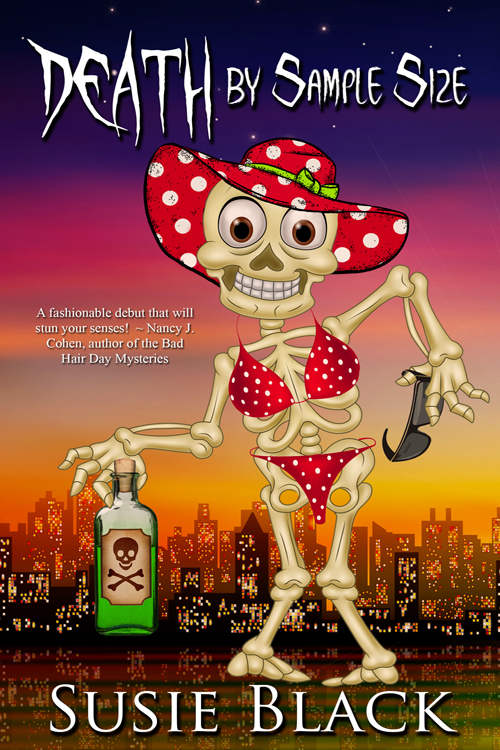
As a female who has succeeded in a historically male-dominated industry, it was important to me to write about the apparel business from a woman’s point of view. All of my characters are based on real people, and the central characters are all strong, successful women who have beaten the odds and broken the glass ceiling. Holly Schlivnik, the main character, is based on me with some poetic license taken, of course. The plots and premises of my stories all take place in the fast-paced ladies’ apparel industry. The premise behind the story in Death by Sample Size is what if a buying office big shot in the apparel industry so universally disliked that when she was murdered, there were so many potential suspects that it wasn’t a question of who wanted her dead, it was a question of who didn’t.

DEATH BY SAMPLE SIZE

Everyone wanted her dead…but who actually killed her?

The last thing swimwear sales exec Holly Schlivnik expected was to discover ruthless buying office big wig Bunny Frank’s corpse trussed up like a Thanksgiving turkey with a bikini stuffed down her throat. When Holly’s colleague is arrested for Bunny’s murder, the wise-cracking, irreverent amateur sleuth jumps into action to find the real killer.  Nothing turns out the way Holly thinks it will as she matches wits with a wily killer hellbent on revenge. Get ready to laugh out loud as Susie Black’s Death by Sample Size takes you on a rollicking adventure ride through the Los Angeles apparel industry.

AMAZON: https://www.amazon.com/gp/productttt/BO93F24T3F

BARNES & NOBLE: https://www.barnesandnoble.com/w/death-by-sample-size-susie-black/1139356591

Book Bub: https://www.bookbub.com/authors/Susie-black

Goodreads https://www.goodreads.com/book/show/57877534-death-by-sample-size

Google: https://play.google.com/store/books/details?pcampaignid=books_read_action&id=k8swEAAAQBAJ

I Tunes: https://books.apple.com/us/book/death-by-sample-size/id1564686461

kobo https://www.kobo.com/us/en/search?query=Death+by+Sample+Size

TARGET.COM: https://www.target.com/s?searchTerm=Death+by+Sample+Size

Just behind my college graduation, wedding day, and the birth of my son, June 9th was truly one of the most amazing days of my entire life. My debut cozy mystery Death by Sample Size was released for publication. I am humbled, honored, and proud to be able to say that now I am officially a published author! A life-long dream has come true, a hard-fought-for goal has been accomplished.

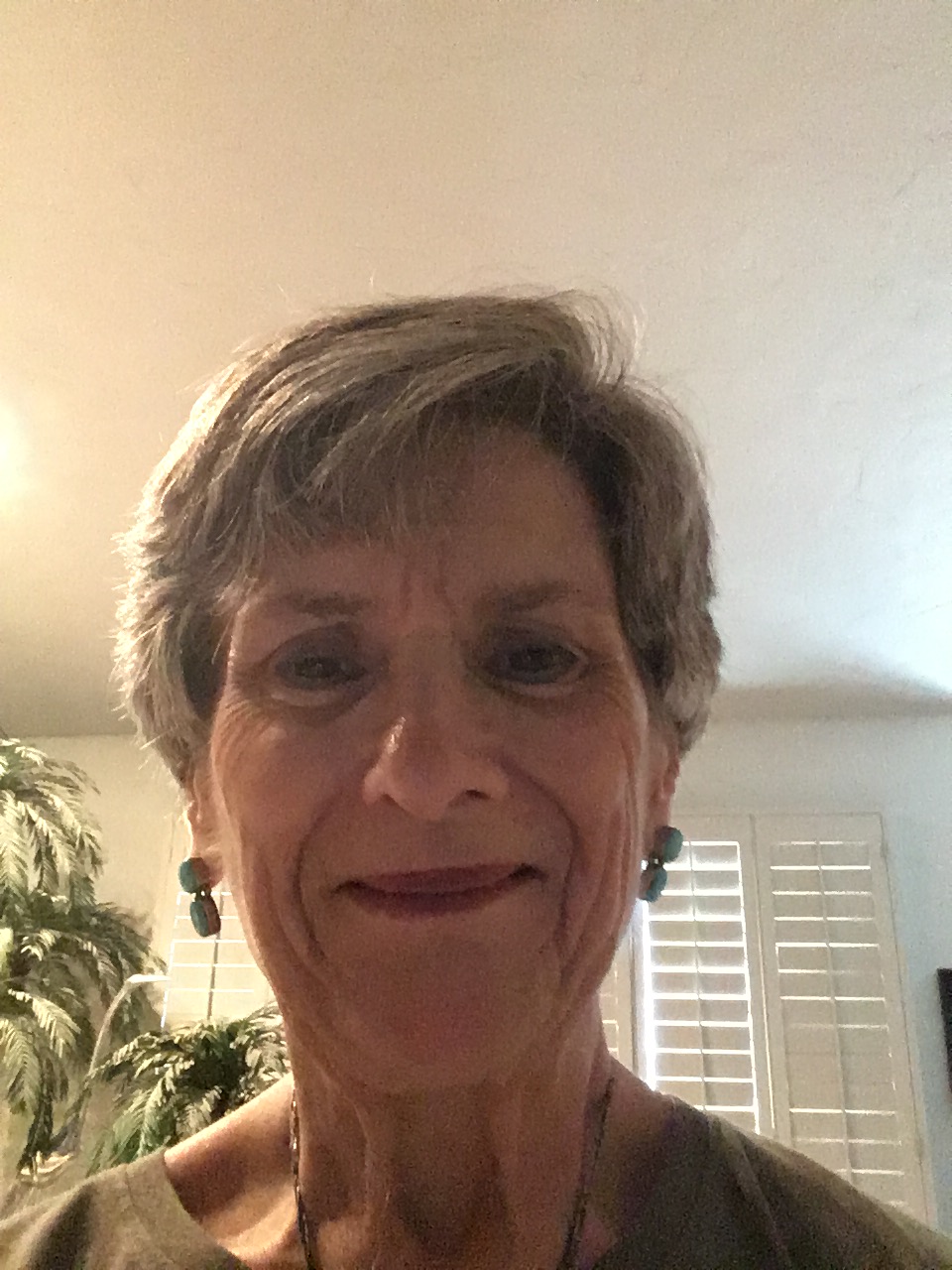
Born in the Big Apple, Susie Black now calls sunny Southern California home. Like the protagonist in her Holly Swimsuit Mystery Series, Susie is a successful apparel sales executive. Susie began telling stories as soon as she learned to talk. Now she’s telling all the stories from her garment industry experiences in humorous mysteries.

She reads, writes, and speaks Spanish, albeit with an accent that sounds like Mildred from Michigan went on a Mexican vacation and is trying to fit in with the locals. Since life without pizza and ice cream as her core food groups wouldn’t be worth living, she’s a dedicated walker to keep her girlish figure. A voracious reader, she’s also an avid stamp collector. Susie lives with a highly intelligent man and has one incredibly brainy but smart-aleck adult son who inexplicably blames his sarcasm on an inherited genetic defect.

Looking for more? Reach her at mysteries_@authorsusieblack.com

Social Media Links:

Book Bub: https://www.bookbub.com/authors/Susie-black

Facebook: https://facebook.com/TheHollySwimsuitMysterySeries

Goodreads https://www.goodreads.com/book/show/57877534-death-by-sample-size

Instagram: Susie Black (@hollyswimsuit) • Instagram photos and videos

Linkedin: https://www.linkedin.com/in/authorsusieblack-61941011

Pinterest: https://www.pinterest.com/hollysusie1_saved/

Twitter: http://twitter.com/@hollyswimsuit